2025-09-24 06:29
NEW DELHI, Sept 24 (Reuters) - India's Oil and Natural Gas Corp (ONGC.NS) , opens new tab hopes to acquire 2.5-3 gigawatt renewable energy projects by 2030, Executive Director Satyan Kumar said on Wednesday. The company already has about 2.5 GW of renewable energy capacity, Kumar told reporters. Sign up here. ONGC is looking to import 3 million ton per year of liquefied natural gas under long-term deals and expects some contracts to be finalised in 12 months, he added. https://www.reuters.com/sustainability/climate-energy/indias-ongc-eyes-acquisition-25-3-gw-renewable-energy-projects-exec-says-2025-09-24/

2025-09-24 06:21
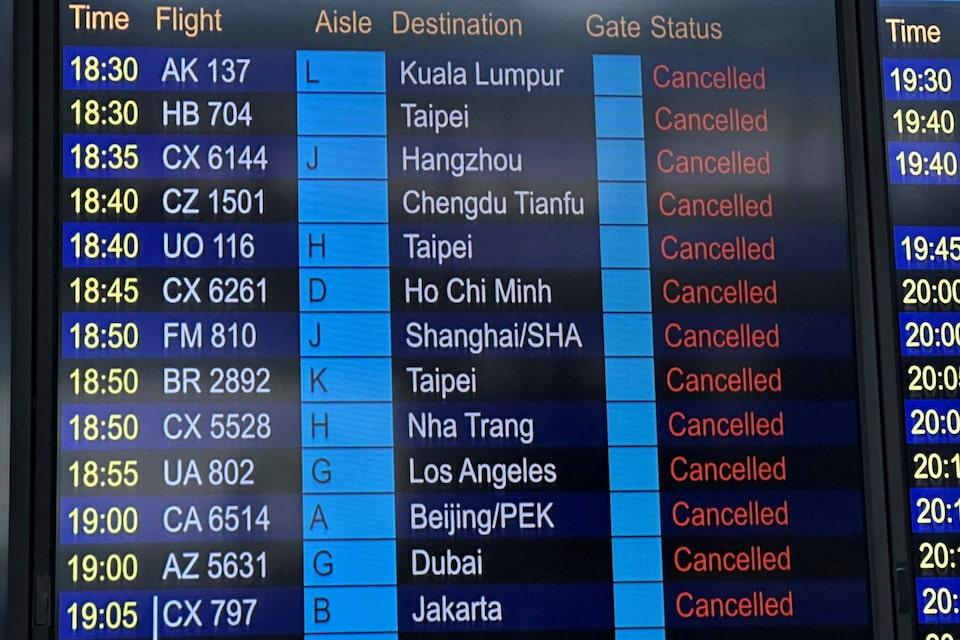
About 80% of planes belonging to city's airlines sent elsewhere - tracking data Majority of private jets also moved out-Hong Kong Business Aviation Centre Planes are at airports in Japan, China, Cambodia, Europe, Australia Cathay Pacific cancelled more than 500 flights Sept 24 (Reuters) - As Typhoon Ragasa, the world's most powerful tropical cyclone this year, approached Hong Kong this week, mass flight cancellations and lost revenue were not the only headache for airlines based at one of the world's busiest airports. Ahead of the arrival of hurricane-force winds and torrential rain on Wednesday, about 80% of the aircraft belonging to the four main airlines based in the city had been relocated to or grounded at airports in Japan, China, Cambodia, Europe, Australia and other locations, Flightradar24 tracking data showed. Sign up here. The majority of Hong Kong's business jet fleet also moved out of the territory ahead of the storm, the Hong Kong Business Aviation Centre said. All landings and departures at Hong Kong, the world's busiest cargo airport and the ninth busiest for international passenger traffic, were cancelled for 36 hours starting on Tuesday evening. Hong Kong's largest airline, Cathay Pacific Airways (0293.HK) , opens new tab, said on Monday the typhoon was going to have "a significant impact" on its operations and it would cancel more than 500 long-haul and regional flights. "We are positioning some of our aircraft away from Hong Kong and expect a staggered and gradual resumption to our schedule throughout Thursday into Friday," said the airline, which has a fleet of 179 passenger and freighter planes. Hong Kong issued typhoon signal 10, its highest warning, early on Wednesday, which urges businesses and transport services to shut down. It is standard industry practice for airlines to move aircraft abroad during major weather events or as conflict risk rises to avoid potential damage, often to comply with insurance obligations. At least 14 Cathay Pacific jets flew from Hong Kong to Cambodia's Phnom Penh Techo airport on Tuesday to wait out the storm, according to tracking data and Techo airport. Airlines can also preemptively send aircraft away from their main base so they are ready to operate return flights when a storm subsides. In high winds, airlines can store aircraft in hangars, or add extra fuel to weigh them down. Smaller aircraft can be tied down. Hong Kong-based Greater Bay Airlines, a small carrier with seven aircraft, said it had parked all its planes away from Hong Kong as a safety precaution. Its Boeing (BA.N) , opens new tab 737s flew to airports in Japan and China on Tuesday, tracking data shows. Hong Kong Airlines similarly appeared to have kept all but one of its 28 aircraft out of Hong Kong. Cathay and its low-cost subsidiary HK Express kept more of their planes in Hong Kong, tracking data showed. Cathay and HK Express did not respond to requests for comment about how they were storing their planes. In a 2017 internal publication, Cathay said it had stored some of its planes in hangars at Hong Kong airport during past cyclones, while others had been sent to other destinations. https://www.reuters.com/world/china/hong-kongs-airlines-evacuate-planes-they-wait-out-typhoon-ragasa-2025-09-24/
2025-09-24 06:16
MUMBAI, Sept 24 (Reuters) - The Indian rupee hovered near its record low on Wednesday, staying flat, as worries about the impact of steep U.S. tariffs and shifts in visa policies kept up the pressure, with intervention by the Reserve Bank of India offering some support. The rupee was last nearly flat at 88.7425 against the U.S. dollar, but is in touching distance of its all-time low of 88.7975 hit on Monday. Sign up here. While the local currency appeared on course to open weaker around 88.85, likely intervention by the central bank in the non-deliverable forwards and onshore spot market helped it find its footing, traders said. There are persistent dollar bids from importers and foreign banks so the direction of travel for the rupee appears to be lower, a trader at a state-run bank said, adding that the extent will depend on what RBI allows. India's benchmark equity indexes, BSE Sensex (.BSESN) , opens new tab and Nifty 50 (.NSEI) , opens new tab were down about 0.4% each on the day. A gauge of IT stocks (.NIFTYIT) , opens new tab was down nearly 1%, as investors fretted over how a steep rise in fees for U.S. H1-B visas could impact their business models. Foreign investors have sold $1 billion worth of Indian stocks on a net basis so far in September, taking the year-to-date outflow tally to nearly $16 billion. The central bank had likely intervened in the market on Monday as well to support the rupee, according to traders. On the day, modest strength in the dollar was a pain point for the rupee. Asian currencies were down slightly. "Despite brief dips in the dollar's strength, persistent market pressures have kept the local currency under strain, reflecting a challenging mix of global developments," said Amit Pabari, managing director at FX advisory firm CR Forex. https://www.reuters.com/world/india/rupee-pinned-near-record-low-holds-ground-central-bank-support-2025-09-24/

2025-09-24 05:55
Headline CPI hit one-year high on base effects Monthly CPI volatile, little chance of RBA move next week A cut in November is now seen as a coin flip SYDNEY, Sept 24 (Reuters) - Australian consumer prices rose at the fastest annual pace in a year in August after a hot July, suggesting some upside to inflation that prompted markets to pare back the chances of imminent policy easing. The Australian dollar rose 0.3% to $0.6619, while three-year government bond futures fell 7 ticks to 96.45, the lowest in three weeks. Sign up here. Investors doubled down on bets that the Reserve Bank of Australia will skip a move in interest rates next week given the recent flow of data has been on the strong side. Prospects for a move at its November meeting also faded to 50% from almost 70% before the data. Data on Wednesday from the Australian Bureau of Statistics showed the monthly consumer price index (CPI) rose 3.0% in August from a year earlier and up from 2.8% in July, mostly due to base effects. It came in just above median forecasts of 2.9%. The key trimmed mean measure of core inflation ran at an annual 2.6% in August, down from 2.7% in July. However, a measure excluding volatile items and holiday travel climbed to 3.4% from 3.2%. Details of the report, mostly in the services sector, suggested some upside risk for third-quarter inflation, which led Barrenjoey, Deutsche Bank, the National Australia Bank, Macquarie and Citi Australia to give up their calls for a rate cut in November. "On any measure this is a material upside surprise and the detail worrying," said analysts at Barrenjoey in a note to clients, noting they still see room for a rate cut in the first half of 2026. "It’s a windy and uncertain path from here and all the turns need to lean in the same direction for the RBA to be able to deliver this additional rate cut." NAB now sees interest rates on hold at 3.6% until May next year, compared with two more cuts expected in November and February, while the Commonwealth Bank of Australia said a November cut is not a done deal. The RBA has downplayed the importance of the monthly CPI data, saying the series remained too volatile, with interest rates only cut this year in February, May and August after assessing the quarterly inflation figures. On Monday, Governor Michele Bullock said Australia's economy was in a good place, with inflation expected to return to the mid-point of the target band of 2% to 3%, and the labour market nearing full employment. The central bank had forecast headline inflation, which ran at 2.1% last quarter, to pick up to 3.1% by the middle of next year, as electricity rebates fade, but core inflation is expected to stay anchored around 2.6% over the coming years. All up, that suggested little urgency to cut rates for the central bank at the next policy meeting September 29-30, since the labour market has stayed resilient, with unemployment at a historically low rate of 4.2%. Wednesday's report provided some updates on the services sector for the quarter. Price growth in restaurant meals, takeaway food and audio visual services has accelerated. New dwelling prices rose 0.7% in the 12 months to August, up from 0.4% as the disinflationary impulse in the housing sector seems to have stalled. "The only path likely rests on the state of the labour market by November," said Phil Odonaghoe, chief economist at Deutsche Bank. "Another weak print might be enough to convince the Board that it can move ahead with a rate cut, but the inherent volatility of the monthly labour market makes it a high hurdle, and so we think the probability of a Nov cut is now below 50%." https://www.reuters.com/world/asia-pacific/australia-monthly-cpi-rises-30-yy-aug-core-cools-2025-09-24/

2025-09-24 05:48
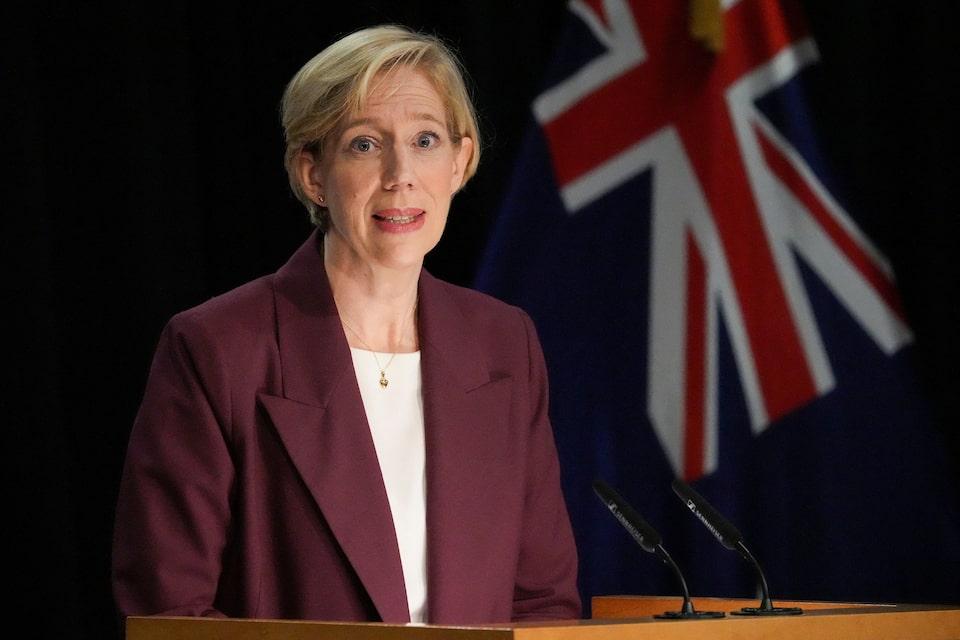
Breman praised RBNZ's global reputation and staff dedication Breman is first female RBNZ governor New governor faces challenges with government criticism and economic downturn WELLINGTON, Sept 24 (Reuters) - New Zealand on Wednesday named Swedish national Anna Breman as its new central bank governor, the first woman in the role who joins following a major shakeup at the bank amid criticism over its management of the economy. Finance Minister Nicola Willis said Breman, currently the First Deputy Governor of Sweden's central bank, the Riksbank, will take up her role at the Reserve Bank of New Zealand (RBNZ) on December 1. Sign up here. "Dr Breman comes to New Zealand with an impressive blend of technical skills and organisational leadership experience," Willis told a press conference in Wellington. Breman, 49, used her first remarks to praise the New Zealand bank's reputation, following the surprise departure of its previous governor who repeatedly clashed with the government. "The Reserve Bank is an excellent institution: it's known globally for being the first to develop inflation targeting," she told reporters. "Staff are dedicated, they are loyal. They know how important the institution is to New Zealand." Breman was nominated for the role by the RBNZ board following a worldwide search in which 300 potential candidates were identified, Willis said. RBNZ board deputy chair Rodger Finlay welcomed Breman's appointment. "Anna's experience spans central banking, academia and financial markets," he said. "She has strong technical knowledge within monetary policy, financial stability and payments systems after several years at the Executive Board at the Riksbank and an extensive international experience." FIRST FEMALE GOVERNOR Breman, who is married with two teenage daughters, is the first foreign national appointed to the role in its modern history. While central banks globally typically choose local talent for their top roles, the appointment of a foreigner to a governor role is not unheard of with the Bank of England appointing Canadian Mark Carney as governor in 2012. New Zealand, which was the first self-governing country to give women the vote 135 years ago and has had three female prime ministers, has never had a female central bank governor. Karen Silk is currently Assistant Governor at the RBNZ. "It certainly makes a difference when young women and girls can see that there is no office that cannot be occupied by a woman," Willis said. Breman will replace current RBNZ Governor Christian Hawkesby, who was appointed to the role for six months in April following the surprise resignation of former governor Adrian Orr. Hawkesby will also leave the bank and step down from the RBNZ's monetary policy board. Orr, who had a reputation as a maverick policymaker and sometimes wrong-footed financial markets with policy decisions, had faced criticism in recent years for being too slow to cut rates to bring the economy out of a deep recession. "The Reserve Bank has found itself behind the curve over the last couple of years," Jarrod Kerr, chief economist at New Zealand's Kiwibank. "We hope we get some leadership that brings the Reserve Bank ahead of the curve, rather than being reactive. We would like a central bank to be a bit more proactive." Orr quit over a dispute with the government about punishing cuts to the central bank's budget, and had clashed repeatedly with Willis. The centre-right government has become more vocal in other areas, with Prime Minister Christopher Luxon publicly saying he had told the RBNZ what he believes they should do with interest rates. RBNZ's chairman also resigned in August following criticism of the bank’s handling of Orr’s departure. "We are opening a new chapter today, a new chapter in New Zealand's history and a new chapter for Reserve Bank," Willis said. New Zealand's main opposition Labour Party also welcomed Breman's appointment, with economics spokesperson Barbara Edmonds praising her "impressive background". NEW CHALLENGES The tense backdrop had heightened market focus on how the new governor would go about defending the central bank's independence from a critical government and restoring the reputational damage done by a deep economic downturn. Breman's confirmation comes just months after funding for the bank was significantly cut by the government, forcing a restructure with around 20% of its staff expected to be laid off. Her first policy meeting will not be until February. Before that, the RBNZ conducts meetings in both October and November, for which markets are currently pricing a total of 58 basis points of rate cuts. The RBNZ is reviewing bank capital requirements, following public criticism of changes announced in 2019 championed by Orr. Critics contend the regulations reduced availability of funds in the economy and led to extra costs for borrowers. The central bank has cut the benchmark cash rate by 250 basis points since August last year in an effort to shore up a frail economy and recently flagged further cuts. https://www.reuters.com/world/asia-pacific/new-zealand-appoints-anna-breman-central-bank-governor-2025-09-24/
2025-09-24 04:33
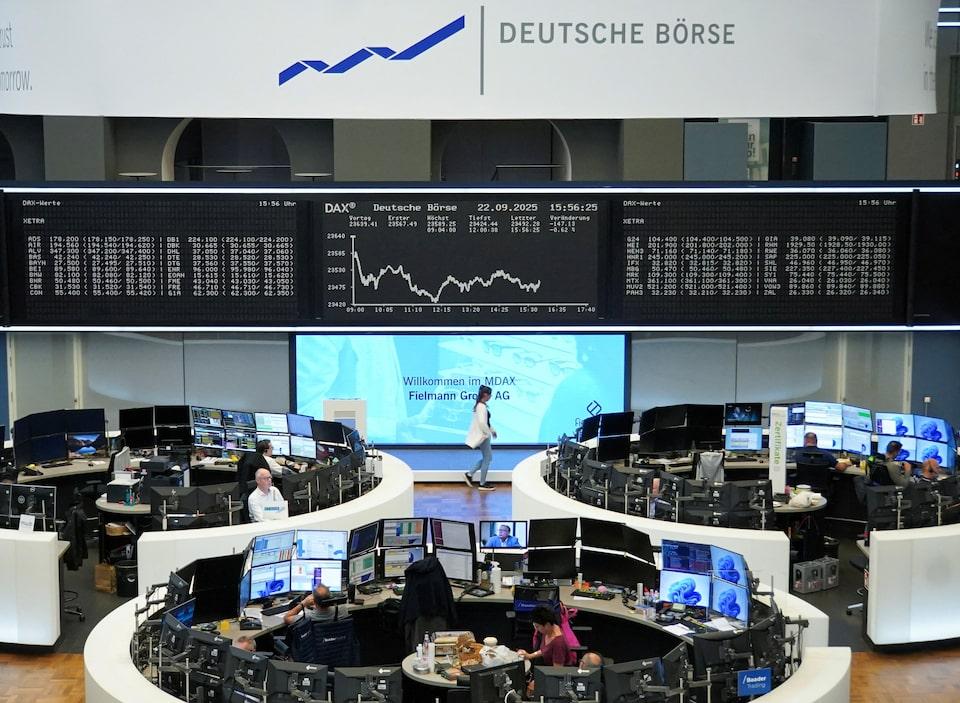
A look at the day ahead in European and global markets from Gregor Stuart Hunter: Having passed through the autumn equinox to pumpkin-spiced latte season, it's a little mysterious that markets have yet to encounter any of the weakness historically found this time of year. Until today, that is. Sign up here. Stocks are falling across Asia after a sell-off on Wall Street overnight fanned by softer-than-expected economic data and comments from Jerome Powell that gave few clues about the future path of interest rates. The MSCI Asia Pacific ex-Japan index is off 0.2% around lunchtime for most of the region. Still, soggy data aside, the index is still up 5.6% so far this month and hovering near a four-year high. But the usual dip-buyers were nowhere to be found, with U.S. stock futures trading flat. In early European trades, pan-region futures were down 0.4% at 5,470, German DAX futures were off 0.3% and FTSE futures sank 0.3%. Australian shares sank almost 1% after a bigger-than-expected rise in consumer prices in August. Japan's Nikkei stock index slid 0.5% after manufacturing sector activity fell at the fastest pace in six months in September, driven by further declines in new orders. Even so, there were bright spots to be found, especially in Chinese markets. Alibaba's Hong Kong-listed shares jumped 5% after the e-commerce giant announced on Wednesday its largest artificial intelligence language model to date, the Qwen3-Max, which contains more than 1 trillion parameters. That's almost six times as many as the original version of ChatGPT when it was released three years ago. Elsewhere, New Zealand on Wednesday named Anna Breman as its new central bank governor, the first woman in the role, who joins following a major shakeup at the bank amid criticism over its management of the economy. Breman is currently the First Deputy Governor of Sweden's central bank, the Riksbank. And Jimmy Kimmel is back on the airwaves after a six-day suspension over on-air remarks about the man accused of assassinating conservative activist Charlie Kirk. "I can’t believe ABC Fake News gave Jimmy Kimmel his job back," U.S. President Trump wrote on Truth Social, threatening further action against the network. "Why would they want someone back who does so poorly, who's not funny, and who puts the Network in jeopardy by playing 99% positive Democrat GARBAGE," he posted. Key developments that could influence markets on Wednesday: Economic data: Germany: Ifo Business Climate, Current Conditions and Expectations for September US: New home sales for August, EIA weekly crude oil stocks Debt auctions: Germany: 7-year government debt U.K.: 4-year government debt https://www.reuters.com/world/china/global-markets-view-europe-2025-09-24/