2025-12-06 11:03
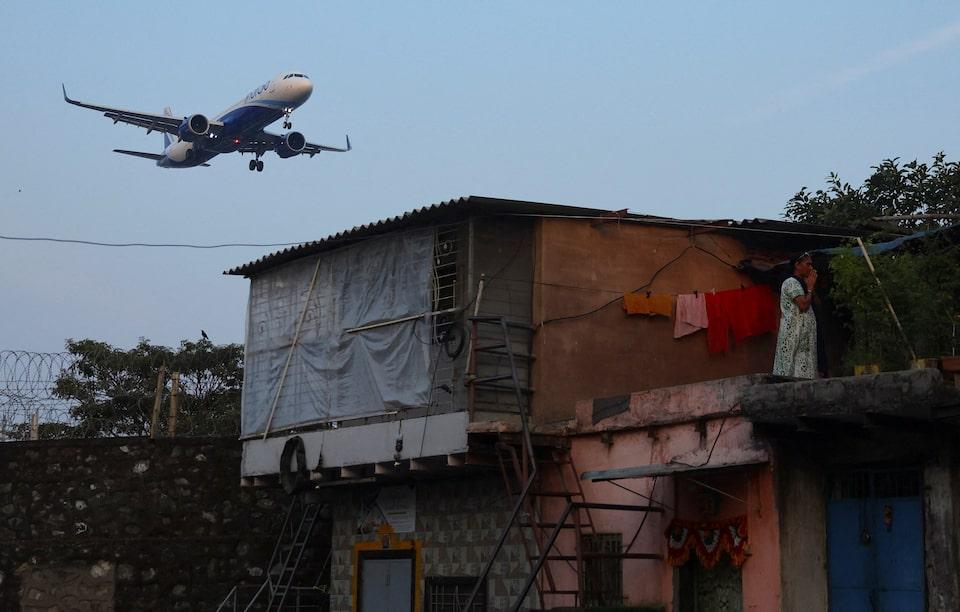
NEW DELHI, Dec 6 (Reuters) - India's stricter pilot fatigue management rules hit IndiGo (INGL.NS) , opens new tab hard this week as it had failed to plan for changes in its rosters, throwing operations of the country's biggest airline into disarray and disrupting air travel across the country. The new regulations, first proposed in early 2024, were implemented in two phases this year, with the latest implementation date of November 1. Lack of proper planning, IndiGo has admitted, ultimately led to disruptions this week. Sign up here. Here are some of the key rules notified by India's aviation regulator: WEEKLY PILOT REST The Indian authorities increased the weekly rest period by 12 hours from 36 to 48 hours. That, the government said, would help ensure sufficient time for recovery from cumulative fatigue. The rule remains in force despite the IndiGo crisis. MAXIMUM NIGHT LANDINGS The weekly number of landings a pilot can make from midnight and early morning has been capped at two, from six earlier, a move meant to boost safety as alertness is lowest at this time. The government has put this measure on hold for IndiGo until February 10 given the crisis. FLIGHT DUTY The maximum time pilots can fly in flights that stretch into the night is capped at 10 hours. The rules consider night to be between midnight to early morning. The government has also put this measure on hold for IndiGo until February 10, given the crisis. REST TIME AND LEAVE If a pilot takes personal leave, airlines cannot count that as part of the mandated weekly rest period of 48 hours. The rest period must be on top of any leave, a practice pilots say was not followed in the past. For now though, all airlines are exempted from this rule to restore normal air travel in India. FATIGUE REPORTS Airlines now need to submit quarterly fatigue reports and action taken to the Indian aviation regulator. https://www.reuters.com/world/india/what-are-indias-pilot-safety-rules-that-hit-indigo-operations-air-travel-2025-12-06/
2025-12-06 10:12
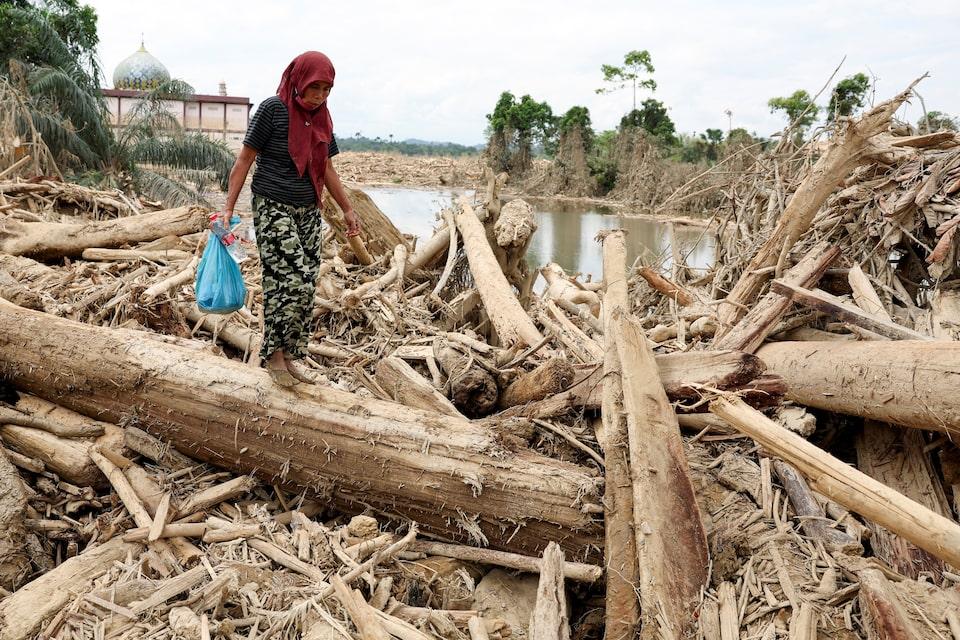
ACEH TAMIANG, Indonesia, Dec 6 (Reuters) - Residents in the Indonesian region of Aceh Tamiang climbed over slippery logs and walked for about an hour on Saturday to get aid, as the death toll from floods and landslides that hit Sumatra island this month reached more than 900. The number known to have died as a result of the cyclone-induced floods and landslides across three Indonesian provinces on Sumatra, including Aceh, was 916 on Saturday, with 274 listed as missing, government data showed. The storm systems also killed about 200 people in southern Thailand and Malaysia. Sign up here. Survivors in the Aceh Tamiang region, on the northeast coast of Sumatra, walked for an hour on Saturday, scrambling over scattered logs and passing overturned cars to reach an aid distribution centre set up by volunteers, they told Reuters. Volunteers handed out clean clothes and brought in a tanker truck of fresh water so people could fill plastic bottles, Reuters witnesses said. RESIDENTS DRINK FLOODWATER Dimas Firmansyah, a 14-year-old at an Islamic boarding school, said Aceh Tamiang had been cut off, and that students had stayed at the school for a week, taking turns to search for food and boiling and drinking floodwater. "We stayed for about a week there," Dimas said, urging the government to come to the area to see the calamity themselves. Local government officials on Sumatra have called on the national government in Jakarta to declare a national emergency to free up additional funds for rescue and relief efforts. Earlier this week, President Prabowo Subianto said the situation was improving and current arrangements were sufficient. ENVIRONMENTAL GROUPS SAY DEFORESTATION TO BLAME Green groups say deforestation linked to mining and logging aggravated the impact of the floods, and Indonesia is investigating companies suspected of clearing forests around flood-hit areas. Indonesia's environment ministry said it had temporarily halted the operations of the suspected companies, and that it will require them to perform environmental audits. The companies include North Sumatra Hydro Energy, which runs the China-funded 510-megawatt hydropower plant in the Batang Toru region of North Sumatra, miner Agincourt Resources, which operates the Martabe Gold Mine, also in Batang Toru, and state agricultural group Perkebunan Nusantara III. The latter did not immediately respond to a request for comment. North Sumatra Hydro Energy also did not immediately respond to a query sent on LinkedIn. Agincourt Resources declined to comment, a spokesperson said, as it had not received an official letter on the halt. Aerial surveys show land-clearing in Batang Toru that may have exacerbated the flooding, the environment ministry said. https://www.reuters.com/business/environment/indonesians-climb-over-logs-walk-aid-centre-flood-deaths-rise-over-900-2025-12-06/
2025-12-06 10:06
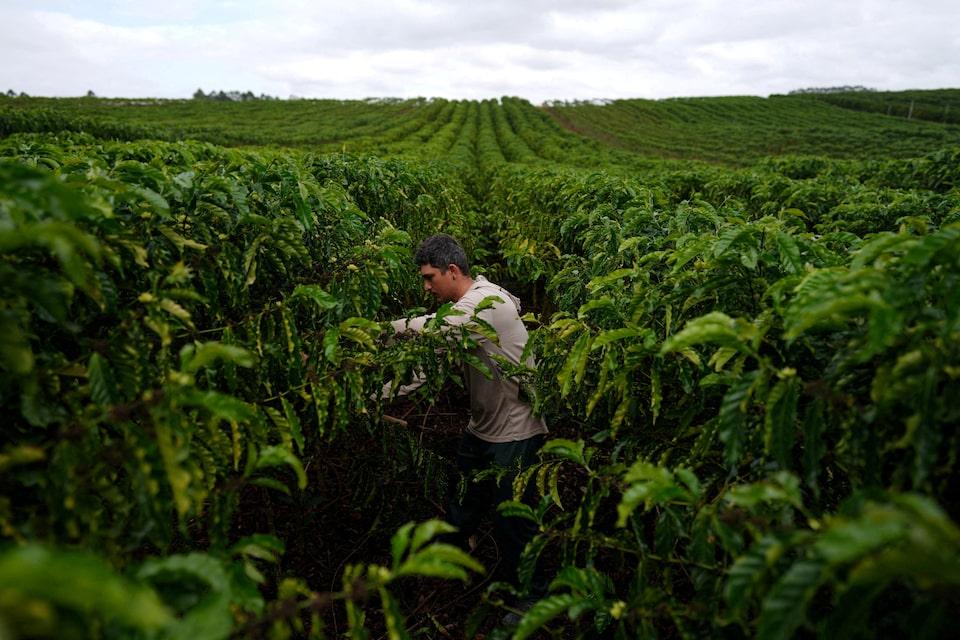
Brazilian robusta farmers invest in quality amid climate threats Espirito Santo aims for 1.5 million bags of specialty robusta by 2032 Rising robusta quality boosts demand and prices, exporter group says SAO DOMINGOS DO NORTE, Brazil, Dec 6 (Reuters) - Amid the din of a chic coffee shop on Sao Paulo's posh Oscar Freire Avenue, a barista pulls an atypical espresso. Extra creamy, with an aroma of cocoa nibs, the shot lacks the hallmark acidity prized in coffee made from the finest arabica beans. That is because this premium espresso is made of 100% robusta beans, long derided in the coffee world as cheap filler better suited for instant coffee. Sign up here. "It's a coffee that makes a wonderful crema ... and has much more chocolatey notes," said Marco Kerkmeester, co-founder of the Santo Grao coffee chain, noting the appeal of a variety cheekily labeled "0% Arabica." CHANGE ON THE FARM As climate change threatens the arabica beans traditionally used in high-end brews, Brazilian robusta farmers are investing in harvesting and drying techniques to produce top-notch robusta that appeals to the most demanding consumers. Brazil is the world's second-largest robusta producer after Vietnam and top arabica grower. However, a 2022 study found that more than three quarters of Brazil’s best land for growing arabica coffee could become unsuitable by 2050 due to higher temperatures and drought. With global coffee prices and consumption hitting record highs this year amid trade tensions and extreme weather, premium robusta beans also offer a way for roasters to lower the cost of espresso blends with more expensive arabica. "My dad is from a mountainous region where they produce high-quality arabica coffee," said Lucas Venturim, a coffee farmer some 500 miles (805 km) away in Espirito Santo state, whose beans went into that espresso served on a corner of Oscar Freire. "He never accepted that robusta coffee is bad just because it's robusta." In the same spirit, the Specialty Coffee Association (SCA), which sets global specialty coffee standards, this year revised its evaluation course to appeal to would-be graders of both arabica and robusta beans. Now, anyone trained to assess top-notch coffee will be able to accurately describe and reward deserving brews, regardless of the species, or type of bean. "We saw the writing on the wall," said Kim Ionescu, SCA's chief strategy development officer, citing growing consumer demand for premium robusta in Southeast Asia, for example. "It just seems like species is not the thing that we should use to define specialty or non-specialty." In 2026, SCA will begin to revise the lexicon of flavor descriptors used by coffee evaluators to include attributes associated with fine robusta, such as aromatic spice. Brands like Nguyen Coffee Supply, which offers quality robusta from Vietnam, have already blazed a path in the U.S., while coffee shops from London to Berlin are showcasing robusta's finer qualities. FIRES OUT, DRYERS IN The opportunity has kicked off a transformation in Espirito Santo, home to most of Brazil's robusta production, which now prioritizes not just yield but the highest quality. The state aims to produce 1.5 million 60-kg bags of specialty robusta annually by 2032, up from 10,000 currently, according to a presentation by the state agriculture secretariat seen by Reuters. That amounts to about a tenth of the state's current output, requiring wider adoption of the best post-harvest practices now common among arabica producers, according to Jose Roberto Goncalves, agricultural manager of Brazil's top robusta co-op, Cooabriel. In recent years, Cooabriel has participated in specialty coffee trade shows around the world. While some growers once dried robusta beans indirectly with fire, where smoke and high temperature could negatively affect the taste, Cooabriel is teaching farmers the advantages of using modern dryers and careful sorting practices, Goncalves said. Experts at state research agency Incaper and federal university IFES said they have seen a surge in robusta farmers looking to certify quantities of their beans as higher-priced specialty grade. “If in the past robusta coffee was considered lower quality, that perception is changing,” said Douglas Gonzaga de Sousa, coordinator of the Center for Specialty Coffees of Espirito Santo. The growing recognition of top-quality robusta in Brazil, along with historically high yields compared to arabica, has lured more arabica farmers to try their hand with robusta - bringing their savvy to the variety. Espirito Santo's undersecretary for rural development, Michel Tesch, said the traffic is largely one-way. "We don't have people leaving robusta to produce arabica," he said. Cooabriel is expanding its robusta nursery in Espirito Santo to produce around 10 million saplings per year, from 2 million at present. PRICES JUMP The rising quality of Brazilian robusta has translated into stronger demand and higher prices, said Marcio Ferreira, the head of national coffee exporter group Cecafe. This year, the average price per bag of specialty Brazilian robusta surpassed $295 per 60-kilogram bag through October, more than double the average 2021 price, according to Cecafe data shared with Reuters. Robusta futures have risen over 80% since 2021 to around $4,370 per metric ton, while arabica futures grew by over 60% to $3.7254 per pound. "Improving quality allows you to increase the percentage of robusta in blends around the world," Ferreira said, adding that roasters are more openly noting the robusta qualities in their espresso blends as they pare back the share of arabica. At the same time, specialty robusta is not trying to go toe-to-toe with arabica as a direct competitor, said Jordan Hooper, head of green coffee trading at Sucafina. "The original approach to specialty robusta was to kind of try to compete with specialty arabica," he said. "Now it's like: robusta can be interesting in and of itself." Natalia Ramos Braga, the barista who pulled the all-robusta shot in Sao Paulo's Santo Grao cafe, said Brazil is a natural hotbed for those tastes to evolve. "People, especially here in Brazil, tend to prefer coffee with a fuller mouthfeel and a more bitter finish," she said. "If someone prefers more bitterness and a fuller body, great, we have a coffee for that: robusta." https://www.reuters.com/sustainability/climate-energy/brazil-robusta-coffee-growers-push-quality-amid-rising-prices-climate-concerns-2025-12-06/
2025-12-06 09:46
DOHA, Dec 6 (Reuters) - Qatar's Energy Minister Saad al-Kaabi said on Saturday he was hopeful the European Union would resolve companies' concerns over its sustainability laws by the end of December. Qatar has aired its frustration with the EU's Corporate Sustainability Due Diligence Directive (CSDDD) and has threatened to halt gas supplies. Sign up here. The dispute centers around CSDDD's potential to fine violators up to 5% of total global revenue. The minister has repeatedly said Qatar would not reach net-zero emissions targets. Kaabi said global gas demand would remain strong, citing rising energy needs from artificial intelligence, and projected that LNG demand would reach 600–700 million tonnes per annum by 2035. "I have no worry at all about gas demand in the future," he said at the Doha Forum conference in Qatar, adding that energy needed for AI would be a key driver of demand. At full production, the North Field expansion project is expected to produce 126 million metric tons of LNG per annum by 2027, boosting QatarEnergy's output by some 85% from its current 77 mtpa. He said the first train of Golden Pass LNG, its joint venture with ExxonMobil in Texas, should come online by the first quarter of 2026. Oil prices in the $70 to $80 per barrel range would provide enough revenue for companies to invest in future energy needs, al-Kaabi said, adding prices above $90 would be too high. He also warned that too much real estate was being built in the Gulf and a real estate bubble could be forming. https://www.reuters.com/business/energy/qatar-hopeful-eu-will-resolve-corporate-concerns-over-sustainability-laws-by-2025-12-06/

2025-12-06 09:46
NEW DELHI, Dec 6 (Reuters) - India’s economic growth will accelerate to at least 7% this year as fundamentals remain robust despite global uncertainties, Finance Minister Nirmala Sitharaman said on Saturday. “Fundamentals of the economy are strong,” Sitharaman said at the Hindustan Times Leadership Summit in New Delhi, adding that consumer spending was expected to stay resilient, supported by low inflation and recent cuts in goods and services tax rates. Sign up here. "We saw the growth numbers for the second quarter. I think that will sustain, and overall, this year's growth numbers will be 7 or beyond it as well," she said. Gross domestic product grew 6.5% last fiscal year. India's economy beat forecasts to grow 8.2% in the three months through September, India's fiscal second quarter, lifted by robust consumer spending and front-loading of production ahead of local festivals and punitive U.S. tariffs. Still, the Reserve Bank of India cut its key repo rate by 25 basis points on Friday and raised its GDP growth forecast for this fiscal year to 7.3% from 6.8%, while lowering its inflation estimate to 2% from 2.6%. The world's fifth-largest economy has faced pressure from higher U.S. tariffs imposed by President Donald Trump, widening India's trade deficit and pushing the rupee to a record low. Global headwinds have prompted Prime Minister Narendra Modi's administration to step up domestic economic reforms, including paring consumer taxes, changing labour rules and easing financial sector regulations. Sitharaman said investor confidence in the economy’s fundamentals was also driving higher retail participation in stock markets and stronger home-loan demand. On the rupee, she said, the currency will have to find its own level, adding that exporters were benefiting from its depreciation "coinciding with the recent tariff hikes". https://www.reuters.com/world/india/indias-strong-fundamentals-support-7-growth-despite-global-risks-finance-2025-12-06/

2025-12-06 07:58
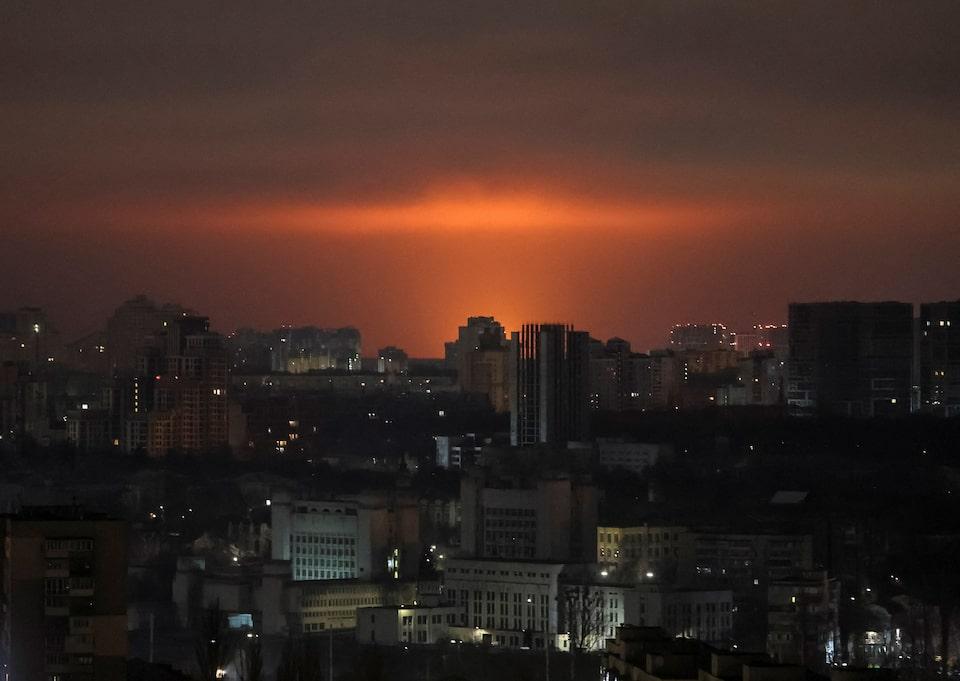
Russia intensifies attacks on Ukraine Ukrainian power sector cut output after attacks Poland scrambled jets overnight KYIV, Dec 6 (Reuters) - A large-scale Russian drone and missile attack damaged power facilities in eight Ukrainian regions, causing blackouts and forcing nuclear power plants to cut power output, officials and the International Atomic Energy Agency (IAEA) said on Saturday. Russia has intensified its attacks on Ukraine's energy sector and infrastructure in recent weeks, targeting power stations and railway hubs as winter deepens and the war approaches its fourth anniversary. Sign up here. There was no breakthrough in U.S.-brokered talks this week aimed at ending the conflict. Ukraine operates three nuclear power plants which produce more than half of the country's electricity and IAEA said the plants cut production due to "widespread military activities overnight". The Ukrainian military said Russia had launched 653 drones and 51 missiles on Ukraine overnight. Ukrainian forces downed 585 drones and 30 missiles, the military said. Power and heat generation facilities in Chernihiv, Zaporizhzhia, Lviv, and Dnipropetrovsk regions were targeted in the attack, Ukraine's ministry for development of communities and territories said. It said on Telegram that 9,500 customers remained without heat and 34,000 without water supply in the southern Odesa region. "Port facilities (in Odesa) have also been attacked: part of the infrastructure has been de-energised, and operators have switched to backup power from generators," the ministry said. "Emergency repair work is already underway where safety conditions permit. Energy companies are doing everything possible to restore power to all customers as quickly as possible," the energy ministry said on Telegram. RAILWAYS UNDER ATTACK Among the sites hit overnight was a railway hub near Kyiv, where the depot and railway carriages were damaged, Ukrainian state railway company Ukrzaliznytsia said. The railway did not report any casualties from the attack, in the town of Fastiv. "Russia continues to disregard any peace efforts and instead strikes critical civilian infrastructure, including our energy system and railways," Ukrainian Foreign Minister Andrii Sybiha said on X. "This shows that no decisions to strengthen Ukraine and raise pressure on Russia can be delayed. And especially not under the pretext of peace process," he added. Ukrzaliznytsia said on the Telegram messaging app that it was forced to cancel several suburban trains near the capital and the city of Chernihiv in northeastern Ukraine. The Russian Defence Ministry said its forces launched a "massive strike" overnight in response to what it called Ukrainian attacks on civilian targets. The ministry said the strike used high-precision, long-range air- and ground-based weapons, including Kinzhal hypersonic missiles and long-range drones. It targeted Ukraine's military-industrial enterprises, energy facilities supporting their operations, and port infrastructure used for military purposes, the ministry added. POLAND SCRAMBLED JETS BUT AIRSPACE WAS NOT VIOLATED Separately, sirens sounded early on Saturday in Lubartow in the Lublin region of eastern Poland, private broadcaster RMF FM reported. RMF quoted local mayor Krzysztof Pasnik as saying the warning was activated due to the situation in Ukraine. Poland scrambled jets overnight due to the Russian attacks on Ukraine, but the Operational Command of the Armed Forces said there were no airspace violations. https://www.reuters.com/world/europe/russian-drones-missiles-hit-railway-hub-near-ukraines-capital-railway-says-2025-12-06/