2025-09-23 00:27
Hong Kong raises typhoon signal to third highest, schools and businesses shut Ragasa disrupts 700 flights, Hong Kong Observatory warns of sea surge Southern Chinese cities order evacuations, shelters activated HONG KONG, Sept 23 (Reuters) - Hong Kong shut down ahead of Super Typhoon Ragasa on Tuesday, the world's most powerful tropical cyclone this year, with authorities urging people to stay at home, while most passenger flights were due to be suspended until Thursday. People piled into supermarkets, leaving little on the shelves, as panic buying set in and residents stocked up on necessities for fear that shops could be closed for two days. Sign up here. Windows in homes and businesses across the city were taped up, with residents hoping it could help reduce the impact of any shattered glass. Ragasa, packing hurricane-force winds of up to 220km/h (137 mph), is posing a "severe threat to the coast of Guangdong", the Hong Kong Observatory said, referring to the Chinese province that neighbours the financial hub. It will maintain super typhoon intensity as it edges closer to the coast of Guangdong, and as it impacts Hong Kong, mainland China and Taiwan, after sweeping through the northern Philippines on Monday. It is expected to make landfall along Guangdong's coast from midday to late Wednesday. Guangdong authorities evacuated over 770,000 people, state broadcaster CCTV said, adding that more than one million people are expected to be relocated across the province on Tuesday. Hong Kong issued the typhoon signal 8, its third highest at 2.20 p.m. (0620 GMT), which urges most businesses and transport services to shut down. More than 700 flights have been disrupted, including in the neighbouring gambling hub of Macau and in Taiwan. The weather is expected to deteriorate rapidly later on Tuesday and the observatory said it will assess whether to issue a higher warning late on Tuesday or early Wednesday. Hurricane-force winds offshore and on high ground were likely in Hong Kong on Wednesday, with heavy rain expected to lead to a significant storm and sea surge in the densely packed city. It warned of rising sea levels, which it said would be similar to those seen during Typhoon Hato in 2017 and Typhoon Mangkhut in 2018, both of which caused billions of dollars in damage. Water levels will rise about two metres (six feet) along Hong Kong's coastal areas and maximum water levels could reach four to five metres (12-15 feet) in some areas, the observatory said, urging residents to take appropriate precautions. Local authorities handed out sandbags for residents to bolster their homes in low-lying areas, while many people stockpiled daily necessities. A 35-year-old resident surnamed Mak said he had already bought some groceries but still needed to get more and was preparing his home for the typhoon. "We shut the windows and doors closely at home and checked if there is leaking," he said While some businesses were hoping to profit from people working from home, with one bar on the outlying island of Lantau offering 20% off all drinks throughout a T8 signal. Hong Kong's Stock Exchange will remain open. It changed its policy late last year to continue trading whatever the weather. STORM SURGES At Ragasa's peak intensity on Monday, maximum sustained winds near its eye topped 260 kph (162 mph), making it the world's most powerful Category 5 storm in 2025. The typhoon has since weakened slightly but is still capable of wreaking havoc on the densely populated Chinese coast as a Category 4 typhoon.Chinese authorities have activated flood control measures in several southern provinces, warning of heavy rain from late on Tuesday. More than 11 cities in Guangdong, including technology hub Shenzhen and coastal city Zhuhai had suspended work, transport services and schools due to warnings of storm surges and high waves. China's Environmental Forecasting centre said that coastal waters off Guangdong would be hit by huge to extremely rough waves with heights of up to seven metres (21 feet). Authorities in Shenzhen have prepared more than 800 emergency shelters, while in the city's Nanshan district, teams were chainsawing tree branches along main roads in preparation for the typhoon. “It’s just the bigger ones where there’s a risk. We’ll be out all afternoon all over the district,” said a worker surnamed Zhang, surrounded by piles of logs from behind a taped-off area of pavement Residents in the world's largest gambling hub of Macau also braced for significant impact. All its casinos will be forced to shut by 5.00 p.m. (0900 GMT) when the former Portuguese colony lifts its typhoon signal to 8. Taiwan logged almost 60 cm (24 inches) of rainfall in its mountainous east and reported 25 people injured, while transport disruptions continued for a second day on Tuesday with 273 flights cancelled. https://www.reuters.com/business/environment/hong-kong-braces-super-typhoon-ragasa-schools-businesses-shut-2025-09-23/

2025-09-23 00:08
SINGAPORE, Sept 23 (Reuters) - Thailand is set for a record decline in electricity output this year as mild weather and a slowing economy are reducing demand, government data shows, putting Southeast Asia's top LNG importer on track for its steepest decline in purchases of the fuel. Power generated and imported to supply the country of over 70 million people fell 5.4% annually in the seven months through July, official data showed, nearly twice as steep as the 2.8% slump in January-July 2020 due to coronavirus-linked lockdowns. Sign up here. An annual decline in output would be only the fourth in the nearly four decades for which official data is available, as fewer days of extreme heat due to frequent rainfall slashed air conditioning use. Raksit Pattanapitoon, analyst at Rystad Energy, said weather is "by far the most significant driver" of power demand in Thailand this year, with all other factors including politics and economic growth lagging "significantly". RESIDENTIAL, INDUSTRIAL DEMAND FALL Residential power demand - which accounts for 31% of annual consumption - fell over 7% in the seven months through July, the steepest decline on record and far outpacing a 2.8% decline in industrial and commercial demand, which make up over two-thirds of Thailand's annual electricity use, government data showed. Electricity demand has grown due to higher air-conditioning use in recent years. The World Bank expects Thailand's economic growth to slow to 1.8% this year and 1.7% next year due to weaker exports, a slowdown in tourism and political uncertainties that could hold back public investments. "This year will be the first since 2020 when Thailand will not record a new peak demand after averaging 6.2% growth from 2021-2024," Pattanapitoon said. LOWER GAS-FIRED POWER Electricity generated from natural gas, which accounts for 56% of Thailand's power output, fell 12% through July, putting it on track for its steepest decline ever and the first drop in annual LNG imports since 2014, government data showed. LNG shipments, about two-thirds of which supply utilities, plunged 15.3% annually to 7.2 million metric tons in the eight months through August, data from analytics firm Kpler showed. Thailand increased output from coal-fired power plants, while hydropower generation and imports from neighboring Laos rose due to bountiful rains, official data showed. Coal use also rose as Western sanctions choked exports of piped gas from neighbouring Myanmar, said Ying-Chin Chou, LNG analyst at consultancy Energy Aspects. A decline in pipeline gas supply, driven by falling imports from Myanmar and reduced domestic production next year, is expected to help fuel a recovery in LNG demand, she said. "We expect Thailand LNG demand to rise in 2026, supported by increasing volumes under term contracts with Oman and the U.S. These contracts will enhance the stickiness of LNG imports," Chou said. ELECTRICITY DEMAND TO RISE Non weather-related power demand is expected to grow next year, analysts said. "Given the pace of transport electrification and upcoming data center projects, we expect electricity use continuing to rise regardless of economic growth," Rystad's Pattanapitoon said. https://www.reuters.com/sustainability/climate-energy/thailand-set-record-plunge-annual-power-output-lng-imports-2025-09-23/
2025-09-22 23:52
SAO PAULO, Sept 22 (Reuters) - MBRF, the newly formed food giant from the merger of pork and poultry processor BRF and beef producer Marfrig, has appointed Miguel Gularte as its global chief executive officer, the company disclosed on Monday. The combined entity is one of the biggest food producers in the world with around 160 billion reais ($30 billion) in revenue. Sign up here. Gularte will report to MBRF Chairman Marcos Molina, founder of Marfrig, who had entrusted the executive to conduct BRF's turnaround when he took majority control of the pork and poultry processor in 2022. Gularte had been CEO of Marfrig before being appointed to lead BRF. In an interview to comment on the new organizational structure, Gularte said the company will generate "synergies" of 1 billion reais per year, up from 800 million reais calculated when the merger was announced in May. Both Molina and Gularte confirmed plans to eventually list MBRF shares on the New York Stock Exchange, as rival JBS did this year, without giving a timeline. "This (the listing) is a natural step following the merger, which we will be ready to undertake. But it will depend on whether it will bring benefits to shareholders, for example, a higher multiple," Molina said. Gularte said the company is focused on delivering the promised synergies before it can advance the listing plan. MBRF's shares will start trading on the Sao Paulo Stock Exchange on Tuesday. Under the new structure, the company cut to eight from 12 the number of vice-presidencies. Jose Rey will be CFO and investor relations officer, for example. Fabio Mariano will take over as vice president for the Halal market, having been BRF's CFO previously. He will be based in the Middle East. The combined company exports products to 120 countries, is the world's largest hamburger producer and has plants in Brazil, the United States and China. https://www.reuters.com/markets/commodities/brazils-mbrf-appoints-gularte-global-ceo-merged-company-2025-09-22/

2025-09-22 23:40
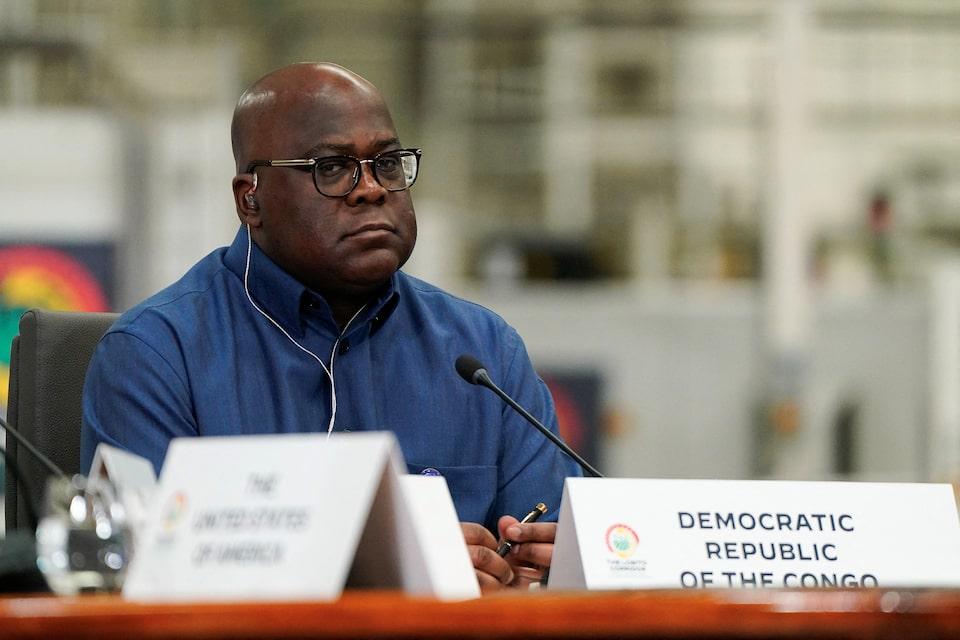
NEW YORK, Sept 22 (Reuters) - Democratic Republic of Congo President Felix Tshisekedi said on Monday that a U.S.-mediated peace deal signed with Rwanda in June has not calmed fighting in eastern Congo, though he thanked President Donald Trump for attempting to end the conflict. On June 27, U.S. mediators brokered the peace deal between Congo and Rwanda aimed at ending the support that Washington and U.N. experts say Kigali provides M23 rebels. Sign up here. The Trump administration has said it is eager to end fighting that has killed thousands this year and attract billions of dollars of Western investment to a region rich in tantalum, gold, cobalt, copper, and lithium. The deadline to implement part of the U.S. deal is this month. Despite his support for U.S. mediation, it "does not mean that we will auction our mineral resources," Tshisekedi told reporters in New York. "We will, as part of this partnership, be working in the development of the mining sectors, developing the value chain, developing infrastructure with a particular emphasis on energy," he said. Congolese officials say the success of the deal hinges on Rwanda ceasing its support for M23, which Kinshasa accuses of atrocities in the east. M23 has disputed allegations of attacks on civilians and Rwanda has long denied helping M23, saying its forces act in self-defense. "(Rwanda) pretended to withdraw their troops, but actually, they are increasing their support to M23," Tshisekedi said. In March, Qatar brokered a surprise sit-down between Congolese President Felix Tshisekedi and Rwanda's Paul Kagame during which the two leaders called for a ceasefire. That led to direct talks between Congo and M23, though the two sides missed an August 18 deadline to reach a peace agreement. M23 says it wants prisoners freed before talks can advance. But a Congolese government official directly involved in the talks told Reuters that prisoners could only be released after an agreement is signed. Tshisekedi said there has been some positive development on a possible prisoner exchange. "As a matter of fact, we are waiting for the Red Cross to give us a go ahead to proceed with the exchange of prisoners," he said. https://www.reuters.com/world/africa/congo-will-not-auction-mineral-resources-us-president-says-2025-09-22/
2025-09-22 22:09
SANTIAGO, Sept 22 (Reuters) - Chilean economic development agency Corfo said on Monday it has submitted to the comptroller's office the terms of a modified lease agreement with lithium producer SQM through 2030, and of a new 2031-2060 lease for a joint venture between SQM and state copper producer Codelco. SQM and Codelco are expected to finalize a partnership this year in the Atacama salt flat in northern Chile that will mark the state's first major foray into lithium production. Sign up here. Corfo, which leases mining rights in the Atacama salt flat, said in a statement that its board last week approved the final version of the contracts. They include lease payments tied to lithium prices and contributions. The contributions will be distributed to local governments and Indigenous communities to promote investment and fund development, and the contracts also outline stronger environmental requirements for clean energy and water use. Corfo will also maintain its preferential pricing program for companies that seek to produce lithium-related products in Chile, it said. Corfo added that it will lead a "monitoring table" for representatives of Indigenous communities to track the commitments made by SQM and Codelco. Codelco, in a separate statement, said the new Corfo contracts will ensure operational continuity, environmental standards and respect for communities. The partnership still requires the approval of Chinese antitrust regulators after other countries signed off, the last condition to finalize the deal. https://www.reuters.com/world/americas/chiles-corfo-agency-preps-lithium-contracts-ahead-sqm-codelco-deal-2025-09-22/
2025-09-22 21:21
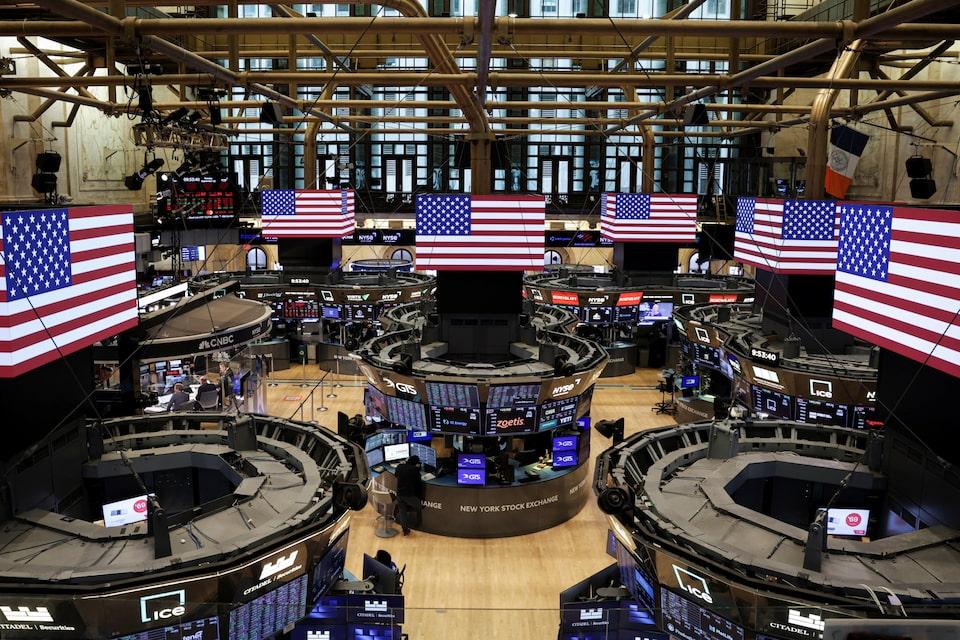
ORLANDO, Florida, Sept 22 (Reuters) - Wall Street rose to new highs on Monday, lifting global stocks to fresh peaks in the process as investors cheered the latest multi-billion-dollar agreement - one of the biggest - in the booming U.S. tech and artificial intelligence space. More on that below. In my column today I look at how, by some measures, U.S. pension funds and households hold record amounts of equities. This is good news right now as stocks continue to outperform bonds. But can it last? Sign up here. If you have more time to read, here are a few articles I recommend to help you make sense of what happened in markets today. Today's Key Market Moves Today's Talking Points: * U.S. immigration The Trump administration's immigration crackdown is not just on the lower-skilled, lower-income end of the foreign worker spectrum at the country's southern border - the new $100,000 fee for H-1B visas targets highly-skilled workers in specialty fields, mainly from India and China. Tech could be hit hardest. Setting aside the politics, the macroeconomic impact of tighter immigration controls is negative. If GDP growth is the increase in labor supply plus the productivity growth of those extra workers, then less immigration equals less growth. And it looks like workers at both ends of the skills spectrum are in the administration's sights. * AI spend frenzy The recent flurry of agreements and tie-ups between U.S. tech firms exploded on Monday with chipmaker Nvidia committing to invest up to $100 billion in OpenAI. It's the latest example of companies pouring billions of dollars into securing and expanding capacity for powerful cloud computing required to develop and power complex AI technology. Nvidia shares, the semiconductor and tech sectors, and Nasdaq and S&P 500 indices leaped to new highs. These are huge investments that raise the bar on future returns, potentially a headwind for markets in the months or years ahead. But not today. * Politics and Palestine It may not be a global market-mover, but it's a moment in global political history. As global leaders converge on New York this week for the U.N. General Assembly, Britain, France and many other countries have recognized or are expected to formally recognize a Palestinian state. Israel and the U.S. have rejected the notion out of hand, and U.S. President Donald Trump will address the U.N. on Tuesday. For investors, the most significant aspect of this may be how it affects U.S. relations with other major countries over the longer term. U.S. savers go all in on 'cult of equity' U.S. pension funds and households have never held more equities as a share of their overall assets, by some measures, raising questions about whether the long-term shift towards stocks has run its course or whether investors have truly undergone a paradigm shift. There are compelling arguments on both sides of that debate, but what's not in dispute are the numbers. The share of stocks in U.S. private sector defined contribution (DC) pension plans is now approaching 70%, while equities as a share of U.S. households' financial assets is a record 45.4%. John Higgins, chief markets economist at Capital Economics, notes that DC pension plans' equity exposure is the highest in at least 75 years. This largely reflects the decades-long shift away from defined benefit (DB) schemes, where the risk of retirement savings lies with the employer, and toward DC plans, where employees assume more of the burden. Broadly speaking, DB plans tend to invest more in bonds, especially long-dated ones, to match the funds' longer-dated liabilities, while DC plans are equity-heavy, as individuals don't have liabilities to match and so will be more likely to lean towards stocks offering higher returns – and higher risk. In the 1950s, more than 90% of all U.S. pensions were DB plans, and less than 20 years ago the split was roughly 50-50. But now, almost 80% are DC plans. In that sense, investors are in a brave new world – and it could be an increasingly risky one, given that DC plans are so highly exposed to Wall Street at a time when U.S. stock market valuations are looking stretched. FLAGGING RISKS From a returns perspective, overloading on stocks makes sense for long-term investors because equities usually outperform bonds, especially over the long run. By some measures, that performance gap is widening, according to figures from Truist Advisory Services' chief markets strategist Keith Lerner and his team. As of August, the S&P 500's trailing one-year annualized return was nearly 16%, compared with the Bloomberg aggregate bond index's returns of just over 3%. The 12.7 percentage point gap is in the 68th percentile going back seven decades. Moreover, the S&P 500's returns advantage when measured on a rolling three- and five-year basis is in the 93rd and 95th percentiles, respectively. How long can equities sustain that level of outperformance over bonds? NOT SO 'RISK-FREE' The answer may be "a while". The near 40-year bull market in bonds appears to be over. Worries about inflation remain, the U.S. federal deficit and public debt are rising, and pension funds' appetite for long-dated bonds may no longer be as voracious as it once was. In short, bonds don't appear quite so 'risk-free' any more. If stocks do continue to outperform over the long term, that's obviously great news for future retirees with portfolios heavily weighted in that direction. The danger, of course, is the stock market can fall sharply and very quickly, wiping out large swathes of savings for people just about to retire. It's also true that many people reduce their exposure to equities in favor of bonds as they near retirement, although that may become less prevalent in the context of a wider paradigm shift in how bonds are viewed. There's no indication that any dramatic equity market correction is on the horizon, though investors are conscious of how expensive stocks are getting. Still, they keep buying. Although valuations are "unambiguously high by historical standards", Deutsche Bank analysts just raised their year-end S&P 500 target to 7,000 from 6,550 and next year's earnings per share forecast. "High allocations to equities don't necessarily mean another major correction in the stock market is imminent. Indeed, our forecast is that the S&P 500 will make further gains this year and next, as enthusiasm for AI continues to grow," says Capital Economics' Higgins. "But high allocations to equities may be flagging trouble ahead." That's true. But as long as equities keep providing the returns and outperforming bonds, prospective retirees will keep ploughing their pension savings into them. What could move markets tomorrow? Want to receive Trading Day in your inbox every weekday morning? Sign up for my newsletter here. Opinions expressed are those of the author. They do not reflect the views of Reuters News, which, under the Trust Principles , opens new tab, is committed to integrity, independence, and freedom from bias. https://www.reuters.com/business/global-markets-trading-day-graphic-2025-09-22/