2025-09-19 12:12
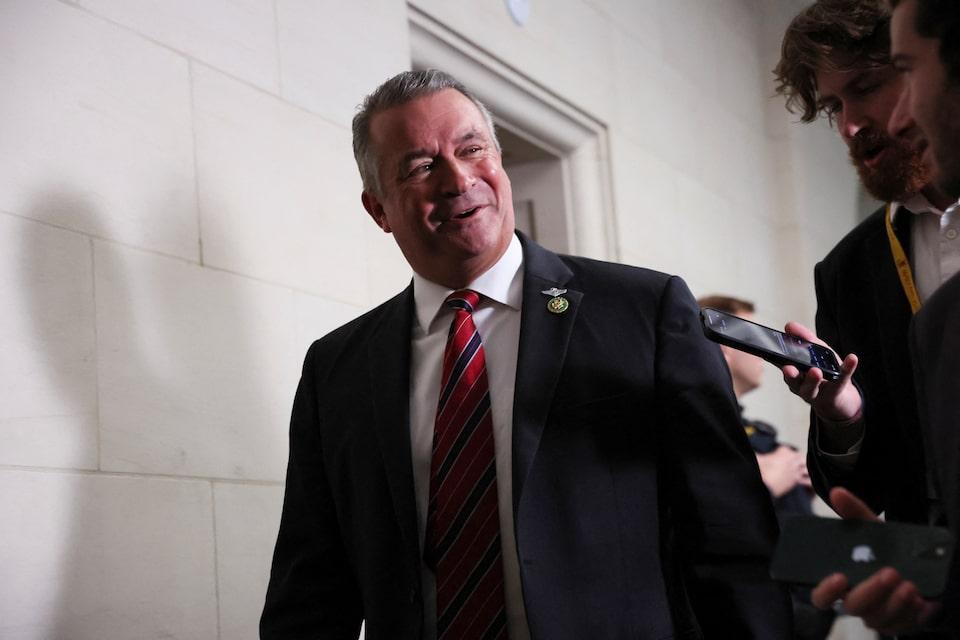
Sept 19 (Reuters) - U.S. Representatives Don Bacon and Ro Khanna will introduce bipartisan legislation that would exempt coffee products from any tariffs, spokespeople for the lawmakers told Reuters on Friday. Brazil used to supply a third of all the coffee used in the U.S., but shipments dried up since a 50% tariff was imposed on Brazilian imports at the end of July. Sign up here. "Families across America are feeling the cost of higher coffee prices, which are already up 21 percent, and tariffing a product we can't grow at a large, commercial scale, only makes it worse," Republican lawmaker Bacon said. Roasted coffee prices at grocery stores in the U.S. rose 20.9% in August from a year ago, according to Bureau of Labor Statistics data. "I look forward to working with Rep. Khanna to introduce this bipartisan bill and believe it can help spark the broader debate about Congress reclaiming its constitutional role in tariff policy," Bacon, one of the few Republican voices in Congress who has taken positions independent of President Donald Trump, added. Prices for arabica coffee, the mild variety mostly used by coffee chains such as Starbucks (SBUX.O) , opens new tab and Dunkin Donuts, have jumped around 50% at the Intercontinental Exchange in New York since the Trump administration imposed its tariff on Brazilian imports, including green coffee. "If you drink coffee every morning, how can you not be mad about that?” Khanna, who is a Democrat, told Reuters, referring to the price rise. The bill seeks to exempt coffee from any tariffs imposed after Jan. 19, 2025, including roasted and decaffeinated coffee, as well as coffee husks, skins, and coffee substitutes containing coffee in any proportion. A spokesperson for Khanna told Reuters the legislation would be introduced Friday. The Washington Post first reported the introduction of the bill. https://www.reuters.com/world/us/us-lawmakers-plan-introduce-bipartisan-bill-kill-coffee-tariffs-washington-post-2025-09-19/
2025-09-19 12:07
US Forest Service issues conditional notice for development Construction of Stibnite project expected to begin by October Reclamation bond finalization expected within weeks US Export-Import Bank reviews $1.8-billion loan Sept 19 (Reuters) - Perpetua Resources (PPTA.O) , opens new tab said on Friday it has received U.S. permission to begin construction of its antimony and gold mine in Idaho, poised after nearly a decade of review to supply a critical mineral whose exports China has blocked. The company plans a ceremony with investors and politicians at its Stibnite project, about 138 miles (222 km) north of Boise, after a conditional notice to proceed from the U.S. Forest Service, but actual constructin is to start by October. Sign up here. The green light for the mine, backed by billionaire investor John Paulson, comes after Beijing last year blocked exports to the United States of antimony, a metal used to make bullets, solar panels and other goods. There are no current U.S. sources of the metal. The project received its mining permit , opens new tabin January, provided several minor conditions were met. Friday's move is essentially an acknowledgement by President Donald Trump's administration, which has supported the mine, that those conditions were satisfied. "Completing federal permitting for Perpetua Resources’ Stibnite Gold Project is a major step towards unlocking America’s critical minerals resources," said Emily Domenech, executive director of the government's permitting council. Boise, Idaho-based Perpetua must finalize a reclamation bond for the mine, a routine step expected to wrap up within a few weeks. The mine will supply more than 35% of America's annual antimony needs once it opens by 2028 and produce 450,000 ounces of gold each year. The dual revenue stream is expected to keep the project financially afloat regardless of any steps by Beijing to sway markets. The site has estimated reserves of 148 million pounds of antimony and 6 million ounces of gold. Last April, Perpetua received a letter of interest from the U.S. Export-Import Bank, the government's export credit agency, for a project funding loan worth up to that is still under review. The project has faced opposition from Idaho's Nez Perce tribe, which is concerned the mine could affect the state's salmon population. https://www.reuters.com/markets/commodities/perpetua-gets-us-approval-begin-construction-idaho-antimony-gold-mine-2025-09-19/

2025-09-19 11:53
JPMorgan $1 billion total return swap expires by year-end Country hopes to move to monthly publication of debt statistics Officals press for conservative oil price estimate for 2026 budget LONDON, Sept 19 (Reuters) - Angola will decide by November whether to roll over its $1 billion total return swap deal with JPMorgan, or potentially raise the money on international capital markets, a senior debt official told Reuters. JPMorgan and Angola agreed in December a $1 billion, one-year derivative contract known as a total return swap, backed by $1.9 billion in government dollar bonds, which will expire at the end of this year. Sign up here. "We have some options," Dorivaldo Teixeira, General Director of the Public Debt Management Unit at Angola's finance ministry, told Reuters on the sidelines of investor meetings in London. If market conditions were right, Angola could issue debt to raise the funds, repay partially, or extend the current arrangement. "It depends on the cost," he said. While he said the market conditions for smaller, riskier issuers were improving, with yields "going in the right direction", he noted that the JPMorgan facility cost was lower than the country's Eurobonds and "if I can extend it, probably I will use it." CONTAINING THE COSTS The yield on Angola's international bonds currently stands at roughly 10%, according to JPMorgan EMBI data. Still, he said Angola would push for a better deal than the current 9% it was paying on the arrangement, whether that was from the bank or from markets. The full terms of the total return swap have never been published. The deal grabbed headlines in April, when Angola had to pay $200 million to JPMorgan as additional security for its collateralised bond in a margin call after U.S. tariff turmoil pushed oil prices - and Angola's bonds - sharply lower. In November, the country also has to pay back just over $860 million it has outstanding on a dollar-denominated bond it sold in 2015. Finance officials are also working to increase transparency by publishing debt statistics more regularly, Teixeira said. The finance ministry has started issuing its debt bulletin quarterly, and it is aiming to publish monthly starting next year, while ensuring key information and statistics are available in English as well as Portuguese. "The perception of risk of Angola was heightened a little bit because we didn't communicate as much. People need more information about what's going on," Teixeira said in an interview late on Thursday, adding he hoped this would help lower Angola's borrowing costs. CAUTIOUS ON CRUDE Teixeira said finance officials are pressing for a more conservative oil price assumption in the 2026 budget after the government had to stress-test its 2025 spending due to a drop in prices below their $70 per barrel assumption. Brent crude is trading at $67, and Teixeira said the final budget deficit figures could be higher than expected due to the fall in revenue. "One of the lessons that we learned from this, from this process, is probably next year, we should take a little bit more conservative approach that will help us to execute the budget in the most seamless way." Teixeira declined to peg a specific price but said officials base their assumptions on top analyst forecasts. A Reuters poll showed most analysts expect prices to drift down next year, with Brent forecast at $62.98 in the second quarter of 2026. https://www.reuters.com/business/finance/angola-decide-1-bln-jpmorgan-deal-by-november-says-finance-official-2025-09-19/

2025-09-19 11:37
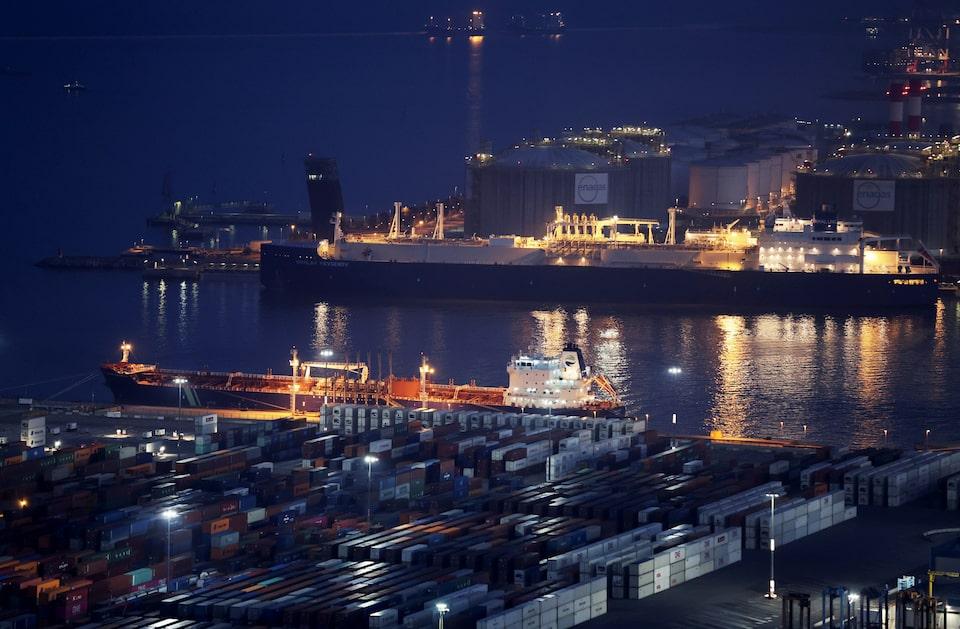
EU proposes 19th package of sanctions against Russia US president has urged Europe to up pressure on Moscow Proposal needs approval from EU member states to pass Russia has shrugged off prospect of more energy sanctions BRUSSELS, Sept 19 (Reuters) - The European Union plans to ban Russian LNG imports into the bloc a year earlier than envisaged as part of a 19th package of sanctions against Moscow, EU officials said on Friday, a change that follows pressure from U.S. President Donald Trump. "The revenues from fossil fuels sustain Russia's war economy. We want to cut these revenues," said European Commission President Ursula von der Leyen, as she announced the proposal, which requires unanimous approval from EU governments. Sign up here. "So we are banning imports of Russian LNG into European markets. It is time to turn off the tap," von der Leyen said. An EU sanctions proposal kicks off intense discussions among the 27-member countries to reach an agreement. Russia-friendly governments in Hungary and Slovakia have held up previous packages before a compromise was finally reached. Kaja Kallas, the EU's foreign policy chief, said on X that the new proposal aimedn "to speed up the phase-out of Russian liquefied natural gas (to be complete) by 1 Jan 2027". The EU had previously planned a phase-out by January 1, 2028, but Trump has repeatedly urged the bloc to end Russian energy purchases faster before he does anything further to pressure Moscow. PACKAGE ALSO TARGETS 'SHADOW FLEET' AND CRYPTO Beyond LNG, or liquefied natural gas, the proposed sanctions would also target more of Russia's shadow tanker fleet and cryptocurrency. Von der Leyen and Kallas did not give full details of the new package, but officials said it would also target Russian and central Asian banks, Chinese refineries and special economic zones, a customs loophole used by Moscow to import dual-use goods for its military. "We are now going after these who fuel Russia's war, who purchase oil in breach of sanctions," von der Leyen said. "We target refineries, oil traders, petrochemical companies in third countries including China." Kremlin spokesperson Dmitry Peskov said on Wednesday that any EU proposal to phase out Russian energy more quickly would not affect Russia and would not force it to change its position. Trump is pressing Europe to play a more robust role in helping end Russia's war in Ukraine, demanding it shoulder a greater burden of the cost of shoring up Ukraine's military and do more to deprive Moscow of the energy revenues bankrolling its war economy. The proposal risks compelling EU countries to cover any shortfalls in LNG supplies through purchases from the United States, increasing their energy dependency on the U.S. in an era when Washington is using trade tariffs as a policy tool. "Trump’s pressure on Europe to move faster on banning Russian energy imports seems to have worked," said Simone Tagliapietra, a senior fellow at think tank Bruegel. "Anticipating the ban on Russian LNG imports to Jan 2027 means Europe will now quickly need to prepare alternatives - and U.S. supplies are of course at the top of the list." A European official said advancing the ban on Russian LNG became a "priority" after von der Leyen spoke with Trump this week. Russia's share in EU imports of LNG decreased to 14% in the second quarter of 2025 from 22% in the first quarter of 2021, according to Eurostat. Spain, Belgium, the Netherlands and France import Russian LNG. Gas piped via TurkStream goes to Slovakia, Hungary and Bulgaria. Totalenergies (TTEF.PA) , opens new tab CEO Patrick Pouyanne said last week that Russian gas was needed until the end of 2027, "then we can exit from that because we can source it from other places without impact on the price". https://www.reuters.com/business/energy/eu-will-propose-banning-russian-lng-imports-by-jan-1-2027-sources-say-2025-09-19/
2025-09-19 11:22
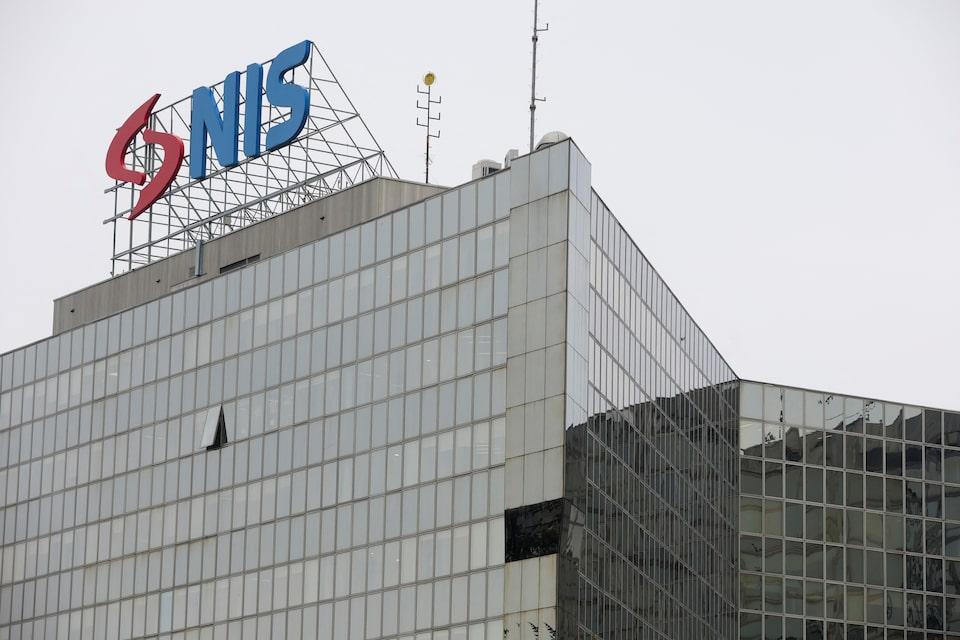
Sept 19 (Reuters) - Serbia's Russian-owned oil company NIS has requested a seventh waiver to postpone U.S. sanctions that would put at risk its crude oil supply and is seeking its removal from Washington's sanctions list, the company said on Friday. The previous waiver, granted last month, expires on September 26. Sign up here. NIS, majority-owned by Russia's Gazprom Neft (SIBN.MM) , opens new tab and Gazprom (GAZP.MM) , opens new tab, operates Serbia's only oil refinery in the town of Pancevo, outside the capital Belgrade. The request was submitted on September 18, NIS said. It added that it had also filed a request for its removal from the list of the Specially Designated Nationals but recognised in the statement that would be a "complex and long-term process". The U.S. Treasury Department initially placed sanctions on Russia's oil sector on January 10 over Moscow's war in Ukraine, and gave Gazprom Neft 45 days to exit ownership of NIS. The Pancevo facility has an annual capacity of 4.8 million metric tons, covering most of the Balkan nation's needs, and sanctions could jeopardise its supply of crude via Croatia's Janaf (JANF.ZA) , opens new tab. https://www.reuters.com/business/energy/serbias-nis-oil-company-seeks-seventh-waiver-us-sanctions-2025-09-19/
2025-09-19 11:14
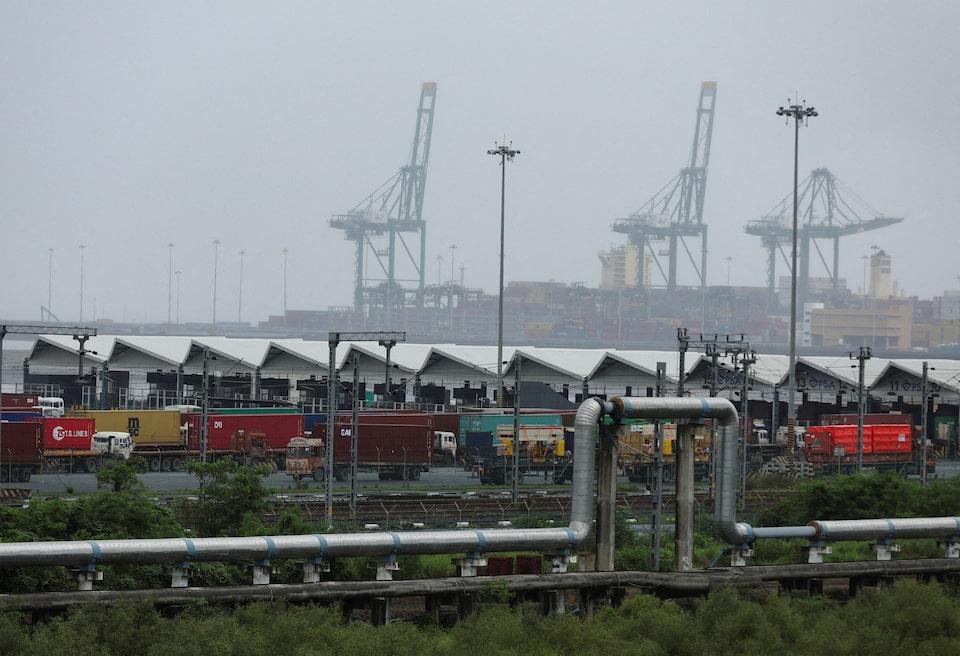
MOSCOW/NEW DELHI, Sept 19 (Reuters) - The price of Russia's Urals crude oil for delivery to top buyer India is rising despite growing sanctions risks as Ukrainian attacks on Russian ports and pipelines and tightened sanctions prompt concerns about supply, four market sources told Reuters on Friday. Ukrainian drone attacks disrupted exports in September and heightened risks of production cuts, forcing Russia to send oil to other western ports to mitigate the impact. Sign up here. The discount on October-loading Urals crude has narrowed to $2–$2.50 per barrel against dated Brent from $3 in September, four sources involved in Russian oil sales to India said, as Western sanctions pressure was intensified. Freight rates to ship Urals from Russia’s Baltic ports to India rose to $6.5–$7 million per voyage in October from $5.5–$6 million in September, traders said. The increase reflects a decline in available shipping options due to tighter enforcement of the price cap on Russia crude exports by the European Union and the United Kingdom. In July, the EU and UK imposed additional sanctions on Russian oil exports, including a floating price cap set at 15% below the average market price — currently equivalent to around $47.60 per barrel — well below the $60 price cap set by the G7 in December 2022. New restrictions on tankers that are subject to sanctions have further complicated Russia's oil exports. India’s Adani Group, for example, has banned sanctioned vessels from entering its ports, including the major Mundra terminal. Combined with U.S. sanctions, the tightened EU and UK restrictions target more than 440 tankers in the so-called "shadow fleet" used for deliveries to India as well as China. The United States and EU have criticised India for ramping up purchases of Russian oil, with Washington imposing higher tariffs on Indian imports over its continued dealings with Moscow. Despite the pressure, New Delhi has continued its buying. https://www.reuters.com/business/energy/russian-october-urals-crude-price-up-indian-ports-despite-sanctions-risks-2025-09-19/