2025-09-19 10:59
ATHENS/BUDAPEST, Sept 19 (Reuters) - Greece's Hellenic Dairies said it had planned significant investments to upgrade the loss-making Hungarian company it had agreed to take over before Hungary banned the acquisition and halted its Eastern European expansion drive. Prime Minister Viktor Orban's government said on Tuesday it had banned the foreign takeover of dairy company Alfoldi Tej Kft by a suitor, identified later by a government official as Hellenic Dairies. Sign up here. Orban's cabinet, which has been stepping up its opposition to foreign takeovers of key companies, said a foreign takeover would mean raw milk would be exported from Hungary and dairy products produced abroad would have to be purchased at higher prices than before. Hellenic Dairies told Reuters late on Thursday that it had planned to maintain and expand the Hungarian company's domestic activity, which Budapest says accounts for nearly a fifth of raw milk purchases in Hungary. "Our main goals were to maintain and develop the company's domestic activity, enrich its portfolio with new products, maintain and develop milk producers and renew and expand the facilities with significant investments in buildings and equipment," the company said in an emailed response. There was no indication of the price from either side. Hellenic Dairies said its offer to acquire Alfoldi Tej Kft was accepted by the company's shareholders before the transaction fell through amid a foreign direct investment screening procedure. "We should note that in the approval file there was a detailed business plan that described our plans for the next day," the company added without giving more details on the reason for the rejection. Hellenic Dairies has expanded in Romania, Bulgaria and Cyprus through buyouts in recent years. Alfoldi Tej Kft employs more than 700 people and processes nearly 270 million litres of milk per year, based on information published on its website. It has been loss-making since 2021, company records show. https://www.reuters.com/markets/commodities/blocked-greek-suitor-says-it-had-planned-big-investments-hungarian-dairy-firm-2025-09-19/

2025-09-19 10:40
LONDON, Sept 19 (Reuters) - Check out what ROI Editor-in-Charge Anna Szymanski and the rest of the ROI team are excited to read, watch and listen to over the weekend. From the Editor Sign up here. Hello Morning Bid readers! U.S stocks hit record highs on Thursday, buoyed by the Federal Reserve’s first interest rate cut in 2025, a drop in U.S. jobless claims, and the announcement that Nvidia will invest $5 billion , opens new tab in the struggling U.S. chipmaker Intel. On Friday morning, the big news in Asia was not so much that the Bank of Japan kept short-term interest rates unchanged at 0.5%, which was widely expected, but that two members voted for a hike and also that the central bank announced that it would begin selling its vast holdings of exchange-traded funds and real-estate investment trusts. Much of the financial world’s focus this week has been on central banks, most notably the U.S Federal Reserve. Some argue that the Fed’s 25 basis point cut and dovish steer may cause it to unintentionally stumble into stimulative territory, simply because it is so challenging to determine where the so-called neutral rate is. Others argue that the Fed’s problems may be of its own making given its questionable record on inflation control. One of the biggest takeaways from Chair Jerome Powell’s remarks was the lack of clarity surrounding the U.S. labor and inflation outlooks. This confusion is epitomized by inconsistencies between the Fed’s statements and changes to its economic predictions, argues ROI Markets Columnist Jamie McGeever. , opens new tab He also discusses why Fed easing could be a mixed blessing for the rest of the world. Over in the United Kingdom, the Band of England held rates steady on Thursday but said it was slowing the pace of its quantitative tightening program. ROI Editor-at-Large Mike Dolan asks why the BoE doesn’t just scrap direct gilt sales entirely. In the commodities markets, China's surplus crude surged in August as robust imports and domestic production offset an increase in refinery processing. Data about China’s crude stockpiling remains opaque, one of a growing number of blind spots in the oil market. ROI Energy Columnist Ron Bousso argues that this is making it harder to determine the true supply-demand balance in the world’s most important commodity market. On the renewables side, ROI Energy Transition Columnist Gavin Maguire discusses the widening lead Texas and California are building over the rest of the country on the clean energy front. He also explains why wind speeds around the UK in the coming months could have potentially far-reaching consequences for Europe's gas and power sectors And over in the metals world, ROI columnist Andy Home explains why the aluminium market, defined by historical excess, may be facing an imminent shortfall. As we head into the weekend, check out the ROI team’s recommendations for what you should read, listen to, and watch to stay informed and ready for the week ahead. I’d love to hear from you, so please reach out to me at [email protected] , opens new tab . , opens new tab This weekend, we're reading... * GAVIN MAGUIRE, ROI Global Energy Transition Columnist: Airlines are racing to cut carbon emissions with biofuels, but a Reuters investigation reveals a troubling link between U.S. green jet fuel and illegal deforestation in the Amazon, raising urgent questions about the integrity of sustainability certifications and the unintended consequences of climate policy. * RON BOUSSO, ROI Energy Columnist: The international Energy Agency this week published , opens new tab a free report on the decline rates of oil and gas fields. While it's very technical is some parts, it also illustrates very clearly how much investment is needed to simply keep oil and gas production steady, let alone to see it grow. * ANNA SZYMANSKI, ROI Editor-in-Charge: China’s auto industry is facing a crisis of oversupply that threatens profitability for automakers and dealers alike. The fascinating Reuters investigation warns that this situation could trigger a painful shakeout with far-reaching implications. We're listening to... CLYDE RUSSELL, ROI Asia Commodities and Energy Columnist: In the latest episode of The Smoking Barrel podcast , opens new tab, the hosts are back from the APPEC break with some market insights taken from the various discussions around the events. The team dives into Russian oil production and how current events could impact market structure going forward. MIKE DOLAN, ROI Financial Markets Editor-at-Large: This audio summary of the And we're watching... JAMIE MCGEEVER, ROI Markets Columnist: This lively, informal chat from Ritholtz Wealth Management's podcast ‘The Compound,’ , opens new tab discusses what happens after an interest rate cut and other issues du jour like President Trump’s call for companies to scrap quarterly reporting. Want to receive the Morning Bid in your inbox every weekday morning? Sign up for the newsletter here. You can find ROI on the Reuters website , opens new tab, and you can follow us on LinkedIn , opens new tab and X. , opens new tab Opinions expressed are those of the authors. They do not reflect the views of Reuters News, which, under the Trust Principles , opens new tab, is committed to integrity, independence, and freedom from bias. https://www.reuters.com/business/finance/global-markets-view-usa-2025-09-19/
2025-09-19 10:24
EU ministers get say on launch, holding limit Debate on digital euro goes back six years Some concerned about stability risk COPENHAGEN, Sept 19 (Reuters) - European Union finance ministers on Friday agreed on a roadmap for launching a digital euro currency that aims to become an alternative to the now dominant U.S.-based Visa and Mastercard systems. Discussions on a digital euro, essentially an electronic wallet backed by the European Central Bank, heated up this year because the EU is now keen to reduce its dependence on other countries in key areas like energy, finance and defence. Sign up here. The ECB has pitched the digital euro as a way to cut Europe's reliance on U.S. credit cards and as a response to U.S. President Donald Trump's global push for stablecoins pegged to the U.S. dollar. But the ECB, the main sponsor of the project, has failed so far to secure legislative approval for it, with lawmakers and bankers complaining it may hollow out banks' coffers, cost too much or curtail privacy. In a sign of progress, EU finance ministers gathering with ECB President Christine Lagarde and European Commissioner Valdis Dombrovskis in Copenhagen on Friday reached an agreement on the next steps. This will give EU finance ministers a say on whether a digital currency is issued and how many such euros each resident will be able to hold, which is seen as crucial for assuaging fears of a run on bank deposits. "The compromise that we reached is that before the ECB makes a final decision in relation to issuance...there would be an opportunity for a discussion in the Council of Ministers," Paschal Donohoe, who chairs meetings of finance ministers, told a joint press conference. Donohoe, Lagarde and Dombrovskis also celebrated a compromise on the procedure for setting the holding limit although they didn't give details. A participant at the meeting told Reuters the ECB will also submit a proposed holding limit for approval by the European Council of Finance Ministers. DELAYS TO LEGISLATION Though the European Commission proposed digital euro legislation in June 2023, the other two institutions that have to sign off on it, the European Parliament and the European Council, have yet to do so. The European Council aims to wrap up its side of the work by the end of the year. The ECB hopes to have the legislation in place by June, after which it will need around two-and-a-half to three years to actually launch the digital euro. Some EU countries have their own national digital payments systems, but none that would be accepted across the 27-nation bloc. "The digital Europe is not just a means of payment, it is also a political statement concerning the sovereignty of Europe and its capacity to handle payment, including on a cross-border basis, with a European infrastructure and solution," Lagarde said at the press conference. https://www.reuters.com/business/finance/eu-ministers-seek-agreement-digital-euro-be-independent-visa-mastercard-2025-09-19/
2025-09-19 10:21
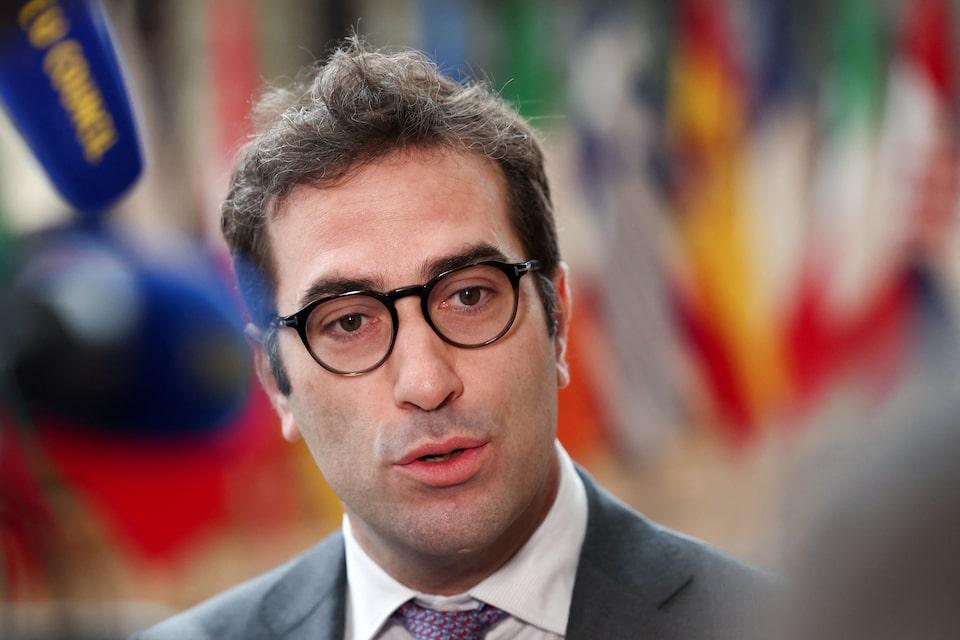
MUMBAI, Sept 19 (Reuters) - The Indian rupee closed little changed on Friday to cap a week of choppy price action that pulled the currency to a more than two-week high, followed by a retreat to near all-time lows as the dollar and U.S. bond yields rose despite a U.S. rate cut. The rupee closed at 88.09 against the U.S. dollar on the day, up 0.2% on the week. Sign up here. The currency had touched a high of 87.72 in the lead up to the Federal Reserve's policy decision, but gave up those gains as investors walked away with mixed signals on the future path of policy rates. The dollar index was last up 0.2% at 97.5, and with the sterling leading losses among G10 currencies, Asian currencies were mostly weaker as well. The rupee appears to be settling in the 87.50-88.50 range in the near-term, but the bias is still tilted towards modest depreciation despite the uptick seen earlier this week, a trader at a state-run bank said. Worries over how steep U.S. tariffs are likely to impact trade and foreign portfolio flows have bogged down the rupee in recent weeks even as recent talks between New Delhi and Washington spurred optimism on an eventual trade deal. India's benchmark equity indexes, the BSE Sensex (.BSESN) , opens new tab and Nifty 50 (.NSEI) , opens new tab were lower on the day but ended the week higher by about 0.8% each. The yield on the benchmark 10-year bond was up 3 bps on the week. The yield on the 10-year U.S. Treasury was up 6 basis points on the week and last at 4.12% while the rate expectations-sensitive 2-year U.S. Treasury yield nudged 3.577% higher. Despite the recent uptick, "the medium-term outlook for the U.S. dollar likely remains tilted to the downside, as concerns about U.S. labour market weakness and the potential for deeper policy easing could continue to weigh on sentiment," MUFG said in a note. https://www.reuters.com/world/india/rupee-ends-choppy-week-quiet-note-slight-downward-bias-may-persist-2025-09-19/
2025-09-19 10:16
RBI favours retaining 4% inflation target within 2% to 6% band Stakeholders favour headline inflation targeting over core Food weightage seen falling in new CPI series, limiting volatility MUMBAI, Sept 19 (Reuters) - India's central bank is expected to recommend retaining an existing inflation target for a third consecutive time following feedback from stakeholders who backed the framework, two sources familiar with the matter said. Flexible inflation targeting in India mandates a 4% headline inflation target within a tolerance band of 2% to 6%. Sign up here. The Reserve Bank of India (RBI) had sought views from economists, market participants and other stakeholders ahead of March 2026, when that target is set to expire. Most respondents back continuation of the existing structure, the sources said. "There have been no big changes that are sought," said a senior source directly aware of the feedback. "Most feel the framework has worked quite well." While tweaks may be considered to the manner in which the RBI communicates its monetary policy stance, the core structure is likely to remain unchanged, the second source said. India adopted the inflation targeting framework in 2016, formally tasking the RBI with keeping headline consumer price inflation at 4%, with a margin of two percentage points on either side. The framework was last renewed in 2021. Over the past decade, inflation has stayed within the mandated band for roughly three-quarters of the time, with volatility peaking during the pandemic years. "Considering the overlap with the COVID period, it's a decent performance," said A. Prasanna, chief economist at ICICI Securities Primary Dealership, adding that his firm had not submitted feedback as it broadly agreed with the RBI's approach. Several others also favour continuity. "We expect the numerical targets as well as the tolerance bands to be maintained for the third successive term," said Radhika Rao, chief economist at DBS Bank. "While global practices favour narrower bands, high weightage for food and structural vulnerabilities make a wider range more suitable for India." THE CORE DEBATE The RBI's discussion paper had also sought views on whether monetary policy should target headline inflation or shift focus to core inflation, which excludes volatile food and fuel prices. A government report last year urged a review of the framework, citing frequent inflation spikes driven by food prices. Some stakeholders, including a state-run bank, suggested giving more weight to core inflation, but stopped short of recommending it as the main target. But several central bank officials and monetary policy committee members have supported continuing to target headline inflation, saying food and fuel prices eventually seep into broader inflation through second- and third-round effects. "For a country like India, where food and fuel contribute more than half to the CPI basket, these segments can't be ignored. That's why we shouldn't move away from headline CPI," said Akshay Kumar, head of global markets at BNP Paribas. "The 4% midpoint target remains relevant as India aims to grow faster than developed market peers." The framework balanced price stability with growth, said Vivek Rajpal, Asia strategist at JB Drax Honore. "Targeting headline inflation is good as volatility in Indian inflation largely comes from food prices," he added. "Targeting headline inflation makes sense, given food price volatility." Separately, with the consumer price index basket due for review next year, the weightage of food is expected to decline, potentially reducing future volatility. https://www.reuters.com/world/india/india-cenbank-back-sticking-with-headline-inflation-target-ahead-review-sources-2025-09-19/
2025-09-19 09:26
Fed, Bank of Canada cut rates Bank of England, BOJ leaves rates on hold Markets see lower chance of further ECB rate cuts LONDON, Sept 18 (Reuters) - The U.S. Federal Reserve has delivered its first rate cut since December, diverging from most other major central banks that have kept interest rates unchanged. The Bank of England kept rates steady on Thursday and the Bank of Japan followed on Friday, while expectations for further euro zone rate cuts are fading. Sign up here. Here's where 10 major central banks stand: 1/ SWITZERLAND The Swiss National Bank cut its key rate to 0% in June. Investors have pondered whether a return to negative territory is likely, but markets now expect the SNB to hold rates when it meets next Thursday. Chairman Martin Schlegel reiterated that the bar is high for a return to negative rates, but does not rule out such a move. Inflation holding above the bottom of the SNB's 0-2% target band in August means traders do not anticipate negative rates soon. 2/ CANADA The Bank of Canada reduced its key rate to a three-year low of 2.5% on Wednesday, the first cut in six months, citing a weak jobs market and less concern about underlying price pressures. It paused its easing campaign in March after reducing rates by a total of 225 basis points in nine months, starting in June last year. Markets price in a roughly 40% chance of another cut when the central bank meets again next month. 3/ SWEDEN Sweden's Riksbank has also cut rates substantially, despite sticky core inflation, but looks set to remain on hold when it meets next week. It says that August inflation data were supportive of the Riksbank's view that price pressures are likely to be temporary. 4/ NEW ZEALAND Domestic and global growth headwinds could pave the way for the Reserve Bank of New Zealand to cut rates at its October 8 meeting and probably once more by the year's end, a Reuters poll of economists shows. The RBNZ cut its policy rate by 25 bps to a three-year low of 3% last month. 5/ EURO ZONE Euro zone rate setters last week kept their key rate on hold at 2% for a second straight meeting, with ECB chief Christine Lagarde reiterating that the bank remains in a "good place" and said risks to the economy had become more balanced than before. Markets sense the ECB cycle is at or near an end and price in roughly 12 bps of cuts by next July. 6/ UNITED STATES Moving in the opposite direction, the Federal Reserve reduced rates on Wednesday and indicated more cuts would follow in October and December. Fed Chair Jerome Powell said the softening job market was now key for policymakers. U.S. President Donald Trump, meanwhile, is trying to fire Fed Governor Lisa Cook. New Fed Governor Stephen Miran, sworn in on Tuesday, cast the only dissenting vote - he opted for a bigger 50 bps rate cut. In total, around 50 bps of Fed cuts are priced in by year-end. 7/ BRITAIN The Bank of England kept rates unchanged on Thursday. Policymakers voted 7-2 to slow the annual pace at which it unloads the gilts purchased from 2009 and 2021 to 70 billion pounds from 100 billion pounds, broadly in line with analyst expectations. The BoE last cut rates in August and markets price in a roughly 40% chance of a quarter point move by year-end. Some analysts think a cut is likely in November as growth slows. 8/ AUSTRALIA The Reserve Bank of Australia has cut rates by 75 bps since February, though strong second-quarter GDP data means markets have pared back bets on more easing. Traders price in one more 25 bps cut this year, and nearly another two by June 2026 . The next meeting is on Sept. 30. 9/ NORWAY Norway's central bank cut rates by 25 bps to 4.0% on Thursday, its second reduction of borrowing costs in three months, as expected by analysts. It added that it would not cut future rates as much as it had thought in June due to an increase in underlying inflation and slower-than-expected growth in the first half. Markets expect Norges Bank to keep rates on hold for the rest of the year. 10/ JAPAN The Bank of Japan on Friday kept short-term interest rates at 0.5%. But two board members proposed, unsuccessfully, a hike to 0.75%, which markets saw as a prelude to a near-term increase in borrowing costs. The BOJ also decided to start selling its massive holdings of exchange-traded funds (ETF) in the market at an annual pace of around 330 billion yen ($2.23 billion) and to sell real-estate investment trusts (REIT) at an annual pace of around 5 billion yen. ($1 = 147.9400 yen) https://www.reuters.com/business/finance/global-markets-cenbank-graphic-2025-09-19/