2025-09-18 22:43
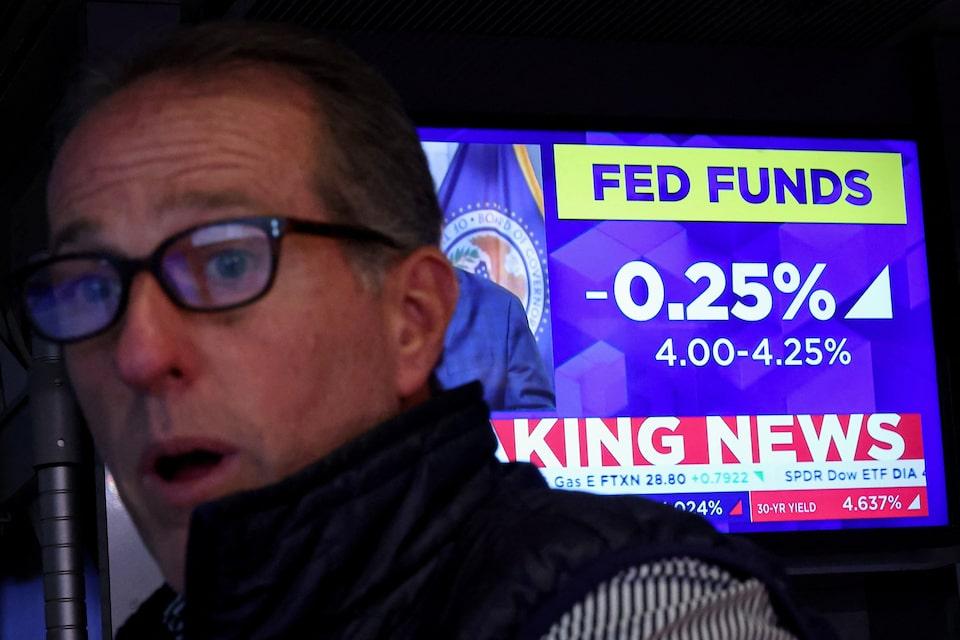
Sept 18 (Reuters) - U.S. House Speaker Mike Johnson said on Thursday that he believes he has the votes to pass a stopgap funding bill on Friday that would avert a government shutdown. House Republicans hope to pass the stopgap, known as a continuing resolution or "CR," on Friday and send it on to the Senate, which would also need to approve the measure before Republican President Donald Trump could sign it into law. Sign up here. "I believe we have the votes to do it," Johnson said during an interview on Fox News' "Special Report with Bret Baier." "We'll do the right thing: keep the government open," he said. https://www.reuters.com/world/us/us-house-speaker-tells-fox-news-he-believes-he-has-votes-pass-funding-bill-2025-09-18/

2025-09-18 22:32
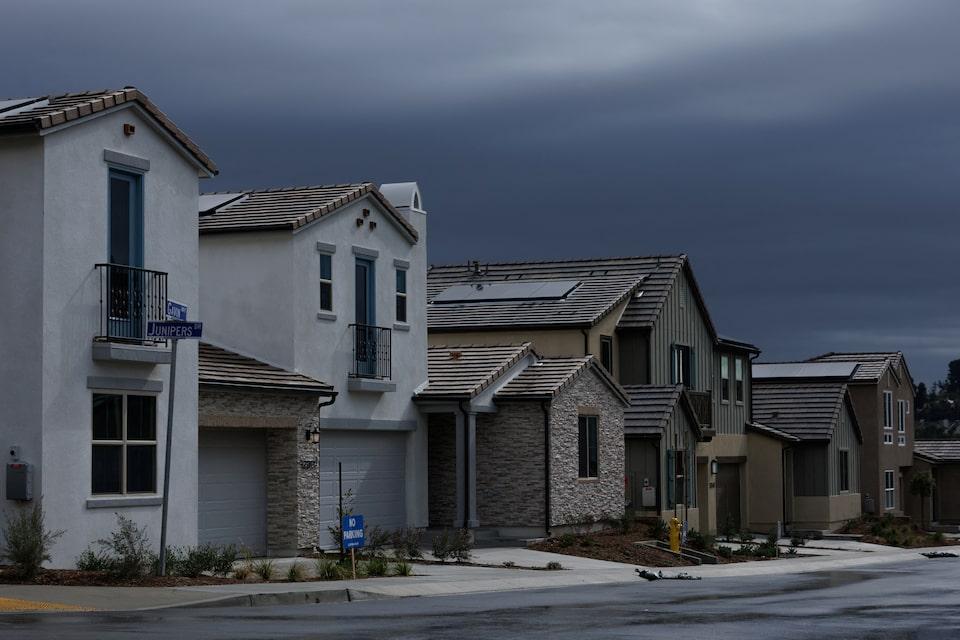
Sept 18 (Reuters) - Homebuilder Lennar (LEN.N) , opens new tab reported a 46% decline in third-quarter profit and forecast fourth-quarter home deliveries below Wall Street estimates on Thursday, as inflationary pressures continued to weigh on housing demand. Shares of Lennar fell 4.4% in after-hours trading. Sign up here. Elevated interest rates and affordability challenges have pressured U.S. homebuilders' profitability in recent quarters. Treasury yields rose on Wednesday despite a rate cut, reversing losses seen in June. Lower yields could have eased mortgage rates, potentially improving affordability. Analysts at BofA Securities said on Thursday that the Fed's rate cut is unlikely to significantly impact the housing market in the short term, as homebuilder stocks and mortgage rates had already priced in the move following June's announcement. Lennar's profit margins remain under pressure due to sales incentives such as mortgage rate buydowns and cost adjustments amid weakening home demand. The company does not expect to be impacted by tariffs and will focus on improving margins, Lennar Co-CEO and Chairman Stuart Miller told CNBC. The second-largest U.S. homebuilder by sales expects fourth-quarter home deliveries in the range of 22,000 to 23,000 units, below analysts' estimates of over 25,000 units, according to data compiled by LSEG. Lennar reported earnings of $2.29 per share for the third quarter, compared with $4.26 per share a year earlier. Revenue for the quarter ended August 31 fell 8.7% to $8.25 billion, below analysts' estimates of $9 billion. https://www.reuters.com/business/lennar-reports-lower-quarterly-profit-affordability-pressures-weigh-home-buyers-2025-09-18/
2025-09-18 21:46
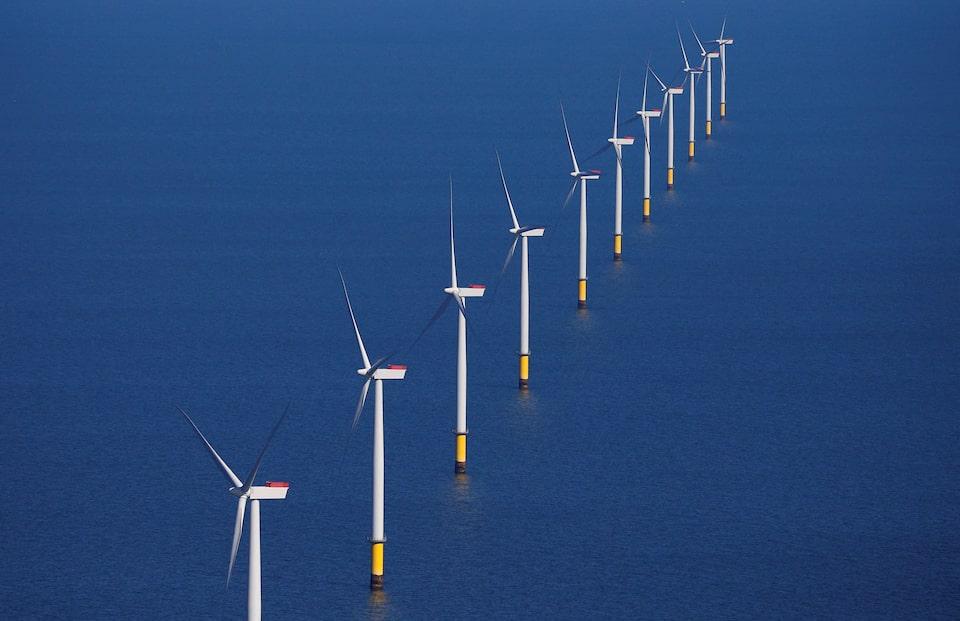
Sept 18 (Reuters) - The owners of Revolution Wind said the Trump administration's reasons for stopping work on its Rhode Island offshore wind farm were "factually incorrect" and only disclosed after it had ordered a halt to the project, according to court documents filed on Thursday. The filing in U.S. District Court for the District of Columbia is part of a lawsuit brought earlier this month by joint venture partners Orsted (ORSTED.CO) , opens new tab and Skyborn Renewables challenging a stop-work order issued to Revolution Wind by the Department of the Interior in August. Sign up here. U.S. President Donald Trump has repeatedly criticized wind energy as ugly, unreliable, and expensive, and his administration is leaning on multiple federal agencies to rein in wind development. Revolution Wind is seeking a preliminary injunction to restart work on the project. A hearing is scheduled for next week. The August stop-work order from the U.S. Bureau of Ocean Energy Management said the project was being halted due to unspecified national security concerns. But in a reply to Revolution Wind's complaint last week, the administration for the first time publicly offered more detail on its reasoning, saying the project had failed to comply with some conditions of its permit. Those conditions include requirements to coordinate with Navy vessels at sea during construction and mitigate risks to military operations from fiber sensing and acoustic monitoring equipment used by the project. The Trump administration also alleged that the project has failed to outline efforts to mitigate its impact on scientific surveys conducted by government scientists at the National Oceanic and Atmospheric Administration. Revolution Wind said it has coordinated with the Navy and NOAA, adding that the administration's filing "belatedly asserts - for the first time - purported failures that were not mentioned in the Stop Work Order or identified to Revolution Wind until they were newly advanced in this litigation, and each of which is factually incorrect." Revolution Wind is 80% complete with all offshore foundations in place and 45 out of 65 wind turbines installed, according to Orsted. The project was scheduled to be completed next year, and was expected to produce enough electricity to power 350,000 homes in Rhode Island and Connecticut. https://www.reuters.com/legal/litigation/us-justification-rhode-island-offshore-wind-project-halt-is-wrong-developer-says-2025-09-18/
2025-09-18 21:41
Japan and UK lead surge in US Treasury holdings China reduces US Treasury holdings to lowest since 2008 US sees $58.2 billion in Treasuries inflow in July NEW YORK, Sept 18 (Reuters) - Foreign holdings of U.S. Treasuries rose to an all-time peak in July, data from the Treasury Department showed on Thursday, hitting record highs for a third straight month, led by gains in holdings from Japan and the United Kingdom. Holdings of U.S. Treasuries surged to $9.159 trillion in July, up from $9.126 trillion the previous month. Compared with a year earlier, Treasuries owned by foreigners were up nearly 9%. Sign up here. China's holdings of Treasuries, on the other hand, dropped to $730.7 billion, its lowest since December 2008 when the world's second-largest economy held $727.4 billion. The country's reduction of its U.S. Treasury holdings has been a gradual process over the past decade, driven by both strategic and market factors. Strategically, China has been seeking to reduce reliance on the U.S. dollar in reserves, trade settlement and investment. At the same time, China has been gradually unloading Treasuries to bolster its currency, the yuan. Analysts said a slowing Chinese economy, post-COVID challenges, and trade barriers have diminished China's inflows from exports. Japan remained the largest non-U.S. holder of Treasuries with $1.151 trillion, its biggest holdings since March 2024. UK investors, the second-largest owner of U.S. government debt, increased their holdings of Treasuries to another record just under $900 billion, up roughly 5% from the $858 billion in June. On a transaction basis, the U.S. recovered from Treasury debt outflows in June to post $58.2 billion in foreign inflows in July. In May, there were foreign inflows of $147.4 billion in Treasuries, the largest since August 2022. Foreign investors sold U.S. equities in July to the tune of $16.3 billion. That followed massive equity inflows of $163.1 billion in June. Data also showed that the net capital inflow into the United States totaled just $2.1 billion in July, down from a revised inflow of $92 billion in June. https://www.reuters.com/world/china/foreign-holdings-us-treasuries-surge-all-time-high-july-chinas-sink-2025-09-18/
2025-09-18 21:40
PANAMA CITY, Sept 18 (Reuters) - The Panama Canal has begun a competitive process to select the company that will design, build and operate a pipeline to transport liquefied petroleum gas (LPG), its authority said on Thursday, following meetings with interested companies. The project, expected to require an investment of between $4 billion and $8 billion, is part of the waterway's move to meet increased demand for services including trans-shipment and generate extra revenue, following the expansion of its area in a Supreme Court ruling last year. Sign up here. The 2 million-barrel-per-day pipeline alone is forecast to contribute between $1 billion and $1.2 billion to the waterway's annual income, Ricaurte Vasquez, head of the canal, told Reuters in an interview after the meetings. The pipeline project aims to move U.S. LPG bound for Asia from one side of the canal to the other. A power transmission line will be built as part of the plan. Among companies that met with canal authorities about the pipeline were Exxon Mobil (XOM.N) , opens new tab, Phillips 66 (PSX.N) , opens new tab, Shell (SHEL.L) , opens new tab, Energy Transfer (ET.N) , opens new tab, Puma Energy, SK Energy, Vitol, Mitsubishi (8058.T) , opens new tab, Itochu (8001.T) , opens new tab and Sumitomo (8053.T) , opens new tab, the canal said in a release. "We had a room full of interested people," Vasquez said about the meeting, adding that a pre-qualification process will be the next step. The winner of the competitive process is expected to be selected in the last quarter of 2026, while a parallel project to build and operate two new ports in the canal's area will be launched between late this year and early next year, he said. The canal forecasts a $3.5 billion profit in the fiscal year ending in September, in line with the previous year's results , opens new tab, Vasquez said. A consolidation of cargo tonnage by receiving larger vessels is expected to offset a reduction in traffic towards the end of the year. "We have had a different seasonality this year, with more cargo being moved to the United States now, instead of in October-December," he said. https://www.reuters.com/business/energy/panama-canal-starts-process-select-firms-build-operate-lpg-pipeline-2025-09-18/

2025-09-18 21:02
ORLANDO, Florida, Sept 18 (Reuters) - Making sense of the forces driving global markets By Jamie McGeever, Markets Columnist Sign up here. Wall Street and world stocks roared to new highs on Thursday, boosted by the Federal Reserve's interest rate cut the day before and a 23% surge in Intel , opens new tab shares, while the dollar and Treasury yields went against the easier monetary policy shift and rose too. More on that below. In my column today I look at how the Fed's statement, policymakers' revised forecasts and Powell's guidance highlighted several inconsistencies. Given the unusual degree of economic uncertainty right now, this is perhaps not surprising. If you have more time to read, here are a few articles I recommend to help you make sense of what happened in markets today. Today's Key Market Moves Today's Talking Points: * Getting the Intel First the world's most powerful government invests in you, then the world's biggest company. Nvidia is investing $5 billion in Intel, taking a roughly 4% stake, just weeks after the White House engineered an extraordinary deal for the federal government to take a 10% stake in the struggling U.S. chipmaker. It's a remarkable turnaround in the fortunes of the company and CEO Lip-Bu Tan, who U.S. President Donald Trump insisted should resign earlier this year. It also stirs debate over issues such as Trump's corporate interventions, national security, U.S.-China rivalry, and tech's place in all of the above. * Reading cenbank tea leaves This week has been a central bank bonanza, topped by the Federal Reserve's first rate cut in nine months and signal of more to come. The Fed's messaging may have been a little incoherent, but economic uncertainty has rarely been higher. Opinion over the Bank of England's next steps is also divided, but there is less ambiguity around some others - Brazil , opens new tab's central bank delivered a "hawkish" hold, and more rate cuts from Canada are on the cards. All eyes now turn to Japan. * Trump-Xi call Trump and Chinese President Xi Jinping speak to each other on Friday, with trade and tech issues front and center of discussions. There has been a fair degree of posturing, signaling and even agreement this week ahead of the call. A deal on TikTok is close, China's Huawei has broken years of silence and outlined its chip and computing power plans, Beijing has ordered tech firms not to buy Nvidia's AI chips and cancel existing orders, but is also ending an antitrust probe into Google. Heightened uncertainties feed Fed inconsistencies The Federal Reserve cut interest rates on Wednesday for the first time in nine months, arguing the move is necessary to counter increasing risks to the labor market. The rationale is sound enough. There's only one problem - it seems to clash with many of the U.S. central bank's revised economic projections. In his press conference following a two-day policy meeting, Fed Chair Jerome Powell stressed that employment risks have risen substantially in recent months and now outweigh inflation risks. However, policymakers lowered their median 2026 and 2027 unemployment rate projections by a tenth of a percentage point to 4.4% and 4.3%, respectively, from three months ago. How does that add up? The revised "dot plot" chart of rate projections also showed that Fed officials now expect three quarter-percentage-point cuts this year, up from the two projected in June. But at the same time, officials lifted their median GDP growth projections for this year and next, while also raising next year's inflation outlook. So, to recap, the Fed is cutting rates and expects to front-load that easing, due to what Powell says are "meaningful" downside risks to the labor market. Yet officials are also penciling in lower unemployment rates than they were three months ago and higher growth and inflation rates. It's a confusing picture. 'MEETING-BY-MEETING SITUATION' But this confusion may be the biggest takeaway. Visibility surrounding the U.S. growth, inflation and employment outlooks is incredibly low, as Powell acknowledged, and the range of policymakers' forecasts has widened. "From the dot plot to the economic forecasts, there are multiple inconsistencies that raise eyebrows," notes Ron Temple, chief market strategist at Lazard. "The key message ... is that there is not a shared outlook among the FOMC (Federal Open Market Committee) participants." These inconsistencies may have been exacerbated by the addition of Stephen Miran, the head of President Donald Trump's Council of Economic Advisers, to the Fed's Board of Governors. His was the lone dissenting voice, calling for a 50-basis-point cut, and he also appears to have tipped the scale in favor of projections of more short-term easing. At the same time, few officials – perhaps with the exception of Miran – seem to hold these views with any real conviction. "We're in a meeting-by-meeting situation," Powell told reporters, an indication that guidance offered by the dot plot is pretty loose. So it's unclear how committed the Fed even is to this new policy shift out of restrictive territory into a more neutral place. (IN)VISIBILITY To be fair to Powell and his colleagues, it is increasingly difficult to interpret the incoming data. The economic models and playbooks of yesteryear often no longer seem relevant to today's economy, as has been proven time and again this year. Just look at the unemployment rate. Labor market supply and demand are in broad balance, which is why the unemployment rate remains so low at 4.3%. But that's only because the alarming slump in hiring has been offset by the Trump administration's immigration policies and deportations, which are crushing labor supply. The "breakeven" rate of monthly payrolls growth needed to keep the unemployment rate steady is perhaps around 50,000 now, or even lower, down from around 150,000 earlier this year. The economy only added 22,000 jobs in August. So it's a "curious balance", according to Powell. And perhaps a dangerously unstable one. If companies' low hiring turns to outright firing, the unemployment rate could shoot higher, even if labor supply remains tight. Visibility on the inflation side isn't much better. Policymakers' assessment that import tariffs will deliver a one-off price hit with no lasting inflationary effects is based more on hope than expectation. U.S. tariffs are the highest in a century, so this is new territory for policymakers today, and uncertainty surrounding the effect on consumer prices remains substantial. As a result, there is little clarity on either side of the Fed's mandate. The central bank is nevertheless choosing to put aside inflation fears and focus more on the upside risks to unemployment. Is there justification for this approach? Certainly. But is it the right move? Who knows. "Tensions within the Fed's dual mandate of price stability and maximum sustainable employment are at the heart of several inconsistencies inside the Fed's rate, growth, inflation and unemployment forecasts," says Joe Brusuelas, chief economist at RSM. As Powell himself said, this is a "particularly challenging time" for the Fed, as "there are no risk-free paths now" for policymakers. The same can be said for investors. What could move markets tomorrow? Want to receive Trading Day in your inbox every weekday morning? Sign up for my newsletter here. Opinions expressed are those of the author. They do not reflect the views of Reuters News, which, under the Trust Principles , opens new tab, is committed to integrity, independence, and freedom from bias. https://www.reuters.com/business/global-markets-trading-day-graphic-2025-09-18/