2025-09-18 12:12
BoE cuts pace of QT to 70 billion pounds from 100 billion MPC votes 7-2 to keep Bank Rate at 4%, as expected Future gilt sales to be skewed to short- and medium-dated gilts Governor Bailey says UK 'not out of the woods' on inflation LONDON, Sept 18 (Reuters) - The Bank of England slowed the pace of its programme to run down its government bond stockpile on Thursday and skewed sales away from long-dated debt in a bid to minimise the impact on volatile gilt markets. The central bank kept its main interest rate on hold at 4% after August's quarter-percentage-point cut, as expected. Sign up here. The BoE bought 875 billion pounds ($1.19 trillion) of British government bonds between 2009 and 2021 to boost the economy, then started to reverse these purchases in 2022 in a process known as quantitative tightening, or QT. Unlike other central banks, it has sold bonds outright as well as letting them mature, something critics say contributed to 30-year gilt yields hitting a 27-year high this month. POLICYMAKERS SPLIT ON PACE OF BOND STOCK RUNDOWN Monetary Policy Committee members voted 7-2 to slow the pace at which the BoE unloads gilts to 70 billion pounds between October 2025 and September 2026 from 100 billion pounds over the past 12 months. The decision was broadly in line with a median forecast of 67.5 billion pounds in a Reuters poll of economists and will reduce the BoE's main government bond holdings to 488 billion pounds by October 2026. "The new target means the MPC can continue to reduce the size of the Bank's balance sheet in line with its monetary policy objectives while continuing to minimise the impact of gilt market conditions," Governor Andrew Bailey said. The QT slowdown is the first since the BoE started to unwind its gilt holdings in February 2022. Bailey said QT was needed to restore room for future stimulus and reduce potential distortions in financial markets. Thursday's vote also represented the first split by policymakers on the pace of QT. BoE Chief Economist Huw Pill voted to keep it at 100 billion pounds a year, saying the impact on markets was small. Catherine Mann called for a 62 billion-pound reduction. The BoE said sales would be split 40:40:20 between short-, medium- and long-dated gilts, based on their initial purchase price. Mann said she wanted to continue with an even split. Britain's Debt Management Office has already largely shifted gilt issuance to short- and medium-dated bonds due to a fall in pension funds' appetite for long-dated debt and global factors that have raised the cost of long-term borrowing. Long-dated gilt yields hit their highest since 1998 this month, making it harder for finance minister Rachel Reeves to meet her own rules when she delivers her November 26 budget. "The decision to slow the pace ... should help ease some of the pressure on the UK bond market in the run-up to the budget," said Yael Selfin, chief economist at KPMG UK. Sterling weakened against the dollar and gilt yields initially edged lower after the decision before a rise in U.S. Treasury yields lifted 10-year gilt yields to a two-week high. Vivek Paul, chief UK investment strategist at major fund manager BlackRock, predicted upward pressure on long-term gilt yields before the budget, given the government's difficulty cutting welfare spending. "Policymakers hope these actions will help limit the UK-specific pressure on long-dated yields just as international buyers of long-term bonds are becoming more risk-conscious than ever," he said. BOE FORECASTS INFLATION WILL HIT 4% The MPC's 7-2 vote to keep interest rates at 4% was in line with expectations in a Reuters poll. MPC members Swati Dhingra and Alan Taylor kept their call for lower rates. The BoE maintained its forecast that inflation would peak at 4% this month before falling back only slowly to its 2% target by the second quarter of 2027. It nudged up its economic growth forecast for the third quarter to 0.4% from 0.3%. "Although we expect inflation to return to our 2% target, we're not out of the woods yet so any future cuts will need to be made gradually and carefully," Bailey said. Speaking later to broadcasters, he said he thought there would be "some further reductions" to borrowing costs but "the timing and scale is more uncertain". Deputy Governor Clare Lombardelli - who opposed last month's rate cut - also said the central bank thought rates "are on a downward path". The economists polled by Reuters last week forecast a quarter-point rate cut in November or December and another early next year. By contrast, financial market rate futures show only around a one-in-three chance of a move this year. "Sticky inflation and subsiding labour market weakness should dissuade the MPC from easing," said Simon Dangoor, head of fixed income macro strategies at Goldman Sachs Asset Management. "However, a budget deemed to weigh further on UK growth prospects could prompt a swift response." Finance minister Reeves is expected to raise taxes in her budget to stay on course to repair the public finances. ($1 = 0.7339 pounds) https://www.reuters.com/world/uk/bank-england-slows-pace-bond-rundown-keeps-rates-hold-2025-09-18/

2025-09-18 12:00
LAUNCESTON, Australia, Sept 18 (Reuters) - A rebound in China's imports of seaborne thermal coal has helped prices recover, but the boost is likely to prove temporary as recent strength in coal-fired electricity generation eases. China, the world's biggest coal producer and importer, is expected to import 27.41 million metric tons of seaborne thermal coal in September, according to data compiled by commodity analysts Kpler. Sign up here. This would extend the strength seen in August, when arrivals were 28.68 million tons, the most since December. On a daily basis, September's imports are tracking at 914,000 tons, just shy of the 925,000 in August, although the final September figure may be revised higher as Kpler assesses more cargoes as likely to be unloaded before the end of the month. China's utilities turned to imports as domestic coal output faltered amid increasing mine safety inspections, with production slipping 3% in August from the same month in 2024. China produced 390.5 million tons in August, down from a year earlier but up slightly from the year-low of 380.99 million recorded for July. At the same time that coal output was easing, China's fossil fuel electricity generation was rising, as the hottest summer on record boosted demand for air-conditioning. Thermal power generation, which is mostly from coal with a small amount from natural gas, was 627.4 billion kilowatt hours (kWh) in August, up 2% from a year earlier, according to official data released on September 15. Coal-fired power was also boosted by falling output from hydropower, which fell by 10% in August from a year earlier as parts of the country endured drought conditions. The increased demand for coal from utilities helped prices for the most popular seaborne thermal coal grades recover in recent weeks. Indonesian coal with an energy content of 4,200 kilocalories per kg (kcal/kg) , as assessed by commodity price reporting agency Argus, rose to $42.62 a ton in the week to September 12, up 5.3% from the four-year low of $40.45 hit in the week to July 4. Australian coal with an energy content of 5,500 kcal/kg ended at $69.60 a ton in the seven days to September 12, a gain of 5.9% from its four-year low of $65.72 in the week to June 6. IMPORT BOOST TO FADE? The question for the seaborne coal market is whether China's recent increased appetite for imports is likely to persist. Much will depend on whether officials continue to restrict domestic output through safety inspections that target mines that are believed to have produced beyond their approved plans. But even if domestic production is held back, it's also likely that China's rapid deployment of renewables such as wind and solar will continue to eat into coal's share of generation. This will especially be the case in the current shoulder season for power demand between the summer and winter peaks. China added 212 gigawatts (GW) of new solar capacity in the first half of 2025, more than double the pace achieved in 2024, and while the pace is expected to slow in the second half of this year, the total for 2025 is likely to be above 300 GW, eclipsing the record 277 GW from 2024. China is projected to add about a record 140 GW of new wind power capacity in 2025, according to the State Grid Energy Research Institute, up 77% from 2024. China isn't the only factor that drives seaborne coal prices, and it's worth noting that India, the world's second-biggest coal importer, is expected to see arrivals of 15.08 million tons of thermal coal in September, up from 11.04 million in August and the most since May, according to Kpler. But similar to China, India's thermal coal imports are likely to ease back once the peak demand period during the monsoon season eases. Enjoying this column? Check out Reuters Open Interest (ROI), your essential new source for global financial commentary. ROI delivers thought-provoking, data-driven analysis of everything from swap rates to soybeans. Markets are moving faster than ever. ROI can help you keep up. Follow ROI on LinkedIn , opens new tab and X , opens new tab. The views expressed here are those of the author, a columnist for Reuters. https://www.reuters.com/markets/commodities/china-import-surge-drives-seaborne-thermal-coal-prices-up-2025-09-18/

2025-09-18 11:55
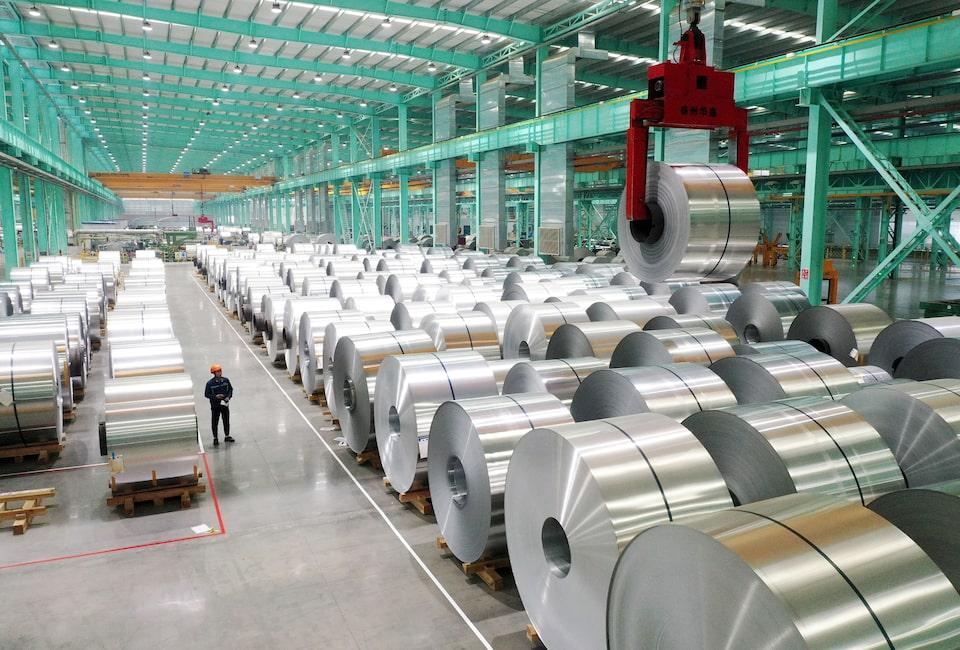
LONDON, Sept 18 (Reuters) - The global aluminium market has been in structural supply surplus for so long that it's hard to imagine a genuine shortage of the light metal. Sure, there have been periodic squeezes on the London Metal Exchange (LME) contract over the years and another one is roiling the market right now. Sign up here. But these have been clashes between traders and banks tussling over control of LME inventory. The stocks financing trade, and its multiple warehousing spin-offs, is predicated on there being lots of surplus metal to play with. That, however, may be changing. Indeed, if you believe Citi, this is a market that is "sleepwalking into the biggest deficits in 20 years". It's a punchy call, as is the bank's expectation that the price will have to rise from its current level around $2,700 per metric ton to over $3,000 and stay there to stop the world running out of metal. So how come a market defined by historical excess is now facing imminent shortfall? CHINA HITS THE CEILING The answer lies in China. China's production of primary aluminium has grown from four million tons in 2002 to 43 million tons in 2024. The country now accounts for 60% of global output. China has also become the world's largest aluminium consumer over the same time-frame but persistent over-production has spilled out in the form of semi-manufactured products. Exports last year hit a new record of 6.7 million tons. China, however, is fast approaching peak aluminium thanks to the government's mandated capacity cap of 45 million tons per year. August output was equivalent to 44.5 million tons, according to consultancy AZ Global. Some further output flex is possible if operators increase smelter amperage. But with Beijing showing no sign of adjusting the cap, the country's seemingly relentless production growth is shuddering to a halt. China's aluminium trade patterns are adjusting to the new reality. Exports of products such as rod, tube and foil fell by 9% year-on-year in the first seven months of the year. Imports of primary metal, on the other hand, rose by 11% to 1.5 million tons on the back of a near doubling in shipments from Russia. STOCKS DEPLETION Sanctions on Russian aluminium mean the metal can't be delivered to the LME if it was produced after April 2024, which is why so much is now going to meet China's import demand. The diversion of what was once one of the exchange's main sources of physical liquidity has contributed to falling exchange stocks. What's noticeable, though, is the absence of any significant new inflow from other sources even though the market has been in the grip of a dominant long position since May. The warranting of 156,000 tons of aluminium between the end of June and the middle of August flattered to deceive. Just about all the metal that "arrived" was drawn down from off-warrant stocks in the LME system. Total LME aluminium stocks, registered and off-warrant, have held steady just above the 700,000-ton mark since May. There were over a million tons this time last year. Four years ago there were over three million tons. The stocks games are continuing, judging by the cancellation of almost 100,000 tons earlier this month, but the exchange liquidity pool is much smaller than it once was. ALL EYES ON INDONESIA It is the combination of stalled production growth in the world's largest supplier and low exchange inventory that has got analysts such as Citi reassessing aluminium's outlook over the coming years. Outside of China, primary aluminium production has been in long-term decline, not least due to China's massive exports, long a bone of contention with Western governments. True, U.S. President Donald Trump's decision to hike U.S. import tariffs to 50% may encourage some limited restarts of smelter capacity in the United States. But elsewhere others are struggling to stay afloat in the face of high energy costs. South32 (S32.AX) , opens new tab warned last month that it may close its smelter in Mozambique if it can't secure a viable power contract by the end of next year. New primary supply hopes rest almost exclusively on Indonesia, where Chinese companies are investing in new smelters in a collective off-shoring from capacity-capped China. On paper the project pipeline could deliver seven million tons of new capacity over the second half of this decade. In reality, that's highly unlikely. New aluminium smelters will either have to compete with other sectors for energy supplies or build their own captive power plants. Current pricing makes the latter challenging, according to Citi, which expects Indonesian capacity to reach only 2.3 million tons per year by 2030. CRISIS OF A DIFFERENT KIND That may not be enough to keep up with global demand growth, which is getting a booster from aluminium's usage in energy transition sectors such as solar and electric vehicles. Hence Citi's call for a structural shift to higher pricing over a five-year horizon. The concept of a deficit market is a novelty for the aluminium market. Past crises have been caused by too much rather than too little metal. Back in the 1990s it was the flood of aluminium that poured through the broken Iron Curtain after the collapse of the Soviet Union. This century it's been China's massive over-production that has led to low prices and a string of smelter casualties in the rest of the world. The next aluminium crisis, though, is shaping up to be altogether different. The opinions expressed here are those of the author, a columnist for Reuters. https://www.reuters.com/markets/commodities/aluminiums-years-plenty-are-drawing-close-2025-09-18/
2025-09-18 11:53
Fed chair says rate cut a 'risk-management measure' ANZ expects gold to outperform early in the easing cycle The bull run is still very much in place, analyst says Sept 18 (Reuters) - Gold prices rose on Thursday, buoyed by a softer dollar, after the U.S. Federal Reserve cut interest rates by 25 basis points and signaled a gradual easing path for the rest of the year, boosting the metal's appeal. Spot gold was up 0.2% at $3,667.12 per ounce as of 1144 GMT. Prices hit a record high of $3,707.40 on Wednesday. U.S. gold futures for December delivery fell 0.5% to $3,701.00. Sign up here. The dollar (.DXY) , opens new tab pared recent gains and hovered near a two-month low, making gold less expensive for other currency holders. The benchmark 10-year Treasury yields also fell. "The dollar is resuming its weakness, which has helped to support gold prices ... the rate decision itself was a little bit on the dovish side, because the statement or the dot plots revealed that there will be two more rate cuts to come this year," said Fawad Razaqzada, market analyst at City Index and FOREX.com. The Fed reduced rates by 25 basis points on Wednesday and indicated it will steadily lower borrowing costs for the rest of this year. Fed Chair Jerome Powell characterised the action as a risk-management cut in response to a weakening labor market, and said the Fed was in a "meeting-by-meeting situation" regarding the interest rate outlook. Non-yielding bullion, considered a safe-haven asset during periods of geopolitical and economic uncertainty, tends to perform well in a low interest-rate environment. "(Gold's) bull run is still very much in place and we will very much see record highs likely to persist," independent analyst Ross Norman said. Traders are currently pricing in a 90% chance of another 25-basis point cut at the Fed's next meeting in October, according to the CME Group's FedWatch tool , opens new tab. ANZ expects gold to outperform early in the easing cycle, the bank said in a note on Thursday. "Demand for haven assets amid the challenging geopolitical backdrop is likely to boost investor demand," it said. Elsewhere, spot silver rose 0.5% to $41.84 per ounce, platinum gained 1.9% to $1,390.43, and palladium was down 1% at $1,142.19/oz. https://www.reuters.com/world/india/gold-gains-softer-dollar-after-fed-delivers-rate-cut-2025-09-18/

2025-09-18 11:45
Fed's guidance leads to dollar's initial plunge, then rebound BoE slows pace of QT, skews away from long-dated gilt sales Bank of Norway cuts rates by 25 bps, as expected JPY slips ahead of BOJ decision on Friday NEW YORK, Sept 18 (Reuters) - The U.S. dollar rose against most major currencies on Wednesday, a day after the Federal Reserve delivered an expected rate cut but signaled little urgency to lower borrowing costs quickly in the coming months. The dollar was supported by data that showed the number of Americans filing new applications for unemployment benefits fell last week, reversing the prior week's jump. Sign up here. The dollar’s broad strength pressured the British pound, erasing earlier gains logged after the Bank of England left rates on hold and slowed the pace of its government bond sales. The Fed reduced rates by a quarter point on Wednesday, as expected, with Chair Jerome Powell characterizing the day's policy action as a risk-management cut in response to the weakening labor market, but said the central bank did not need to rush easing. Powell's words fell short of the "unequivocal dovishness that the markets were expecting," Eric Theoret, FX strategist at Scotiabank said. The upbeat economic data on Thursday combined with the heavy selling the dollar had seen at the start of the week was enough to lift the dollar, Theoret said. "I think the balance for the markets was kind of just leaning all to one side and so, it would have taken a lot to break the U.S. dollar even further from here," he said. Analysts were divided on what to make of the Fed messaging. While those at Goldman Sachs said that many hints had pointed to Wednesday's cut being the first among many, their counterparts at ANZ characterized the Fed Chair's commentary as "not at all dovish". The dollar dropped to the lowest since February 2022 at 96.224 against a basket of major peers immediately after the rate decision on Wednesday, but sprang back to trade up 0.4% at 97.347 on Thursday. Meanwhile, the pound initially edged up after the BoE's decision, but gave up those gains to trade 0.6% lower on the day at $1.35515. Sterling had briefly leaped to the highest since July 2 at $1.3726 in the prior session. BoE policymakers voted 7-2 to slow the annual pace at which the central bank unloads the gilts that it purchased from 2009 and 2021 to 70 billion pounds from 100 billion pounds, broadly in line with a Reuters poll median forecast for it to be cut to 67.5 billion. "We think the market is positioned too bearishly on the pound," said Benjamin Ford, researcher at macro research and strategy firm Macro Hive. The euro was 0.2% lower at $1.17893, after retreating from its highest level since June 2021 at $1.19185 on Wednesday in a knee-jerk reaction to the Fed announcement. NORWAY CUTS RATES, YEN SLIPS AHEAD OF BOJ The Norwegian crown fell 0.5% against the dollar after the Norges Bank cut rates 25 basis points to 4.0%, its second cut in three months. The central bank signaled rates could continue to fall. Elsewhere, the dollar was 0.6% firmer against the Japanese yen at 147.88 ahead of the Bank of Japan's policy decision on Friday. The BOJ is widely expected to refrain from hiking rates, although markets price in a quarter-point increase by end-March, with about 50% odds of it happening within this year. The spotlight is on an October 4 vote where the ruling Liberal Democratic Party will elect a new leader to replace outgoing Prime Minister Shigeru Ishiba, who is stepping down following a bruising defeat in upper house elections. Data on Thursday showed that New Zealand's gross domestic product (GDP) fell 0.9% in the second quarter from the previous three months, worse than forecast by analysts and the Reserve Bank of New Zealand. This weighed on the New Zealand dollar , which fell 1.4% as traders added to bets on policy easing by the country's central bank. Cryptocurrency bitcoin was 1.9% higher at $117,837. https://www.reuters.com/world/middle-east/dollar-choppy-investors-parse-fed-outlook-await-boe-decision-2025-09-17/
2025-09-18 11:44
US Fed cuts rates, signals further reductions amid economic concerns Kuwait expects increased oil demand post rate cut, especially from Asia US oil stockpiles fall, but distillate rise pressures prices NEW YORK, Sept 18 (Reuters) - Oil prices eased on Thursday, settling lower as traders remained worried about the U.S. economic outlook a day after the U.S. Federal Reserve cut interest rates for the first time this year. Brent crude futures fell 51 cents, or 0.8%, to settle at $67.44. U.S. West Texas Intermediate (WTI) crude fell 48 cents, or 0.8%, to settle at $63.57. Sign up here. The Fed cut its policy rate by a quarter of a percentage point on Wednesday and indicated it will steadily lower borrowing costs over the rest of the year, responding to signs of weakness in the jobs market. Lower borrowing costs typically boost demand for oil and push prices higher. "They did this now because clearly the economy is slowing down," said Jorge Montepeque, managing director at Onyx Capital Group. "The Federal Reserve is trying to restore growth." The number of Americans filing new applications for unemployment benefits fell last week, reversing the prior week's jump, but the labor market has softened as both the demand for and supply of workers have diminished. U.S. single-family home building plunged to a near 2-1/2-year low in August amid a glut of unsold new houses, suggesting the housing market could remain an economic headwind. Persistent oversupply and soft fuel demand in the U.S., the world's biggest oil consumer, also weighed on the market. U.S. crude oil stockpiles fell sharply last week as net imports dropped to a record low while exports jumped to a near two-year high, data from the Energy Information Administration showed on Wednesday. A rise in U.S. distillate stockpiles (USOILD=ECI) , opens new tab by 4 million barrels, however, against market expectations of a gain of 1 million barrels, raised worries about demand in the world's top oil consumer and pressured prices. DEMAND WORRIES OFFSET SUPPLY CONCERNS In Russia, the world's second biggest producer of crude in 2024 after the U.S., the Finance Ministry announced a new measure to shield the state budget from oil price fluctuations and Western sanctions targeting Russian energy exports. Ukraine said its drones struck a major oil-processing and petrochemical complex and an oil refinery in Russia, part of an intensifying campaign to disrupt Moscow's oil and gas sector. Exxon Mobil (XOM.N) , opens new tab CEO Darren Woods told the Financial Times in an interview that the U.S. oil major has no plans to resume operations in Russia. Anything that keeps Russian barrels out of the international oil market should be bullish for prices. Kuwait's oil minister, Tariq Al-Roumi, however, said he anticipates an increase in oil demand following the U.S. interest rate cut, with a particular rise expected from Asian markets. Kuwait is a member of the Organization of the Petroleum Exporting Countries (OPEC). In Qatar, another member of OPEC, state-owned QatarEnergy hiked the term price for al-Shaheen crude oil loading in November to the highest in eight months. In Germany, the biggest economy in Europe, parliament approved the nation's first annual budget since sweeping reforms to loosen fiscal rules were passed earlier this year, securing record investments to revive the economy while committing to an increase in defense spending. In the Middle East, Israel launched fresh air strikes against Hezbollah military targets in south Lebanon to stop the militant group from rebuilding in the area. https://www.reuters.com/business/energy/oil-edges-lower-traders-weigh-rate-cut-with-worries-over-us-economy-2025-09-18/


