2025-09-18 06:33
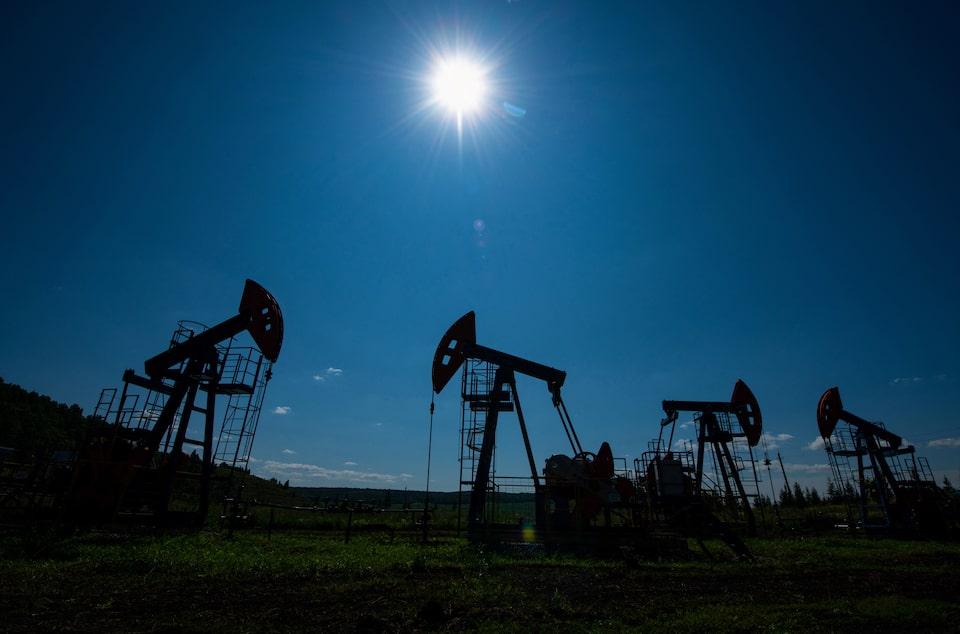
MOSCOW, Sept 18 (Reuters) - Oil demand continues to grow in Asia, while China and some other countries have been replenishing their crude stockpiles, Alexander Dyukov, the head of Russian oil major Gazprom Neft (SIBN.MM) , opens new tab said on Thursday, TASS news agency reported. OPEC+ group agreed earlier this month to further raise oil production from October as its leader Saudi Arabia pushes to regain market share, while slowing the pace of increases compared with previous months due to an anticipated weakening of global demand. Sign up here. Dyukov, the head of Russia's top four oil producer, however, said demand was still robust. "Global oil consumption rises in the summer. In fact, in Asia, consumption continues to rise in the autumn. Furthermore, we see that a number of countries, including China, are currently replenishing their strategic oil reserves," Dyukov was quoted as saying. The International Energy Agency said last week global oil supplies would rise more rapidly than expected this year because of planned output increases by the OPEC+ group comprising the Organization of the Petroleum Exporting Countries and allies such as Russia, according to an agency report. However, OPEC's own report made no change to its relatively high forecasts for oil demand growth this year and next, saying the global economy was maintaining a solid growth trend. Dyukov also said it is expected that Gazprom Neft will increase both crude production and refining volumes this year, TASS reported, without providing figures. https://www.reuters.com/business/energy/russias-top-oil-executive-says-asian-oil-demand-still-growing-tass-reports-2025-09-18/
2025-09-18 06:33
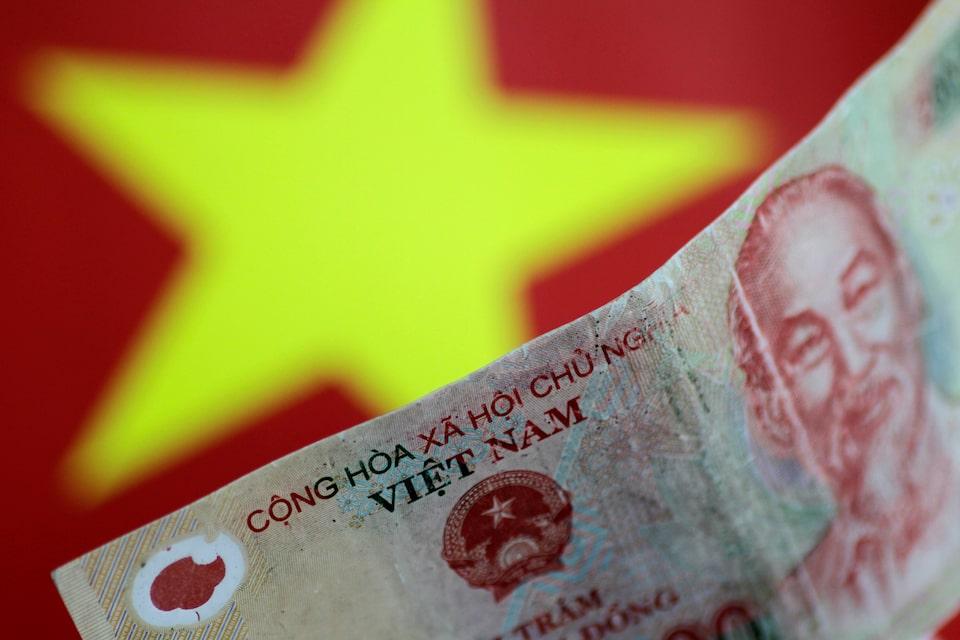
Security ministry to gain vetting powers on investment projects Plan concerns critical projects and also golf, industrial parks Investor-reliant Vietnam has faced criticism over slow approvals HANOI, Sept 18 (Reuters) - Investors in Vietnam in energy, telecommunications, construction and other sectors, will need police approval for projects, under a major reform meant to boost security and ensure the "absolute leadership" of the ruling Communist Party, a draft decree says. The proposed text from the public security ministry, which is still subject to changes, could increase compliance costs for business in the Southeast Asian nation while significantly expanding the powers of the security apparatus. Sign up here. "In socio-economic development, security must be ensured, without sacrificing national interests for economic benefits," said the proposal published on the security ministry's website, which other ministries can comment on until September 22. It could then be signed into law by the prime minister provided no major changes are requested. Export-reliant Vietnam is highly dependent on foreign investors and currently conducts limited security checks on most development projects, giving the police largely a consulting role. It is unclear how extensively the new rules would be applied, if approved, and whether they would concern only future projects. In a separate explanatory document, the ministry said the new provisions were necessary to deal with a more complex international situation dominated by strategic competition meant "to increase the sphere of influence of strong countries," without specifying which nations. The ministry did not reply to a request for comment. In Communist-run Vietnam, police already play a crucial role beyond security, encompassing a major influence on legislation and growing interests in the economy. The party leader and Vietnam's most powerful man, To Lam, headed the security ministry before moving to the top job. Separately, the army oversees a wide array of businesses, including banks and the largest telecom operator Viettel. The planned reform would give the security ministry the power to vet development projects on security grounds for a broad variety of critical infrastructures like nuclear power plants, telecommunication and satellite services with foreign involvement, ports and oilfields. U.S. companies SpaceX and Amazon are planning to launch their satellite communication services in Vietnam. GOLF PROJECTS TO BE VETTED BY POLICE Seemingly less critical operations would also need the ministry's approval, including industrial parks and golf courses, according to the draft document. Vietnam plans to expand its golf industry from nearly 100 courses at present, according to Vietnam Golf Association. The family business of U.S. President Donald Trump is partnering with a local developer on a large golf resort to be built close to Hanoi. The country is also home to huge industrial operations of multiple multinationals, including South Korea's Samsung Electronics (005930.KS) , opens new tab, Japan's Honda (7267.T) , opens new tab and U.S. chipmaker Intel (INTC.O) , opens new tab, which are attracted by low labour costs but have at times voiced concerns over slow project approvals. The ministry, supported by national and local police forces, will establish whether yet-to-be-defined security conditions are met for projects to go ahead, including those involving foreign investors, according to the draft proposal. A Vietnam-based legal consultant, who declined to be named to speak more freely, said the decree would effectively give the police the power to veto projects, and noted some companies had expressed concerns about the draft document, fearing it could increase compliance costs and delay projects. Other corporate, diplomatic and legal representatives contacted by Reuters about the draft decree did not comment, with some declining to discuss the matter because of the sensitive nature of the issue or due to lack of clarity around the proposed rule. Under the proposal, the security ministry will also develop a mechanism to supervise and inspect foreign aid projects and will "comprehensively appraise the impacts on security, social order and safety on foreign-invested projects, implemented in many key localities and areas, where many labourers and workers live," the document says. A similar decree was implemented in 2019 to guarantee defence priorities were taken into account for economic projects, but gave the army less explicit powers and was more limited in its scope. https://www.reuters.com/world/asia-pacific/investors-vietnam-face-strict-police-screening-under-planned-reform-2025-09-18/
2025-09-18 06:33
Sept 18 (Reuters) - Oil producer Capricorn Energy (CNE.L) , opens new tab posted a first-half pretax loss from continuing operations on Thursday, dragged by hurdles in its main market Egypt, but said it remains "on track" to deliver its annual production forecast. Capricorn reported a loss before taxation from continuing operations of $7.5 million for the six-month period ended June 30, down from a profit of $16.4 million last year. Sign up here. https://www.reuters.com/business/energy/capricorn-energy-posts-first-half-loss-maintains-production-outlook-2025-09-18/

2025-09-18 06:25
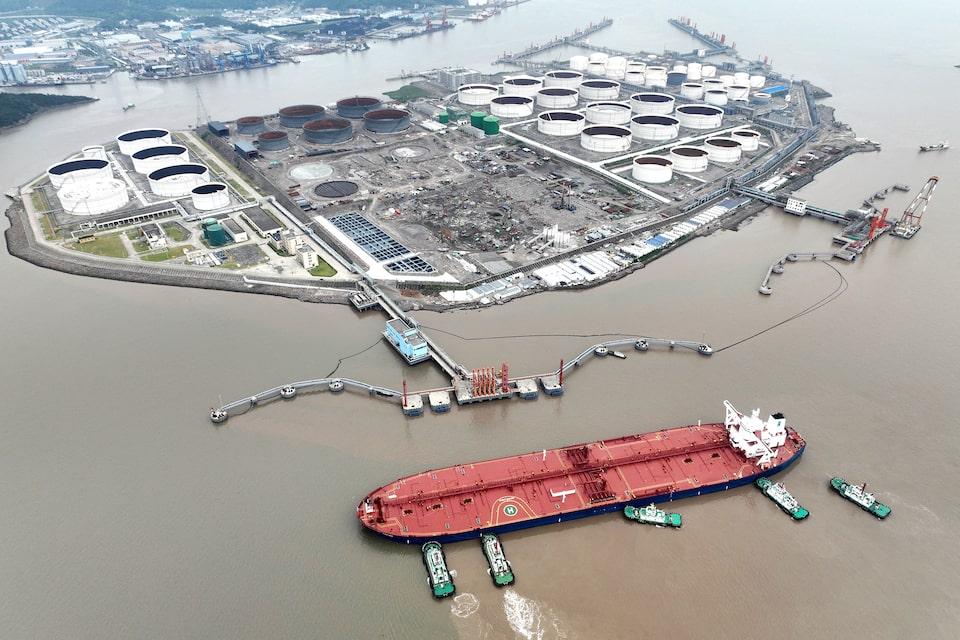
Chinese oil storage increasingly vital for market, but data is obscure IEA, OPEC offer widely divergent estimates for oil demand growth Growing sanctions-busting fleet of tankers complicates oil tracking LONDON, Sept 18 (Reuters) - Growing blind spots in the oil market driven by geopolitics are making it harder to determine the true supply-demand balance in the world’s largest and most important commodity market. That’s a recipe for volatility. Little is known about two of the major drivers of today’s global oil market: the flow of sanctioned oil and Chinese stockpiling. Sign up here. Add to that uncertainty over global trade wars, and this could explain, at least in part, why oil prices have remained relatively stable in recent months – around $65 to $70 a barrel for global benchmark Brent crude since July – despite forecasts for a protracted period of oversupply. Traders may be loath to make big bets when there is such disagreement about market fundamentals. Just look at the widening disparities in major forecasting agencies’ near-term oil demand projections. The International Energy Agency expects consumption to grow by 740,000 barrels per day in 2025 and by an additional 700,000 bpd in 2026. OPEC, meanwhile, sees demand this year growing by 1.3 million bpd, with an additional 1.4 million bpd next year. That’s a huge difference, one of the widest ever seen. BLIND SPOTS Explaining this disparity is complex, but one can start with China. Chinese oil demand has been the biggest driver of global consumption since the early 2000s, even if its growth rate has slowed down in recent years. China's crude oil imports have been a major point of discussion this year, as they have far exceeded refinery processing rates, suggesting a build-up in storage. The average volume of surplus crude in China hit 990,000 bpd for the first eight months of the year, nearly 1% of global demand, according to ROI calculations. That surplus is particularly notable because Chinese refineries have been running at elevated rates, processing 14.94 million bpd in August, the second-highest monthly total in over a year, according to the National Bureau of Statistics. China does not divulge data on domestic consumption, but estimates suggest it has not been so strong this year. The discrepancy between refining rates and apparent demand either points to significant blind spots in the Chinese market or that refiners are stockpiling refined products. NEW WORLD Global oil inventories have a major impact on oil prices, as increases point to oversupply, and vice versa – and this is another place where clarity is lacking. For decades, OECD countries represented the lion’s share of global demand. OECD stocks, which are reported to the IEA, have therefore been the industry’s primary metric for inventories. But while China is today the world’s second largest oil consumer, it does not report inventory data, obscuring a vital part of the market. China is believed to have added 73 million barrels to its onshore crude oil storage since the start of the year, bringing storage levels to 1.18 billion barrels, around 60% of capacity, according to satellite analytics firm Kayrros. Compare that to the increase of 40 million barrels in OECD industry-controlled and government-controlled stocks between January and July. "More and more oil is outside of OECD, effectively reducing the accuracy of balances, which focuses so heavily on OECD metrics," said Keshav Lohiya, CEO of commodity analytics firm Oilytics. IN THE SHADOWS Further complicating matters for energy market observers is the growing use of so-called "shadow fleet" tankers to transport oil from countries that face extensive western sanctions, including Russian, Iran and Venezuela. Combined production from the three totals around 13.5 million bpd today, 13% of global supply. These ageing and often uninsured dark fleet vessels – which make up 17% of the global tanker fleet, according to a recent report , opens new tab by Allianz – create large blind spots for oil trackers, as buyers tend to obscure the origin of the cargoes to avoid western scrutiny. One major buyer is China, which stopped reporting Iranian crude imports in official customs data in June 2022. While satellite and ship-tracking firms monitor the flow of Iranian crude to China, the exact volume is hard to determine, complicating efforts to assess global balances. Analytics firm Kpler estimates that China imported 1.24 million bpd of oil from Iran last year, over 12% of total deliveries. The IEA has acknowledged this problem. It recently made minor downward revisions to Chinese oil demand over the past two years, citing "an increasingly untenable mismatch" in official data that it attributed to "falls in inflows of non-crude refinery feedstock ... and oil supplies from sanctioned producers." Given rising geopolitical tensions, it’s hard to imagine that more tankers are going to come out of the shadows. FLYING BLIND Over the past few decades, the oil industry has evolved into a highly efficient market where producers and buyers can easily trade vast quantities of crude and refined products across regions. The system relies on an enormous volume of data from governments, companies, pricing agencies and analysts to form a complex picture of supply and demand. The growing opacity of critical parts of the market complicates this assessment, however, making it more likely that oil prices are not properly reflecting today’s supply-demand balance. Enjoying this column? Check out Reuters Open Interest (ROI), , opens new tabyour essential new source for global financial commentary. ROI delivers thought-provoking, data-driven analysis. Markets are moving faster than ever. ROI , opens new tab can help you keep up. Follow ROI on LinkedIn , opens new tab and X. , opens new tab https://www.reuters.com/markets/commodities/oil-market-blind-spots-give-traders-nasty-headache-2025-09-18/
2025-09-18 06:24
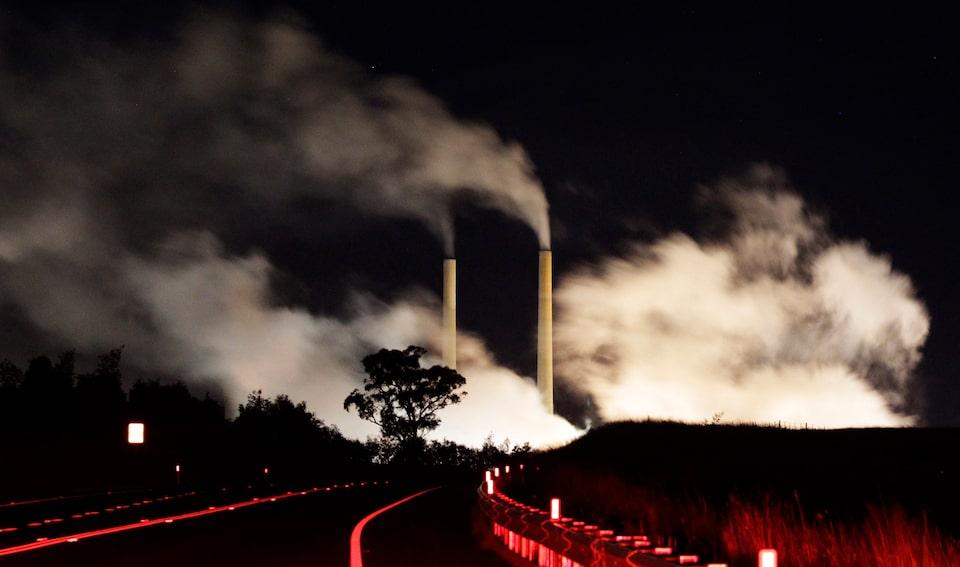
Australia's emissions target criticised for lacking ambition Green groups say target prioritises industry over vulnerable communities Australia commits billions to clean energy, faces tension over gas project SYDNEY, Sept 18 (Reuters) - Australia on Thursday set its 2035 emissions target at a reduction of 62%-70% from 2005 levels, a lower-than-expected figure that was criticised by green groups. The United Nations has asked countries to submit their climate plans, called Nationally Determined Contributions, or NDCs, before the end of September so that their efforts can be assessed before the COP30 climate summit in November in Brazil. Sign up here. Australia is one of the world's highest polluting countries per capita, largely due to its resources industry that extracts large amounts of coal and natural gas. The country's target falls below the range of 65%-75% that was modelled by the Treasury Department and initially suggested by the Climate Change Authority, an independent body that advises the government on climate policy. Minister for Climate Change and Energy Chris Bowen told a news conference on Thursday the lower target was a more realistically reachable level. "The target must be two things, ambitious and achievable. A target over 70% is not achievable. That advice is clear. We have gone for the maximum level of ambition that is achievable," he said. The reduced target drew sharp criticism from environmentalists, who said it lacked ambition and prioritised industry over communities vulnerable to climate change in the region. "The Albanese government's new climate plan is an affront to communities across the Pacific and Australia facing the escalating impacts of dangerous climate change," said Shiva Gounden, head of Pacific at Greenpeace Australia Pacific. "Today the government has chosen coal and gas profits over the safety of Pacific and Australian communities." The target falls "dangerously short of what the science demands," said Dermot O’Gorman, CEO of WWF-Australia. GREEN CREDENTIALS The centre-left Labor government has been keen to burnish its green credentials and on Thursday committed billions of dollars in extra funding for clean energy initiatives. Canberra is also bidding to host the 2026 COP31 summit in partnership with other Pacific nations. But its recent decision to extend the life of a huge natural gas project has been a source of tension with some of its Pacific Islands neighbours, who are among the world's most vulnerable countries to climate change. Australia is also yet to commit to phasing out its ageing coal power plants, a fact that is hindering the take-up of renewables, said Stephanie Bashir, CEO of Nexa Advisory, which helps businesses transition to clean energy. "Certainty around coal closures will send the much needed market signals for renewable development," she said. "Talks of extensions of ageing coal power stations rattle the market." Out of the climate targets already submitted to the U.N., most of which use different baseline years to Australia, the United Kingdom has announced the most ambitious target of 81% below 1990 levels, followed by Norway, which has pledged a 70%-75% cut. Australian Prime Minister Anthony Albanese said the country's planned reduction was in line with indications given by allies including the European Union, which has yet to finalise its target. On Thursday the government announced A$5 billion ($3.32 billion) in funding to help industrial facilities decarbonise, as well as A$2 billion for the country's Clean Energy Finance Corporation to continue to drive downward pressure on electricity prices. "We are not the biggest polluter or the biggest economy but our commitment to action on climate change matters," Albanese said. "It matters to our neighbours, it matters for our economy and it matters for the country that we pass on to our children." ($1 = 1.5058 Australian dollars) https://www.reuters.com/sustainability/cop/australias-watered-down-emissions-target-draws-ire-environmentalists-2025-09-18/
2025-09-18 06:09
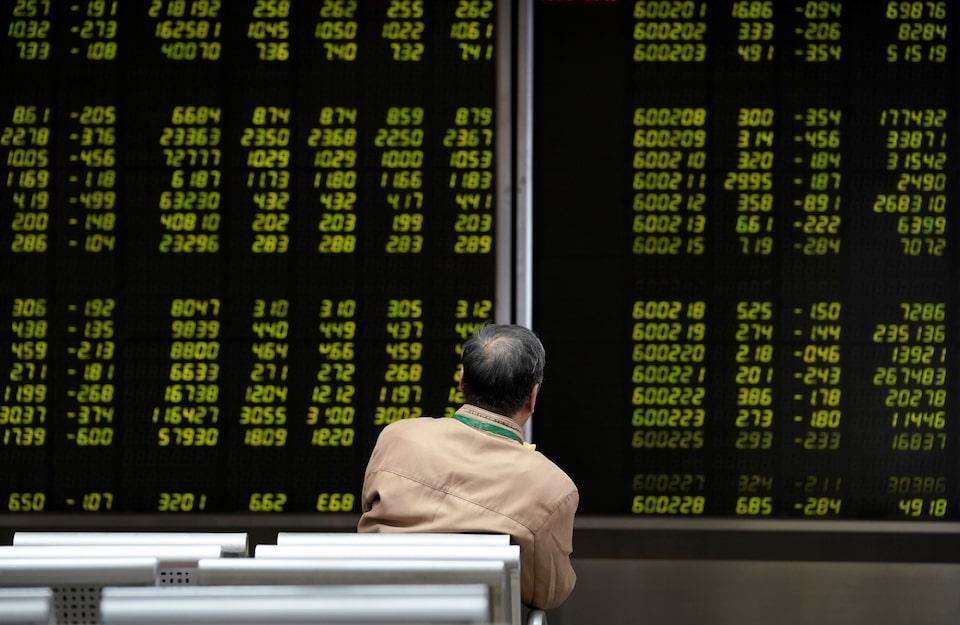
Fed's Powell signals cautious approach to further rate cuts Stocks, FX markets tentative after Fed cut, assess future easing New Zealand, Australia stocks falter SINGAPORE, Sept 18 (Reuters) - Global stock markets were choppy on Thursday after the Federal Reserve delivered its first rate cut this year but signalled a measured approach to further monetary policy easing, leaving investors unsure about the pace of future moves. MSCI's broadest index of Asia-Pacific shares outside Japan (.MIAPJ0000PUS) , opens new tab lost 0.3% as declines in Australian and New Zealand markets weighed on the wider benchmark, while Chinese stocks veered between gains and losses. Sign up here. There were signs of strength in some markets, however, as U.S. equity futures advanced 0.4% to rebound from losses on Wall Street overnight, while shares in South Korea (.KS11) , opens new tab jumped 1.2% and those in Taiwan (.TWII) , opens new tab rallied 1.3%. Japan's Nikkei 225 (.N225) , opens new tab tacked on 1.2%. Global stocks stumbled on Wednesday after hitting a record high in the wake of the Fed's quarter-point rate cut and indications it would steadily lower borrowing costs for the rest of this year. However, in post-meeting comments, Fed Chair Jerome Powell tempered the more aggressive easing expectations in markets, saying Wednesday's move was a risk-management cut and the central bank did not need to move quickly on rates. "Resuming a rate cut cycle at this stage is fraught with risks, which was underscored by Chair Powell in his press statement," Taimur Baig, chief economist at DBS said in a note. "He conceded that it is not obvious what to do at this juncture." Those doubts fed into U.S. trading overnight, with the S&P 500 (.SPX) , opens new tab and the Nasdaq Composite (.IXIC) , opens new tab closing down. Only new Governor Stephen Miran, who joined the Fed on Tuesday, dissented in favour of a larger 50-basis point cut. Currency markets were similarly indecisive. The U.S. dollar dropped to the lowest since February 2022 at 96.224 against a basket of major peers immediately after the rate decision, but sprang back 0.3% on Thursday. The euro slipped 0.2% to $1.1795 after a knee-jerk reaction to the Fed announcement saw it rise to the highest since June 2021 at $1.19185. The Chinese yuan traded up 0.1% at 7.1060 after China's central bank left the borrowing cost of its seven-day reverse repurchase agreements unchanged on Thursday, declining to follow the Fed. Sterling was down 0.2% at $1.3606, having briefly raced to the highest since July 2 at $1.3726 on Wednesday. The Bank of England will announce its own policy decision later on Thursday, and is widely anticipated to keep rates at 4%. Traders are pricing in an 87.7% chance of another 25-bp cut at the Fed's next meeting in October, compared with a 74.3% probability a day earlier, according to the CME Group's FedWatch tool. "The Fed is still signalling more rate cuts, but at the same time still sees okay growth, which is a positive combination for share markets," said Shane Oliver, chief economist and head of investment strategy at AMP in Sydney. "I do think the gains will be a bit limited though, as markets have already had a big rally in anticipation of the Fed cutting and so are due a pause or near-term correction," he added. The Bank of Canada also reduced its key policy rate by 25 bps to a three-year low of 2.5% on Wednesday, the first cut in six months, and said it would be ready to cut again if risks to the economy increased in coming months. GROWTH CONCERNS In New Zealand, the S&P/NZX 50 dropped 0.8% after data showed a worse-than-expected economic contraction in the second quarter. The kiwi dollar sank 0.9% against the greenback. Australia's market (.AXJO) , opens new tab fared little better, falling 0.7% led by a decline of as much as 13.6% in gas producer Santos (STO.AX) , opens new tab shares after a consortium led by Abu Dhabi's ADNOC scrapped its $18.7 billion bid for the company, saying commercial terms could not be agreed. The Australian dollar slipped 0.4%, edging away from an almost one-year high reached on Wednesday, after the release of weaker-than-expected labour market data for August, with employment unexpectedly falling as full-time positions dropped back after a sharp rise the previous month. The jobless rate held steady at 4.2%. Bond markets rallied after a pullback on Wednesday, with the yield on benchmark 10-year Treasury notes sliding to 4.064% compared with its U.S. close of 4.076% on Wednesday. The two-year yield , which rises with traders' expectations of higher Fed funds rates, rose a touch to 3.5385%. Gold fluctuated between gains and losses, hitting an air pocket after scaling a record high on Wednesday, with bullion last trading 0.2% lower at $3,653.64 per ounce. Oil prices declined, with Brent crude last down 0.4% at $67.67 per barrel. https://www.reuters.com/world/china/global-markets-wrapup-2-2025-09-18/