2025-09-17 20:43
Fed signals start of monetary policy easing cycle Benchmark 10-year yields rise US dollar strengthens against peers Gold prices settle lower after hitting fresh peak Crude oil prices ease NEW YORK, Sept 17 (Reuters) - World stocks hit a record high in choppy trading with equities Wall Street ending mixed on Wednesday after the Federal Reserve delivered a widely expected interest rate cut and signaled the start of a monetary policy easing cycle. The Fed cut rates by a quarter of a percentage point and indicated it will steadily lower borrowing costs for the rest of this year. Only new Governor Stephen Miran, who joined the Fed on Tuesday and is on leave as head of the White House's Council of Economic Advisers, dissented in favor of a half-percentage-point cut. Sign up here. The S&P 500 and Nasdaq finished slightly lower while the Dow rose. The Dow Industrial Average (.DJI) , opens new tab rose 0.57% to 46,018.32, the S&P 500 (.SPX) , opens new tab fell 0.10% to 6,600.35 and the Nasdaq Composite (.IXIC) , opens new tab fell 0.32% to 22,261.33. MSCI's gauge of stocks across the globe (.MIWD00000PUS) , opens new tab was last down 0.10% to 975.84, after rising to a record high of 979.61. The pan-European STOXX 600 (.STOXX) , opens new tab index had ended down 0.03%. "The market’s reaction so far has been to sell on this news, which isn’t that surprising; what does surprise me is that the markets were as bullish going into this as they were," said Mark Malek, chief investment officer at SiebertNXT in New York. "I’m expecting more of a negative knee-jerk reaction, because there was a lot of excitement and a bit too much exuberance came in too soon." After the cut, Treasury yields initially erased gains and turned lower on the session before reversing course as Powell spoke. The benchmark U.S. 10-year note yield rose 4.6 basis points to 4.072%. The 2-year note yield, which typically moves in step with interest rate expectations for the Fed, rose 3.9 basis points to 3.51%. The 30-year bond yield rose 2.4 basis points to 4.669%. “I would say this is a mildly bullish report, as it shows that the Fed no longer has the hawkish bias it had earlier in the year. In the commentary, unemployment seems as much of a worry now as inflation,” said Chris Grisanti, chief market strategist at MAI Capital Management in New York. “The Fed lowered rates by 25 basis points – no surprise there – but the bigger news here is the huge dispersion in the ‘dot plot’ estimates as to where rates will be a year and two years from now," Grisanti added. Fed Chair Jerome Powell said in his subsequent press briefing that some of the more dire inflationary scenarios facing the economy have faded, adding that tariffs may be pushing up prices but it increasingly looks like it will be "a one-time price increase.” The U.S. dollar strengthened against major peers after the Fed's announcement and as Powell spoke to the press. The dollar strengthened 0.27% to 146.87 against the Japanese yen and was up 0.36% to 0.788 against the Swiss franc . The euro fell 0.38% to $1.1822 against the dollar . The dollar index rose 0.35% to 96.96. Gold prices hit a fresh record high after the Fed's decision. Spot gold was last down 0.82% to $3,659.10 an ounce after reaching a new peak of $3,707.40. U.S. gold futures for December delivery settled 0.2% lower at $3,717.80. Oil prices eased after data showing an increase in U.S. diesel stockpiles stoked worries about demand. Brent crude futures settled down 0.76% to $68.22 a barrel while U.S. West Texas Intermediate crude futures lost 0.73% to settle at $64.05. https://www.reuters.com/world/china/global-markets-wrapup-7-graphic-2025-09-17/
2025-09-17 20:29
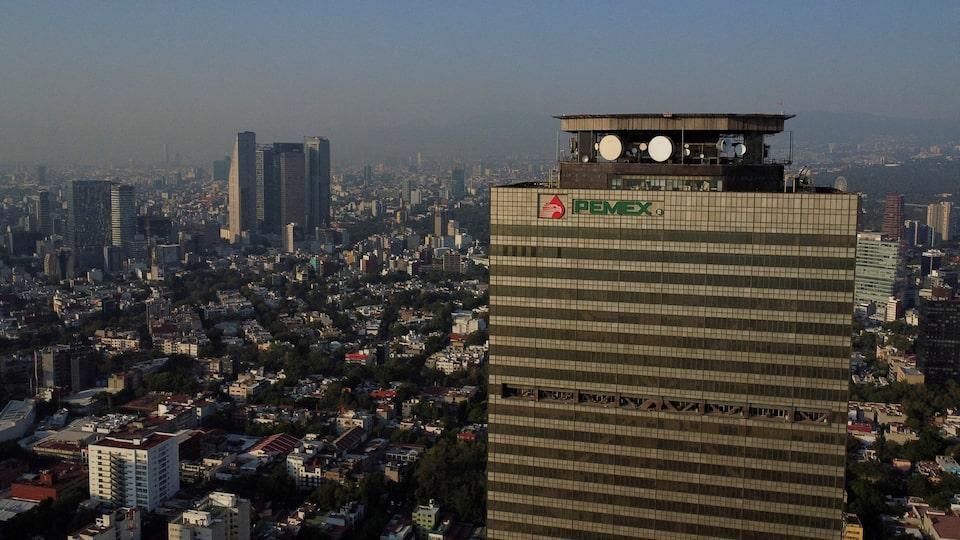
MEXICO CITY, Sept 17 (Reuters) - Mexico will inject nearly $14 billion into highly indebted state oil company Pemex after it raised funds through two recent bond issuances on international markets, the nation's finance ministry said on Wednesday. The dollar-denominated and euro-denominated bond issues will largely go toward buying back $9.9 billion worth of Pemex bonds, the finance ministry said, after that buyback closed early because demand exceeded the offer. Sign up here. This will "smooth out" Pemex's debt maturity profile, the ministry said, as the state company had payments coming due in 2026 and 2027. Pemex is one of the world's most heavily indebted energy companies, with nearly $100 billion in financial debt and some $22 billion owed to suppliers and contractors. In August, the government rolled out a sweeping plan to end its handouts for the company by 2027. "The transactions will equivalently reduce Pemex's previously contracted foreign currency obligations, in order to stabilize the public company's debt at a level that will allow it to strengthen its credit and liquidity profile while reducing its financing costs," the ministry said in a statement. https://www.reuters.com/business/energy/mexico-inject-nearly-14-billion-into-pemex-after-fresh-debt-offers-2025-09-17/
2025-09-17 20:26
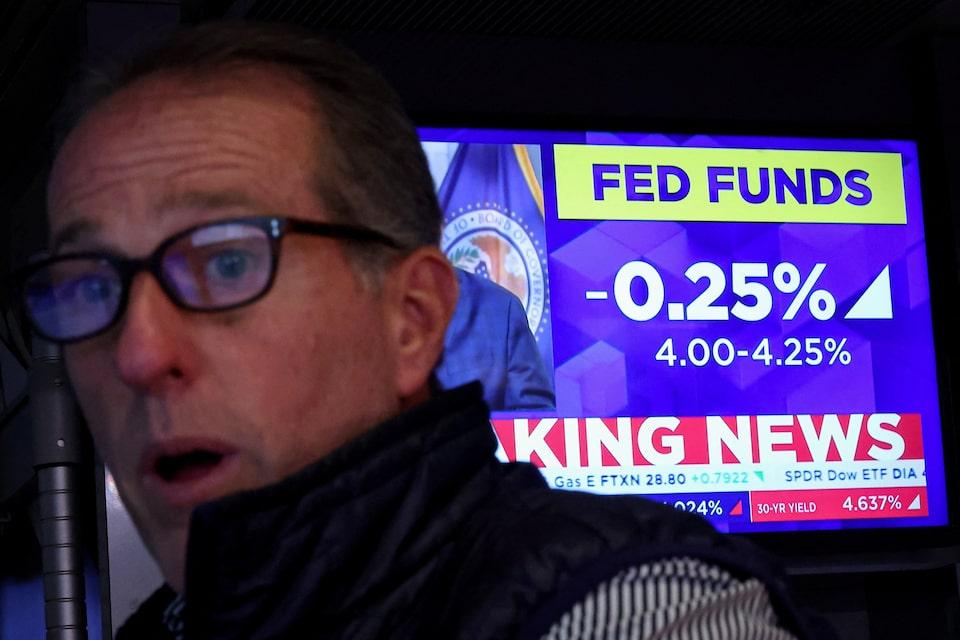
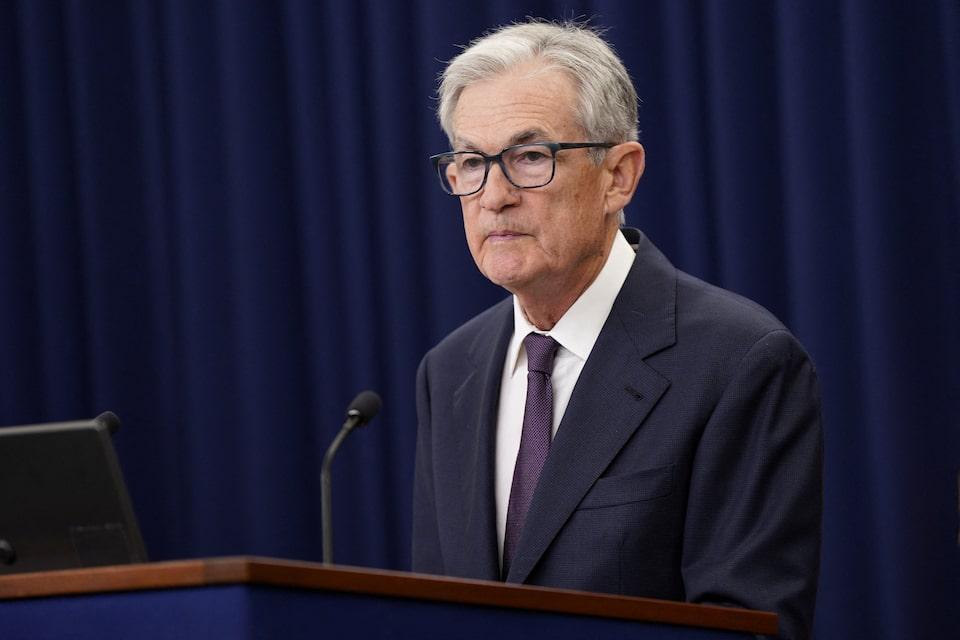
Fed cuts policy rate by a quarter of a percentage point Policymaker projections show two more cuts for remainder of 2025 Miran dissented in favor of a half-percentage-point cut Labor market risks were main focus of policy decision WASHINGTON, Sept 17 (Reuters) - The Federal Reserve, goaded by the risk of rising unemployment, reduced interest rates on Wednesday for the first time since December and indicated more cuts would follow to halt any slide in a labor market already experiencing higher joblessness among Blacks, a declining workweek, and other signs of weakness. The decision moves in a direction called for by President Donald Trump, but falls far short of the steep cuts in borrowing costs that he has demanded - and which were apparently penciled into projections submitted by new Fed Governor Stephen Miran, who cast the only dissenting vote. Sign up here. Fed Chair Jerome Powell, speaking in a press conference after the U.S. central bank lowered its benchmark interest rate by a quarter of a percentage point to the 4.00%-4.25% range , opens new tab and indicated more cuts would follow at meetings in October and December, said the softening job market was now top of the mind for him and his fellow policymakers. "There are no risk-free paths ... It's not incredibly obvious what to do," Powell told reporters at the end of a two-day policy meeting. "We have to keep our eye on inflation at the same time, we cannot ignore ... maximum employment." Powell said he believes the recent pace of job creation is running below the break-even rate needed to hold the unemployment rate constant, and that with businesses doing very little hiring overall, any increase in layoffs could quickly feed into higher unemployment. "You see minority unemployment going up. You see younger people ... more susceptible to economic cycles ... in addition to just overall lower payroll job creation that shows you that at the margin, the labor market is weakening. ... We don't need it to soften anymore," he said. Powell's comments cap a steady shift in tone that began over the summer as Fed officials concluded that the higher import tariffs imposed by the Trump administration would not lead to persistent inflation, with faster price increases expected through the end of the year but price pressures also expected to fade after that time even as monetary policy becomes looser. At the same time, signs of job market weakness began to accumulate, with payroll growth nearing stall speed. MEETING MARKED BY POLITICAL DRAMA The decision to cut rates came with no shortage of political drama, with Trump trying to fire Governor Lisa Cook in a so-far unsuccessful effort to open another seat on the Fed's Board of Governors for him to fill, and appointing Miran, who is on leave from his job as head of the White House's Council of Economic Advisers, to an open position that may only last until the end of January. Miran was sworn in on Tuesday before the meeting started, and dissented against the policy decision in favor of a larger half-percentage-point rate cut. He also seems to have submitted a year-end rate projection implying he supports further half-percentage-point cuts in the meetings ahead, with the policy rate dropping below 3%. The interest rate "dots" are not associated with policymakers by name, but new projections showed one forecast far below the others that analysts promptly attributed to Miran. Concerns that Trump's interference with the Fed - through constant criticism over its rate policy, the appointment of a White House insider to the Fed board and the president's effort to fire Cook - would yield signs of outsized political influence appear to have been overblown for now. Two other Trump appointees to the central bank's board - Fed Vice Chair of Supervision Michelle Bowman and Governor Christopher Waller - joined the wider consensus after dissenting just one meeting earlier. Waller in particular has been arguing for greater focus on the job market since the summer, a concern that others on the Fed's policy-setting committee have come to share as data indicated weaker hiring and which is now reflected in the policy statement. "It's deeply in our culture to do our work based on the incoming data and never consider anything else," Powell said in response to questions about the Fed's ability to maintain its independence in setting interest rates. "There wasn't widespread support at all for a 50-basis-point cut today." 'WEIGHTING THE LABOR MARKET MORE' Even with inflation expected to end the year at 3%, well above the central bank's official 2% target, Fed policymakers "deemed that the downside risk to employment has increased, and therefore it would seem that they are weighting the labor market more than the higher inflation that they noted in their projections," said Ellen Hazen, chief market strategist at F.L. Putnam Investment Management. Powell said it was not so much the initial cut that will matter to the economy, but the broader sense of a rate path that moves slightly faster to a stopping point about a quarter of a percentage point lower than officials communicated in their projections in June. The rate-path views are not commitments, Powell said, with higher inflation still a risk and the central bank now in a "meeting-by-meeting situation" when it comes to further rate reductions. But "I do think the Fed will ultimately keep moving towards neutral," even at the expense of slightly higher inflation through 2026, said Christopher Hodge, chief U.S. economist at Natixis. New economic projections released by the Fed showed policymakers at the median still see inflation ending this year at 3%, well above the central bank's 2% target, a projection unchanged from the forecasts in June. The projection for unemployment was also unchanged at 4.5% and the one for economic growth slightly higher at 1.6% versus 1.4%. Stocks briefly rose after the release of the policy decision and projections before turning lower and closing mixed, while the dollar was modestly higher against a basket of major trading partners' currencies. Treasury yields were little changed and rate futures markets saw more than a 90% probability of another rate cut at the Fed's next meeting in late October. Among those voting in favor of the policy decision was Cook, who attended the meeting despite Trump's effort to fire her and after two courts supported her challenge of his attempted dismissal. https://www.reuters.com/business/fed-lowers-interest-rates-signals-more-cuts-ahead-miran-dissents-2025-09-17/
2025-09-17 20:20
Republicans conflicted between loyalty to constituents or Trump Farmers worried about low crop prices and trade wars Near-record $40 billion in farm payments expected in 2025, USDA data shows WASHINGTON, Sept 17 (Reuters) - As U.S. farmers enter autumn harvest season worried that low crop prices and a trade war could hurt their livelihoods, Republican farm-state lawmakers are urging President Donald Trump's administration to issue economic aid for farmers by year's end. Discussions between lawmakers and the administration highlight the trade-offs Republicans face between loyalty to the president and representing constituents who have contacted their offices and flocked to town halls in their districts, worried about the impact of Trump's trade policies. Sign up here. Four farm-state members of Congress told Reuters they are in talks with the U.S. Department of Agriculture and other administration officials about an aid package, ideally by the end of December. Republican Senator John Hoeven, who leads agriculture funding on the appropriations committee, said he is discussing with the administration an approach similar to that taken during Trump's first term, when the federal government issued $23 billion in payments to farmers to offset losses from a trade war with China. He said emergency aid could also be added to a government spending bill. Hoeven, of North Dakota, said farmers need assistance "the sooner, the better, but certainly by year-end." On Monday, Agriculture Secretary Brooke Rollins said she is working daily with Congress , opens new tab to evaluate how much aid might be needed this autumn, but did not specify a timeline or amount. A USDA spokesperson said officials were "exploring the need for further assistance but have not made a determination if an additional program is needed at this time." The spokesperson said Trump was supporting farmers by opening new international markets, lowering taxes and boosting farm supports in his tax-cut and spending bill. “President Trump and Secretary Rollins are always in touch with the needs of our farmers, who played a crucial role in the President’s November victory," White House spokesperson Anna Kelly said in an email. The email added that Trump's inflation fight will "lower input costs" while trade deals "are opening new markets for America’s agriculture industry. We would not get ahead of the President on any support for pending legislation.” FARMS TO GET NEAR-RECORD PAYMENTS The federal government is already expected to spend more than $40 billion on payments to farmers in 2025, the second-highest amount since 1933, according to USDA data. The near-record sum is fueled by ad-hoc disaster and economic aid passed by Congress last December. “Farmers are going through some of the worst economic times, I think, in my lifetime,” said Republican House Agriculture Committee Chairman Glenn Thompson, of Pennsylvania, adding the need for aid has grown and he hopes to pass some assistance in a farm-spending package later this year. Congress is several years overdue to pass a farm bill. The lawmakers were hesitant to specify how much aid was needed, but said it eclipsed the $23 billion of Trump's first term. Net farm income could fall by more than $30 billion in 2026 due to a decline in government payments and low crop prices, according to an estimate from the Food and Agricultural Policy Research Institute at the University of Missouri. Representative Angie Craig, the top Democrat on the Agriculture Committee, blamed Trump’s tariffs and economic policies for this downturn. "We’ve lost markets farmers worked decades to develop and the president is continuing his trade wars," the Minnesota lawmaker said. "The administration needs to step up and end the chaos in farm country.” In northeast Arkansas early this month, almost 500 farmers and farm industry insiders packed a church center to warn the staff of their state's all-Republican congressional delegation they may not be able to pay off farm loans that many used to purchase seed for spring planting. “Farming is done like Russian roulette. You have to pay out the loan to go again next year,” said Scott Brown, who attended the Arkansas town hall to advocate for his four-crop, 800-acre (324 ha) farm. Republican Representative Rick Crawford, whose Jonesboro, Arkansas-area district hosted the town hall, said an aid package would likely not arrive before October. That is when Congress is expected to replenish a discretionary USDA funding pool, the Commodity Credit Corporation, that would likely be the source of payments. Lawmakers are currently locked into a partisan standoff to avert a potential government shutdown before funding runs out at the end of the fiscal year on September 30. “I think farmers can probably wait till October. But I think what they need, and what the bankers need, as much as anything, is a strong signal that the money will be there,” Crawford said, “And if it's not, we're going to see a lot of financial calamity in rural America.” https://www.reuters.com/world/us/us-farmers-face-financial-calamity-without-extra-aid-soon-republican-lawmakers-2025-09-17/

2025-09-17 20:19
Fed delivers normal-sized rate cut, sees steady pace of further reductions Dollar supported after Powell says Fed is in a 'meeting-by-meeting situation' with respect to future policy path Canadian dollar weakens as BoC cuts rates NEW YORK, Sept 17 (Reuters) - The U.S. dollar fell to a fresh four-year low against the euro before reversing losses to trade higher on the day in a choppy session after the Federal Reserve cut interest rates by a quarter of a percentage point. The rate cut, along with projections showing two more quarter-percentage-point reductions are anticipated at the remaining two policy meetings this year, indicates Fed officials have begun to downplay the risk that the administration's trade policies will stoke persistent inflation. Sign up here. "The Fed opted for the most probable outcome this afternoon, cutting 25 basis points. Risk assets and treasuries appear to be focused on the Fed's expectation for two more cuts this year," Blair Shwedo, head of investment grade sales and trading at US Bank, said. Fed officials have gradually warmed to the idea that Trump's tariffs would have only a temporary impact on inflation, and the latest forecasts are consistent with that view. The cut, the first move by the policy-setting Federal Open Market Committee since December, lowered the policy rate to the 4.00%-4.25% range. A 25 basis point cut was widely expected though U.S. President Donald Trump , opens new tab on Monday called for a "bigger" cut to benchmark interest rates. The dollar found some support after Fed Chair Jerome Powell said the Fed is in a "meeting-by-meeting situation" regarding the outlook for interest rates and characterized Wednesday's move as a risk management cut, adding that he does not feel the need to move quickly on rates. The move to a more consistent pace of cuts was backed by Fed Governor Christopher Waller and Vice Chair of Supervision Michelle Bowman, Trump appointees who dissented over the policy decision in late July to hold rates steady. The euro was 0.3% lower against the dollar at $1.18305, after rising to as high as $1.19185, its strongest since June 2021, earlier in the session. The dollar index , which measures the U.S. currency against six others, was 0.3% higher at 96.926. Earlier in the day data showed U.S. single-family homebuilding and permits for future construction dropped in August amid a glut of unsold new houses and a softening labor market, shrugging off falling mortgage rates. With the Fed finally cutting rates again, many market participants see further losses for the dollar, but that is far from a given, analysts said. "In part, why I'm thinking that the U.S. dollar may not necessarily completely sink is also the idea that you have to take into account what's going on outside of the U.S. and the global growth narrative," said Juan Perez, director of trading at Monex USA in Washington. "The global growth narrative is not a good one. It's not like everybody else is killing it out there," he said. On Wednesday, the Canadian dollar weakened about 0.2% against its U.S. counterpart after the Bank of Canada reduced its key policy rate by 25 bps to a three-year low of 2.5%, as expected, citing a weak jobs market and less concern about underlying pressures on inflation. Sterling was up 0.08% on the day at $1.36575, not far from 2-1/2-month highs after British inflation data matched expectations. Against the Japanese yen , the dollar rose 0.1% to 146.655 yen, ahead of a Bank of Japan policy meeting on Friday, where the central bank is expected to stand pat on rates. The spotlight is on an October 4 vote where the ruling Liberal Democratic Party will elect a new leader to replace outgoing Prime Minister Shigeru Ishiba. Cryptocurrency bitcoin was down 1% at $115,730. https://www.reuters.com/world/middle-east/dollar-whipsawed-fed-delivers-normal-sized-rate-cut-2025-09-17/
2025-09-17 19:56
WASHINGTON, Sept 17 (Reuters) - More than 100 Democratic lawmakers in the U.S. House of Representatives on Wednesday urged the Trump administration to abandon plans to repeal vehicle emission rules. In a letter seen by Reuters, 102 lawmakers led by Representative Doris Matsui called on the Environmental Protection Agency to drop its aim to repeal all greenhouse gas emission standards for light-duty, medium-duty and heavy-duty vehicles and engines. Sign up here. "Repealing the vehicle pollution standards would hamstring this growing industry, killing thousands of good-paying American jobs and ceding the future of global automotive leadership to China," the lawmakers wrote in a letter seen by Reuters. In July, the EPA said it will rescind the long-standing finding that greenhouse gas emissions endanger human health, removing the legal foundation for all U.S. greenhouse gas regulations, a move that would end current limits on greenhouse gas pollution from vehicle tailpipes, power plants, smokestacks and other sources. The EPA said it will review the letter and respond through the appropriate channels. Comments on its proposal are due by September 22. "If we turn our backs on clean vehicle technologies, the next generation of American vehicles will be significantly more expensive to fuel, maintain, and repair," according to the letter, which was also signed by Representatives Rick Larsen, Alexandria Ocasio-Cortez, Raja Krishnamoorthi and Jerrold Nadler. The letter said EPA’s analysis "suggests the proposal to eliminate vehicle pollution standards would result in $1.3 trillion in lost fuel and maintenance savings." The Trump administration has taken aim at vehicle environmental rules on a number of fronts. In June, Trump signed a resolution of disapproval under the Congressional Review Act to bar California's landmark plan to end the sale of gasoline-only vehicles by 2035 and two other vehicle rules. In June, NHTSA paved the way for looser U.S. fuel economy standards by declaring that former President Joe Biden's administration exceeded its authority by assuming high uptake of electric vehicles in calculating rules. Trump also signed legislation eliminating penalties for automakers not meeting U.S. fuel economy standards dating back to 2022. https://www.reuters.com/sustainability/climate-energy/democratic-lawmakers-urge-trump-drop-plan-kill-vehicle-emission-limits-2025-09-17/