2025-09-17 13:48
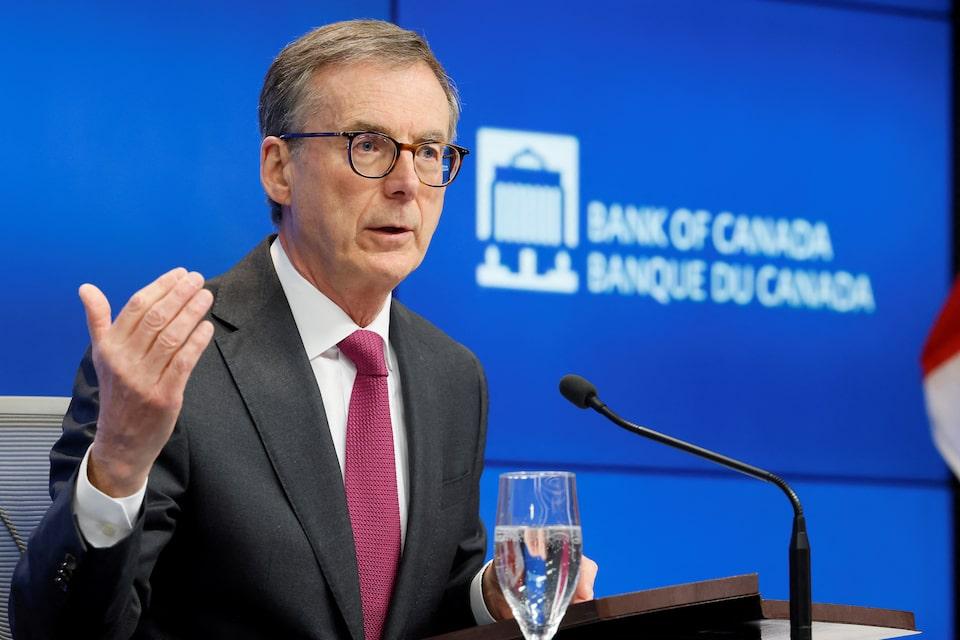
OTTAWA, Sept 17 (Reuters) - The Bank of Canada released the following statement by Governor Tiff Macklem on Wednesday: "Good morning. I'm pleased to be here with Senior Deputy Governor Carolyn Rogers to discuss today’s monetary policy decision. Sign up here. "Today, we lowered the policy interest rate by 25 basis points, bringing it to 2.5%. Through the recent period of trade upheaval, Governing Council has been proceeding carefully, paying particular attention to the risks and uncertainties facing the Canadian economy. Three developments have shifted the balance of risks since our July decision. "First, Canada's labour market has softened further. "Second, although there are still some mixed signals, on balance, recent data suggest the upward pressures on underlying inflation have diminished. "Third, with the removal of most retaliatory tariffs by Canada, there is less upside risk to future inflation. "Considerable uncertainty remains. But with a weaker economy and less upside risk to inflation, Governing Council judged that a reduction in the policy rate was appropriate to better balance the risks going forward. "The Bank will continue to assess the risks, look over a shorter horizon than usual, and be ready to respond to new information. "Let me provide some details on what we've seen since July. "After remaining resilient to sharply higher US tariffs, global growth is now showing signs of slowing. US consumers are cautious and employment gains have slowed. US inflation has picked up in recent months as businesses appear to be passing on some tariff costs to consumer prices. In China, GDP growth was resilient in the first half of the year but appears to be softening as investment weakens. The Canadian economy is being affected by both US tariffs and the unpredictability of US trade policy. "GDP declined by 1.6% in the second quarter, largely as expected. Exports to the United States fell sharply — both as payback for the pull-forward of activity in the first quarter and because tariffs are dampening US demand. "Tariffs are having a profound effect on several key sectors, including the auto, steel and aluminum industries. Chinese tariffs on canola, pork and seafood, new US tariffs on copper, and higher US tariffs on softwood lumber will spread the direct impacts further. "Uncertainty is also weighing on the economy. Business investment contracted in the second quarter. Many businesses have told us they have paused investment plans given elevated uncertainty about US trade policy. Businesses are also concerned that demand in Canada will weaken as the economic fallout broadens. "There were some signs of resilience: consumption was stronger than expected in the second quarter and housing activity increased. But in the months ahead, low population growth and weakness in the labour market will likely weigh on household spending. "Employment has declined in the past two months, increasing the unemployment rate to 7.1%. In addition to significant job losses in sectors that rely on US trade, employment growth in other parts of the economy has slowed as businesses have scaled back their hiring intentions. Wage growth has continued to ease. "Turning to inflation, CPI inflation was 1.9% in August, the same as at the time of the July Monetary Policy Report. Excluding taxes, inflation was 2.4%. Preferred measures of core inflation have been around 3% in recent months, but on a monthly basis, the upward momentum seen earlier this year has dissipated. A broader range of indicators, including the alternative measures of core inflation and the distribution of price changes across CPI components, continue to suggest underlying inflation is running around 2½%. "The federal government's recent decision to remove most retaliatory tariffs on imported goods from the United States will mean less upward pressure on the prices of these goods going forward. "Still, the disruptive effects of shifts in trade will add costs even as they weigh on economic activity. It is difficult to predict the extent of cost increases, where they will show up, and how they could be passed through to consumer prices. "With some stability in US tariffs in recent weeks, near-term uncertainty may have come down a little. But the focus is shifting to the upcoming review of the Canada-United States-Mexico Agreement. New US threats to use tariffs as an instrument of geopolitical pressure are also contributing to global uncertainty. "At this rate decision, there was clear consensus to lower our policy rate for the first time since March. We will continue to assess the impacts of tariffs and uncertainty on economic activity and inflation. We are paying close attention to how exports evolve given the impact of US tariffs and changing trade relationships; how much this spills over into business investment, employment and household spending; how the cost effects of trade disruptions and reconfigured supply chains are passed on to consumer prices; and how inflation expectations evolve. "We are focused on ensuring that Canadians continue to have confidence in price stability through this period of global upheaval. We will support economic growth while ensuring inflation remains well controlled. "With that, the Senior Deputy Governor and I would be pleased to take your questions." ((Reuters Ottawa bureau, +1 647 480 7921; [email protected] , opens new tab)) Keywords: CANADA CENBANK/MACKLEM https://www.reuters.com/world/americas/full-text-bank-canada-head-says-rate-cut-designed-help-balance-risks-economy-2025-09-17/
2025-09-17 12:27
LONDON, Sept 17 (Reuters) - Crypto firms in Britain could be exempted from rules that ensure financial services companies act with integrity and in the interests of customers, under new proposals outlined by the Financial Conduct Authority on Wednesday. The move comes after Britain signalled in April it would cooperate on the best approach towards digital assets with the United States, which has embraced the crypto industry and vowed to roll back regulatory curbs under President Donald Trump. Sign up here. Publishing a consultation on minimum standards designed to allow fast-growing crypto firms to compete internationally, Britain's financial regulator is suggesting waiving four of its principles for crypto asset trading platforms. These include that firms must conduct their business with integrity, with skill, care and diligence, that they pay due regard to customer interests and take reasonable care to ensure advice and discretionary decisions for customers are suitable. "We want to develop a sustainable and competitive crypto sector – balancing innovation, market integrity and trust," said David Geale, the FCA's executive director of payments and digital finance. "Our proposals won't remove the risks of investing in crypto, but they will help firms meet common standards so consumers have a better idea of what to expect." Although crypto assets are generally high-risk and volatile, customers should still be protected from poor business practices, the regulator said. The FCA is also proposing tougher rules in areas such as operational risk. A $1.5 billion hack on Dubai-headquartered cryptocurrency exchange Bybit in February underlined the need for "strong operational resilience controls", it said. The regulator is seeking feedback on whether the consumer duty, which requires firms to put their customers first, and customer access to the Financial Ombudsman Service for compensation should apply for crypto asset firms. Charles Kerrigan, a partner and AI specialist at law firm CMS, said it was inevitable that the consumer duty would apply once crypto assets are brought within the regulatory framework. Around 12% of British adults own or have owned cryptocurrencies such as bitcoin or ethereum, up from 4% in 2021, the government has said. The deadline for feedback on the consultation is November 12. https://www.reuters.com/sustainability/boards-policy-regulation/uk-regulator-proposes-exempting-crypto-firms-integrity-other-rules-2025-09-17/

2025-09-17 12:20
ADNOC-led consortium walks away after months of talks Third failed takeover attempt for Australian gas firm Deal would have been Australia's biggest all-cash buyout DUBAI/SYDNEY, Sept 17 (Reuters) - Abu Dhabi National Oil Company has withdrawn the $18.7 billion offer it led to buy Australian gas producer Santos (STO.AX) , opens new tab after months of wrangling over valuation and terms. The move on Wednesday may slow down ADNOC's aggressive overseas expansion as the firm looks to invest its booming domestic oil income. It also highlights the difficulties foreign firms face when trying to buy assets in Australia. Sign up here. ADNOC's overseas unit XRG's bid with Abu Dhabi sovereign fund ADQ and private equity firm Carlyle for Santos became a third failed bid to buy Santos. Santos previously rejected a $10.8 billion offer from private equity-backed Harbour Energy in 2018 and walked away from talks with its bigger Australian rival Woodside Energy (WDS.AX) , opens new tab last year to create a possible A$80 billion oil and gas giant. "The market will ask questions about Santos' valuation after this ... XRG was a less price sensitive buyer than most yet still couldn't make it work," said MST Marquee senior energy analyst Saul Kavonic. Santos in a statement said it had expected to enter a deal at the agreed price on or before September 19 and had expressed concerns over delays in reaching a formal agreement. The company said the consortium refused to agree to a fair sharing of risk, including taking responsibility for securing regulatory approvals and committing to domestic gas development and supply. XRG in its statement said the decision was taken after taking into account all commercial factors. The consortium was ready to undertake new long-term commitments to Australian energy production and enhance regional energy security, it added. The Australian government did not respond to requests for comment outside of business hours. XRG, PARTNERS FOCUSED ON SHAREHOLDER VALUE "While disappointed not to move forward, XRG, and its consortium partners, are responsible, disciplined investors with a clear focus on creating value for our shareholders and driving long-term growth," XRG said in a statement released after Australian financial market hours. Santos' shares closed on Wednesday at A$7.65, well below the consortium's indicative $5.76 per share offer, which had equated to A$8.89 per share when the bid arrived in June. The shares have consistently traded below the offer price, which analysts interpreted as a sign from investors that the deal was at risk of not proceeding. Santos in June said the offer came after it had rejected two previous proposals made by the consortium in March, at $5.04 and $5.42 per share, that were not made public. Taking into account net debt, the deal would have given Santos an enterprise value of A$36.4 billion ($24.30 billion), which would have made it the largest all-cash corporate buyout in Australian history, according to FactSet data. The consortium had extended its due diligence on Santos and had up until Friday to finalise a formal offer. OPPORTUNITIES TO SELL DOWN SOME ASSETS "Despite this outcome, we believe Santos' APAC-facing LNG assets continue to hold geostrategic value in this turbulent time," Kaushal Ramesh, vice president, gas and LNG research at Rystad Energy, told Reuters. MST Marquee's Kavonic echoed that. "There should still be an opportunity for Santos to sell down some assets to realise value and fund more growth to deliver for shareholders, but its unclear of this can happen under the current leadership," Kavonic said. He added there would still be scope for ADNOC to pursue simpler and less controversial asset-level deals. "ADNOC ambitions haven't changed. Santos just won't be their big LNG debut." ($1 = 1.4981 Australian dollars) https://www.reuters.com/business/energy/adnoc-led-consortium-pulls-187-billion-bid-australias-santos-2025-09-17/
2025-09-17 12:11
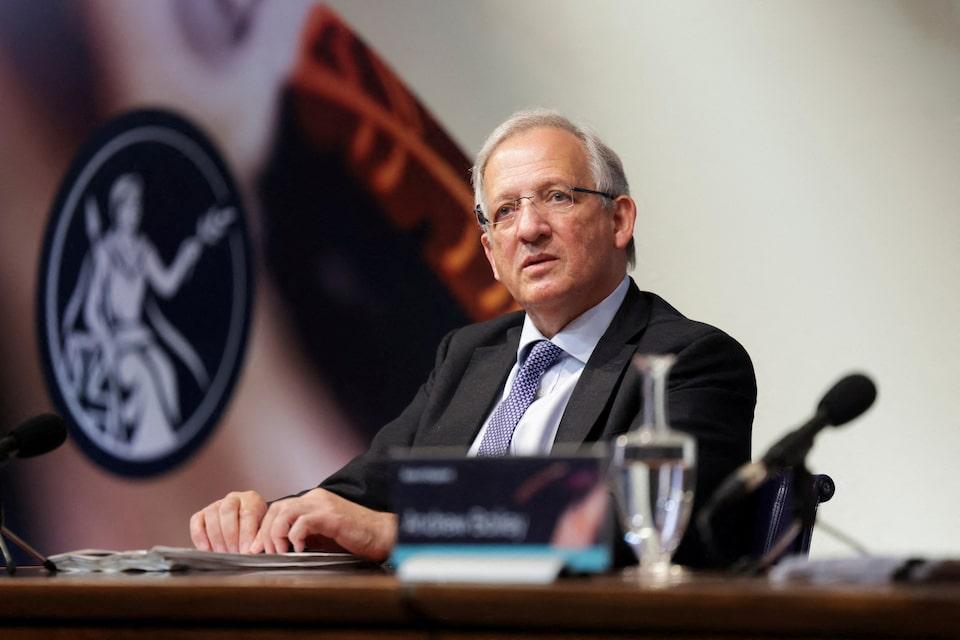
Ex-BoE deputy warns US might use banking system against allies Many Western countries rely on US banks, Visa and Mastercard Trump in Britain for unprecedented second state visit LONDON, Sept 17 (Reuters) - Countries that see themselves as U.S. allies are now considering whether President Donald Trump's administration could one day disrupt their payments systems to exert diplomatic pressure, a former top Bank of England official has said. Jon Cunliffe, the BoE's deputy governor for financial stability from 2014 to 2024, said Western countries relied heavily on U.S.-headquartered Visa (V.N) , opens new tab and Mastercard (MA.N) , opens new tab for day-to-day domestic transactions and found it hard to avoid U.S. banks when making foreign payments. Sign up here. "What you've seen now with Greenland and Canada and other areas is that this particular administration appears to be as likely to use all the levers it has against jurisdictions that you would traditionally think of as its allies as its opponents," he told an event hosted by Britain's National Institute of Economic and Social Research late on Tuesday. "I've heard it from people in the payments network: 'Do I want to use the U.S. system because it might now be weaponised against me?'" Cunliffe added. COMMENTS COME AS TRUMP BEGINS STATE VISIT TO BRITAIN His comments came as Trump began an unprecedented second state visit to Britain after forging a cordial relationship with Prime Minister Keir Starmer. Cunliffe drew a parallel with some Western countries' new-found reluctance to buy U.S. fighter jets, possibly due to fears that they could be remotely disabled. "The question of the 'kill switch' which people worry about for F-35s... the issue of the 'kill switch' exists in terms of payments." Visa and Mastercard suspended operations in Russia in March 2022 after Russia's full-scale invasion of Ukraine. BoE Governor Andrew Bailey told parliament this month he was "very concerned" about Trump's pressure on the Federal Reserve's independence. And at a European Central Bank event on September 3, another former BoE official, Adam Posen, who is now president of the Peterson Institute for International Economics, said it should not be taken for granted that a politicised Fed would lend dollars to foreign central banks in a crisis, as it has done a few times since the 2007-2008 financial meltdown. Both the BoE and the ECB have already asked lenders to assess their need for U.S. dollars in times of stress, as they game out scenarios in which they cannot rely on tapping the Fed, according to people with knowledge of the discussions. Asked about this specific risk, Cunliffe said he believed U.S. policymakers would realise it was in their national interest to preserve dollar swap lines to prevent financial turmoil spilling over into U.S. markets. But he said he would be more concerned if there were an abrupt loss of global confidence in the U.S. dollar at the same time. "If people don't want dollars, how do you put the fire out? That looks much more like an emerging market currency crisis." https://www.reuters.com/sustainability/boards-policy-regulation/ex-boe-deputy-governor-warns-trump-could-flick-financial-payments-kill-switch-2025-09-17/
2025-09-17 12:08
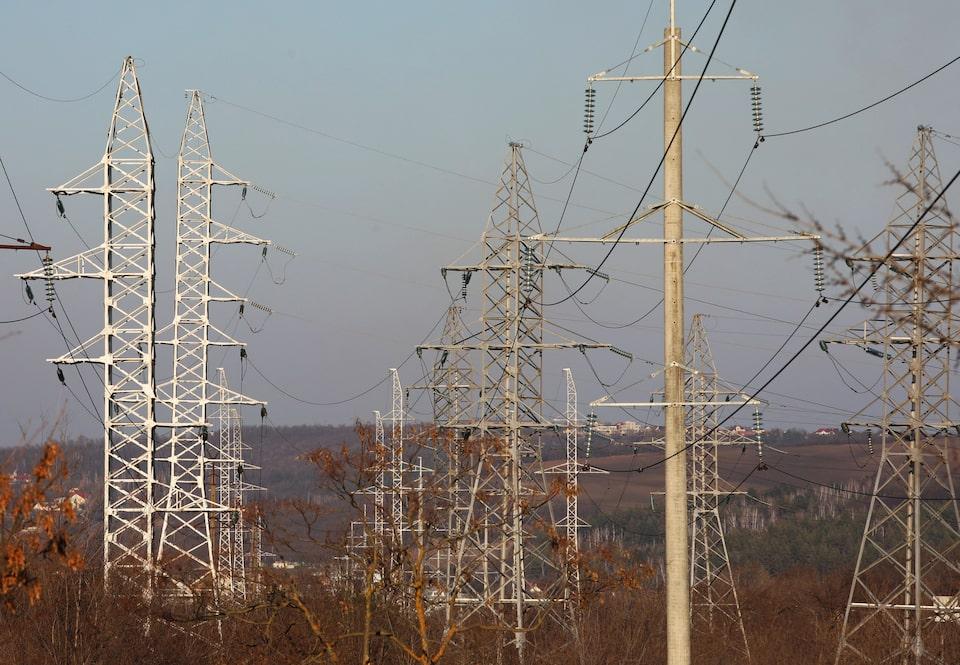
CHISINAU, Sept 17 (Reuters) - The U.S. has approved a $130 million project to construct a high voltage transmission line to ensure a reliable electricity supply to Moldova from European markets, the U.S. embassy in Moldova said on Wednesday. For years, Moldova depended on electricity produced in the separatist region of Transdniestria, which used Russian gas to generate it. Sign up here. However, Chisinau stopped imports after Kyiv's refusal to extend the contract for the transit of Russian gas to Europe and Russian gas stopped flowing to Transdniestria. The embassy said the project would create significant opportunities for U.S. firms by enabling Moldova to adopt and utilize U.S. technologies. "It will unlock potential across multiple sectors, including transmission infrastructure, grid optimization technologies, information and communication technologies, nuclear power, and battery storage," it said on Facebook. (This story has been corrected to say that Moldova depended, not depends, on power supplies from Transdniestria, having refused them since January 2025, in paragraph 2) https://www.reuters.com/business/energy/us-approves-130-million-project-build-power-line-moldova-2025-09-17/
2025-09-17 12:02
Kazakhstan resumes BTC oil exports after contamination halted flows 8,800 tons of Kashagan oil sent; next cargo due Sept. 20 BTC used to reduce reliance on Russian routes; 80% still via CPC MOSCOW, Sept 17 (Reuters) - Kazakhstan resumed oil supplies via the Baku-Tbilisi-Ceyhan pipeline on September 13, state energy company Kazmunaygaz (KMGZ.KZ) , opens new tab said on Wednesday. Supplies via the route were suspended last month amid contamination issues. Sign up here. The BTC pipeline, which runs through Georgia to Turkey, is used mainly to export oil from the Azeri, Chirag and Guneshli oilfields, which are operated by BP (BP.L) , opens new tab. The pipeline is also used by Kazakhstan as a way to lessen its dependence on Russia as a main exporting route. More than 80% of Kazakhstan's oil exports are shipped by the Caspian Pipeline Consortium via Russia's Black Sea Yuzhnaya Ozereevka terminal. Organic chloride contamination in Azeri BTC crude cargoes was discovered in July, causing several days' delay in loadings from Turkey's BTC Ceyhan terminal. Kazmunaygaz said Kazakhstan had sent 8,800 metric tons of oil from the Kashagan oilfield to BTC. The next cargo is planned for September 20. Industry sources said that no supplies from the Chevron-led (CVX.N) , opens new tab Tengiz oilfield are scheduled for this month via the route. One of the sources said two cargos totalling 18,000 tons of oil are expected to be dispatched from Kashagan via BTC in September. Azeri BTC crude oil exports from Ceyhan have been set at 15.4 million barrels for October, down from 16.5 million barrels in September, a schedule showed last week. Plans for the year call for Kazakhstan to ship 1.7 million tons, or 34,000 barrels per day, of oil via BTC. In the first eight months of the year, Kazakhstan sent 0.9 million tons to the BTC, according to Kazmunaygaz. https://www.reuters.com/business/energy/kazakhstan-resumes-oil-exports-via-baku-tbilisi-ceyhan-pipeline-2025-09-17/