2025-12-05 22:14
Dec 5 (Reuters) - Morgan Stanley said on Friday it now expects the U.S. Federal Reserve to deliver a quarter-percentage point rate cut in December, joining peers J.P.Morgan and BofA Global Research, following dovish remarks from central bank policymakers. All three brokerages previously expected the Fed to hold rates steady in December. Sign up here. Softer U.S. economic data released late November and dovish comments from key Fed officials, including from New York Fed President and the Federal Open Market Committee Vice Chair John Williams, Fed Governor Christopher Waller and San Francisco President Mary Daly, have bolstered expectations for a cut. "It seems we jumped the gun," Morgan Stanley strategists said. "We expect dissents, and Chair Powell will likely trade the cut for language changes in the statement that signal further cuts will have a higher bar." Traders are currently pricing in a 87.2% chance of a quarter-point interest rate cut at the monetary policy meeting on December 9-10, as per the CME FedWatch Tool. In addition, Morgan Stanley now expects the Fed to reduce rates in January and April by 25 basis points each to a terminal rate of 3.0%-3.25%, revised from a previous forecast of a cut each in January, April and June. "We expect Chair Powell to signal that the recalibration phase of monetary policy is now complete. Any additional adjustments will be considered on a meeting-by-meeting basis and guided by incoming data," they said. Meanwhile, J.P.Morgan expects another cut in January, while BofA forecasts a cut each in June and July next year. https://www.reuters.com/business/jumped-gun-says-morgan-stanley-reverses-dec-fed-rate-call-25bps-cut-2025-12-05/
2025-12-05 19:57
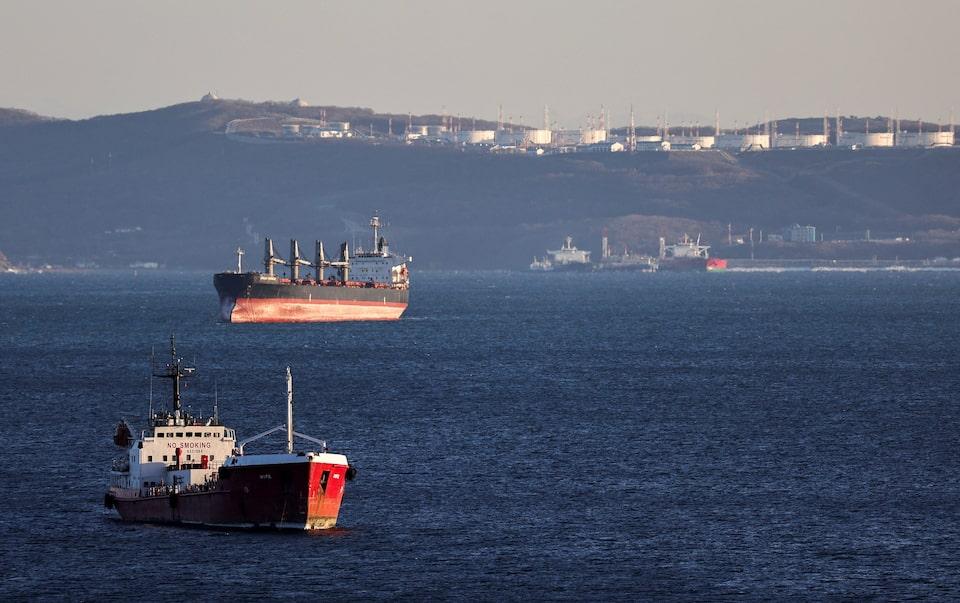
Dec 5 (Reuters) - Bulgaria's maritime authorities, border police and navy, are carrying out a rescue of a vessel that entered the country's territorial waters on Friday but the operation has been put on hold due to bad weather, the transport ministry said in a statement. The vessel is identified as sanctioned tanker Kairos, which was hit in the Black Sea last week by a Ukrainian drone in Turkey's Exclusive Economic Zone and its crew rescued after it was caught by fire. Sign up here. Kairos was one of the two sanctioned tankers Ukrainian naval drones hit as they headed to a Russian port to load up with oil destined for foreign markets, as Kyiv tries to pile pressure on Russia's vast oil industry. It suffered an explosion and caught fire while en route from Egypt to Russia, Turkey's Transport Ministry has said. It was spotted by the maritime control services earlier on Friday but did not respond to calls for contact. Following the contacts with passing ships and the Maritime Coordination Centre in Ankara, it was confirmed there were 10 people on board, who later sent a request for evacuation, the ministry said. The border police and a navy helicopter were sent to help but the ship anchored about one nautical mile east of the resort village of Ahtopol and stopped its movement. It has been under constant surveillance because of strong winds. The ministry said that the border police specialised team was ready to sail to the ship and two air-tractors prepared to join the operation as soon as the weather stabilises. On Tuesday, another Russian-flagged tanker loaded with sunflower oil reported a drone attack off the Turkish coast but its 13 crew members were unharmed. Turkish Foreign Minister Hakan Fidan on Wednesday said the "very scary" attacks on Russia-linked tankers in the Black Sea threatened the safety of all in the region and showed the reach of the war in Ukraine was expanding. https://www.reuters.com/world/europe/bulgaria-rescuing-sanctioned-tanker-that-was-hit-by-ukrainian-drone-2025-12-05/

2025-12-05 19:34
Dec 5 (Reuters) - U.S. power company Constellation Energy (CEG.O) , opens new tab said on Friday it has reached a resolution with the U.S. Department of Justice on the conditions required to complete the previously announced $16.4 billion acquisition of Calpine Corporation. The Federal Energy Regulatory Commission also approved the deal, on the condition Calpine divests four of its generating assets in the Mid-Atlantic region. Sign up here. The deal, announced in January, is one of the biggest acquisitions in U.S. power industry, coming at a time of rising electricity demand, driven by the proliferation of energy-hungry AI data centers and the electrification of transportation and buildings. In July, Constellation had received a regulatory approval from FERC following earlier approvals by the New York Public Service Commission and the Public Utility Commission of Texas for the acquisition. As part of the agreement, Constellation will divest three natural gas-fired power plants - its York 2 plant in Pennsylvania, the Jack Fusco Energy Center near Houston, Texas, and a minority interest in the Gregory Power Plant near Corpus Christi, Texas. The DOJ said in a statement the divestitures address concerns the acquisition could harm competition and increase prices for consumers in the Electric Reliability of Texas and PJM Interconnection grids. https://www.reuters.com/business/energy/constellation-reaches-agreement-with-us-department-justice-calpine-acquisition-2025-12-05/
2025-12-05 19:33
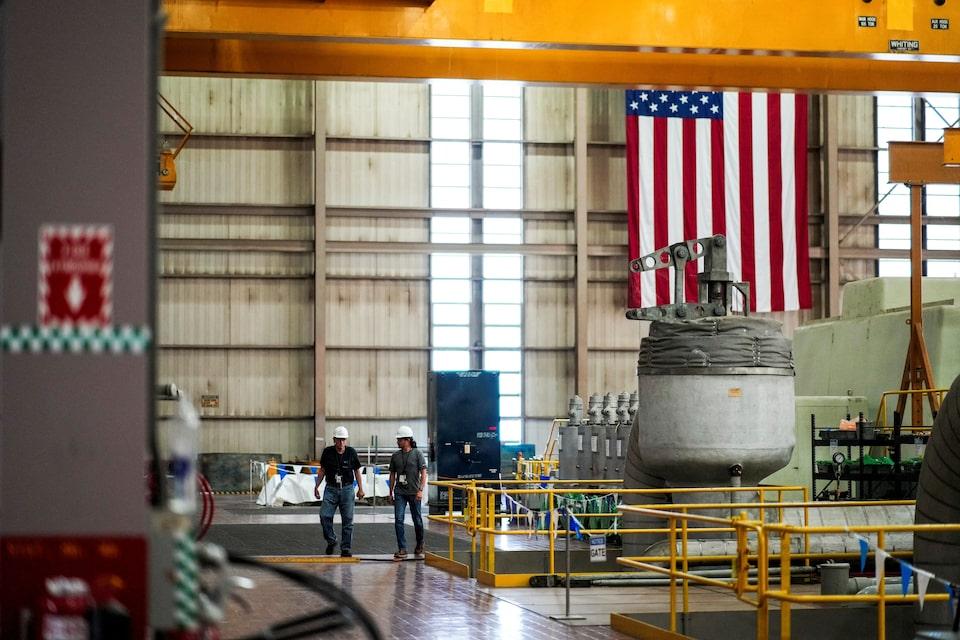
Dec 2 (Reuters) - (This Dec. 2 story has been corrected to say pounds, not euros, and to change the USD conversion figure, in paragraph 2) TAE Technologies, a private company backed by Alphabet's (GOOGL.O) , opens new tab Google and Chevron (CVX.N) , opens new tab, said on Tuesday it had formed a joint venture with the United Kingdom's nuclear agency to develop neutral beams for nuclear fusion. Sign up here. Under the agreement, the UK Atomic Energy Authority will make an equity investment of 5.6 million pounds ($7.47 million) in the new venture called TAE Beam UK. Nuclear fusion is a nascent technology that aims to generate electricity by harnessing the process that powers the sun. It offers the vision of abundant energy without pollution, radioactive waste or greenhouse gases. With nuclear power garnering renewed interest, countries such as Italy, the UK, China and the U.S. are looking into nuclear technology firms to enable application across industries including healthcare and defense. TAE Technologies said the partnership will enable it to develop and commercialize next‑generation neutral beam systems for fusion and related applications in a more cost‑effective manner. The company added that it will design, develop and manufacture neutral beams for fusion, while adapting its accelerator technology for cancer therapy, food safety and homeland security. "Together, we're building critical infrastructure for the fusion supply chain and ensuring that the U.S.-UK partnership can together remain central to the fusion economy of the future," CEO Michl Binderbauer said. The project is expected to deliver the first short-pulse beams within 18 to 24 months, the company said. ($1 = 0.7501 pounds) https://www.reuters.com/world/uk/google-backed-tae-technologies-forms-jv-with-uks-nuclear-agency-2025-12-02/

2025-12-05 19:15
BRUSSELS, Dec 5 (Reuters) - Six European Union countries have on Friday asked the European Commission to water down an effective ban on the sale of internal combustion engine cars slated for 2035 ahead of the release of a new auto package next week. The countries have asked the EU Commission to allow the sale of hybrid cars or vehicles powered by other, existing or future, technologies "that could contribute to the goal of reducing emissions" beyond 2035, a joint letter seen by Reuters showed on Friday. Sign up here. The letter was signed by the prime ministers of Bulgaria, the Czech Republic, Hungary, Italy, Poland and Slovakia. They also asked for low-carbon and renewable fuels to be included in the plan to reduce the carbon emissions from transportation. The European Commission is set to present a package of measures to support European automakers, such as an easing of the effective ban on internal combustion engines from 2035. The package is due to be published on Dec. 10, but could be delayed. Since they adopted a regulation that all new vehicles from 2035 should have zero emissions in March 2023, EU countries are now having second thoughts. Back then, the outlook for battery electric vehicles was positive, but carmakers' efforts have later collided with the reality of lower-than-expected demand and fierce competition from China. "We can and we must pursue our climate goal in an effective way, while not killing our competitiveness in the meanwhile since there is nothing green in an industrial desert," the prime ministers said in their letter. https://www.reuters.com/business/retail-consumer/six-countries-push-eu-allow-hybrid-cars-other-technologies-beyond-2035-2025-12-05/
2025-12-05 18:51
LONDON, Dec 5 (Reuters) - The G7’s proposed plan to bar tankers from hauling Russian oil ups the ante in the West’s economic stand-off with Moscow, but the ultimate bite hinges on whether governments will ratchet up punishments on those skirting sanctions. And with Russian President Vladimir Putin working tirelessly to strengthen Moscow’s own alliances, including India and China, the West may need to act quickly. Sign up here. Group of Seven countries and the European Union are discussing plans to impose a full maritime services ban on Russian oil transportation, restricting Moscow's access to a large pool of tankers, Reuters reported on Friday. The initiative, which could take effect by early 2026, will end the G7 price cap introduced in late 2022. That mechanism allows buyers to access Western shipping and insurance only if they purchase Russian crude below the set cap. The aim was to curb the oil revenue that helps finance Russia's war in Ukraine, while keeping global oil supply flowing. Russia produced around 9.3 million barrels per day (bpd) in October, around 9% of global supply, of which over half was exported, according to the International Energy Agency. The G7 governments appear willing now to bite deeper into Russia's oil exports, yet the ban does not mean they will stop. Russian producers have in recent years developed efficient ways to circumvent Western financial systems and sanctions, primarily using so-called “shadow fleet” tankers. In October, only 38% of Russian crude oil exports were shipped on G7 compliant tankers, according to data from the Centre for Research on Energy and Clean Air (CREA). Expanding the shadow fleet and replacing capacity lost to the new G7 restrictions appears doable as there are plenty of old vessels that Russia and its partners can purchase, including from Western shipping companies. How the West will respond remains the big unknown. A PRICE FOR EVERY RISK The market for Russian crude is quite concentrated. Over 90% of Russian seaborne crude oil exports of around 3.5 million bpd so far this year have gone to China, India and Turkey, according to shipping analytics firm Kpler. The question is whether these countries will continue buying the oil under the new G7 restrictions. The answer is probably yes - at the right price. Russian sellers will need to offer significant discounts to global oil prices to compensate for the higher risks and greater logistical complexity associated with dark fleet tankers, including ship-to-ship transfers. In effect, this is already happening under the current price cap. The risk, then, is that removing the price cap will actually simplify the calculus for Russian crude buyers, ultimately reducing the discount Russia is forced to offer, especially if oil prices rise. MEASURES WITH BITE The effectiveness of the new G7 proposal therefore hinges on Western governments’ willingness to enforce these new restrictions. But here, too, there is reason to be sceptical. Western governments have ratcheted up economic pressure on the Kremlin in recent months. Several G7 members in September lowered the price cap on crude oil to $47.60 a barrel from $60. The EU has also announced plans to ban imports of refined products made from Russian crude starting next year, and on Wednesday, the bloc agreed to phase out Russian gas imports by 2027. Crucially, U.S. President Donald Trump in October imposed sweeping sanctions on Russia's two largest oil companies, Rosneft (ROSN.MM) , opens new tab and Lukoil (LKOH.MM) , opens new tab. Trump had earlier imposed a 25% tariff on India over its purchases of Russian crude, as the two countries struggle to hammer out a trade deal. Yet despite all this, Russian exports have remained largely stable, while Indian and Chinese imports of Russian crude have continued, albeit at reduced levels. Indian imports of Russian crude are set to drop to 1.38 million bpd in November and December from an average of 1.75 million bpd in the first ten months of the year, according to Kpler. China has seen a similar trend. Yet, actual sales of Russian oil into India, China and other countries may end up far higher, judging by recent history, as Russian crude is often blended mid-ocean with other grades, rebranded and then gradually imported. THE RIGHT APPROACH Enforcement will depend on how much pain Western governments are willing to tolerate - whether by constraining the supply of Russian crude, which would push up oil prices, or by risking retaliatory measures from buyers of Russian oil. Isaac Levi, energy analysis team lead at CREA, says that the new G7 service ban "is the right approach" since most Russian crude oil is already under U.S. sanctions, effectively rendering the price cap moot. The new rules will only be effective if maritime coastal states – such as those in the Baltic and Nordic regions through which most Russian oil is shipped – intensify vessel inspection and detention of non-compliant tankers, he said. "We're not seeing enough deterrence and vessel detention. Until non-compliant vessels get detained, the trade will continue," Levi said. The tightening of the G7 restriction on Russia's oil industry, which accounts for around a quarter of federal budget proceeds, will certainly complicate life for the country's oil producers, likely resulting in lower revenue. But as time goes by, the West seems to be losing its influence in this battle. Putin and Indian Prime Minister Narendra Modi agreed on Friday to expand and diversify trade beyond oil and defence, despite Western pressure on New Delhi to scale back its ties with Moscow. To truly turn the tables, Western governments led by the U.S. will also need to be willing to take some financial pain – and that could be the ultimate sticking point. Want to receive my column in your inbox every Monday and Thursday, along with additional energy insights and links to trending stories? Sign up for my Power Up newsletter here. Enjoying this column? Check out Reuters Open Interest (ROI), , opens new tabyour essential new source for global financial commentary. ROI delivers thought-provoking, data-driven analysis. Markets are moving faster than ever. ROI , opens new tab can help you keep up. Follow ROI on LinkedIn , opens new tab and X. , opens new tab https://www.reuters.com/markets/commodities/g7s-russian-oil-tanker-ban-shows-teeth-bite-is-doubt-2025-12-05/