2025-09-16 21:04
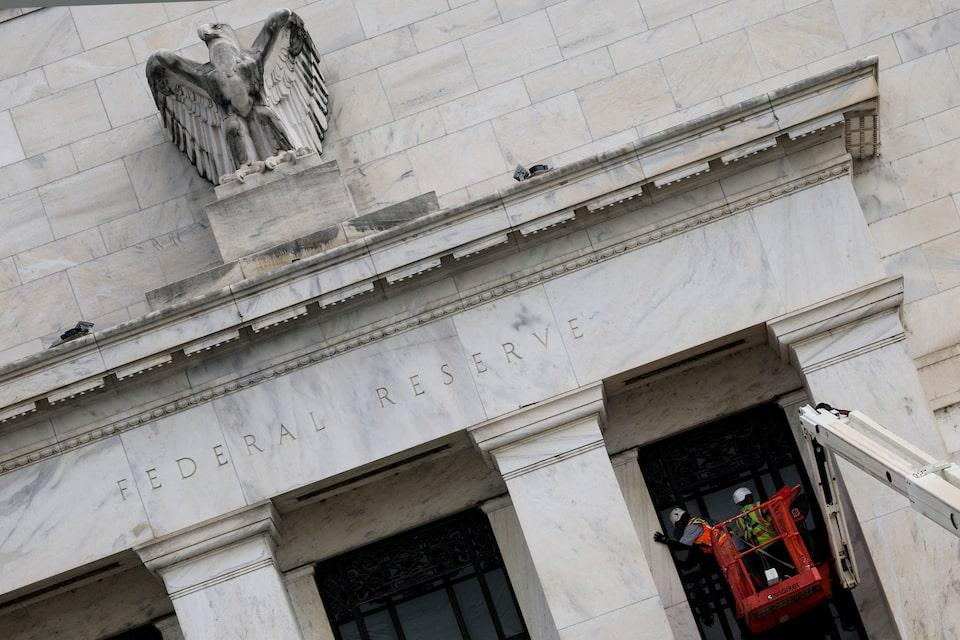
ORLANDO, Florida, Sept 16 (Reuters) - Making sense of the forces driving global markets By Jamie McGeever, Markets Columnist Sign up here. U.S. stocks dipped slightly on Tuesday but not before the S&P 500 and Nasdaq hit new highs, as investors braced for an expected rate cut from the Federal Reserve on Wednesday. Gold also hit a new high and the euro reached a four-year peak as the dollar's doldrums deepened. More on that below. In my column today I look at the surge in dollar hedging this year, and how it ties together two of global investors' main trades this year - long Wall Street, short the U.S. dollar. If you have more time to read, here are a few articles I recommend to help you make sense of what happened in markets today. Today's Key Market Moves Today's Talking Points: * Eur-eka! The euro climbed nearly 1% on Tuesday to a four-year high of $1.1877. It is up nearly 15% against the dollar so far this year and on course for its biggest annual rise since 2003. Could it scale $1.20? The euro's rise is not all that unique, as the dollar is struggling broadly in the face of crumbling rate and yield differentials. But it's potentially a major headache for the ECB, which already sees core inflation in 2027 at 1.8%, below its 2% target. * Central bank bonanza The Fed takes center stage this week and is widely expected to resume its monetary easing cycle with a 25 basis point cut. Chair Jerome Powell's steer in his press conference will be critical for the world economy and markets in the months ahead. But the Fed will be ably supported by a strong central bank cast. This week also sees policy decisions in Brazil, Canada, Japan, Britain, and South Africa, to name a few countries, which will go a long way to setting the tone for assets there, especially exchange rates. * Love spreads From euro zone sovereign debt, to U.S. credit and emerging markets, many key bond yield spreads around the world are narrowing to their tightest levels in years. Even decades. This is as a sign of how sanguine investors are about current market conditions and the near-term investment outlook. Or, it reflects a worrying degree of complacency and suggests stock bubble, economic, policy and other risks are insufficiently priced. Hedging surge reflects crowded trade - long Wall Street, short U.S. dollar The rush to hedge U.S. equity exposure this year was initially seen as part of a broad 'de-dollarization' process, reflecting global investors' discomfort with President Donald Trump's trade, economic and foreign policy agendas. But, as the months go by and U.S. stocks roar to fresh tech-fueled highs, this theory seems to be crumbling. If 'de-dollarization' were truly taking hold, U.S. stocks and bonds would almost certainly be cheapening. And they're not. Wall Street's indices - the S&P 500, Nasdaq, Dow and Russell 2000 - are at record highs, and Treasury bonds across the curve are up this year. Even the 30-year bond. However, unhedged overseas investors are currently sitting on much smaller gains or nursing losses because the dollar index is down 11% so far this year. Hence the rush to hedge. LIVING ON THE HEDGE For the first time this decade, hedged inflows into U.S. securities exceed unhedged inflows from abroad, according to analysts at Deutsche Bank. Analyzing more than 500 funds, they calculate that more than 80% of inflows into U.S. equities are now currency-hedged, as are around 50% of flows into U.S. bonds. This means that around two-thirds of total inflows into U.S. assets are now hedged. This represents a dramatic shift from years gone by, especially in equities. Hedging against further dollar downside suggests investors want to protect their U.S. equity and fixed income holdings rather than reduce them. Indeed, demand is holding up remarkably well, given the stretched valuations in stocks and fiscal clouds looming large over bonds. When it comes to stocks, investors rarely hedged in the past because of bets that a substantial decline on Wall Street would usually coincide with a crisis and therefore be offset by a safe-haven surge in the dollar. But that's not how the 'Liberation Day' tariff turmoil in April panned out. "Foreigners may have returned to buying U.S. assets ... but they don't want the dollar exposure that goes with it. For every hedged dollar asset that is bought, an equivalent amount of currency is sold to remove the FX risk," George Saravelos, Deutsche's global head of FX research, wrote on Monday. The last official U.S. Treasury figures for the end of June 2024 show that foreign ownership of U.S. stocks was a record 18%. Has that risen? DOLLAR BEARS The first half of the year was peppered with stories of European and Canadian pension funds sharply raising their dollar hedge ratios, fueling the 'de-dollarization' and 'end of U.S. exceptionalism' narratives. In euro terms, the Nasdaq's 12% fall in March was the index's worst month since 2002. And the dollar is likely to remain under sustained selling pressure, with interest rate and bond yield differentials moving against it with the Federal Reserve almost certain to resume its rate-cutting cycle this week, just as many peers are close to ending theirs. The currency could also end up bearing the brunt of lingering investor concerns about the U.S. fiscal trajectory and central bank independence. Yet amid all this, the profitability and dynamism of Wall Street, and the security and liquidity of Treasuries, continue to attract capital from around the world. U.S. assets remain the only game in town. THE APRIL 8 TURNAROUND Global stocks have been buoyant in 2025 too, with many non-U.S. indices outperforming their U.S. counterparts this year. But since the 'Liberation Day' turmoil reached its peak on April 8, U.S. stocks have roared back, with the Nasdaq – up nearly 40% since then – one of the best performers. Unsurprisingly, foreign investors don't want to miss out. According to JP Morgan's equity strategists, foreign investors are not interested in selling their U.S. holdings regardless of current valuations, because growth opportunities abroad are limited, liquidity outside the U.S. is relatively poor, and they want to stay reasonably close to their benchmarks. "Most foreign investors continue to park their capital in the U.S. for the long-term growth potential, shareholder-friendly corporates, pro-growth policies, and the AI story," they wrote last week. All told, investors seem to be bearish the dollar but bullish Wall Street and Big Tech in particular – a trend that has confounded many experts who assumed 'de-dollarization' would go well beyond the currency. It hasn't. And there's little reason to believe this will change just yet. What could move markets tomorrow? Want to receive Trading Day in your inbox every weekday morning? Sign up for my newsletter here. Opinions expressed are those of the author. They do not reflect the views of Reuters News, which, under the Trust Principles , opens new tab, is committed to integrity, independence, and freedom from bias. https://www.reuters.com/business/global-markets-trading-day-graphic-2025-09-16/
2025-09-16 20:56
Sept 16 (Reuters) - BWX Technologies (BWXT.N) , opens new tab said on Tuesday it had secured a $1.5 billion contract from the U.S. National Nuclear Security Administration to develop domestic uranium enrichment capabilities for defense purposes. The semi-autonomous nuclear agency, part of the Department of Energy, aims to establish a reliable supply of low-enriched uranium for tritium production and highly enriched uranium for naval nuclear propulsion, the NNSA said in a statement. Sign up here. The production plant will be located in Erwin, Tennessee. In July, BWX secured a $2.6 billion order to manufacture components for nuclear submarines and an aircraft carrier for the U.S. Navy. Shares of BWX were up 1.4% in extended trading. https://www.reuters.com/business/energy/bwx-technologies-secures-15-billion-contract-us-nuclear-weapons-agency-2025-09-16/

2025-09-16 20:51
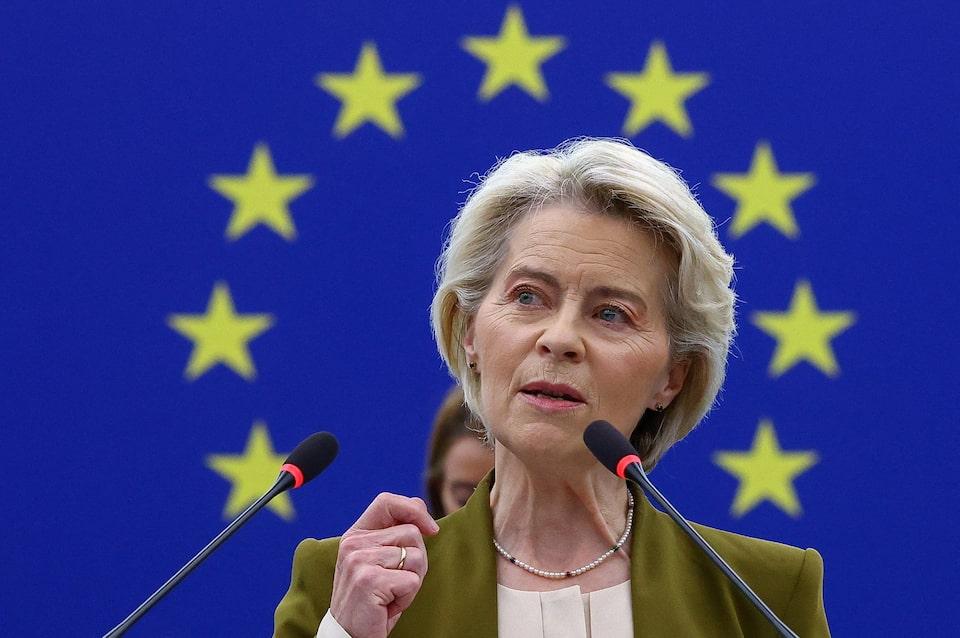
Von der Leyen discusses economic pressure on Russia with Trump EU to propose 19th sanctions package targeting crypto, banks, and energy Sept 16 (Reuters) - The European Commission will propose speeding up the phase-out of Russian fossil imports, the European Union executive's head Ursula von der Leyen said on Tuesday after a call with U.S. President Donald Trump. Von der Leyen said that she had a call with Trump on strengthening joint efforts to increase economic pressure on Russia through additional measures. Sign up here. More than three years after Russia launched its full-scale invasion of Ukraine, the U.S. and European Union still import billions of euros worth of Russian energy and commodities, ranging from liquefied natural gas to enriched uranium. "The Commission will soon present its 19th package of sanctions, targeting crypto, banks, and energy," von der Leyen wrote in a post on social media platform X. "The Commission will propose speeding up the phase-out of Russian fossil imports," she added. The bloc had previously intended to end purchases of Russian oil and gas by January 1, 2028. The U.S. has stepped up pressure on Europe to play a more robust role in helping to end Russia's war in Ukraine. Trump has told the EU it should impose harsh tariffs on India and China, the biggest buyers of Russian oil, and stop importing Russian energy itself. U.S. Treasury Secretary Scott Bessent has said , opens new tab the Trump administration would not impose additional levies on Chinese goods to halt China's purchases of Russian oil unless EU nations first hit China and India with punitive duties of their own. https://www.reuters.com/world/europe/eu-propose-faster-phase-out-russian-energy-von-der-leyen-says-2025-09-16/
2025-09-16 20:50
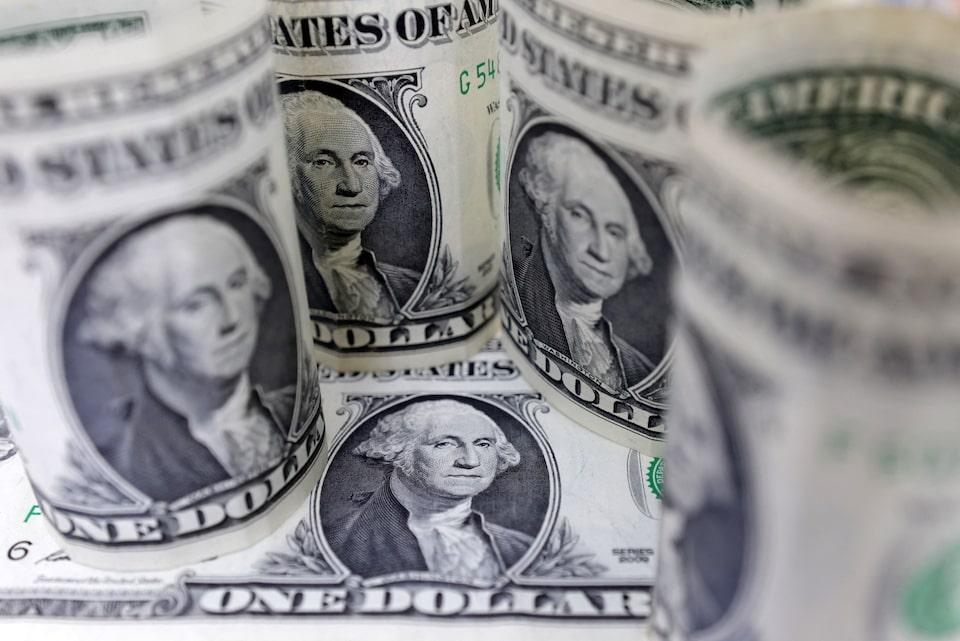
Wall Street stocks edge lower in choppy trading Investors bet on further Fed cuts Gold at record high, dollar weakens European shares fall Oil prices gain more than 1% NEW YORK/LONDON, Sept 16 (Reuters) - An index of world equity markets edged higher in choppy trading after hitting a record high on Tuesday ahead of the widely expected start of the Federal Reserve's interest rate cutting cycle, while U.S. Treasury yields and the dollar fell. MSCI's all-country index (.MIWD00000PUS) , opens new tab was a shade higher by 0.04% after rising as far as 978.74, a record high. Wall Street stocks erased earlier session gains and finished lower, with utilities and real estate making the most losses while energy and consumer discretionary shares led the gains. Sign up here. The Dow Industrial Average (.DJI) , opens new tab fell 0.27% to 45,757.90, the S&P 500 (.SPX) , opens new tab fell 0.13% to 6,606.76 and the Nasdaq Composite (.IXIC) , opens new tab fell 0.07% to 22,333.96. The pan-European STOXX 600 (.STOXX) , opens new tab dropped 1.14%, led by declines in financials, real estate and industrials stocks. "Today is more of a sideways move than anything else," said Mark Hackett, chief market strategist at Nationwide. "It felt like yesterday where we had a little bit of a surge and today a little bit of a pullback. But the reality is this is all just waiting to see what happens tomorrow afternoon." The Fed is expected to cut its benchmark interest rate by a quarter of a percentage point to the 4.00%-4.25% range at the end of its monetary policy meeting on Wednesday. Stephen Miran was sworn into his Fed position on Tuesday morning, after the U.S. Senate narrowly confirmed him to the central bank's Board of Governors ahead of its policy meeting. A U.S. appeals court separately declined to let President Donald Trump fire Fed Governor Lisa Cook. The yield on benchmark U.S. 10-year notes fell 0.6 points to 4.028%. The 2-year note yield, which typically moves in step with interest rate expectations for the Federal Reserve, fell 2.6 basis points to 3.51%. "You've had a really incredible run in the past couple of weeks: five out of the last six weeks positive ... record highs pretty much across the board. To me this is just a pause and a sideways, wait-and-see movement rather than a significant drop," Hackett said. Bets on Fed cuts have in turn kept pressure on the dollar, which on Tuesday fell to its lowest since July 4 against a basket of currencies . The dollar weakened 0.64% against the Japanese yen to 146.45 and fell 1.04% to 0.786 against the Swiss franc . The euro traded at its highest since September 2021 against the dollar. It was last up 0.87% at $1.1862. Sterling climbed to its highest in more than two months at $1.365. The dollar index fell 0.714% to 96.653, its lowest level since July 1. Gold rose as the dollar weakened. Spot gold rose 0.36% to $3,692.10 an ounce. Oil prices rose as markets weighed a potential disruption of supplies from Russia due to Ukrainian drone attacks on its ports and refineries. Brent crude futures rose 1.5% to settle at $68.47 a barrel. U.S. West Texas Intermediate crude settled at $64.52, up 1.9%. https://www.reuters.com/world/china/global-markets-wrapup-5-graphic-2025-09-16/
2025-09-16 20:33
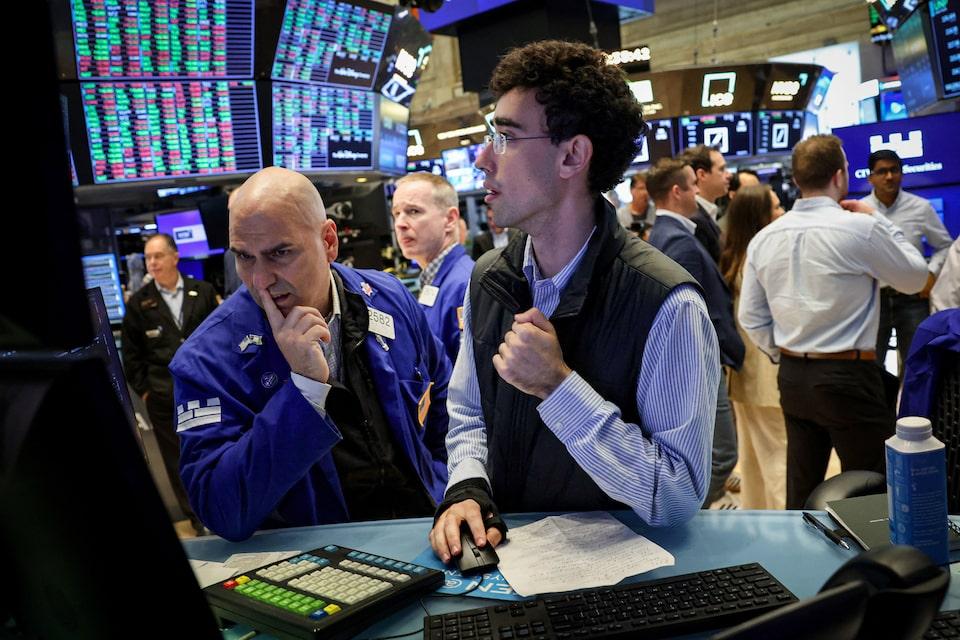
S&P down 0.13%, Nasdaq down 0.07%, Dow down 0.27% Fed begins two-day policy meeting Oracle shares up on TikTok deal framework reports Retail sales rise 0.6% in August vs 0.2% estimate Sept 16 (Reuters) - Wall Street's three main stock indexes ended lower in choppy trading on Tuesday as caution set in ahead of an anticipated interest rate cut from the Federal Reserve. Investors are largely still pricing in a 25 basis-point cut from the U.S. central bank at the conclusion of its two-day meeting on Wednesday, to offset the deterioration in the U.S. labor market, evidenced by numerous recent economic indicators. Sign up here. Data on Tuesday showed that U.S. retail sales increased more than expected in August, but that did little to change rate cut expectations. "Any kind of resilient economic data will only reaffirm the hawks on the FOMC ... and could give a little bit of fuel for (Fed Chair Jerome) Powell to come out as slightly more hawkish than the market is hoping for," said Ross Mayfield, investment strategist at Baird Private Wealth Management. Investors also brushed off news that the U.S. Senate confirmed White House economic adviser Stephen Miran to the Fed Board and an appeals court rejected President Donald Trump's bid to fire Fed Governor Lisa Cook. The Dow Jones Industrial Average (.DJI) , opens new tab fell 125.55 points, or 0.27%, to 45,757.90, the S&P 500 (.SPX) , opens new tab lost 8.52 points, or 0.13%, to 6,606.76 and the Nasdaq Composite (.IXIC) , opens new tab lost 14.79 points, or 0.07%, to 22,333.96. Six of the 11 S&P 500 subsectors ended lower. The utilities (.SPLRCU) , opens new tab and real estate (.SPLRCR) , opens new tab sectors fell 1.81% and 0.66%, respectively. The CBOE Volatility Index (.VIX) , opens new tab climbed to its highest level in more than a week to 16.04 points. UnitedHealth Group (UNH.N) , opens new tab shares fell 2.3% and Nvidia (NVDA.O) , opens new tab shares dropped 1.6%, weighing on the Dow. Nvidia shares fell after Reuters reported , opens new tabweak demand in China for its new AI chip. The S&P 500 and the Nasdaq closed at all-time highs on Monday after hitting intraday records in multiple sessions. The three main indexes had gained so far in September - a month traditionally deemed bad for U.S. equities. Webtoon Entertainment (WBTN.O) , opens new tab soared 39% after a deal with Disney (DIS.N) , opens new tab to create a new digital comics platform to feature content from Disney's portfolio, including the Marvel and "Star Wars" franchises. Oracle (ORCL.N) , opens new tab rose 1.5% after Trump said that the U.S. and China have a deal that will keep the short-video app TikTok operating in the U.S. and multiple news outlets, citing sources, said Oracle is part of the investor consortium. On the Nasdaq, advancing issues outnumbered decliners by a 1.01-to-1 ratio. Declining issues outnumbered advancers by a 1.07-to-1 ratio on the NYSE. The S&P 500 posted 15 new 52-week highs and 13 new lows while the Nasdaq Composite recorded 89 new highs and 58 new lows. Volume on U.S. exchanges was 17.11 billion shares, compared with the 16.31 billion average for the full session over the last 20 trading days. https://www.reuters.com/business/wall-st-ends-lower-investors-turn-cautious-ahead-fed-rate-decision-2025-09-16/
2025-09-16 20:33
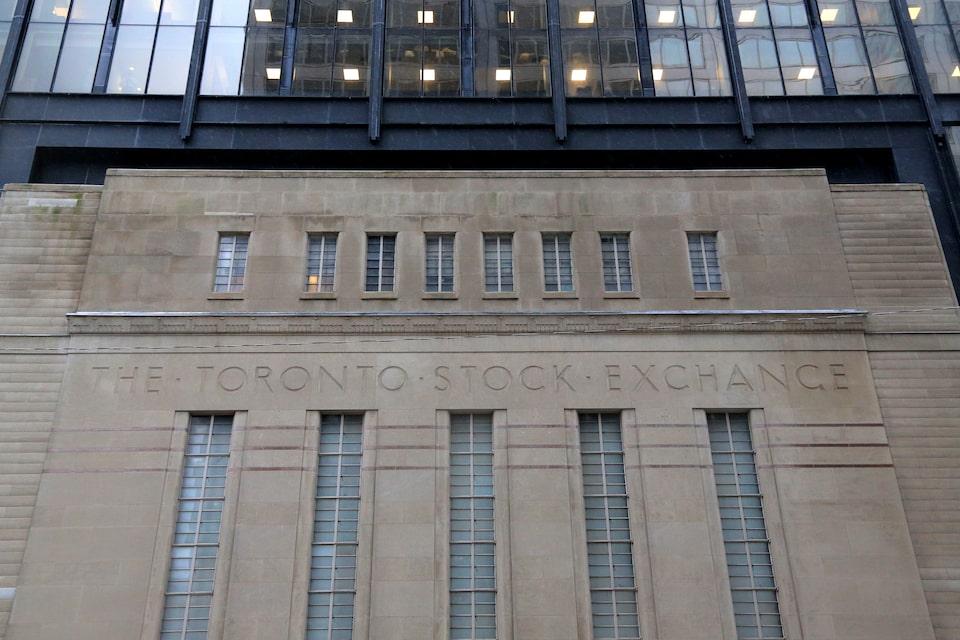
TSX ends down 0.4% at 29,315.23 Pulls back from record closing high on Monday Materials group declines 1.9% Teck Resources loses 4.3% Sept 16 (Reuters) - Canada's major stock index pulled back on Tuesday from a record high, as metal mining and consumer-related shares lost ground ahead of policy decisions from the Bank of Canada and the Federal Reserve. The S&P/TSX composite index (.GSPTSE) , opens new tab ended down 115.79 points, or 0.4%, at 29,315.23, after posting a record closing high on Monday. Sign up here. "The market is taking a bit of a breather - it has been a long rally," said Christine Tan, a portfolio manager at SLGI Asset Management. "Just waiting for what happens on rate cuts tomorrow." Both the Fed and the BoC are expected to lower interest rates on Wednesday after recent data both sides of the border showed weakening labor markets. "Some of the data, in Canada especially, on the jobs side has been very weak," Tan said. Adding to rate-cut expectations, Canadian consumer prices increased at an annual rate of 1.9% in August, falling short of the 2% pace that economists had forecast. The materials group, which includes fertilizer companies and metal mining shares, lost 1.9%, giving back some recent gains. Canadian Industry Minister Melanie Joly said she will be meeting the CEOs of Anglo American (AAL.L) , opens new tab and Teck Resources Ltd (TECKb.TO) , opens new tab next week to discuss their proposed merger. Shares of Teck, a major copper producer, ended 4.3% lower. Consumer staples fell 0.7% and consumer discretionary ended 0.9% lower. Just two of 10 major sectors ended higher, including energy. It was up 2.5% as the price of oil settled 1.9% higher at $64.52 a barrel. Traders weighed the possibility that Russian oil supplies may be disrupted by Ukrainian drone attacks on its ports and refineries. Air Canada (AC.TO) , opens new tab said the union representing its flight attendants has requested a cancellation of mediation after members voted against a wage agreement earlier this month. The airline's shares were down 0.4%. https://www.reuters.com/markets/europe/tsxs-record-setting-rally-pauses-ahead-central-bank-decisions-2025-09-16/