2025-12-12 11:36
NEW DELHI, Dec 12 (Reuters) - India's federal cabinet approved sweeping changes to its atomic energy laws and fully opened the insurance sector to foreign investors, two government sources said on Friday, key policy moves aimed at attracting billions of dollars in two critical sectors. India, which plans to expand nuclear power capacity 12-fold by 2047, is relaxing rules to end a decades-old state monopoly and overcome a stringent liability provision to allow private participation and attract foreign technology suppliers. The changes in the nuclear sector are a part of a larger push to boost nuclear capacity to 100 gigawatts by 2047, as the country looks to cut coal dependence and meet its climate commitments. In the insurance sector, the government has proposed increasing foreign direct investment to 100% from the existing 74%. Both changes to laws are listed for approval in the ongoing winter session of parliament. Sign up here. https://www.reuters.com/sustainability/boards-policy-regulation/india-cabinet-approves-opening-nuclear-insurance-sectors-private-investment-2025-12-12/

2025-12-12 11:35
LONDON, December 12 (Reuters) - Everything Mike Dolan and the ROI team are excited to read, watch and listen to over the weekend. From the Editor Sign up here. Hello Morning Bid readers! Federal Reserve Chair Jay Powell buoyed markets by executing that most rare of monetary policy moves: the dovish ‘hawkish cut’. But the spectre of AI anxiety threatens to hold off a “Santa Claus” rally. The Fed hogged most of the spotlight this week, delivering a widely expected 25 basis point rate cut. But Chair Powell also announced a Treasury bill buying program, starting at $40 billion per month, a “surprise” that ROI markets columnist Jamie McGeever suggested might be coming. The Chair also touted U.S. productivity growth, hinting that it could be the trick to squaring the circle of solid growth, sticky inflation and a soft jobs market. It wasn’t a total dove-fest, though. The Fed indicated that we’ll only see one 25 bps rate cut next year followed by another in 2027, while markets had been expecting two in 2026. This speaks to a larger issue: the global easing cycle appears to be over. The Bank of Canada kept rates on hold this week, the Reserve Bank of Australia made it clear rate cuts are done, and European Central Bank hawks hinted that the next move – whenever that may be – could be a hike. Then, of course, there’s the Bank of Japan. Governor Kazuo Ueda has essentially announced that the BoJ will raise rates next week. He’s now also expected to pledge to keep hiking. This global shift has major implications for currencies and the debt market. That’s just one more reason investors are worried about the increasingly debt-financed AI capex binge. Look at Oracle. Not only did the cloud-computing company’s shares fall 13% on Thursday, after it released underwhelming earnings and upped its projected 2026 spending, but credit-default swaps (CDS), which offer bondholders a hedge against default, for Oracle hit at least a five-year high the same day. Meanwhile, in energy markets, the U.S. seizure of a sanctioned Venezuelan tanker – and the threat to take more – has caused some modest ripples in crude prices. Spiking tensions between Washington and Caracas are raising the question of what could happen to Venezuela’s oil industry if President Nicolas Maduro’s regime were to fall. One thing appears clear, no matter what happens, Venezuela will not be leaving OPEC. Speaking of rising geopolitical tensions, the G7 late last week proposed a plan to bar tankers from hauling Russian oil, intensifying the West’s economic stand-off with Moscow. But the unknown now is whether governments will actually ratchet up punishments on those skirting sanctions. Over in India, tightening Russian sanctions don't appear to be having a major impact - at least not yet. India’s crude oil imports from Russia are on track to climb to a six-month high in December. Meanwhile, the U.S. shale industry is facing a watershed moment this month, with oil production in the Permian basin poised to peak, according to a U.S. Energy Information Administration report. Yet drilling innovations mean output in America’s most prolific oil patch should hold steady for years to come. In the renewables market, Texas' main power system looks set to generate more energy from solar farms than coal plants during the 2025 calendar year, marking a key energy transition milestone for the America’s largest power network. But, despite this, the U.S. has still lost ground to Asia in the clean energy race this year, with Europe also falling behind, setting the stage for an East-West divergence in energy transition momentum going into 2026. As we head into the weekend, check out the ROI team’s recommendations for what you should read, listen to, and watch to stay informed and ready for the week ahead.Also, check out thelatest episode of the new Morning Bid daily podcast. Subscribe to hear Reuters journalists discuss the biggest news in markets and finance seven days a week. I’d love to hear from you, so please reach out to me at [email protected] , opens new tab . , opens new tab This weekend, we're reading... MIKE DOLAN, ROI Financial Markets Editor-at-Large: This piece from Boston University Professor Laurence Kotlikoff, long an advocate of so-called “fiscal gap and generational accounting” – which considers all government spending and revenue, whether or not it’s on the books – reckons the United States is in worse fiscal shape than Italy. , opens new tab JAMIE MCGEEVER, ROI Finance Columnist: This is an excellent deep-dive into the US-China economic and strategic rivalry by Louis-Vincent Gave, founding partner and CEO of Gavekal. China has been playing the long game, while the US has gone for short-term fixes. The consequences of that may be about to play out. , opens new tab GAVIN MAGUIRE, ROI Global Energy Transition Columnist: This excellent report from Wired describes the spectacular rise and fall of a carbon offsetting company that convinced U.S. tech giants it could help balance their carbon footprints by dumping woodchips into the ocean. It's fascinating and infuriating in equal measure, and well worth the read. , opens new tab We're listening to... RON BOUSSO, ROI Markets Columnist: The latest episode of the Cleaning Up podcast , opens new tab features former BP CEO and now energy transition guru John Browne, who argues the world needs to adapt to climate change and develop new technologies. JAMIE MCGEEVER, ROI Finance Columnist: This is an excellent deep-dive into the US-China economic and strategic rivalry by Louis-Vincent Gave, founding partner and CEO of Gavekal. China has been playing the long game, while the US has gone for short-term fixes. The consequences of that may be about to play out. , opens new tab And we're watching... CLYDE RUSSELL, Commodities and Energy Columnist, ROI: Former Rystad head oil analyst Mukesh Sahdev has started doing some great interviews on his YouTube channel,and this is one , opens new tab. He discusses biofuels with XAnalysts Mukesh Sahdeve and former Shell executive Michael Pope, focusing on the challenge of scaling production. Want to receive the Morning Bid in your inbox every weekday morning? Sign up for the newsletter here. You can find ROI on the Reuters website , opens new tab, and you can follow us on LinkedIn , opens new tab and X. , opens new tab Opinions expressed are those of the authors. They do not reflect the views of Reuters News, which, under the Trust Principles , opens new tab, is committed to integrity, independence, and freedom from bias. https://www.reuters.com/business/finance/global-markets-view-usa-2025-12-12/

2025-12-12 11:32
Seizure threatens Cuba's oil supply from Venezuela, may worsen economic crisis Venezuela's oil covers about 50% of Cuba's deficit, loss may strain energy infrastructure Diaz-Canel calls US tanker seizure 'piracy' Cuba to fast-track the building of solar parks HAVANA/HOUSTON, Dec 12 (Reuters) - A U.S. move this week to seize an oil tanker out of Venezuela is poised to make a bad situation worse for a crisis-stricken Cuba already struggling to source enough oil to power its ailing economy and electrical grid. The Communist-run nation, a nearby neighbor and long-time foe of the United States, suffers daily, hours-long rolling blackouts that have decimated productivity and tested the patience of its exhausted residents. Sign up here. Cuba depends on Venezuela's crude and refined products - transported to the island by small vessels and a shadow fleet of sanctioned tankers - for a large portion of its consumption, according to shipping data and analysts. That supply chain could be severely curtailed if the single tanker seizure this week turns into a pattern of interceptions, coupled with more sanctions. Washington, which on Thursday imposed fresh sanctions on six Venezuela-related vessels, in coming weeks is planning more interceptions of tankers carrying Venezuelan oil, sources familiar with the matter said this week. Between January and November, Venezuela sent 27,000 barrels per day of crude and fuel to Cuba, below the 32,000 bpd of last year, according to shipping data and internal documents from state oil company PDVSA. That covers about 50% of Cuba's oil deficit, or around one quarter of total demand, according to Jorge Pinon, who studies Cuba's energy infrastructure at the University of Texas at Austin. Without Venezuela's contribution, Cuba's oil imports, which have also been hit by lower supply from Mexico this year, would tumble, he said, leaving Cuba in dire straits. "Now that Mexico is sending less oil and Russian supply in large quantities has not materialized, I just don't see any other alternatives," Pinon said. "Times are tough and are going to get tougher." The Cuban and Venezuelan governments and PDVSA did not reply to requests for comment on this story. The U.S. action, as U.S. President Donald Trump ratchets up pressure on Venezuelan President Nicolas Maduro, is putting many vessel owners, operators and shipping agencies on alert, and many are reconsidering whether to set sail from Venezuela in coming days as planned, sources have told Reuters. Cuban President Miguel Diaz-Canel joined Venezuela late on Wednesday in condemning the U.S. tanker seizure. "This constitutes an act of piracy, a violation of International Law and an escalation of aggression against that sister country," Diaz-Canel said on X. Cuba has for decades worked to outwit a Cold War-era U.S. trade embargo and related financial restrictions that complicate its fuel purchases on the global market. The vessel seized this week, the Skipper, transferred a small portion of its Venezuelan oil cargo near Curacao to another tanker bound for Cuba, according to satellite images analyzed by TankerTrackers.com. That matched a pattern that started early this year, in which third-party-owned supertankers load oil under shared charterers departing from Venezuelan ports, make a brief stop in the Caribbean to transfer a portion of cargo to another vessel bound for Cuba, and then continue to China to deliver the remainder of the oil, the shipping data and documents showed. The terms between Venezuela and Cuba on those cargoes remain unclear. As part of a long-standing collaboration, Cuba provides security and intelligence services to Maduro. Some Russian naphtha cargoes have also been shared by Cuba and Venezuela this year, with tankers delivering parcels to the countries in turn to make more efficient use of the available fleet. Cuba has also announced a drive to fast-track the building of solar parks, though officials have cautioned that the island's aging oil-fired power plants will still need fuel. https://www.reuters.com/business/energy/cuba-edge-us-seizure-oil-tanker-puts-supply-risk-2025-12-12/

2025-12-12 11:24
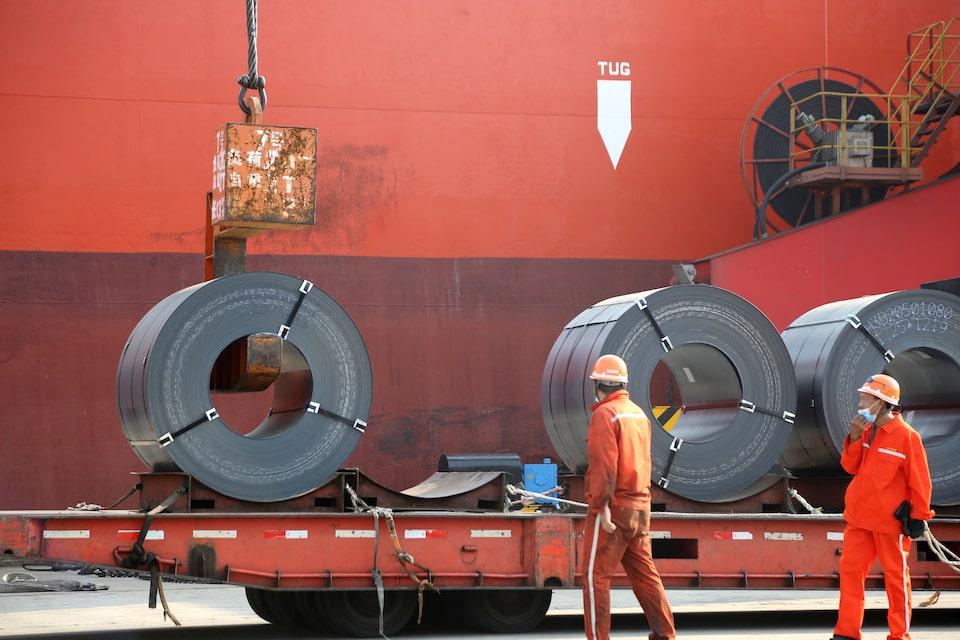
BEIJING, Dec 12 (Reuters) - The world's largest steel producer, China, plans to roll out a licence system from 2026 to regulate exports of the metal, as robust shipments have fuelled a growing protectionist backlash worldwide. Exporters of some 300 steel items will have to apply for licences on the basis of export contracts and product quality inspection certificates from manufacturers, the commerce ministry said on Friday. Sign up here. "Some steel products will be added into the list of cargoes under export licence management effective from January 1, 2026," it added in a statement. The news followed market talk the previous day that Beijing could be planning such a move. A list of 43 categories of goods , opens new tab subject to export licences in 2025 included wheat, corn, coal and crude oil, the ministry said late in 2024. "The move will help maintain a balance of global supply, demand and trades," the state-backed China Iron and Steel Association said in a statement on its WeChat account. Some analysts downplayed the potential impact on steel exports in the short term, saying it was not hard to secure the necessary licence. "While the near-term impact is limited, the move lays foundations for potentially more stringent regulation in the future," said a Shanghai-based analyst who sought anonymity, as he was not authorised to speak to media. China's steel exports have been surprisingly resilient since 2023. Outbound shipments in the first 11 months of 2025 jumped 6.7% year-on-year to 107.72 million metric tons, keeping the annual total on track to hit a record high. Robust steel exports have helped to partly offset faltering domestic demand dragged down by a protracted property market downturn. But rising product outflows have also prompted countries to throw up more trade barriers on grounds that the flood of cheap products is hurting domestic manufacturers. Ballooning exports of some semi-finished steel products such as steel billet with lower added value sparked criticism from market participants and associations, which called them a waste of valuable resources, such as iron ore. https://www.reuters.com/world/asia-pacific/china-require-export-licences-some-steel-products-2025-12-12/
2025-12-12 11:07
KYIV, Dec 12 (Reuters) - Ukraine's special forces said on Friday they had conducted an operation alongside what they described as a local resistance movement to hit two Russian ships transporting weapons and military equipment in the Caspian sea. They did not specify when the strike took place. A Ukrainian official said on Thursday that Kyiv's drones had hit a Russian oil rig in the Caspian Sea for the first time, disabling the extraction of oil and gas from about 20 wells. Sign up here. The special forces' statement on Telegram did not say how they had hit the vessels or what the extent of any damage was. They said the ships were hit off the coast of the republic of Kalmykia, a region of Russia. They named the vessels as the Composer Rakhmaninoff and the Askar-Sarydzha, which they said were sanctioned by the U.S. for carrying military cargoes between Iran and Russia. The statement said that the "Black Spark" resistance movement had provided detailed information on the movement and cargo of the ships. https://www.reuters.com/world/europe/ukraine-says-it-hit-two-russian-ships-transporting-military-equipment-caspian-2025-12-12/

2025-12-12 11:05
Dec 12 (Reuters) - Shares of cannabis companies jumped on Friday after the Washington Post reported U.S. President Donald Trump is expected to push the government to dramatically loosen federal restrictions on marijuana. U.S.-listed shares of Tilray Brands gained 35%, while SNDL , Canopy Growth (WEED.TO) , opens new tab and ETF AdvisorShares Pure US Cannabis (MSOS.P) , opens new tab were up between 20% and 31% in morning trading. Sign up here. Trump is expected to issue an executive order as soon as Monday that would allow for reclassification of weed, CNBC reported, citing a source familiar with the matter. "No final decisions have been made on the rescheduling of marijuana," a White House official said. Trump plans to direct agencies to reclassify marijuana as a Schedule III drug, the Washington Post reported on Thursday, reducing oversight of the plant and its derivatives to the same level as some common prescription painkillers and other drugs. "We believe this would open the door for pharmaceutical companies to seek approval for more cannabis products, which could then be dispensed the same as other prescription drugs," TD Cowen analyst Jaret Seiberg said in a note. Trump's administration has been looking to reclassify marijuana as a less dangerous drug, a shift that could ease criminal penalties and reshape the industry through potentially lower taxes and by making it easier to secure funding. Funding remains one of the biggest challenges for cannabis producers, as federal restrictions keep most banks and institutional investors out of the sector, forcing pot producers to turn to costly loans or alternative lenders. This sets the stage for several catalysts, including "additional states legalizing cannabis, safer banking being passed, and the ultimate uplisting of plant-touching cannabis stocks to major US exchanges", Alliance Global Partners analyst Aaron Grey said. Under the Controlled Substances Act, marijuana is listed as a Schedule I substance, implying it has a high potential for abuse and no currently accepted medical use. Last year, the Biden administration asked the Department of Health and Human Services to review marijuana's classification, and the agency recommended moving it to Schedule III classification. The Drug Enforcement Administration has to review the recommendation and will decide on the reclassification. https://www.reuters.com/sustainability/boards-policy-regulation/cannabis-stocks-surge-report-trump-seeks-ease-restrictions-2025-12-12/