2025-12-05 12:13
OGDC triples tight-gas study area to 4,500 sq km Shale pilot to expand to five-six wells by 2026-27 OGDC's five-year plan to significantly change production profile Deepal offshore well spud planned for Q4 2026 in Indus Basin ISLAMABAD, Dec 5 - Pakistan's state-run Oil & Gas Development Company is planning a major expansion of unconventional gas developments from early next year, aiming to boost production and reduce reliance on imported liquefied natural gas. Pakistan has long been viewed as having potential in both tight and shale gas, which are trapped in rock and can only be released with specialised drilling, but commercial output has yet to be proved. Sign up here. Managing Director Ahmed Lak told Reuters that OGDC had tripled its tight-gas study area to 4,500 square kilometres (1,737 square miles) after new seismic and reservoir analysis indicated larger potential. Phase two of a technical evaluation will finish by end-January, followed by full development plans. The renewed push comes after U.S. President Donald Trump said Pakistan held "massive" oil reserves in July, a statement analysts said lacked credible geological evidence, but which prompted Islamabad to underscore that it is pursuing its own efforts to unlock unconventional resources. "We started with 85 wells, but the footprint has expanded massively," Lak said, adding that OGDC's next five-year plan would look "drastically different". Early results point to a "significant" resource across parts of Sindh and Balochistan, where multiple reservoirs show tight-gas characteristics, he said. SHALE PILOT RAMPS UP OGDC is also fast-tracking its shale programme, shifting from a single test well to a five- to six-well plan in 2026–27, with expected flows of 3–4 million standard cubic feet per day (mmcfd) per well. If successful, the development could scale to hundreds or even more than 1,000 wells, Lak said. He said shale alone could eventually add 600 mmcfd to 1 billion standard cubic feet per day of incremental supply, though partners would be needed if the pilot proves viable. The company is open to partners "on a reciprocal basis", potentially exchanging acreage abroad for participation in Pakistan, he said. A 2015 U.S. Energy Information Administration study estimated Pakistan had 9.1 billion barrels of technically recoverable shale oil, the largest such resource outside China and the United States. A 2022 assessment found parts of the Indus Basin geologically comparable to North American shale plays, though analysts say commercial viability still hinges on better geomechanical data, expanded fracking capacity and water availability. OGDC plans to begin drilling a deep-water offshore well in the Indus Basin, known as the Deepal prospect, in the fourth quarter of 2026, Lak said. In October, Turkey's TPAO with PPL and its consortium partners, including OGDC, were awarded a block for offshore exploration. A combination of weak gas demand, rising solar uptake and a rigid LNG import schedule has created a surplus of gas that forced OGDC to curb output and pushed Pakistan to divert cargoes from Italy's ENI and seek revised terms with Qatar. https://www.reuters.com/business/energy/pakistans-ogdc-ramps-up-unconventional-gas-plans-2025-12-05/
2025-12-05 11:40
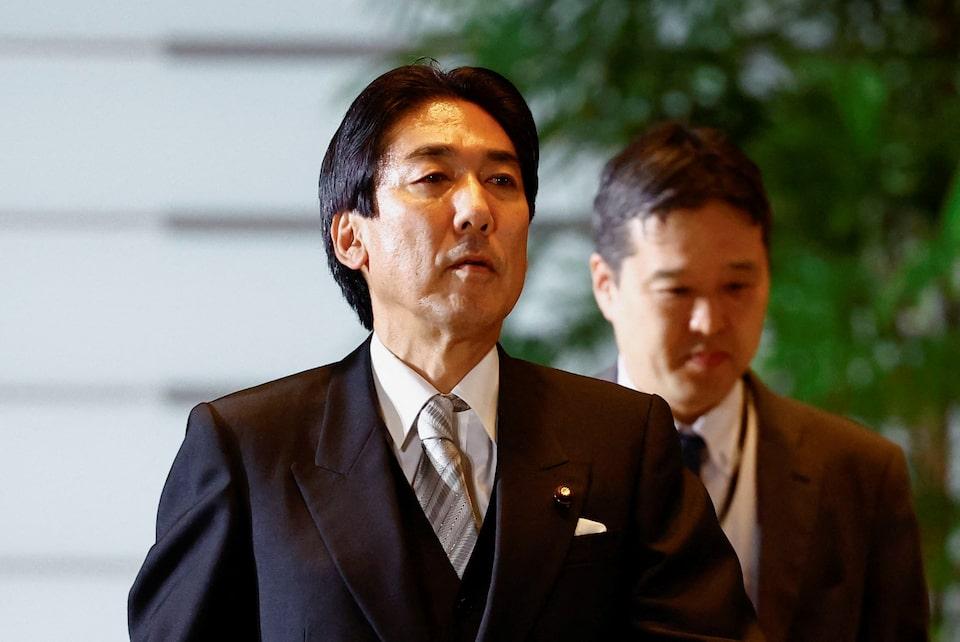
TOKYO, Dec 5 (Reuters) - Japan's economic revitalisation minister, Minoru Kiuchi, called on the central bank to closely communicate with the government in setting monetary policy on Friday, but did not voice opposition to a near-term interest rate hike. Asked about growing prospects of an interest rate hike by the central bank in December, Kiuchi said that specific policy means was for the Bank of Japan to decide. Sign up here. The remarks by Kiuchi, who is known to be an advocate of loose monetary policy, reinforces the market view that the government will not push back against any decision to raise interest rates to 0.75% from 0.5% this month. "I hope the BOJ continues to guide monetary policy appropriately to stably achieve its 2% inflation target working closely with the government," he told a news conference on Friday. Kiuchi also said he hoped the central bank sets policy mindful of BOJ rules that require the central bank to closely communicate with the government. BOJ Governor Kazuo Ueda said on Monday the bank will consider the "pros and cons" of raising rates at its December 18-19 meeting. Sources have told Reuters the BOJ is likely to raise rates in December and the government is likely to accept the decision. Kiuchi oversees the Cabinet Office which, along with the Ministry of Finance, has the authority to send representatives to attend the BOJ's policy meetings. The representatives cannot vote but can request a delay in the board's vote on rates. https://www.reuters.com/world/asia-pacific/japans-economy-minister-says-up-boj-decide-specific-monetary-policy-means-2025-12-05/
2025-12-05 11:40
LONDON, December 5 (Reuters) - Everything Mike Dolan and the ROI team are excited to read, watch and listen to over the weekend. From the Editor Sign up here. Hello Morning Bid readers! We've entered the final month of the year, and that means one thing: 2026 market outlooks. While it’s tough to find many U.S. equity bears, forecasts are arriving with quite a few qualifiers – which is understandable given that so much is riding on an artificial intelligence boom that’s shrouded in uncertainty. AI adoption might truly take off next year, but as ROI editor-at-large Mike Dolan argues, U.S. GDP growth is likely still going to be constrained by a 150-year 2% trendline, especially if technological innovation runs up against supply chain or labor market bottlenecks. Speaking of the U.S. labor market, the picture there is once again clear as mud. On Wednesday, U.S. private payrolls for November came in at negative 32,000 – well below consensus and the biggest drop in more than two and a half years. Yet Thursday brought news that the number of Americans filing new applications for unemployment benefits had slid to the lowest level in a more than three years. And despite all the talk of a K-shaped economy, a slice of consumer delinquency figures suggests the U.S. economic picture might not be so grim. On top of that, fears about foreign investors souring on U.S. stocks may also be misplaced. Overseas private sector inflows into U.S. stocks are running at record-high levels, having re-accelerated in recent months. The big question now is whether this can be sustained next year. Over in Asia, Japan's 10-year yield jumped to its highest point since 2007 on Friday, shooting up over 25 bps in four weeks, even as the government of Prime Minister Sanae Takaichi has sought to soothe investor concerns about her $137 billion spending plan. The battered yen continues to hover around 155 to the dollar, near the higher end of its multi-decade range. The currency’s seemingly excessive weakness may be a ticking time bomb, argues Eurizon SLJ CEO Stephen Jen. In energy markets, the week started off with OPEC+ announcing that it would keep production levels unchanged through the first quarter. But uncertainty surrounding sanctioned volumes complicates the market outlook. Staying with OPEC+, changes its making to its oil production quota system could spark a wave of upstream investments. Meanwhile, in the gas market, Europe is preparing to phase out Russian imports by 2027. ROI energy transition columnist Gavin Maguire explains which countries will be most affected. Over in metals, copper continues its bull run, but this boom does not mean global manufacturing is firing up commensurately heading into 2026. Looking to next week, the main event is the Federal Reserve meeting. A 25 bps cut is all but guaranteed, but Fed-watchers will pay close attention to the number of dissents, as this may speak to the growing divisions in a body long known for consensus. The real Fed story, however, remains Present Donald Trump’s selection of the next Chair. Mike Dolan argues that if White House adviser Kevin Hassett is selected – as Trump has hinted – he will effectively serve as a "shadow Fed Chair" for five months – with markets hanging on his every word. As we head into the weekend, check out the ROI team’s recommendations for what you should read, listen to, and watch to stay informed and ready for the week ahead. I’d love to hear from you, so please reach out to me at [email protected] , opens new tab . , opens new tab This weekend, we're reading...CLYDE RUSSELL, ROI Asia Commodities and Energy Columnist: You don’t need to be a chess player to appreciate the story of Sarwagya Singh Kushwaha, the youngest player in chess history to earn an official FIDE rating before the age of four.RON BOUSSO, ROI Energy Columnist: A picture is worth a thousand words. That's why I recommend looking at this exquisite collection of the Reuters' top photographs of 2025, selected from the 1.6 million photos released to clients this year. And what a year it's been...GAVIN MAGUIRE, ROI Global Energy Transition Columnist: This updated high-def map of U.S. Data Center infrastructure created by the chief cartographer at the recently renamed National Renewable Energy Laboratory (NREL) is a thing of beauty. It really highlights the enormous scale of the activity taking place across the country as transmission lines and server farms get up at running to power the AI revolution: https://docs.nrel.gov/docs/gen/fy26/98020.jpg , opens new tabJAMIE MCGEEVER, ROI Markets Columnist: The U.S. – and the world – is experiencing an intense speculative AI boom. To get a sense of where it might lead, economics professors Simon Johnson and Piero Novelli look back and Charles Kindleberger’s “Manias, Panics and Crashes”. The book, published in 1978, raises three fundamental questions relevant to today. , opens new tabWe're listening to...MIKE DOLAN, ROI Editor-at-Large: It's not often you get a podcast on 'r*'! With the Fed meeting up next week, this Brookings podcast on the theoretical 'neutral' rate of interest shows how the shocks of recent years may see this rate creeping higher after years of decline. , opens new tabJAMIE MCGEEVER, ROI Markets Columnist: Michael Burry of ‘The Big Short’ fame doesn’t really do media beyond his often cryptic posts on X – and interviews are even rarer. But fast forward through about 6-7 minutes of ads and intro, and you get one here on the ‘Against the Rules’ podcast with author Michael Lewis. , opens new tab And we're watching... ANNA SZYMANSKI, ROI Editor-in-Charge: We've just launched the Morning Bid daily podcast , opens new tab, which will be available in audio and video. Subscribe to hear and see ROI editor-at-large Mike Dolan and other Reuters journalists discuss the biggest news in markets and finance seven days a week. Want to receive the Morning Bid in your inbox every weekday morning? Sign up for the newsletter here. You can find ROI on the Reuters website , opens new tab, and you can follow us on LinkedIn , opens new tab and X. , opens new tab Opinions expressed are those of authors. They do not reflect the views of Reuters News, which, under the Trust Principles , opens new tab, is committed to integrity, independence, and freedom from bias. https://www.reuters.com/business/finance/global-markets-view-usa-2025-12-05/
2025-12-05 11:24
LONDON, Dec 5 (Reuters) - Europe has finally taken major steps to build up its rare earths sector to counter Chinese dominance, but the region also needs to guard against being overwhelmed by the United States, the head of an EU-funded agency for key minerals said. Bernd Schaefer, CEO of EIT RawMaterials, welcomed Wednesday's release of a new EU action plan to secure critical raw materials used in electric cars, wind turbines and semiconductors. Sign up here. The European Commission's REsourceEU plan includes investing 3 billion euros ($3.49 billion) over the next year to fast-track projects that could cut reliance on supplies from a single country. "It is certainly a real step change from ambition to delivery, but it's still missing a couple of things," Schaefer told Reuters in an interview. The EU needs to step up negotiations with third countries that can supply it with key minerals, he said. "Many memorandums of understanding have been signed in recent years with international partners, but this is only a starting point," Schaefer added. "We must become more of a deal-maker and get away from our prosaic attitude and just talking about everything." Europe also needs to make sure it does not continue to lose key rare earth assets to the U.S., he said, citing the recent acquisition by USA Rare Earth (USAR.O) , opens new tab of Less Common Metals, one of the few companies involved in a key processing step, turning rare earth oxides into metals and alloys. "There is a danger we are moving into a situation where this rare earths value chain is pulled to a substantial level into the U.S.," Schaefer said. "The U.S. could become a second China, so to speak, in terms of another country for us to be import-dependent on for magnets." ($1 = 0.8584 euros) https://www.reuters.com/business/energy/europe-must-guard-against-us-dominance-rare-earths-agency-head-says-2025-12-05/
2025-12-05 11:22
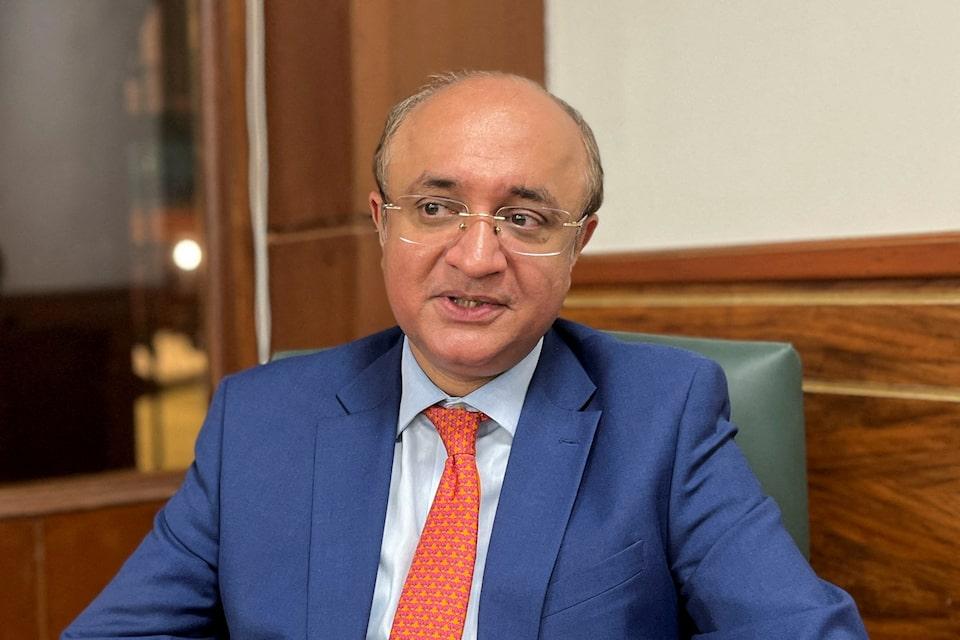
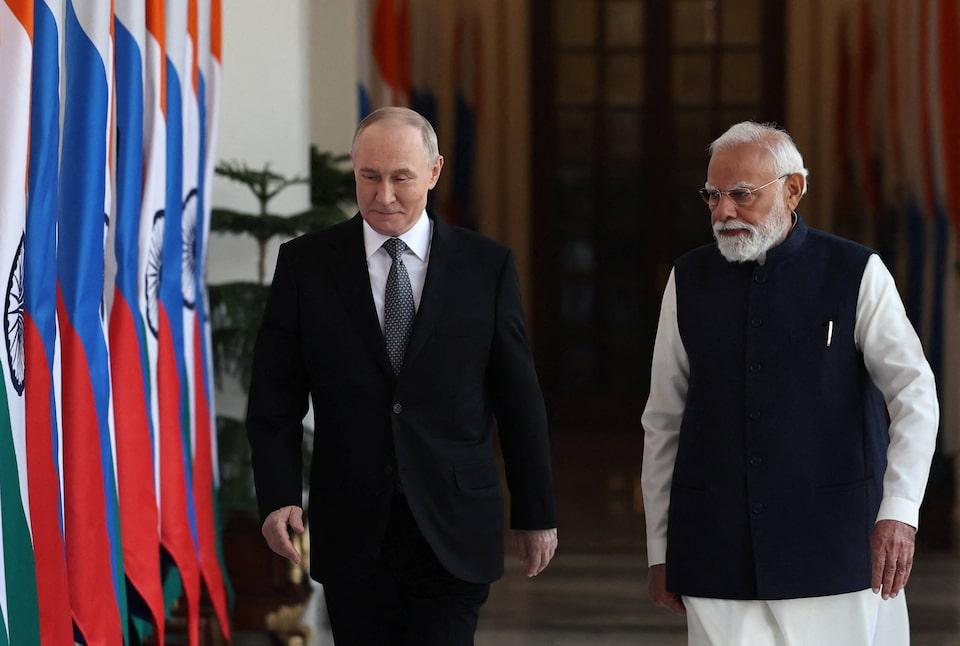
Modi and Putin hold summit talks, countries sign multiple deals Moscow seeks more Indian goods to rebalance trade flows Both sides adopt an economic cooperation plan to 2030 Modi highlights enduring trust and long-standing partnership Putin pledges uninterrupted fuel supplies, nuclear cooperation NEW DELHI, Dec 5 (Reuters) - Russian President Vladimir Putin offered India uninterrupted fuel supplies on Friday, eliciting a cautious response even as he and Indian Prime Minister Narendra Modi agreed to expand trade and defence ties between countries with decades-old ties. India, the world's top buyer of Russian arms and seaborne oil, has rolled out the red carpet for Putin during his two-day state visit, his first to New Delhi since Russia's invasion of Ukraine in 2022. Sign up here. But New Delhi is also in talks with the U.S. on a trade deal to cut punitive tariffs imposed by President Donald Trump on its goods over India's purchases of Russian oil. India's energy imports are expected to fall to a three-year-low this month following U.S. tariffs and sanctions. Deputy U.S. Trade Representative Rick Switzer is still slated to travel to India on Monday, two U.S. officials said on Friday. Russia has said it wants to import more Indian goods in an effort to grow trade to $100 billion by 2030. INDIA CAUTIOUS ON OIL IMPORTS Putin said Moscow was ready to continue ensuring "uninterrupted fuel supplies" to India, following up on comments on Thursday questioning U.S. pressure on India to curb oil purchases from Russia. India appeared cautious about the offer. Asked about the future of energy trade between the two countries, India's foreign secretary said Indian energy companies take decisions based on "evolving market dynamics" and "commercial issues that they confront while sourcing their supplies", indicating the pressures of sanctions and prices. Energy cooperation between the two countries continues within this framework, Vikram Misri told a media briefing. Underlining this caution, Indian state refiners Indian Oil Corp (IOC.NS) , opens new tab and Bharat Petroleum Corp (BPCL.NS) , opens new tab have placed January orders for the loading of Russian oil from non-sanctioned suppliers due to widening discounts, Reuters reported on Friday. TIES HAVE 'STOOD TEST OF TIME', SAYS MODI Describing India's enduring partnership with Russia as "a guiding star", Modi said: "Based on mutual respect and deep trust, these relations have always stood the test of time." "...we have agreed on an economic cooperation programme for the period up to 2030. This will make our trade and investment more diversified, balanced, and sustainable," he told reporters, with Putin by his side. Modi, who warmly embraced Putin on the airport tarmac when he arrived on Thursday, also reiterated India's support for a peaceful resolution to the war in Ukraine. A joint statement issued following the summit said: "The leaders emphasized that in the current complex, tense, and uncertain geopolitical situation, Russian-Indian ties remain resilient to external pressure." 21-GUN SALUTE Putin received a ceremonial welcome on Friday on the forecourt of Rashtrapati Bhavan, the colonial-era presidential palace, with a 21-gun salute as his convoy drove in. A large business and government delegation has accompanied Putin. Among the deals signed, the two countries agreed to help Indians move to Russia for work, to set up a joint venture fertiliser plant in Russia, and boost cooperation in agriculture, healthcare and shipping. They also agreed to reshape their defence ties to take account of New Delhi's push for self-reliance through joint research and development, as well as the production of advanced defence platforms. This would include joint production in India of spare parts, components, assemblies, and other products for servicing Russian weapons and military equipment. PUTIN QUESTIONS WASHINGTON In an interview with broadcaster India Today aired on Thursday, Putin challenged U.S. pressure on India not to buy Russian fuel. "If the U.S. has the right to buy our (nuclear) fuel, why shouldn't India have the same privilege?" he said, adding that he was ready to discuss the matter with Trump. India has said Trump's tariffs are unjustified and unreasonable, noting continued U.S. trade with Moscow. The U.S. and European Union still import billions of dollars worth of Russian energy and commodities, ranging from liquefied natural gas to enriched uranium, despite economic sanctions. https://www.reuters.com/business/aerospace-defense/russias-putin-hold-summit-talks-with-indias-modi-delhi-2025-12-05/
2025-12-05 10:56
US central bank expected to cut rates next week Russia-Ukraine talks stall, affecting oil supply outlook OPEC+ production steady, geopolitical tensions influence prices NEW YORK, Dec 5 (Reuters) - Oil prices edged up nearly 1% to a two-week high on Friday on increasing expectations the U.S. Federal Reserve will cut interest rates next week, which could boost economic growth and energy demand, as well as geopolitical uncertainty that could limit supplies from Russia and Venezuela. Brent futures rose 49 cents, or 0.8%, to settle at $63.75 per barrel, while U.S. West Texas Intermediate (WTI) crude rose 41 cents, or 0.7%, to settle at $60.08. Sign up here. Those were the highest closes for both crude benchmarks since November 18. For the week, Brent was up about 1% and WTI was up about 3%, marking a second straight weekly gain for both contracts. Investors digested a U.S. inflation report and recalibrated expectations for the Fed to reduce rates at its December 9-10 meeting. U.S. consumer spending increased moderately in September after three straight months of solid gains, suggesting a loss of momentum in the economy at the end of the third quarter as a lackluster labor market and the rising cost of living curbed demand. Traders have been pricing in an 87% chance that the Fed will lower borrowing costs by 25 basis points next week, according to CME Group's FedWatch Tool. Separately, top Chinese and U.S. officials held a call on Friday to discuss trade, including ongoing efforts to implement an agreement to their trade war. In other trade news, U.S. President Donald Trump said he will meet with the leaders of Mexico and Canada to discuss trade issues on Friday after they gather in Washington for the 2026 World Cup draw. Any talks that could reduce trade tensions between the U.S. and other nations could boost economic growth and energy demand. INVESTORS FOCUSED ON RUSSIAN, VENEZUELAN OUTPUT Investors also focused on news from Russia and Venezuela to determine whether oil supplies from the two sanctioned OPEC+ members will increase or decrease in the future. The failure of U.S. talks in Moscow to achieve any significant breakthrough over the war in Ukraine has helped to boost oil prices so far this week. "The lack of progress in the Ukrainian peace talks provides a bullish backdrop, but on the other hand, resilient OPEC production provides a bearish backstop. These two opposing forces make trading seemingly quiet," said Tamas Vargas, an oil market analyst at PVM. The Group of Seven countries and the European Union are in talks to replace a price cap on Russian oil exports with a full maritime services ban in a bid to reduce the oil revenue that helps finance Russia's war in Ukraine, six sources familiar with the matter said. OPEC+ includes the Organization of the Petroleum Exporting Countries and allies such as Russia. Any deal that could lift sanctions on Russia, the world's second-biggest crude producer after the U.S., could increase the amount of oil available to global markets. Russian President Vladimir Putin, on his first trip to New Delhi since Russia's 2022 invasion of Ukraine, on Friday offered India uninterrupted fuel supplies, eliciting a cautious response even as he and Indian Prime Minister Narendra Modi agreed to expand trade and defense ties. State refiners Indian Oil Corp (IOC.NS) , opens new tab and Bharat Petroleum Corp (BPCL.NS) , opens new tab have placed January orders for the loading of Russian oil from non-sanctioned suppliers due to widening discounts, trade sources with knowledge of the matter said. A Ukrainian drone attack caused a fire at Russia's Azov Sea port of Temryuk, the local emergencies center said on Friday. Temryuk handles liquefied petroleum gas (LPG), oil products and petrochemicals, as well as grain and other bulk food commodities. Markets also were bracing for a potential U.S. military incursion into Venezuela after Trump reiterated the U.S. would start taking action to stop Venezuelan drug traffickers on land "very soon." Rystad Energy said in a note that such a move could put at risk Venezuela's 1.1 million barrels per day of crude oil production, which goes mostly to China. https://www.reuters.com/business/energy/oil-prices-head-2-weekly-gain-fed-hopes-boost-market-venezuela-tensions-loom-2025-12-05/