2025-09-15 11:00
Sept 15 (Reuters) - Futures for Canada's main stock index edged higher on Monday, kicking off a high-stakes week, as both the Bank of Canada and the U.S. Federal Reserve are expected to resume interest rate cuts. Futures on the S&P/TSX index SXFcv1 rose 0.16% to 1,733 points by 06:21 a.m. ET (1021 GMT). Sign up here. The benchmark index gave back part of its weekly gains on Friday, as investors turned cautious ahead of key interest rate decisions this week. Economists anticipate the BoC will cut its overnight rate by a quarter point on September 17, as the labour market deteriorates and economic activity weakens. They also expect one more cut next quarter. The Canadian central bank has maintained its benchmark rate at 2.75% since it was lowered in March. Meanwhile, the U.S. central bank is widely expected to ease its monetary policy by 25 basis points on Wednesday after a series of economic indicators pointed to a worsening jobs market in the world's biggest economy. Several other central banks will announce their policy decisions this week, including those in the UK and Japan. In commodities, gold was flat on Monday, while oil prices edged higher and copper prices firmed. In corporate news, Brookfield Asset Management (BAM.TO) , opens new tab is in talks to buy Yes! Communities, a U.S. firm, from the Singaporean sovereign wealth fund GIC for more than $10 billion, the Financial Times said on Sunday. FOR CANADIAN MARKETS NEWS, CLICK ON CODES: TSX market report Canadian dollar and bonds report CA/ Reuters global stocks poll for Canada , Canadian markets directory https://www.reuters.com/markets/europe/tsx-futures-inch-up-amid-anticipation-central-bank-rate-cuts-2025-09-15/
2025-09-15 10:51
South Korea trade talks with U.S. have stalled due to FX issues Currency market too small for $350 bln fund, unlike Japan's case Hopes grow that bilateral currency swap line may offer solution SEOUL, September 16 - South Korea's negotiations with the U.S. on a trade deal to lower tariffs have stalled amid concerns over the foreign exchange implications of a $350 billion investment fund, part of an agreement reached with President Donald Trump in July. WHAT HAS JAPAN AGREED TO? South Korean officials, who had argued that the package would mostly comprise loans and guarantees with limited direct investment, said last week they could not accept terms similar to those of a $550 billion investment package finalised this month by Japan. Sign up here. Tokyo agreed to transfer money within 45 days after the U.S. selects a project, and that available free cash flows from investments would be split evenly until they reached an allocated amount, after which 90% would go to the U.S. U.S. Commerce Secretary Howard Lutnick said on Thursday that there would be no flexibility for Seoul. "The Japanese signed the contract. The Koreans either accept that deal or pay the tariffs. Black and white, pay the tariffs or accept the deal." HOW IS SOUTH KOREA'S SITUATION DIFFERENT FROM JAPAN'S? Since South Korea's deal was announced in late July, there have been concerns among market participants that the resulting dollar demand will overwhelm the domestic currency market, depressing the won . Since suffering traumatic capital flight during a financial crisis in the late 1990s, South Korea has retained a tight grip on its currency market. It started opening it to foreigners last year but there is still no offshore market to trade the won. The daily average global won trade stood at $142 billion in 2022, compared with $1.25 trillion for the Japanese yen, according to a triennial survey , opens new tab by the Bank for International Settlements. The won accounted for 2% of global market share, against 17% for the yen. WHY IS IT SOUTH KOREA PARTICULARLY WORRIED? The won hit a 15-year low at the end of last year at around 1,476 to the dollar and now stands around 1,390. Market participants say the $40 billion needed by the state pension fund every year for its overseas investments is already a heavy burden on the currency. Citi estimated that the investment package would generate dollar demand of around $100 billion each year from 2026 to 2028. South Korea's economy is much smaller than Japan's. It had a current account surplus of $99 billion last year, compared with Japan's surplus of nearly $200 billion, and central bank foreign reserves of $416 billion in August, compared with Japan's $1.3 trillion. HOW IS SOUTH KOREA TRYING TO MITIGATE THE IMPACT? The idea of seeking a foreign exchange swap line with the U.S. was raised publicly by Presidential Policy Secretary Kim Yong-beom last week, when he said the yen's status as a key international currency and an unlimited swap line between Japan and the U.S. put Tokyo in a stronger position. Finance Minister Koo said last week there would be an announcement on foreign currency when tariff negotiations conclude and he told Reuters on Monday he thought the U.S. would "contemplate" a currency swap line, after a local media outlet said the government had passed the request to the U.S. WHICH COUNTRIES HAVE FX SWAP LINES WITH THE US? The U.S. Federal Reserve has standing swap line arrangements with the central banks of Canada, Britain, Japan, the European Union and Switzerland. It established temporary swap lines of $60 billion each with the Bank of Korea and eight other central banks in March 2020 during the COVID-19 pandemic. After the swap line expired in December 2021, the Fed offered the Bank of Korea a safety net of $60 billion through repurchase agreements, enabling it to borrow dollars with its holdings of U.S. Treasuries as collateral. https://www.reuters.com/world/asia-pacific/why-south-korea-cannot-make-same-us-trade-deal-japan-2025-09-15/
2025-09-15 10:43
All 31 economists see rates left on hold at 5.00% on September 17 BENGALURU, Sept 15 (Reuters) - Indonesia's central bank will pause its easing cycle on Wednesday according to a Reuters poll of economists published a week after the removal of Finance Minister Sri Mulyani Indrawati rattled investor confidence and weakened the rupiah. Indrawati's sudden exit erased most of the rupiah's gains following a U.S. trade deal struck in mid-July, prompting the central bank to step in to steady the market. Even with that intervention, the currency has fallen about 1% since the trade agreement was agreed. Sign up here. The renewed currency pressure, coupled with back-to-back rate cuts in July and August, is likely to deter the central bank from lowering borrowing costs again, despite expectations the U.S. Federal Reserve will cut rates just hours later. All 31 economists in the September 9-15 poll expected Bank Indonesia to leave its benchmark seven-day reverse repurchase rate (IDCBRR=ECI) , opens new tab unchanged at 5.00% when the two-day meeting concludes on September 17. The overnight deposit and lending facility rates were expected to remain steady at 4.25% and 5.75%, respectively. "The abrupt departure of the former finance minister has stoked fears over the government's commitment to fiscal discipline and sapped investor confidence. With the rupiah under renewed pressure, BI's priority is likely to shift back to external stability," said ANZ economist Krystal Tan. "Recent developments have further strengthened our call for a pause." While a pause appears certain, concerns are emerging about BI's independence. Under a 'burden-sharing' arrangement, the central bank will help the government programs by raising interest rates it pays on state deposits - a move some economists see as undermining monetary autonomy. Indonesia announced a 16.23 trillion rupiah ($989.3 million) stimulus package for the fourth quarter of 2025, underscoring the government's spending push. Asked about the risk of political influence over monetary policy, seven economists said they were somewhat worried, one said very worried and two said not worried. "The main idea of burden sharing is simply to help the government finance its ambitious spending plans linked to election promises with a limited multiplier effect. This phase of fiscal dominance suggests potential weakening of central bank independence," said Kunal Kundu, economist at Societe Generale. "But then again, why just blame Indonesia? One can see that in many parts of the world now." A separate Reuters poll in July showed more than 70% of economists, 36 of 50, said they were worried about the Fed's independence from political influence. "At this point, I'd say that I'm somewhat concerned about Bank Indonesia's independence," said Jason Tuvey, deputy chief emerging markets economist at Capital Economics. "I'd become a lot more concerned if we explicitly saw calls from government officials for rate cuts, unexpected changes to the leadership at the central bank, or a return to primary-market government bond purchases." Despite those concerns, economists still expect the central bank to ease policy further once stability returns to the rupiah. Of the 25 economists with a year-end view on rates, 14 forecast a 25-basis-point cut to 4.75%, 10 anticipated two quarter-point cuts to 4.50%, and just one projected a 75-basis-point drop to 4.25%. "Risks are still skewed towards a cut should the currency stabilises quickly. The policy bias will likely stay dovish," said Adam Ahmad Samdin, economist at Oxford Economics. (Other stories from the September Reuters global economic poll) ($1 = 16,405 rupiah) https://www.reuters.com/world/asia-pacific/bank-indonesia-hold-rates-this-week-political-shake-up-hits-rupiah-2025-09-15/
2025-09-15 10:34
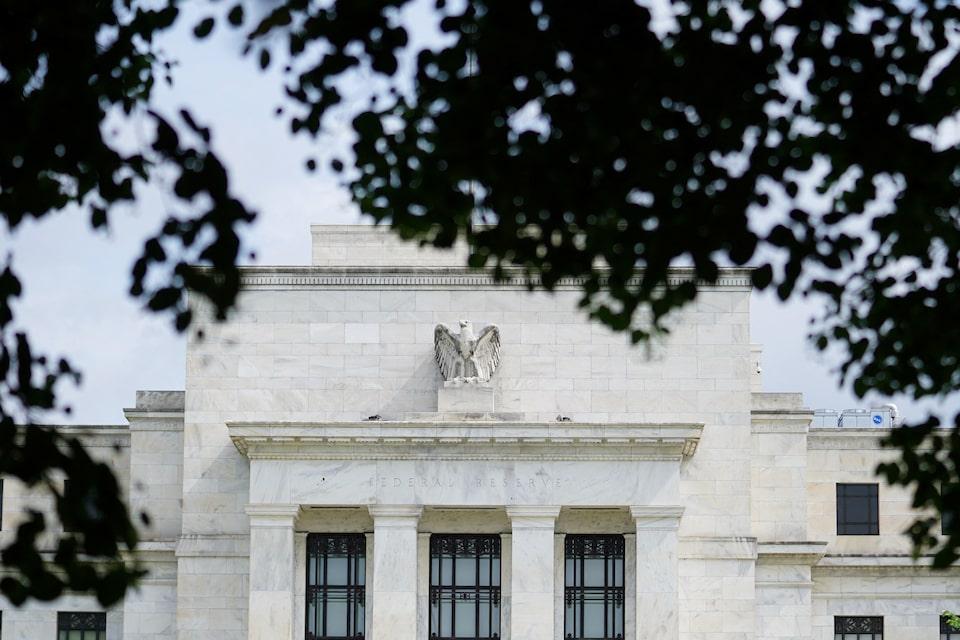
LONDON, Sept 15 (Reuters) - What matters in U.S. and global markets today By Mike Dolan , opens new tab, Editor-At-Large, Finance and Markets Sign up here. A pivotal week for big central bank decisions started quietly for world markets, with the U.S. Federal Reserve expected to deliver its first rate cut of the year and the only debate seemingly about whether it's a quarter point or 50 basis points. With the U.S. labor market softening, even as consumer price inflation remains sticky, the main question for investors is whether embattled Fed Chair Jerome Powell signals that Wednesday's cut is the start of a broader easing cycle. Futures have about 70 bps of Fed cuts priced over the three meetings to year-end and stock futures are flat to firmer ahead of Monday's bell. A Senate vote on President Donald Trump's latest Fed board nominee - White House adviser Stephen Miran - is due on Monday. * Along with the Fed, the Bank of Canada , opens new tab is also expected to trim rates this week - but the Bank of England and Bank of Japan are likely to hold steady. A wave of weak Chinese economic numbers , opens new tab for this month showed ebbing retail and industrial growth but merely reinforced expectations for more fiscal stimulus and markets were steady to firmer. The dollar was a touch lower as the week kicked off, with an eye on U.S. retail and industrial updates tomorrow and even as longer-term Treasury yields nudged higher. * Geopolitical and economic risks added to the mix. Fitch's expected downgrade of France's sovereign credit rating to A+ late on Friday underscored the fiscal strains in the euro zone's second-largest economy and the task facing its new Prime Minister Sebastien Lecornu. But markets shrugged it off as Fitch's outlook switched to stable and the agency also raised Portugal's rating, while S&P Global upped Spain's. Ukrainian drone strikes on Russian oil infrastructure pushed crude higher, meanwhile. * MSCI’s Asia-Pacific ex-Japan index hovered near four-year highs, while South Korea's Kospi hit another record after scrapping a planned tax hike on stock investments. U.S.-China trade talks resumed in Madrid as Washington presses allies to impose tariffs over Beijing’s Russian oil purchases and U.S. Treasury Secretary Scott Bessent said both sides are close to reaching an agreement on social media platform TikTok. Today's Market Minute * U.S. Democrats have asked the Trump administration to press China to curb "structural overproduction", essentially overhauling Beijing's economic model. * Delegations from the U.S. and China were set to continue their talks in Madrid into a second day on Monday over trade tensions and an imminent deadline for Chinese divestment from the short-video app TikTok. * The United States and Britain will announce agreements on technology and civil nuclear energy during U.S. President Donald Trump's unprecedented second state visit this week, as the UK hopes to finalise steel tariffs under a much-vaunted trade deal. * BP's recent discovery of a giant oilfield has reignited investor enthusiasm, suggesting that fears of ‘stranded assets’ may have receded, writes ROI energy columnist Ron Bousso. * China's surplus crude surged to just over 1 million barrels per day in August as robust imports and domestic production trumped an increase in refinery processing. Read the latest on China’s crude oil stockpiles from ROI columnist Clyde Russell. Chart of the day China's factory output and retail sales , opens new tab reported their weakest growth since last year in August, keeping pressure on Beijing to roll out more stimulus to buoy the world's second-largest economy just as the latest U.S. and Chinese trade negotiations in Madrid entered a second day. The disappointing data split economists over whether policymakers would need more near-term fiscal support to hit their annual growth target of "around 5%", with manufacturers awaiting more clarity on a U.S. trade deal and domestic demand curbed by a wobbly job market and property crisis. Weather has also not helped, with manufacturing activity affected by the hottest conditions since 1961 and the longest rainy season for the same period. Today's events to watch * New York Fed's September "Empire State" manufacturing survey (8:30 AM EDT) * U.S. Senate votes to confirm President Trump's Fed board nominee Stephen Miran * European Central Bank President Christine Lagarde and ECB board member Isabel Schnabel both speak * European Council President Antonio Costa visits Cyprus ahead of the island assuming the rotating EU presidency in 2026 -- Want to receive the Morning Bid in your inbox every weekday morning? Sign up for the newsletter here. You can find ROI on the Reuters website , opens new tab, and you can follow us on LinkedIn , opens new tab and X. , opens new tab (The opinions expressed here are those of the author, a columnist for Reuters) https://www.reuters.com/business/finance/global-markets-view-usa-2025-09-15/
2025-09-15 10:12
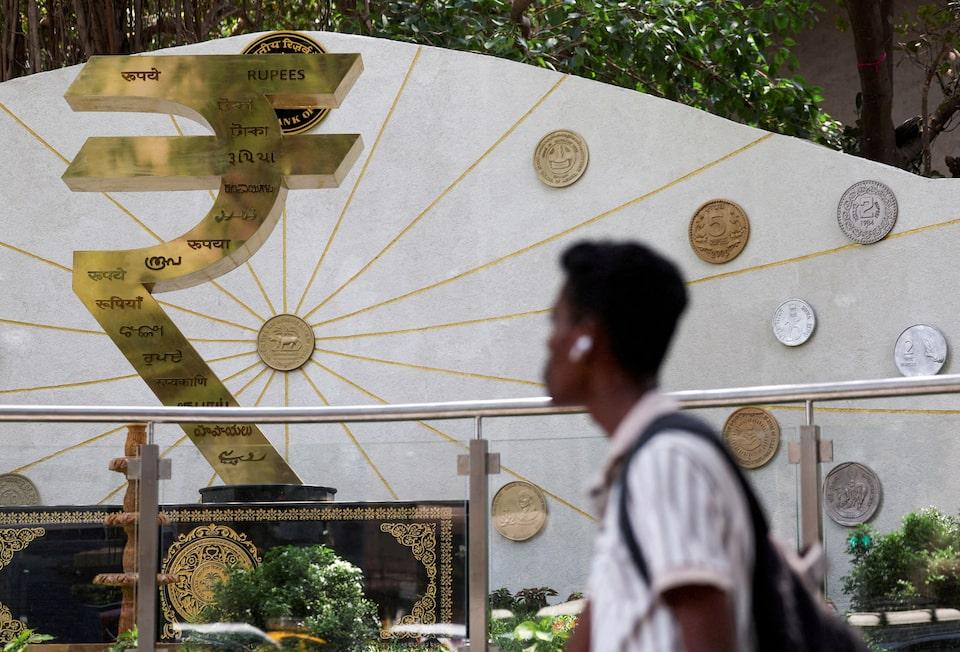
MUMBAI, Sept 15 (Reuters) - The Indian rupee closed nearly flat on Monday, as the boost from a broadly weaker dollar was blunted by persistent hedging demand from importers and lacklustre foreign portfolio flows. The rupee closed at 88.21 against the U.S. dollar, marginally stronger from its close at 88.2750 in the previous session. Sign up here. While the currency rose to an intraday peak of 88.1475, traders pointed out that dollar demand from local importers, including oil companies, shaved its gains later in the session. Data released on Monday showed that India's merchandise trade deficit narrowed in August to $26.49 billion, from $27.35 billion in July, as exports slowed after U.S. President Donald Trump hiked import tariffs on Indian goods. India and the United States are slated to hold trade negotiations on Tuesday in New Delhi, a trade official said on Monday. India's benchmark equity indexes, the BSE Sensex (.BSESN) , opens new tab and Nifty 50 (.NSEI) , opens new tab closed down by about 0.2% each, diverging from a modest uptick in their Asian counterparts, as investors braced for a set of pivotal central bank policy decisions this week. Key rate decisions in the U.S., Japan, the United Kingdom, Canada, and Norway are due this week, with the Federal Reserve's decision on Wednesday taking centre stage. While money markets have fully priced in a 25-basis-point rate cut by the Fed on Wednesday, investors will pay close attention to commentary from Chair Jerome Powell and policymakers' updated economic and benchmark policy rate projections. The interest rate-expectations sensitive 2-year U.S. Treasury yield was steady at 3.55%. On the longer end of the curve, the 10-year U.S. Treasury yield was steady at 4.06%. "Any disappointment in the Fed's rate cut relative to the pace of cuts already priced, coupled with any renewed concerns about the fiscal situation, for instance, could quickly lead to a reversal higher in long bond yields," analysts at Standard Chartered said in a note. Meanwhile, dollar-rupee forward premiums were steady on the day with the 1-year implied yield at 2.33%, hovering near its highest level since May. https://www.reuters.com/world/india/rupee-ends-little-changed-importer-hedging-caps-lift-softer-dollar-2025-09-15/
2025-09-15 10:03
FRANKFURT, Sept 15 (Reuters) - The European Central Bank is increasing pressure on small banks to tackle loans that went sour more than six years ago by forcing them to set aside more money to cover potential losses. In guidelines published on Monday, the ECB said "less significant institutions" too, like their larger rivals, would have to make growing provisions for their stock of unpaid loans. Sign up here. Small banks had so far been exempted from this provisioning schedule. This has resulted in a lower coverage ratio, which measures provisions against so-called non-performing loans (NPL), than at larger banks. "Some smaller banks continue to face challenges stemming from persistent stocks of long-standing NPLs," Sharon Donnery, a member of the Supervisory Board of the ECB, said in a blog post, adding that they maintain fewer reserves to cover potential losses. The ECB's move follows an increase in NPLs - from 1.7% to 2.3% - on the book of smaller banks. The new guidelines will be phased in gradually until the end of 2028 and apply to loans originated before April 26, 2019. Banks with negligible amounts of bad loans will be exempted. The ECB will now consult the industry on the new guidelines until October 27. https://www.reuters.com/business/finance/ecb-tells-small-banks-tackle-old-bad-loans-2025-09-15/