2025-09-15 06:35
Ukraine attacks more Russian energy facilities over weekend US-China officials in Madrid for trade talks Fed September 16-17 policy meeting in focus SINGAPORE, Sept 15 (Reuters) - Oil prices extended gains on Monday as investors assessed the impact of Ukrainian drone attacks on Russian refineries that could disrupt its crude and fuel exports, while also eyeing U.S. fuel-demand growth. Brent crude futures rose 47 cents, or 0.7%, to $67.46 a barrel by 0622 GMT while U.S. West Texas Intermediate crude was at $63.17 a barrel, up 48 cents, or 0.8%. Sign up here. Both contracts gained more than 1% last week as Ukraine stepped up attacks on Russian oil infrastructure, including the largest oil exporting terminal, Primorsk, and the Kirishinefteorgsintez refinery, one of the two largest refineries in Russia. "The attack suggests a growing willingness to disrupt international oil markets, which has the potential to add upside pressure on oil prices," JPMorgan analysts led by Natasha Kaneva said in a note, referring to the attack on Primorsk. Primorsk has a capacity to load about 1 million barrels per day (bpd) of crude, making it a key export hub for Russian oil and the largest port in western Russia. The Kirishi refinery, operated by Surgutneftegaz (SNGS.MM) , opens new tab, processes about 17.7 million metric tons per year, or 355,000 bpd, of Russian crude, equal to 6.4% of the country's total. "If we are seeing a strategic shift by Ukraine towards Russian oil exporting infrastructure - that brings upside risks to forecasts," IG markets analyst Tony Sycamore said, despite ongoing concerns around oversupply as OPEC+ plans to ramp up output. An oil company in Russia's Bashkortostan region will maintain production levels despite a drone attack on Saturday, regional governor Radiy Khabirov said. Pressure is mounting on Russia as U.S. President Donald Trump reiterated on Sunday that he is willing to impose sanctions on Russia but Europe has to act in a way that is commensurate with the United States. Investors are also watching U.S.-China trade talks in Madrid that started on Sunday amid Washington's demands that its allies place tariffs on imports from China over its purchases of Russian oil. Last week, softer job-creation data and rising inflation in the U.S. raised concerns about economic growth in the world's largest economy and oil consumer, even as the Federal Reserve is likely to cut interest rates during its September 16-17 meeting. https://www.reuters.com/business/energy/oil-extends-gains-after-attacks-russian-energy-facilities-2025-09-15/
2025-09-15 06:18
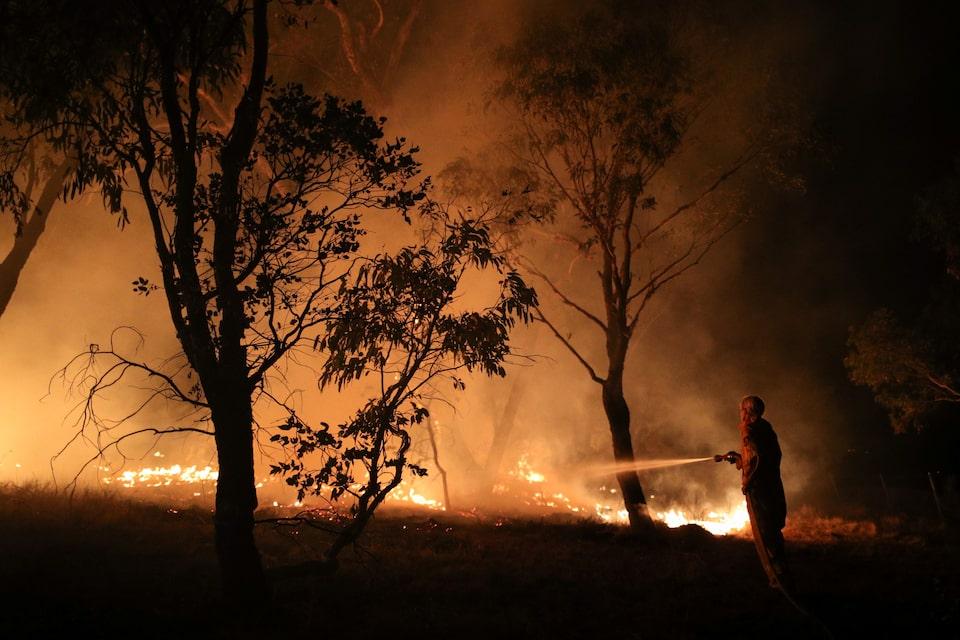
Australia to face more frequent, extreme climate events, report finds Heatwaves, rising sea levels threaten millions, ecosystems Government to announce new emissions target for 2035 CANBERRA, Sept 15 (Reuters) - Australia will suffer more frequent and extreme climate events, often happening simultaneously, which will strain industry, services and infrastructure, a government report said on Monday, ahead of the announcement of a new emissions target. Among the conclusions of the most comprehensive assessment of risks to Australia posed by climate change were that heatwaves will become more frequent and deadly, while rising sea levels will put millions at risk and plants and animals will have to move, adapt or die. Sign up here. Northern parts of the country, remote communities and outer suburbs of major cities will be particularly susceptible, Climate and Energy Minister Chris Bowen said in a statement. "No Australian community will be immune from climate risks that will be cascading, compounding and concurrent," he said. "Australians are already living with the consequences of climate change today, but it's clear every degree of warming we prevent now will help future generations avoid the worst impacts in years to come." Australia aims to cut carbon emissions by 43% by 2030 and reach net-zero emissions by 2050. Bowen said the government would soon announce an "ambitious and achievable" emissions reduction target for 2035. The previous right-of-centre government was considered by clean energy advocates a global laggard for its emissions policies. Renewable energy projects have faced backlash from communities and conservative politicians and media. Opposition leader Sussan Ley said Australia should cut emissions but not at any cost and the government should avoid alarmist language. "Any (emissions reduction) target must pass two simple tests: it must be credible, and it must be upfront about the cost to households and small businesses," she said in a statement. Australia is a major exporter of natural gas and coal. The government last week gave the go-ahead for the country's second-largest liquefied natural gas plant to operate until 2070. Monday's report said Australia was already 1.2 degrees Celsius warmer than historical levels. It said a 3-degree warming would raise the number of extreme heatwave days to 18 a year from four now and the duration of marine heatwaves to nearly 200 days from 18 now. The number of deaths from heatwaves in Sydney could increase by 444% in that scenario, it said, while some forests and marine life may perish. Three degrees of warming would raise sea levels by another 54 centimetres by 2090, allowing saltwater ingress to impact fresh water supply and putting more than 3 million people in coastal communities at high risk of flooding. Health and emergency services would face pressure, rebuilding costs would rise, property values would fall and hotter, drier weather would damage crop yields and stress livestock, the report said. The government also on Monday released a national adaptation plan that Bowen said would guide Australia's response to the report's findings. "Our whole country has a lot at stake," Bowen said. "This report is a reminder, if we needed one, that the cost of inaction will always outweigh the cost of action." https://www.reuters.com/sustainability/cop/australia-warns-cascading-climate-risks-ahead-emissions-target-announcement-2025-09-15/
2025-09-15 06:16
Goldman Sachs flags risk of gold pullbacks U.S. Fed two-day policy meeting begins on Tuesday Fed seen cutting rates for first time since December Sept 15 (Reuters) - Gold prices remained steady on Monday as investors awaited a widely expected rate cut by the U.S. Federal Reserve this week, while profit-taking and a firmer dollar kept gains in check. Spot gold held its ground at $3,642.65 per ounce, as of 0606 GMT. Bullion climbed about 1.6% last week, reaching a record high of $3,673.95 on Tuesday. Sign up here. U.S. gold futures for December delivery were down 0.2% at $3,680.20. The temptation by traders to lock in profit and some resilience from the dollar putting pressure on gold, KCM Trade Chief Market Analyst Tim Waterer said. "The bullish outlook remains in place; however, a period of consolidation or a minor pullback would arguably be a healthy outcome that supports gold's ambitions for hitting loftier price targets down the road," Waterer said. The U.S. dollar index (.DXY) , opens new tab edged 0.1% higher, making greenback-priced bullion more expensive for overseas buyers. U.S. inflation data for August came in slightly above expectations on Thursday, but investors anticipate this will not deter the Fed from cutting rates by a quarter-percentage-point on Wednesday. USDIRPR/ "The risk for gold this week is that the Fed may not be so clear-cut in signalling when further rate cuts could arrive," Waterer said. Non-yielding bullion, often considered a safe-haven asset during broader uncertainty, tends to perform well in low-interest rate environment. The Fed's meeting comes amid challenges, including a legal dispute over its leadership and U.S. President Donald Trump's efforts to exert more control over the interest rate policy and the central bank's broader role. For gold, "while we see the risks to our $4,000/toz mid-2026 forecast as skewed to the upside, rising speculative length raises the risk of tactical pullbacks, as positioning tends to mean-revert," Goldman Sachs said in a note on Friday. Speculators reduced their net long positions by 2,445 contracts to 166,417 in the week ended September 9. Elsewhere, spot silver was up 0.1% at $42.20 per ounce, platinum gained 0.5% to $1,397.59 and palladium rose 0.2% to $1,197.88. https://www.reuters.com/world/india/gold-steady-investors-await-fed-rate-decision-2025-09-15/

2025-09-15 06:06
BP Bumerangue discovery in Brazil could hold over 2 billion barrels of oil reserves Discovery comes as oil majors revive focus on exploration Concerns over long-term oil demand subside LONDON, Sept 15 (Reuters) - BP's recent discovery of a giant oilfield offshore Brazil has reignited investor enthusiasm, echoing the aggressive exploration era two decades ago when companies were thirsty for resources amid fears the world was running out of oil. The announcement of the Bumerangue discovery, described by CEO Murray Auchincloss as BP's most significant in 25 years, sparked an 8% surge in the company’s London-listed shares in August, outperforming sector peers. Sign up here. The discovery signals that concerns that oil majors might be left with stranded assets in the energy transition may be receding. If fully developed, the enormous field could prove transformational for the beleaguered $93 billion company, which in recent years has faced leadership turmoil, strategic drift, persistent takeover speculation and pressure from activist investors. BP will need months to fully appraise Bumerangue, but initial results revealed a 500-metre hydrocarbon column in a high-quality pre-salt reservoir that could span over 300 square kilometres (115.8 square miles). Claudio Steuer of the Oxford Institute for Energy Studies estimates the field could hold 2 to 2.5 billion barrels of recoverable oil equivalent, based on nearby fields. That, in turn, could translate into a massive offshore development capable of producing roughly 400,000 barrels per day for decades, according to Steuer. And BP, with a 100% stake, stands to reap a huge windfall from this find. This discovery reflects that fact that BP is now redirecting cash and talent upstream, after years of downsizing its exploration and reservoir engineering teams. It plans to boost annual upstream spending by 20% to $10 billion by 2027 and keep production steady at 2.3–2.5 million barrels per day through 2030. BP appears to be pivoting back toward early 2000s strategy – and it's not alone. STRANDED NO MORE? For two decades, reserve size was a key investor metric for energy companies. To grow reserves, ‘Big Oil’ firms had to ramp up exploration spending, which grew from $5 billion annually between 1995 and 2005 to a peak of over $35 billion in 2013, according to consultancy Thunder Said Energy. But the rush slowed in the mid-2010s as shareholder returns were eroded by soaring development costs and falling oil prices. Appetite for exploration was further dampened by the 2015 Paris climate agreement and subsequent forecasts of slowing, if not shrinking, oil demand in the coming decade. Companies - and investors - began to fear that reserves could become stranded assets never to be tapped and to ultimately become worthless. Consequently, exploration spending by ExxonMobil, Chevron, Shell, BP, and TotalEnergies dropped below $10 billion annually in recent years, and companies began to downplay reserve size. Today, Western oil firms hold reserves equivalent to 7 to 13 years of current production, down from 12 to 17 years a decade ago. BP’s reserves stood at 6.25 billion barrels of oil equivalent at end-2024, 8% lower than the previous year and equal to 7.25 years of production, compared with 15 years a decade ago. Now, of course, the tide seems to be turning, as the excitement around the Bumerangue discovery indicates. Investor sentiment is shifting, and years of underinvestment mean that Western majors must now replenish reserves simply to maintain output. REDIRECTING RESOURCES Companies are today directing increasing resources to exploration, a high-risk, high-reward activity. Chevron CEO Mike Wirth said in August that he was "not happy" with exploration results in recent years and as a result the U.S. company is increasing spending to search for new resources both around its existing production and in new, frontier basins such as Suriname, Namibia and Egypt. "There has been a pickup in activity, starting with licensing rounds. That's the leading indicator, for exploration activity," said Rystad chief analyst Per Magnus Nysveen. Rystad estimates the world holds 1.5 trillion barrels of potentially recoverable crude, including undiscovered oil, equal to total global consumption from 1900 to 2024. That sounds like a lot, but extracting those potential resources will require huge investment. Moreover, uncertainty over long-term demand complicates matters. The International Energy Agency expects demand to plateau by 2030, while OPEC sees growth continuing through 2050. Much depends on how quickly the energy transition progresses, particularly in major markets like China. However, there could also arguably be a floor under demand moving forward, given the renewed focus on energy security that began following Russia’s invasion of Ukraine in 2022 and the expected spike in overall energy demands driven by the artificial intelligence boom. Debate about these timelines will continue, but one thing is certain. For BP, the Bumerangue discovery is coming at just the right moment. Enjoying this column? Check out Reuters Open Interest (ROI) , opens new tab, your essential new source for global financial commentary. ROI delivers thought-provoking, data-driven analysis. Markets are moving faster than ever. ROI , opens new tab can help you keep up. Follow ROI on LinkedIn , opens new tab and X. , opens new tab https://www.reuters.com/markets/commodities/bps-brazil-oil-discovery-signals-receding-fears-stranded-assets-2025-09-15/
2025-09-15 06:05
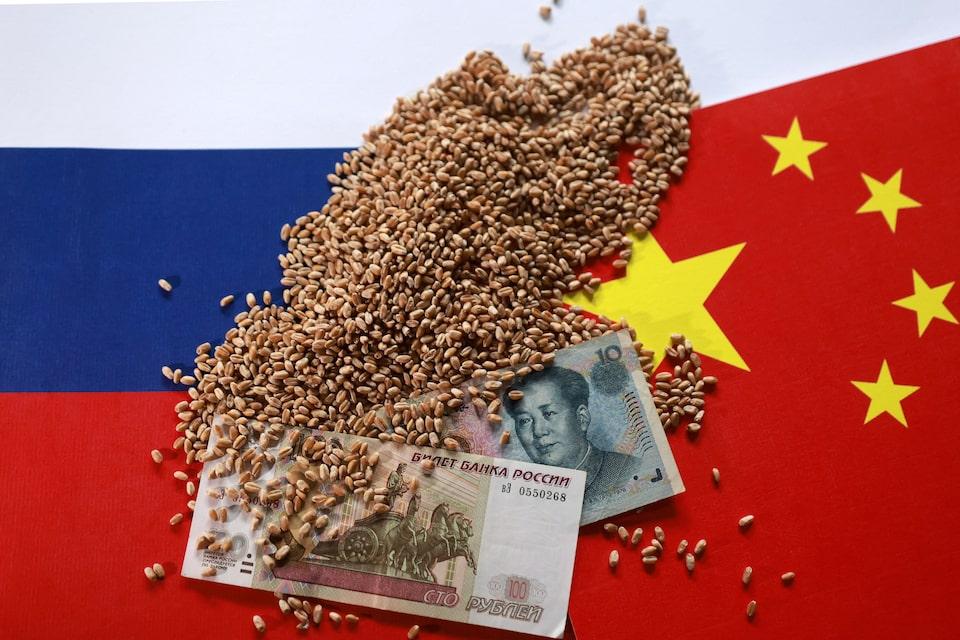
Barter transactions help circumvent SWIFT disconnection and secondary sanctions fears Russia's economy ministry issued a guide to facilitate foreign barter transactions Barter last popular during Russia's chaotic 1990s post-Soviet economy MOSCOW, Sept 15 (Reuters) - Old-fashioned barter is on the rise in Russia's foreign trade for the first time since the 1990s, as companies seeking to outfox Western sanctions swap wheat for Chinese cars and flax seeds for building materials. Even as Russia builds warm ties with China and India, the return of barter shows just how far the war in Ukraine has distorted trading relationships for the world's biggest producer of natural resources, three decades after the 1991 collapse of the Soviet Union ushered in Russian economic integration with the West. Sign up here. The United States, Europe and allies have imposed more than 25,000 different sanctions on Russia over the 2022 war in Ukraine and the 2014 annexation of Crimea in a bid to sink Russia's $2.2 trillion economy and undermine support for President Vladimir Putin. Washington has also hit India with tariffs in response to New Delhi's oil trade with Russia. Putin says Russia's economy has outperformed expectations. It grew faster over the past two years than G7 countries, despite Western predictions of a crash. He has ordered businesses and officials to defy sanctions in every way they can. However, there are growing signs of strain on the economy, which the central bank now shows to be technically in recession and which suffers high inflation. Some punitive measures - particularly the disconnection of Russian banks from the SWIFT payments system in 2022 and Washington's warnings to Chinese banks last year against supporting Russia's war effort - have stoked fears of secondary sanctions. "Chinese banks are afraid of being placed on sanctions lists, under secondary sanctions, so they do not accept money from Russia," a source in the payment market told Reuters. Those concerns appear to be behind the emergence of barter transactions, which are much harder to trace. In 2024, Russia's economy ministry issued a 14-page "Guide to Foreign Barter Transactions," advising businesses on how to use the method to skirt sanctions. It even proposed the creation of a trading platform that would work as a barter exchange. "Foreign trade barter transactions allow the exchange of goods and services with foreign companies without the need for international transactions," the ministry document said, citing "conditions of sanctions restrictions." Until recently, there was little evidence of commercial interest in such transactions. However, last month, Reuters reported that China's Hainan Longpan Oilfield Technology Co. was seeking to trade steel and aluminium alloys in exchange for marine engines. The company did not respond to a request for comment. For this story, Reuters was able to identify eight such transactions of goods-in-kind based on trade sources, public statements from customs services and company statements. The transactions have not been previously reported. While the news agency could not establish the overall value or volume of barter in the Russian economy due to the opacity of the transactions, three trade sources said the practice was becoming more frequent. "The growth of barter is a symptom of de-dollarisation, sanctions pressure and liquidity problems among partners," Maxim Spassky, Secretary of the General Council of the Russian-Asian Union of Industrialists and Entrepreneurs, an industry body, told Reuters. Spassky said barter volumes were likely to grow further. One of the trade sources - who spoke on condition of anonymity due to the sensitivity of the information - said the system helped circumvent sanctions that disconnect Russian banks from dollar and euro transactions. Three analysts said a possible indication of the scale of barter was a widening divergence between the foreign trade statistics of the central bank and the customs service's own data, which reached $7 billion in the first half of this year. In response to a request for comment, Russia's customs service confirmed barter was carried out with different countries "for a wide range of goods." It said, however, the number of barter transactions was insignificant compared to overall foreign trade contract volumes. Russia's foreign trade surplus in January - July decreased by 14% compared to a year earlier, to $77.2 billion, according to published data from the Federal Customs Service. Exports during this period decreased by $11.5 billion to $232.6 billion, while imports increased by $1.2 billion to $155.4 billion. The government and central bank declined to discuss barter with Reuters beyond saying that there was no data available on such transactions as they would be included in the overall figures if reported lawfully. One source close to the government said that the data divergence could be due to differences in methodology. CARS FOR GRAIN In one transaction identified by Reuters from two trade sources, Chinese cars were traded for Russian wheat. According to one of the sources, the Chinese partners in the deal asked their Russian counterparts to pay in grain. The Chinese partners bought the cars in China for yuan. The Russian partner bought grain with roubles. Then the wheat was exchanged for cars. Reuters could not establish the volumes traded, nor the mechanism by which the traders decided the value of the grain or the cars. In two other transactions, flax seeds were exchanged for goods including household appliances and building materials from China, customs statements show. Experts with knowledge of Russia's external trading said one of the flax deals, registered in a 2024 statement by Russia's customs service of the Urals region, was estimated to be worth in the region of $100,000. China is a major importer of Russian flax seed, used in industrial processes and as a nutritional product. In other transactions, metals were delivered to China in exchange for machines, Chinese services were swapped for raw materials, and a Russian importer bought aluminium to pay a Chinese company. One deal was with Pakistan. Some barter transactions have allowed the import of Western goods to Russia despite sanctions, two sources with knowledge of the transactions said, without providing details of which goods. At the Kazan Expo business forum in August, Chinese companies cited settlement issues among problems hindering the development of bilateral trade. Xu Xinjing, chairman of Hainan Longpan Oilfield Technology Co., Ltd, said barter trade could be a solution. Speaking at the conference, Xu said that "in the current conditions of limited payments," barter provided new opportunities for enterprises in Russia and Asian countries. BARTER SOWED CHAOS IN THE 1990S In the wake of the Soviet collapse in the 1990s, barter sowed chaos through the economy as vast chains of contingent deals were set up for everything from electricity and oil to flour, sugar and boots, allowing for pricing scams that made value hard to determine and earned fortunes for some. At the time, the lack of ready money, vast inflation and repeated devaluations made barter attractive. Now, there is plenty of money but barter is being driven by the constantly changing pressure of the threat of Western sanctions on Russia and China. Russia says the Western sanctions are illegal and China has criticised them as discriminatory. Barter is not the only workaround. Some traders have used so-called "payment agents", who for a fee facilitate payments through various schemes, but such transactions can be risky. Another way to execute payment is via Russia's state-owned VTB bank which has a branch in Shanghai. Others use cryptocurrencies pegged to the U.S. dollar. "Small businesses are actively using crypto. Some transport cash, some work through offsets, some diversify accounts with different banks," said Sergey Putyatinsky, vice president for operations and IT at BCS, a leading Russian financial company. "There is no ready-made technological answer yet. The economy is surviving, and business is simultaneously applying 10-15 different payment methods," he said. https://www.reuters.com/business/finance/wheat-chinese-cars-russia-turns-barter-skirt-sanctions-2025-09-15/
2025-09-15 05:46
Slew of central bank meetings on deck, focus on the Fed Dollar weakens ahead of expected U.S. rate cut Euro dips after France's credit rating downgrade Yuan steady despite bleak Chinese economic data SINGAPORE, Sept 15 (Reuters) - The dollar slipped on Monday ahead of a pivotal week filled with central bank decisions headlined by the Federal Reserve, while the euro hardly reacted to Fitch's downgrade of France's credit rating. Trading in Asia was thinned with markets in Japan closed for a holiday, leaving currencies mostly rangebound over the course of the session. Sign up here. The euro came under slight pressure and last traded 0.04% lower at $1.1729, though investors largely shrugged off Friday's announcement from Fitch downgrading France's sovereign credit score to the country's lowest level on record. The move strips the euro zone's second-largest economy of its AA- status as it grapples with political crisis and ballooning debt. Still, much of investors' attention this week will be on the slew of rate decisions in the U.S., Japan, United Kingdom, Canada and Norway that could set the tone for markets, with the Fed taking centre stage. Expectations of a rate cut from the Fed on Wednesday have weighed on the dollar in recent times, and it declined 0.08% against a basket of currencies to 97.58 on Monday. Sterling rose 0.11% to $1.3565, while the Aussie dollar rose 0.23% to $0.6663, flirting with a 10-month high hit on Friday. "We are calling for a 25-basis-point cut from the FOMC this week, which is more than fully priced," said Carol Kong, a currency strategist at Commonwealth Bank of Australia. Just as important will be Fed members' "dot plot" projections for rates and guidance from Fed Chair Jerome Powell on the extent and pace of any further easing. "In order to have an impact on currencies, Powell will have to out-dove the market by giving quite explicit hints about follow-up rate cuts. And if the FOMC does deliver an outsized 50-basis-point cut, that could also push the dollar down quite significantly, unless he suggests that there is a limited chance of follow-up cuts," said Kong. Elsewhere, the yen strengthened more than 0.1% to 147.44 per dollar, ahead of the Bank of Japan's (BOJ) policy meeting later in the week. While the BOJ is expected to stand pat on rates, focus will similarly be on comments from Governor Kazuo Ueda on the future policy path. "The JPY continues to underperform in the near-term undermined by the pick-up in political uncertainty in Japan after PM Ishiba resigned," said analysts at MUFG in a note. "The BOJ would have to provide a signal that a rate hike could be delivered as soon as next month to trigger a reversal of JPY weakness." In other currencies, the New Zealand dollar was up 0.15% to $0.5964. The onshore yuan got a slight lift from a weaker greenback and last stood at 7.1213 per dollar, despite Monday's grim economic data which showed China's factory output and retail sales in August logged their weakest growth since last year. Also on investors' radars were talks between U.S. and Chinese officials. They concluded a first day of talks in Madrid on Sunday on their strained trade ties and a looming divestiture deadline for Chinese short-video app TikTok, amid Washington's demands that its allies place tariffs on imports from China over its purchases of Russian oil. https://www.reuters.com/world/middle-east/dollar-eases-ahead-central-bank-bonanza-eyes-fed-2025-09-15/