2025-09-12 15:15
MEXICO CITY, Sept 12 (Reuters) - Mexican officials are set to speak with representatives from China next week about Mexico's planned tariffs on goods from the Asian country, President Claudia Sheinbaum said on Friday, saying the tariffs were not intended as a coercion measures. Sheinbaum added that the proposed measures, which are set to impact hundreds of goods from countries with which Mexico does not have trade agreements, notably cars sent from China, are not against any country in particular. Sign up here. China on Thursday criticized the tariff hike on Chinese autos, saying the move would undermine investor confidence and "seriously affect Mexico's business environment." "We have a very good relationship with China and we want to keep having a very good relationship with them," Sheinbaum said in her daily morning press conference. The fresh tariff measures are targeted to sectors which need to boost national production, Sheinbaum added. South Korea has also reached out to Mexican officials to initiate talks, she said. The Mexico-China Chamber of Commerce on Thursday called for Mexico to reconsider the measures, arguing they threatened the competitiveness of goods sold in Mexico and the adoption of electric vehicles in the country. Mexico is a major manufacturer of cars that it exports largely to the United States, but it also imports hundreds of thousands of vehicles each year. https://www.reuters.com/world/americas/mexican-officials-speak-with-china-tariffs-next-week-2025-09-12/

2025-09-12 13:21
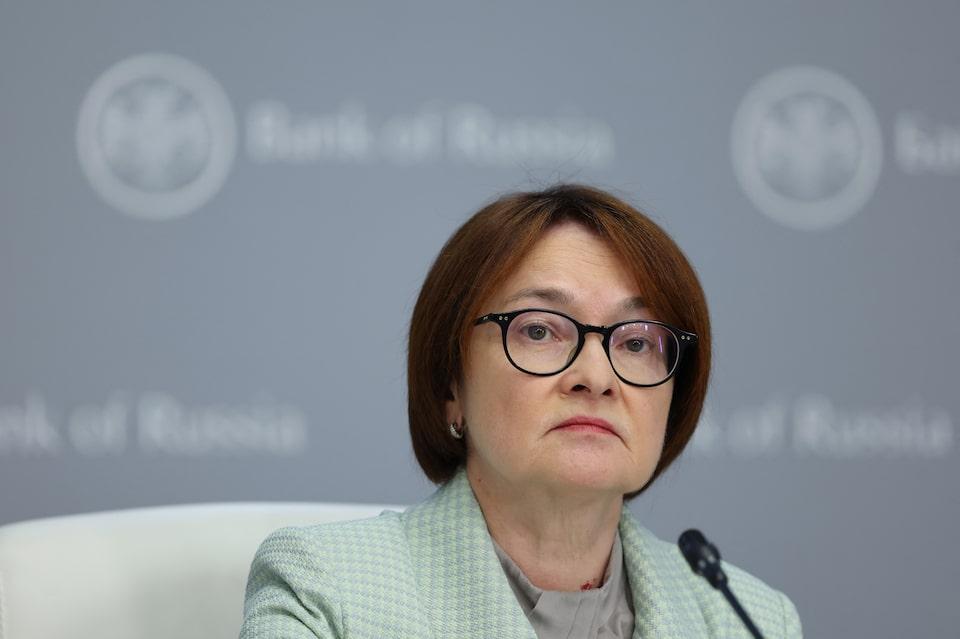
MOSCOW, Sept 12 (Reuters) - Russian Central Bank Governor Elvira Nabiullina and her deputy Alexei Zabotkin addressed a news conference on Friday after the central bank cut its key rate to 17% from 18%. They spoke in Russian and the quotes below were translated into English by Reuters. Sign up here. *ZABOTKIN ON REASONS FOR FLUCTUATIONS IN ROUBLE EXCHANGE RATE I would like to emphasise that the fluctuations we have been seeing over the last three months are occurring at the lower end of the range in which the exchange rate has been trading for the last two years. Therefore, it is probably not worth talking about some kind of systematic weakening of the exchange rate. In fact, the fluctuations are occurring at levels that are relatively strong compared to the history of the last two years. *NABIULLINA ON THE IMPACT OF THE STRENGTHENING OF THE ROUBLE ON PRICES From our point of view, the main disinflationary effect (of the strengthening of the exchange rate) that occurred has already ended. *NABIULLINA ON POSSIBLE TAX INCREASES When making decisions, it is important for us to consider how balanced the budget is. The smaller the budget deficit, i.e. if there are additional expenses, it is better for them to be covered by revenue rather than by increasing the budget deficit, because if the budget deficit grows to cover necessary expenses, our rate will be higher. *NABIULLINA ON RECESSION Commentators tend to refer to two consecutive quarters of real GDP decline as a technical recession. However, there are three considerations in this regard. First, it is incorrect to consider this a recession if other indicators do not confirm it. Second, GDP data, especially quarterly data, is subject to significant revisions. That is why macroeconomists do not base their assessment of the economic situation solely on GDP, but must look at a more multifaceted picture. Third, estimates of seasonally adjusted GDP dynamics vary significantly. Indeed, in the first quarter, our GDP declined after a strong jump in the fourth quarter of 2024. And according to our estimates, which we will refine further, seasonally adjusted GDP in the second quarter of this year was higher than in the first quarter. Therefore, even the assertion of a technical recession today seems, at the very least, debatable. We do indeed have a cooling of the economy. This is natural when coming out of overheating, when production capacity must catch up with demand, as we keep saying. It's like when you're running: the faster you accelerate, the higher your heart rate rises, and the longer you have to run slower than usual to lower your heart rate and return to a steady pace. That is why we say that the greater the overheating, the more significant the slowdown that may follow. Yes, the situation varies across sectors. In sectors that are oriented towards external demand, the decline is greater, and it is linked to a reduction in external demand and prices for our export goods, as well as the continuation of structural shifts in the economy, because the economy is increasingly oriented towards the domestic market. The decline in employment and capacity utilisation in these export-oriented sectors, given these structural changes, is not in itself a sign of recession. As for domestic demand, we are seeing continued growth, albeit at a slower pace than in the previous two years. And, according to our estimates, domestic demand in the second quarter was higher than in the first quarter, adjusted for seasonality. And if we look at the first half of the year as a whole, consumption and investment were higher than in the second half of 2024, but again with a seasonally smoothed expression. What indicators do we use to judge this? We look at a wide range of indicators, including monitoring of enterprises. We have an extensive sample of enterprises that make assessments of current demand and expected demand. In addition, we rely on information about payments through the bank's payment system, analyse data from cash registers, and so on. Based on this operational data, what can be said about the last two months, July and August? They are uneven, but overall they indicate some increase in consumption. NABIULLINA ON PAYMENT SYSTEMS BETWEEN RUSSIA AND CHINA We do not comment on the details of cooperation in the field of international settlements. In general, I can say that despite external restrictions, our banks and companies are developing various alternative payment methods. Therefore, international settlements do not currently have any impact on stability and monetary policy. NABIULLINA ON ECONOMIC GROWTH According to our estimates, the economy will continue to grow this year and next, albeit at a slower pace than in the previous two years. There can be no other outcome after the overheating, but it is still growth. Moreover, the more severe the overheating, the more noticeable the economic slowdown will be. When will growth accelerate again? In our view, when potential catches up with demand, when we finally emerge from overheating, and both demand and supply grow at a steady pace. For inflation, this will mean a steady return to 4%, and for interest rates, a return to neutral territory. We currently estimate this neutral territory to be 7.5%-8.5%. However, the reasons for the acceleration in growth are not the reduction in interest rates themselves, but the fact that the reduction in interest rates will mean that the economy is returning to a balanced state, with demand no longer outstripping production capacity. In the baseline forecast, this will happen by the beginning of 2027. If we try to accelerate growth now, before demand has caught up with the supply of goods, services, and production, inflation will accelerate and ultimately undermine sustainable growth. Therefore, we are determined to bring inflation down to sustainably low levels. NABIULLINA ON OPTIONS FOR KEY RATE DECISION Two options were considered at the meeting: lowering the rate by 1% and keeping the rate unchanged. The arguments in favour of keeping the rate unchanged were that monetary conditions had eased significantly and that we needed to assess the consequences of the decisions already taken. And, of course, we will need to obtain more information about what the budget policy will ultimately be. NABIULLINA ON THE BUDGET FACTOR Our decision today reflects our understanding, based on the information currently available, of how the budget will shape up at the end of 2025 and its parameters for 2026, 2027 and 2028. We assume that the budget will be disinflationary for the year, but the extent of this will be clarified when amendments to this year's budget are made. We expect the government to present specific quantitative characteristics by the end of September, and we will include them in our forecast update at the October meeting. And, of course, the budget factor is always important, as is the predictability of budget policy in general. NABIULLINA ON THE EXCHANGE RATE "We always take into account exchange rate dynamics. This is an important indicator of the degree of monetary policy tightness and the main indicator through which changes in external conditions affect inflation. With a monetary policy aimed at low inflation, a stable, self-sustaining weakening of the exchange rate is impossible. But fluctuations do occur. They are inevitable when economic conditions change. And, of course, we analyse all these factors when making decisions." https://www.reuters.com/business/finance/russias-nabiullina-her-deputy-zabotkin-rates-economy-budget-2025-09-12/
2025-09-12 13:06
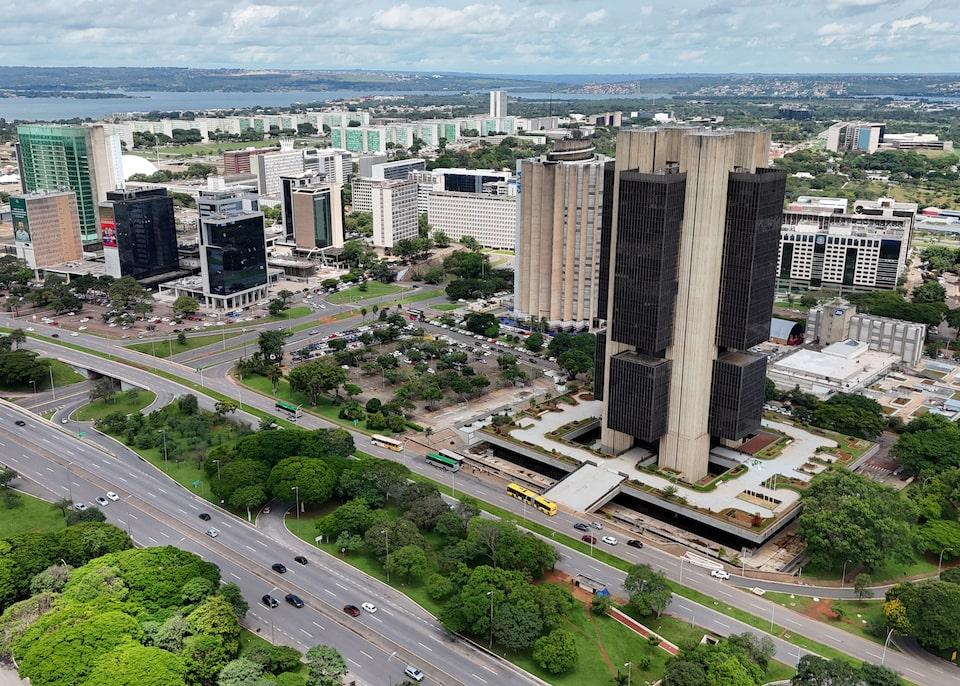
BUENOS AIRES, Sept 12 (Reuters) - Brazil's central bank is set to keep its key rate unchanged at 15% in a meeting on September 17 amid persistently high inflation pressures, a Reuters poll showed. It would be the second consecutive time the bank stands pat after its last decision in July when policymakers halted a tightening cycle that added 450 basis points in rate hikes since September 2024. Sign up here. They are expected to maintain a cautious strategy that confounded some analysts who until recently had anticipated Banco Central do Brasil (BCB) to have turned more dovish by now. The bank's monetary policy committee, known as Copom, will keep the Selic rate at 15% on September 17, according to all 41 economists polled September 8-12. "Although the central bank has made progress in bringing inflation closer to target, it still faces a tight labor market, along with an uncertain international environment," said Jose Alfaix, economist at Rio Bravo Investimentos. "The appreciation of the exchange rate has been helpful, but there is no certainty it will remain at its current level," he added. In August, Brazil's consumer prices fell 0.11% from July, the first monthly deflation in a year, but rose 5.13% on annual terms, still running above the central bank's target of 3% with a tolerance band of 1.5 percentage points. Service prices increased 0.39% on the month in August in another sign of inflation pressures related to record low unemployment that analysts say warrant a continuation of Copom's holding pattern for a "prolonged period". Meanwhile, inflation expectations compiled in a weekly central bank poll continue above the middle goal of 3% despite recent improvement due in part to this year's strengthening of Brazil's real currency . Last month, central bank chief Gabriel Galipolo reiterated the need to keep the cost of borrowing at a restrictive level, citing a slow convergence of inflation expectations toward the official target. "Inflation expectations remain unanchored, while the underlying services core trend remains high, with a very gradual cooling," said Julio Cesar de Mello Barros, an economist at Banco Daycoval. "Given this scenario, the central bank should reinforce its message of caution and the need for a restrictive monetary policy for an extended period." Additionally, Copom is expected to highlight increased uncertainty from U.S. tariffs on Brazil that also was a factor behind the shift to a more cautious policy stance. In the poll, of 36 respondents who answered a question on when the Selic would be adjusted after next week's decision, 10 saw a cut in December, 13 in January, nine in March, and the rest in other months. Copom does not meet in February. Asked about the size of the next move, 23 of 36 leaned towards a 25 basis points reduction, 12 viewed a 50 basis points move, and one a 100 basis points cut. Median quarterly estimates showed the Selic staying at 15% until the end of 2025 and then falling a total 75 basis points to 14.25% at the end of the first quarter of 2026. (Other stories from the Reuters global economic poll) https://www.reuters.com/business/finance/brazils-central-bank-keep-rates-unchanged-15-september-17-2025-09-12/
2025-09-12 13:04
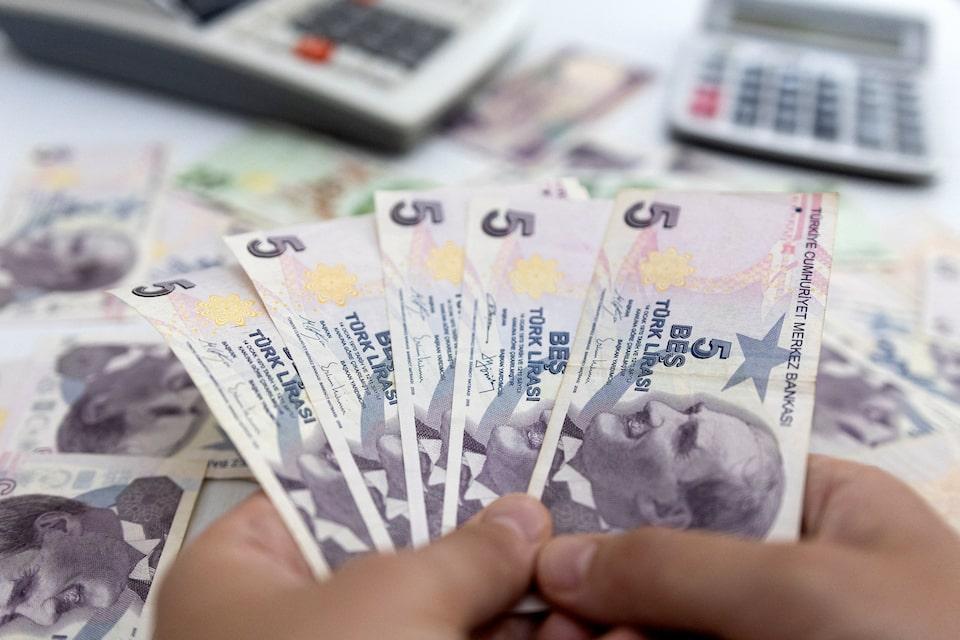
Sept 12 (Reuters) - Turkey's financial markets are bracing for a court ruling on Monday that could oust the leader of the main opposition party following months of political turmoil that has roiled Turkish stocks, bonds and the lira. Monday's ruling is the latest chapter in a legal crackdown on the main opposition to President Tayyip Erdogan that has been unsettling investors since March, when the arrest of Istanbul Mayor Ekrem Imamoglu - Erdogan's main rival - triggered a major selloff. Sign up here. The turmoil has put a fresh focus on Turkey, an emerging market economy that has in the last two years seen a return of some of the foreign investment that vanished in previous years over the government's unorthodox policies. The latest ruling follows a September 2 court decision that ousted the Istanbul provincial head of the opposition Republican People's Party (CHP), citing irregularities at a local party congress. Markets will be closely watching Monday's ruling, and the political fallout. "It is a very important moment for Turkey," said Giulia Pellegrini, portfolio manager at Allianz. Below are five charts on how Turkey's financial markets have fared in recent months. EQUITIES SUFFER Turkish stocks tumbled after the September 2 ruling, with Istanbul's benchmark (.XU100) , opens new tab index dropping as much as 5% during the session, its worst daily performance in about six months. Losses in the banking index (.XBANK) , opens new tab were even bigger. Since Imamoglu's arrest, the benchmark and banking indexes are down 15% and 10% in dollar terms, respectively. The declines are in sharp contrast to wider emerging markets. The MSCI Emerging Markets Index (.MSCIEF) , opens new tab has gained more than 23% since the start of the year, compared to a loss of some 8% in the index provider's Turkey benchmark, representing the country's most liquid and sizeable stocks that foreign investors seek exposure to. LINGERING LIRA On the day of Imamoglu's arrest, the lira weakened more than 2.6% against the dollar and hit a record 42.00 level with the speed of the move sending shockwaves through the markets. The currency has returned to a more gradual pace of depreciation since then, though it has still weakened more than 9% - making it one of the worst performers across emerging markets. That comes against the backdrop of the dollar waning around 10% this year, on track for its worst year in more than two decades - usually a boon to emerging market currencies. Grant Webster, portfolio manager at Ninety One, said he did not expect a repeat of the lira's steep plunge on Monday, pointing to the currency's more muted reaction in early September, with authorities standing ready to react swiftly. "They put processes in place which allow them to more quickly sell dollars and to tighten liquidity - so they can do it very quickly," Webster said. FOCUS ON CENTRAL BANK Turkey's hard currency reserves have long been a flash point, especially when authorities had to draw on them to shore up the lira. Following Imamoglu's arrest, the central bank sold some $57 billion in reserves. In the days following the early September ruling, traders said the central bank sold $4 billion-$5 billion - denting its rebuilding effort after the March drawdown. Politics have also shaped interest rate decisions. The March markets rout prompted policymakers to abandon their easing push and hike the policy rate by 350 basis points to 46% in April. After holding steady in June, the central bank resumed easing in July, cutting by 300 and 250 basis points in July and September respectively to 40.5%. FIXED INCOME PRESSURES Local bonds have oscillated this year, with yields scaling five-month highs in mid-April, and ticking up again earlier this month. While external debt also showed big swings, longer-dated dollar bonds are trading at their highest in a year. Credit Default Swaps (CDS) - a proxy for the costs to insure exposure to a country's external debt against default - have steadily come down, and are now not far off pre-March levels. However, some expect this could change on Monday. "The case could reshape Turkish politics and increase the political risk premium currently embedded into Turkish assets to a new level," BBVA analysts wrote in a note. https://www.reuters.com/world/middle-east/after-months-political-drama-turkish-markets-brace-next-big-test-2025-09-12/
2025-09-12 12:57
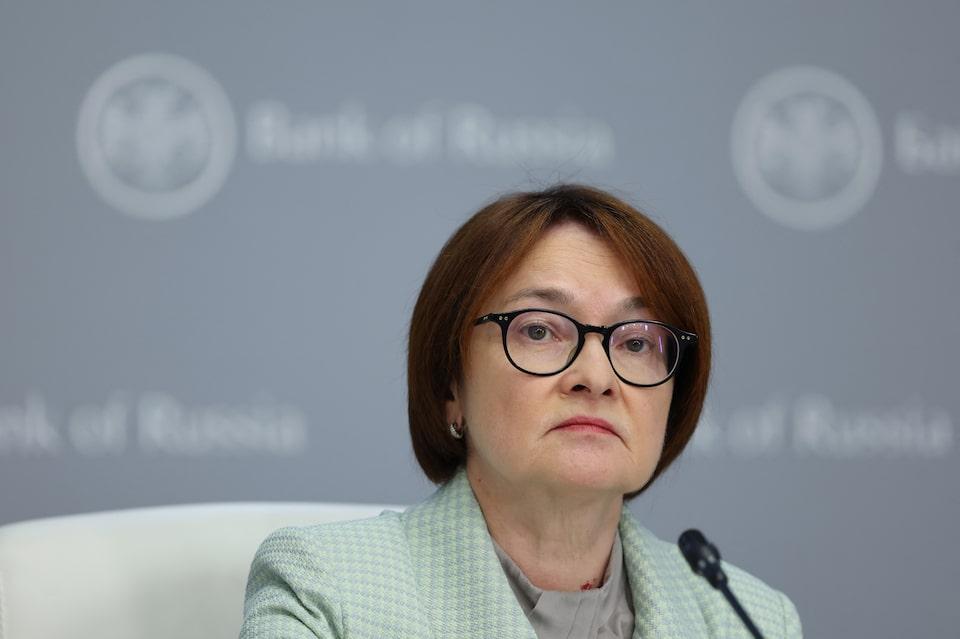
MOSCOW, Sept 12 (Reuters) - Russian Central Bank Governor Elvira Nabiullina and her deputy Alexei Zabotkin addressed a news conference on Friday after the central bank cut its key rate to 17% from 18%. They spoke in Russian and the quotes below were translated into English by Reuters. Sign up here. *NABIULLINA ON PAYMENT SYSTEMS BETWEEN RUSSIA AND CHINA We do not comment on the details of cooperation in the field of international settlements. In general, I can say that despite external restrictions, our banks and companies are developing various alternative payment methods. Therefore, international settlements do not currently have any impact on stability and monetary policy. *NABIULLINA ON ECONOMIC GROWTH According to our estimates, the economy will continue to grow this year and next, albeit at a slower pace than in the previous two years. There can be no other outcome after the overheating, but it is still growth. Moreover, the more severe the overheating, the more noticeable the economic slowdown will be. When will growth accelerate again? In our view, when potential catches up with demand, when we finally emerge from overheating, and both demand and supply grow at a steady pace. For inflation, this will mean a steady return to 4%, and for interest rates, a return to neutral territory. We currently estimate this neutral territory to be 7.5%-8.5%. However, the reasons for the acceleration in growth are not the reduction in interest rates themselves, but the fact that the reduction in interest rates will mean that the economy is returning to a balanced state, with demand no longer outstripping production capacity. In the baseline forecast, this will happen by the beginning of 2027. If we try to accelerate growth now, before demand has caught up with the supply of goods, services, and production, inflation will accelerate and ultimately undermine sustainable growth. Therefore, we are determined to bring inflation down to sustainably low levels. NABIULLINA ON OPTIONS FOR KEY RATE DECISION Two options were considered at the meeting: lowering the rate by 1% and keeping the rate unchanged. The arguments in favour of keeping the rate unchanged were that monetary conditions had eased significantly and that we needed to assess the consequences of the decisions already taken. And, of course, we will need to obtain more information about what the budget policy will ultimately be. NABIULLINA ON THE BUDGET FACTOR Our decision today reflects our understanding, based on the information currently available, of how the budget will shape up at the end of 2025 and its parameters for 2026, 2027 and 2028. We assume that the budget will be disinflationary for the year, but the extent of this will be clarified when amendments to this year's budget are made. We expect the government to present specific quantitative characteristics by the end of September, and we will include them in our forecast update at the October meeting. And, of course, the budget factor is always important, as is the predictability of budget policy in general. NABIULLINA ON THE EXCHANGE RATE "We always take into account exchange rate dynamics. This is an important indicator of the degree of monetary policy tightness and the main indicator through which changes in external conditions affect inflation. With a monetary policy aimed at low inflation, a stable, self-sustaining weakening of the exchange rate is impossible. But fluctuations do occur. They are inevitable when economic conditions change. And, of course, we analyse all these factors when making decisions." https://www.reuters.com/business/finance/russias-nabiullina-rates-economy-budget-2025-09-12/
2025-09-12 12:45
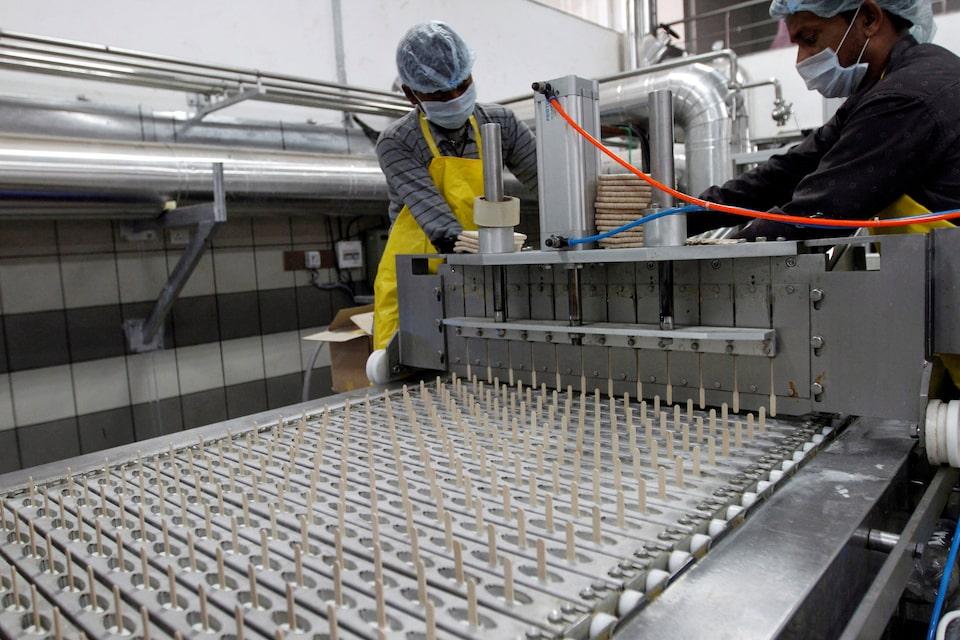
Sept 12 (Reuters) - The U.S. subsidiary of India’s Vadilal Industries (VDLI.NS) , opens new tab will start manufacturing ice cream at its local facility by the year-end to reduce dependence on imports and boost sales, an executive of the unit said on Friday. Vadilal Industries USA currently imports a majority of its products from India. Sign up here. U.S. President Donald Trump last month imposed tariffs of up to 50% on Indian goods, sending exporters of everything from apparel to frozen shrimp into a frenzy and forcing them to work out contingency plans. Corporates globally from Johnson & Johnson (JNJ.N) , opens new tab and Adidas (ADSGn.DE) , opens new tab to Sony (6758.T) , opens new tab have flagged a financial knock worth billions of dollars due in part to the tariffs on countries. The Bristol, Pennsylvania-based subsidiary, set up in 2009, distributes its products to stores across the country and accounts for roughly a third of Vadilal Industries' turnover. "(Scaling) our manufacturing in America will give us a significant advantage in terms of saving on the tariff and overall supply chain impacts from India," Vadilal Industries USA CEO Shreshth Jhawar told Reuters in an interview. Jhawar said the U.S. plant is expected to begin operations by December with full-fledged ice cream manufacturing commencing by April. The Ahmedabad, Gujarat-based parent company posted revenue from operations of 10.11 billion rupees ($114.55 million) for the year ended March 31. Jhawar did not disclose the investment size in the facility, which Vadilal Industries USA aims to use for future exports. The subsidiary, which brought forward its shipments several months ago in anticipation of tariff challenges, is on track to meet revenue growth of 20% in the ongoing financial year, he said. "We have to do everything to keep protecting (market share)," Jhawar said, adding the U.S. unit will absorb some of the cost impact. ($1 = 88.2590 Indian rupees) https://www.reuters.com/business/retail-consumer/indias-vadilal-industries-us-unit-make-ice-creams-locally-cut-imports-2025-09-12/