2025-09-12 10:14
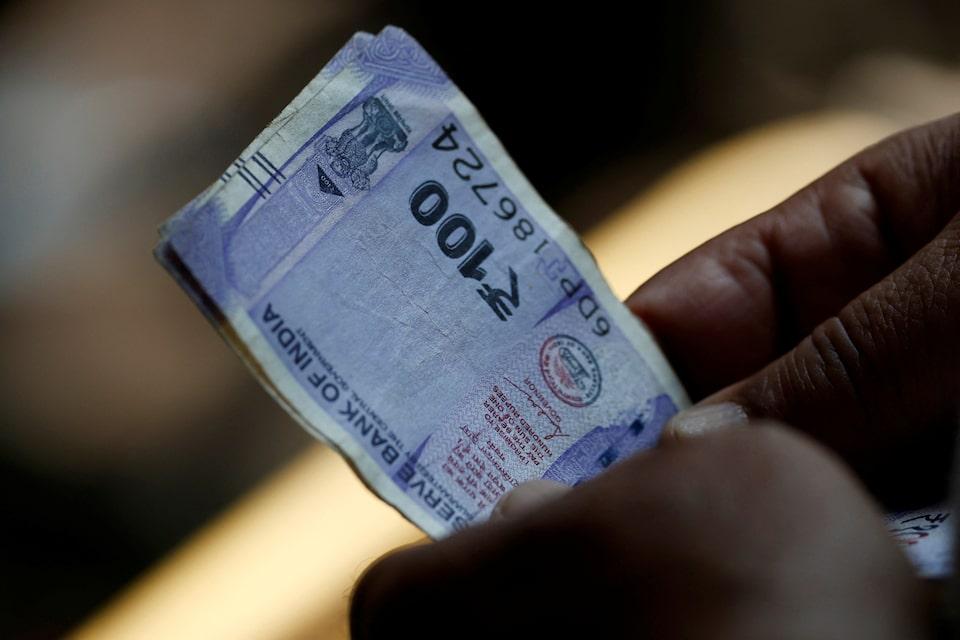
MUMBAI, Sept 12 (Reuters) - The Indian rupee climbed on Friday, as a key U.S. inflation data came in line with expectations and reinforced bets that the Federal Reserve will cut interest rates next week. The rupee ended 0.19% up at 88.2750 on Friday from the close of 88.4425 on Thursday - a record closing low. Sign up here. Friday’s move ended a volatile week, during which the rupee stayed largely below the 88-mark, weighed down by persistent portfolio outflows and U.S. tariff-related uncertainties. The local unit has been under steady pressure since the U.S. imposed additional punitive tariffs on Indian imports last month over the purchase of Russian oil. To curb the impact of the levies, Indian Prime Minister Narendra Modi rolled out consumption tax cuts. Both U.S. and India are also looking at resuming negotiations to address the trade barriers. “The rupee...remains caught between domestic trade and capital pressures and global dollar moves shaped by U.S. inflation and Fed policy,” said Abhishek Goenka, founder and CEO of IFA Global. While the Indian central bank has been intervening through state-run banks to smooth volatility, it is not defending a specific level, leaving the currency outlook fragile, Goenka said. Thursday's U.S. inflation data, seen as supportive of rate cuts, prompted traders to price a 90% chance of two more moves this year. The Fed last lowered rates in December 2024. Strengthening prospects of U.S. rate cuts has propped up currencies across Asia, with the Malaysian ringgit and the Indonesian rupiah leading the gains, as lower borrowing costs weaken the dollar and draw more money into high-yielding emerging markets. The U.S. dollar index was up 0.15% as of 1535 IST. https://www.reuters.com/world/india/rising-bets-fed-rate-cut-lifts-rupee-2025-09-12/
2025-09-12 10:09
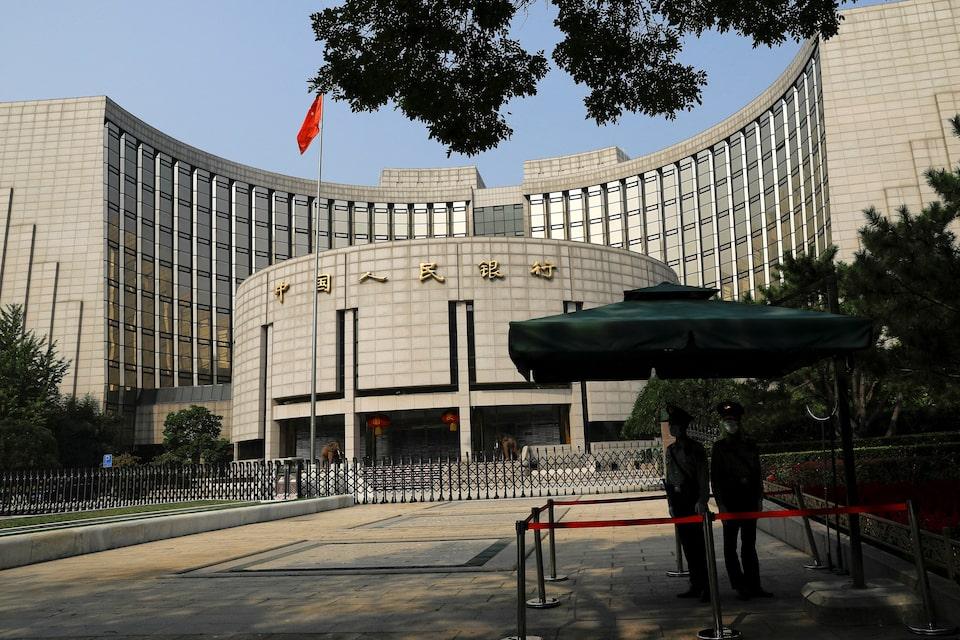
SHANGHAI, Sept 12 (Reuters) - China's central bank said on Friday it plans to better regulate cross-border yuan financing between banks, and promote offshore use of the Chinese currency. China is ramping up the pace of yuan globalisation as Beijing seeks to reduce its reliance on the U.S. dollar amid simmering trade and geopolitical tensions with Washington. Sign up here. The People's Bank of China (PBOC) said in draft rules that it will introduce a counter-cyclical mechanism to manage cross-border, interbank yuan financing. The PBOC also encourages domestic banks to exploit their full potential in cross-border yuan financing, and will set a business ceiling that ensures "adequate room for growth." The draft rules were designed to "further support cross-border yuan financing by domestic banks, develop the offshore yuan market, and improve macro-prudential management of cross-border capital flows," the PBOC said. Cross-border yuan financing, including lending and bond repo agreements, is the main channel for onshore Chinese banks to pump liquidity into offshore markets and promote overseas use of the yuan. U.S. Treasury Secretary Scott Bessent plans to meet with Chinese Vice Premier He Lifeng and other senior officials next week in Madrid to continue their discussions on trade, economic and national security issues, the Treasury said on Thursday. https://www.reuters.com/sustainability/boards-policy-regulation/china-central-bank-better-regulate-cross-border-yuan-financing-between-banks-2025-09-12/
2025-09-12 10:07
Increased funding pressure expected due to lower bank reserves SOFR seen higher than fed funds by end-September Investors rely on Fed's Standing Repo Facility as a backstop NEW YORK, Sept 12 (Reuters) - A surge in U.S. Treasury bill issuance in recent months has reduced liquidity in the financial sector, stoking investor concerns that funding markets could face a September squeeze. That could create ripple effects through markets by reducing demand for assets like stocks and corporate bonds, and pushing some investors to set cash on the side in anticipation of volatility. Sign up here. Some say there is a mild risk of a repeat of 2019 when a liquidity shortage caused a spike in short-term borrowing rates until the Federal Reserve intervened in overnight markets to alleviate the crunch. "There is some concern that we could have a repeat of September 2019 at quarter-end due to technicals, corporate tax days, and coupon settlements," said Teresa Ho, head of short duration strategy at J.P. Morgan in New York. In September 2019, overnight funding costs in the repurchase (repo) market spiked due to a large drop in bank reserves amid large corporate tax payments and payments for Treasury debt, forcing the Fed to inject liquidity in repo markets. Some measures of liquidity are already signaling stress ahead, such as a higher cost of borrowing cash overnight collateralized by Treasuries. Still, money market conditions are different. The Fed has launched the Standing Repo Facility (SRF) -- that could be tapped by banks for emergency liquidity, and bank reserves - the biggest component of overall financial sector liquidity - are much higher at $3.2 trillion than in 2019. However, the Fed has been shrinking its bond holdings for over three years, drawing attention to liquidity. At the same time, rapid issuance of Treasury bills by the government after the debt ceiling was raised in July, has prompted traders to anticipate potential stress. Pressure could increase around the September 15 corporate income tax date and the end of the September quarter, when traders say banks tend to reduce intermediation activity. "September tends to be one of the more volatile months and so we are really keeping a close eye on repo and front-end funding spreads," said Clayton Triick, head of portfolio management of public strategies at Angel Oak Capital Advisors. Triick is keeping money on the side in case money market volatility leads to wider credit spreads, which he said would be an opportunity to buy more corporate bonds. SEPTEMBER STRESS Generally, an increase in government borrowing coincides with a decline in demand for the Fed's overnight reverse repo facility (RRP), through which money funds lend to the central banks, or with a drop in bank reserves parked at the Fed. These two money pools are monitored by the Fed to assess financial sector liquidity as it continues shrinking its balance sheet through quantitative tightening. "We expect U.S. bank reserves to continue seeing drawdowns in the upcoming months as T-bill net supply increases," Citi analysts said in a recent note, which could lead to a potential liquidity crunch this month. Among the measures of liquidity signaling stress is that the Secured Overnight Financing Rate (SOFR), the cost of borrowing cash overnight collateralized by Treasuries, rose to 4.42% last Friday, the highest in two months, signaling pressure in a key funding market for Wall Street. On Thursday, SOFR pulled back a bit to 4.39%. Meanwhile, the spread between one-month forwards of SOFR and the effective fed funds rate , at which banks lend overnight unsecured loans to each other, stood at minus 7.5 basis points (bps) on Thursday, the most negative level on record. This means that the forwards market expects SOFR to trade 7.5 bps higher than fed funds by end-September, suggesting tighter repo funding conditions. SOFR typically tends to be lower than fed funds by five to 10 bps because the former carries minimal credit risk being secured by Treasuries. Nafis Smith, head of taxable money markets at Vanguard, said while repo spreads are experiencing mild and periodic pressure, these are typically short-lived, in contrast to 2019 when they were persistently elevated leading up to the September dislocation. He added that worries about a 2019-style funding disruption appear "overly pessimistic." DECLINING BANK RESERVES Usage of the Fed's RRP facility has also fallen sharply, from a peak of $2.6 trillion at the end of 2022 to $29 billion on Thursday, leaving bank reserves as the main source of financial sector liquidity. Lou Crandall, chief economist at Wrightson ICAP, said he expects more funding pressure this quarter compared with end-June because of declining bank reserves, which could necessitate higher usage of the Fed's SRF. Fed data showed that banks borrowed $11.1 billion from the SRF last June 30 backed mostly by Treasuries, the largest borrowing since its launch four years ago. Crandall said he expects SRF borrowings as high as $50 billion at end-September. He added that bank reserves could well dip below $3 trillion by end-September as market participants settle a substantial amount of Treasury debt and pay corporate taxes ahead of a September 15 deadline. To be sure, some market players argued that any funding squeeze would be fleeting. Since quarter-end liquidity tightness is expected, the odds of investors being blindsided are slim. "It never seems like funding markets blow out when risks are well-telegraphed," said Jonathan Cohn, head of U.S. rates desk strategy at Nomura. "The market pre-positions, precautionary liquidity is sourced, so you can have these known periods of pressure like a reporting date, that come and go, that don't require any direct Fed intervention." https://www.reuters.com/business/finance/wall-street-braces-quarter-end-liquidity-stress-money-markets-2025-09-12/
2025-09-12 09:59
LONDON, Sept 12 (Reuters) - The British public's expectation for inflation in around five years' time rose in August to its highest since May 2019 at 3.8%, according to a Bank of England survey on Friday, which may unsettle some policymakers ahead of next week's rate decision. The measure of longer-term public inflation expectations increased from 3.6% in May while expectations for inflation in the next 12 months rose to a two-year high of 3.6%, up from 3.2% three months earlier. Sign up here. Surveys of public inflation expectations are not viewed by economists as a forecast, but are seen as a risk factor for higher inflation, as they increase the chance that people will push for higher wages and accept higher price increases. Members of the BoE's Monetary Policy Committee place varying weight on this type of survey. Some view it as more of a knee-jerk reaction to recent inflation data, while others regard it as reflecting a possible loss of confidence in the central bank's willingness to get inflation back to its 2% target. Net satisfaction with the BoE's approach to controlling inflation dropped in the survey to +2 in August from +6 in May, although it is still higher than it has been for most of the past three years. British consumer price inflation rose to an 18-month high of 3.8% in July, the highest in the Group of Seven advanced economies, and last month the BoE forecast it would reach 4% in September before returning to target in the second quarter of 2027. The BoE cut rates by a quarter-point to 4% in August, but financial markets see almost no chance of a rate cut next week and only a roughly 40% chance of a cut later this year, according to LSEG data. https://www.reuters.com/world/uk/uk-publics-long-term-inflation-expectations-rise-highest-since-2019-2025-09-12/

2025-09-12 09:48
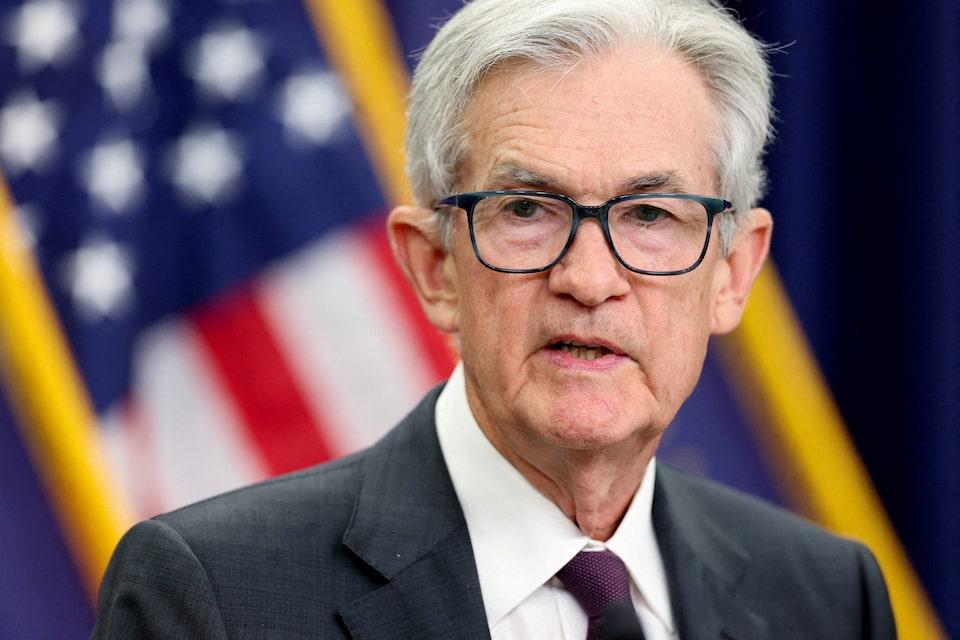
Sept 12 (Reuters) - The moment investors - and at least one occupant of the White House - have been waiting for is almost here. The Federal Reserve is one of a number of major central banks that meets in the coming week to set monetary policy, and its decision could set the tone for markets for the rest of the year. Sign up here. Here's your look at the week ahead from Kevin Buckland in Tokyo, Alden Bentley in New York and Dhara Ranasinghe, Karin Strohecker and Amanda Cooper in London. 1/ THE FED, FINALLY The week's main event is shaping up to be a resumption of U.S. monetary easing after a nine-month pause. Over the past two weeks, bad news on the jobs front and tame inflation readings from CPI and PPI reports have paved the way for the Fed to cut rates by at least 25 basis points after its Tuesday-Wednesday meeting, resuming the easing path that ran from last September to December. Some Fed officials, including Chair Jerome Powell at the Jackson Hole symposium last month, have been signalling a cut was coming. The questions have been: when? and how many? President Donald Trump, for one, believes the answers are something like: immediately, and a lot. Betting in futures markets suggests a quarter-point cut in the 4.25%-4.5% Fed funds target is all but certain, with a 10% chance of a super-sized 50 bps cut. By December, at least 75 bps of easing is priced in. 2/ BOJ TIMING Whether or not U.S. Treasury Secretary Scott Bessent is right about the Bank of Japan being behind the curve, a rate hike on September 19 looks like a long shot. For one thing, Japan won't know who its next prime minister is until October 4 at the earliest, and the front-runners couldn't be much further apart in their views on fiscal and monetary policy. Sanae Takaichi, potentially the country's first female premier, is an Abenomics disciple backing higher spending and looser monetary conditions. Shinjiro Koizumi, who at 44 would be its youngest premier, is the continuity candidate, close to outgoing fiscal hawk Shigeru Ishiba. Another complication is potential Fed easing. A BOJ hike in that environment could roil Japan's already fragile bond market, accelerate yen strength, and knock stocks off their record peaks. Traders now see a rate hike by year-end as a coin toss, compared with a 72% bet last month after Bessent's last jab. 3/ READY FOR MORE? Europe's not missing out on a central-bank packed week. The Bank of England is tipped to hold rates steady on Thursday, and analysts have pushed back forecasts for future rate cuts, citing sticky inflation. August inflation numbers are out a day earlier and could add to a sense that further cuts are unlikely soon. UK jobs data is released on Tuesday. Still, the UK isn't alone in grappling with higher-than-anticipated inflation that casts doubt over central banks' ability to keep cutting rates. Norway's central bank also meets on Thursday. Markets are pricing a roughly 70% chance of a quarter-point rate reduction, but underlying inflation - running at 3.5% year-on-year - makes traders less confident of a move. A day after the Fed, Thursday's European rate decisions are likely to highlight a growing dispersion among big central banks. 4/ ...AND THEN THERE IS THE REST Several major emerging market central banks also have rate decisions. Having announced a new and lower policy objective of achieving 3% inflation, central bankers in South Africa will have to re-anchor inflation expectations and might keep rates on hold at 7%, with some expecting there is room to cut soon. Brazil - having hiked 450 bps over the past 12 months - is expected to keep rates at a nearly 20-year high of 15% on Wednesday. But slowing growth and downside inflation surprises could spark debate on when cuts might start. Faced with uncertainty over fiscal expansion, analysts are undecided over whether Indonesia's central bank will cut, or keep rates at 5%, on Wednesday after the sacking of respected Finance Minister Sri Mulyani - widely seen as one of the few checks on President Prabowo Subianto's big growth and spending promises that have unnerved many investors. 5/ NOT BAD FOR A RELIC Gold has virtually doubled in value in the space of three years and is up nearly 40% in 2025, set for its strongest yearly gain since 1980's 126% surge. It has beaten even bitcoin , which is up "only" 22%. A weaker dollar tends to favour gold, as do falling interest rates and lower real yields - those that strip out inflation. What else favours gold - and has been delivered in spades this year - is geopolitical uncertainty, persistent inflation and a desire to ditch dollars. The price has vaulted above $3,600 an ounce and a lot of demand is coming from central banks and other buyers with a longer investment horizon. Not bad for what economist John Maynard Keynes once dubbed the "barbarous relic". https://www.reuters.com/business/take-five/global-markets-themes-repeat-graphic-2025-09-12/
2025-09-12 09:41
Japan's interest rates are too low, Gyoten says Weak yen could accelerate inflation, he says Gyoten was involved in the 1985 Plaza Accord TOKYO, Sept 12 (Reuters) - The Bank of Japan should be mindful of the risk of inflation accelerating due to the yen's prolonged weakness, as Japan's interest rates remain ultra-low, former top currency diplomat Toyoo Gyoten told Reuters. "It's a matter of fact that Japan's interest rates have been simply too low, and that's undeniably contributing to the yen's weakness," said Gyoten, who was involved in the 1985 Plaza Accord, which saw five major economies agree to a concerted devaluation of the dollar. Sign up here. "Naturally, there's concern that if this situation is left unattended, it could accelerate inflation (through higher import costs). The BOJ really needs to take this into consideration," he said in an interview. The BOJ exited a massive, decade-long stimulus last year and raised short-term rates to 0.5% in January on the view Japan was on the cusp of sustainably achieving its 2% inflation target. While consumer inflation has exceeded the BOJ's target for well over three years, governor Kazuo Ueda has vowed to go slow in hiking rates due to uncertainty over the impact of U.S. tariffs on Japan's economy. The yen plunged to 38-year lows past 161 per dollar last year. It has partly rebounded, but has remained weak for much of this year and was last fetching around 147 on the dollar. Gyoten, now honorary advisor to Mitsubishi UFJ Financial Group's (8306.T) , opens new tab main banking arm, said the yen's weakness would be corrected if Japan gradually moves toward further tightening, narrowing the interest rate gap with the United States. "Looking at the yen's value from a historical perspective, it's still too weak. There's no reason why the yen shouldn't strengthen significantly from here," he said. Gyoten, who became vice finance minister for international affairs in 1986, recalled the public outcry when the yen shot up in the aftermath of the Plaza Accord. The BOJ responded with massive monetary easing to shield the exports-reliant economy from the currency shock. But the move fuelled asset bubbles that later burst, leaving deep scars on what is now the world's fourth-largest economy. "Rather than trying to stop the yen's appreciation, Japan should have accepted a stronger yen and used it as an opportunity to reduce its dependence on exports and shift to a new growth model," he said. Regarding lingering caution among export-oriented industries about a strong yen, he noted that the sentiment "has changed quite a bit from the past." Unlike in earlier times when a strong yen was seen as inherently negative, there is now a growing awareness that the perspective of ordinary consumers has to be taken into account, Gyoten said, referring to households getting crunched by higher costs of living due partly to the weak yen. https://www.reuters.com/world/boj-should-watch-out-inflation-risks-weak-yen-ex-japan-fx-diplomat-says-2025-09-12/