2025-12-05 10:28
Heads of both companies reveal plans in separate interviews Saab CEO says move envisages side drones for current fighters Airbus CEO says talks unrelated to problems with FCAS project Saab doesn't rule out partnerships, must keep fighter capability PARIS, Dec 5 (Reuters) - Saab (SAABb.ST) , opens new tab and Airbus (AIR.PA) , opens new tab are discussing co-operation on unmanned warplane technology, senior executives of the companies told Reuters, a move highlighting surging interest in drones and evolving alliances in Europe's fractured defence industry. The project, revealed in separate CEO interviews at a European industry event this week, focuses on exploring unmanned aircraft to support the current generation of crewed combat jets like the Airbus-backed Eurofighter Typhoon and Saab Gripen E. Sign up here. But industry sources said that if successful, it could also provide a catalyst for broader co-operation on air power, especially if a troubled FCAS fighter project between France and Airbus' defence paymasters Germany and Spain falls apart. Asked whether Airbus had already been in touch with Saab about joining forces if FCAS fails, Saab CEO Micael Johansson said the companies already had good relations through Saab's Arexis Electronic Warfare system, equipping German Eurofighters. He added: "And we have discussed whether we can we do something on the unmanned side which complements our legacy fighters". Saab is also talking to other players but no decisions have been taken. "That could be an opportunity, but of course we are discussing," Johansson said on the sidelines of a Brussels forum hosted by Europe's ASD, the association which represents Europe's aerospace and defence industry. Asked at the same event about those remarks, Airbus CEO Guillaume Faury confirmed the previously unreported talks and said the companies had strong relations in electronics and missiles. "And we see good perspectives to continue to work with them on unmanned - that's something that we are discussing with them, which is unrelated to FCAS," he said. "We'll see what the programme will look like in the future. But today, the discussions we're having are directly between Airbus and Saab, unrelated to other problems." WINGMAN DEVELOPMENTS Both companies have joined in a surge of interest in futuristic uncrewed fighters known as collaborative combat aircraft (CCA) or loyal wingman, designed to support human-piloted warplanes. Airbus presented a model of its stealthy "Wingman" concept at the Berlin Airshow in 2024. Saab said last month it had received a new Swedish government order for studies on manned and unmanned warplanes, extending a previous contract dating from Sweden's 2023 decision to quit the UK-led Tempest fighter study, now part of the GCAP fighter jet project between Britain, Italy and Japan. Ministers from Germany, France and Spain are due to discuss splits in the FCAS programme next week. Industry sources have said Airbus has been in regular contact at CEO level with both Saab and GCAP member BAE Systems (BAES.L) , opens new tab to discuss options. The 100-billion-euro Future Combat Air System (FCAS), floated more than eight years ago, has been stuck in disputes between the companies involved over workshare and technology. Johansson declined to discuss any implications for Saab of the in-fighting within FCAS but said that in general terms, "we don't speak about Sweden replacing someone or something". Analysts say decisions over the next generation of fighters will shape the defence industry and its alliances for decades. Sweden remained independent during the last round of fighter developments, creating the Gripen as France built the Rafale and Britain, Germany, Spain and Italy co-developed the Eurofighter. For the next generation of warplanes, the cards have been reshuffled, with France joining Germany and Spain in FCAS, also known by its French acronym SCAF, and Britain merging its efforts with Japan inside GCAP, which is open to new members. Sweden has yet to show its hand, having initially partnered with Britain and now conducting its own research on a successor to the Gripen with political decisions due in 2030. Johansson said he thought decisions could come even earlier, "maybe 2028". Johansson said Saab would not relinquish its seat in the small club of global arms firms capable of developing fighters. "I'm not excluding any sort of partnerships going forward. That could absolutely be a way forward, but with retaining OEM (manufacturer) capability on the fighter side: why would we let go of that?" https://www.reuters.com/business/aerospace-defense/saab-airbus-co-operate-unmanned-fighter-technology-2025-12-05/
2025-12-05 09:45
LONDON, Dec 5 (Reuters) - Regulators at the Bank of England and the Financial Conduct Authority on Friday announced a package of measures aimed at supporting Britain's mutuals sector. The plans seek to speed up application processes, review credit union regulations, and make it easier for mutuals to co-operate. Sign up here. "Mutuals are a vital part of our financial system. Today’s report examines how the financial mutuals sector is growing, and what we can do to help it thrive in the period ahead," Sam Woods, CEO of the PRA and deputy governor at the BoE, said. https://www.reuters.com/business/bank-england-fca-announce-plans-support-growth-mutuals-sector-2025-12-05/
2025-12-05 09:33
MUMBAI, Dec 5 (Reuters) - A potential artificial intelligence bubble will deflate faster than past tech cycles but give way to an even stronger rebound as corporate adoption catches up with infrastructure spending, the head of Japanese IT company NTT DATA Inc. said. Despite worries around supply chains, the direction of travel is clear, CEO Abhijit Dubey said in an interview with the Reuters Global Markets Forum , opens new tab. Sign up here. "There is absolutely no doubt that in the medium- to long-term, AI is a massive secular trend," he said. "Over the next 12 months, I think we're going to have a bit of a normalisation ... It'll be a short-lived bubble, and (AI) will come out of it stronger." With demand for compute still running ahead of supply, "supply chains are almost spoken for" over the next two to three years, he said. Pricing power is already tilting toward chipmakers and hyperscalers, mirroring their stretched valuations in public markets, he added. AI has triggered the biggest technological shake-up since the advent of the internet, fuelling trillions of dollars of investment and eye-watering equity gains. But it has caused shortages of memory chips, drawn regulatory scrutiny, and created growing unease over the future of work. Dubey, who is also the firm's chief AI officer, said his company has begun rethinking recruitment strategies as AI reshapes labour markets. "There will clearly be an impact ... Over a five- to 25-year horizon, there will likely be dislocation," he said. However, he added that NTT DATA continues to hire across locations. Speakers at the Reuters NEXT conference in New York discussed how AI may upend work and job growth. AI startup Writer Inc.'s CEO May Habib said customers are focused on slowing headcount growth. "You close a customer, you get on the phone with the CEO to kick off the project, and it's like, 'Great, how soon can I whack 30% of my team?'," she said. Still, a PwC survey of the global workforce released in November suggests the reality of generative AI usage has yet to match boardroom expectations. Daily use of GenAI remains "significantly lower" than widely touted by executives, PwC said, even as workers with AI skills commanded an average wage premium of 56% — more than double last year's figure. PwC also flagged a widening skills gap, with about half of non-managers reporting access to training resources, compared with roughly three-quarters of senior executives. (Join GMF on LSEG Messenger for live interviews:) (This story has been refiled to remove the outdated advisory note) https://www.reuters.com/world/asia-pacific/ai-bubble-be-short-lived-rebound-stronger-ntt-data-chief-says-2025-12-05/
2025-12-05 07:41
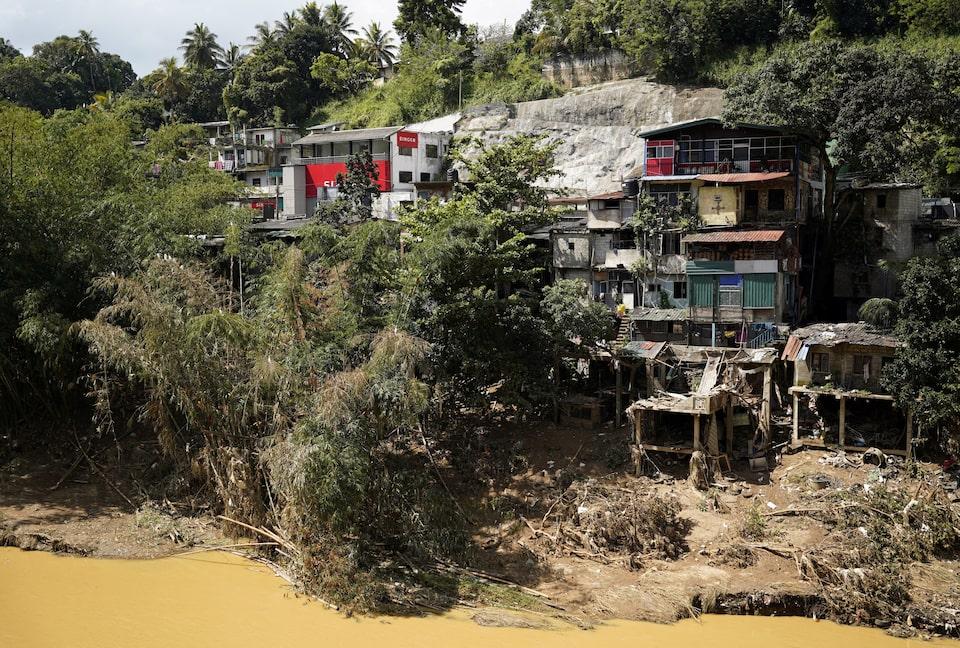
Cyclone Ditwah hits Sri Lanka's peak tourism season Small operators, backdone of tourism, suffer most Cancellations low at about 1% for now, says hoteliers Tourism is country's third-largest foreign exchange earner KANDY, Sri Lanka, Dec 5 (Reuters) - November to January are usually the busiest season for Herath Gedara Rohan Anil Kumara’s three-bedroom homestay in Sri Lanka’s hill country, famed for its tea plantations, historic sites and quaint villages. But after Cyclone Ditwah tore through the island last week, killing nearly 500 people, Kumara now finds himself in a relief centre, uncertain when he can rebuild his business. Sign up here. His now-damaged house used to earn him more than $30 a night, enough to support his family, but the 37-year-old has been forced to cancel all bookings for December and January. "I’m still getting inquiries, but we can’t accept them," Kumara said from the Kithulbedda relief centre, where he moved with his family of six last Friday. "I don’t know when we will be able to rebuild and return to normal." His story underscores the vulnerability of small operators who form the backbone of Sri Lanka’s tourism industry, the country’s third-largest foreign exchange earner after remittances and apparel, amounting to 4% of GDP. WIDESPREAD DAMAGE A revival in tourism has helped Sri Lanka recover from its debilitating economic crisis, which peaked in 2022, but the extensive damage caused by Cyclone Ditwah has been a setback. It has affected nearly 10% of Sri Lanka's 22 million population, damaged or destroyed thousands of houses and killed at least 486, with hundreds still missing. The cyclone also hit roads, power lines, and telecom networks, alongside significant losses to agriculture. The Hotels Association of Sri Lanka, however, is hopeful of a fast recovery because cancellations have remained low at about 1%, said association president Asoka Hettigoda. "Hotels across the island are operational," he told Reuters. "Even in Kandy and Nuwara Eliya (among the worst-affected areas), tourists are safe and enjoying their stay, though access is still difficult due to blocked roads." Tourist arrivals crossed two million by mid-November, and the government hopes to reach 2.6 million by the end of the year, the highest since the COVID-19 pandemic, driven by visitors from India, Russia, Germany, France, and the UK. STRANDED TOURISTS AIRLIFTED Authorities have airlifted stranded tourists, waived fees for overstaying visas, and allowed free flight rescheduling. The industry is also pushing for an expanded visa-free programme and launching social media campaigns to reassure travellers. Tour guides have adjusted itineraries to avoid the worst-hit areas. For Estelle Burgess, a 71-year-old tourist from Australia, the cyclone became just another chapter in her Sri Lankan adventure. She arrived about a week ago and plans to stay for another six days. “We’re hoping the weather improves so we can enjoy the beach,” Burgess said outside Kandy's Temple of the Tooth, one of Sri Lanka’s most sacred Buddhist shrines and a UNESCO World Heritage Site. "Sri Lanka truly is an adventure. You never know what's going to happen next." ($1 = 308.6000 Sri Lankan rupees) https://www.reuters.com/business/environment/deadly-cyclone-dents-sri-lankas-peak-tourism-season-2025-12-05/
2025-12-05 07:40
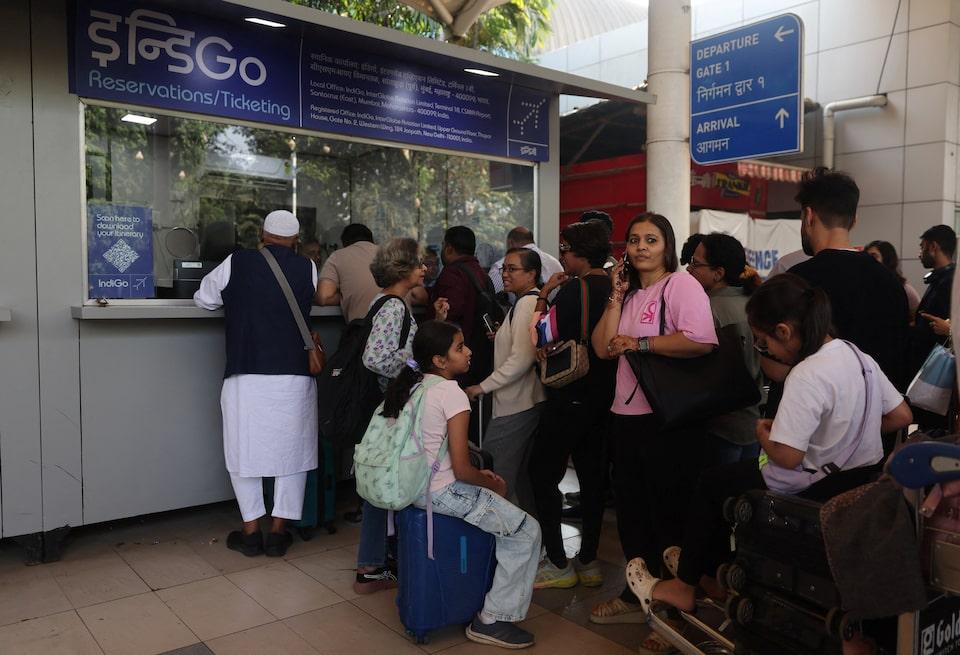
Dec 5 - India's aviation regulator on Friday eased some pilot duty rules after a staffing crunch forced IndiGo (INGL.NS) , opens new tab, the country's largest airline, to cancel hundreds of flights this week. Sign up here. https://www.reuters.com/world/india/india-aviation-regulator-allows-partial-relief-pilot-duty-rules-2025-12-05/
2025-12-05 07:40
LONDON, Dec 8 (Reuters) - The long-awaited December U.S. Federal Reserve meeting is almost here. But it's not the only game in town for financial markets with Canadian, Swiss, Australian and Turkish central banks also meeting and the latest China data to pore over. Sign up here. Here's your one-stop shop for the week ahead in world markets from Alden Bentley in New York, Rae Wee in Singapore and Dhara Ranasinghe, Amanda Cooper and Karin Strohecker in London. 1/ FINALLY Speculation about whether the Fed will ease rates for a third time next week has come full circle since an October rate cut. After a rough patch, Wall Street is again buoyed as if another reduction is a done deal. Policymakers were not unanimous about the last one and differences remain. Several lean dovish, and President Donald Trump will keep up pressure to drop rates. Fed Chair Jerome Powell highlighted "strongly differing views about how to proceed," chilling market certainty by saying that a December cut was not a foregone conclusion. And opaqueness on the economy remains. November inflation data is out in the week to come. Some data has trickled in since the government reopened on November 13, still October and November jobs data only comes out after the Fed meeting. Rate futures reflect confidence in a quarter point cut, but traders are mercurial. Odds recently were less than 50/50. 2/ STILL IN THE WOODS China's struggle with a years-long property slump and anaemic domestic demand shows little sign of recovery even as the year's end draws closer, with the clock ticking for Beijing to deliver more stimulus to shore up its economy. China's exports topped forecasts, data on Monday showed, while inflation figures are out on Wednesday. Investors are focused on the economic agenda for the year ahead to be unveiled later this month. Defaults are also in the spotlight, as China Vanke, once the country's top home builder by sales, seeks a one-year extension on its onshore bond repayment. A bondholder meeting is set for December 10. Down Under, Australia's central bank meets Tuesday and is likely to leave rates unchanged in an economy that's still running hot. 3/ STUCK AT ZERO The Swiss National Bank will almost certainly keep rates at 0% when it meets on Thursday. They are expected to stay stuck there in 2026, even though inflation has slipped towards the lower end of the SNB's range. Officials expect inflation to rise, but also say they would tolerate a temporary blip below 0%. U.S. tariffs aren't helping, but one of the SNB's biggest headaches is homegrown: the currency. The franc has appreciated nearly 12% against the dollar this year, set for its strongest year since 2002. The Swissie has barely moved against the euro in 2025 , but over the last five years, it has gained 14%. Bearing in mind that Europe is Switzerland's largest market, accounting for around half of total exports, this strength is hurting everyone from watchmakers to wealth managers. 4/ THE ONLY WAY IS DOWN (IF YOU ARE TURKEY) Turkey's central bank will set rates on Thursday - there's little doubt it will cut, but by how much is hotly debated. November inflation, at just over 31%, has come in surprisingly soft on the headline number thanks to declining food prices, but rising pressures from services, including rent, make inflation stickier than hoped. The central bank's end-2025 inflation target stands at 24%, with its forecast range at 31%-33%. Markets are watching this final policy meeting of the year for signals on the pace of future easing, with the main rate now at 39.5%. JPMorgan expects a 100 basis point cut, but doesn't rule out a 150-bps trim. Meanwhile, Brazil's central bank is expected to keep its rates at 20-year highs of 15% on Wednesday, but a sharper than expected economic slowdown has fuelled bets a cut could come in January. 5/ THE RE-ACCELERATION TRADE With bitcoin's recent wobble (it suffered its biggest monthly fall in November since February) and Japanese bonds taking a whack, you'd think alarm bells of caution would be ringing. Yet, the smart people in the room seem decidedly upbeat on the year ahead, judging by some of the 2026 outlooks emerging. They're largely sticking with bullish bets on equities - especially in the tech-driven U.S. market. Lombard Odier calls it the re-acceleration trade, with global economic growth expected to drive a "diversified" stocks rally. BNP Paribas has an above-consensus forecast for euro zone growth. The euro is rallying again, and even talk of an AI bubble bursting hasn't really dented stocks. Perhaps the degree of optimism itself - in markets where consensus trades have not always got it right - warrants some caution. https://www.reuters.com/business/take-five/global-markets-themes-graphic-2025-12-05/