2025-09-12 05:03
PARIS, Sept 12 (Reuters) - A wave of cancellations, cost pressures and policy uncertainty have thinned the low-emissions hydrogen project pipeline and cut 2030 projected development by nearly a quarter, the International Energy Agency said on Friday. About 37 million metric tons per year of the low-carbon fuel is expected to be produced by 2030, down from 49 million a year earlier as developers shelved or delayed plans, the IEA said in its Global Hydrogen Review. Sign up here. Actual output is likely to be lower because not all announced projects reach completion, it added. However, this means that capacity that is already operating, under construction or at final investment decision is expected to climb more than five-fold from 2024 levels to above 4 million tons per year by 2030, the report said. Another 6 million tons could be in place by then if governments implement effective demand-creation policies and accelerate infrastructure build-out, the IEA said. Cost competitiveness remains the central hurdle, as falling natural gas prices have widened the gap in recent months in favour of fossil-based hydrogen, while higher electrolyser prices have weighed on low-carbon projects. The IEA expects the cost gap to narrow by 2030 as technology costs decline and regions with strong renewables growth and new regulations improve cost structures. China is the main developer of hydrogen electrolysers, accounting for 65% of global capacity that is installed or at final investment decision and nearly 60% of worldwide electrolyser manufacturing capacity. Low-carbon hydrogen is produced through electrolysis that splits water into hydrogen and oxygen using electricity often derived from renewables. Manufacturers elsewhere face financial strain due to rising costs and slow uptake, while Chinese firms may also confront future challenges as more than 20 gigawatts a year of existing manufacturing capacity exceeds current demand. An IEA analysis of installing Chinese-made electrolysers outside China found no significant cost advantage versus other producers once transport costs and tariffs are factored. Southeast Asia is emerging as a significant hydrogen market, with about 430,000 tons per year of low-emissions hydrogen production by 2030 in announced projects, up from roughly 3,000 tons today. https://www.reuters.com/sustainability/climate-energy/iea-cuts-2030-low-emissions-hydrogen-production-outlook-by-nearly-quarter-2025-09-12/

2025-09-12 04:50
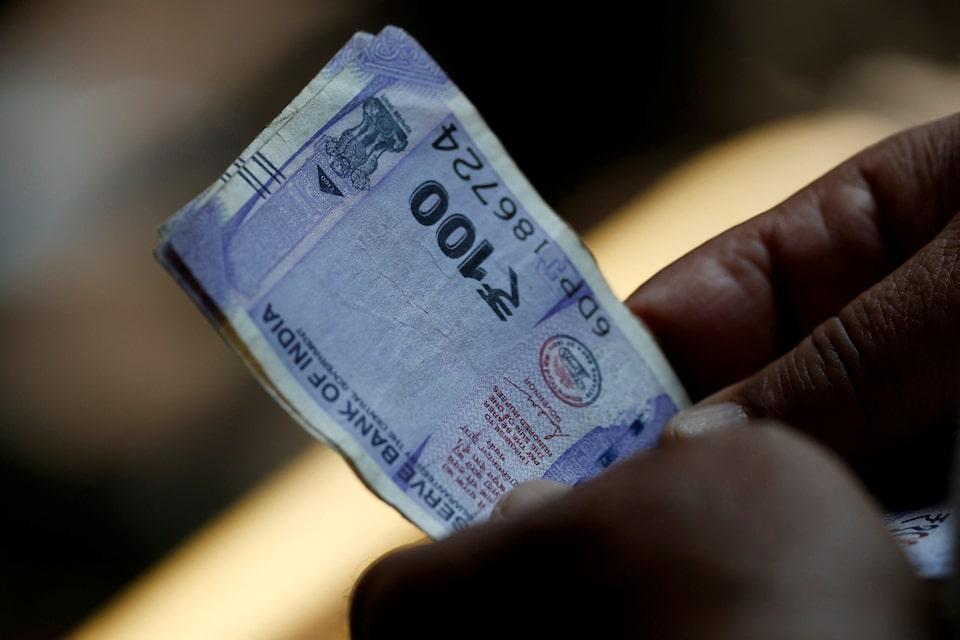
MUMBAI, Sept 12 (Reuters) - The Indian rupee rose on Friday, drawing some relief from expectations that the Federal Reserve remains on track to cut rates, possibly three times this year. Forward premiums inched up to their highest since the first half of May. Sign up here. The rupee was at 88.3025 at 10:06 IST, up from 88.4425 on Thursday, when it fell to an all-time low. It has been under steady pressure since the U.S. imposed extra tariffs on Indian imports of Russian oil late last month. Any brief relief in the currency have been limited by importers covering their dollar needs and continued demand from speculators, bankers said. The story feels "increasingly repetitive - tariff-led pressure on India’s exports combined with lack of portfolio flows weighing on the currency, Amit Pabari, managing director at FX advisory firm CR Forex said, "The rupee seems caught in a cycle of stress." The Indian currency has declined through September despite firming expectations of multiple Federal Reserve rate cuts. The Fed is poised to lower rates by 25 basis points next week, with two further cuts likely in October and December. Data on U.S. inflation and initial jobless claims released on Thursday reinforced market bets on a more accommodative Fed. Claims data reinforced the narrative of a weakening labor market, supporting Fed cuts and boosting risk appetite. USD/INR forward premiums have been climbing in response to Fed rate cut expectations, with the implied yield on the one-year contract on Thursday rising to a new four-month high. The one-year USD/INR forward yield has risen 14 basis points so far this year, following a 20-basis-points jump in August. https://www.reuters.com/world/india/rupee-rises-fed-boost-forward-premiums-near-4-month-high-2025-09-12/
2025-09-12 04:35
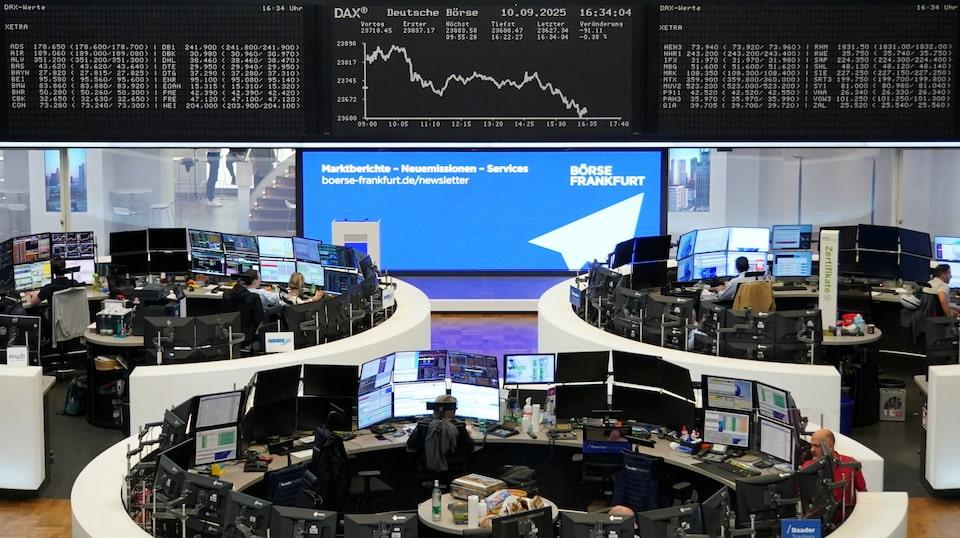
Sept 12 (Reuters) - A look at the day ahead in European and global markets from Wayne Cole. Well, that was a relief. U.S. CPI was on the firmer side but not so much that you'd notice. Some of the prices that feed into core PCE were surprisingly benign, leading analysts to trim their forecasts to +0.2% m/m and a steady 2.9% on the year. Sign up here. So it's all go for the Federal Reserve to resume its easing cycle with 25 basis points next week, though it's notable markets see just a 7% chance of a bumper 50bps. You would assume the more aggressive option will be discussed given the sheer scale of the downward shift in the labour market data. If it's 25 but a voter or two dissents in favour of 50, that might be dovish enough to keep the market rally going. The guidance needs to be dovish given futures have shifted to pricing in 71bps of cuts by Christmas, and 125bps by July. Five cuts in five meetings would be fine. Oh, and a plea to the Fed, please go back to a single rate and not this 4.25-4.50 range. We're not at the zero-bound anymore. Bonds have already delivered a quarter-point cut to mortgage rates with 10-year yields down ~20bps in the past two weeks. To keep the rally going, investors need Fed Chair Jerome Powell to open the door to a series of easings, depending on the data, of course. Anyway, the prospect of much lower U.S. borrowing costs has kept liquidity flowing in Asia and allowed investors to bet on all things AI. Indexes in Japan, South Korea and Taiwan have all hit record highs. The Kospi (.KS11) , opens new tab alone is up almost 6% for the week. Chinese blue chips are back to the peaks from early 2022, having so far survived Beijing's stern warnings against capitalist excesses. The dollar has held up relatively well on the majors in the face of falling yields, while giving ground on some of the less crowded crosses. The dollar index is just a fraction lower on the week, despite all the talk of the end of exceptionalism. The Australian dollar , for instance, finally escaped its soporific trading range to reach a 10-month top, while the Norwegian crown just reached its best level since early 2023. Both have seen yield spreads vs the USD swing around 40 basis points in their favour in the past month or so, and both are testing huge chart levels. Key developments that could influence markets on Friday: - Appearances by Bank of Spain Governor Jose Luis Escriva and ECB policy maker Olli Rehn - UK GDP and manufacturing output for July. Final readings on EU CPI - US consumer sentiment for September https://www.reuters.com/business/take-five/global-markets-view-europe-2025-09-12/
2025-09-12 04:33
Sept 11 (Reuters) - Transit tech firm Via Transportation (VIA.N) , opens new tab and select existing investors raised $492.9 million in a U.S. initial public offering on Thursday, becoming the latest addition to the September rebound in IPO activity. The New York-based company sold about 10.7 million shares at $46 each, priced above its marketed range of $40 to $44 apiece, giving Via a valuation of $3.65 billion. Sign up here. Activity in the U.S. IPO market has rebounded in the autumn window of 2025, driven by an ebullient stock market, growing expectations of rate cuts and strong debuts by several big names. Investor anxiety over U.S. President Donald Trump's tariffs, which forced several companies to shelve their IPO plans, has also started to recede, in a welcome development for those looking to tap the public markets. U.S.-listed shares of Swedish fintech firm Klarna (KLAR.N) , opens new tab rose 30% at open on Wednesday, in one of the hotly anticipated debuts of the year. Founded in 2012, Via's technology combines on-demand shared rides and intelligent routing to optimize public transit systems in hundreds of cities across more than 30 countries. Rising urban congestion and environmental concerns have led to calls on administrations worldwide to develop sustainable mixed-mode public transit systems. Via first confidentially filed for an IPO in late 2021. The company was valued at $3.5 billion in a 2023 funding round led by venture firm 83North. Goldman Sachs, Morgan Stanley, Allen & Company and Wells Fargo are the lead underwriters for Via's offering. The company plans to list its shares on the New York Stock Exchange on Friday under the "VIA" ticker symbol. Several other companies, such as the Winklevoss twins' cryptocurrency exchange Gemini and Blackstone-backed engineering and maintenance service provider Legence, are also set to go public on Friday. https://www.reuters.com/technology/via-transportation-raises-493-million-us-ipo-valued-365-billion-2025-09-12/

2025-09-12 04:13
Long-dated bond slump seen rippling into tech, FX - investors Japan sells overseas stocks as rate hike bets boost yen French budget tumult could cap euro rally - analysts LONDON, Sept 12 (Reuters) - Escalating fears about government finances everywhere from Britain to Japan have so far been contained mostly within bond markets, but big investors are preparing for stress to spread across assets from big tech to housing and currencies. Budget-driven tumult in France, Britain and Japan, and ballooning U.S. debt have sapped demand for lending long-term to governments. Sign up here. Here are some potential scenarios for how money managers see rising bond yields impacting corporate financing costs, currencies and equity valuations: 1/PAIN BROADENS Governments' 30-year bond yields, which rise as debt prices fall, are near multi-year highs in Germany and the United States where they are around 5%. . Such borrowing costs have hit 16-year highs in France and record peaks in Japan . Britain's 30-year yields are around 5.5% and recently hit 27-year highs, heightening fears about the sustainability of public finances. Long-dated borrowing costs traditionally influence equity and housing markets and corporate financing rates. RBC Bluebay Asset Management fixed income CIO Mark Dowding said fiscally troubled nations' currencies were vulnerable and was betting against Britain's pound . "Every move up in yields leads people to lose a bit more confidence, that pushes yields up further and you end up in a bit of a doom loop," Dowding said. In Canada, where economic weakness is pressuring public finances, 30-year yields are near 14-year highs and speculative bets against the nation's currency at a five-month peak. 2/ EUROPE WOBBLES A rush into European assets to diversify away from the United States has stalled as French budget tumult weighs on European stocks, (.STOXX) , opens new tab which have lagged MSCI's world index (.MIWO00000PUS) , opens new tab since June. "French-driven negative sentiment is not only affecting France but the rest of Europe," Fidelity multi-asset manager George Efstathopoulos said. Carmignac investment committee member Kevin Thozet expected the euro, up around 13% so far this year to $1.17, to now trade sideways . Thozet was also cautious on European banks (.SX7P) , opens new tab after a heady 45% year-to-date gain for the sector and considering the risk of French loan losses. 3/ TECH'S CROWN SLIPS With big tech companies shoveling cash into multi-decade AI investments, their shares should be sensitive to changes in the cost of long-term capital, investors said. Global tech stocks (.dMIWO0IT00PUS) , opens new tab have underperformed MSCI's global index in the last month and been outpaced by banks, whose profits are boosted by higher debt rates, over 12 months. "We're watching for which segments of the market are getting impacted," by long term rates, Pictet multi-asset co-head Shaniel Ramjee said, including big tech, real estate and UK stocks. 4/ WATCH JAPAN Japanese investors own over $3 trillion of overseas assets thanks to a multi-decade carry trade involving recycling the weak yen into dollar assets and banking easy exchange rate profits. "They made roughly 10% a year, basically incredibly low-risk and low-volatility, and it's been an amazing and wonderful trade," Zennor Asset Management CIO David Mitchinson said. But now, Japan's inflation is surging, and mounting speculation that the Bank of Japan could soon deliver a further rate hike has helped lift the yen about 7% against a broadly soft dollar year-to-date . Japan's investors are still buying overseas bonds but they are ditching foreign stocks. "I expect the domestic (Japanese) money goes into domestic stocks," Artemis head of investments Toby Gibb said, adding he was topping up on Japanese equities (.TOPIX) , opens new tab too. https://www.reuters.com/business/finance/global-markets-debt-graphic-2025-09-12/
2025-09-12 03:16
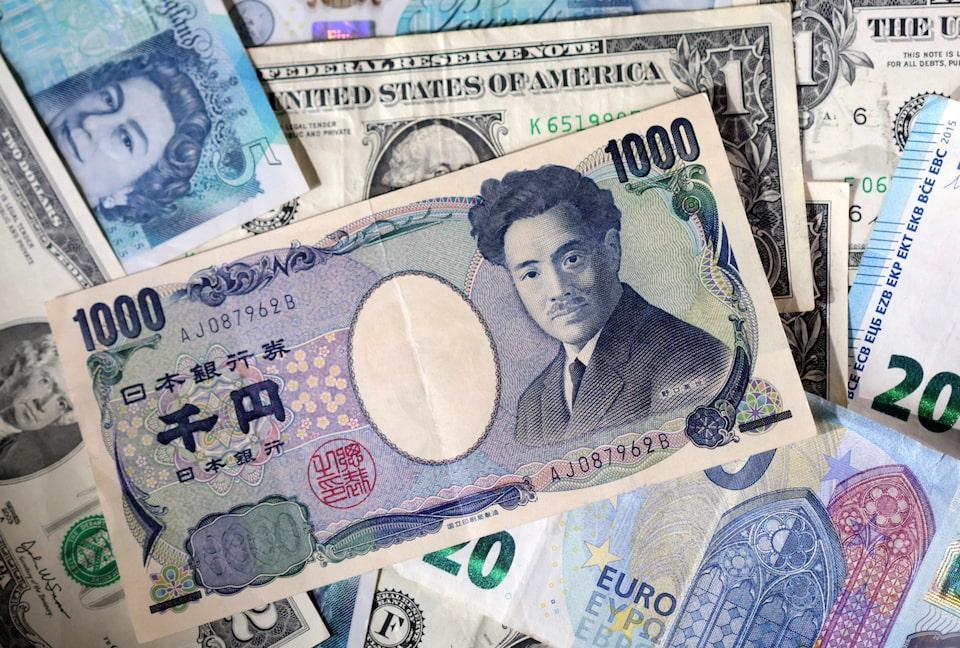
Joint statement makes no fresh FX demands from US Says FX intervention should be reserved for excess volatility Japan, US had separate channel to discuss FX in trade talks TOKYO, Sept 12 (Reuters) - The United States and Japan reaffirmed their commitment to "market determined" exchange rates, while agreeing that foreign exchange interventions should be reserved for combating excess volatility, according to a joint statement released on Friday. The latest agreement also notably made no new demands by the Trump administration on Tokyo around foreign exchange or other matters, a point analysts say will give Japan some relief as it navigates tricky bilateral ties with Washington. Sign up here. The U.S. Treasury Department and the Japanese Finance Ministry "reaffirmed that exchange rates should be market determined and that excess volatility and disorderly movements in exchange rates can have adverse implications for economic and financial stability," the statement said. They agreed that foreign exchange interventions "should be reserved for combating excess volatility and disorderly movements in exchange rates," it added. They also reconfirmed they had avoided exchange rate intervention to gain competitive trade advantages, an implicit approval that massive yen-buying Japan conducted in 2022 and 2024 was not unfair currency manipulation. The statement mostly reaffirmed existing foreign exchange commitments agreed among the Group of Seven major economies. There had been some concern in Tokyo that the U.S. would call on Japan to prop up the yen in trade negotiations. Finance Minister Katsunobu Kato told reporters that the two countries decided to issue a joint statement on foreign exchange to reflect the discussions that he and U.S. Treasury Secretary Scott Bessent have had as part of broader trade negotiations. They chose this timing as the two countries this month published a separate joint statement clarifying details of their tariff deal, Kato said. The tariff negotiations with the United States have been led by Economy Minister Ryosei Akazawa, while the two countries had agreed that any discussions on currency rates have to be held between Kato and Bessent. Under the agreement, Washington will reduce tariffs to 15% on most Japanese imports in exchange for Japan's $550 billion U.S.-bound investment package, which includes government-backed loans and guarantees. The foreign exchange market showed little immediate reaction to the statement. "The statement is significant for Japan in a sense that they reaffirmed the previous agreements, with no fresh demand being made from the United States," said Yuji Saito, executive advisor to SBI FX Trade. Prior to the trade agreement, the market had feared that Tokyo could come under pressure to strengthen the yen versus the dollar and give U.S. manufacturers a competitive advantage. U.S. President Donald Trump has in the past criticised Japan for intentionally maintaining a weak yen. Bessent has said in August the Bank of Japan will likely raise interest rates as it is behind the curve in dealing with inflation, in his most explicit comment on Japan's monetary policy. "The statement doesn't contain anything that is directly disadvantageous to the Japanese government," Ueno Tsuyoshi, senior economist at NLI Research Institute, said, adding it leaves room for Japan to conduct yen intervention. "At the same time, it doesn't bind Trump either, leaving questions about how effective or enforceable it really is," he said. https://www.reuters.com/markets/us/us-japan-reaffirm-fx-commitments-leave-room-interventions-2025-09-12/