2025-09-11 23:32
Sept 11 (Reuters) - Lundin Gold (LUG.TO) , opens new tab said on Thursday Ron Hochstein would step down as CEO after a decade, and be succeeded by Jamie Beck. Beck was the former CEO of copper miner Filo Corp, where he steered exploration and development initiatives. His new appointment would be effective November 7, the Vancouver-based company said. Sign up here. Hochstein, who has been with Lundin Gold since 2014, oversaw the development of the company's flagship Fruta del Norte gold mine in Ecuador, the company said. He would remain with the broader Lundin Group. https://www.reuters.com/sustainability/boards-policy-regulation/lundin-gold-ceo-ron-hochstein-step-down-2025-09-11/

2025-09-11 23:27
Sept 11 (Reuters) - Gemini Space Station raised $425 million in an initial public offering, pricing its stock above a marketed range, a source familiar with the matter told Reuters on Thursday. The cryptocurrency firm led by the billionaire Winklevoss twins sold about 15.2 million shares for $28 each after marketing them for $24 to $26, the source said, requesting anonymity ahead of an official announcement. Sign up here. The IPO values Gemini at $3.33 billion on a non-diluted basis, according to a Reuters calculation. The company did not immediately respond to a request for comment. The price range was lifted earlier this week from $17 to $19, underscoring robust investor demand. New York City-based Gemini had capped IPO proceeds at $425 million, in a rare move, even as the offering drew orders more than 20 times the shares available, Reuters reported earlier in the day. Record high prices for digital assets and regulatory wins have transformed the once beleaguered sector into an anchor for the IPO market, which have resumed a long-awaited recovery this fall after U.S. tariffs delayed listing plans in April. Nasdaq (NDAQ.O) , opens new tab had committed to a $50 million investment in a private placement at the time of the IPO. Reuters was the first to report on the investment. Gemini will begin trading on Nasdaq on Friday under the ticker "GEMI". Crypto listings are gathering momentum. Stablecoin issuer Figure Technology raised $787.5 million in an upsized U.S. IPO on Wednesday. Earlier this year, CoinDesk owner Bullish (BLSH.N) , opens new tab, and stablecoin issuer Circle (CRCL.N) , opens new tab both enlarged their offerings. The Securities and Exchange Commission under President Donald Trump has eased oversight of the crypto sector, which has frequently seen ventures from entities connected to him and his family. Gemini has benefited as well, with the billionaire Winklevoss twins moving closer in April to resolving an SEC lawsuit claiming they failed to register a cryptocurrency asset lending program before offering it to retail investors. The case has not been resolved. A status report from both sides is due by September 15. In another display of the sector's proximity to Washington, Trump's Commodity Futures Trading Commission nominee accused crypto entrepreneur Tyler Winklevoss on Wednesday of lobbying the White House to stall his nomination after a text exchange. Bloomberg News was the first to report the pricing details on Thursday. https://www.reuters.com/business/crypto-exchange-gemini-prices-ipo-above-range-raise-425-million-source-says-2025-09-11/
2025-09-11 23:08
Sept 11 (Reuters) - President Donald Trump has withdrawn the nomination of Landon Heid, a China hawk, for a key post in the U.S.-China tech battle, raising questions about whether the move signals a more dovish approach to Beijing. Trump withdrew Heid's nomination on Wednesday for assistant secretary for export administration at the U.S. Department of Commerce, according to the Congress.gov website. The president had selected him in February for the post overseeing export controls for national security. Sign up here. Chris McGuire, an expert on technology and national security who served at the U.S. Department of State until this summer, called the withdrawal "very concerning" on Thursday. "Hopefully this does not signal that the Administration plans to further weaken U.S. restrictions on sales of our most advanced technologies to China, but I fear that it does," McGuire, who also previously served at the White House National Security Council, wrote in a social media post on X. Heid, who now serves on the NSC, did not respond to a request for comment. "Landon Heid is a valued voice within the administration and will continue executing the President's America First Asia policy at the NSC," Anna Kelly, a White House spokeswoman, said in a statement. She did not say why the nomination was withdrawn but added that an outside voice like McGuire's should not be used to speculate. Heid was previously on the staff of the House of Representatives' Select Committee on China, which supported global restrictions on AI chips introduced by the administration of former President Joe Biden and U.S. restrictions on business with Chinese biotech firms. The Trump administration has said it plans to rescind the global chip curb regulation and in July reversed an April decision to restrict the sale of AI chips including Nvidia's H20 to China. https://www.reuters.com/world/us/trump-withdraws-nomination-china-hawk-key-post-us-sino-tech-battle-2025-09-11/

2025-09-11 23:00
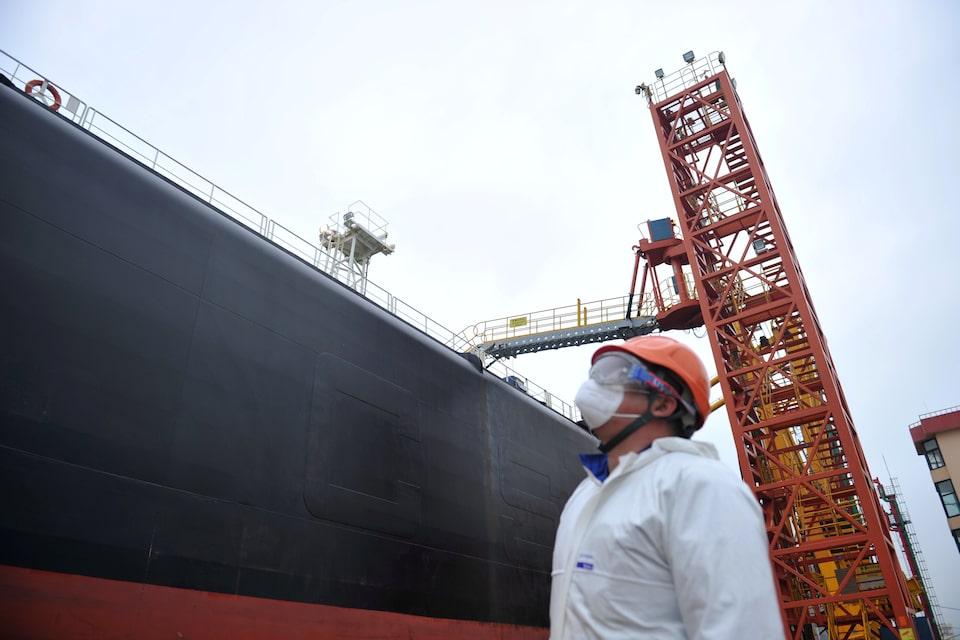
China introduced new refined oil market rules aligned with anti-involution plan Research firms say 30%–40% of diesel and gasoline sales evaded tax Smaller refiners rely on tax dodges to meet margins as demand plummets Many will struggle to make money after the changes BEIJING, Sept 11 (Reuters) - China's independent teapot refiners are staring down a fresh hit to profits because of new rules introduced this month to crack down on untaxed refined oil, analysts say, as the sector struggles with tepid fuel demand and overcapacity. Refiners are required to pay consumption taxes both when they import feedstock such as fuel oil and also on the refined products they produce, but evasion is widespread. Sign up here. Industry estimates suggest 30-40% of all gasoline and diesel refined is sold tax-free, according to calculations cited by state oil giant Sinopec and Chinese consulting firm GL Consulting. New rules implemented by the Ministry of Commerce will scrap paper ledgers and require refiners, petrol stations and other operators to report purchases, sales and inventories online each month. The State Council, China's cabinet, flagged the changes in February. Many independent refiners, especially smaller players, rely in part on tax dodges to pad out margins under pressure from falling demand and will be hit hardest, China-based GL Consulting said. Removing that competitive edge over larger or state-owned refiners that are tax compliant will in turn spur consolidation, dovetailing with Beijing's push to reduce overcapacity, said Dongyuan Cao, associate law professor at the University of Science and Technology Beijing. "The regulation is a vital component of the broader 'anti-involution' governance push for a refining sector experiencing 'low-price competition'," explained Cao. Involution is a buzz word in China that refers to competition so fierce it becomes self destructive. The goal of the changes is to collect more tax revenue and eliminate illegal petroleum products, Sinopec researcher Qi Mengdi wrote in Petroleum Business News. The Ministry of Commerce and the State Taxation Administration did not immediately respond to questions. OPERATING AT A LOSS China has launched campaigns against tax evasion in the teapot hub of Shandong province before but refiners backslid when inspections ended, Sinopec said in a report published in September. Experts said the new rule will be more effective because it introduces a system, not a one-off campaign. The stakes are highest for the smallest teapots, which the government has been slowly squeezing for years with higher taxes. The teapot sector ran at less than half its capacity in the first half of this year as a weak economy and the rapid adoption of electric vehicles hit fuel demand. Some smaller teapots will start operating at a loss as a result of the change, Li Xiang, a researcher with state oil company CNPC wrote in an article this month. For refiners, skirting the consumption tax can lift margins on diesel by about 600 yuan ($84.26) per ton (7.45 barrels), said two sales managers, one at a refined product sales company and another at a private refinery. For gasoline, the lift is around 1,900 to 2,000 yuan, they said. Shandong independent refineries processing imported crude oil earned profit averaging 177 yuan ($24.86) per ton in the first half of 2025, Chinese consultancy JLC estimated. ($1 = 7.1207 Chinese yuan renminbi) https://www.reuters.com/business/energy/chinas-teapot-refiners-face-fresh-test-crackdown-tax-evasion-2025-09-11/
2025-09-11 21:35
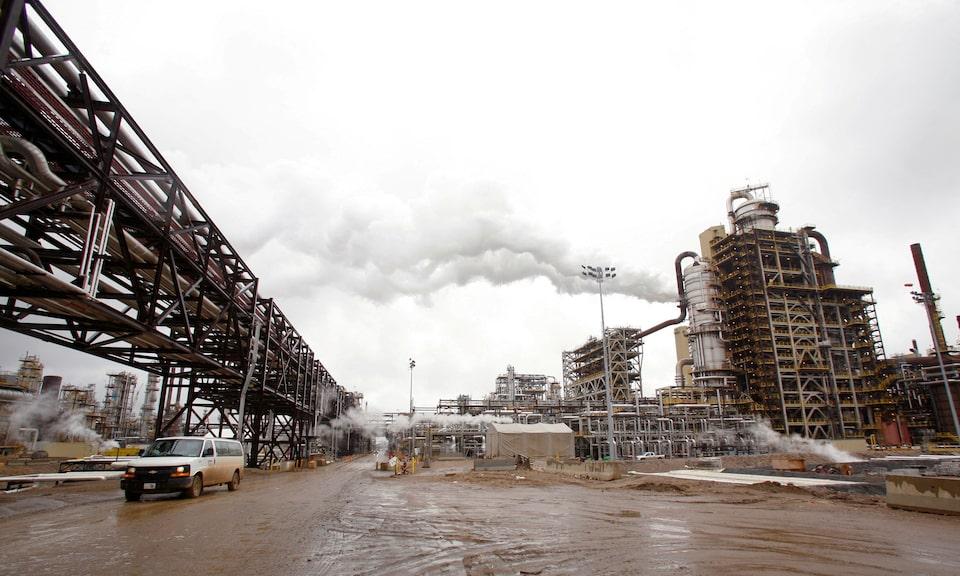
Canada considers scrapping oil emissions cap for climate strategy Alberta must commit to emissions reduction for cap removal Oil sector's emissions rise, risking climate goals by 2030 CALGARY, Sept 11 (Reuters) - Canada's government is in discussions with energy companies and the oil-producing province Alberta about eliminating a federal cap on emissions from the country's oil and gas sector if the industry and province reduce their carbon footprint in other ways, three sources with knowledge of the talks said. Canada's emissions cap has not yet been implemented through legislation. But the prospect of it has been broadly condemned by Canadian oil and gas companies who have said it will force them to cut production. Sign up here. Prime Minister Mark Carney, who won the April election promising to protect Canada's economy from U.S. tariffs, has faced some criticism for stepping away from his Liberal Party's previous emphasis on the environment. His government's tone has changed significantly from a few weeks ago, sources said, adding officials had until recently suggested the emissions cap would stay in place. The sources were not authorized to speak publicly about the discussions. Carney said during the election campaign he would keep the emissions cap, which is not scheduled to take effect until 2030. His predecessor, Justin Trudeau, published draft regulations for the cap in November. The sources said the current talks could lead to the emissions cap being scrapped as part of a broader new "climate competitiveness strategy," which the federal government aims to unveil later this autumn. GOVERNMENT REVIEWING FEEDBACK ON CAP Carney's office referred Reuters to the federal Environment Department, which said the government is reviewing feedback on the emissions cap. While mechanisms like caps can play a role in building a future that reduces emissions, "we are not going to get there through regulation alone," an Environment Department spokesperson said in a statement. "Canada’s new government is committed to climate policy that is unifying, credible, and predictable; that reduces emissions, drives investment, and builds the economy of the future," the statement said. Canada's Natural Resources Minister Tim Hodgson declined to discuss details of the negotiations, but said in an interview on Thursday the federal government is committed to delivering clean and conventional energy in an environmentally responsible way. "Our government is focused on results, not how we get there," Hodgson said. Any move to eliminate the cap would be contingent on Alberta and the oil sector making renewed, serious commitments to emissions reduction, including, but not limited to, moving ahead with the Pathways carbon capture and storage project, two of the sources said. Canada's new climate competitiveness strategy will focus on "results over objectives and investments over prohibition," Carney said this week at a meeting of the ruling Liberal Party in Edmonton. Oil and gas is Canada's highest-emitting industry, and its emissions continue to rise due to rising production in the country's oil sands region. Ottawa will likely fall short of its international climate commitment to reduce greenhouse emissions by 40-45% from 2005 levels by 2030 unless the oil and gas sector intensifies efforts to decarbonize. "It would be a tragic mistake for the Liberal government to back off on climate action while wildfires are still burning across this country," Greenpeace Canada strategist Keith Stewart said. Under the terms of the cap, the federal government would require its oil and gas sector to cut emissions to 137 million metric tons, 37% below 2022 levels, by 2030. Carney promised to make Canada the "world's leading energy superpower," forging ahead with clean energy development while making the conventional oil and gas sector more competitive. He has also sought to mend federal relations with Alberta, which under Trudeau had become increasingly rocky due to that government's heavy focus on environmental issues. Canadian oil and gas companies have repeatedly said other Trudeau-era legislation, including a ban on oil tankers off British Columbia's north coast, must be repealed to significantly jump-start private investment. https://www.reuters.com/sustainability/climate-energy/canada-may-drop-oil-emissions-cap-part-new-climate-plan-sources-say-2025-09-11/
2025-09-11 21:03
ORLANDO, Florida, Sept 11 (Reuters) - TRADING DAY Making sense of the forces driving global markets Sign up here. By Jamie McGeever, Markets Columnist A surge in U.S. jobless claims to a four-year high on Thursday cemented investors' bets for a Fed rate cut next week, weighing on the dollar , opens new tab and bond yields, and lifting Wall Street's three main indices to new highs. For now at least, expectations of easy monetary policy are clearly trumping growth worries. More on that below. In my column today I look at how the extraordinary rise in Oracle's share price on Wednesday has reignited the already fiery debate over whether U.S. tech and AI stocks are in a bubble. If you have more time to read, here are a few articles I recommend to help you make sense of what happened in markets today. Today's Key Market Moves Today's Talking Points: * The claim game The only debate now around U.S. interest rates, surely, is how fast they will come down. That's the upshot from the shock jump in jobless claims figures, which trumped worries over slower growth and simmering inflation numbers - claims surged the most in a year to the highest level in nearly four years. Remember, a record downward benchmark annual revision to payrolls growth was announced earlier this week too. The labor market is clearly softening, but enough for a half-percentage point rate cut next week? That's still an outside bet, but the probability traders are attaching to it is creeping up. * Fed vs the world The European Central Bank kept rates on hold at 2% on Thursday and bank president Christine Lagarde signaled its rate-cutting cycle is over, saying the bank remains in a "good place" and that risks to the economy have become more balanced. Traders agree. What's more, other central banks are at or close to the end of their easing cycles too. Rates futures pricing suggests that, of the nine non-U.S. G10 central banks, only Canada's is fully expected to cut rates 50 bps by the end of next year, three are unlikely to cut at all, and one - Japan - will raise rates. * Dollar doldrums The Fed's relative dovishness - or playing catch-up with many of its peers, if you prefer - is weighing heavily on the dollar. While the broad dollar index isn't making new lows right now, pockets of weakness continue to pop up. On Thursday the greenback fell to 2025 lows against the Australian dollar, Mexican peso, Brazilian real and Colombian peso. The last time the dollar was this weak against these last two currencies was June last year. Oracle surge pours fuel on fiery AI bubble debate The eye-watering surge in U.S. tech giant Oracle's share price on Wednesday added fuel to a fiery debate: is the U.S. artificial intelligence stock boom a bubble destined to burst? This is a question that has dogged Wall Street for months, as AI euphoria has helped the S&P 500 and tech-heavy Nasdaq hit new highs seemingly every day, swatting away the chaos and uncertainty surrounding tariffs, Washington politics and Fed independence. But Wednesday felt different. It's not every day that one of the country's biggest tech companies sees its share price skyrocket by as much as 43%. Oracle is not a penny stock, startup or meme stock. A surge of this magnitude should make everyone reassess where markets are, and whether this boom is moving into unsustainable territory. Below are five charts that suggest what former Federal Reserve Chair Alan Greenspan termed "irrational exuberance" may be engulfing AI and tech. 1. Oracle's soaring valuation Oracle, the cloud computing giant, saw its stock trade at nearly 50x estimated 12-month forward earnings on Wednesday, the highest since the dotcom crash when its forward PE topped 120. Its share price rose as much as 43% on the day, causing it to virtually double since June. Oracle did say it expects cloud revenue to exceed half a trillion dollars and announced four new multi-billion contracts, so some optimism is warranted. But should the company truly be worth twice as much as it was only three months ago? 2. The Nvidia juggernaut Nvidia's share price has doubled since April, rising an eye-popping 300% in the last two years. The AI chip superpower is now the world's most valuable company with a market cap of $4.3 trillion, larger than every country's listed stock exchange apart from the U.S., China, Japan and India, according to Deutsche Bank. Sure, Nvidia continues to churn out cash, but just two customers made up 39% of its revenue in the last quarter. Is that sustainable? 3. Record-high concentration The combined weighting of the top five companies in the S&P 500 is nearing 30%, higher than the 'Nifty Fifty' in the late 1960s/early 1970s and much higher than tech companies in 2000 before the dotcom bust. This doesn't automatically mean we're in a bubble, but the market is in unchartered territory and heavily dependent on a handful of companies - all of them in one industry. History suggests this level of concentration rarely ends well. 4. Lofty valuations The S&P 500 tech sector is nearing its most expensive levels since 2002 when the dust from the dotcom bust was still settling. Of course, this can be sustained as long as the cash keeps rolling in. But the amount of AI-related capex needed to develop the industry – an estimated $6.7 trillion worldwide by 2030, according to McKinsey - means the amount of cash that will need to keep coming in is enormous. When the bar is that high, even sound companies might struggle to meet it. 5. Stretched positioning Bank of America's August fund manager survey showed that the most crowded trade in world markets currently is once again "long Magnificent 7", according to 45% of those polled. A majority, 52%, say they see no AI bubble, suggesting this packed trade could get even more crowded before it unwinds. Investors have little incentive to go against this trade as long as it remains a winning one. But when a crowded trade reverses it can be sudden, and not everyone gets out the exit door in time. A lot of investors could lose a lot of money. What could move markets tomorrow? Want to receive Trading Day in your inbox every weekday morning? Sign up for my newsletter here. Opinions expressed are those of the author. They do not reflect the views of Reuters News, which, under the Trust Principles , opens new tab, is committed to integrity, independence, and freedom from bias. https://www.reuters.com/business/global-markets-trading-day-graphic-2025-09-11/