2025-09-11 10:52
DUBLIN, Sept 11 (Reuters) - Ryanair boss Michael O'Leary warned on Thursday that the Russia-Ukraine war would be an ongoing issue for all European airlines for years to come, a day after Poland shot down suspected Russian drones in its airspace. Warsaw Chopin and Modlin airports, as well as Rzeszow and Lublin airports in the country's east, temporarily closed before resuming operations after Poland shot down the drones early on Wednesday. Sign up here. Air-traffic control services all over Europe were significantly impacted on Wednesday and only 60% of Ryanair's flights were on time, compared to a normal rate of around 90%, group CEO O'Leary said. Flights from Scandinavia and the Baltic states in particular were impacted. "This is going to be an ongoing issue for all airlines and all European citizens for the next number of years," he said in comments at the company's annual general meeting. Polish F-16 fighter jets, Dutch F-35s, Italian AWACS surveillance planes, and NATO mid-air refuelling aircraft scrambled in an operation to shoot down drones entering Polish airspace from Tuesday evening until morning, officials said. The impact of the incident, which marked the first time a member of NATO is known to have fired shots during the war, was discussed at a meeting of the company's board of directors on Wednesday. "I think we expect more disruptions, unless the European, the EU and the White House, take some firm stick, preferably in the form of sanctions, penal sanctions, on Russia," O'Leary told journalists after the AGM. "This kind of irritant ... Russia playing games with Europe - will continue," he said. https://www.reuters.com/business/aerospace-defense/ryanair-warns-years-long-impact-european-aviation-russia-ukraine-war-2025-09-11/
2025-09-11 10:52
Kashmir apple growers face losses of $68 million to $79 million Truckers stranded, produce rotting; packaging costs rise Indian railways offers relief, adding services from September 13 Sept 11 (Reuters) - Apple growers in Indian Kashmir are staring at huge losses this year as floods and highway closures disrupt the peak harvest season, enmeshing growers and truckers in uncertainty, farmers and industry officials say. Losses of between 6 billion rupees and 7 billion rupees ($68 million and $79 million) are estimated as landslides shut the national highway linking Jammu and Srinagar, a vital artery carrying apples out of the region, since August 26. Sign up here. Besides the snaking queues of trucks left to idle for days, heavy rains brought sudden floods that killed dozens of people by mid-August. "If this continues, the entire season will suffer, and our sector will collapse," said Bashir Ahmad Basheer, chairman of the Kashmir Valley Fruit Growers and Dealers Union, adding that the traffic disruptions drove up costs, worsening the crisis. Packaging costs have risen to 200 rupees for a carton of apples, from 40 rupees earlier, for example. India’s apple production is concentrated in the mountainous regions of Kashmir and Himachal Pradesh, with most of the fruit consumed domestically. Less than 2% is exported, mainly to Bangladesh and Nepal. In South Kashmir, swollen rivers broke their banks, flooding orchards and leaving behind uprooted trees and rotting fruit. Mughal Road, now the sole operational corridor for traffic with Kashmir and a back-up route for the national highway has also been rendered unreliable, say people living there. On Thursday, the Indian Railways offered some respite for growers, with plans to launch from September 13 a daily service for parcels from Badgam in the Kashmir Valley to Adarsh Nagar station in Delhi, with two carriages dedicated for apples. Despair is mounting among truck drivers stranded on the highway as their produce deteriorates. "I don’t know what to do with these apples and who to blame," said Abid Ahmad Lone, stuck for 12 days, adding that his truckload of apples had rotted, causing an estimated loss of 1 million rupees. Other truck drivers, some stuck on the highway for nearly two weeks, echoed the sentiment, while growers who managed to dispatch their produce are still anxious. "My family is solely dependent on apple orchards, but the recent floods have devastated everything," said Shahid Ahmad, as he stood among trees spattered with mud and bruised fruit scattered in his orchard at the town of Pulwama. "We used to sell a box of apples for around 1,600 rupees to 1,700 rupees," he said. "Now nobody is willing to buy them, even at low prices." ($1=88.0890 Indian rupees) https://www.reuters.com/business/environment/apple-growers-indian-kashmir-face-crippling-losses-floods-road-closures-2025-09-11/

2025-09-11 10:25
MUMBAI, Sept 11 (Reuters) - The Indian rupee dropped to an all-time low against the U.S. dollar on Thursday, in a slide that reflects the mounting strain of U.S. tariffs on Asia's third largest economy. The rupee closed 0.39% lower at 88.4425 against its previous close of 88.1000. The currency had hit its previous record low of 88.36 last Friday. Sign up here. Punitive U.S. tariffs on Indian goods, which kicked in last month, are denting investor confidence, making the rupee one of the most vulnerable Asian currencies. Foreign investors have withdrawn a net of $11.7 billion from India's debt and equity markets so far this year. Washington's steep tariffs have hurt India's growth and trade outlook and clouded the path for currency. To curb the impact of the levies, Indian Prime Minister Narendra Modi has rolled out consumption tax cuts. Both U.S. and India are also looking at resuming negotiations to address the trade barriers. For now, Indian exporters face uncertainty over order flows, while importers are forced to hedge their forex exposure more aggressively, distorting the demand-supply balance in the currency market. "While importer dollar demand is persistent, exporter flows, and foreign portfolio flows seem to be muted, which is leading to pressure on the rupee," said Dilip Parmar, a foreign exchange research analyst at HDFC Securities. The USD/INR pair is likely to continue following a pattern of consolidation for a few days before breaking higher, Parmar said. The Reserve Bank of India has stepped in frequently to temper the pace of the rupee’s decline. Market participants say the central bank has been selling dollars to prevent large swings. The interventions are not aimed at defending any particular level, bankers say, but are intended to keep the slide "measured" and to prevent unease among companies and investors. The rupee’s weakness is in contrast to its regional peers, most of which have been buoyed by expectations of a Federal Reserve rate cut next week. Weakness in the rupee is likely to persist in the near term considering the impact of the U.S. tariffs on labour-intensive sectors, Abhishek Goenka, founder & CEO of IFA Global, said. Most Asian currencies fell on Thursday while the dollar index inched higher, as investors awaited U.S. inflation data due later in the day. https://www.reuters.com/world/india/india-rupee-sinks-record-low-us-tariffs-keep-outlook-fragile-2025-09-11/
2025-09-11 10:23
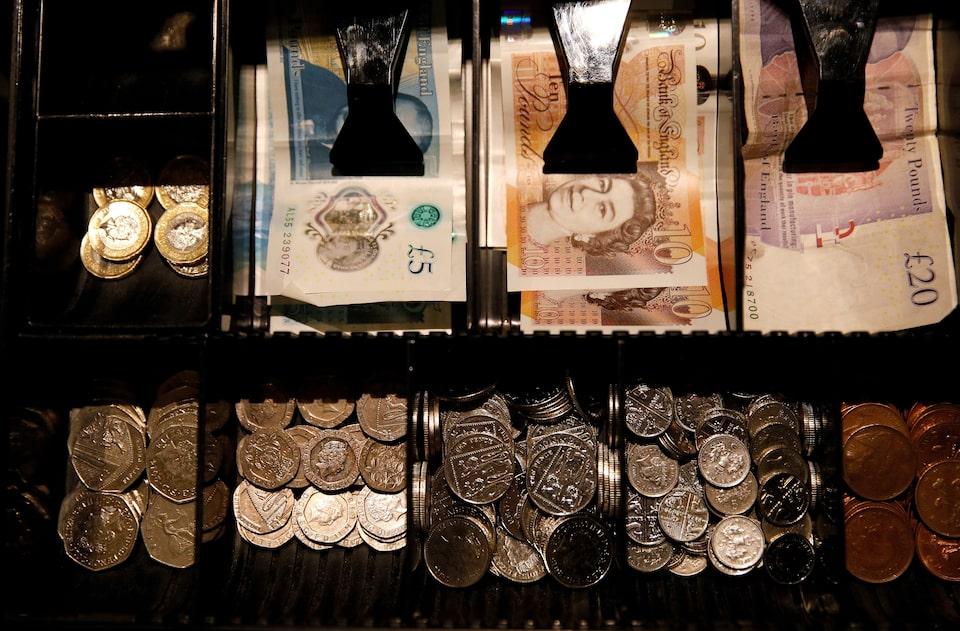
Sept 11 (Reuters) - The pound fell against a broadly stronger dollar on Thursday as markets focused on impending U.S. core consumer inflation data at 1230 GMT and a European Central Bank policy meeting, as well as next week's Federal Reserve and Bank of England meetings. Sterling was down 0.2% at $1.3505 at around 1000 GMT. The pound was 0.1% lower against the euro at 86.545 . Sign up here. Sterling has come back from a one-month low hit in early September after a sell-off in long-dated government bonds pushed yields to their highest since the late 1990s amid jitters over the UK's public finances. It is part of a broader storm hitting the long-dated government debt of G7 major world economies. Pressure is mounting on finance minister Rachel Reeves to keep Britain's deficit in check with the next budget announcement due at the end of November. "Rising government borrowing costs, in the form of higher yields on its bonds, or gilts, mean Rachel Reeves will want to put together a tax-and-spending plan that appeases bond vigilantes," Russ Mould, AJ Bell investment director, said in a note. Reeves said on Thursday she would look at reforming business property taxes to make it easier for smaller firms to expand, as she seeks to boost growth. The Bank of England's monetary policy committee convenes next Thursday to deliver its next rate decision. Money markets are betting it will hold rates steady at 4%. Elsewhere, British house prices in August experienced the most widespread falls in more than a year-and-a-half, a survey showed. https://www.reuters.com/world/uk/sterling-slips-traders-await-us-inflation-print-ecb-meeting-2025-09-11/
2025-09-11 10:05
Dollar still pressured by concerns over trade and twin deficits Bears also worry aggressive Fed rate cuts could sink dollar Another worry: global investors rebalancing away from US assets NEW YORK, Sept 11 (Reuters) - The U.S. dollar has steadied since a record slide earlier this year, but many currency market players still view the greenback as locked in a bearish trend and are bracing themselves for further losses. The dollar index (.DXY) , opens new tab fell about 11% in the six months through June in one of its steepest declines on record. Sign up here. The greenback has steadied in recent weeks along with a sharp pullback in bearish futures bets. As of last week, speculators’ net short dollar position was at $5.7 billion, near the smallest since mid-April. That was down sharply from about $21 billion in late June, CFTC data show. Many investors view this as a pause in the selling rather than a reversal. Worries include twin U.S. fiscal and trade deficits, chances that a slow job market may prompt more aggressive rate cuts from the Federal Reserve and the view that global fund managers may be in the process of rethinking their FX hedging practices as they look to reduce their exposure to the U.S. dollar. "The dollar is in the process of declining, and there's more to go," Francesca Fornasari, head of currency solutions at Insight Investment said. "It's messy and it's probably going to be pretty noisy," Fornasari said. Many of the forces that drove the dollar’s slide remain in place. These include a rethink of U.S. exceptionalism, worries about economic growth due to U.S. President Donald Trump's protectionist trade stance, and persistent twin-deficit concerns. Soft jobs data give the Fed scope to cut rates more aggressively. This would erode the yield advantage for the greenback. "The markets are now starting to think about the degree to which the U.S. economy is going to weaken ...how weak will the labor market get going forward and what does that mean for Fed monetary policy," said Paresh Upadhyaya, director of fixed income and currency strategy at Amundi, the biggest European asset manager. The Fed will likely resume cutting short-term rates next week and continue on for the rest of the year. Upadhyaya, who started the year bearish on the greenback and has been adding to short dollar positions, sees little reason to change course now. GLOBAL INVESTORS FACE HEDGING HEADACHE Years of U.S. outperformance have left global investors heavily exposed to American assets. April’s tariff turbulence prompted some to trim positions and reassess hedges, but the repositioning is far from complete, investors said. With foreign holdings of U.S. assets in the trillions, according to banks including Deutsche Bank, any paring of exposure could weigh on the dollar, a move that has yet to materialize in a big way, analysts said. "The next big drop in the dollar could be if foreign investors decide they want to now start reducing their U.S. allocation," Amundi's Upadhyaya said. The dollar's dismal first-half performance has already prompted a pick-up in hedging activity by asset managers. Slower-acting market participants could join the fray over the next three to six months, Insight Investment's Fornasari said. Hedging flows typically involve selling dollars via forwards or swaps, adding supply that can pressure the greenback. Lower U.S. interest rates relative to overseas rates reduce the cost of popular hedging instruments and can make hedging more attractive. "It is stating the obvious that additional Fed cuts from here would increase incentives to hedge dollar assets by foreign investors," George Saravelos, Global Head of FX Research at Deutsche Bank, said in a note on Monday. Dollar bulls are unlikely to find support from the Trump administration, investors said, as the “America First” agenda and plans to revive U.S. manufacturing work against a stronger currency. The administration has occasionally said it is committed to protecting the strength and power of the U.S. dollar. "They still believe in a strong dollar, king dollar, but a little bit weaker than the very elevated level (at the start of the year,)" Thanos Bardas, managing director and co-head of global investment-grade fixed income at Neuberger Berman, said. "There is no way they can bring manufacturing back to the U.S. with the dollar index at 110," said Bardas, who expects the index to linger in the 95 to 100 range in the near term. On Wednesday the index was at 97.72. "I don't think the U.S. wants to necessarily signal its desire for a weaker dollar, but it's not going to stand in the way of a weaker dollar," said Shaun Osborne, chief FX strategist at Scotiabank. Osborne sees the dollar falling another 5% to 7% over the next year or so against major peers. MANY SAY DOLLAR IS STILL OVERVALUED There is still some chance that the dollar finds some support, given how much it has already fallen this year and the extent of Fed easing already priced in by the market. One risk to the weaker-dollar view is an unexpected brightening in the U.S. economic growth outlook, Neuberger Berman’s Bardas said. The economy expanded faster than first estimated in the second quarter, helped by business investment in intellectual property such as artificial intelligence, though import tariffs kept the outlook cloudy. Still, the dollar remains expensive relative to many currencies, investors said, discouraging potential buyers in FX markets, known for prolonged periods where currencies overshoot in both directions. "We're just barely getting to what I would consider neutral levels for the dollar," Amundi's Upadhyaya said, noting that the dollar is far from undervalued. "We have more of the dollar bear market still to come." https://www.reuters.com/business/finance/us-dollar-bears-think-record-slide-may-resume-after-recent-pause-2025-09-11/
2025-09-11 09:23
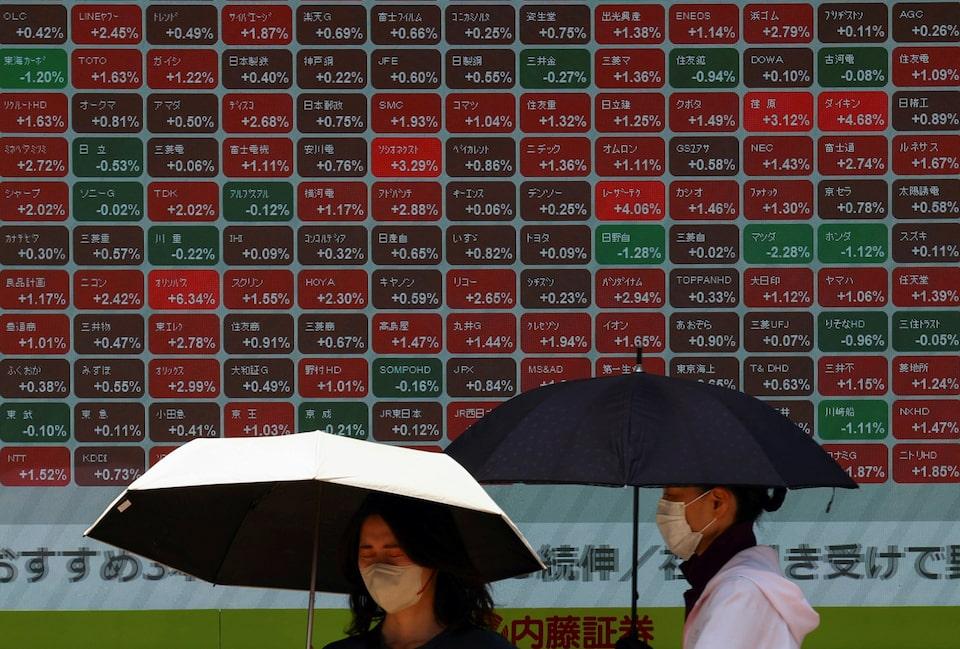
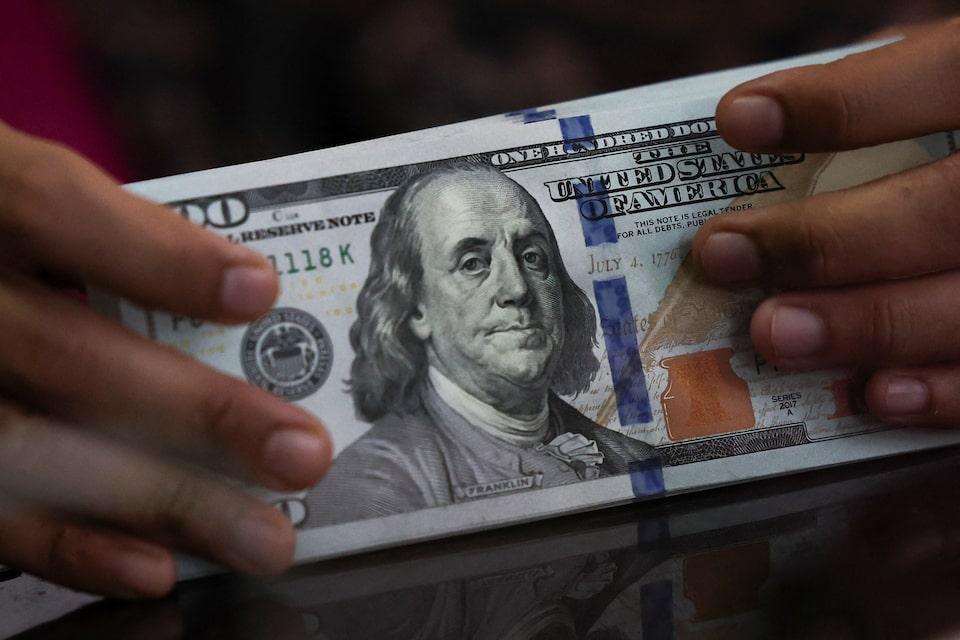
ECB expected to hold rates at 2% US inflation data to feed Fed rate cut expectations Oil edges lower after two days of conflict-linked rises LONDON, Sept 11 (Reuters) - World stocks consolidated near all-time highs while the dollar crept up on Thursday, as traders readied for the European Central Bank's latest interest rate decision as well as new U.S. inflation data later. High-flying tech shares lifted Japan, Taiwan and South Korea's bourses to record peaks overnight and Europe was having a steady morning ahead of what is set to be a second hold in a row in the euro zone's 2% rates from the ECB after lunch. Sign up here. With that and closely watched U.S. consumer price inflation data coming, most traders were keeping their powder dry. The euro hovered at $1.1690 having soared nearly 13% versus the dollar this year, while the bond vigilantes hadn't yet managed to decisively push politically strained France's borrowing costs above Italy's. ABN AMRO strategist Benoit Begoc said with the ECB widely expected to hold rates, the focus is on whether it keeps the door ajar for further cuts and its new set of economic forecasts this meeting. "I think the question will be why are you not cutting rates more?" Begoc said. "We know we have some deflationary pressures and there is no big rise in consumer confidence, so what is the rationale behind that?" Ahead of the 1215 GMT ECB decision and 1245 GMT press conference, the pan-European STOXX 600 (.STOXX) , opens new tab edged up 0.3% while Germany's 10-year bond yield eased to 2.65% having touched 2.80% - its highest since March - just last week. GVD-EUR In the commodity markets, oil prices also dipped after gaining more than 1% on Wednesday when Poland's downing of suspected Russian drones triggered fresh talk of sanctions a day after Israel attacked Hamas leadership in Qatar. Safe-haven gold edged away from its recent record highs and bellwether metal copper took a breather from its more than 20% rally since U.S. President Donald Trump's trade tariffs shook global markets back in April. /GOL TRADERS BET ON TRIO OF FED CUTS Wall Street futures pointed to more gains there later after a stunning 36% leap in the shares in data services giant Oracle (ORCL.N) , opens new tab had fuelled the latest records for the S&P 500 (.SPX) , opens new tab and Nasdaq (.NDX) , opens new tab. A benign reading on U.S. producer prices had also helped as the money markets priced in more of a chance of three interest rate cuts from the Federal Reserve this year. Investors have fully priced in a quarter-point move from the Fed at next week's meeting, with an 8% chance of a 50 basis-point cut. August's consumer price index data is due later. A Reuters poll expects headline CPI to rise 2.9% from a year earlier, the biggest increase since January, while the core measure likely held at 3.1%. "Unless CPI delivers a significant upside shock, investors are likely to maintain their dovish outlook," said Julien Lafargue, chief market strategist at Barclays Private Bank. "This shift in inflation dynamics could prove pivotal for the U.S. Fed, which now faces fewer constraints in pursuing a more aggressive rate-cutting cycle." Overnight in Asia, Japan's Nikkei (.N225) , opens new tab gained 1.2% to hit a record as tech, energy and utilities firms jumped. South Korean shares (.KS11) , opens new tab rose 0.9%. In Tokyo. SoftBank (9984.T) , opens new tab rose almost 10% after the roaring gains for its Stargate Project partner Oracle (ORCL.N) , opens new tab. That 36% leap had been the biggest one-day gain since 1992 for the 48-year-old tech giant. In foreign exchange, movement was largely muted, with the U.S. dollar struggling for direction and the main six currency dollar index (.DXY) , opens new tab a touch above a seven-week trough. Ten-year Treasury yields edged up 2 basis points to 4.0531%, having fallen 4 basis points on Wednesday after the PPI data and as a solid 10-year note auction alleviated some concern about investor appetite for long-term U.S. debt. An even more telling gauge will be the Treasury's $22 billion sale of 30-year bonds on Thursday. The 30-year yield rose 2 bps to 4.7028%, having come down more than 30 basis points since it briefly topped 5% a week ago. https://www.reuters.com/world/china/global-markets-wrapup-3-pix-2025-09-11/