2025-09-11 06:35
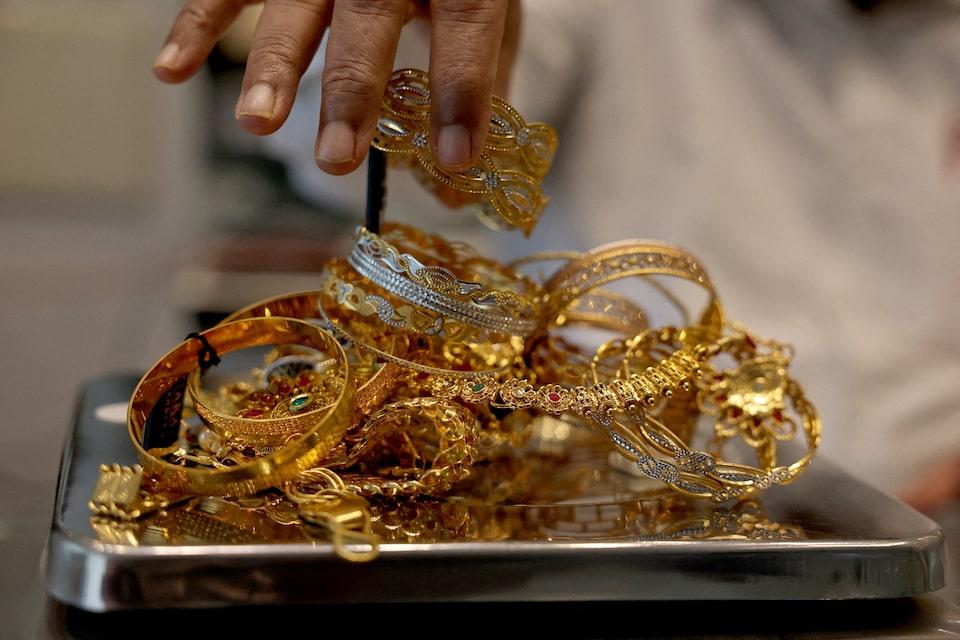
US consumer inflation data due at 1230 GMT Producer Price Index falls below expectation in August Trump administration appeals ruling blocking removal of Fed Governor Cook Sept 11 (Reuters) - Gold prices edged lower on Thursday, hovering near record highs, as investors awaited U.S. consumer inflation data due later in the day following weaker-than-expected producer price figures that reinforced expectations of a rate cut next week. Spot gold was down 0.2% at $3,632.48 per ounce, as of 0621 GMT. Bullion hit a record high of $3,673.95 on Tuesday. Sign up here. U.S. gold futures for December delivery fell 0.3% to $3,669.80. "Gold seems to be consolidating recent gains as markets wait for U.S. Consumer Price Index data and what it'll mean for Fed rate cut expectations," said Ilya Spivak, head of global macro at Tastylive. U.S. producer prices unexpectedly fell in August due to lower trade services margins and modest increases in goods costs. Investors are now focused on U.S. CPI data, due at 1230 GMT, with a Reuters poll forecasting a 0.3% monthly increase in August following a 0.2% rise in July. CPI is expected to have grown 2.9% year-on-year, compared with 2.7% in July. Weaker-than-expected nonfarm payroll data last week, along with revised estimates revealing 911,000 fewer jobs in the 12 months through March, have reinforced expectations of monetary easing. Weekly jobless claims data, also due at 1230 GMT, will offer further insights into the labor market. "The trend points higher, but a hot CPI report may boost the dollar, hurt gold prices in the short term, forcing a pullback. Losses may be limited however as markets are unlikely to abandon rate cut bets even if they push them further out along the timeline," Spivak said. The Fed is widely anticipated to cut interest rates by 25 basis points at its meeting next Wednesday, while investors also priced in a slim possibility of 50-basis-point reduction, as per CME FedWatch tool. Lower interest rates typically support non-yielding gold. Meanwhile, U.S. President Donald Trump's administration appealed on Wednesday a federal judge's ruling that temporarily blocked the dismissal of Fed Governor Lisa Cook. Elsewhere, spot silver was down 0.3% at $41.07 per ounce. Platinum fell 0.2% to $1,383.10 and palladium rose 0.3% to $1,175.86. https://www.reuters.com/world/india/gold-consolidates-after-record-peak-us-cpi-data-focus-2025-09-11/
2025-09-11 06:34
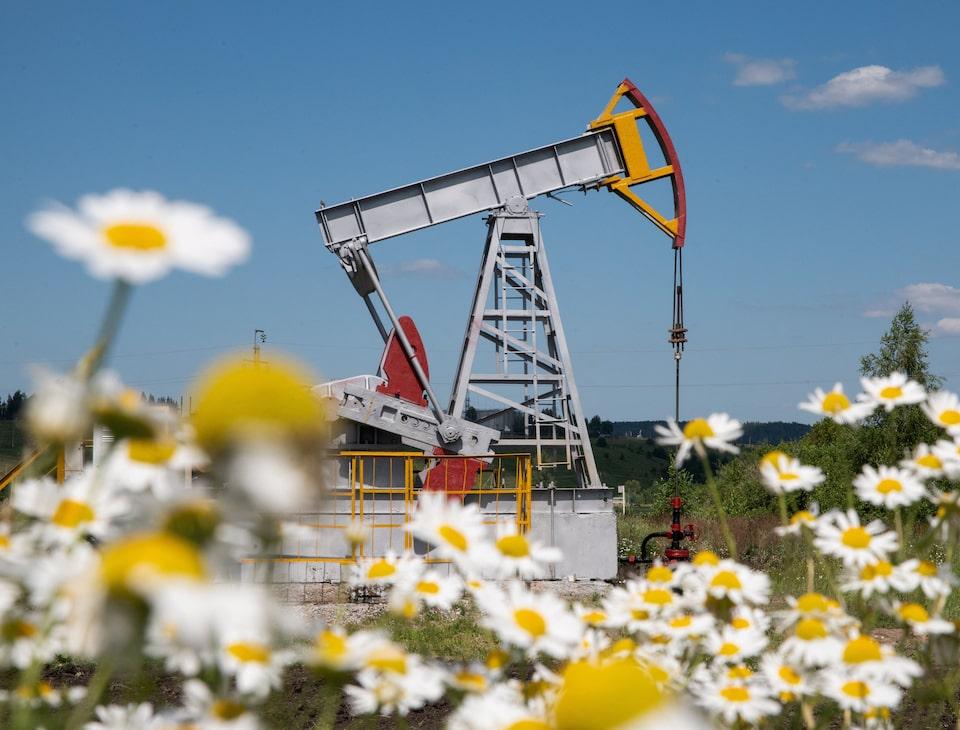
SINGAPORE, Sept 11 (Reuters) - Pakistan's largest refiner Cnergyico (CNER.PSX) , opens new tab expects to boost fuel oil exports by 35% to 40% during the fiscal year ending June 2026 as high taxes have cut into domestic sales, its vice chairman said. Pakistan levied additional taxes of about 40% on domestic sales of fuel oil in June, on top of a consumption tax of 18%, effectively shutting its refiners out of the domestic market. Sign up here. The company has exported 80,000 tons, or 95% of its production, from July to date, versus 55% in the last fiscal year that ended in June, Usama Qureshi told Reuters on the sidelines of the APPEC conference. Sales of fuel oil, mainly used by ships, typically make up 10% to 15% of the refiner's annual revenue. Cnergyico exported 247,000 metric tons (1.57 million barrels) in the fiscal year ended June, and an increase of 35% to 40% would boost annual exports to 333,000 tons to 346,000 tons. Pakistan's fuel oil exports jumped to an all-time high of 242,000 tons in August, data from analytics firm Kpler showed. Cnergyico is upgrading its refinery complex to reduce fuel oil production and boost fuel sales to the domestic market, in line with Pakistan's policy guidelines to upgrade refineries to produce cleaner fuels, Qureshi said in an interview. "We will be importing more sweet crude and upgrading the refinery to produce cleaner diesel and gasoline, and also plan to set up fuel oil cracking facilities to boost gasoline production," Qureshi added. Cnergyico mainly imports so-called sour crude, with high sulphur content, from the Middle East, and booked Pakistan's first-ever purchase of U.S. crude last month. U.S. crude grades typically contain low levels of sulphur, and produce less fuel oil when refined. Domestic sales of fuel oil are typically more profitable, while export revenue depends on fuel oil cracks, Qureshi said. The company sold fuel oil to traders who exported it to destinations such as southern Europe, Singapore and the United Arab Emirates. Pakistan has a significant fuel oil-based power generation capacity, but utilisation has plunged this decade, due to lower power demand, higher solar adoption and increased generation from other clean energy sources such as nuclear. https://www.reuters.com/business/energy/pakistans-top-refiner-cnergyico-boost-fuel-oil-exports-domestic-sales-plummet-2025-09-11/

2025-09-11 06:22
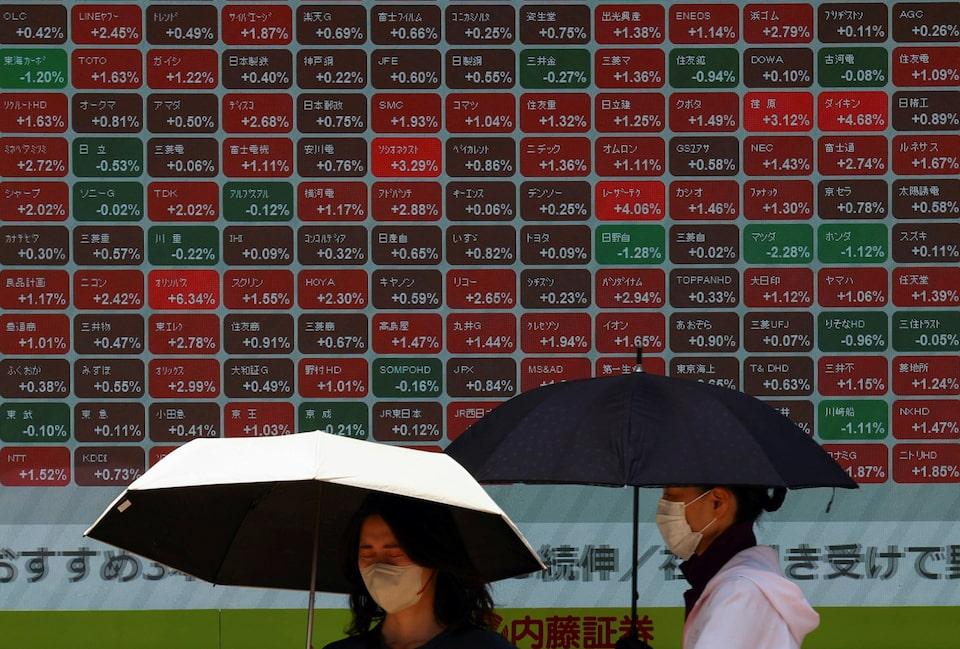
Japan's Nikkei, Taiwanese shares hit record highs Investors hope for good U.S. CPI figures after benign PPI Fed rate cut next week fully priced in, small chance of 50 bps Oil trims gains, gold slips from all-time highs SYDNEY, Sept 11 (Reuters) - Sharemarkets in Japan, Taiwan and South Korea set records on Thursday, boosted by technology stocks, while investors wagered U.S. inflation data would be benign enough to ensure a rate cut next week and perhaps two more by year-end. European stocks, however, braced for a more subdued open, with EUROSTOXX 50 futures little changed ahead of a rate decision from the European Central Bank. The ECB is widely expected to hold rates steady but the focus is on whether it will keep the door ajar for further policy easing. Sign up here. Meanwhile, oil prices trimmed overnight gains after Poland downed suspected Russian drones in its airspace and as the U.S. pushed the EU to impose new sanctions on buyers of Russian oil. Gold also slipped further away from all-time highs. Michael Brown, a senior research strategist at Pepperstone, said for stocks, the path of least resistance is clearly higher. "The list of bullish catalysts is still piling up – solid economic growth, strong earnings growth & guidance, corporate buybacks gathering pace, calmer tones prevailing on trade and optimism around the AI theme having returned with a vengeance," Brown said. Japan's Nikkei (.N225) , opens new tab gained 1.2% to hit a record as tech, energy and utilities firms jumped. South Korean shares (.KS11) , opens new tab rose 0.6%, while the rally in Taiwan faded somewhat, with stocks last flat for the day. SoftBank (9984.T) , opens new tab rose almost 10% after Stargate Project partner Oracle (ORCL.N) , opens new tab soared 36% overnight in its biggest one-day percentage gain since 1992 as the 48-year-old tech giant forecast a demand surge from AI firms for its cloud computing services. Chinese blue chips (.CSI300) , opens new tab jumped 1.8%, while Hong Kong's Hang Seng index trimmed earlier losses to be off 0.3%. Both Nasdaq futures and S&P 500 futures were little changed. Overnight, a benign reading on U.S. producer prices led markets to price in more chance of three interest rate cuts from the Federal Reserve this year. Investors have fully priced in a quarter-point move from the Fed at next week's meeting, with an 8% chance of a 50 basis-point cut. With PPI out of the way, investors are now focused on the consumer price index for August due out later in the day. A Reuters poll showed the headline CPI likely rose 2.9% from a year earlier, the biggest increase since January, while the core measure likely held at 3.1%. "Unless CPI delivers a significant upside shock, investors are likely to maintain their dovish outlook," said Julien Lafargue, chief market strategist at Barclays Private Bank. "This shift in inflation dynamics could prove pivotal for the U.S. Fed, which now faces fewer constraints in pursuing a more aggressive rate-cutting cycle. With inflation appearing less of a threat, the Fed may find room to stimulate the economy more assertively." In foreign exchange, movement was muted with the U.S. dollar struggling for direction. The dollar index was last flat at 97.84 , a touch above a seven-week trough of 97.25. The Australian dollar hit a 10-month top of $0.6636 overnight before steadying at $0.6607 on Thursday. In the bond market, 10-year Treasury yields edged up 2 basis points to 4.0531%, having fallen 4 bps overnight as a solid 10-year note auction alleviated some concern about investor appetite for long-term U.S. debt. An even more telling gauge will be the Treasury's $22 billion sale of 30-year bonds on Thursday. The 30-year yield rose 2 bps to 4.7028%, having come down more than 30 basis points since it briefly topped 5% a week ago. In commodity markets, oil prices slipped on Thursday, having settled up over $1 overnight. U.S. crude eased 0.3% to $63.45 a barrel, while Brent was also down 0.3% at $67.26. Spot gold prices slipped 0.3% to $3,630 an ounce. https://www.reuters.com/world/china/global-markets-wrapup-2-2025-09-11/
2025-09-11 06:05
US presses Europe to cut Russian energy purchases Interior secretary says US can replace Russian gas volumes But that would increase US share of EU's LNG imports to over 70% MILAN, Sept 11 (Reuters) - It may appear quite audacious for the world's largest natural gas producer to demand that its biggest market stop buying from a competitor. But that's exactly what unfolded this week at the global gas industry’s annual gathering in Milan. Speaking at the start of the Gastech conference, U.S. Interior Secretary Doug Burgum delivered a clear message: Europe should stop purchasing gas from Russia, which the United States would happily replace. Sign up here. American energy dominance, a key pillar of President Donald Trump's agenda for his second term, aims to bring both peace and prosperity to the world, Burgum told the audience of European energy officials and company executives. "We achieve prosperity at home and with our allies through energy abundance... Peace is achieved around the world by selling our energy to our friends and allies who don't have to buy from our adversaries," said Burgum, a former governor of the oil and gas-rich state of North Dakota The comments come as Washington is ratcheting up pressure on Europe to cut off its remaining purchases of Russian oil and gas to squeeze the Kremlin’s war economy and put pressure on President Vladimir Putin to agree to a ceasefire in Ukraine. ‘ENERGY DOMINANCE’ Europe sharply reduced its Russian pipeline gas imports following Moscow's invasion of Ukraine in 2022, and it aims to fully phase out purchases of Russian gas by 2027, if not earlier. Yet the region has continued to import some Russian gas through the Turkstream pipeline into Bulgaria. And, importantly, Europe has arguably just traded one dependency for another. The region’s Russian pipeline volumes have mostly been replaced by LNG imports – and the majority of those have come from the United States. In the first half of 2025, Europe’s LNG imports rose by 25% from the previous year, reaching an all-time high of 92 billion cubic metres (bcm). The United States accounted for over 55% of those imports, followed by Russia at 14%. Given this new reality, Europe has little choice but to go along with the Trump administration’s energy agenda. The European Commission Director General for Energy Ditte Juul Jorgensen told the conference that the bloc will continue to strengthen its energy partnership with the United States. "The U.S. policy of energy dominance is complementary to our strategy of replacing Russian energy in our system," she said. These words have already been translated into action. On Monday, Italy and the United States vowed to deepen energy ties, including through increased LNG purchases. And then on Wednesday, Italy's energy company Edison (EDNn.MI) , opens new tab signed a deal with Shell (SHEL.L) , opens new tab to buy around 0.7 million tonnes per year of U.S. LNG starting in 2028, which could continue for up to 15 years. Of course, some among EU members – most notably Hungary and Slovakia – are pushing back against this U.S. pivot. These two countries still rely heavily on Russian oil and gas and thus both opposed the import ban earlier this year. Sitting alongside Burgum at the conference, Hungary's Foreign Minister Peter Szijjarto said the central European country "cannot walk away from Russian gas" because of geographical and infrastructure constraints. Still, actions speak louder than words. The Hungarian natural gas wholesaler MVM CEEnergy signed a 10-year deal with Shell on Tuesday that will see the latter supply 200 million cubic metres (mcm) of natural gas a year, beginning in January 2026. The aim here is clearly to reduce the country's reliance on Russia. Overall then, Europe appears to be doing precisely what Burgum is asking for. EXTREME DEPENDENCE As a result, Europe’s energy dependence is likely to soon be the most extreme ever. Replacing Russia's LNG volumes with U.S. volumes would increase America’s share of EU LNG imports to around 70%. If the additional 16 bcm of gas imports via the Turkstream pipeline are also replaced, that could boost the portion to over 80%. That would equate to around 23% of total gas imports, when including pipeline imports from Norway, Azerbaijan and North Africa, according to Reuters calculations. For comparison, Russia accounted for around 40% of Europe's total gas imports before 2022. While reliance on U.S. energy carries less political risk, such extreme dependence nevertheless exposes Europe to potentially severe disruptions such as a sudden drop in exports from the U.S. Gulf Coast due to hurricanes or heatwaves. And the chaotic policymaking out of Washington since January shows that political risk can exist among allies. Burgum said that the U.S. energy dominance policy is fully aligned with Europe’s ambition to end its dependence on Russia. For now, that seems to be correct. But who knows how long these allies’ energy and security goals will remain in synch. The EU better hope it is a long time, as the bloc’s outsized energy dependence will leave it with little room to manoeuvre. Enjoying this column? Check out Reuters Open Interest (ROI), , opens new tabyour essential new source for global financial commentary. ROI delivers thought-provoking, data-driven analysis. Markets are moving faster than ever. ROI , opens new tab can help you keep up. Follow ROI on LinkedIn , opens new tab and X. , opens new tab https://www.reuters.com/markets/commodities/europe-succumbs-us-energy-dominance-its-own-risk-2025-09-11/

2025-09-11 06:00
Sanctions coordination is weaker under Trump admin, analyst says EU and UK revised price cap lower, U.S. declined support Price cap is still relevant, EU official says EU envoy in Washington for talks on Russia sanctions LONDON/BRUSSELS/NEW DELHI, Sept 10 (Reuters) - The growing policy divide between the United States and the European Union on Russian oil exports to India is likely to play out in a small reduction in crude flows in October, analysts and trade sources with knowledge of loading plans said. The U.S., EU and G7 allies sanctioned Russian imports after Moscow’s invasion of Ukraine, and prohibited insurers and maritime service providers from facilitating exports to third countries unless they were below a price cap. Sign up here. The purpose of the cap was to limit the price that importers could pay for Russian oil while keeping shipments flowing, thereby reducing Russian oil revenue and preventing a supply crunch that would push up oil prices. The scheme effectively encouraged India and China to buy the oil at discounted prices. U.S. President Donald Trump has, however, changed policy on Russian exports to India. He has demanded India stop buying Russian oil completely and then doubled tariffs to as much as 50% on Indian exports to the United States when New Delhi refused to halt the oil imports. Trump is using the tariffs on India, the top importer of Russian seaborne oil, to force Moscow to make peace in Ukraine. Trump's demand for a halt in the trade is at odds with the price cap scheme, which aims to keep Russian oil exports moving to India, China and other buyers such as Turkey. "Sanctions coordination between the U.S. and the other G7 nations does seem to have largely broken down under the Trump administration," said consultancy Energy Aspects' head of geopolitics Richard Bronze. In a sign that may change, European Commission chief Ursula von der Leyen said on Wednesday the EU is considering a faster phase-out of Russian fossil fuels as part of new sanctions against Moscow. The EU's sanctions envoy and an EU team are in Washington to discuss possible further sanctions. Indian importers of Russian oil are pushing for bigger discounts from Russian sellers as the potential risks from participating in the trade rise, four traders involved in sales told Reuters. Indian buyers said discounts need to widen to around $10 per barrel to benchmark Brent prices to meet price cap levels as banks have tightened scrutiny due to discord between EU and U.S. policies on Russian oil. That is much wider than discounts of $2-3 per barrel seen in September, the traders said. Some Russian sellers have responded by saying Indian buyers were asking for too deep a discount and said they would send some October spot cargoes to China instead, which would lead to a slight decline in volumes for India, two trading sources said. OCTOBER VOLUMES TO DROP Russian crude arriving in India in October will average about 1.4 million barrels per day, a source with knowledge of loading plans said. That would be down from 1.5 million bpd in August and 1.6 million bpd in September, according to sources. The final volumes for October will become clearer when talks between buyers and sellers are completed in the next two weeks. Whatever the outcome, crude for October will be sold above the price cap in most cases to India as even a discount of $10 per barrel will not bring Russian oil prices below the new EU and UK price cap of $47.60 a barrel. The EU lowered the price cap for Russian oil from October, allowing Western insurers and shippers to provide services only if crude is sold below $47.60 a barrel, down from the previous cap of $60 per barrel. The U.S. did not support the cut in the price cap. Brent traded at $67 per barrel on Wednesday. The European Commission would try to align all G7 members with the new lower price cap in the future, the Commission's spokesperson told Reuters. The price cap was still relevant as Western shippers were still transporting Russian oil, he said. The lower price cap would make it harder for Western shippers to continue facilitating the trade. "A growing split on oil sanctions policy will further increase confusion for market participants and potentially weaken levels of compliance," said Tom Boughton from risk consultancy S-RM. Russia is also using tankers from the so-called shadow fleet - a fleet of tankers with Russian connections, which is covered by Russian ship insurance. Due to the lack of Western service providers in these trades, the shadow fleet operates outside of the price cap scheme. Russian firms and traders have managed to sell most oil above the price cap since 2022 either thanks to using their own fleet or by forging documents related to sales, according to traders, Western intelligence sources and market analysts. Poor sanction enforcement has encouraged traders to push boundaries or ignore sanctions altogether as they do not fear penalties, Energy Aspects' Bronze said. The price cap is likely to remain a hindrance to Russian traders of oil, but not a major threat, said Benjamin Godwin, partner at risk consultancy PRISM Strategic Intelligence. "Both the U.S. and EU could make serious moves to choke Russia’s oil and gas industry, but they would be extremely disruptive to global economic activity," said Godwin. https://www.reuters.com/sustainability/climate-energy/eu-us-policy-divide-russian-oil-sales-india-hit-october-trade-2025-09-10/
2025-09-11 05:23
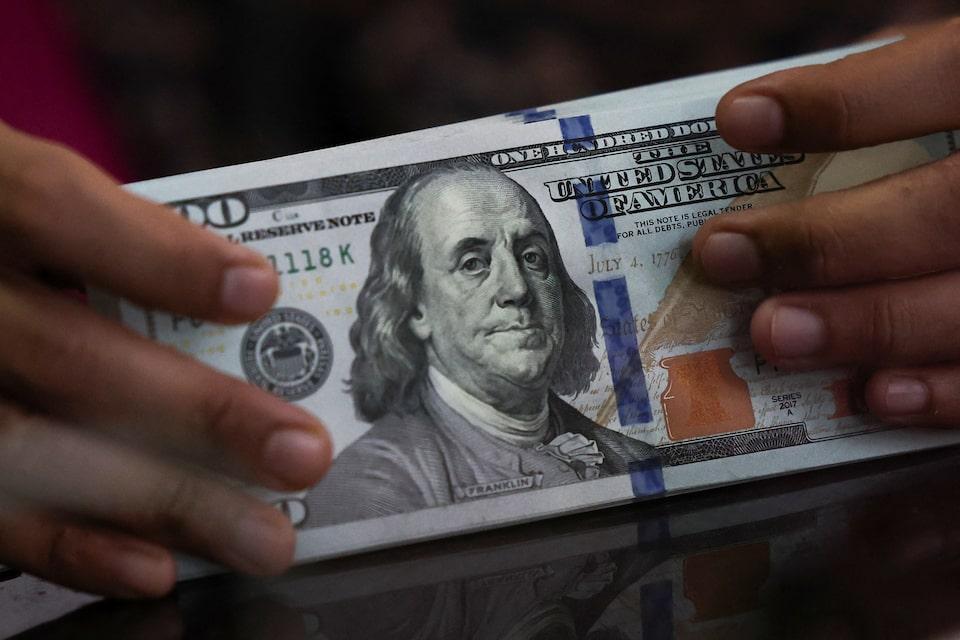
Markets await US CPI data later on Thursday ECB rate decision due at 1215 GMT Australian dollar nears strongest level since November SINGAPORE, Sept 11 (Reuters) - The dollar stabilised in Asia on Thursday after an unexpected drop in U.S. factory-gate prices bolstered expectations the Federal Reserve will cut rates next week, with traders now awaiting U.S. consumer price data later in the day. The dollar index nudged up 0.1% to 97.83, rising for a third consecutive day after the Producer Price Index for final demand fell 0.1% during August, the Labor Department's Bureau of Labor Statistics said on Wednesday. The decline followed a 0.7% jump in July, which was also revised downwards. Sign up here. "The market has positioned for the Fed to ease in September and potentially ease three times this year," said Rodrigo Catril, currency strategist at National Australia Bank in Sydney. "The benign outcome from the PPI tells you pricing expectations look about right." Markets are trading on expectations that the prospect of the Fed easing is a certainty and the only remaining question is by how much. Traders are pricing in an 8.9% chance of a jumbo 50 basis points (bps) rate cut at the central bank's September 16-17 meeting, while a cut of at least 25 bps is viewed as a done deal, according to the CME Group's FedWatch tool. Appointments to the Fed's rate-setting panel remained in focus, as President Donald Trump's administration on Wednesday moved to appeal a federal judge's ruling temporarily blocking Trump from taking the unprecedented step of firing Federal Reserve Governor Lisa Cook. The White House is seeking to remove her before the U.S. central bank's meeting next week. Stephen Miran also moved closer to becoming a Federal Reserve governor, furthering Trump's effort to exert more direct control over interest rate policy. The Senate Banking Committee voted to advance Miran's nomination, though lawmakers involved said it is far from certain if the process can be completed in time for him to participate in the coming meeting. The euro edged 0.04% upwards to $1.1699 ahead of the European Central Bank's policy meeting later on Thursday, where it is widely expected to keep rates on hold. Analysts said policymakers may strike a more dovish tone to counter a fraught trade and political outlook across the continent. The single currency is stabilising after a two-day streak of declines as geopolitical tensions continue on the bloc's Eastern flank. Poland said it shot down suspected Russian drones in its airspace on Wednesday with the backing of aircraft from its NATO allies, the first time a member of the Western military alliance is known to have fired shots during Russia's war in Ukraine. Against the yen, the dollar was trading flat at 147.43 yen , after data showing Japanese wholesale prices rose 2.7% in the year to August, accelerating from the previous month in a sign of sticky inflationary pressure in the world's fourth-largest economy. The Australian dollar slipped 0.1% to $0.66095 , retreating after hitting the highest levels since November on Wednesday, as commodities including crude oil and gold gave up recent gains. The offshore yuan traded at 7.1184 yuan per dollar , strengthening 0.03% in early Asian trade. The kiwi slipped 0.1% to $0.5936 . Sterling traded at $1.3525 , unchanged so far on the day. https://www.reuters.com/world/africa/dollar-steady-inflation-data-central-banks-take-focus-2025-09-11/