2025-12-05 06:29
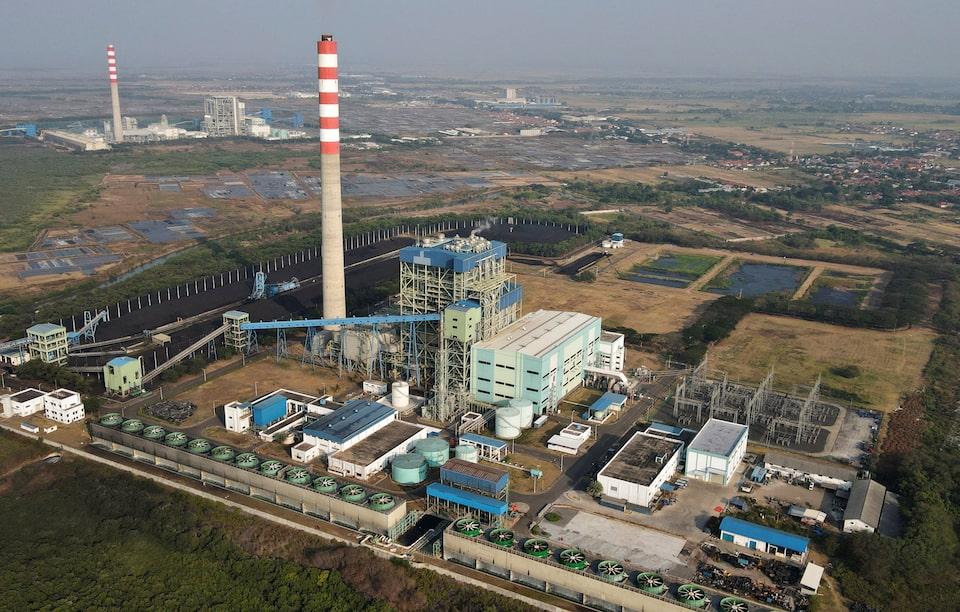
JAKARTA, Dec 5 (Reuters) - Indonesia is unlikely to move forward with a plan to retire the Cirebon-1 coal power plant early, although it is reviewing other coal-fired plants for early shutdown, its chief economic minister said on Friday. The Cirebon deal has been seen as a test case for the early retirement of coal-fired power plants in developing countries under the Just Energy Transition Partnership (JETP), a G7 funding initiative. Sign up here. But after initially agreeing to close Cirebon in 2035 - seven years earlier than its lifespan - Indonesian authorities last year missed a key deadline and raised concerns about potentially higher costs for electricity subsidies. Choosing to shut down older power plants was "based on technical considerations," Indonesia's Chief Economic Minister Airlangga Hartarto told a press conference in Jakarta, flanked by representatives of JETP partner nations. "Cirebon is one of those that still has a long lifespan, and its technology is also critical, supercritical, and relatively better," he said, referring to so-called Clean Coal Technology at the plant. He added that the environmental impact of shutting down older, dirtier coal power plants would be bigger. The JETP has distributed $3.1 billion in financing so far, Airlangga said, adding international partners remained committed to the programme, noting the total funding commitment for Indonesia had been raised to $21.4 billion from an initial $20 billion. A number of projects worth a total of $5 billion are currently in the pipeline for financing, including the Saguling floating solar PV project, a transmission project in Sulawesi, and a wind power project in South Sumatra, Airlangga said. It was not clear how soon the funds would be deployed. Indonesia, which counts coal as one of its biggest export products, has pledged to reach net-zero greenhouse gas emissions by 2060. Jakarta this year submitted more ambitious, self-determined emission cut targets by 2035 to the United Nations. The plan has been criticised by environmentalists as extending the life of coal assets, because it included the utilisation of Clean Coal Technology. https://www.reuters.com/business/energy/indonesia-backpedals-retiring-cirebon-coal-power-plant-early-2025-12-05/
2025-12-05 06:21
MUMBAI, Dec 5 (Reuters) - The Reserve Bank of India lowered its key interest rate on Friday and announced measures to infuse up to $16 billion into the banking system this month in the form of debt purchases and a foreign exchange swap. The RBI reduced the repo rate by 25 basis points to 5.25% and maintained its "neutral" stance, citing record low retail inflation and a benign outlook for prices. Sign up here. The central bank will conduct open-market purchases of bonds worth up to 1 trillion rupees ($11.1 billion) and a $5 billion dollar-rupee buy/sell swap, Governor Sanjay Malhotra said. The debt purchases will be conducted on December 11 and December 18, while the three-year FX swap will take place on December 16. "Together, these measures are growth-supportive and the evolving growth-inflation mix keeps the door open for one more rate cut. Financial conditions should, therefore, be supportive for rate transmission and for bond market sentiment," said Churchil Bhatt, executive vice president - investments at Kotak Mahindra Life Insurance. This would be the first time since May that the central bank will conduct an OMO auction. The RBI bought bonds worth 4.84 trillion rupees between January and May. It also conducted similar swaps worth $10 billion each in February and March to infuse rupee liquidity into the system. "Announcing OMO perhaps suggests that RBI is cognizant of G-sec yields. In addition, the three-year FX swap suggests that RBI is aware of FX risks. They have done swaps in the past and there is possibility of more support if required," Anitha Rangan, chief economist at RBL Bank, said. "Nevertheless, a "neutral" stance suggests that RBI is unlikely to acknowledge rate cuts once again in the near future, but the support from OMOs and FX could continue." ($1 = 90.0250 Indian rupees) https://www.reuters.com/world/india/indias-rbi-announces-debt-purchases-fx-swap-boost-banking-system-liquidity-2025-12-05/
2025-12-05 06:20
RBI cuts repo rate, bringing total cuts to 125 basis points in 2025 Keeps door open for more easing, to boost liquidity by up to $16 billion Inflation below threshold leaves room for more monetary easing Governor says external financing requirements will be met comfortably MUMBAI, Dec 5 (Reuters) - The Reserve Bank of India (RBI) cut its key repo rate by 25 basis points on Friday and left the door open for further easing as it took steps to boost banking-sector liquidity by up to $16 billion to support a "goldilocks" economy. The world's fifth-largest economy is under pressure from punitive tariffs imposed by U.S. President Donald Trump, widening its trade deficit and pushing its currency to a record low. Sign up here. Global headwinds have prompted Indian Prime Minister Narendra Modi's administration to step up domestic economic reforms, including paring consumer taxes, changing labour rules and easing financial sector regulations. The RBI's six-member monetary policy committee voted unanimously to lower the repo rate (INREPO=ECI) , opens new tab to 5.25%, in line with a consensus view, and maintained a "neutral" stance, suggesting room for further rate cuts. The central bank has now cut rates by a total of 125 basis points since February 2025, the most aggressive easing since 2019. It held rates in August and October. The Indian economy is in a "rare goldilocks" period, RBI Governor Sanjay Malhotra said in a video address. Since October, India's economy has experienced rapid disinflation leading to a breach of the central bank's lower threshold of tolerance, said Malhotra, adding that growth has remained strong. Given these macroeconomic conditions, "policy space" exists to support growth, he said, adding later at a post-policy press conference: "We expect the policy rates to be low as inflation stays benign." Garima Kapoor, economist at Mumbai-based Elara Securities, expects another rate cut, noting "there are no signs of overheating in the economy." "We believe that there would be scope for another 25 basis points cut this cycle as inflation is expected to remain benign," he said. The RBI also decided to conduct open market operations of 1 trillion rupees ($11.14 billion) to buy bonds this month, and another $5 billion in forex swaps to add liquidity to the banking system and speed up transmission of lower rates. India's benchmark 10-year bond yield dropped nearly 5 basis points after the central bank's moves but rebounded thereafter to trade flat at 6.4841%. The rupee fell marginally, while the benchmark equity indexes were up 0.4% each. STRONGER GROWTH; LOWER INFLATION The central bank raised its GDP forecast for the current year to 7.3% from its previous estimate of 6.8% while the inflation projection was lowered to 2% versus 2.6% in October. The South Asian economy expanded at a sharper-than-expected clip of 8.2% in the July-September quarter but growth is expected to slow as the full impact of up to 50% tariffs imposed by the U.S. hit exports and sectors from textiles to chemicals. External uncertainties could pose "downside risks" to growth, Malhotra said. On the other hand, retail inflation stood at an all-time low of 0.25% in October and is expected to remain soft in coming months. The central bank targets inflation at 4%, within a tolerance band of 2% on either side. "Underlying inflation pressures are even lower", Malhotra said, pointing to a "generalised" decline in price pressures. "Both demand and supply-side factors are driving the low inflation", he said in response to a question on whether weak price pressure reflects soft consumer demand and a rise in cheaper Chinese imports. "With RBI continuing to leave room open for further easing, we do not rule out another 25-basis-point cut, with the likely terminal rate at 5% followed by a prolonged pause," said Upasna Bhardwaj, chief economist at Kotak Mahindra Bank in Mumbai. CAN "COMFORTABLY" MEET EXTERNAL FINANCING Malhotra said India's external sector remains "resilient" and external financing requirements will be met "comfortably". Concern about stalling dollar flows at a time when India's trade deficit is widening has pushed the South Asian nation's currency to an all-time low. The central bank will tolerate a weaker currency, and only intervene to curb speculative activity, Reuters reported on Thursday. Malhotra said the RBI will allow the market to determine levels on currency, reinforcing that the central bank's focus is on reducing "undue volatility". India’s foreign exchange reserves of $686.2 billion provide a robust import cover of more than 11 months, the governor said. ($1 = 89.8020 Indian rupees) https://www.reuters.com/world/india/india-central-bank-cuts-repo-rate-by-25-bps-widely-expected-2025-12-05/
2025-12-05 06:06
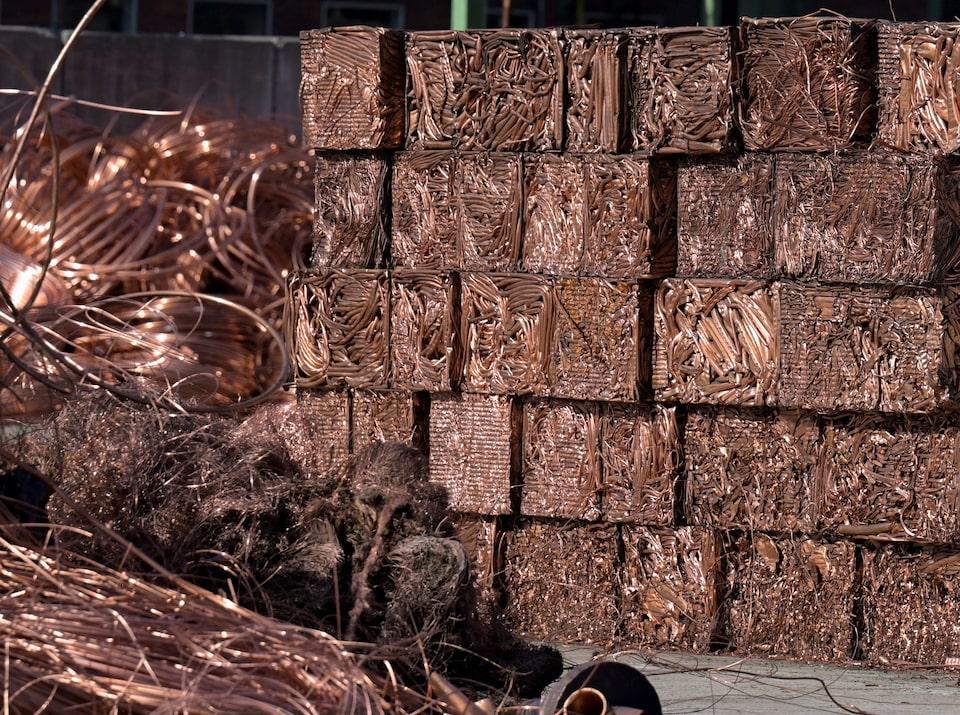
LONDON, Dec 5 (Reuters) - Copper is on a bull surge with the price hitting record highs on both the London and Shanghai markets this week. Everyone's talking about a copper supply crunch. Physical premiums are soaring. Smelters are being squeezed by a shortfall of mined concentrate. Sign up here. Just to cap it all, London Metal Exchange (LME) stocks have just been raided, reducing available inventory to below 100,000 metric tons for the first time since July. Yet it's not as if the global manufacturing sector is similarly fired up. September saw activity contract in China, Japan, Europe and, for the ninth consecutive month, the United States. Tariff uncertainty hangs heavy on the world's largest manufacturing nations and it is also key to understanding copper's current euphoria. Copper's bull run is as much about market fracture as it is about a straightforward supply crunch. FEAST... This week's raid on LME copper stocks saw 54,350 tons, around a third of registered inventory, cancelled in preparation for physical load-out. It's highly likely this metal is destined either for the United States or to fill a supply-chain gap caused by other units heading that way. The United States is now the market of first resort for copper thanks to the lingering threat of import tariffs. A decision on whether to extend tariffs on copper products to refined metal has been deferred until the middle of next year. But the CME U.S. copper contract is still commanding a hefty premium over the international price traded on the LME, keeping the physical arbitrage window wide open. U.S. imports of refined copper more than doubled year-on-year to 1.19 million tons in January-August and more will arrive as long as the CME premium covers the shipping costs. Which at around $500 per ton on a three-month forward basis it more than comfortably does. CME stocks, all customs-cleared, have mushroomed from 85,000 tons at the start of the year to 394,000 tons and now account for 55% of global exchange inventory. There is no copper supply crunch in the United States and there's not going to be one any time soon. ...AND FAMINE But there is growing tightness everywhere else in the world as metal continues to gravitate towards the United States. That's why producers have been able to demand record premiums for deliveries next year. Chilean producer Codelco has hiked its European premium by 39% to $345 per ton over the LME price and is pushing for $350 per ton for Chinese buyers, who find themselves in the unfamiliar position of being second in line in the copper delivery queue. Indeed, China itself has been caught up in the physical copper scramble. The mass relocation of copper inventory to the United States has extended to China's bonded warehouse zones with 128,000 tons re-exported to the United States since February, according to Chinese customs. Chinese producers have also been lifting deliveries to LME warehouses as a tightening London market opens up an export arbitrage window. Chinese-brand copper accounted for 82% of LME registered stocks at the end of October, up from 51% at the start of January. Yet even as global inventory is reshuffled, total exchange stocks are rising, closing November above the 700,000-ton mark for the first time since early 2020. There is no global shortage of copper but there is a widening split between the U.S. market and the rest of the world. It's captured by the CME and LME forward curves - in comfortable contango and widening backwardation respectively. 'MALIGNANT COMPETITION' The splintering of the copper market is not just geographical but also internal. China has brought too much smelting capacity online in too short a time for the world's mines to supply, a mismatch compounded by this year's litany of disruption at some of the world's largest mines such as Grasberg in Indonesia. The result is a crisis of smelter profitability. Spot processing fees have been trading at negative levels for months, meaning smelters are giving away for free what should be a core revenue stream. Several Western smelters have closed and the Chinese smelter sector is now confronted with the hangover from its previous exuberance in the form of potentially negative fees for next year's annual contracts. The China Smelters Purchase Team, comprising the country's top-ten producers, has pledged to reduce production by 10% to help stabilise the raw materials market. It will also monitor members' spot market activity to prevent what it called "malignant competition" between smelters for concentrate. Collective cutback announcements are standard operating procedure for China's metal smelters whenever the going gets tough but the impact has as often as not been less than promised. The announcement, though, is evidence of a dysfunctional raw materials market. The current annual benchmark pricing model is at risk of splintering into multiple short-term and binary deals under the pressure. This injects another level of uncertainty into an already complex copper pricing picture. So is the world facing an imminent copper supply crunch? Well, it depends very much on which Doctor Copper you ask. But none of them is saying much about the state of global manufacturing right now. Andy Home is a Reuters columnist. The opinions expressed are his own Enjoying this column? Check out Reuters Open Interest (ROI) for thought-provoking, data-driven commentary on markets and finance. Follow ROI on LinkedIn , opens new tab, opens new tab and X , opens new tab, opens new tab. https://www.reuters.com/markets/commodities/will-real-doctor-copper-please-step-forward-2025-12-05/
2025-12-05 05:55
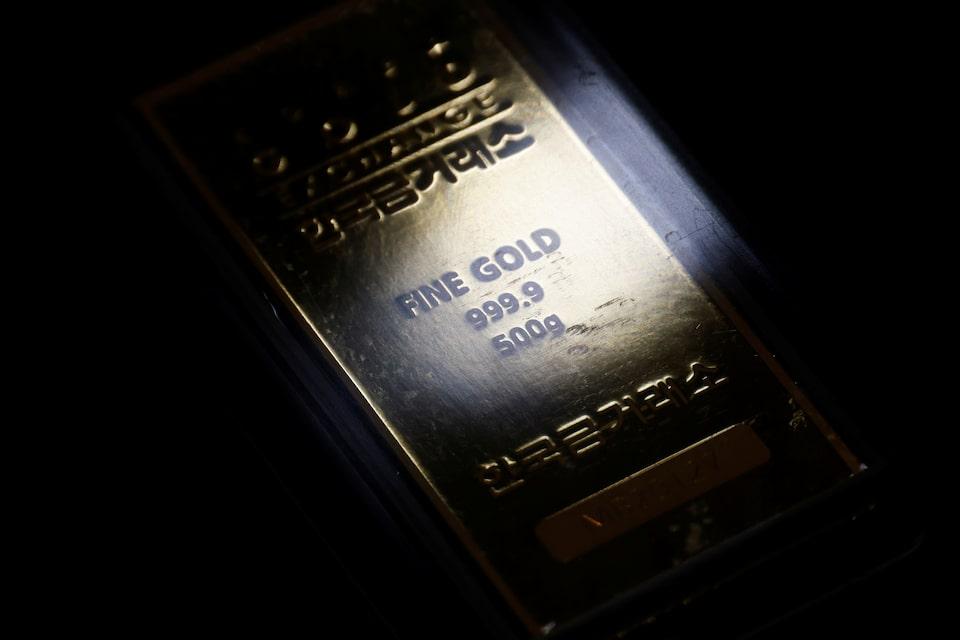
US consumer spending moderates in September Silver hits a record high of $59.32/oz Gold seen trading between $4,500 and $5,000 in 2026 Dec 5 (Reuters) - Gold prices rose on Friday as mounting expectations of a U.S. Federal Reserve rate cut next week buoyed sentiment, while silver soared to a record high. Spot gold was up 1% to $4,212.16 per ounce at 1:36 p.m. ET (1836 GMT), but was on track for a 0.4% weekly loss. Sign up here. U.S. gold futures for February delivery settled unchanged at $4,243 per ounce. "The market is increasingly confident that the central bank is going to cut (rates) and in response to that, we've seen the U.S. dollar weaken a little bit and that's accretive for gold," said Bart Melek, global head of commodity strategy at TD Securities. U.S. economic data showed the core Personal Consumption Expenditures (PCE) Price Index rose 0.3% in September, with the annual increase slowing to 2.8% from 2.9% in August. This followed private payroll data revealing the sharpest decline in over two-and-a-half years last month. Dovish commentary from several Fed officials has further fueled expectations of monetary easing. CME's FedWatch tool indicates an 87.2% probability of a 25-basis-point rate cut at the Fed's December 9-10 meeting. Gold is projected to trade between $4,200 and $4,500 this year, and between $4,500 and $5,000 next year, depending on the Fed's decisions, said Alex Ebkarian, COO at Allegiance Gold. Meanwhile, physical gold demand in India and China eased this week as buyers wait for a correction in spot prices. Silver rose 2.6% to $58.59 an ounce, up 4% for the week, after touching a record $59.32 earlier. "(Silver is) following the pathway of gold and many investors still believe that silver is quite cheap in relative terms," Melek said, citing structural deficits and rising demand for electrification as supportive factors. The white metal has rallied 98% so far this year, fueled by supply deficits and its designation on the U.S. critical minerals list. Platinum was steady at $1,646.10, while palladium gained 0.3% to $1,453.39. https://www.reuters.com/world/india/gold-flat-higher-yields-counter-weak-dollar-ahead-us-inflation-read-2025-12-05/
2025-12-05 05:48
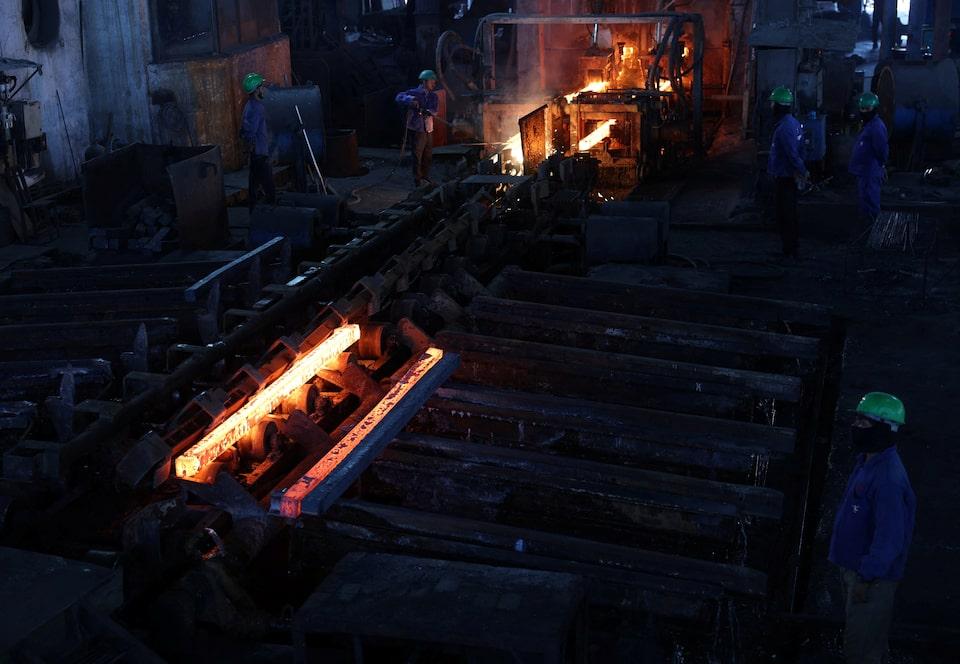
Steel companies ship roughly two-thirds of exports to EU Indian steel mills tap Middle East, Africa to boost exports Steel companies need clarity on European carbon tax: executives NEW DELHI, Dec 5 (Reuters) - India's steel exports to Europe are expected to fall once the European Union's carbon tax takes effect next month, prompting mills to seek alternative buyers in Africa and the Middle East, industry executives and analysts said. Imports of steel into the European Economic Area will face a carbon tax under the EU's Carbon Border Adjustment Mechanism (CBAM) starting on January 1. The decarbonisation-oriented levy will also apply to cement, electricity, fertilisers and other products. Sign up here. Mills in India, the world's second-largest crude steel producer after China, ship roughly two-thirds of their exports to Europe. Experts say Indian mills will need to cut their carbon emissions. "We recognise that we have to do environment-friendly production and companies are gearing up to comply, but they are also looking at alternative markets too," Aruna Sharma, India's former steel secretary, told Reuters. Most of India's steel is produced in blast furnaces, which generate higher emissions, said Sandeep Poundrik, the top civil servant at the Ministry of Steel, in September. He also said further expansion of blast furnace capacity is a concern. Additional planned capacity could add about 680 million metric tons of carbon-dioxide-equivalent emissions from the sector, according to Global Energy Monitor, a U.S.-based research group. Indian steelmakers have planned new investments to lift output as strong domestic demand - fuelled by government-backed infrastructure spending - continues to rise. "Most of the companies are yet figuring out a way to deal with CBAM," said Ravi Sodah, a cement, metals and mining analyst at Elara Capital. "In the near term, it is expected to slow down India's exports to EU." One way to mitigate the problem is to use electric arc furnaces, which emit far less carbon than conventional blast furnaces. Two executives at large Indian steelmakers, who asked not to be named because they are not authorised to speak to the media, said companies had little clarity on how the tax would be calculated. "About 60% of our exports go to Europe and we want to know what is the rate that will be levied and will it be company specific?" said one of the executives. The levy will raise the cost of Indian steel exports to the EU, especially blast furnace products, squeezing margins and EU market share unless producers cut emissions, said Lakshmanan R, head of South & Southeast Asia corporates at CreditSights in Singapore. To offset lower exports to the EU, Indian steel mills are trying to tap into the Middle East and offering quick delivery and flexible payment terms, said Shankhadeep Mukherjee, principal analyst at London-based CRU Group. https://www.reuters.com/sustainability/boards-policy-regulation/indias-steel-exports-europe-set-drop-eu-carbon-tax-looms-2025-12-05/