2025-09-10 16:03
NEW YORK, Sept 10 (Reuters) - Investors plowed nearly $45 billion into their emerging market equities and debt portfolios in August, the most in nearly a year, but a large outflow from EM stocks outside of China pointed to a change of sentiment among investors, according to a report from a banking trade group. The $44.8 billion net inflow for last month compares with $38.1 billion in July, which was sharply revised lower from $55.5 billion, and compares with $28.2 billion in August 2024, according to data from the Institute of International Finance. Sign up here. Chinese debt and stocks took in over $39 billion net last month, while ex-China debt attracted $13.2 billion. Stocks outside of China saw a $7.4 billion outflow after three months of inflows. The shift "marks the weakest month for EM equity flows since the (Northern) spring and reflects a significant reversal in sentiment toward ex-China markets," Jonathan Fortun, senior economist at the IIF, wrote in a statement published alongside the data. Yet an external tailwind could give EM assets support, as cooler-than-expected U.S. inflation data cemented expectations that the Federal Reserve will cut borrowing costs following its meeting next week. Lower rates in developed economies help funnel investments into EMs that offer higher yields. Regionally, Asia attracted $18.1 billion, while Latin America added $8.9 billion, partly boosted by debt flows to Mexico and Brazil, according to the report. EM Europe added $8.7 billion and Middle East and North Africa $5.8 billion more, the IIF data showed. "All (regions) posted higher inflows than the previous month, yet the underlying pattern still reflects the outsized role of China in portfolio allocations," Fortun wrote. August marked the largest inflow to Chinese equities since February. “Investor positioning appears increasingly sensitive to headline risk and policy noise, especially in economies exposed to external shocks or electoral cycles,” Fortun said. https://www.reuters.com/world/china/em-portfolios-funnel-near-45-billion-august-cracks-are-showing-iif-says-2025-09-10/

2025-09-10 15:59
WASHINGTON, Sept 10 (Reuters) - The office of the Labor Department's inspector general said on Wednesday it was initiating a review of challenges the Bureau of Labor Statistics (BLS) faces in collecting and reporting U.S. economic data following recent large downward revisions to nonfarm payrolls and cuts to inflation data collection. Assistant inspector general for audit, Laura Nicolosi, sent a letter to acting BLS commissioner William Wiatrowski informing him of the review. The announcement followed on the heels of news from the BLS on Tuesday that payrolls could have been overstated by 911,000 jobs in the 12 months through March. Sign up here. "Our focus will be on the challenges and related mitigating strategies for (1) collecting PPI and CPI data, and (2) collecting and reporting, including revising, monthly employment data," the letter said. Sharp downgrades last month to May and June payrolls figures totaling 258,000 jobs angered U.S. President Donald Trump, who fired BLS Commissioner Erika McEntarfer, accusing her, without evidence, of faking the employment data. Trump has nominated E.J. Antoni, chief economist at the conservative think tank Heritage Foundation to replace McEntarfer. The BLS has suffered from years of inadequate funding under both Democratic and Republican administrations. Like all government agencies, it has been severely affected by mass firings, voluntary resignations, early retirements and hiring freezes, part of an unprecedented campaign by the White House to drastically reduce the size of government and remake it. The BLS has suspended consumer price data collection in three cities because of resource constraints. It last month ended the calculation and publication of about 350 indexes in the producer price report. https://www.reuters.com/world/us/labor-department-inspector-general-reviewing-challenges-bls-economic-data-2025-09-10/

2025-09-10 13:36
Sept 10 (Reuters) - The Federal Reserve is likely to start a series of interest-rate cuts next week and keep going through the end of the year, traders bet on Wednesday after tamer-than-expected producer price inflation last month calmed worries that price pressures would hold the central bank back from policy easing. Traders stuck to bets the Fed will start with a quarter-point reduction at its meeting next week, and continue with same-sized cuts through year-end, based on pricing of futures contracts that settle to the Fed's policy rate. The producer price index increased 2.6% in August from a year earlier, a government report showed, after climbing 3.1% in July. Sign up here. President Donald Trump took to social media shortly after the report to call for a "big" and immediate interest-rate cut, a move he has repeatedly pressed the Fed to take. Analysts said they continue to expect Trump's tariffs to push up inflation in coming months, calling the wisdom of a large rate cut into question at least for now. That's particularly so with September consumer price inflation - due Thursday - expected to come in well above the Fed's 2% target. "Producers do not seem to be facing major inflationary pressure as of now, but consumer prices will be more important to the Fed decision," wrote Scott Helfstein, head of investment strategy at Global X. The slowdown in producer price inflation could signal a softening economy, he said, and while "the Fed is likely to take notice (it) will still likely deliver a modest rate cut in September." https://www.reuters.com/business/fed-seen-course-rate-cuts-after-ppi-data-2025-09-10/

2025-09-10 13:27
LONDON, Sept 10 (Reuters) - Nebius Group (NBIS.O) , opens new tab said on Wednesday it would raise $3 billion to fuel growth in its core artificial intelligence cloud business, on the heels of its $17.4-billion deal with Microsoft (MSFT.O) , opens new tab. The financing includes a $2 billion private offering of convertible senior notes and a $1 billion underwritten public offering of the company's class A shares. Sign up here. Goldman Sachs is lead book-running manager on the public offering alongside Morgan Stanley, BofA Securities and Citigroup as additional book-running managers. Nebius said it will use the cash to finance continuing growth, including the acquisition of additional compute power and hardware, securing land plots with reliable providers and expanding its data center footprint. On Monday, Amsterdam-based Nebius announced it would provide Microsoft with GPU infrastructure capacity over a five-year term. Microsoft may also acquire additional services capacity under the deal, bringing the total contract value to about $19.4 billion. On Tuesday, its Nasdaq-listed shares soared over 49% to a record high, driven by the Microsoft deal. They are up 245% so far this year. Shares were down 5.6% in pre-market trading on Wednesday. Nebius emerged from a deal to split the assets of Russian tech company Yandex. Global demand for data center capacity has risen sharply in recent years as companies tap into new technologies to run their businesses, especially after the emergence of generative artificial intelligence. https://www.reuters.com/business/ai-infrastructure-company-nebius-raise-3-billion-fuel-growth-2025-09-10/

2025-09-10 13:24
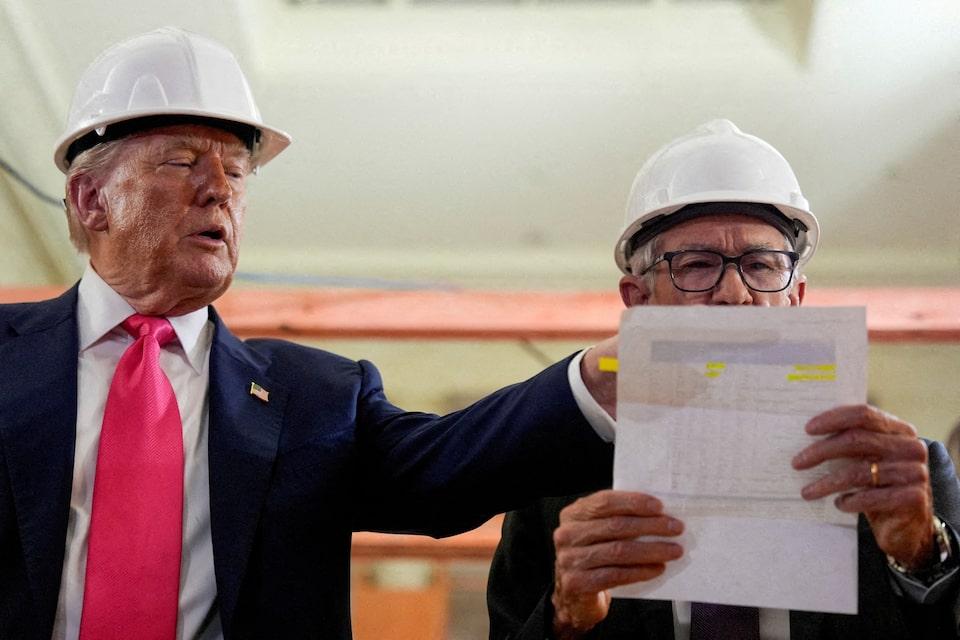
WASHINGTON, Sept 10 (Reuters) - U.S. President Donald Trump on Wednesday reiterated his call for Federal Reserve Chairman Jerome Powell to cut benchmark interest rates. "Just out: No Inflation!!! “Too Late” must lower the RATE, BIG, right now. Powell is a total disaster, who doesn’t have a clue!!!, Trump said in a post on Truth Social. The post follows federal government data that showed U.S. producer prices slipped in August. Sign up here. https://www.reuters.com/world/us/trump-says-fed-chair-powell-should-make-big-rate-cut-now-2025-09-10/
2025-09-10 13:10
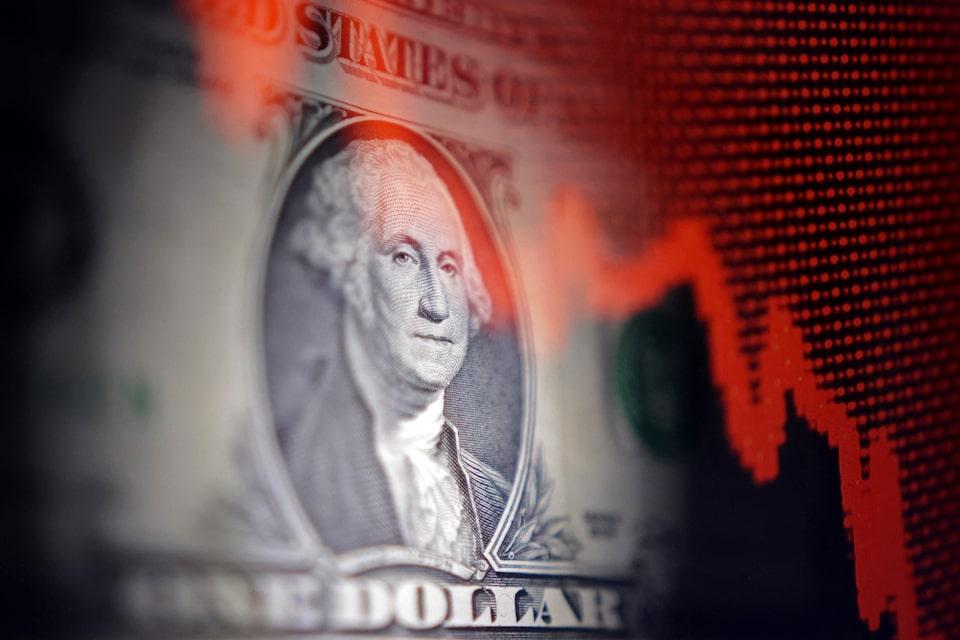
ORLANDO, Florida, Sept 10 (Reuters) - The dollar has been beaten down this year as investors have priced in a resumption of the Federal Reserve's rate-cutting cycle. But even if lower nominal rates are already reflected in the greenback's price, lower 'real' rates may not be. The greenback has gotten a bit of respite recently after recording its worst start to any calendar year since the era of free-floating exchange rates was introduced over 50 years ago. But it will face a renewed headwind if its real interest rate support evaporates, which currently seems likely. Sign up here. If the Fed pulls the rate cut trigger next week, as expected, it will be doing so with inflation around 3% - a percentage point above the central bank's 2% target. Further easing amid sticky prices means the gap between the U.S.'s inflation-adjusted or 'real' interest rate and those of its developed market peers should narrow – bad news for the dollar. 'REAL' PAIN The difference in inflation-adjusted or 'real' interest rates and yields is often thought to play the biggest role in determining the relative returns and purchasing power of currencies. Depending on what cut of annual inflation you use, the 'real' federal funds rate right now is somewhere in the 1.3-1.8% range. That's much higher than equivalent rates in the euro zone, Britain and most notably Japan, where the real policy rate is deeply negative. You can argue this hasn't prevented the dollar's eye-popping decline so far this year. But maybe that 'real' advantage at the short end helped avert an even steeper slide. What's going to happen if that support evaporates? It already has further out the curve. The dollar's 10% slide this year is thanks in no small part to the collapse in its positive real yield differentials in the five- and 10-year space, for example. These spreads are currently the narrowest since early 2022, but can shrink further. SIXTH TIME'S THE CHARM? Rates futures traders expect the Fed to cut rates by some 150 basis points by the end of next year, the most in the developed world but only really playing catch-up with most of these countries. On the other side of the 'real' rate equation is inflation, which remains sticky and above target across the developed world, but particularly in the United States – and that's before the tariff price shock truly hits. Economists at JP Morgan on Tuesday warned that, barring recession, 2026 will likely be the sixth year in a row expectations of inflation returning to target will not be met. They note that policymakers' inflation forecasting record since 2021 has been "less than exemplary," to put it charitably. They reckon central banks have, on average, underestimated core inflation over the period by about one percentage point and overshot their targets by 1.5 percentage points. The Bank of England has the worst record, but given the Fed's global prominence, its poor marks are what really stand out. The U.S. central bank's inflation forecasts have missed by an average of 1.3 percentage point over this period, and it has overshot its target by roughly 2 percentage points. Of course, maybe the sixth time will be the charm, and inflation will ease in line with Fed forecasts next year. The soft U.S. labor market appears quite a bit mushier following Tuesday's announcement of a record downward revision of payrolls growth. And if unemployment rises, consumer demand, economic activity, and price pressures will surely cool. But for now, inflation concerns still appear to be simmering. U.S. consumer inflation expectations are, by some measures, closer to 5% than the Fed's 2% goal, financial conditions are the loosest in years, and monetary and fiscal stimulus look to be coming down the pike. Put everything together, and you have the recipe for lower U.S. real rates and more dollar pain. (The opinions expressed here are those of the author, a columnist for Reuters) https://www.reuters.com/markets/currencies/real-rate-dip-threatens-pull-down-dollar-2025-09-10/