2025-09-10 11:29
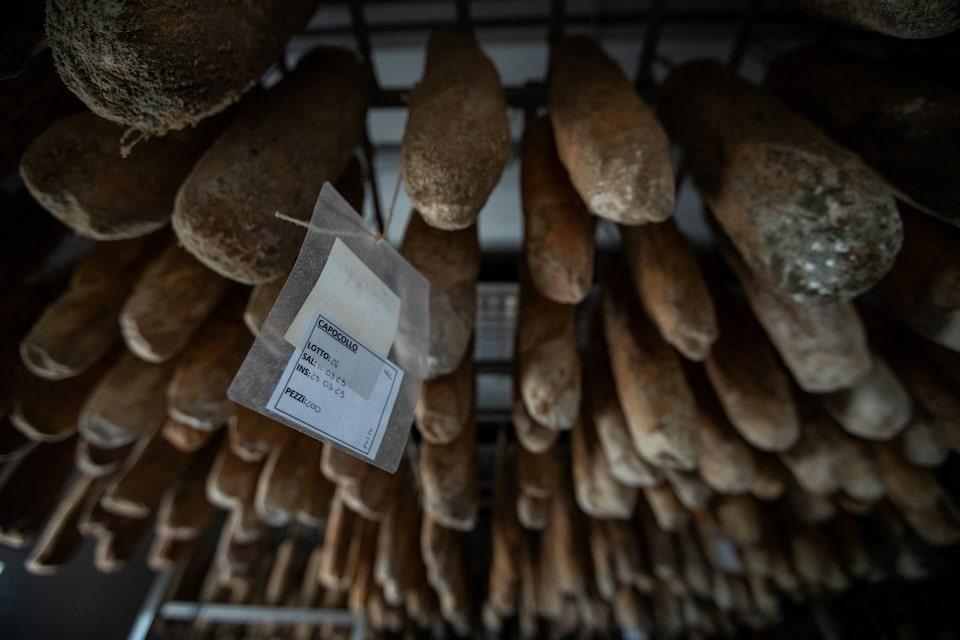
Duties target over $2 billion worth of EU pork imports Move escalates trade tensions between China and the EU Offal products make up half of EU exports to China Spain most exposed to the duties PARIS, Sept 10 (Reuters) - European pork producers face a squeeze on profit margins after China, their largest market, imposed anti-dumping duties of up to 62.4% on imports of EU pork products. The provisional tariffs, effective on Wednesday, target over $2 billion worth of annual exports and threaten to erode margins across the European Union’s pork sector. Sign up here. China accounts for a quarter of EU pork exports. Shipments to China rose 4% in the first half of 2025 after a three-year decline. Offal products — such as pig ears, noses and feet — make up more than half of these exports, according to Rabobank. These items are popular in China but have limited demand elsewhere, leaving European producers few alternative markets. “We’ll continue exporting but at lower value,” said Thierry Meyer, vice president of French pork industry group Inaporc. He warned that the duties, combined with a stronger euro, could pressure exporters and reduce farmgate prices, potentially slowing pig production in Europe. The sector had recently begun recovering, helped by falling input costs for feed and energy. The new tariffs now threaten that rebound. On Friday, China’s Ministry of Commerce said a preliminary investigation found evidence of dumping that harmed its domestic producers. The investigation and duties are widely viewed as retaliation for EU tariffs on Chinese electric vehicles, escalating trade tensions that have also seen Beijing investigate European brandy and dairy. European pork producers had hoped that Beijing’s decision to extend the investigation for six months in June meant a resolution to the broader EV dispute was within reach. FEW ALTERNATIVE MARKETS FOR OFFAL Initial Chinese tariffs on EU pork products, to be paid as deposits, range from 15.6% to 32.7% for companies cooperating with the probe, while others face the full 62.4% rate. The investigation is set to conclude in December. “Although trade will continue, downward pressure on EU pig prices is expected,” said Eva Gocsik, global animal protein strategist at Rabobank. She noted that alternative markets like pet food offer limited margins for offal, while diverting non-offal meat could intensify price competition in other markets. Spain is the most exposed EU country, accounting for nearly half of pork exports to China, followed by the Netherlands, Denmark, and France. Spanish pork group Interporc and the Danish Agriculture & Food Council, which represents agri-food sectors including pork, said they would continue engaging with Chinese authorities during the investigation. European producers fear losing market share, as U.S. exporters did earlier this year when China imposed additional duties amid its trade dispute with Washington. Brazil, a lower-cost and fast-growing supplier, is seeking approval to export offal to China and could benefit from the EU’s setback. China remains partially reliant on pork imports, especially offal. However, domestic supply has recently surged. Last month, China’s state planner announced plans to purchase 10,000 metric tons of frozen pork for reserves. “They have too many pigs and demand is not there,” said Jean-Paul Simier, meat analyst at French commodities research group Cyclope. “So it’s also an opportunity to slow imports from Europe.” https://www.reuters.com/world/china/chinas-retaliatory-tariffs-squeeze-eu-pork-producers-2025-09-10/
2025-09-10 11:23
STRASBOURG, Sept 10 (Reuters) - The European Union is considering a faster phase-out of Russian fossil fuels as part of new sanctions against Moscow, European Commission chief Ursula von der Leyen said on Wednesday, following U.S. pressure to stop buying Russian oil. EU officials are currently in Washington to discuss coordination on new Russia sanctions with the administration of U.S. President Donald Trump. Sign up here. Trump, seeking to end Russia's war with Ukraine, told European leaders last week to stop buying oil from Russia, a White House official said. He has also urged the EU to hit China and India with up to 100% tariffs in order to pressure Moscow. In her State of the Union address to the European Parliament, von der Leyen said that as part of the 19th package of Russia sanctions now being prepared, "we are particularly looking at phasing out Russian fossil fuels faster, the shadow fleet and third countries". The EU has already banned imports of seaborne crude oil from Russia - which covers more than 90% of its Russian oil imports - and imposed a price cap on Russian oil trade. The bloc is now negotiating legal proposals to completely phase out imports of Russian oil and gas by January 1, 2028, starting with new purchases and short-term contracts next year. Sanctions could bring forward these deadlines, but Hungary and Slovakia have so far opposed such measures on gas imports, which they say would raise energy prices. EU countries agree sanctions by unanimity, while other legal proposals can be passed with support from a reinforced majority of countries. As Russia's most lucrative exports, fuel revenues have helped Moscow to fund its war in Ukraine. Hungary and Slovakia import around 200,000-250,000 barrels per day of Russian oil, equivalent to around 3% of EU oil demand. EU purchases of Russian gas remain far bigger. Europe is expected to purchase around 13% of its gas from Russia this year, down from roughly 45% before Russia's full-scale invasion of Ukraine in 2022, according to EU figures. https://www.reuters.com/sustainability/climate-energy/eu-looking-faster-russian-oil-gas-exit-after-us-pressure-2025-09-10/

2025-09-10 11:10
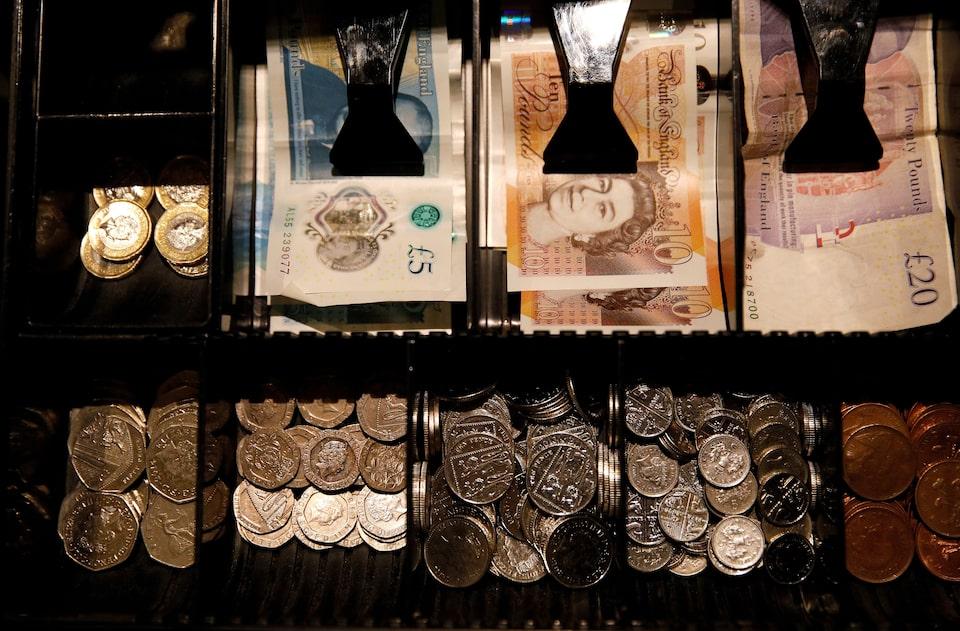
LONDON, Sept 10 (Reuters) - The pound held steady on Wednesday, hemmed in by a firm dollar ahead of key U.S. inflation data this week, and by a degree of stasis ahead of rate meetings at both the Federal Reserve and the Bank of England next week. Sterling was up 0.1% at $1.3539 around midday in London. Sign up here. The pound was also set for a 0.4% gain over the last two trading days against the euro , after the French government collapsed on Monday, after a confidence vote in parliament ousted the prime minister. The pound has recovered from the rout in early September that sent it down to one-month lows, when investors were alarmed enough by the outlook for Britain's finances that they sold long-dated government bonds, pushing yields to their highest since the late 1990s. Several driving forces are behind that rally. Investors think the BoE is unlikely to cut interest rates much more for the time being, while central banks elsewhere, such as the Federal Reserve, lower borrowing costs. Britain has the highest rate of inflation among the Group of Seven richest nations, with price pressures in harder-to-target areas of the economy such as wages and the services sector proving particularly resilient. Recent data show the economy is holding up, despite stubborn inflation and a weakening labour market. Finance minister Rachel Reeves has been under pressure to keep Britain's finances on track, without breaking her own borrowing rules. Her next budget announcement is due in November. "... it is difficult to figure out exactly how she will balance the books in the autumn budget given that Labour MPs have baulked at cutting welfare spending and in view of her own set of strict fiscal rules. The market is therefore likely to remain sensitive to fiscal matters in the UK," Rabobank strategists said in a note on Tuesday. https://www.reuters.com/world/uk/sterling-holds-steady-propped-up-by-rate-outlook-2025-09-10/
2025-09-10 11:08
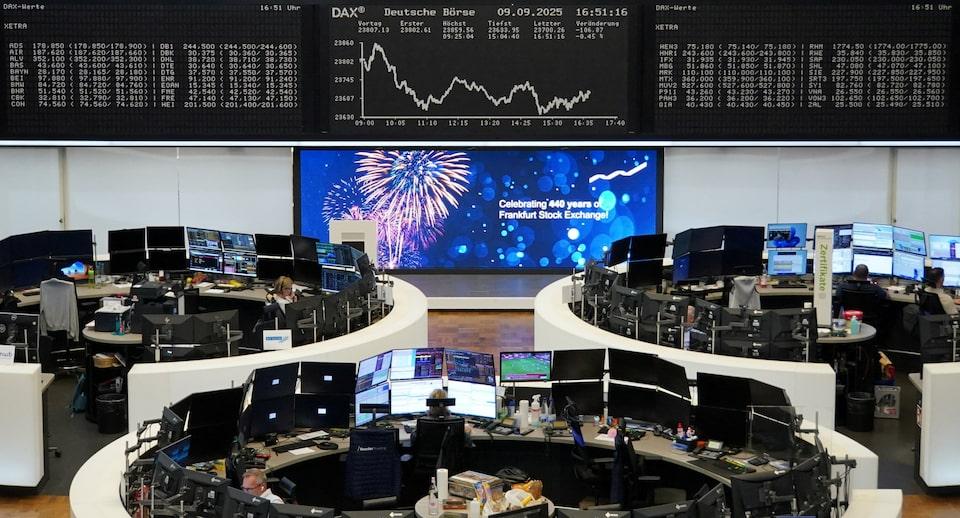
Global equities sidestep geopolitical worries Gold holds near record, oil prices tick up US PPI, CPI figures this week to give final clues on Fed move Markets factoring in 8% chance of outsized Fed cut next week MUMBAI, Sept 10 (Reuters) - Global shares gained on Wednesday and the dollar steadied ahead of key U.S. inflation data which could impact the Federal Reserve's policy outlook, while geopolitical uncertainty lifted oil prices and kept gold near record highs. The pan-European STOXX 600 (.STOXX) , opens new tab rose 0.4% and equity futures pointed to a positive start on Wall Street, a day after the S&P 500 (.SPX) , opens new tab and Nasdaq (.IXIC) , opens new tab posted new record closing highs. Sign up here. European shares were led higher by gains in Spanish fast-fashion giant Inditex (ITX.MC) , opens new tab, and Novo Nordisk (NOVOb.CO) , opens new tab which rose following the Wegovy maker's announcement of restructuring steps, including job cuts. Buoyant equities and steady currency markets appeared to largely sidestep geopolitical worries spurred by Israel's attack on Hamas leadership in Qatar on Tuesday and after Poland scrambled its own and NATO air defences to shoot down drones following a Russian air attack on western Ukraine. Poland's blue-chip index (.WIG20) , opens new tab was down 1.5%, one of the few regional indices in the red in Europe. "The Pavlovian response of investors has been to fade geopolitical risk," said Ben Laidler, head of equity strategy at Bradesco BBI, referring to pullbacks spurred by previous geopolitical flare ups that proved to be attractive entry points for investors. The broader market sentiment remains bullish despite multiple risks and some of that could be finding an expression in hedges via gold, Laidler said. Gold lingered close to its record high hit in the previous session. It was last up 0.8% at $3,654.36 per ounce. It has risen over 5% so far in September, also helped along by firming of Fed rate cut wagers. "Prospects of continued accommodative monetary policy, increasing geopolitical tensions, ongoing macroeconomic challenges, and concerns over the Fed’s independence are expected to strengthen the investment case for gold," analysts at ANZ said in a note. Traders see a rate cut by the Fed next Wednesday as a sure thing, and even lay 8% odds on a super-sized half-point reduction, the CME Group's FedWatch Tool shows. The final hurdles to those expectations will come on Wednesday and Thursday, in the form of producer and consumer inflation readings, respectively. Analysts reckon that an upside surprise could spur investors to lighten bets on rate cuts later this year but is unlikely to meaningfully change expectations for September. Markets took in their stride a court ruling that temporarily blocked President Donald Trump from removing Federal Reserve Governor Lisa Cook, a case which is likely to end up before the Supreme Court. Investors are keenly following the legal battle as it could upend the central bank's long-held independence. Meanwhile, Stephen Miran, a top White House economic advisor, is expected to clear a U.S. Senate hurdle on Wednesday, advancing his nomination as Federal Reserve governor. U.S. Treasury bonds declined for a second day on Wednesday, pushing yields higher. The 10-year Treasury yield ticked up to 4.0932%, after climbing almost 3 basis points on Tuesday. Bond yields rise when prices fall. The focus this week is also on the European Central Bank's policy decision due on Thursday. It is widely expected to keep rates unchanged. "We see slightly negative euro risks around the ECB's September meeting, with our economists expecting a slightly dovish press conference, also given ECB market pricing. But we would not expect this meeting to be much of an event for FX," analysts at BofA Global Research said in a note. The euro was last steady at $1.1705 but rose by as much as 0.5% against the Polish zloty to 4.268 zloty, its biggest one-day rise in three months. The U.S. dollar index , which measures the currency against six others, eased slightly to 97.78, paring earlier small gains. In commodities, Brent crude futures rose 0.7% to $67 a barrel, while U.S. West Texas Intermediate crude futures gained 0.8% to $63.13. U.S. President Donald Trump urged EU officials on Tuesday to hit China and India, both major purchasers of Russian oil, with tariffs of up to 100% as part of a strategy to pressure Russian President Vladimir Putin. https://www.reuters.com/world/china/global-markets-wrapup-5-2025-09-10/
2025-09-10 11:00
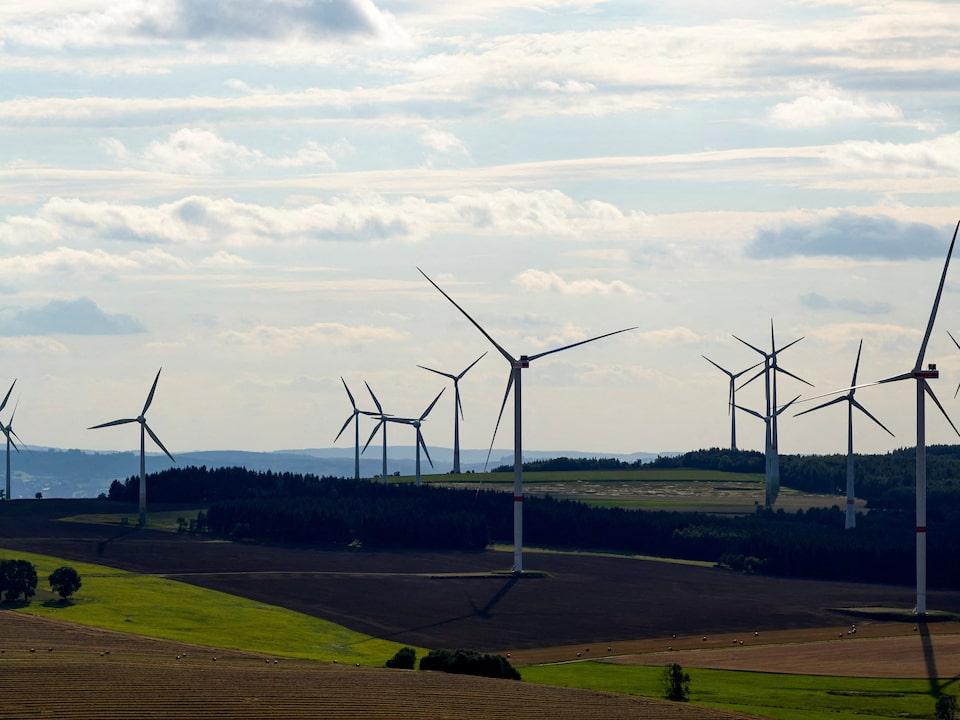
LITTLETON, Colorado, Sept 10 (Reuters) - Europe's wind turbines are set to take over from solar panels as the main driver of clean electricity supply growth for the rest of 2025, as the end of the Northern Hemisphere summer brings less sunlight but windier conditions at turbine level. So far this year, Europe's wind generation levels have come in well below normal due to lengthy wind droughts, which have led to a rare year-over-year drop in Europe's total clean electricity supplies. Sign up here. Total European wind-powered electricity supplies from January through August were down 6% from the same months in 2024, data from think tank Ember shows, while total clean electricity supplies were down 2%. The forecast for European wind power output, however, is positive, with LSEG models calling for a sharp rise in regional wind power output over the second half of September. If those higher wind generation levels are sustained through the winter - historically an active period for wind output in Europe - Europe's total clean electricity output could still climb to a new record this year. SEASONAL PEAKS AND TROUGHS Solar has been the star of Europe's electricity generation system so far in 2025, with solar-powered electricity output up by more than 20% from a year ago to all-time highs. Solar electricity output in Europe scaled successive record highs in May and June this year, data from Ember shows, as expanded capacity resulted in steadily-higher generation across the continent. However, solar generation levels have now peaked for the year, with output in July and August both posting declines from the prior month as cloudier skies and less daylight trimmed generation from solar farms. Thankfully for the clean power advocates, electricity generation from wind farms tends to climb steadily after the summer as the change of seasons ushers in breezier conditions. The complementary nature of solar and wind generation patterns normally means that Europe's total clean electricity production is quite stable throughout the year, even with the large swings in solar and wind production from summer to winter. This year, however, the stretch of below-normal wind generation during the opening half of 2025 has raised concerns that output from wind farms will remain stunted for the rest of the year as well, and deal a blow to clean power growth efforts. WIND'S LETDOWN Wind speeds across continental and northern Europe during the first half of 2025 averaged around 4% to 8% below long-term averages, according to risk consultancy DNV. Those below-average wind speeds were especially evident during the opening four months of 2025, when Europe's wind-powered electricity supplies were consistently below the year-before levels. Wind electricity generation from January through April averaged around 10 terawatt hours (TWh) or 16% lower compared to the same months in 2024, Ember data shows. Some countries in Europe recorded even steeper falls in wind generation this year, including Germany and the United Kingdom, which are Europe's largest wind power producers by capacity. Germany's wind electricity output during January to April averaged 30% below the year-before totals, while output in the UK averaged 20% lower. ON THE RISE? Wind watchers are closely tracking wind output forecasts for the coming autumn and winter, as any sustained below-par wind generation will likely require regional utilities to boost use of fossil fuels for power and heat generation. However, the latest forecast models suggest a notable upturn in regional wind generation can be expected over the coming weeks. Collective wind generation across continental Europe looks set to rise from around 40,000 MWh to 60,000 MWh per day so far in September to roughly 60,000 MWh to 110,000 MWh per day during the second half of the month, LSEG data shows. Longer-term forecasts also call for sharply higher supply compared to recent levels. In Germany, wind power output averaged around 10,700 MWh per day in August, but is expected to average around 15,200 MWh in September, nearly 19,000 MWh a day in October, and climb to more than 24,000 MWh a day by December. In the UK, average output was around 5,100 MWh a day in August, and is set to average around 7,000 MWh in September, 8,500 MWh in October, and rise to around 10,500 MWh per day in December. If those forecasts hold true, those output levels would be roughly on a par with the long-term average in Germany and roughly 10% above the long-term average in the UK, LSEG data shows. Those output forecasts would also likely be enough to ensure that Europe's total supplies of clean electricity scale new highs in 2025, despite the early-year dip in wind production. Any underperformance by wind farms over the coming months, however, would lead to lower overall clean electricity supplies and likely trigger higher fossil fuel generation by utilities during Europe's peak power demand and heating seasons. The opinions expressed here are those of the author, a columnist for Reuters. Enjoying this column? Check out Reuters Open Interest (ROI), your essential new source for global financial commentary. ROI delivers thought-provoking, data-driven analysis of everything from swap rates to soybeans. Markets are moving faster than ever. ROI can help you keep up. Follow ROI on LinkedIn , opens new tab and X , opens new tab. https://www.reuters.com/markets/commodities/europes-wind-output-closely-tracked-solar-peak-passes-2025-09-10/
2025-09-10 10:59
BERLIN, Sept 10 (Reuters) - The German government is examining several options for both SEFE and Uniper (UN0k.DE) , opens new tab, the energy firms Germany nationalised during Europe's energy crisis, including a separate sale or a possible listing, the economy ministry said on Wednesday. "The federal government is examining various options with an open mind," a spokesperson for the ministry said. Sign up here. Gazprom Germania, now operating under the name SEFE, was nationalised by Berlin in 2022 after the group's former Russian parent ditched the division, which is a vital part of Germany's gas supply. The company had to be rescued with a 6.3-billion-euro ($7.37 billion) bailout after Russia suspended gas supplies. Uniper was bailed out also in 2022 when the government injected a total of 13.5 billion euros. Berlin has been preparing to reduce its 99.12% holding as soon as this year, sources have told Reuters. Under European Union requirements, Berlin must reduce its stake in both companies to no more than 25% plus one share by 2028. ($1 = 0.8547 euros) https://www.reuters.com/sustainability/boards-policy-regulation/germany-mulls-several-options-sefe-uniper-including-sale-or-ipo-2025-09-10/