2025-09-09 12:00
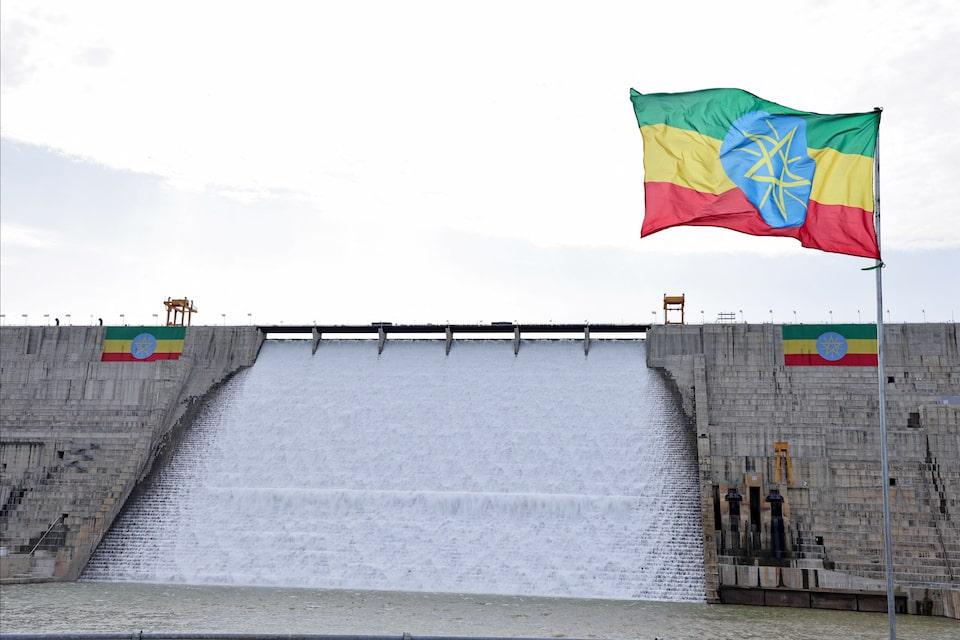
Ethiopia says dam will provide power to country, region Egypt fears its water supplies could be affected Trump tried to broker deal over project during first term Many Ethiopians not yet on the national grid GUBA, Ethiopia, Sept 9 (Reuters) - Ethiopia officially inaugurated Africa's largest hydroelectric dam on Tuesday, a project that will provide energy to millions of Ethiopians while deepening a rift with downstream Egypt that has unsettled the region. Ethiopia, the continent's second most populous nation with over 120 million people, sees the $5 billion Grand Ethiopian Renaissance Dam on a tributary of the River Nile as central to its economic ambitions. Sign up here. The dam's power has gradually increased since the first turbine was turned on in 2022, reaching its maximum capacity of 5,150 MW on Tuesday. That puts it among the 20 biggest hydroelectric dams in the world - about one-quarter of the capacity of China's Three Gorges Dam. At a ceremony on Tuesday at the site in Guba, an Ethiopian fighter jet flew low over the mist from the dam's white waters, which plunge 170-metres (558 feet). Beneath the canopy of a giant Ethiopian flag, Prime Minister Abiy Ahmed later addressed a crowd of dozens of dignitaries including the presidents of Somalia, Djibouti and Kenya. "To our (Sudanese and Egyptian) brothers; Ethiopia built the dam to prosper, to electrify the entire region and to change the history of black people," Abiy said. "It is absolutely not to harm its brothers." Abiy has said Ethiopia will use the energy to improve Ethiopians' access to electricity and export surplus power to the region. The dam's reservoir has also flooded an area larger than Greater London, which the government says will provide a steady water supply for irrigation downstream while limiting floods and drought. DROUGHT RESTRICTIONS? Ethiopia's downstream neighbours, however, have watched the project advance with dread since construction began in 2011. Egypt, which built its own Aswan High Dam on the Nile in the 1960s, fears the GERD could restrict its water supply during periods of drought, and could lead to the construction of other upstream dams. It has bitterly opposed the dam from the start, arguing that it violates water treaties dating to the British colonial era and poses an existential threat. Egypt, with a population of about 108 million, depends on the Nile for about 90% of its fresh water. Egypt would continue to closely monitor developments on the Blue Nile and "exercise its right to take all the appropriate measures to defend and protect the interests of the Egyptian people", Egyptian Foreign Ministry spokesperson Tamim Khallaf told Reuters on Monday. While Egypt has refrained from any direct reprisals against Ethiopia, it has drawn closer in recent years to Addis Ababa's rivals in the Horn of Africa, notably Eritrea. Sudan, meanwhile, has joined Egypt's calls for legally binding agreements on the dam's filling and operation, but could also benefit from better flood management and access to cheap energy. 'NOT A THREAT' Ethiopia in 2020 began filling the reservoir in phases while arguing that the dam would not significantly harm downstream countries. Independent research shows that so far, no major disruptions to downstream flow have been recorded — partly due to favourable rainfall and cautious filling of the reservoir during wet seasons over a five-year period. In Ethiopia, which has faced years of internal armed conflict, largely along ethnic lines, the GERD has proven a source of national pride, said Mekdelawit Messay, an Ethiopian water researcher at Florida International University. "It has been a banner to rally under, and it shows what we can achieve when unified," Mekdelawit said. Ethiopia's central bank provided 91% of the project's funding, while 9% was financed by Ethiopians through bond sales and gifts, without any foreign assistance, local media has reported. Sultan Abdulahi Hassan, a farmer who lives near the dam, said the dam has brought electricity to his village. "We now have refrigerators. We can drink cold water. We now use electricity for everything," he told Reuters at the launch. While the extra power will help the country's burgeoning bitcoin mining industry, most rural Ethiopians may have to wait a little longer to benefit. Underdeveloped transmission networks in rural areas are a major constraint on electricity access. While urban areas had a 94% electrification rate as of 2022, just 55% of the country's total population had electricity, according to the World Bank. https://www.reuters.com/sustainability/boards-policy-regulation/ethiopia-launches-africas-largest-hydroelectric-dam-2025-09-09/
2025-09-09 11:57
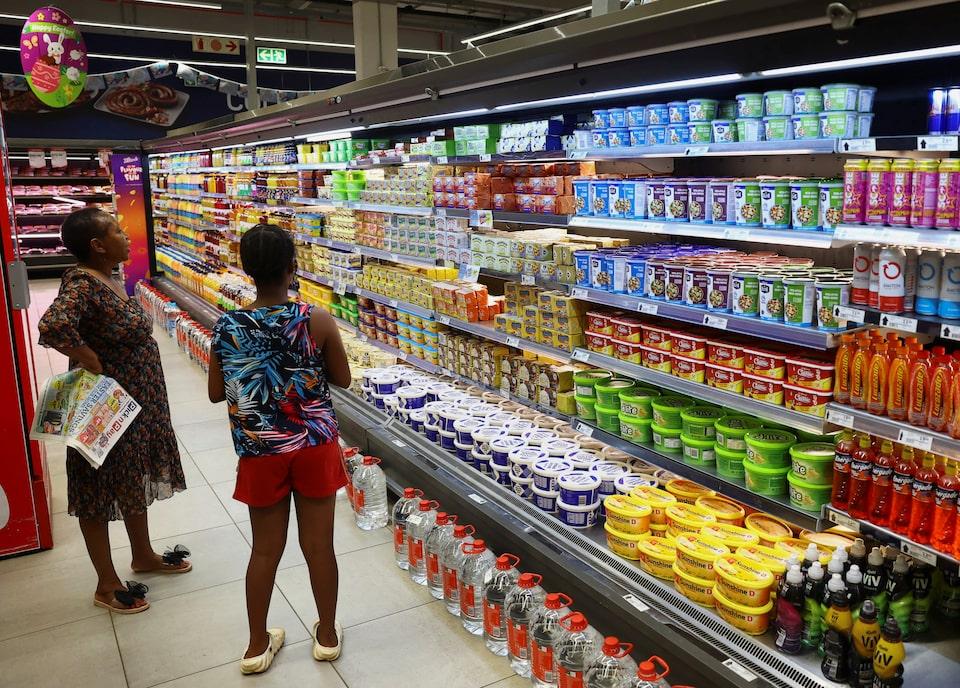
PRETORIA, Sept 9 (Reuters) - South Africa's economic growth rate quickened in the second quarter of 2025, reaching its fastest in two years, though it remains well below the level needed to meaningfully reduce high levels of poverty and inequality. Statistics South Africa recorded , opens new tab growth of 0.8% in quarter-on-quarter terms, better than economists' predictions for an expansion of 0.5% (ZAGDPN=ECI) , opens new tab. Sign up here. There was a broad-based improvement from the first quarter, when growth of 0.1% was recorded, as eight of the 10 sectors tracked by the statistics agency registered higher output, including mining and agriculture. Household consumption picked up, helped by interest rate cuts by the country's central bank. But analysts said a continued contraction in gross fixed capital formation was worrying, adding much higher investment was needed for the growth rate to be sustainably stronger. Gross domestic product growth has averaged less than 1% annually over the past decade, below the rate at which the population has expanded. "Economic growth was a little bit better than we expected ... though this doesn't quite eliminate all of the concerns around trend growth," said Elna Moolman, Standard Bank's head of South Africa macroeconomic research. The coalition government formed last year has been trying to boost growth through reforms, though its efforts are yet to bear fruit. Longstanding domestic issues such as logistics bottlenecks at the ports and on the freight rail network are only slowly easing, and the global economic backdrop has worsened because of U.S. President Donald Trump's trade policies. Last month, Trump imposed a 30% tariff on goods from South Africa, the highest rate in Sub-Saharan Africa, which is expected to affect the economy's performance from the third quarter onwards. In July, South Africa's central bank forecast growth of 0.9% this year, following several downward revisions to the forecast. https://www.reuters.com/world/africa/south-african-growth-rate-quickens-though-still-sluggish-2025-09-09/
2025-09-09 11:50
OSLO, Sept 9 (Reuters) - Norway's Green Party played a crucial role in the re-election of the Labour-led government on Monday by securing 4.7% of the vote and ensuring Labour and its allies have 87 seats in parliament - two more than needed to hold a majority. Here is a look at the Greens' main energy policy proposals, their potential impact, and how likely they are to come to pass: Sign up here. WHAT DO THEY WANT TO DO? The Greens want to halt new exploration at once and phase out existing petroleum activities by 2040. At the same time, they say the country must remain a stable natural gas supplier to Europe in the short-term so the phase-out must be gradual and prioritise oil over gas fields. That is important because Norway has become Europe's largest gas supplier following Russia's invasion of Ukraine in 2022, providing one-third of all gas imports to the European Union. Under its proposals, existing fields would be shut down one-by-one, starting with the ones that emit the most greenhouse gases, generate the least income and produce more oil than gas. The Greens also want to stop investments aimed at increasing production or extending the lifespan of fields already in production, including projects to electrify offshore platforms with power from shore. HOW WOULD THIS AFFECT THE STATE'S FINANCES? Norway pools its state revenues from oil and gas production into a $2 trillion sovereign wealth fund - the world's largest - which invests in bonds, equities, property and renewable energy projects abroad. Under the Greens' proposals, state revenues from petroleum would drop by some 70 billion crowns ($7.0 billion) a year, or 20% of total revenue for the period up to 2050, in a worst-case scenario that excludes any potential positive impact on revenue from emerging industries as part of the energy transition. HOW LIKELY IS IT TO HAPPEN? The Green Party is one of four parties Labour relies on for support. They all have their priorities and Norway's oil and gas industry is one of several issues on the table. Still, Labour needs to pass its budget next month and it will rely on its allies, including the Greens, to do so. The Greens are not expected to win on everything, but they will need some victories to show their supporters. WHAT DOES EUROPE THINK? The Greens say their plan would maintain steady gas supplies to Europe in the short run, while in the longer-term the EU itself plans to cut its emissions by 90-95% by 2040, meaning its demand for fossil fuels will fall. European Commission President Ursula von der Leyen wrote in a social media post on Tuesday that she would continue to work closely with Norway to advance a shared commitment to energy independence and a clean energy future. WHICH FIELDS MIGHT BE SHUT AND WHEN? In practice, the Greens' plans could mean closing down the most-polluting Stafjord, Brage, Draugen and Ula fields first, followed by another eight by 2030 - including the Snoehvit field that supplies the Arctic Hammerfest liquefied natural gas plant. "That will bring down the emissions from the fossil fuel industry, and it will also ensure that we take the competence, the people, and the capital from that sector over to renewables," Green Party leader Arild Hermstad told Reuters. Together, output from the first four fields with the highest emissions in 2024 stood at 5.33 million standard cubic metres of oil equivalent, or 2.2% of Norway's total petroleum production, according to official data. WHAT ABOUT POWER EXPORTS? Several parties in Norway want to stop cross-border electricity exchanges and not renew interconnector cables - two cables to Denmark will need replacing by 2027. Not the Greens. The party is a strong supporter of European climate objectives and wants non-EU Norway to collaborate closely with Brussels. The Nordic country participates in the union's common market via the European Economic Area treaty. ($1 = 9.9776 Norwegian crowns) https://www.reuters.com/sustainability/climate-energy/greens-key-player-norway-election-seek-gradual-phase-out-oil-sector-2025-09-09/

2025-09-09 11:45
Sept 9 (Reuters) - U.S. refiner Phillips 66 (PSX.N) , opens new tab said on Tuesday it will acquire the remaining 50% stake in WRB Refining from Cenovus Energy (CVE.TO) , opens new tab for $1.4 billion, giving it full ownership of two major U.S. refineries. WRB includes the Wood River refinery in Illinois and the Borger refinery in Texas, which have a combined crude throughput capacity of 495,000 barrels per day (bpd). Sign up here. The refineries — which would add about 250,000 bpd to Phillips 66’s net refining capacity — can process heavy and medium sour crudes as well as light sweet crudes, and produce a high percentage of transportation fuels. Phillips 66 has been streamlining its business to focus on refinery business, following a long-drawn proxy battle with activist investor Elliott Investment Management. Elliott had advocated exploring a sale or spinoff of the midstream business and other divestments to concentrate on refining. Earlier this year, Phillips 66 sold its 65% stake in a German and Austrian fuel retail business. "With full ownership of the Wood River and Borger refineries, we are strengthening our integrated business and expanding our position in a region where we lead the industry," Phillips 66 CEO Mark Lashier said. Meanwhile, the Canadian oil and gas producer has reported underperformance at some of its U.S. refineries. Cenovus said the WRB sale will simplify its downstream business and sharpen its focus on assets tied to heavy oil operations. The companies expect the transaction to close between the end of the third and fourth quarters. After closing, Cenovus’s refining business will include plants in Lloydminster, Lima, Toledo and Superior, with total throughput capacity of 472,800 bpd. Cenovus said it would use the proceeds to reduce net debt and accelerate shareholder returns by boosting share repurchases. https://www.reuters.com/legal/transactional/phillips-66-buys-remaining-stake-major-us-refineries-cenovus-14-billion-2025-09-09/

2025-09-09 11:43
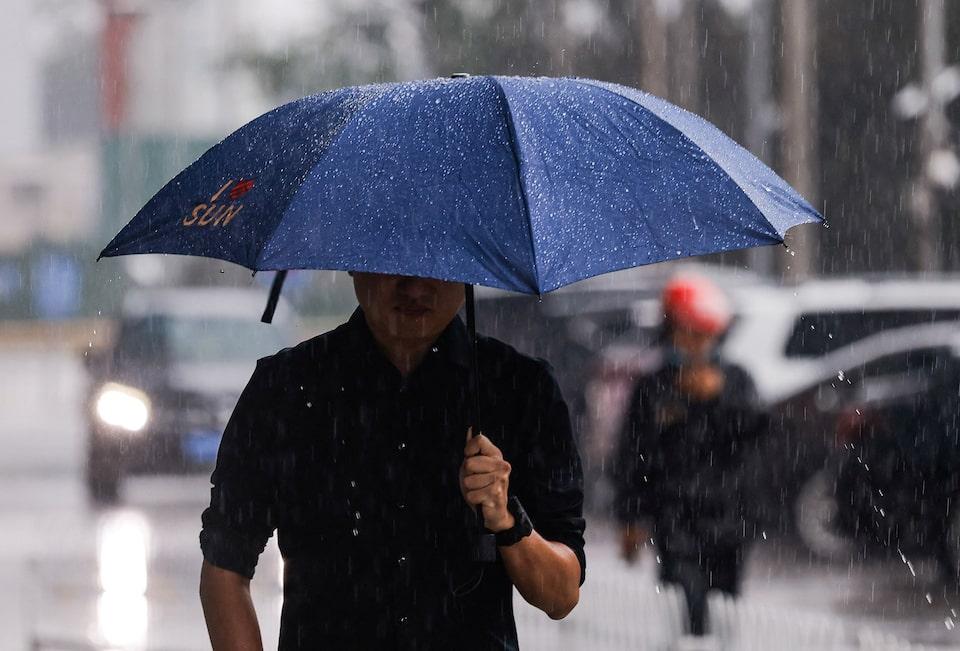
North China's rainy season longest on record, forecaster says Records going back to 1961 also show China had hottest summer Extreme weather increasingly poses challenge for policymakers BEIJING, Sept 9 (Reuters) - China faced its hottest summer since 1961 while the country's north experienced its longest rainy season for the same period, the national weather authority said on Tuesday, atmospheric chaos that scientists have linked to climate change. The summer 'Plum Rains' - named for their timing coinciding with plums ripening along China's Yangtze River during the East Asia Monsoon - began one week earlier than usual, Huang Zhou, deputy director of the China Meteorological Administration, told a news conference. Sign up here. Meanwhile, large swathes of the country experienced extreme heat, with a total of 13.7 high-temperature days, 5.7 days above the average for the same June to August period, Huang added. The national average temperature was 22.3 degrees Celsius (72.14 degrees Fahrenheit), 1.1 C above normal and tied with 2024 as the highest since 1961, he said. This summer, the world's second-largest economy contended with both a stubborn subtropical high-pressure system, which causes warm and dry weather, and the East Asian monsoon. The torrential rains pushing up from Southeast Asia resulted in the deaths of hundreds of people and caused billions of dollars in economic losses. The extreme weather poses a major challenge to policymakers, as heavy rains threaten to overwhelm ageing flood defences and displace millions, while scorching heat strains the power grid and scalds croplands. Beijing's mountainous northern Huairou district and neighbouring Miyun district received a year's worth of rain in a single week in late July, triggering flash floods that devastated villages and killed 44 people in the deadliest flood since 2012. China does not give a tally of heat-related deaths, but a 2023 report published in the medical journal The Lancet estimated heatwave-related mortality in China at 50,900 deaths in 2022, doubling from 2021. Globally, August 2025 was the third-warmest August, with the average temperature 0.49C above the 1991-2020 average for the month, according to the EU-funded Copernicus Climate Change Service (C3S) on Tuesday. The two warmest Augusts on record globally were in 2023 and 2024. Even the seas are hotter. Last month, most of the northern Pacific saw above-average sea surface temperatures, hitting record highs in many areas, C3C said in its monthly bulletin. (This story has been corrected to change the district name to Miyun, from Miyuan, in paragraph 7) https://www.reuters.com/sustainability/climate-energy/north-china-posts-longest-rainy-season-since-1961-country-faces-hottest-summer-2025-09-09/
2025-09-09 11:41
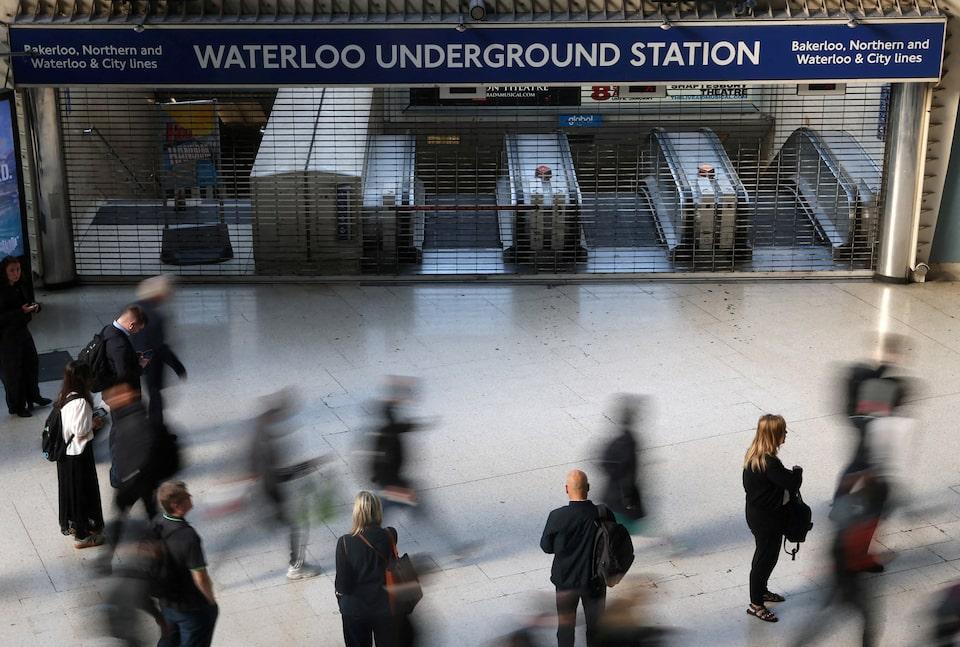
LONDON, Sept 9 (Reuters) - Commuters in London turned to bikes, buses and boats on Tuesday as a staff strike shut down the capital's underground "Tube" network for a second day. With almost no underground trains running until Friday, demand for shared bike services and river transport surged as Londoners looked for alternative ways to get to work, causing longer journeys and crowding on other parts of the transport network. Sign up here. The London-based Centre for Economics and Business Research estimates the strike will have a direct impact on the London economy of 230 million pounds ($310 million), and cost millions more indirectly. Lime, which operates electric bikes across the city, said it saw a 58% increase in trips during Monday's morning peak compared with the same period a week earlier. "Journeys were longer in both distance and duration, indicating that many riders relied on Lime for their entire commute rather than just the first or last mile," a Lime spokesperson said. Forest, another bike-sharing firm which operates 15,000 e-bikes in London, reported a 300% increase in rides during Tuesday's morning rush hour between 7 a.m. (0600 GMT) and 8 a.m. On Monday, Forest reported a 100% increase in rides during the same period. But Mondays have typically been quieter commuting days since the COVID-19 pandemic, with many workers continuing to work remotely at the start of the week. Uber Boat by Thames Clippers, a river bus service operating on the Thames, said its services were "busier than usual," with extra sailings added, including a shuttle between Canary Wharf and London Bridge. The strike, called by the RMT union, centres on pay, working hours and shift patterns. Transport for London has offered a 3.4% pay rise, but the union is pushing for a reduction in working hours. Prime Minister Keir Starmer's government, which vowed to tackle widespread strike action across the economy before it was elected last July, has called for a resolution. ($1 = 0.7362 pounds) https://www.reuters.com/sustainability/sustainable-finance-reporting/london-commuters-turn-bikes-boats-tube-strike-enters-second-day-2025-09-09/