2025-09-09 07:08
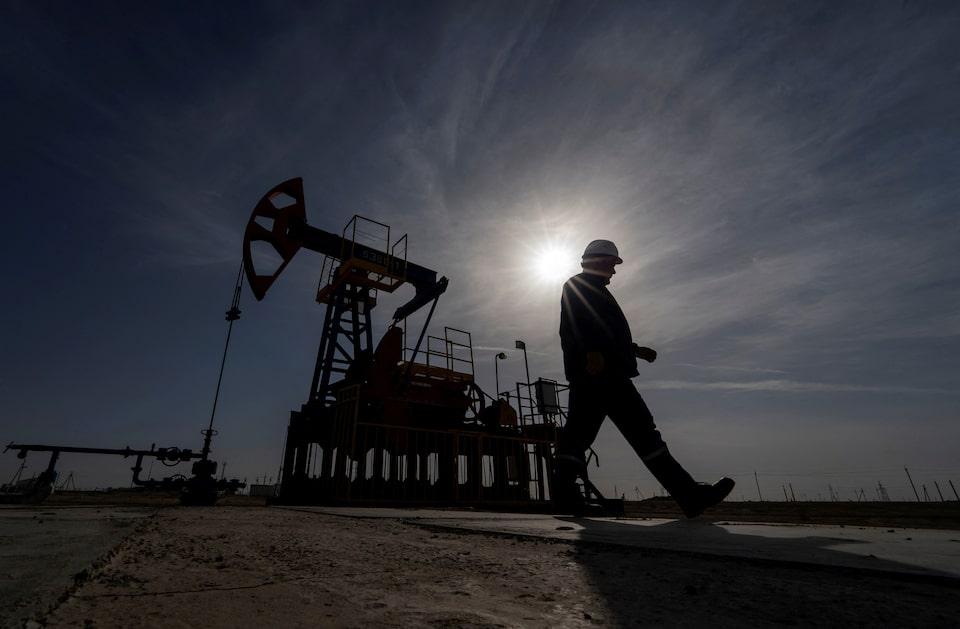
SINGAPORE, Sept 9 (Reuters) - Sentiment in the crude oil market has shifted to expecting prices to decline, with the debate at the industry's biggest gathering in Asia more about timing than direction. The topic of presentations and conversations at the annual APPEC conference is always dominated by the outlook for prices, and this week's event was no different. Sign up here. What has shifted is market sentiment and the least-sighted animal this year was a bull in a sea of bearish participants. While there are many factors that drive crude oil prices, the two that dominated APPEC were the decision by OPEC+ to keep unwinding production cuts and the risks to the global economy from the trade and geopolitical policies of U.S. President Donald Trump. The first is a supply factor and points to the now widespread market expectation that OPEC+ will continue to add barrels back as regaining market share is now more of a priority than defending price levels. The decision on September 7 by the eight members of OPEC+ undertaking voluntary production cuts to add back 137,000 barrels per day (bpd) of output from October was largely viewed as minor and unlikely to alter the market balance in itself. But what is seen as significant is the expectation that the producer group, which includes top exporters Saudi Arabia and Russia, will continue to increase output into the first half of 2026 and completely unwind the 1.65 million bpd of cuts from April 2023, having already ended an additional 2.2 million bpd from November 2023. It's unlikely that all of these barrels will find their way to the market, but with global demand growth forecasts coalescing at a maximum of 1 million bpd this year and next, it's still likely that OPEC+ will add back enough to swamp the increase in demand. The likelihood that non-OPEC oil output will also rise, especially from the Americas outside of the United States, is tilting the market consensus heavily towards a supply overhang in coming months. The demand side is also clouded with uncertainty, especially over the impact of the tariffs imposed by Trump on imports into the United States. Estimates of the impact of lifting the average tariff on goods imports from just over 2% to around 18% vary, but the consensus was overwhelmingly that these will act as a drag on growth, while boosting U.S. inflation, but likely lowering it elsewhere. HIDDEN BULLS? It was not all doom and gloom at APPEC, with some bullish factors getting an airing. But the bullish case relies on a few things going better than expected, and a few things getting worse. On the better side of the ledger, the world economy has sailed through the Trump barrage largely unscathed, with consumer sentiment and spending holding up in developed economies and developing economies able to continue to attract investment and trade. On the worse side, there would have to be heightened, and more successful, measures to reduce the flow of Russian crude to both India and China, the only major buyers left for oil sanctioned as part of efforts to end Moscow's war in Ukraine. More effective measures against Iranian and Venezuelan oil could also have an impact, and there is the ongoing risk of a flare-up in Middle East tensions given the conflict between Israel and Hamas. In some ways much of the risk premium in the crude market currently is largely dependent on what steps Trump decides to take. This is somewhat ironic as the one thing the otherwise inconsistent and unpredictable U.S. leader has been consistent on is that he wants lower oil prices. But it is caution over what he might do that is keeping a risk premium in the market, and helping to keep global benchmark Brent futures anchored around $65 a barrel. Another unknown is what tactics China's refiners are likely to adopt in coming months. They have been storing vast quantities of crude this year, with some estimates as high as 600,000 bpd, and their total storage is now estimated at between 1.2 billion and 1.4 billion barrels, which is well in excess of the 90 days of import cover recommended by the International Energy Agency. China has been building stockpiles largely on the back of discounted Russian barrels and a lower price trend for other grades in the second quarter of this year. But the Chinese may be swinging towards the view that oil should be priced more in a $50-$60 range currently, and may start to cut back on imports in order to encourage lower prices. Enjoying this column? Check out Reuters Open Interest (ROI), your essential new source for global financial commentary. ROI delivers thought-provoking, data-driven analysis of everything from swap rates to soybeans. Markets are moving faster than ever. ROI can help you keep up. Follow ROI on LinkedIn , opens new tab and X , opens new tab. https://www.reuters.com/markets/commodities/crude-oil-sentiment-swings-lower-prices-bearish-factors-mount-2025-09-09/
2025-09-09 06:54
Dollar falls to near seven-week low US 10-year Treasury yields slip to 5-month low Focus shifts to US CPI data on Thursday Palladium up more than 1% Sept 9 (Reuters) - Gold prices scaled a record peak on Tuesday, buoyed by a weaker U.S. dollar and a dip in bond yields, as growing expectations of a Federal Reserve rate cut this month lifted demand for the precious metal. Spot gold was up 0.2% at $3,642.09 per ounce, as of 0636 GMT, after hitting a record high of $3,659.10 earlier in the session. U.S. gold futures for December delivery edged 0.1% higher to $3,682.10. Sign up here. "We probably will see more upside in gold from here provided that the U.S. central bank delivers with regards to market expectations of seeing multiple rate cuts," KCM Trade Chief Market Analyst Tim Waterer said. U.S. job growth weakened sharply in August and the unemployment rate increased to a nearly four-year high of 4.3%, confirming that labour market conditions were softening and sealing the case for a Fed rate cut next week. Traders are pricing in an 89.4% chance of a 25-basis-point Fed rate cut at this month's meeting and a 10.6% probability of a jumbo 50-basis-point cut, per the CME Group's FedWatch tool. Lower interest rates pressure the dollar and bond yields, raising the appeal of the non-yielding bullion. The dollar index (.DXY) , opens new tab fell to an almost seven-week low against its rivals, making gold more attractive for other currency holders, while the benchmark U.S. 10-year Treasury yield dropped to a five-month low. Meanwhile, the European Central Bank is widely expected to hold rates at its meeting on Thursday. Investors are now awaiting the U.S. producer price data on Wednesday and consumer price data on Thursday for further clues into the Fed's policy path. "A potential short-term catalyst would be if U.S. inflation data comes in below expectations this week, which could see the Fed dial up their dovish levels at their September meeting and could hasten gold's ambitions of hitting the $3,700 level," Waterer said. Gold prices have gained 38% so far this year, following a 27% jump in 2024, bolstered by a soft dollar, strong central bank accumulation, dovish monetary settings and heightened global uncertainty. Elsewhere, spot silver was flat at $41.32 per ounce. Platinum gained 0.6% to $1,390.80 and palladium climbed 1.1% to $1,147.07. https://www.reuters.com/world/india/gold-extends-record-rally-fed-rate-outlook-dents-us-dollar-yields-2025-09-09/

2025-09-09 06:51
KUALA LUMPUR, Sept 9 (Reuters) - A security warning by Malaysian authorities for liquefied natural gas facilities was issued after an employee at state energy firm Petronas received a threat by phone to burn them down, a deputy premier said, according to state media. Petronas, or Petroliam Nasional Berhad, confirmed it was working with authorities after the National Security Council on Monday ordered LNG facilities in Sarawak to tighten security following an unspecified threat. Sign up here. The Bintulu complex is Petronas' flagship LNG facility, with an annual production capacity of 29.3 million metric tons. The government has tightened security at LNG facilities in Sarawak and Sabah after a Petronas employee at the company’s headquarters received threatening text messages, deputy premier Fadillah Yusof was quoted as saying. "I was informed that threatening text messages were received, originating from a phone number in Indonesia. However, who was behind it is still under police investigation," he said. Fadillah, according to Bernama, said a request was made in the text message and after receiving no response, the sender then threatened to burn LNG facilities. It did not say what the request was. "He asked for an answer but because there was no response, he threatened to burn our LNG - but who knows which one," he said. https://www.reuters.com/business/energy/malaysia-deputy-pm-says-petronas-received-threat-burn-lng-facilities-state-media-2025-09-09/

2025-09-09 06:24
LONDON, Sept 9 (Reuters) - The recent wave of Ukrainian drone attacks on Russian oil refineries and export facilities could boost global refining profit margins – particularly those in the U.S. – just as the peak summer demand season fades. Ukrainian attacks have shut down facilities accounting for at least 17% of Russia's oil processing capacity, or 1.1 million barrels per day (bpd), according to Reuters' calculations. Other targeted infrastructure includes the Ust-Luga Baltic Sea oil export terminal and the Druzhba pipeline, which supplies Belarus, Slovakia and Hungary. Sign up here. These strikes mark a significant escalation in the three-and-a-half year conflict, with Kyiv now taking direct aim at the Kremlin's largest source of revenue while U.S. President Donald Trump seeks to broker a ceasefire deal. Russia and Ukraine had agreed in March to halt attacks on energy infrastructure after a barrage of Russian attacks. But Moscow has already broken this agreement, hitting a number of Ukrainian energy targets in recent weeks, including drone attacks on power facilities in the north and south of the country. Tensions escalated further this week when Russia launched its largest air offensive since the start of the war, hitting Ukraine’s main government building in Kyiv. DISRUPTED REFINERIES Ukraine’s strikes on Russia’s energy infrastructure are already having a meaningful impact on the world's second-largest exporter of crude oil, particularly its refining industry. Reduced domestic oil processing capacity has prompted Russia to increase its August crude oil exports from western ports by 200,000 bpd, or 11%, Reuters reported, because reduced domestic refining capacity means that increased volumes are available for export. The strikes also triggered gasoline shortages in parts of Russia, even after Moscow imposed a gasoline export ban for oil producers on July 28 to prevent supplies from falling too low during peak summer demand. The problem won’t be fixed any time soon. Repair work on damaged refineries could take weeks or longer, tightening fuel supplies domestically and internationally at a time when many of the world's refineries are entering seasonal maintenance ahead of winter. EXPANDING MARGINS Refineries worldwide have enjoyed strong profit margins this year, buoyed by robust diesel demand despite concerns about a potential slowdown in global economic activity stemming from the U.S. trade war. Supply has also been relatively stable, with closures of several European refineries offsetting new capacity additions in the Middle East, Mexico and Africa. Benchmark European diesel refining margins are $23.50 a barrel, roughly 40% higher than this time last year, LSEG data shows. But declining Russian diesel exports could apply downward pressure on global supply, further boosting refining margins, particularly for U.S. Gulf Coast refiners that export the majority of their product. Russian seaborne diesel exports declined in August to 744,000 bpd from 828,000 bpd in July, according to data from analytics company Kpler. That is only slightly lower than last year's 750,000 bpd in August exports, but the Ukrainian strikes mean volumes are likely to remain depressed. Reflecting expectations of tighter supply, the six-month forward spread for the ICE diesel contract has more than doubled since August 18 to about $50 a ton, LSEG data shows. MORE TURMOIL AHEAD? Before Moscow’s 2022 invasion of Ukraine, Europe was the largest buyer of Russian diesel, meeting 40% of its import needs and a quarter of its total consumption. The EU and Britain halted Russian fuel imports in 2023, turning instead to Middle Eastern and Indian refiners, some of which used Russian feedstock. However, in July, the EU adopted its 18th package of sanctions against Russia, which included a ban on imports of refined products made from Russian crude, which is set to kick in next year. The ban largely targets India, which has become the second-largest buyer of Russian crude behind China. India imported 1.9 million bpd in 2024, nearly 20% of total Russian crude exports, IEA data shows. Trump said on Sunday that he was ready to move towards a second phase of sanctions against Moscow, suggesting an increasingly aggressive posture. Sanctions could target Brazil’s purchases of Russian diesel, which could further disrupt global supplies. While the latest damage to Russian energy infrastructure is likely to complicate the supply outlook for refined products, it could provide a boost for refiners outside Russia, particularly those in the United States. (The opinions expressed here are those of the author, a columnist for Reuters) Enjoying this column? Check out Reuters Open Interest (ROI), , opens new tabyour essential new source for global financial commentary. ROI delivers thought-provoking, data-driven analysis. Markets are moving faster than ever. ROI , opens new tab can help you keep up. Follow ROI on LinkedIn , opens new tab and X. , opens new tab https://www.reuters.com/markets/commodities/ukrainian-strikes-russian-oil-facilities-could-be-boon-us-refiners-2025-09-09/

2025-09-09 06:22
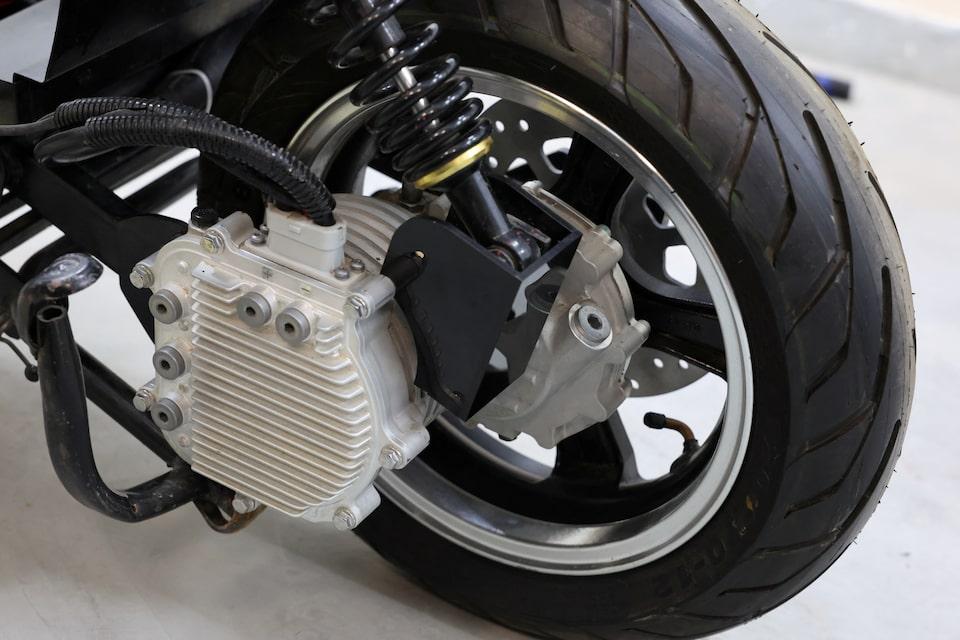
India races to cut reliance on Chinese rare earth magnets China resumes some rare earth exports to US, Europe, not India Part maker Sterling fast-tracks magnet-free motor production India's Sona Comstar has plans to make magnets domestically FARIDABAD, India, Sept 9 (Reuters) - In a 3,500 square foot laboratory in Faridabad, northern India, engineers are fast-tracking tests on an EV motor that could help alleviate one of New Delhi's most pressing trade and diplomatic challenges: its reliance on China for rare earths. Unlike regular EV motors, the one being tested by Sterling Gtake E-Mobility does not use rare-earth magnets - a technology that, while not new, is uncommon and could be transformative for the world's No. 3 car market that has been hit harder than most by China's export curbs on the critical minerals. Sign up here. "We want to be in commercial production as soon as possible," Sterling Managing Director Jaideep Wadhwa said. Seven Indian automakers are reviewing the motors, and if cleared, production could begin within a year, well ahead of an initial 2029 target, he added. Sterling sped up the timeline after China announced the curbs in April in response to U.S. tariffs. While China has since resumed some rare earth shipments to the U.S. and Europe, India remains effectively cut off due to political tensions with Beijing. Indian companies have yet to see a single import application approved. Prime Minister Narendra Modi and Chinese President Xi Jinping have discussed ways to improve trade, and Beijing has agreed to lift curbs on magnet exports but has not given a timeline. Against this backdrop, Sterling and several other firms are expediting work on alternate technologies that eliminate magnets or use ferrite or "light" rare earths, materials for which there is no dependence on China. China controls more than 90% of the world's rare-earths processing capacity, giving it diplomatic clout and dominance over the supply chain, as the global pivot to EVs intensifies demand for the group of 17 elements vital to consumer electronics, EV batteries, and motor magnets. India has the world's fifth-largest rare earth reserves, but lacks the ability to process them into magnets. To address this, the government plans to offer incentives for mining and processing, while also seeking to collaborate with Japanese and South Korean companies to produce magnets. CUT RARE EARTH DEPENDENCE Car makers like BMW (BMWG.DE) , opens new tab and Nissan (7201.T) , opens new tab are already building EV motors that do not rely on rare earths. However, the technology is yet to see widespread adoption as matching the compact size, light weight and performance of magnet-based motors remains a challenge. Rigorous testing requirements have further deterred many automakers. But that appears to be changing amid concerns about China using rare earths as a political tool. In 2010, Beijing briefly stopped shipments to Japan after a diplomatic dispute. "This could happen again in five years" cautioned Vivek Vikram Singh, CEO of Indian parts supplier Sona Comstar (SONB.NS) , opens new tab, referring to China's export curbs. While plans to mine and process rare earths would take years to develop, Singh said India "should not stop working on it". Sona, the largest importer of rare earth magnets in India's auto sector, has plans to make magnets domestically and is also developing motors without heavy rare earths from China. In Faridabad, Sterling has hooked up one motor to the back wheel of a stationary motorcycle in its lab and mounted another on a dynamometer to measure torque and power output, while various screens capture performance data. These high-density reluctance motors use tightly wound metal coils, instead of rare-earth magnets, to generate magnetic force and power. The technology belongs to Britain's Advanced Electric Machines, which in June signed a licensing deal with Sterling, enabling the Indian company to build the motors domestically. James Widmer, CEO of Advanced Electric Machines, said customers were pushing for quick solutions. "What can you do now? That is what customers are asking." 'SCRAMBLING FOR LOCAL SOLUTIONS' In Japan, scientist Masato Sagawa, who invented a magnet using rare earth element neodymium in the 1980s, is advocating for rare-earth free alternatives, saying they would be cheaper. In India, start-up Chara Technologies has spent five years refining its magnet-free motor technology to match and exceed the performance of existing motors, CEO Bhaktha Keshavachar said. While its motors are about 10%-15% heavier, the company is seeing demand from customers in India and Europe, he said. Chara, which has built motors for two and three-wheelers, will soon start production for small cars under a metric tonne. U.S.-based Conifer is returning to long-used ferrite magnets in motors which Indian founder Ankit Somani says can deliver 10%-30% better range than incumbent designs with some innovation, and are much cheaper. The company's Pune factory in western India is producing hundreds of motors and will hit its annual capacity of 70,000 units within two quarters, Somani said. "Everybody's scrambling for local solutions," he added. https://www.reuters.com/world/china/india-revs-up-alternate-ev-motor-tests-china-curbs-rare-earths-exports-2025-09-09/
2025-09-09 06:18
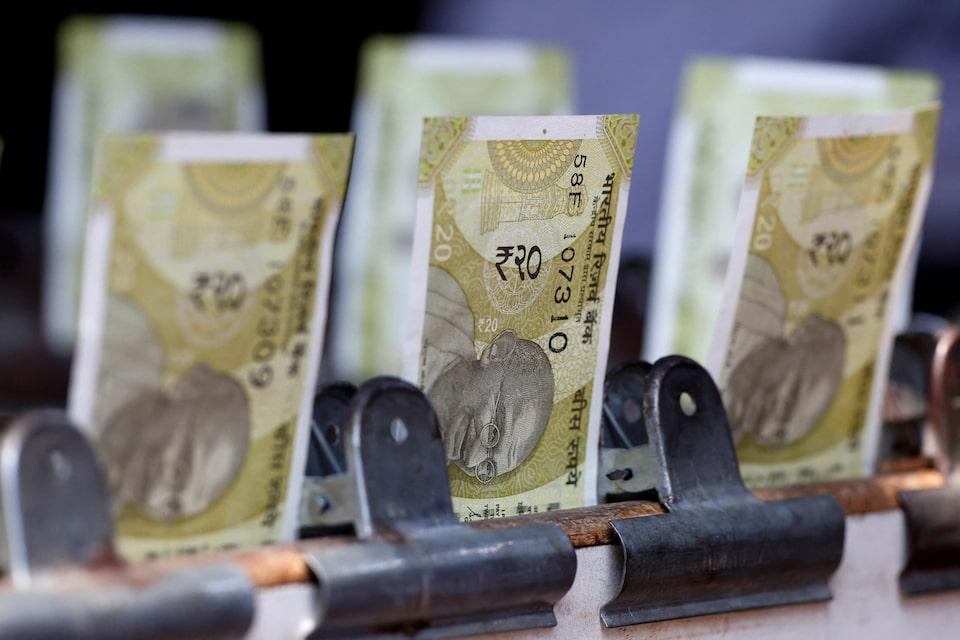
MUMBAI, Sept 9 (Reuters) - The Indian rupee encountered resistance after climbing past the 88 per U.S. dollar level on Tuesday, while forward premiums surged on expectations that the Federal Reserve may cut rates more than previously anticipated after a soft U.S. jobs print. The rupee was trading at 88.1250 at 11:36 am IST, compared with Friday's level of 88.2650. India's FX markets were shut on Monday. Sign up here. In early trades, the currency briefly breached the 88 mark, hitting an intraday high of 87.9550. The 87.95 level remains a key threshold, marking the prior all-time low before the recent breakout. The rupee has been lagging most Asian peers, pressured by the hefty U.S. tariffs on Indian goods that have dented sentiment, and, according to bankers, fuelled sustained dollar demand. "Every time we try to break below 88 (on dollar/rupee), dollar demand jumps in. Attempts to push lower are getting met with resistance," a currency trader at a bank said. The rupee's rise past 88 in opening trades came in the wake of the dollar's retreat, with markets pricing in a more dovish Fed stance. Weak U.S. jobs growth in August heightened expectations that the Fed will cut rates by at least 25 basis points next week, with total cuts of around 75 basis points expected for the remaining of the year. U.S. Treasury yields dropped in response to the rising rate cut bets, pushing dollar/rupee forward premiums higher. The implied yield on the 1-year forward premium rose 6 basis points to 2.29%. https://www.reuters.com/world/india/rupee-struggles-hold-above-88usd-premiums-jump-fed-outlook-2025-09-09/