2025-09-09 06:10
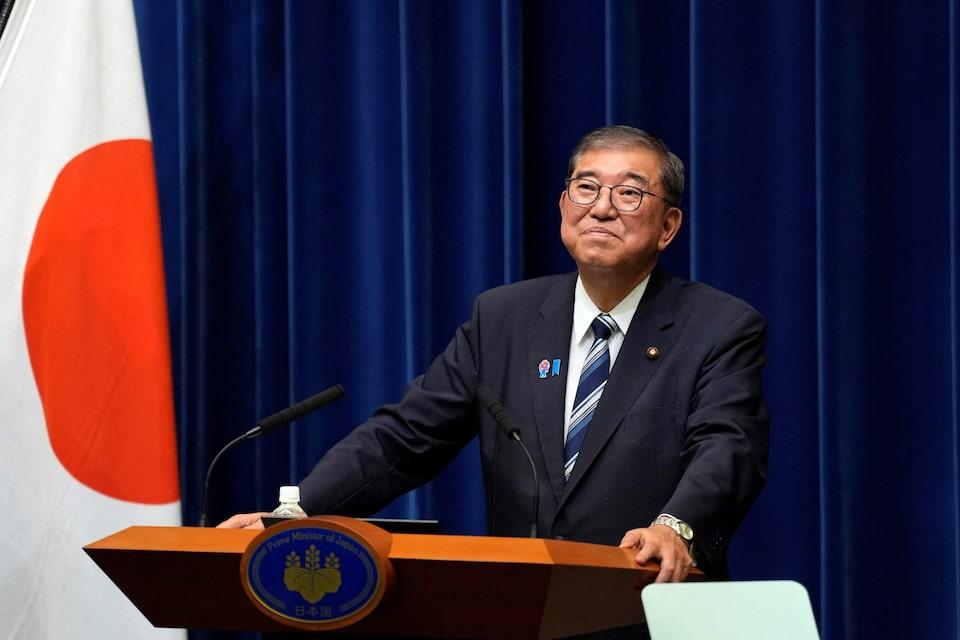
Seoul says currency issue needs to be addressed in trade deal South Korea in different position to Japan, officials say $350 bln investment package expected to add to pressure on won SEOUL, Sept 9 (Reuters) - South Korea's negotiations to finalise a U.S. trade deal are being held up due to foreign exchange issues and Seoul has asked Washington to help find a way to cap any market impact from a $350 billion investment package, a senior presidential official said on Tuesday. The delay in striking a final deal comes after U.S. President Donald Trump last week signed an executive order to implement Japan's trade deal, which includes a $550 billion investment package. Sign up here. South Korea is yet to reach a written agreement on its deal, which was struck in July and includes a $350 billion package to be invested in the United States. Presidential Policy Secretary Kim Yong-beom said that Japan and South Korea were in a different situation, echoing earlier comments by the industry minister and the foreign minister on Monday that Seoul could not agree to similar terms outlined in Japan's agreement on the investment package. "While there is not much difference in trade surpluses, the size of the economy, more importantly foreign exchange market conditions are very different," Kim told a live discussion forum. Kim said the most important matter that needed to be addressed in order for South Korea to sign any agreement on the investment package was the impact it would have on the domestic dollar-won exchange market. South Korea was in a different position to Japan because the yen is an international currency, while Japan also has a currency swap programme and foreign exchange reserves that are three times larger than South Korea's that would help cap the impact of its $550 billion investment in the U.S., he said. Since the deal was announced in late July, there have been growing expectations among market participants that the $350 billion investment will add to downward pressure on the won in the long term. The $350 billion compares with the maximum amount of $20-30 billion state-run policy banks can procure in a year, Kim said. It also compares with the national pension fund's overseas investments of $2-3 billion a month – a factor already cited by market participants as a big force weighing on the won. The won , which is currently trading at around 1,390 per dollar, has strengthened 6% so far this year, after weakening for four consecutive years to hit 15-year lows in 2024 below the psychological threshold of 1,400 mark. South Korea agreed with the U.S. at their opening round of trade talks in late April to put currency policy on the agenda and has since been in working-level consultations. The matter will be included when the two countries announce a final agreement after trade negotiations conclude, Finance Minister Koo Yun-cheol said on Monday. https://www.reuters.com/world/asia-pacific/south-korea-trade-talks-with-us-deadlocked-over-forex-seoul-says-2025-09-09/
2025-09-09 06:07
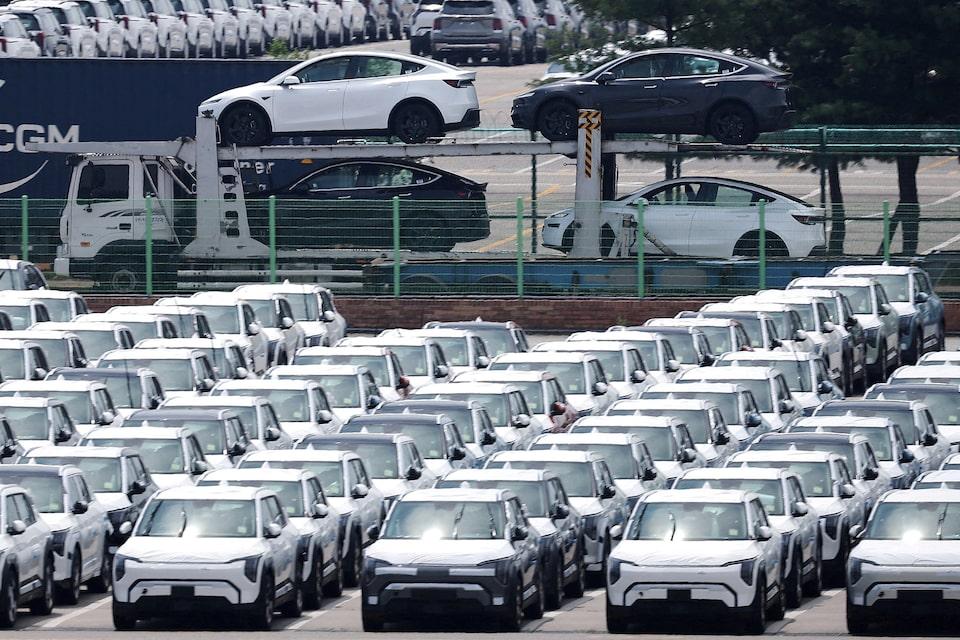
LONDON, Sept 9 (Reuters) - Aluminium, steel and copper have all been hit with steep U.S. import tariffs this year, upending physical supply chains and fracturing global pricing. Which metal is next for the tariff treatment? Sign up here. There is no shortage of potential targets. The United States Geological Survey's (USGS) latest iteration of its critical minerals list now includes 54 elements , opens new tab deemed essential for U.S. economic and national security. All come under the scope of President Donald Trump's Section 232 investigation into U.S. critical minerals import dependency. The investigation was launched in April and the final report and any potential tariffs are due in October. The USGS list is sprinkled with obscure components of the periodic table, such as rare earth elements dysprosium and praseodymium. But it also includes globally traded industrial inputs such as zinc and platinum. SIX IN, TWO OUT And now also lead and silver. The USGS recommends both for inclusion, along with potash, silicon, rhenium and copper. The United States is a net exporter of copper ore and concentrates, but the USGS highlights the country's import dependency for refined metal as a reason for inclusion. The Trump administration backed off from immediate tariffs on refined copper, but confirmation of the metal's new national security designation would increase the likelihood of a threatened phase-in from 2027. Silver, currently on a speculative price surge, is proposed for inclusion because of a scenario in which Mexico stops exporting to the United States, though that eventuality is described as a high-impact low probability event. Rhenium and lead are both borderline, but the USGS warns that its risk assessments fluctuate as production and trade flows change. To prove the point it has dropped tellurium and arsenic from the list. Rio Tinto (RIO.L) , opens new tab started recovering tellurium from its Utah copper smelter in 2022, leading to a decrease in U.S. imports. Arsenic's removal reflects Peru's move past China as the world's largest producer. MOST CRITICAL The USGS has evolved its methodology , opens new tab to include the economic impact of potential supply disruptions to flows of critical minerals to the United States. It has assessed the effects of more than 1,200 disruption scenarios for 84 minerals on 402 individual industries. Minerals-based industries contribute more than $4 trillion to the U.S. economy and, to quote the USGS, "the loss of even one can ripple through entire industries, from semiconductors to defense systems, undermining production capacity, technology leadership and American jobs". Which makes samarium the most critical of all critical minerals owing to its importance in manufacturing guided missiles, space vehicles and search and navigation instruments. Other rare earth elements, such as lutetium and terbium, make it into the top 10 along with semiconductor chip materials gallium and germanium as well as tungsten. All of them are subject to some form of Chinese export restriction as Beijing leverages its grip on global supplies in response to U.S. restrictions on advanced computer chip sales to China. TRADING TARIFFS The sheer number of potential metallic targets has inhibited individual markets from pricing in the probability of U.S. tariffs. The mere threat of refined copper tariffs, subsequently deferred, was enough to trigger a mass relocation of metal to the United States. The same has not yet happened for other industrial metals on the USGS critical minerals list, such as nickel, tin, zinc and, if confirmed, lead. Nor do hybrid industrial investment metals such as platinum, palladium and silver seem prepared for tariff turbulence. Palladium and silver are under-pricing tariff risk, Citi analysts say. Based on exchange-for-physical transactions, the U.S. premium for both metals is only 2-3% relative to non-U.S. pricing, which is very low considering the 50% tariffs applied to steel, aluminium and copper products. The U.S. Commerce Department has also launched an investigation , opens new tab into potential Russian dumping of unwrought palladium, putting it high on the potential trade hit list. PUSH AND PULL The action against Russian palladium underlines the double nature of the critical minerals threat to the United States and other Western countries. Dominant producer countries can both restrict supply or flood Western markets with too much supply to crush competitors. The Trump administration must walk a fine line between using tariffs as a tool for increasing domestic production and potentially limiting already constrained availability. Each individual metal on the lengthening USGS list of critical minerals has its own unique dynamics in terms of import dependency, alternative suppliers and domestic production potential. Copper has come in for a more nuanced approach than aluminium or steel, where blanket 50% tariffs capture all countries and, after last month's inclusion of 407 category codes , opens new tab, the whole length of the product chain down to household furniture. The broad spectrum of minerals now classified as critical argues for an equally tailor-made approach to determining solutions. Trump, of course, may disagree. Either way, global metal markets are in for more tariff turbulence, whether they're pricing it or not. The opinions expressed here are those of the author, a columnist for Reuters. https://www.reuters.com/markets/commodities/us-critical-minerals-list-expands-ahead-possible-tariffs-2025-09-09/
2025-09-09 06:07
Sept 9 (Reuters) - Finnish steelmaker Outokumpu (OUT1V.HE) , opens new tab said on Tuesday that it had signed a memorandum of understanding with U.S.-based Boston Metal to enhance the production of critical carbon-free metals. Carbon-free metals are seen as a key component of clean energy transition and a contributor to environmental sustainability. Sign up here. The two groups intend to establish a joint development project related to the use of Outokumpu's chromium material from its Kemi mine in Finland in components of Boston Metal's molten oxide electrolysis technology. Boston Metal aims to commercialize the molten oxide electrolysis process with equipment capable of taking the heavy greenhouse gas emissions out of steel production. "The joint development showcases our ability and commitment to drive our newly announced EVOLVE strategy for 2026–2030 forward," Outokumpu's chief technology Stefan Erdmann said in a statement. https://www.reuters.com/sustainability/climate-energy/outokumpu-signs-mou-with-boston-metal-enhance-production-carbon-free-metals-2025-09-09/

2025-09-09 06:00
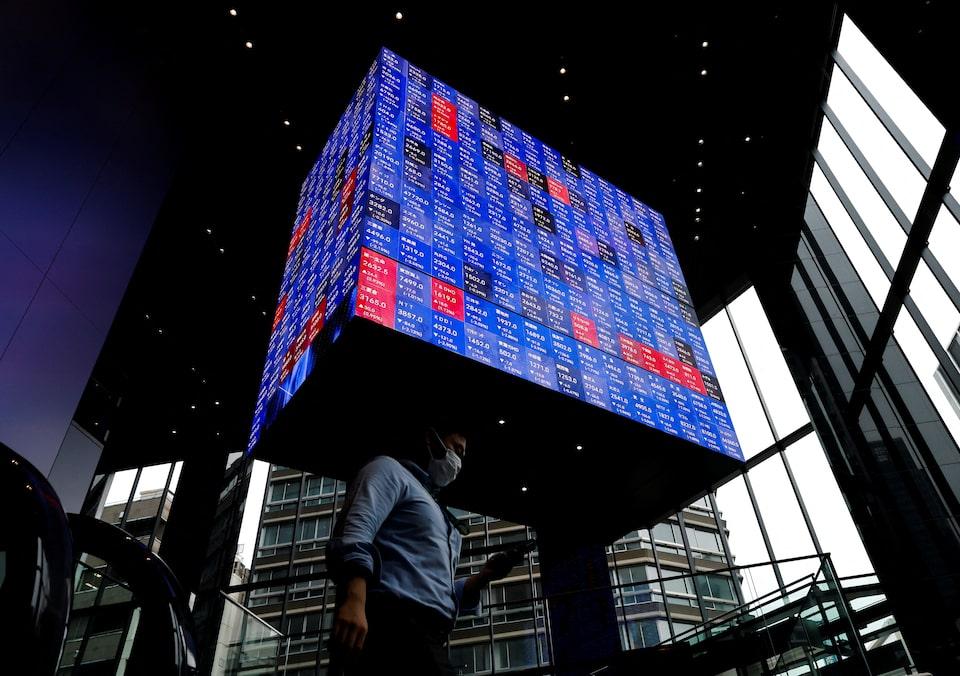
Stocks get lift from Fed easing expectations Investors weigh 50bp cut, look to U.S. CPI, PPI releases for clues Political turmoil in many countries complicates outlook for FX, bond markets SINGAPORE, Sept 9 (Reuters) - Asia stocks rose on Tuesday, buoyed by expectations of a U.S. rate cut as early as next week, even as political upheavals around the world kept currency and bond investors on edge. MSCI's broadest index of Asia-Pacific shares outside Japan (.MIAPJ0000PUS) , opens new tab climbed 0.7%, taking its cue from Wall Street's positive lead overnight that saw the Nasdaq index (.IXIC) , opens new tab notch a record-high close. Sign up here. Nasdaq futures were last up 0.06%, while S&P 500 futures similarly ticked up 0.05%. European futures, meanwhile, eased after regional benchmark indexes clocked gains in the cash session on Monday. EUROSTOXX 50 futures fell 0.2%, while FTSE futures and DAX futures dipped 0.13% and 0.26%, respectively. Breathing new life into the equities rally were expectations that the Federal Reserve would ease rates when it meets next week, following Friday's weak U.S. jobs report. While consumer and producer price inflation data are due in the week ahead, investors are betting that a 25-basis-point cut this month is a done deal, with focus now on whether the Fed could deliver a larger 50bp move. The U.S. Labor Department will also report a preliminary revision estimate to the employment level for the 12 months through March later in the day. "Both publications are poised to influence the central bank's pace down the monetary policy stairs," said Jose Torres, senior economist at Interactive Brokers, referring to the PPI and CPI figures. "A heavy subtraction from the worker roster alongside a downside miss on the CPI is likely to raise the odds of a half-percent to a coin flip." Markets are now pricing in an over 11% chance the Fed could lower rates by 50bp this month, compared to zero a week ago, according to the CME FedWatch tool. Elsewhere, Japan's Nikkei (.N225) , opens new tab climbed past the key 44,000 mark for the first time, aided by a weaker yen and following the resignation of the country's Prime Minister Shigeru Ishiba, a fiscal hawk. U.S. tariffs on Japanese goods including cars and auto parts are set to be lowered by September 16, Japan's tariff negotiator Ryosei Akazawa said in an X post on Tuesday. Hong Kong's Hang Seng Index (.HSI) , opens new tab rose 0.5%, while China's CSI300 blue-chip index (.CSI300) , opens new tab shed 0.7%. POLITICAL TURMOIL Renewed uncertainty over the political landscape across various economies has rattled currency and bond markets in the past few sessions. From Ishiba's resignation in Japan, French lawmakers voting to oust Prime Minister Francois Bayrou, a heavy election defeat for Argentina President Javier Milei's ruling party in local elections, to the abrupt replacement of Indonesia's finance minister, investors had lots to consider. Still, losses across currencies were capped by a broadly weaker dollar, while most bond markets have since largely held steady. The yen was last 0.3% stronger at 147.05 per dollar, clawing back its losses from the previous session, while the euro steadied at $1.1772. Yields on Japanese government bonds fell on Tuesday, after rising in the previous session. Bond yields move inversely to prices. "While global political risks bear monitoring, the market is currently positioned for a potential Fed rate cut, with equities rallying and bond yields responding mainly to U.S. data surprises," said Shier Lee Lim, lead FX and macro strategist for APAC at Convera. The two-year U.S. Treasury yield , which typically reflects near-term rate expectations, languished near a five-month low at 3.5005%. The benchmark 10-year yield was similarly pinned near a five-month trough and last stood at 4.0512%. In commodities, oil prices gained on Tuesday after OPEC+ decided to increase production by less than what market participants had anticipated. Brent crude futures were up 0.73% at $66.50 per barrel, while U.S. crude rose 0.72% to $62.71 a barrel. Spot gold touched a fresh record high of $3,656.92 an ounce, buoyed by expectations of imminent Fed cuts. https://www.reuters.com/world/china/global-markets-wrapup-1-2025-09-09/
2025-09-09 06:00
Sept 9 (Reuters) - Freeport-McMoRan (FCX.N) , opens new tab said on Tuesday it temporarily halted mining in Indonesia's Grasberg minerals district after a large flow of wet material blocked access to parts of its underground mine, restricting evacuation routes for seven workers. The incident occurred late on Monday at one of five production blocks in the Grasberg Block Cave underground mine in Central Papua, the company said. Sign up here. The location of the seven workers is known and they are believed to be safe, Freeport said, adding that rescue crews are working to clear the area for a safe and swift evacuation. Freeport operates Grasberg, one of the world's largest gold and copper mines, and had been building a smelter in Indonesia. The smelter was damaged by a fire last year and was shut down. https://www.reuters.com/business/energy/freeport-halts-indonesias-grasberg-mining-operations-after-underground-incident-2025-09-09/

2025-09-09 05:54
Politics won't derail BOJ rate hike plan but may affect timing Takaichi, proponent of low rates, seen frontrunner in LDP race Rising inflation may prod Takaichi to water down stimulus calls Fiscal stimulus, yield spike may affect BOJ's QT, rate hike plan TOKYO, Sept 9 (Reuters) - The appointment of a new Japanese prime minister next month could give the central bank more reasons to go slow on its next interest rate hike, especially if the next leader is wary of seeing borrowing costs rise too quickly. While the Bank of Japan's main concern remains domestic inflation and the economic hit from U.S. tariffs, uncertainty around who becomes next leader or what their policies might be adds a layer of risk to deliberations around monetary settings. Sign up here. Prime Minister Shigeru Ishiba announced his decision to resign on Sunday after a string of election defeats including a July upper house poll. The focus has now shifted to who will replace him. Japanese bond yields fell on Tuesday on reports Sanae Takaichi, a proponent of government stimulus and monetary easing, would run in the Liberal Democratic Party's leadership race in October, which could make her the next prime minister. "The resignation of Japan's prime minister Ishiba and the unfolding leadership contest at the ruling LDP will likely deter the Bank of Japan from raising rates in October," analysts at Evercore ISI wrote in a research note, adding they were pushing back their call for the next hike provisionally to January. The departure of Ishiba, seen as a fiscal hawk who gave a nod to gradual BOJ rate hikes, pushed down the yen and bond yields as investors reduced bets of a near-term rate hike. Money markets now show about a 20% chance the BOJ will hike rates by the end of October, down from 46% odds a week ago. The LDP will choose his successor in a vote on October 4, who will then seek parliament approval to become head of government. A new administration may not be formed until mid-October, creating an uneasy political vacuum ahead of the BOJ's policy meeting on Oct. 29-30. While the wider political uncertainty won't derail the BOJ's plan to continue raising rates gradually, it could affect the timing of the next hike, said three sources familiar with its thinking. "The BOJ doesn't need to hike in the midst of turbulence," one of the sources said. "It is in no rush and has a free hand on the timing, as long as it gets another rate hike done possibly by early next year." "The key is whether the hit from U.S. tariffs on Japan's economy would be within expectations, rather than what happens with politics," another source said on the rate-hike timing. FISCAL COMPLICATIONS Who wins the race will also have a significant impact on the pace and timing of BOJ rate hikes, analysts say. Conservative lawmaker Takaichi is one of the frontrunners and previously a strong advocate of "Abenomics"-style mix of fiscal and monetary stimulus of deceased premier Shinzo Abe. She stands out for her criticism of the BOJ's rate hikes. Another contender is Shinjiro Koizumi, a proponent of deregulation whose views on monetary policy are little known. Both were top candidates in the LDP leadership race in September 2024 with Takaichi winning the most votes in the first round, only to be defeated by Ishiba in the run-up. There is uncertainty on whether Takaichi will do as well this time, with some of her political backers having lost their jobs or clout due to a scandal that hit the former Abe faction. Even if she wins, Takaichi may need to water down calls for ultra-low rates with rising inflation, rather than the risk of deflation, now a bigger problem for the public, analysts say. "Support for reflationist-minded lawmakers has shrunk within the LDP. As such, Takaichi will need to restrain her calls for reflationist policies to some extent to win broad support within the party," said BNP Paribas chief Japan economist Ryutaro Kono. Whoever ends up winning the leadership race would ultimately run a minority coalition and need support from opposition parties to pass the budget through parliament. Small opposition parties seen as candidates for forming an alliance are against an early BOJ rate hike, or have called on the central bank to tread carefully in rolling back stimulus. While politics may create hurdles for a near-term rate hike, growing calls from most candidates and opposition parties for bigger spending could require the BOJ to lift rates over the longer-term to tame inflationary pressures. The worst-case scenario for policymakers would be a sustained, sharp rise in bond yields triggered by investors' concern over Japan's loss of fiscal discipline. In such an event, the government may pressure the BOJ to halt its quantitative tightening (QT) plan and step into the market with emergency bond purchases, some analysts say. Such a move would be a major setback in the BOJ's efforts, which began last year, to gradually taper its huge bond buying. All this would give the BOJ reason to sit on the sidelines until the political dust settles. But waiting too long also carries risks. Inflation has held above the BOJ's 2% target for three years, and price pressures have broadened beyond stubbornly high food costs as a tight labour market pushes up wages. "The BOJ must be cautious. But it also understands that waiting too long is not without risk," a third source said. https://www.reuters.com/business/ishibas-departure-gives-boj-pause-thought-rate-hikes-2025-09-09/