2025-09-08 22:08
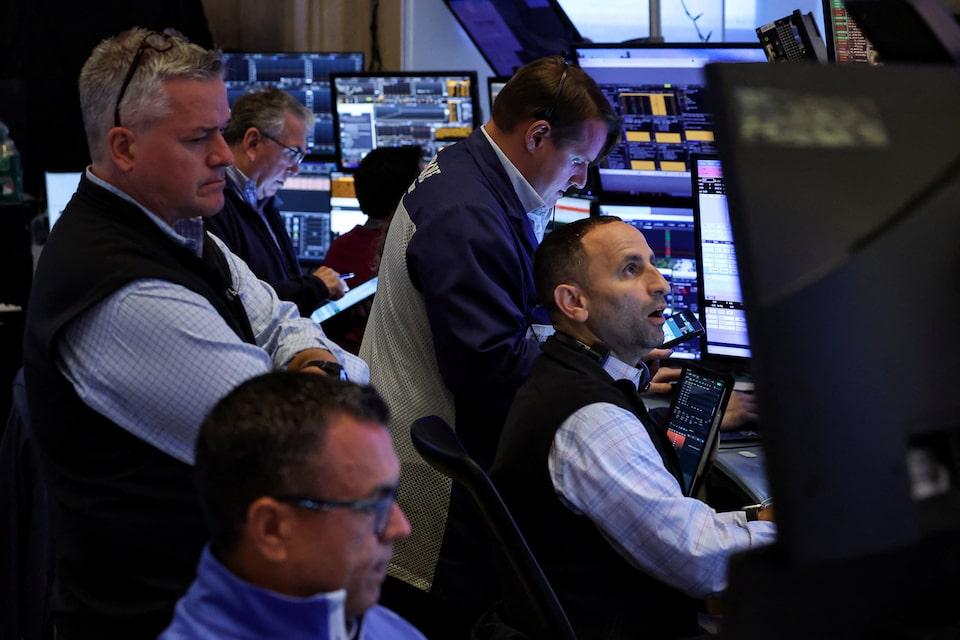
EQT to purchase 1 mtpa of LNG for 20 years Last week, EQT had signed a similar deal with NextDecade Sept 8 (Reuters) - U.S.-based energy company EQT Corp (EQT.N) , opens new tab will purchase 1 million tonnes per annum (mtpa) of liquefied natural gas from Commonwealth LNG's export facility under development on the Gulf Coast near Cameron, Louisiana, for 20 years, the companies said on Monday. EQT said it will acquire the LNG on a free-on-board basis at a price indexed to Henry Hub and will market and optimize its cargos internationally. Sign up here. The additional export capacity will allow EQT to further expand its domestic direct-to-customer strategy into the global energy markets, the company said in a statement. The United States has been working to cement its position as the world's biggest exporter of LNG, surpassing previous leaders Qatar and Australia. In January, President Donald Trump lifted a pause on new LNG export permits, which had been imposed by the previous administration in 2024 to review public interest criteria, shortly after assuming office. Last week, Commonwealth LNG secured final non-free trade agreement export authorization from the U.S. Department of Energy for its export facility in Louisiana. Commonwealth's facility is designed to produce 9.5 million tonnes of LNG annually and received approval from the Federal Energy Regulatory Commission in June. The company plans to make a final investment decision in the fourth quarter of this year, with first production targeted for 2029. "This is another marketing agreement that enhances EQT's LNG portfolio, signaling potential upside from international pricing arbitrage and supporting long-term production growth," said Gabriele Sorbara, analyst at Siebert Williams Shank. Sorbara added that the recent supply and marketing deals are strategic positives that could differentiate EQT from domestic gas peers in the coming years. EQT recently signed a similar 20-year deal with NextDecade (NEXT.O) , opens new tab to purchase 1.5 mtpa of LNG from its Rio Grande export facility in Texas. https://www.reuters.com/business/energy/eqt-purchase-lng-commonwealth-lngs-louisiana-facility-20-years-2025-09-08/

2025-09-08 22:03
Sept 8 (Reuters) - Madrone Partners-backed StubHub is targeting a valuation of up to $9.2 billion in its U.S. initial public offering, the ticket reseller said on Monday, becoming the latest company to resume listing plans delayed in April due to tariff uncertainty. The New York-based firm is seeking up to $851 million by offering 34 million shares priced between $22 and $25 each. Sign up here. Buoyant equity markets and robust tech earnings have sparked a long-awaited recovery in the IPO market this fall, after uncertainty from U.S. trade policy forced a slew of companies including StubHub to delay listing plans earlier in the year. In an IPO market led by crypto and other tech-heavy companies, StubHub's debut could be a barometer of investor appetite for consumer-focused firms, which tend to be more sensitive to macroeconomic downturns. StubHub was co-founded in 2000 by Jeff Fluhr and current CEO Eric Baker, who had initially left the firm — and launched viagogo, a rival ticket reseller — in Europe in 2006. Baker had exited StubHub ahead of its $310-million sale to e-commerce firm eBay (EBAY.O) , opens new tab, completed in 2007. More than a decade later, in 2020, viagogo bought StubHub from eBay for $4.05 billion. StubHub was valued at $16.5 billion in 2021, according to data from Tracxn. "I think the bankers will also try to sell the deal on its valuation, which is below prior expectations," said Matt Kennedy, senior strategist at IPO-focused research and exchange-traded funds provider Renaissance Capital. Eye popping first day gains by recent market debutantes like design software firm Figma (FIG.N) , opens new tab and Bullish (BLSH.N) , opens new tab have led many to wonder if underwriters — cautious of volatility and economic uncertainty from sweeping U.S. tariffs — are pricing conservatively. The company is valued at $14 billion or $15 billion by other investors, far greater than the targeted $9.2 billion, according to a current StubHub investor that declined to be named publicly. "I think they will end up pricing higher than that number for sure," the investor told Reuters. StubHub declined to comment on its pricing strategy. The live events industry has benefited from an explosion in consumer preference for out-of-home experiences and entertainment. Record-smashing concert ticket sales such as those seen for singer Beyoncé's "Cowboy Carter" tour this summer have boosted revenues for rival Ticketmaster's parent, Live Nation Entertainment (LYV.N) , opens new tab. StubHub's revenue rose 3% to $827.9 million for the six months ended June 30 from a year ago, while its losses more than doubled to $111.8 million in the same period. J.P. Morgan and Goldman Sachs are the lead underwriters. StubHub will list on the New York Stock Exchange under the "STUB" ticker symbol. https://www.reuters.com/business/media-telecom/ticketing-platform-stubhub-eyes-up-9-billion-valuation-us-ipo-2025-09-08/
2025-09-08 21:27
Sept 8 (Reuters) - U.S.-based energy company EQT Corp (EQT.N) , opens new tab will purchase 1 million tonnes per annum (mtpa) of liquefied natural gas from Commonwealth LNG's export facility under development on the Gulf Coast near Cameron, Louisiana, for 20 years, the companies said on Monday. EQT said it will acquire the LNG on a free-on-board basis at a price indexed to Henry Hub and will market and optimize its cargos internationally. Sign up here. The additional export capacity will allow EQT to further expand its domestic direct-to-customer strategy into the global energy markets, the company said in a statement. Last week, Commonwealth LNG secured final non-free trade agreement export authorization from the U.S. Department of Energy for its export facility in Louisiana. Commonwealth's facility is designed to produce 9.5 million tonnes of LNG annually and received approval from the Federal Energy Regulatory Commission in June. The company plans to make a final investment decision in the fourth quarter of this year, with first production targeted for 2029. The United States has been working to cement its position as the world's biggest exporter of LNG, surpassing previous leaders Qatar and Australia. In January, President Donald Trump lifted a pause on new LNG export permits, which had been imposed by the previous administration in 2024 to review public interest criteria, shortly after assuming office. EQT recently signed a similar 20-year deal with NextDecade (NEXT.O) , opens new tab to purchase 1.5 mtpa of LNG from its Rio Grande export facility in Texas. https://www.reuters.com/business/energy/eqt-corp-signs-20-year-lng-deal-with-commonwealth-lngs-louisiana-facility-2025-09-08/

2025-09-08 21:15
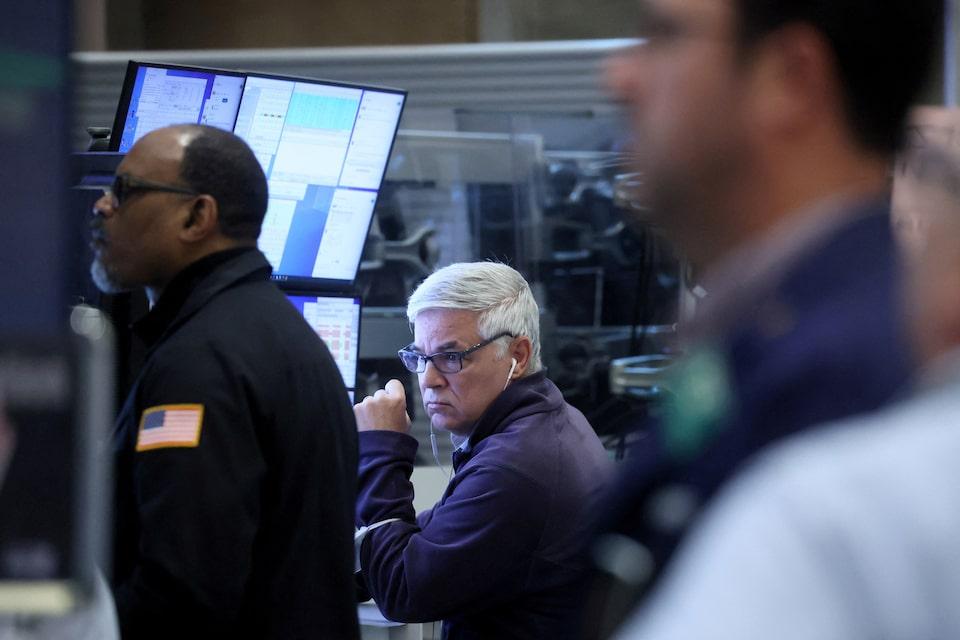
ORLANDO, Florida, Sept 8 (Reuters) - Making sense of the forces driving global markets By Jamie McGeever, Markets Columnist Sign up here. World stocks rallied and gold leaped to new highs on Monday as investors cemented bets that U.S. interest rates will be cut next week, while political ructions in Argentina, Japan and France raised uncertainty in these countries' markets. The long end of sovereign bond markets has rightly grabbed the headlines lately, with 30-year yields spiking to historic highs in many countries. But in my column today I look at the ultra-short end of the U.S. curve, where Treasury has reached a $100 billion issuance milestone. If you have more time to read, here are a few articles I recommend to help you make sense of what happened in markets today. Today's Key Market Moves Today's Talking Points: * Fed 50? Could the Fed cut rates by 50 basis points next week? It's unlikely, but markets are beginning to price in the possibility. Fed funds futures are now attaching around a 10% chance, and big banks Standard Chartered and Societe Generale are calling for it. The argument is the labor market is even weaker than soft headline numbers show. If benchmark preliminary revisions for April 2024-March 2025 jobs data on Tuesday are big enough, the case for 50 bps could mushroom. * Pesky politics From France to Japan, Argentina to Indonesia, political upheaval around the world is swaying financial markets. Some of Monday's moves were dramatic, especially in Argentina where the peso slumped to an all-time low and stocks and bonds tanked following a local election on Sunday. Each country has its own issues, but there are common themes - high inflation and cost of living, rising government debt and deficits, economic uncertainty, populism, and distrust in 'elites'. Political volatility sometimes has next to no impact on markets, sometimes it's huge. * Going for gold Gold's march higher shows little sign of slowing, never mind reversing. It is up 10% in barely over two weeks and nearly 40% this year, hitting record highs on a near daily basis as investors seek safety and an inflation hedge. It's long-term investment allure isn't dimming either, even at these record prices. Official figures from Beijing on Sunday showed that China's central bank added gold to its reserves in August for a 10th straight month. The $100 billion Treasury record you probably missed The recent spike in 30-year yields has been the headline story in world bond markets, for good reason. But with so much attention on the long end of the curve, few seem to have noticed the historic developments in the ultra-short U.S. Treasury market. The weekly sales of four-week T-bills have now reached the landmark threshold of $100 billion, with the September 4 auction marking the fifth consecutive sale at that record-high amount. This flood of bill sales reflects the government's new strategy. President Donald Trump's administration is seeking to reduce the country's debt maturity profile – and overall interest costs – by borrowing more at the ultra-short end of the curve, while simultaneously pushing the Federal Reserve to lower rates. So far, it seems to be working. The Fed appears certain to resume its interest rate-cutting cycle later this month, with investors anticipating at least 150 basis points of easing by the end of next year. Not only is that bringing down bill rates and short-term bond yields, it's also pulling down longer-term yields. The benchmark 10-year yield is the lowest since April's 'Liberation Day' tariff chaos, while the 30-year yield is again backing away from 5%. The upshot is that investors lending to Uncle Sam for 10 years, with all the risk that entails, are getting paid an annual 4.08%, while investors lending to the U.S. government for four weeks are getting 4.20%. Unsurprisingly, these bill auctions have elicited strong demand: last week's $100 billion sale was 2.78 times oversubscribed. So what's the problem? LET ME ROLL IT The biggest concern is 'rollover' risk. Concentrating sales at the front end of the curve means the government has to refinance a large chunk of its debt much more frequently. This leaves it vulnerable to unforeseen financial, political or economic shocks that could cause short-term borrowing costs to spike or force the Fed to suddenly raise its policy rate. True, Fed expectations are skewed to the downside right now, but what if inflation expectations become unanchored, and the Fed has to pause its easing cycle or even consider raising rates? That's not an outlandish scenario. The Fed looks set to ease in an environment with 3% inflation, record-high equity markets, the loosest financial conditions in three-and-a-half years, according to Goldman Sachs, and economic growth tracking at 3.5%, based on the Atlanta Fed's latest GDPNow model. And that's not even taking into account the full inflationary impact of Trump's tariffs. Increased bill issuance has been well absorbed so far, but cash going into bills is depleting liquidity pools and buffers in other parts of the system. The Fed's overnight reverse repo facility is almost empty, and total bank reserves at the Fed are declining. No one knows what the lowest comfortable level of reserves for the banking system is. It proved to be around $1.5 trillion in late 2019, when a sudden drop below that level triggered significant money market volatility and a spike in overnight rates. Experts reckon it is higher today, as the economy and banking system have expanded. But reserves are steadily decreasing and look set to fall below $3 trillion. Analysts at Citi warn they will "continue marching" below that level as T-bill issuance grows, potentially putting upward pressure on repo rates and funding costs. THRESHOLD With the Treasury leaning more on T-bills for funding, new issuance over the next 18 months could perhaps exceed $1.5 trillion, according to some Wall Street bank estimates. As a result, the share of bills in the total outstanding federal debt stock is likely to grow too. This portion currently stands at just under 21%, slightly below the historical average of around 22.5% but above the 15-20% range recommended by the Treasury Borrowing Advisory Committee. Analysts at T Rowe Price reckon the share could soon reach 25%, a level last seen during the pandemic and the Global Financial Crisis, suggesting borrowing policies previously seen in crises could become the new normal. Of course, none of this will be a problem if increased issuance continues to be met with solid demand. And there's reason to believe that will be the case. First, money market funds – the biggest buyers of T-bills with holdings representing 36% of the $6.4 trillion market – have seen their assets explode from $4.7 trillion in early 2020 to more than $7 trillion today. And there is now also massive demand from stablecoin issuers looking to back their crypto assets with safe, liquid assets like T-bills. In short, the market could continue to 'play ball' with the government's new funding strategy. With over $1 trillion of new issuance coming, the Trump administration certainly hopes so. What could move markets tomorrow? Want to receive Trading Day in your inbox every weekday morning? Sign up for my newsletter here. Opinions expressed are those of the author. They do not reflect the views of Reuters News, which, under the Trust Principles , opens new tab, is committed to integrity, independence, and freedom from bias. https://www.reuters.com/world/americas/global-markets-trading-day-graphic-2025-09-08/
2025-09-08 21:02
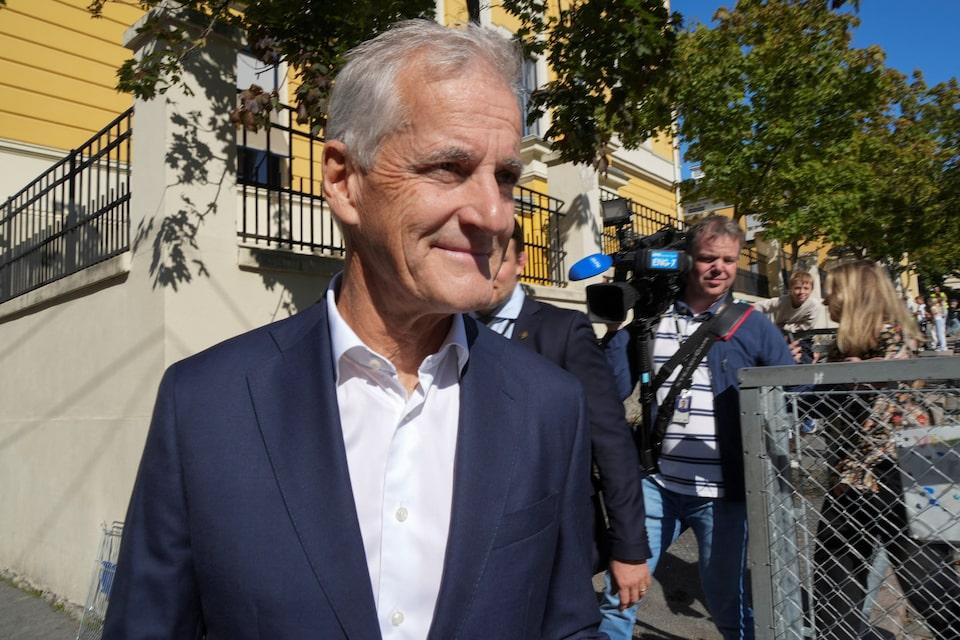
Labour and the left projected to win majority of seats Jonas Gahr Stoere expected to remain PM if projection holds Labour to face tough choices on oil investments, wealth fund OSLO, Sept 8 (Reuters) - Norway's minority Labour Party government held a narrow election lead on Monday, projections by local broadcasters showed, in a national ballot dominated by concerns over rising living costs and wars in Ukraine and Gaza. Projections by broadcasters NRK and TV2 after polls had closed showed the left-wing bloc of Prime Minister Jonas Gahr Stoere's Labour and four smaller parties winning 89 seats, above the 85 needed for a majority. Sign up here. If official results confirm the early readings, Stoere, 65, would remain in power in a minority government that would be heavily reliant on smaller parties to pass major legislation such as fiscal budgets. To get their backing, he would likely face tough discussions over issues such as tax hikes for the wealthy, future oil exploration, and divestments by Norway's $2 trillion sovereign wealth fund from Israeli companies. "It looks like Stoere will continue as prime minister," Jonas Stein, an associate professor in political science at the University of Tromsoe, told Reuters. "But with a much more difficult parliamentary situation, in which he is dependent on five parties to govern. The Progress Party is having a great election. But not enough to win power," he said. Right-wing parties headed by the anti-immigration populist Progress and the Conservatives of former Prime Minister Erna Solberg, 64, were on track for 80 seats, the projections showed. Voter concerns over the conflict in Ukraine and an aggressive Russia, which shares a border with Norway in the Arctic, have given a boost to the left in recent months after former NATO Secretary-General Jens Stoltenberg, 66, joined Stoere's cabinet. Many Norwegians saw the decision as a safeguard in case of a new armed conflict, given Stoltenberg's decade-long tenure as head of the western military alliance. Some 59% of Norwegians believe a new war in Europe is likely within the next decade, up from 55% last year, according to a survey by the Peace Research Institute Oslo. TAXES, ISRAEL, OIL Within the right-wing bloc, early projections indicated a shift further to the right, with the Progress Party of Sylvi Listhaug, 47, making its best-ever showing in an election. The party was projected to win at least 43 seats, more than double its current total and making it the country's second-largest party. Listhaug, a onetime firebrand who cites Ronald Reagan and Margaret Thatcher as her role models, campaigned on what she said was wasteful public spending on areas such as international aid and subsidies to green energy. Her party's promise of large tax cuts appeared to have resonated with many voters. Still, none of the right-wing parties that are expected to win seats have sought the backing of U.S. President Donald Trump or his movement, unlike some of their counterparts elsewhere in Europe. Also looming large in the final weeks of the election was the war in Gaza, with Stoere's smaller allies calling for Norway's $2 trillion sovereign fund, the world's largest and a major source of the country's wealth, to divest further from Israeli companies. Since June 30, the fund has divested from more than two dozen Israeli companies, following media reports that it had built a stake in a jet engine company that provides maintenance for Israeli fighter jets. Some parties on the left have questioned whether the country is in effect contributing to violations of international law by investing in companies active in the occupied Palestinian territories. Also at stake in the election is the future path of the oil industry in Norway, which replaced Gazprom as Europe's top gas supplier after Russia's 2022 invasion of Ukraine. Norway's role is set to grow further as the European Union plans to phase out the use of Russian gas by 2027, but some of Stoere's junior allies want to gradually phase out oil exploration, which could limit new gas fields. https://www.reuters.com/world/europe/norways-ruling-labour-holds-narrow-election-lead-2025-09-08/
2025-09-08 20:57
Dollar index falls but greenback gains on yen after Japan PM resigns Stocks rise globally as traders eye US September rate cut Politics roils investors in Argentina, Indonesia, France Rate outlook, US inflation data in focus this week NEW YORK/LONDON, Sept 8 (Reuters) - MSCI's global equities gauge rose on Monday, while U.S. Treasury yields declined with the dollar on the prospects of lower interest rates and investors around the world grappled with political uncertainty in countries from Japan and Indonesia to France and Argentina. A heavy election defeat for Argentina President Javier Milei's ruling party in Buenos Aires province sent the Argentine peso to a record low. Sign up here. In afternoon trading, the peso fell 3% against the dollar, while the benchmark stock index [.MERV , opens new tab] fell 13.25% and an index of Argentine stocks traded on U.S. exchanges [.BKAR , opens new tab] lost 18.6%. Some of the country's international bonds saw their biggest falls since they began trading in 2020 after a $65 billion restructuring deal. Japanese Prime Minister Shigeru Ishiba resigned on Sunday, ushering in a potentially lengthy period of uncertainty at a shaky moment for the world's fourth-largest economy, prompting the yen to fall against the dollar. France's fourth prime minister in less than two years, Francois Bayrou, lost a confidence vote on Monday, and parliament the government in the euro zone's second-largest economy over its plans to tame the ballooning national debt, deepening a political crisis. And in Indonesia, stocks (.JKSE) , opens new tab gave up early gains to finish down more than 1%, while the rupiah rose after Finance Minister Sri Mulyani Indrawati was ousted in a cabinet shake-up. U.S. investors were focused on the prospects for easier monetary policy, however, after Friday's weaker than expected U.S. labor data for August appeared to seal the case for a Federal Reserve interest rate cut this month. "We had a pretty disappointing employment report on Friday. This week, it's all about inflation," said Ameriprise chief market strategist Anthony Saglimbene. "Markets are kind of looking past some of the weaker economic data because it likely means that the Fed is going to have more space to cut interest rates this year." GLOBAL STOCK INDEX RISES MSCI's gauge of stocks across the globe (.MIWD00000PUS) , opens new tab rose 3.67 points, or 0.38%, to 959.38. Earlier, the pan-European STOXX 600 (.STOXX) , opens new tab index closed up 0.52%. "The weakening dollar against most currencies is boosting returns in foreign stock indices," said Gene Goldman, Chief Investment Officer at Cetera Investment Management in the U.S. "There are country-by-country concerns. But a lot of news in France is priced in and Japan's prime minister could be replaced by a much more dovish, market-friendly prime minister." On Wall Street, the Dow Jones Industrial Average (.DJI) , opens new tab closed up 114.09 points, or 0.25%, to 45,514.95, the S&P 500 (.SPX) , opens new tab rose 13.65 points, or 0.21%, to 6,495.15 and the Nasdaq Composite (.IXIC) , opens new tab rose 98.31 points, or 0.45%, to 21,798.70 for a record closing high. In currencies, the U.S. dollar extended Friday's losses after the jobs report reinforced rate cut expectations, while the yen fell broadly after Japan's political news. The dollar index , which measures the greenback against a basket of currencies including the yen and the euro, fell 0.42% to 97.46. The euro rose 0.36% on the dollar to $1.1759. Against the Japanese yen , the dollar strengthened 0.04% to 147.44. Sterling strengthened 0.29% to $1.3545 while the Canadian dollar strengthened 0.17% against the greenback to C$1.38 and the Swedish crown strengthened 0.75% versus the dollar. In U.S. Treasuries, the prospect of interest rate cuts and optimism that U.S. inflation data due later in the week would be benign pushed down yields for the fourth straight day, to their lowest level since April. The yield on benchmark U.S. 10-year notes fell 3.9 basis points to 4.047%, from 4.086% late on Friday while the 30-year bond yield fell 7.7 basis points to 4.697% from 4.774%. The 2-year note yield, which typically moves in step with interest rate expectations for the Federal Reserve, fell 1 basis point to 3.497%, from 3.507%. Oil prices regained some of last week's losses, after OPEC+'s output hike was seen as modest and due to concerns over the possibility of more sanctions on Russian crude. U.S. crude settled up 0.63%, or 39 cents, at $62.26 a barrel and Brent ended at $66.02 per barrel, a rise of 0.79% or 52 cents on the day. Gold surged past $3,600 an ounce for the first time on Monday, as the soft U.S. labor data reinforced expectations that the Fed would cut interest rates. Spot gold rose 1.37% to $3,635.26 an ounce. U.S. gold futures rose 0.66% to $3,637.10 an ounce. https://www.reuters.com/world/china/global-markets-wrapup-8-graphic-2025-09-08/