2025-12-04 22:05
ORLANDO, Florida, Dec 4 (Reuters) - Wall Street's big three indices were little changed on Thursday, while the dollar and Treasury yields rose, after a surprisingly strong U.S. labor market indicator called into question how much lower the Fed will cut interest rates next year. More on that below. In my column today I look at the U.S. consumer. By some measures, delinquency rates are worryingly high as the affordability crisis bites. But other measures show they are low, leveling off, or even falling. Maybe the glass is half full, not half empty. Sign up here. If you have more time to read, here are a few articles I recommend to help you make sense of what happened in markets today. Today's Key Market Moves Today's Talking Points * China flexes at FX fix China's yuan has been on a tear lately, powering to 14-month highs against the dollar and bringing the 7.00/$ level into view. But its impressive rally shouldn't be confused with a willingness in Beijing to let it go unchecked. On Thursday the PBOC's daily fix was 179 pips weaker than a Reuters estimate - the largest weak-side deviation since the data was available in November 2022. And as Reuters exclusively reported, state-owned banks have been buying dollars but using a different intervention strategy. Beijing is still in the driver's seat. * The claim game The number of Americans filing new applications for unemployment benefits fell last week to 191,000, its lowest since September 2022. In contrast to the surprise fall in ADP private sector jobs reported earlier this week, this suggests the labor market is holding up just fine. This is historic. As economist Phil Suttle notes, it is only the 9th time since 1970 that initial weekly claims have fallen below 200,000. And 191,000 today is a much smaller share of the labor force than it was in the past. Does this look like a labor market in need of more rate cuts? * The Fed's division bell Barring an extraordinary upside surprise in the September PCE inflation data on Friday, the Fed will almost certainly cut interest rates again next week. But the division of opinion, and number of dissenting votes, will garner more market attention than the decision itself. There hasn't been a unanimous FOMC vote since June, and there have been more dissents in 2025 than any year since 1993. The FOMC has not had three or more dissents at a meeting since 2019, and that has happened just nine times since 1990. A 7-5 split next week would make upcoming meetings very interesting, especially with more hawkish regional Fed presidents becoming voters in 2026. U.S. consumer delinquency glass is half full Years of high borrowing costs and sticky inflation have spawned an affordability crisis in the United States, but some consumer delinquency figures suggest the economic picture might not be so grim. Today there is much talk of the so-called "K-shaped" economy: the rich are thriving while the rest are barely surviving. Proponents of this narrative often point to the millions of consumers struggling to service their debts, be they credit card, auto, student, or other loans. If the labor market continues to weaken, they argue, incomes will be squeezed, delinquencies will accelerate, and economic growth will slow. In a worst-case scenario the economy could tip into outright recession. With the unemployment rate the highest in four years and rising, this is a compelling argument, especially now that the slowdown in hiring is threatening to flip into outright firing. And it's true that, by some measures, consumer delinquency rates are "elevated", as the New York Fed notes. But by others, they are either low, or are leveling off from the steady rise that followed the pandemic. "Household leverage and debt servicing costs remain low by historical standards, and credit card delinquency rates continued to level off through 2025 Q3," Goldman Sachs economist Joseph Briggs wrote on Monday. Indeed, at the aggregate level, household debt service payments as a percentage of disposable personal income have steadied in recent quarters at just over 11%. That is lower than the level just before the Covid-19 recession, and, more significantly, is also below levels that immediately preceded the three prior recessions going all the way back to 1990. Combine this with the likelihood of falling interest rates and fiscal stimulus in the coming year, and the outlook for the U.S. consumer - and, by extension, the economy - may be brighter than feared, even at the lower end of the income scale. CREDIT WHERE CREDIT'S DUE Outstanding credit card debt in the United States is around $1.23 trillion, roughly a quarter of the $5.09 trillion of total household debt. And credit card interest rates are among the highest of all borrowing costs, with the average annual rate currently running comfortably above 20%. Yet credit card delinquencies are falling. At the end of September, the aggregate rate stood at 2.98%, according to Fed data, down from 3.22% in June last year, which was the highest since 2011. Drilling down, there are even encouraging signs for lower income deciles, says John Silvia, CEO and founder of consultancy Dynamic Economic Strategy. Excluding the top 100 banks that typically cater to wealthier consumers, credit card delinquency rates at the remainder of the roughly 4,000 U.S. commercial banks are below 7%, down from a multi-decade peak near 8% a couple of years ago, he finds. "Credit card delinquencies are a sensitive indicator of the credit cycle," Silvia says. "From a small bank point of view, there is no immediate problem – steady economic growth, rising home prices and lower two-year (Treasury) yields are all positive." Importantly, lower interest rates also appear to be on the horizon, with the Federal Reserve likely to resume its easing cycle next week. This will obviously benefit the wealthiest cohorts by further boosting asset prices, but it should also help all borrowers by reducing debt servicing costs to some degree. WATCH WAGE GROWTH Income growth is crucial to keeping a lid on delinquencies, of course, and here the signs are reasonably encouraging, for now at least. According to the Atlanta Fed, average annual nominal wage growth is still above 4% and therefore still positive in real terms. To be sure, inflation remains elevated, job creation has slowed and one can find compelling counterarguments about the health of the consumer in the reams of debt and delinquency data. For example, student loan defaults have spiked after the 12-month moratorium on payments expired late last year. These loans total $1.65 trillion, around a third of all non-mortgage household debt, and the burden is getting heavier. If the labor market sours, the debt picture will certainly darken. But as things currently stand, there are grounds for cautious optimism that U.S. consumers are servicing their debts, and the worst may even be over. What could move markets tomorrow? Want to receive Trading Day in your inbox every weekday morning? Sign up for my newsletter here. Opinions expressed are those of the author. They do not reflect the views of Reuters News, which, under the Trust Principles , opens new tab, is committed to integrity, independence, and freedom from bias. https://www.reuters.com/world/china/global-markets-trading-day-graphic-2025-12-04/
2025-12-04 21:44
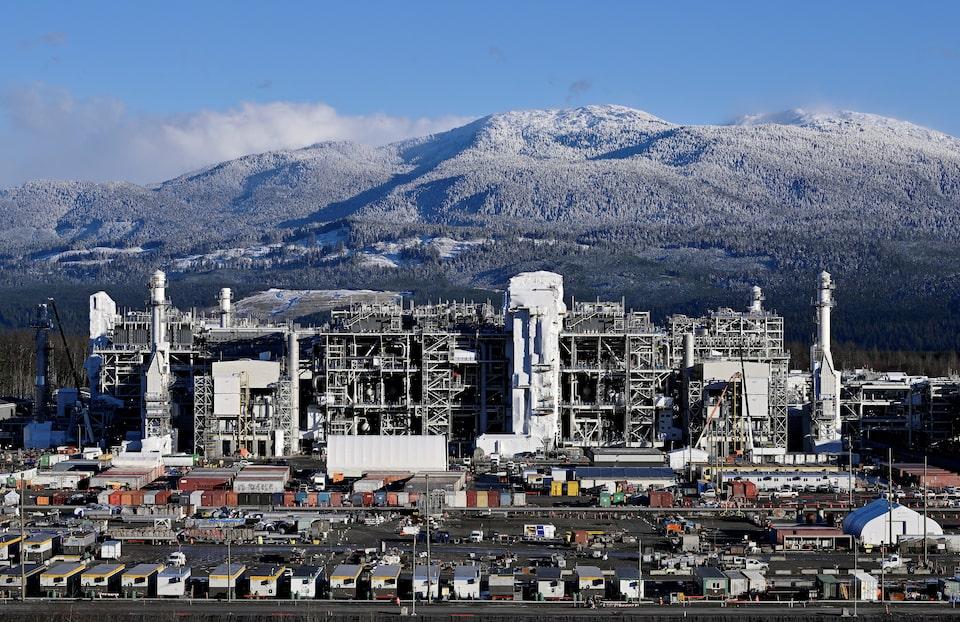
Train 2 down nearly a month after initial start-up, sources say LNG Canada to provide update later this week, spokesperson says Facility faces technical issues, no export increase despite Train 2 start HOUSTON, Dec 4 (Reuters) - Shell-led (SHEL.L) , opens new tab LNG Canada's second processing unit, known as Train 2, remains down nearly a month after its initial start-up, two sources told Reuters. The company said on November 20 that a re-start had been scheduled for December 1 and would last about two weeks. Sign up here. A spokesperson for LNG Canada said on Thursday it expects to provide an update later this week. Located in Kitimat, British Columbia, the complex is the first major LNG export facility in Canada and the first on North America's West Coast with direct access to Asia, the world's largest market for the liquid fuel. When fully operational, LNG Canada is expected to export 14 million metric tonnes of LNG per year. Since starting up in July, the plant has had challenges, with its first train experiencing technical issues involving a gas turbine and refrigerant production unit. The company on November 6 announced it had started production from its second train, but data from financial firm LSEG has not shown an increase in exports since then. In both October and November, LNG Canada exported just above half a million tonnes of the superchilled gas, the LSEG data showed. LNG Canada is a joint venture between Shell, Malaysia's Petronas (PGAS.KL) , opens new tab, PetroChina (601857.SS) , opens new tab, Japan's Mitsubishi Corp (8058.T) , opens new tab and South Korea's KOGAS (036460.KS) , opens new tab. https://www.reuters.com/business/energy/shell-led-lng-canadas-second-processing-unit-still-down-sources-say-2025-12-04/
2025-12-04 21:20
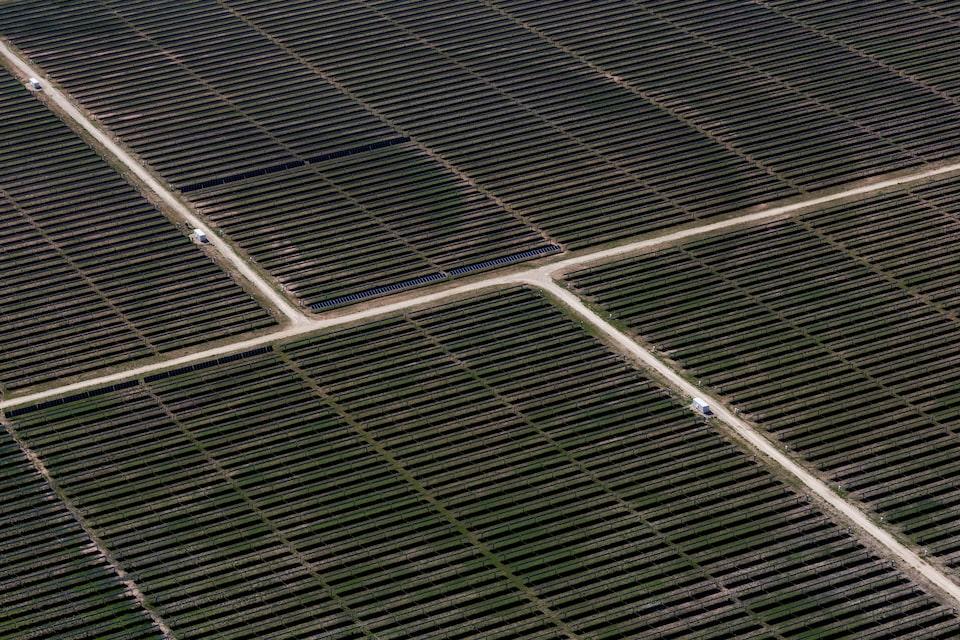
Dec 4 (Reuters) - Dozens of U.S. solar companies urged federal lawmakers to revoke a Trump administration policy that has stalled project permits, they said in a letter to leaders in Congress on Thursday. WHY IT'S IMPORTANT The letter highlights mounting concerns from project developers over stepped-up scrutiny of solar permits by U.S. President Donald Trump's Interior Department at a time of rising energy demand. Sign up here. KEY QUOTE "Businesses need certainty in order to continue making investments in the United States to build out much-needed energy projects," the companies wrote in a letter to Senate Majority Leader John Thune, House of Representatives Speaker Mike Johnson, Senate Minority Leader Chuck Schumer and House Minority Leader Hakeem Jeffries. The companies stressed that the Interior Department's actions were "tantamount to a nearly complete moratorium on permitting." CONTEXT A memo in July from Interior Secretary Doug Burgum required his personal sign-off for dozens of kinds of solar permits, affecting not only projects on federal lands but also those on private lands involving federal resources or consultation. It is among the many measures implemented by the government this year to restrict wind and solar energy, which Trump considers unreliable, expensive, and unfairly subsidized. BY THE NUMBERS The Solar Energy Industries Association estimates that more than 500 solar projects are at risk of delays or cancellation. The letter is signed by 143 companies, including solar developers, installers, manufacturers and power providers. THE REPLY The Interior Department was not immediately available for comment. https://www.reuters.com/legal/litigation/us-solar-companies-urge-congress-address-trumps-solar-permit-freeze-2025-12-04/
2025-12-04 21:01
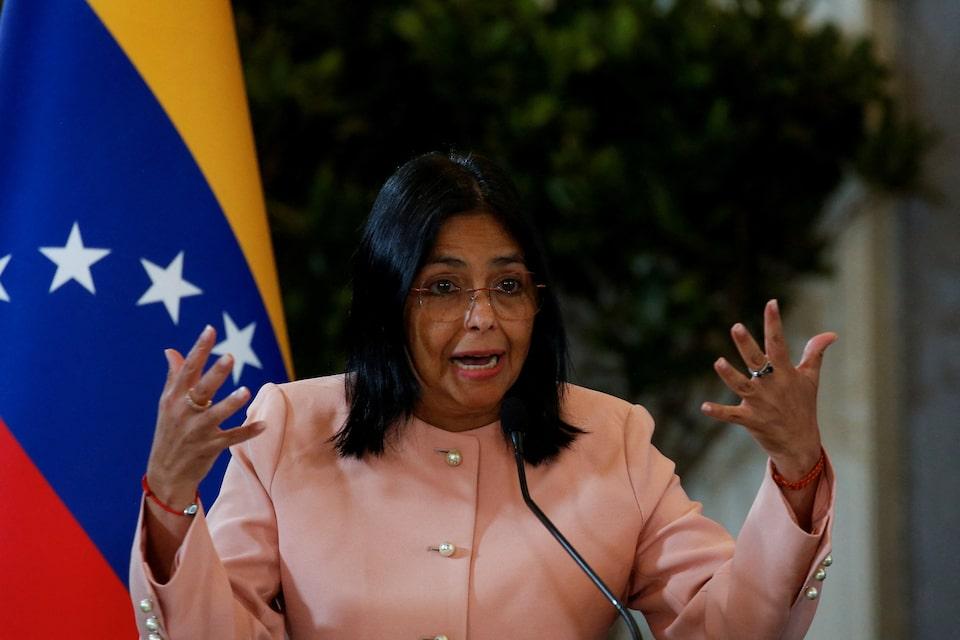
Dec 4 (Reuters) - Venezuelan Vice President Delcy Rodriguez on Thursday presented the government's 2026 budget proposal to the National Assembly, urging lawmakers to approve spending of some $19.9 billion. Nearly 78% of the funding would be spent on social programs, Rodriguez said. Sign up here. The OPEC country's oil production rose to 1.17 million barrels per day (bpd) in November from 1.13 million bpd the previous month, while output of refined products averaged 174,800 bpd in October, an increase from 146,200 bpd in September, according to figures she presented. https://www.reuters.com/world/americas/venezuela-asks-lawmakers-approve-2026-budget-199-billion-2025-12-04/
2025-12-04 20:56
Freeport not counting on deals for growth, CEO says Says more government incentives needed to boost US copper output Grasberg expected to hit 90% capacity by mid-2026, back fully by end of 2027 NEW YORK, Dec 4 (Reuters) - Copper producer Freeport-McMoRan (FCX.N) , opens new tab would pursue an acquisition if "the stars and the moon" aligned, but is not counting on deals to grow and is focused on developing existing assets, its CEO said on Thursday. As an M&A frenzy envelops the mining industry, Freeport's stance stands apart as global demand for the key electrification metal pushes rivals BHP (BHP.AX) , opens new tab, Anglo American (AAL.L) , opens new tab, and others to scramble for deals. Sign up here. "You never say never about M&A, because we keep relationships around the industry ... but we're not counting on that," Kathleen Quirk told the Reuters NEXT conference in New York. "The stars and the moon and everything would need to align." FREEPORT EYES NEW TECHNOLOGY The world's largest publicly traded copper company produced 1.26 billion pounds (571,530 metric tons) of copper in the U.S. last year and 4.1 billion pounds (1.86 million metric tons) globally. By the end of the decade, Freeport aims to be producing 800 million pounds annually of copper outside of traditional mines with novel leaching technology in the U.S. That is roughly the size of a new mine's output, yet at lower cost and with fewer regulatory issues. "In the next five years in our U.S. business, we have the opportunity to grow by up to 50% through internal organic growth," said Quirk, who became CEO of the Phoenix-based company last year after previously serving as finance chief. "We have the opportunity ... to essentially build a new mine without spending a huge amount of capital." Freeport, which operates mines across the Americas and in Indonesia, would be interested only in buying a rival copper company or mine that could have synergies with its existing assets and technology, Quirk said. Copper is used in construction, transportation, electronics, and many other industries. The U.S. imports roughly half of its copper needs each year and has only two active copper smelters, one of which Freeport owns. SEEKING MORE INCENTIVES FROM WASHINGTON Quirk called on the U.S. government to do more to protect the domestic copper industry from competitive global threats. President Donald Trump in July imposed a 50% tariff on copper pipes, tubes, and other semi-finished products, but left out copper input materials such as ores, concentrates, and cathodes that Freeport produces. The move was essentially a boost for Chile and Peru, two of the world's largest copper miners and major suppliers, yet for Freeport, the final levy missed market expectations. "If the U.S. wants to be self-sufficient in copper, some kind of incentive would help," said Quirk, adding that permitting reform is one of the company's other requests from Washington. "We're not going and asking Washington for handouts, but we are spending a lot of time with the administration to educate them on what we do." GRASBERG MINE FULLY ONLINE IN 2027 After a fatal accident in September at Freeport's Grasberg copper and gold mine in Indonesia forced operations to halt, production should be 90% restored next year and fully back online by 2027, Quirk said. The disaster was caused by mud that breached a previously undetected hole in the mine's retired open pit and rushed into a zone where a two-person electrical crew and a five-person boring crew were working. Mud reached that area in minutes. Quirk went to Indonesia after the disaster to meet with the miners' families and recovery workers. "Our team has taken it very hard, but we've unified together, and we're committed to coming out stronger and safer in the future," Quirk said. View the live broadcast of the Reuters NEXT World Stage here and read full coverage here. https://www.reuters.com/business/copper-giant-freeports-ceo-wont-count-mergers-growth-2025-12-04/
2025-12-04 20:24
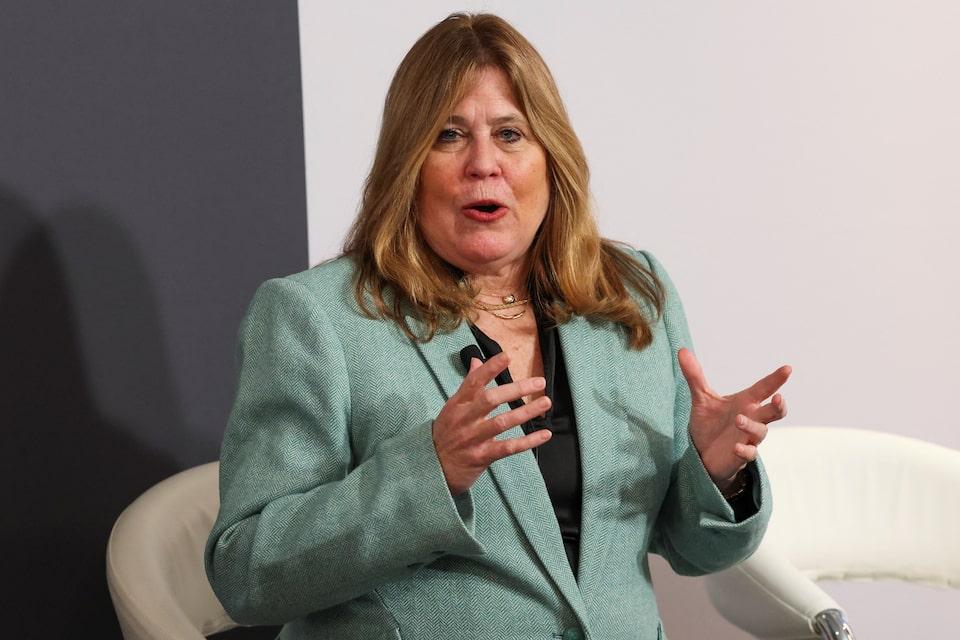
DUBAI/NEW YORK, Dec 4 (Reuters) - Visa (V.N) , opens new tab plans to launch operations in Syria following an agreement with the war-torn country's central bank on a roadmap to develop a digital payments ecosystem, the bank's governor and the company said on Thursday. "We are glad that we are working with Visa," Syrian central bank governor AbdulKader Husrieh told Reuters NEXT, adding that country officials have further meetings with Visa on Thursday. Sign up here. "We are working to have a fully finished payment system in which we have global partners because ... our vision is to have Syria as hub - a financial hub - for the Levant" region, Husrieh added, speaking via video link at the Reuters NEXT conference in New York. Visa, in a separate statement, said: "The immediate focus will be on working with licensed financial institutions to develop a robust and secure payments foundation. This includes issuing payment cards and enabling digital wallets using global standards." In November, the International Monetary Fund visited Damascus and said it would provide technical assistance on financial sector regulation, the rehabilitation of payment and banking systems and rebuilding the central bank's capacity to effectively implement monetary policy for low and stable inflation and supervision of the banking system. Husrieh on Thursday said the IMF was providing technical assistance but that it was not yet under any formal fund program. The World Bank's estimate that Syria's gross domestic product would grow by a modest 1% in 2025 also did not reflect "the reality" of the impact that easing sanctions and returning refugees would likely have, he added. Syrian banks were largely isolated from the global financial system during the civil war, after President Bashar al-Assad's crackdown on anti-government protests in 2011 prompted Western states to impose sweeping sanctions, including measures against the central bank. Assad was ousted in an offensive by Islamist-led rebels last year, and the interim government has since moved to restore international ties. Those efforts culminated in a May meeting in Riyadh between interim President Ahmed al-Sharaa and U.S. President Donald Trump, followed by Sharaa’s visit last month to the White House. Washington has since eased significant parts of its sanctions program. European governments have announced the end of their own economic sanctions on Syria. View the live broadcast of the Reuters NEXT World Stage here and read full coverage here. https://www.reuters.com/world/middle-east/visa-plans-syria-launch-after-deal-with-central-bank-digital-payments-2025-12-04/