2025-09-08 19:44
GENEVA, Sept 8 (Reuters) - The Red Cross said on Monday it has distributed over 300 tents to displacement camps in southern Gaza in recent days but warned that the current supply of shelter materials to the enclave falls far short of urgent needs on the ground. In addition to the 300 tents, more than 1,500 are expected to be delivered in coming days, the Red Cross added, but said hundreds of thousands of people desperately need new tents or tarpaulins after months of wear and tear on existing supplies. Sign up here. "Many displaced families are living in appalling conditions -- some among the rubble of their destroyed homes, others in makeshift tents constructed from tarpaulins and scrap metal," Sarah Davies, a spokesperson for the International Committee of the Red Cross, told Reuters. The United Nations Office for the Coordination of Humanitarian Affairs told Reuters separately that humanitarian groups had sent "a limited number of tents" into Gaza in recent weeks, but many more were needed. Over 1.3 million Gazans currently lack tents, according to the United Nations, and further displacement is anticipated as Israel conducts a major assault on Gaza City, where hundreds of thousands of residents are living among the ruins. COGAT, the Israeli defence agency that deals with humanitarian issues, told Reuters that 5,000 tents had entered Gaza since restrictions on shelter materials were lifted near the end of August. Aid organizations say Israel effectively blocked deliveries of materials for shelter for nearly six months, and despite the lifting of the restriction last month, international NGOs such as CARE International, ShelterBox, and the Norwegian Refugee Council reported on Monday they have yet to receive authorization to deliver such materials. COGAT said: "Every organization that wants to enter tents is absolutely allowed to do so." The International Organization for Migration told Reuters it still has about 35,000 tents as well as half a million tarpaulins waiting in Jordan pending customs clearance. "It's frustrating. We need political solutions and then you can remove things like customs clearance and then we can move quicker," said Karl Baker, Regional Crisis Coordinator and head of IOM Gaza Response. Israel's assault has reduced much of the enclave to rubble and caused a humanitarian catastrophe. More than 64,000 Palestinians have been confirmed killed, according to health officials in Gaza. The war began with an assault by Hamas-led fighters on southern Israel in 2023. The attackers killed 1,200 people and took more than 250 hostages to Gaza, according to Israeli tallies. https://www.reuters.com/world/middle-east/some-tents-enter-gaza-red-cross-says-enclave-needs-many-more-2025-09-08/

2025-09-08 19:34
Layoffs aim to streamline operations and cut costs Oil industry faces challenges from OPEC+ and economic uncertainty ConocoPhillips is pursuing expensive projects like Willow in Alaska HOUSTON, Sept 8 (Reuters) - ConocoPhillips (COP.N) , opens new tab must sharpen its focus on capital discipline and investment priorities in order to regain its competitiveness against peers as oil prices and revenues fall, investors and analysts said, after the company announced last week it would lay off up to 25% of staff to cut costs. The third-largest U.S. oil producer joins majors Chevron (CVX.N) , opens new tab and BP (BP.L) , opens new tab, and the world's largest oil service providers SLB (SLB.N) , opens new tab and Halliburton (HAL.N) , opens new tab, in cutting staff as increased output from OPEC+ and economic uncertainty due to unpredictable U.S. trade policy have contributed to a slump in crude prices, pushing down oil company earnings to their lowest since the COVID-19 pandemic. Sign up here. Crude prices , which have fallen around 12% this year, are expected to decline again in 2026 as supply outpaces demand, according to the U.S. Energy Information Administration. "If you're cutting 25% of your workforce, that also tells me how inefficient things are," said Michael Alfaro, chief investment officer at Gallo Partners. Alfaro was among the investors and analysts who told Reuters they were surprised by the extent of ConocoPhillips' layoffs, which could impact up to 3,250 employees globally. On top of the gloomy oil market outlook, ConocoPhillips' specific challenges include big-ticket projects that will benefit the company in the long-run, but are capital intensive upfront. And after a string of acquisitions in recent years, including Marathon Oil for $22.5 billion last year, the company lost focus on controlling costs, CEO Ryan Lance told employees last week. ConocoPhillips needs to prioritize major projects like its Willow oil project in Alaska and developing its liquefied natural gas business, two efforts that will drive future cash flow, said Stewart Glickman, director of equity research at financial intelligence firm CFRA. That meant it needed to cut costs elsewhere, he added. Still, some investors said the company should do more to control rising capital expenditures. "They're solving the staff problem instead of solving the capital allocation problem," said Josh Young, CIO at Bison Interests, which has exposure to ConocoPhillips. "They're not judicious enough in their capital allocation, in my mind." The company does, however, hold high-quality assets, Young added. ConocoPhillips declined to comment for this story. Capital expenditures this year are expected to be between $12.3 billion and $12.6 billion, about 10% lower than ConocoPhillips and Marathon's pro forma capex last year. In August, executives said they expected next year's capex to be lower. ConocoPhillips' capex totaled $11.2 billion in 2023 and $10.2 billion in 2022. COST SAVINGS OPPORTUNITIES In its second quarter earnings, the company said it had identified $1 billion in cost reduction opportunities, on top of the more than $1 billion in cost savings after acquiring Marathon. It also raised its asset sales target to $5 billion by 2026, after achieving its previous target of $2 billion ahead of schedule. In a video message to employees last week, Lance said controllable costs had risen by about $2 per barrel since 2021, making it harder for the firm to compete and putting it behind peers. Higher inflation over the past few years and tariffs on imports imposed by the U.S. government are adding cost pressures for oil producers like ConocoPhillips, said Simon Wong, energy portfolio manager at investment firm Gabelli, which met with the company last week. Lance said during a town hall meeting last Thursday that a review of the business identified roughly 600 processes or activities where the company could take steps to simplify work. "It's not about trying to do more with less. We really have to take out the things that aren't adding value in this company," Lance said. The oil industry has seen a wave of mega-mergers in recent years, including Exxon Mobil's (XOM.N) , opens new tab acquisition of Pioneer and Chevron's purchase of Hess, as producers have consolidated to secure areas of lower-cost production. That has also meant a steady stream of layoff announcements. After incorporating Marathon, ConocoPhillips has a significant presence in key U.S. shale basins such as the Permian, Eagle Ford and Bakken. Technology and operating efficiencies likely mean fewer staff are needed in those fields, CFRA's Glickman said. The company needs to simplify and remove any overlapping positions, said Bill Smead, founder and CIO at Smead Capital Management, which holds a $169 million position in the Houston-based company, according to data from LSEG. "This is exactly what (ConocoPhillips) should be doing," he said. https://www.reuters.com/business/energy/conocophillips-deep-layoffs-highlight-need-capital-discipline-analysts-say-2025-09-08/

2025-09-08 19:33
Yen falls on political uncertainty in Japan French parliament votes to oust prime minister Investors pricing in slight chance of outsized September Fed cut NEW YORK, Sept 8 (Reuters) - The dollar extended its decline on Monday in the wake of Friday's weak U.S. jobs report, which all but cemented an interest rate cut this month, even as the yen fell after Japanese Prime Minister Shigeru Ishiba announced his resignation over the weekend. In Europe, the euro showed little reaction to news that France's parliament voted to oust Prime Minister Francois Bayrou on Monday. The parliament brought down the government over its plans to tame the ballooning national debt, plunging the euro zone's second-largest economy deeper into political crisis. Sign up here. Europe's common currency was last up 0.2% on the day versus the dollar at $1.1751 . Analysts said the outcome of the vote had been expected. In Japan, Ishiba on Sunday said he would step down, ushering in a potentially lengthy period of policy uncertainty for the world's fourth-largest economy, the most heavily indebted industrialised nation. That pushed the yen lower across the board and by mid-morning trading the dollar was up just 0.2% against the Japanese currency at 147.695 , after rising by as much as 0.8% on the day. But the market's attention remained firmly pinned on the U.S. dollar after a non-farm payrolls shock on Friday which reinforced expectations that the Federal Reserve will resume cutting interest rates at a policy meeting later this month. "The driving force in the foreign exchange market remains the dollar and U.S. developments," said Marc Chandler, chief market strategist at Bannockburn Forex in New York. "People can talk about Japanese politics, but the real driver of dollar/yen is not Japanese politics, or Japanese interest rates. It's U.S. interest rates, and with the market pricing in about a 10% chance of a 50 basis-point cut, the dollar is falling." Fed funds futures are pricing in a 90% chance of a standard 25 basis-point cut this month and a 10% chance of 50-bp rate decline, according to LSEG estimates. The nonfarm payrolls report showed U.S. job growth plunged in August and the unemployment rate increased to nearly a four-year high of 4.3%. The dollar index edged down 0.4% to 97.51, having slipped more than 0.5% on Friday. Against the Swiss franc, the dollar fell to its lowest since July 24, and was last down 0.5% at 0.7937 . UPTICK IN THE DOLLAR? "We feel there's a chance for a surprise uptick in the dollar especially if the inflationary figures to arrive in the form of PPI (producer price index) and CPI (consumer price index) paint a picture in which prices are just simply getting out of control," said Juan Perez, director of trading at Monex USA in Washington. In other currency pairs, the yen slid against the euro, falling to its lowest in more than a year . The euro was last up 0.4% at 173.40 yen. Investors are also focused on the possibility that Japan's Ishiba could be replaced by an advocate of looser fiscal and monetary policy, such as Liberal Democratic Party veteran Sanae Takaichi, who has criticised the Bank of Japan's interest rate hikes. Japanese stocks earlier surged while government bonds (JGBs) were steady, although yields on super-long JGBs hovered near record highs. The yen hardly reacted to data on Monday showing Japan's economy expanded much faster than initially estimated in the second quarter. Elsewhere, sterling edged up 0.3% against the dollar to $1.3545, having risen more than 0.5% on Friday. The Australian and New Zealand dollars rose 0.5% to US$0.6590 and 0.8% to US$0.5938, respectively. Also last Friday, U.S. Treasury Secretary Scott Bessent called for renewed scrutiny of the Fed, including its power to set interest rates, as the Trump administration intensifies its efforts to exert control over the central bank. President Donald Trump is considering three finalists to replace Fed Chair Jerome Powell, whom he has criticised all year for not cutting rates as he has demanded. https://www.reuters.com/world/middle-east/us-dollar-falters-rate-outlook-yen-retreats-amid-japan-uncertainty-2025-09-07/
2025-09-08 19:15
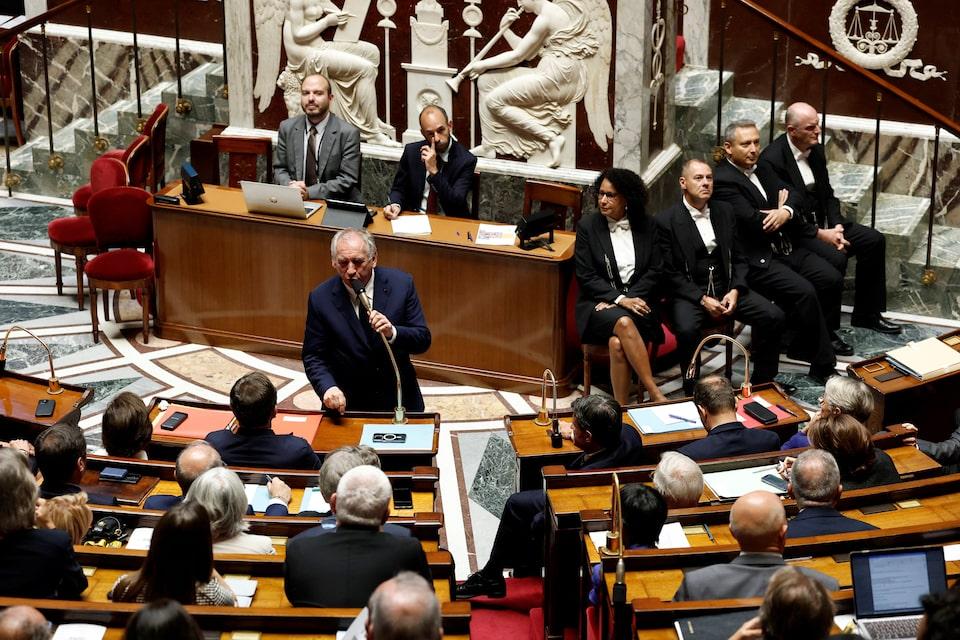
Government fall kills 44 billion euro deficit cut plan France now pays more to borrow than Greece, Spain Political chaos chills business and consumer spending PARIS/LONDON, Sept 9 (Reuters) - The collapse of France's latest government leaves the euro zone's second-biggest economy lurching deeper into a morass of feeble growth, high borrowing costs and a debt burden becoming one of Europe's heftiest. Lawmakers' rejection of Prime Minister Francois Bayrou's government in a no-confidence vote on Monday crushed any hope of making serious headway next year on France's budget deficit - the biggest in the euro zone. Sign up here. Opposition parties toppled the veteran centrist over his plans for a 44 billion euro ($52 billion) budget squeeze that will now inevitably be heavily watered down by whomever President Emmanuel Macron taps as his successor. "There is no upside scenario, there is no way out, there is no credible scenario where you end up with the same amount of fiscal consolidation," said Frederik Ducrozet, head of macroeconomic research at Pictet Wealth Management. Finance Minister Eric Lombard has acknowledged the next government, which must draft a 2026 budget by October 7, would be less ambitious than Bayrou, a longtime debt hawk. Bayrou's successor is also likely to rely more heavily on taxes than spending cuts to reduce the budget deficit with the Socialists - from whose ranks the next prime minister could come - calling for a 15 billion euro tax hike on the ultra-wealthy. But financial markets may frown on tax increases, especially broader measures, fearful they may choke off growth - already a worry in Britain. "What we're increasingly seeing is a reluctance of market participants to buy the taxation route as a viable way to reduce big fiscal deficits," said Russel Matthews, portfolio manager at RBC BlueBay Asset Management, which is betting against French bonds. "It's just becoming less credible," he said. French government bonds and stocks responded modestly on Tuesday to the government's collapse, which had been widely expected. DEBT TRAP Macron is not currently signalling plans to call a snap legislative election, and polls indicate doing so would not necessarily give a majority to any one party and break the deadlock. With France's politics in chaos and its public finances adrift, households and businesses are already hesitant to spend or invest. "Retail customers are like companies. The more visibility you have, the more you are able to invest and spend money for the future," automaker Renault's Chief Growth Officer Fabrice Cambolive told Reuters. Slow growth is particularly problematic for a high-debt country like France, because it cannot simply count on growing its way out from under its debt burden, which reached 3.3 trillion euros in June or 114% of GDP. That's lower than Greece's 153% or Italy's 138%. But, unlike France, both countries run considerable budget surpluses before taking interest payments into account. French debt payments are set to reach more than 100 billion euros by 2029 - up from 59 billion in 2024 - becoming the single biggest budget expense if growth slows or deficit reduction is relaxed, the Cour des Comptes audit office warned earlier this year. Meanwhile, Germany's plans to invest billions of euros in Europe's biggest economy after years of restraint also leaves France in an unflattering light. "The situation is improving everywhere except in France, which has become somewhat of an ugly duckling," said Oxford Economics economist Leo Barincou. With perennially slow growth and huge debt, Italy had long been Europe's problem child for financial markets, but "now France is clearly becoming that country," he added. MARKET SCRUTINY France's bond market, the biggest in the euro zone, was once considered among the main safe alternatives for investors looking beyond Germany. But since a snap legislative election delivered a hung parliament last year, France has been left paying a higher risk premium on its debt. . France, which faces a credit rating decision from Fitch on Friday, now pays more for longer-term debt than Greece and Spain, countries at the heart of the bloc's 2011 debt crisis. Its benchmark 10-year borrowing cost was on the cusp of rising above Italy's on Tuesday. At the start of 2024, Italian 10-year borrowing costs had been more than a whole percentage point higher than France's. Economist Mathieu Plane at the OFCE think-tank said the biggest risk was that France would have to durably pay a high risk premium amid political deadlock. "Then few decisions will be made about the long-term, on innovation, education, everything that can make future growth," he said. ($1 = 0.8527 euros) https://www.reuters.com/world/europe/crisis-prone-france-sinks-deeper-into-debt-quagmire-2025-09-09/
2025-09-08 18:11
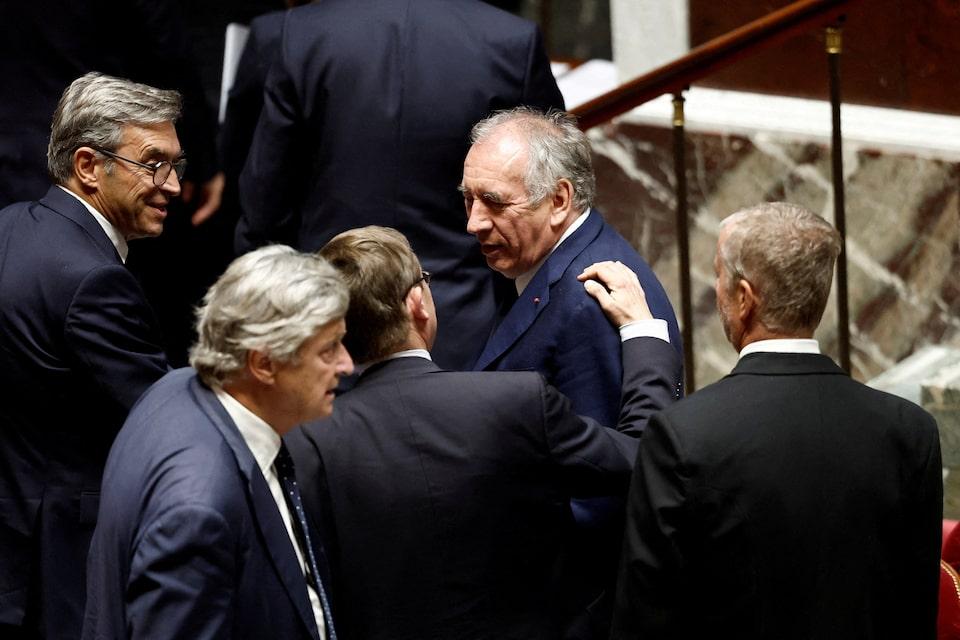
LONDON, Sept 8 (Reuters) - French Prime Minister Francois Bayrou lost a confidence vote on Monday, plunging the euro zone's second largest economy deeper into political crisis. The euro showed little initial reaction, showing a 0.2% daily rise to trade at $1.1743, down from an earlier high of $1.1756 , while French bond and stock futures , both held onto the day's gains, up 0.3% and 0.6%, respectively. Sign up here. Financial markets had anticipated the no confidence vote would fail, while French markets face another test on Friday when Fitch Ratings reviews its AA- French rating with a negative outlook. COMMENTS: JUAN PEREZ, DIRECTOR OF TRADING, MONEX USA, WASHINGTON: "There was very little reaction to the French vote and the resignation of the prime minister because it was desired and expected. Truth is that guy needed to go and markets are happy that it brings potential new contention within the country for leadership. Bonds moving a little but FX-wise this had no impact since it was not a surprise." CHRIS SCICLUNA, HEAD OF ECONOMIC RESEARCH, DAIWA CAPITAL MARKETS, LONDON: "We've entered a period of uncertainty. The outcome was as expected, so markets should react in a modest way." "Macron now has his work cut out, trying to find a prime minister who can get enough support to pass a budget in parliament. "Over the near-term, I'm sure everyone in markets expects paralysis and downward pressure on ratings. The French deficit is going to remain big for the foreseeable future and how much (bond yield) spreads widen from here is open to question." TOM ROSS, HEAD OF HIGH YIELD, JANUS HENDERSON INVESTORS, LONDON: "This is not the last time we are going to be talking about budget deficits and fiscal spending and quite how governments deal with this." "This is one of the most prominent areas of how this has tried to come through in terms of impacting markets. The market hasn’t taken a huge amount of note ." "Europe had potentially this open goal, but then you have government and political situations like this that give investors pause for thought in terms of how they are going to execute on that." SIMON EDELSTEN, FUND MANAGER AT GOSHAWK ASSET MANAGEMENT, LONDON: "The bond markets seem to have anticipated this and longer-dated French bonds may continue at current high yields, as strong fiscal measures seem politically impossible. However, such issues are widely spread across Europe, (with) the UK chancellor also facing problems producing a credible budget in November. All this is against a background of U.S. bond yields rising - though in a different environment of tax cuts, but a feeble-seeming economy. The French budget situation continues to be the worst of the larger problems - but Europe has a range of social care costs, which seem destined to rise ahead of likely tax receipts. As debt service costs also are rising, the road before a crisis becomes shorter. However, politicians still see grasping this nettle as electoral suicide." MICHAËL NIZARD, HEAD OF MULTI ASSET AND OVERLAY, EDMOND DE ROTHSCHILD ASSET MANAGEMENT, PARIS: "Whichever outcome of the current political crisis, the probability of a significant public finances reform will remain low, so much so that financial markets themselves seem resigned and might settle for a scenario where the budget deficit does not deteriorate further. Yet, without being catastrophic, the situation is worrisome as France diverges from the rest of the euro zone, with the largest budget deficit (-5.8% in 2024; -5.4% expected in 2025 versus a euro zone average around -3%) and public debt on an upward trajectory (113% in 2024 and 117% expected in 2025)." (This story has been refiled to clarify that the vote is a 'confidence' vote, not a 'no-confidence' vote, in the headline) https://www.reuters.com/world/europe/view-french-government-loses-no-confidence-vote-parliament-2025-09-08/
2025-09-08 16:36
LONDON, Sept 8 (Reuters) - British hedge fund Marshall Wace posted positive returns in two of its funds in August, a source close to the matter told Reuters on Monday. Co-founded by British financier Paul Marshall, the firm which manages over $70 billion in assets, returned 0.41% in its Eureka Fund last month and this brought performance to a positive 6.49% for the year to end-August, the source said. Sign up here. The hedge fund's Market Neutral Tops fund returned 1.95% for August and is up 13.15% for the year to date, the source added. Systematic stock trading hedge funds, such as Marshall Wace, are up over 12% for 2025 so far, said Goldman Sachs in a note to clients this week. https://www.reuters.com/markets/europe/marshall-wace-posts-positive-performance-two-funds-says-source-2025-09-08/