2025-09-08 16:30
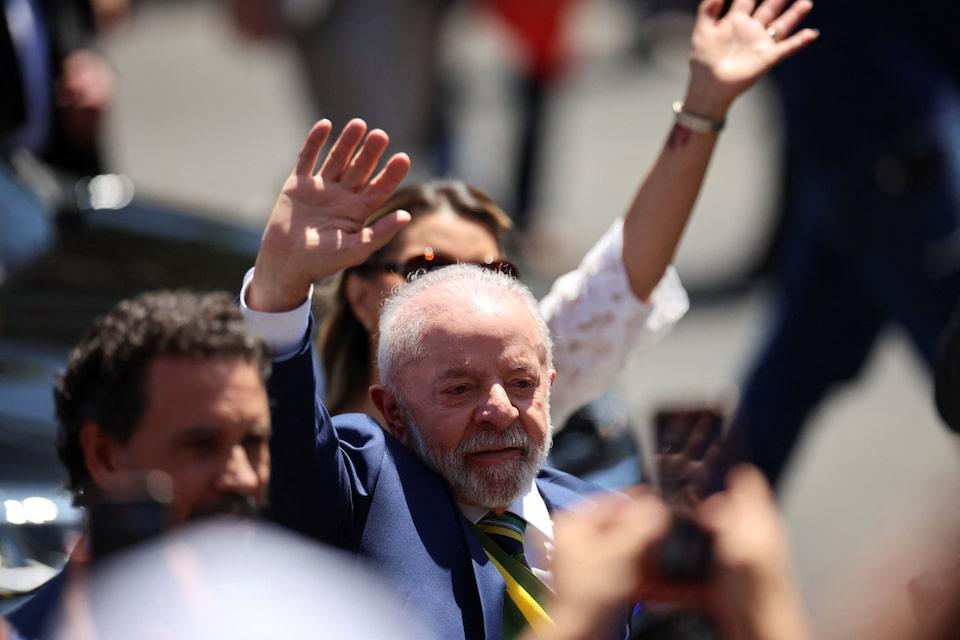
BRASILIA, Sept 8 (Reuters) - Brazilian President Luiz Inacio Lula da Silva said on Monday that more trade and financial integration among the BRICS group of developing nations would help mitigate the effects of protectionism. "Tariff blackmail is being normalized as a tool for conquering markets and interfering in domestic issues," Lula said in the government's published remarks of a Monday virtual meeting of BRICS leaders, without directly citing the United States. Sign up here. BRICS countries have become "victims of unjustified and illegal trade practices," Lula said. BRICS members Brazil and India are among the countries hardest hit by U.S. President Donald Trump's tariffs, while new sanctions against Russia over the war in Ukraine are expected. "Increasing barriers and complicating transactions will not help. Neither would the linking of trade measures to non-trade matters," India's Prime Minister Narendra Modi said, according to a speech shared by India's Foreign Ministry. Lula told Reuters in an interview last month he would raise the issue of Trump's tariffs with BRICS. The 50% levies on most Brazilian exports are linked to what Trump has described as a "witch hunt" against his ally and former Brazilian President Jair Bolsonaro, who is on trial for allegedly plotting a coup. U.S. tariffs on Indian goods were doubled last month to as high as 50% in response to India's continued imports of Russian oil. "Certain countries have launched trade wars and tariff wars, severely impacting the world economy and seriously undermining international trade rules," Chinese leader Xi Jinping said during the meeting, according to China's state-run news agency Xinhua. The virtual meeting, which lasted 1-1/2 hours, brought together leaders from Brazil, Russia, India, China, South Africa, Egypt, Indonesia, Iran, the United Arab Emirates, and Ethiopia, Brazil's government said in a separate statement. The group discussed the risks posed by the resurgence of unilateral measures, particularly in international trade, and explored ways to strengthen mechanisms for solidarity, coordination, and trade among BRICS nations, the statement said. https://www.reuters.com/world/china/brazils-lula-calls-tighter-trade-ties-brics-tariffs-bite-2025-09-08/
2025-09-08 12:25
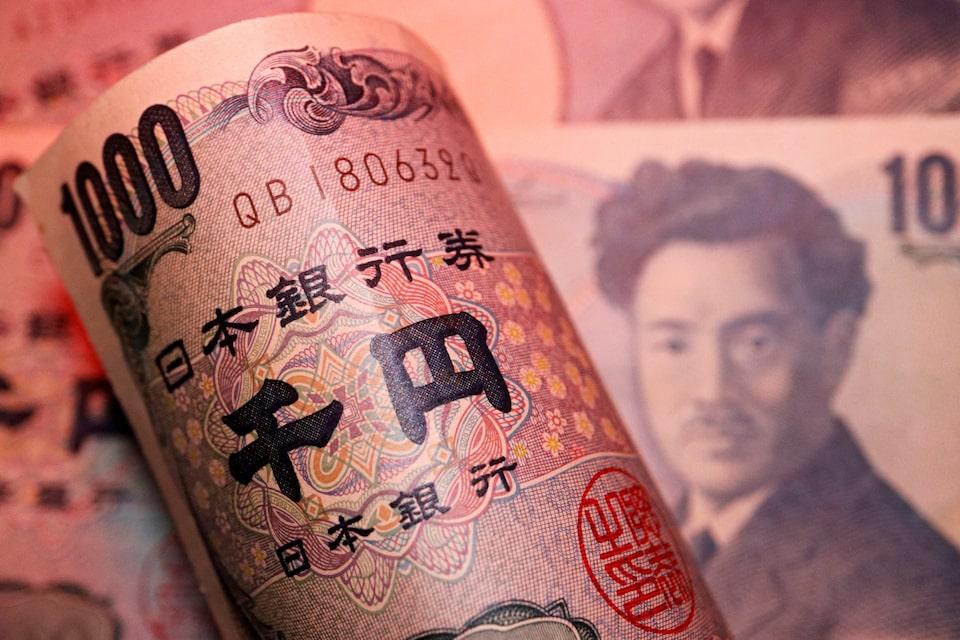
Yen falls on political uncertainty in Japan French politics also in focus Investors pricing in slight chance of outsized September Fed cut SINGAPORE/LONDON, Sept 8 (Reuters) - The yen eased on Monday after Japanese Prime Minister Shigeru Ishiba announced his resignation over the weekend, while the dollar was on shaky ground as Friday's weak U.S. jobs report cemented expectations of a Federal Reserve rate cut this month. The focus for markets will also be on French Prime Minister Francois Bayrou's confidence vote later in the day, which he is expected to lose. The announcement of the vote, which Bayrou himself called, has plunged the euro zone's second-largest economy deeper into political crisis. Sign up here. Japan's Ishiba on Sunday said he would step down, ushering in a potentially lengthy period of policy uncertainty for the world's fourth-largest economy, the most heavily indebted industrialised nation. The yen weakened sharply in Asia trade, leaving the dollar up by as much as 0.78% at one point before steadying to trade with a 0.26% gain on the day at 147.77 . The Japanese currency similarly slid to its lowest in more than a year against the euro , which rose 0.3% on the day to 173.25 yen. Investors are focusing on the chance of Ishiba being replaced by an advocate of looser fiscal and monetary policy, such as Liberal Democratic Party veteran Sanae Takaichi, who has criticised the Bank of Japan's interest rate hikes. "The probability of an additional rate hike in September was never seen as high to begin with, and September is likely to be a wait-and-see," Hirofumi Suzuki, chief currency strategist at SMBC, said of the BOJ's next move. "From October onwards, however, outcomes will in part depend on the next prime minister, so the situation should remain live." Japanese stocks surged while government bonds (JGBs) were steady, though yields on super-long JGBs hovered near record highs. "With the LDP lacking a clear majority, investors will be cautious until a successor is confirmed, keeping volatility elevated across yen, bonds and equities," said Charu Chanana, chief investment strategist at Saxo. "Near term, that argues for a softer yen, higher JGB term-premium, and two-way equities until the successor's profile is clear." The yen hardly reacted to data on Monday showing Japan's economy expanded much faster than initially estimated in the second quarter. SEPTEMBER FED CUT BAKED IN The dollar struggled to recoup its heavy losses after falling sharply on Friday on data that showed further cracks in the U.S. labour market. The nonfarm payrolls report showed U.S. job growth plunged in August and the unemployment rate increased to nearly a four-year high of 4.3%. Investors ramped up bets of an outsized 50-basis-point rate cut from the Fed later this month following the release and are now pricing in a 10% chance of such a move, as compared to none a week ago, according to the CME FedWatch tool. Sterling edged up 0.1% to $1.3534, having risen more than 0.5% on Friday, while the euro steadied at $1.1725, after hitting a more than one-month high on Friday. The dollar index edged down 0.2% to 97.7, having tumbled more than 0.5% on Friday. "(The payrolls report) has resulted in the dollar index falling back below support at the 98.000-level although the negative impact on the U.S. dollar is more modest than implied by the drop in short-term U.S. yields," MUFG currency strategist Lee Hardman said in a note on Monday. "The weak nonfarm payrolls report for August has reinforced expectations that the Fed will resume cutting rates this month, and has even encouraged expectations that they could begin with a larger 50-bp rate cut similar to last September." U.S. Treasury Secretary Scott Bessent on Friday called for renewed scrutiny of the Fed, including its power to set interest rates, as the Trump administration intensifies its efforts to exert control over the central bank. President Donald Trump is considering three finalists to replace Fed Chair Jerome Powell, whom he has criticised all year for not cutting rates as he has demanded. Elsewhere, the Australian and New Zealand dollars each rose 0.5% to $0.6585 and $0.5926, respectively. https://www.reuters.com/world/middle-east/yen-dented-political-uncertainty-grips-japan-dollar-fragile-2025-09-07/
2025-09-08 12:14
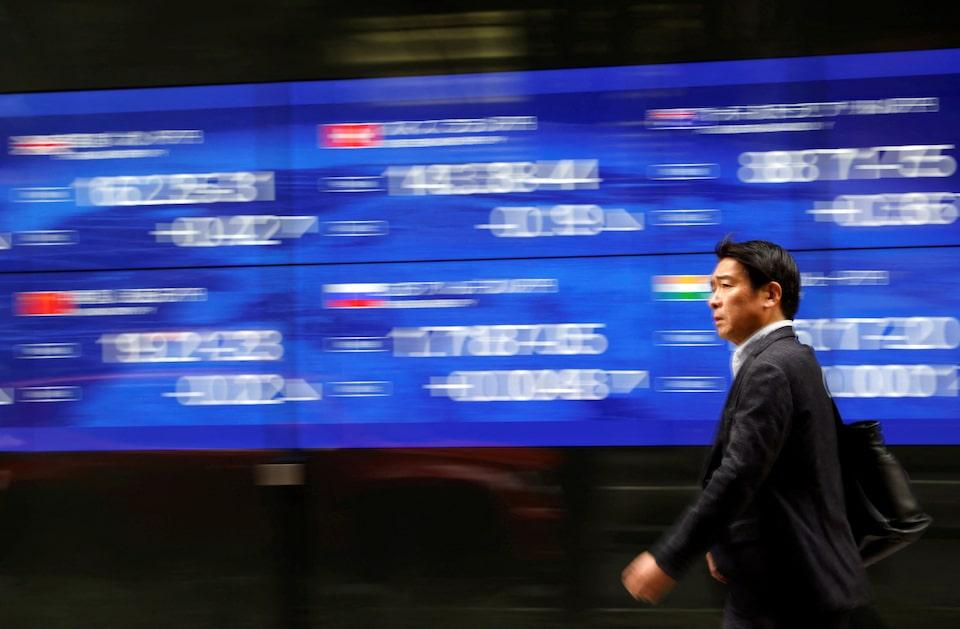
Yen weakens, Nikkei rises 1.8% after Ishiba's resignation Stocks rise as traders pencil in rate cut in September French political quagmire adds to investor angst US inflation data this week also in focus SINGAPORE/LONDON, Sept 8 (Reuters) - Stocks rose and Treasury yields held lower on Monday after last week's dismal U.S. labour data sealed the case for an interest rate cut this month, with investors preparing for a week heavy on politics, crucial data and central bank activity. U.S. S&P 500 futures were up about 0.2%, leaving the index set to head back towards the record intraday high hit immediately following last week's jobs data, while European (.STOXX) , opens new tab and Asian shares were up 0.3% and 0.6%, respectively. (.MIAPJ0000PUS) , opens new tab Sign up here. The first political drama of the week took place in Japan, where the yen and longer-dated bonds fell and stocks rose following the resignation of Prime Minister Shigeru Ishiba, as traders bet heightened political uncertainty would make the Bank of Japan less likely to raise rates in the near term. Attention is turning to who will replace Ishiba, and whether it could be an advocate of looser fiscal and monetary policy such as Liberal Democratic Party veteran Sanae Takaichi, who has criticised the BOJ's interest rate hikes. Meanwhile, France could be forced to look for its fifth prime minister in three years as the incumbent Francois Bayrou faces a confidence vote on Monday that he is expected to lose. The selloff in French assets after Bayrou called the vote last month has eased, and French stocks and bonds were slightly outperforming European peers on Monday. (.FCHI) , opens new tab But uncertainty about whether President Emmanuel Macron would try to appoint another prime minister or call fresh parliamentary elections if Bayrou loses means French and wider European assets are not yet out of the woods. A slew of upcoming French debt rating reviews are also on investors' radar. Nor is it just developed markets where investors are watching political developments. A heavy election defeat for Argentine President Javier Milei's ruling party in Buenos Aires province put the country's strained markets on track to extend a recent selloff, while Indonesia's stocks fell and its currency jumped after its well-regarded finance minister Sri Mulyani Indrawati was removed from her position. DOLLAR HELD IN CHECK The political uncertainty in France and Japan is also keeping the dollar in check - even after last Friday's soft jobs data, which has left markets fully pricing in a 25 basis point rate cut from the Fed later this month, and showing a small chance of a 50 basis point cut. The numbers raise "the question as to whether U.S. employment conditions are now shifting from cooling to deteriorating and if the Fed should cut rates faster," said Paul Mackel, global head of FX research at HSBC. He said this had "opened the door" for the dollar to weaken again, but with "political noise around the yen and euro, the likelihood of dollar weakness will be reflected more easily against other currencies". The dollar hit a six-week low against a basket of currencies on Friday after the jobs data . On Monday, while it was down markedly on the Swiss franc, and Antipodean currencies, , the euro was just 0.1% higher at $1.1731 and the dollar was 0.3% higher on the yen at 147. , U.S. Treasury yields dropped sharply on Friday but were last steadier, with the benchmark 10-year yield marginally softer on the day at 4.07% and the rate sensitive two-year yield at 3.49%. U.S. CPI data due on Wednesday will be the last major data point before the Fed's meeting, and a hot print could temper bets on a super-sized rate cut. The European Central Bank meets on Thursday, but is expected to hold rates steady for a second straight meeting. In commodities, gold continued to surge, hitting its latest all-time high of 3,622 an ounce. The precious metal is up 37% this year after rising 27% in 2024. Oil prices climbed after the OPEC+ group agreed over the weekend to raise output at a slower pace from October on expectations of weaker global demand. Brent crude and U.S. West Texas Intermediate crude rose over 2% each. https://www.reuters.com/world/china/global-markets-wrapup-5-2025-09-08/
2025-09-08 12:05
Nasdaq proposes trading tokens tied to stocks and ETPs If approved, move would mark first instance of tokenized securities trading on a US exchange Nasdaq files proposal days after SEC agenda adds crypto trading rules NEW YORK, Sept 8 (Reuters) - Nasdaq (NDAQ.O) , opens new tab is working with U.S. regulators to introduce trading of tokenized securities, becoming the latest major financial player on Wall Street to double down on a boom in tokenization amid an easing of crypto regulations under the Trump administration. If approved, the move would mark the first instance of tokenized securities being allowed to trade on a major U.S. stock exchange, and also signify the most ambitious attempt yet by an exchange operator to bring blockchain-based settlement into the national market system. Sign up here. Nasdaq on Monday filed a proposal with the U.S. Securities and Exchange Commission to tweak its rules to allow for trading of listed stocks and exchange-traded products on its main market in "either traditional digital or tokenized form." The filing comes days after the SEC unveiled its rulemaking agenda, which included a potential amendment of its rules to allow for crypto to be traded on national securities exchanges and alternative trading systems. Investor demand for tokenized assets is rising globally. Proponents of the crypto industry have argued that tokenization can improve liquidity in the financial system. Coinbase (COIN.O) , opens new tab, the largest U.S. crypto exchange, has also previously sought permission from the SEC to offer "tokenized equities" to its customers. Some major global banks, including Bank of America (BAC.N) , opens new tab and Citigroup (C.N) , opens new tab have said they could explore launching tokenized assets, including stablecoins. Neither the New York Stock Exchange nor Cboe Global Markets (CBOE.Z) , opens new tab responded to requests for details on any plans they may have in the works regarding tokenization. In its filing on Monday, Nasdaq said it believes the markets can use tokenization while "continuing to provide the benefits and protections of the national market system." "Wholesale exemptions from the national market system and related protections are neither necessary to achieve the goal of accommodating tokenization, nor are they in investors’ best interests," Nasdaq said. In a post on his LinkedIn profile, Tal Cohen, president of Nasdaq, said the integration of tokenization and traditional markets offers "an extraordinary opportunity" to accelerate trade settlements, automate processes and improve efficiency. However, the World Economic Forum, in a report released in May, pointed to a lack of sufficient secondary-market liquidity as well as the lack of a clear global standard as two major challenges for adoption while the World Federation of Exchanges voiced concern and called on regulators to crack down on the rush to tokenization. Others have cautioned that tokenization could introduce new systemic risks, especially in the absence of stringent regulation. In July, Hester Peirce, a commissioner at the SEC who has frequently spoken positively about cryptocurrency, said tokenized securities would not be able to circumvent existing securities laws. In its filing, Nasdaq referred to Peirce's earlier statement and said its latest proposal to trade tokenized securities would exist within that context. 'SAME MATERIAL RIGHTS' The term "tokenization" is used in a variety of ways, but generally refers to the process of turning financial assets - such as bank deposits, stocks, bonds, funds and even real estate - into crypto assets. Under new SEC Chair Paul Atkins, the agency has been attempting to revamp cryptocurrency regulations and reduce rules Wall Street has criticized as overly burdensome. If the latest policies are adopted, they would represent a major win for the digital asset industry, which has long pushed for tailored rules that would enable crypto to become more enmeshed with traditional finance. On Monday, Nasdaq said that trading of tokenized stocks in Europe is taking place in a way that is "raising concerns" as some trading platforms are offering investors access to tokenized U.S. equities, but they are not providing investors with actual shares in companies. As part of its new proposal, Nasdaq argued it would raise the bar for tokenized securities to have "the same material rights and privileges as do traditional securities of an equivalent class." If those conditions are met, then Nasdaq will trade tokenized securities together with traditional securities "on the same order book and according to the same execution priority rules," it said. "The exchange will not treat tokenized instruments to be equivalent to their traditional counterparts if they do not convey such rights, in whole or in material part ... but instead the exchange will treat these instruments as distinct," Nasdaq added. If Nasdaq's proposal is approved and once the central clearing agency's infrastructure is live, investors could buy a share on Nasdaq and have it settle in token form without changing how orders are routed, priced, surveilled or reported. U.S. investors could see the first token-settled trades of securities by the end of the third quarter of 2026, assuming the Depository Trust Company's infrastructure is in place by then, Nasdaq said. Marcin Kazmierczak, co-founder of RedStone, a crypto platform that works with decentralized finance projects, said he believes that the conditions for tokenization to work at scale finally appear to be in place, pointing to the more favorable regulatory environment, improvements in blockchain technology and growing institutional investor interest in tokenization initiatives. https://www.reuters.com/business/finance/nasdaq-makes-push-launch-trading-tokenized-securities-2025-09-08/
2025-09-08 11:43
UN nuclear watchdog in talks on returning to key sites Discussions do not alter Iran's obligations, Grossi says Progress has been made, Grossi hopes end is days away Taking place as sanctions 'snapback' process under way VIENNA, Sept 8 (Reuters) - Time is running out in talks between the U.N. nuclear watchdog and Iran on how to fully resume inspections in the Islamic Republic, the watchdog's chief Rafael Grossi said on Monday, adding that he hoped the discussions would conclude within days. The International Atomic Energy Agency has not had access to Iran's key nuclear facilities since the United States and Israel bombed them in June. Iran passed a law after the attacks suspending cooperation with the IAEA and saying any inspections had to be approved by its Supreme National Security Council. Sign up here. The IAEA and Iran are now in talks on the "modalities" of a full resumption of inspections, though Grossi says that does not alter Iran's duty to allow verification measures such as inspections as a party to the nuclear Non-Proliferation Treaty. "There is still time, but not much. Always enough when there is good faith and a clear sense of responsibility," Grossi said in a statement to a quarterly meeting of the IAEA's 35-nation Board of Governors. "Progress has been made. It is my sincere hope that within the next few days it will be possible to come to a successful conclusion of these discussions in order to facilitate the resumption, the full resumption, of our indispensable work with Iran," he added. Their talks are taking place against the backdrop of Europe's top three powers having initiated a 30-day process on Aug. 28 to re-impose sanctions on Iran. The curbs were lifted under a 2015 nuclear deal between Iran and major powers that unravelled after President Donald Trump pulled the U.S. out of it in 2018. Those three powers - France, Britain and Germany, known as the E3 - have said they will go ahead with re-imposing sanctions under the so-called "snapback" process unless IAEA inspections fully resume in Iran, and Tehran accounts for its large stock of near-weapons-grade uranium and resumes nuclear talks with the United States. "I am confident that with these practical steps (on inspections) in place, other important diplomatic consultations and processes will find a more promising ground upon which to advance towards positive outcomes," Grossi said, apparently referring to broader diplomacy such as Iran-E3 discussions. In Tehran, Iran's foreign ministry said the talks with the IAEA were "positive" but had not yet reached a conclusion and that no specific time frame was determined for the next round of talks. "On Saturday, the third round of negotiations ended and their results are currently being reviewed in Tehran by relevant authorities and we will announce the next steps when this review is finalised," ministry spokesperson Esmaeil Baghaei told a weekly press conference on Monday. https://www.reuters.com/world/china/iaeas-grossi-iran-not-much-time-left-talks-inspections-2025-09-08/

2025-09-08 11:30
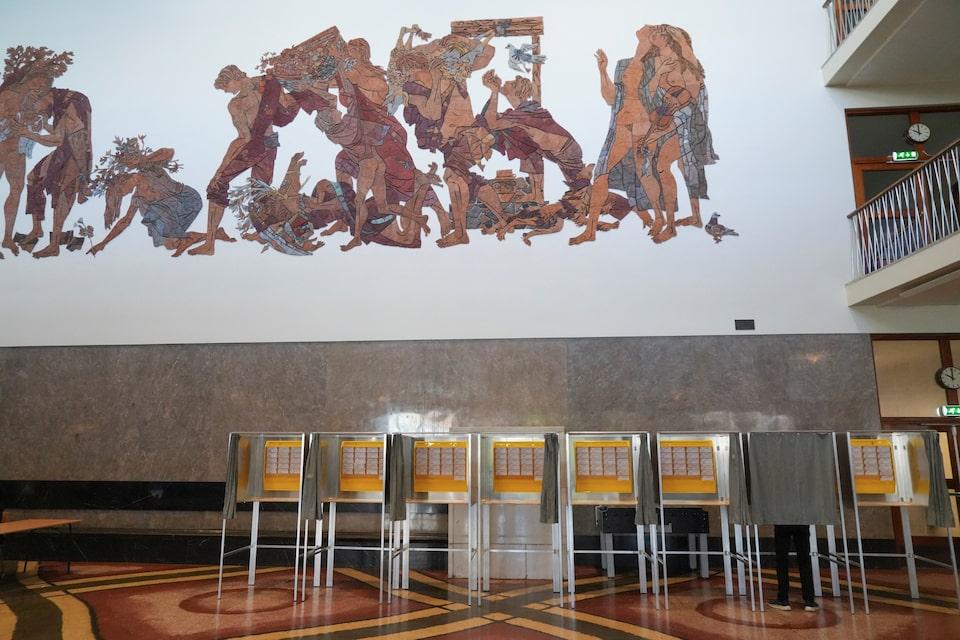
Voting ends at 1900 GMT on Monday Labour and the left seen holding onto power But right-wing opposition still in contention Cost of living, geopolitics dominate Narrow victory could make it harder to govern OSLO, Sept 8 (Reuters) - Norway voted on Monday on the final day of a parliamentary election dominated by concerns over the cost of living and turmoil in international politics, with the ruling Labour Party narrowly favoured to remain in office. A left-wing bloc of Labour and four smaller parties is seen winning 88 seats in parliament, three more than the minimum needed to secure a majority and down from a combined 100 seats in 2021, according to an average of recent opinion polls. Sign up here. Casting his ballot in Oslo, Prime Minister Jonas Gahr Stoere said rising prices had been, in his opinion, top of voters' minds, but added that inflation and interest rates were now on their way down. "This issue of your daily coping with expenses has been key ... And then of course also what is around Norway with the war in Ukraine, the Middle East and how we secure our foreign policy in a predictable way," Stoere told reporters. On the right, the populist Progress Party, the centre-right Conservatives and two smaller groups look set to win the remaining 81 seats, but opinion poll forecasts were within the margin of error and the outcome could depend on how some of the smallest parties fare. Voting in the two-day election concludes at 1900 GMT, followed by immediate exit polls, with final results expected by early Tuesday morning. Among other key issues were taxes and the quality of public services. The result could have an impact on the oil and gas industry and power supplies to Europe, as well as the management of Norway's $2 trillion sovereign wealth fund. U.S. President Donald Trump's foreign and trade policies also loomed large, and analysts said this could benefit Stoere, a former foreign minister who presents himself as a safe pair of hands. Labour was lagging in the polls at the start of the year but received a major boost in February from the surprise return to politics of former NATO chief Jens Stoltenberg as finance minister - a move dubbed "Stoltenback" in Norwegian media. POTENTIAL 'TUTTI FRUTTI' COALITION While the election remains close, the left-wing bloc appeared to have momentum in the most recent opinion polls, said Johannes Bergh, head of the national election studies programme at the Oslo-based Institute for Social Research. "So if you were betting, you would probably guess that the centre-left would win," Bergh said. Benjamin Tegelaar-Breiby, a 29-year-old software developer, said he hoped for a centre-left win. "I feel like the world is kind of crumbling around us and so I would like stability in Norway. That's kind of what I'm voting for," he told Reuters in Oslo. At least nine political parties are expected to secure seats in the election but only the leaders of Labour, Progress and the Conservatives are candidates for prime minister. Stoere has ruled since 2021 with the backing of the agrarian Centre Party and the Socialist Left, but opinion polls show he may also need to rely on the far-left Red party and the Greens in a mix some analysts have dubbed a "tutti frutti" coalition. Demands from the Greens and Reds could include tougher restrictions on oil and gas exploration, more taxes on the wealthy and high earners, and more overall spending from the country's sovereign wealth fund. Labour is seen winning some 27% of the vote, this month's pollofpolls.no average showed. On the right, former Prime Minister Erna Solberg of the Conservative Party hopes to return to power with promises of broad tax cuts, including to the wealth tax that is deeply unpopular with businesses. But as in other Western countries, voters are increasingly turning to more populist right-wing options. Before the election, Sylvi Listhaug's anti-immigration Progress Party was polling at around 21% of the vote, comfortably ahead of the Conservatives on 14%. https://www.reuters.com/world/europe/norwegians-vote-with-labour-party-narrowly-favoured-win-re-election-2025-09-08/