2025-09-08 05:53
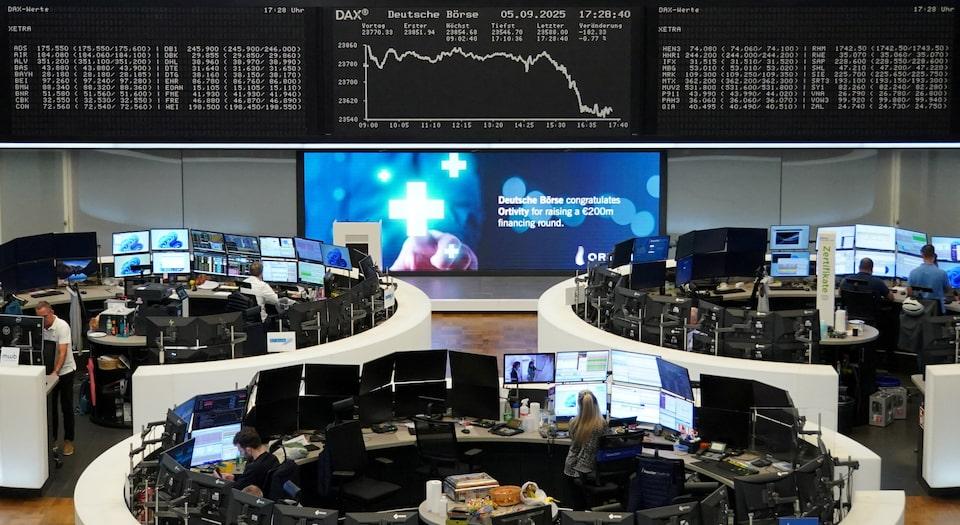
SINGAPORE, Sept 8 (Reuters) - New sanctions on buyers of Russian oil could disrupt crude flows, energy trader Gunvor's (GGL.UL) global head of research and analysis, Frederic Lasserre, said on Monday. His comments came after U.S. President Donald Trump, who is seeking to broker an end to the Ukraine conflict, said he is ready to move to a second phase of sanctioning Russia to hit Moscow's oil revenue and bring President Vladimir Putin to the negotiating table. Sign up here. Treasury Secretary Scott Bessent said on Sunday that the U.S. and the European Union could heap "secondary tariffs on the countries that buy Russian oil." India is the top buyer of Russian oil after China. "President Trump is serious about going for much tougher sanctions," said Lasserre, adding that tough sanctions on Russian and Iran could hit supplies by more than 1 million barrels per day (bpd)," Lasserre said at the APPEC conference. "But the issue is the nature of sanctions ... And today, if you don't impose any sanctions on the buyers, on China and India, then the rest is pure rhetoric." Trump, has said India's oil imports are helping fund Moscow's war effort and imposed a 50% tariff on imports from India. New Delhi has said its purchases of Russian oil have kept the markets in balance and prevented global oil prices from surging. India's finance minister Nirmala Sitharaman on Friday said India will continue to buy Russian oil as it proves economical. Lasserre said the meetings and speeches of leaders of China, Russia, India, Brazil at recent summts indicate that they are not going to accept "any more" sanctions. Chinese President Xi Jinping last week hosted more than 20 leaders of non-Western countries for the Shanghai Cooperation Organization (SCO) summit, including Putin and Indian Prime Minister Narendra Modi. Putin and Modi were seen holding hands at the summit as they walked toward Xi before all three men stood side by side. https://www.reuters.com/business/energy/new-sanctions-russian-oil-buyers-disrupt-flows-says-trader-gunvor-2025-09-08/
2025-09-08 05:39
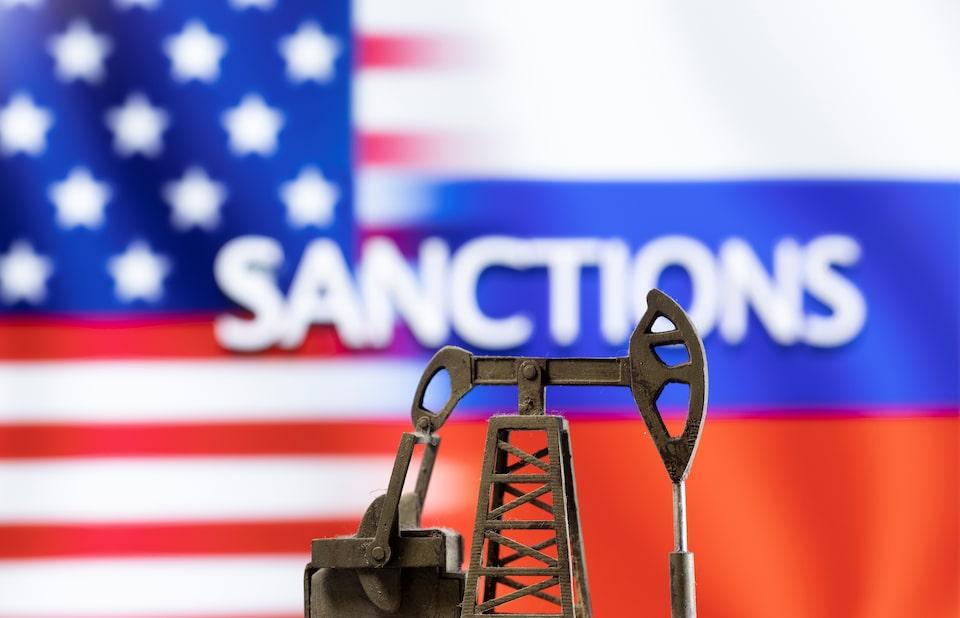
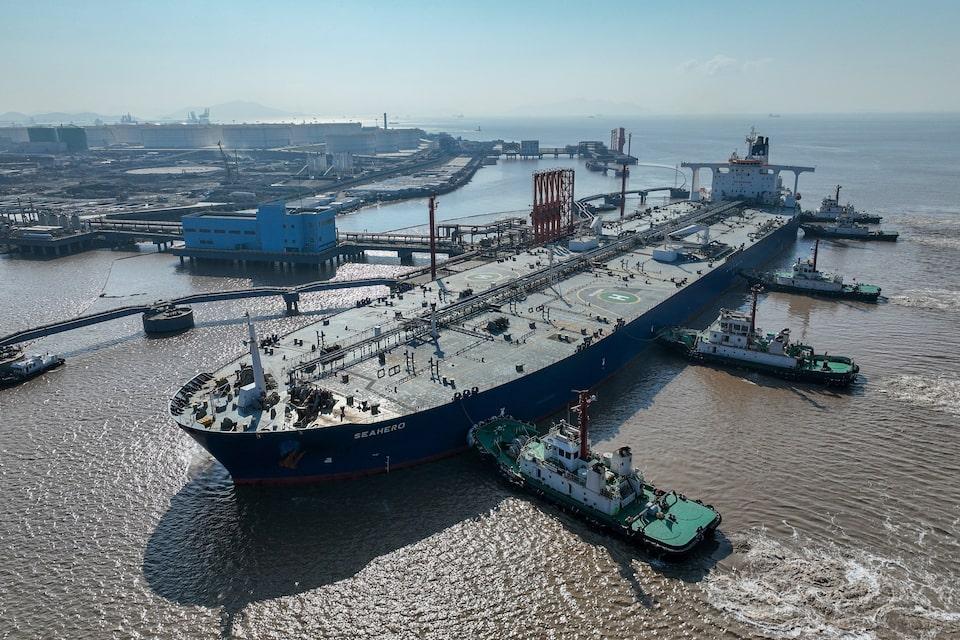
SINGAPORE, Sept 8 (Reuters) - The shadow fleet of oil tankers has expanded following a slew of Western sanctions on Russia over its war in Ukraine, major trading house Trafigura's (TRAFGF.UL) chief economist, Saad Rahim, said on Monday. The shadow fleet is playing a key role in keeping Russian crude flowing to buyers despite the sanctions, targeted at curbing Moscow's oil revenues. Sign up here. "As there are more sanctions and restrictions, the size of the (shadow fleet) has grown even larger," Rahim told the APPEC 2025 conference. The shadow tanker fleet has grown more slowly this year, but the fleet continues to expand as new vessels frequently replace those that are blacklisted. Meanwhile, Rahim said that U.S. tariffs so far have had a limited impact on the global economy and fuel demand. "The key story with tariffs is that we actually haven't seen the impact yet on the demand side," said Rahim, adding that there has not been enough time for the August 1 tariffs to really show up on the demand side. "Companies in the U.S. have had pre-tariff inventory that they have then been able to draw down at prices that they have not had to pass through to the consumer just yet," he added. Rahim said producers are setting their capital expenditure budgets in the next few months in view of the $60 per barrel mark for oil prices, which is the breakeven level. On supply, the number of U.S. oil rigs has also declined, with production expected to stall at current levels. "If you look at the number of rigs, we have gone down by about 25% right now," said Rahim, adding that there is a time lag for the lower rig count to affect production. "While you won't see the drop (in production) yet because there is a six to eight months' lag, I think you are going to see production start to stall at these levels and then potentially come down," he said. https://www.reuters.com/business/energy/oil-shadow-fleet-grows-sanctions-trafigura-economist-says-2025-09-08/

2025-09-08 05:36
Yen slumps on heightened political uncertainty in Japan Ishiba's resignation clouds BOJ outlook French politics also in focus Investors pricing in slight chance of outsized September Fed cut SINGAPORE, Sept 8 (Reuters) - The yen fell sharply on Monday following the resignation of Japanese Prime Minister Shigeru Ishiba, while the dollar remained on shaky footing after Friday's weak U.S. jobs report cemented expectations of a Federal Reserve rate cut this month. The focus for markets will also be on French Prime Minister Francois Bayrou's confidence vote, which he is expected to lose, plunging the euro zone's second-largest economy deeper into political crisis. Sign up here. Japan's Ishiba on Sunday announced his resignation, ushering in a potentially lengthy period of policy uncertainty at a shaky moment for the world's fourth-largest economy. The yen slumped in response in Asia trade, and was last down 0.5% against the dollar at 148.16, having pared some losses over the course of the session. The Japanese currency similarly slid to its lowest in more than a year against the euro and sterling at 173.91 and 200.33, respectively. Investors are focusing on the chance of Ishiba being replaced by an advocate of looser fiscal and monetary policy, such as Liberal Democratic Party (LDP) veteran Sanae Takaichi, who has criticised the Bank of Japan's interest rate hikes. "The probability of an additional rate hike in September was never seen as high to begin with, and September is likely to be a wait-and-see," Hirofumi Suzuki, chief currency strategist at SMBC, said of the BOJ's next move. "From October onward, however, outcomes will in part depend on the next prime minister, so the situation should remain live." On Monday, former Foreign Minister Toshimitsu Motegi became the first ruling party lawmaker to throw his hat into the ring to succeed Ishiba. Japanese stocks surged while government bonds (JGBs) were steady, though yields on super-long JGBs hovered near record highs. "With the LDP lacking a clear majority, investors will be cautious until a successor is confirmed, keeping volatility elevated across yen, bonds and equities," said Charu Chanana, chief investment strategist at Saxo. "Near term, that argues for a softer yen, higher JGB term-premium, and two-way equities until the successor profile is clear." The yen hardly reacted to Monday's data, which showed Japan's economy expanded much faster than initially estimated in the second quarter. SEPTEMBER FED CUT BAKED IN The dollar struggled to recoup its heavy losses after falling sharply on Friday on data that showed further cracks in the U.S. labour market. The nonfarm payrolls report showed U.S. job growth weakened sharply in August and the unemployment rate increased to nearly a four-year high of 4.3%. Investors ramped up bets of an outsized 50-basis-point rate cut from the Fed later this month following the release and are now pricing in a 10% chance of such a move, as compared to none a week ago, according to the CME FedWatch tool. Sterling eased just 0.06% to $1.3499, having risen more than 0.5% on Friday, while the euro was down 0.04% at $1.1717, after hitting a more than one-month high on Friday. The dollar index was marginally lower at 97.82, after sliding more than 0.5% on Friday. "Given the more elevated downside risks to the employment side of the mandate, we think a rate cut at the September meeting is all but assured. We continue to expect a 25bp cut at that meeting," said Barclays economists in a note. "However, we change our Fed call by adding another 25bp cut in October, while leaving our December cut unchanged. In all, we now think the FOMC will proceed with three 25bp cuts this year, easing the policy stance in the face of the slowing labour market." U.S. Treasury Secretary Scott Bessent on Friday called for renewed scrutiny of the Fed, including its power to set interest rates, as the Trump administration intensifies its efforts to exert control over the central bank. President Donald Trump is considering three finalists for Federal Reserve chair to replace Jerome Powell, whom the president has criticised all year for not cutting rates as he has demanded. Elsewhere, the Australian dollar was up 0.14% at $0.6564, while the New Zealand dollar gained 0.15% to $0.5901. https://www.reuters.com/world/middle-east/yen-slides-after-japan-pm-ishiba-resigns-dollar-wobbles-2025-09-07/
2025-09-08 05:23
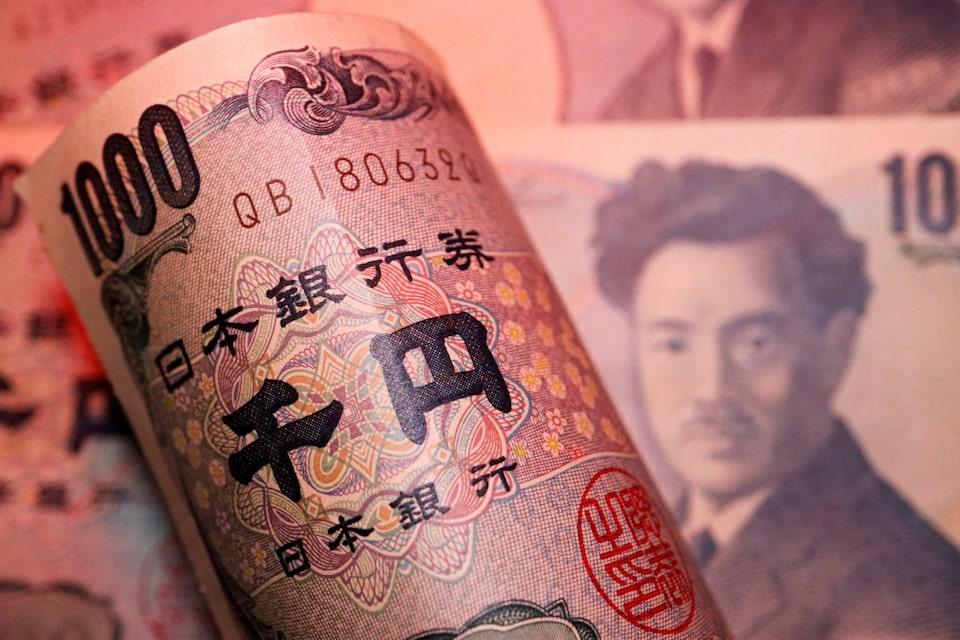
Yen weakens, Nikkei rises 1.8% after Ishiba resignation Stocks rise as traders pencil in rate cut in September French political quagmire adds to investor angst US inflation data this week also in focus SINGAPORE, Sept 8 (Reuters) - Stocks rose and the dollar wobbled on Monday after dismal U.S. labour data sealed the case for an interest rate cut this month, while the yen fell as investors girded for uncertainty in Japan following the resignation of Prime Minister Shigeru Ishiba. Gold prices held near a record-high while U.S. Treasury yields hovered close to five-month lows after data showed the world's largest economy created far fewer jobs than expected in August, with markets factoring in chances of a jumbo rate cut. Sign up here. Much of the focus last week was on elevated long-end bond yields across the globe as investors fretted about the state of various countries' finances from Britain and France to Japan. Some of those worries could return after Japan's Ishiba resigned on Sunday, while France could be looking for its fifth prime minister in three years as Francois Bayrou faces a confidence vote on Monday, which he is expected to lose. The political uncertainty gripping Japan, the world's fourth-largest economy and France, the euro zone's second-biggest economy, will likely limit any exuberant reaction to the prospect of rate cuts from the Federal Reserve. European futures advanced 0.45%, while S&P 500 futures pointed 0.08% higher on Monday after a volatile session on Friday where the index hit a record high but then closed 0.3% lower. The yen fell across the board and was last 0.6% lower at 148.39 per dollar, while the Nikkei (.N225) , opens new tab surged 1.8%, just shy of its recent record-high. The benchmark 10-year Japanese government bond (JGB) yield was flat at 1.57%. MSCI's broadest index of Asia-Pacific shares outside Japan (.MIAPJ0000PUS) , opens new tab was 0.4% higher. Hong Kong's Hang Seng index (.HSI) , opens new tab gained 0.35%. The spotlight will be on who replaces Ishiba, with investors fretting that an advocate of looser fiscal and monetary policy, such as Liberal Democratic Party veteran Sanae Takaichi, who has criticised the BOJ's interest rate hikes, could take the helm next. "The markets are going to be framing this around what it means for fiscal policy, inflation and the BOJ's response," said Kyle Rodda, senior financial market analyst at Capital.com. RATE CUTS ARE HERE Investor attention this week will be on the U.S. inflation report on Thursday to gauge the risk of rising prices that could help temper some of the enthusiasm for a larger rate cut. The U.S. two-year yields, which are tied to interest rate policy, were 2 basis points (bps) higher at 3.527%, near the five-month low of 3.464% hit on Friday. Traders have fully priced in a 25 bps cut later this month with an 8% chance of a jumbo 50 bps rate cut, the CME FedWatch tool showed. They are anticipating 68 bps of easing by the end of this year. "The Fed has more than enough reasons and will cut by 25bps ... with another two within six-months," said George Boubouras, head of research at K2 Asset Management. "U.S. cash rates are notably higher than other developed markets (and) given the resilient and robust U.S. economy, lower cash rates are now required. Fed commentary of further rate cuts will be supportive, without this equity markets will be weaker." In the currency market, the euro eased a bit to $1.1712 after surging 0.6% on Friday, while sterling last fetched $1.3495 after a 0.5% rise on Friday. In commodities, gold prices were at $3,588 per ounce, just shy of the $3,600 milestone. Gold is up 37% this year after rising 27% in 2024. Oil prices climbed after OPEC+ agreed over the weekend to raise output at a slower pace from October on expectations of weaker global demand. Brent crude and U.S. West Texas Intermediate crude rose more than 1% each. https://www.reuters.com/world/china/global-markets-wrapup-3-2025-09-08/
2025-09-08 05:17
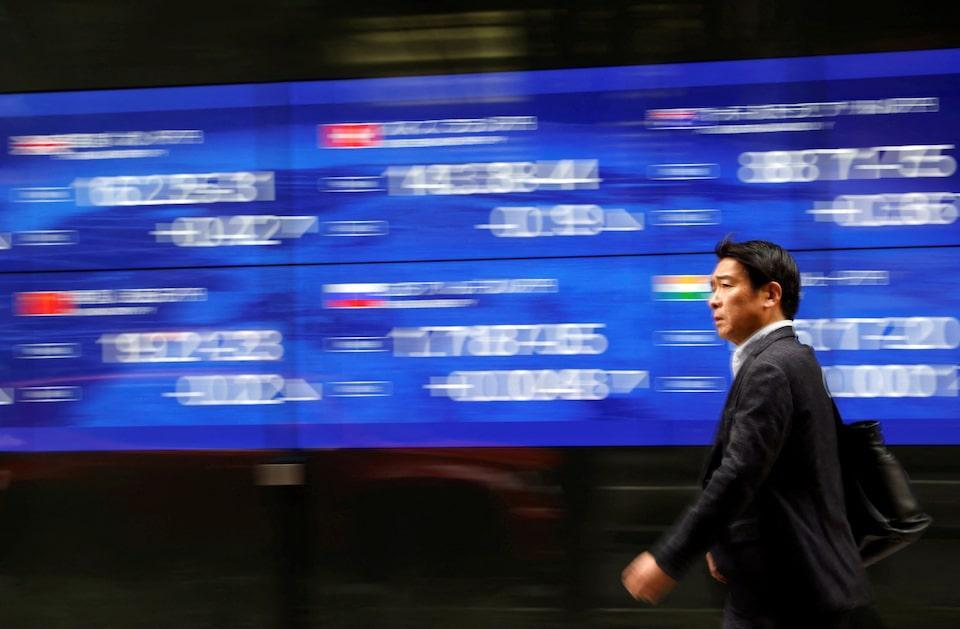
SINGAPORE, Sept 8 (Reuters) - China's stockpiling of oil, which has helped soak up excess global crude production this year, is likely to continue at a similar rate in 2026, the chief strategist for commodity trading house Gunvor (GGL.UL) said on Monday. Frederic Lasserre, global head of research and analysis at Geneva-based Gunvor, told the APPEC conference on Monday that China's purchases took off in March and the filling rate for its stockpiles is roughly 60%, meaning China has room for more. Sign up here. From March, he said, "we started to see a very impressive rate of stockpiling, like close to one million barrels per day," he said. China, the world's biggest crude importer, has been building up crude oil inventories at a rate of 530,000 barrels per day (bpd) so far this year, Jim Burkhard, global head of crude oil market research at S&P Global Commodity Insights, told the same event. Its pace of stockpiling marks one of the fastest annual rates of increase, other than 2020, and has played a major role in helping to soak up surplus production, particularly in the second quarter, Burkhard said. China's total onshore crude oil inventories are at around 1.4 billion barrels, he said. "That is a very, very large increase, bigger than global oil demand growth," he said. S&P pegged global oil demand growth at 700,000 bpd for this year, with over half of that for natural gas liquids and biofuels and the remaining 350,000 bpd growth for crude oil. https://www.reuters.com/business/energy/china-maintain-oil-stockpiling-2026-gunvor-strategist-says-2025-09-08/
2025-09-08 04:34
A look at the day ahead in European and global markets from Ankur Banerjee: Investors will get more political drama as France is all but certain to start looking for its fifth prime minister in three years, plunging the euro zone's second-biggest economy into turmoil. Sign up here. Francois Bayrou faces a confidence vote on Monday, which he is expected to lose. While much of the crisis may already be priced in, a slate of debt rating reviews starting this week will be a litmus test for France and investors' appetite for the country's assets. France's rating was downgraded by Moody's after its previous government collapsed last year, and a repeat would be a heavier blow, pushing it to a lower rating and raising the risk of forced selling of its already pressured bonds. Last week, France's 30-year government bond yield hit a level last seen in June 2009 as investors fretted about the fiscal outlook and ongoing political quagmire. Speaking of yields, Japanese government bonds were muted on Monday after Japanese PM Shigeru Ishiba resigned over the weekend, paving the way for fiscal uncertainty and clouding the policy path for the Bank of Japan. The main action was seen in the yen , which dived across the board but held near the 148 per dollar level. The soft yen helped push the Nikkei (.N225) , opens new tab to just below the record peak touched last month. Traders aren't sure when the BOJ will next hike rates and investors are worried that the next PM could well be an advocate of looser fiscal and monetary policy, such as Liberal Democratic Party veteran Sanae Takaichi. All that has muddled what might have been an exuberant Monday for risk assets after the lousy U.S. jobs report cemented expectations of a rate cut from the Federal Reserve when it meets next week. The only question left to be answered is whether it's a 25 basis point cut or a jumbo 50 basis point cut. The U.S. inflation report on Thursday will be pivotal in that debate. Key developments that could influence markets on Monday: Economic events: Germany industrial data for July https://www.reuters.com/world/china/global-markets-view-europe-2025-09-08/