2025-09-05 18:16
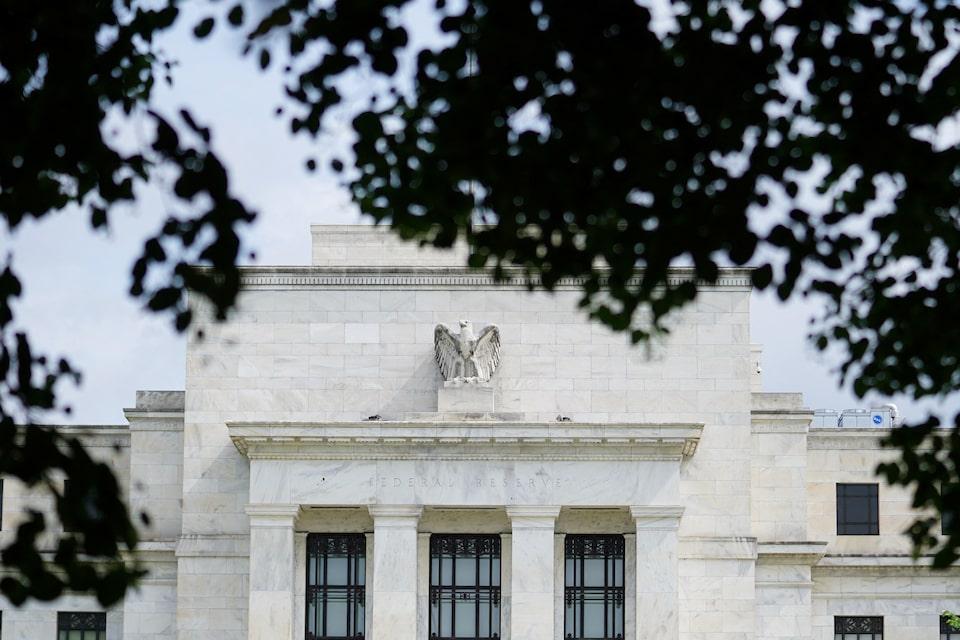
Investors anticipate chance of half-point cut at Fed meeting later in month US job growth in August comes in much weaker than expected Stocks waver after report, dollar slides NEW YORK, Sept 5 (Reuters) - After a surprisingly weak U.S. payrolls report that underscored that the economy is slowing, investors see the need for accelerated monetary easing, including an increased chance of a jumbo interest rate cut this month. Heading into Friday's employment report, investors were already widely projecting the Federal Reserve to lower its benchmark interest rate by a standard quarter-point at its September 16-17 meeting, in what would be its first reduction in nine months. Fed Chair Jerome Powell had set the stage for such a cut in remarks last month that pointed to risks in the labor market. Sign up here. But after data showed U.S. jobs grew by a paltry 22,000 in August, well below estimates, market pricing began making room for the possibility of a heftier half-percentage-point reduction, while more easing is now expected through 2025 overall. "This is two disappointing jobs reports in a row and certainly makes the case for a weakening economy," said Jack Ablin, founding partner and chief investment officer at Cresset Capital. "If you combine that with Chairman Powell's bias toward full employment rather than price stability, it does suggest that the Fed could go more than originally planned." The prospect of lower interest rates has been a support for stocks in recent weeks but equities wavered after Friday's report. Stock futures jumped initially after the data, before reversing course. The benchmark S&P 500 (.SPX) , opens new tab was last down 0.5%. "If investors are focused on Fed policy cuts, then that could be supportive of the stock market," said Jim Baird, chief investment officer with Plante Moran Financial Advisors. "If investors are instead looking at it as a precursor to further slippage in labor conditions and job losses and perhaps an economy that softens up further from here, that's not good news for stocks." Investors piled in to U.S. Treasuries, sending both short and long-term yields lower. The benchmark U.S. 10-year Treasury yield fell as low as 4.06%, its lowest in about five months. Meanwhile, in foreign exchange markets, the prospect of accelerated rate cuts sank the dollar index (.DXY) , opens new tab to a near six-week low. "We find G10 FX is trading with front-end nominal yields. That's why the dollar dropped after weaker-than-expected payrolls," said Benjamin Ford, researcher at macro research and strategy firm Macro Hive. Fed fund futures as of Friday afternoon were baking in a 10% chance of a 50 basis-point reduction later this month, with the 90% balance of probability on a 25 bp cut, according to LSEG data. When the Fed started its cutting cycle in September 2024, the central bank began with a half-percentage-point reduction, noted Blair Shwedo, head of investment grade sales and trading at US Bank. "So I would imagine the market is looking back at that and realizing the Fed is not scared to start out with a more aggressive 50 bp cut," Shwedo said. Mark Malek, chief investment officer at Siebert Financial, said a 50 basis-point move "would add a tailwind to the (stock) market." "It would definitely be a boost for the megacap growth stocks, and a green light for investors to take on more risk," Malek said. A 50 basis-point cut could lead to the "capitulation" of short bets for the front-end part of the Treasury curve, which may exacerbate volatility in the bond market, said Slawomir Soroczynski, head of fixed income at Crown Agents Investment Management. The prospect of more aggressive easing could also further raise fears about inflation. Current inflation rates are still above the Fed's 2% target and Powell and other Fed officials have been wary that President Donald Trump's tariffs could lead to higher prices. "Powell’s concern is there’s still tariff uncertainty, and he knows that from an inflation standpoint the increase in risk sentiment will certainly spur asset price inflation," said George Cipolloni, portfolio manager at Penn Mutual Asset Management. "Now will it spur consumer price inflation? That's the tug of war." Not everyone was convinced a hefty cut was coming after the jobs data. August is a "noisy month" with figures that tend to get revised higher, said Phil Blancato, chief executive officer of Ladenburg Thalmann Asset Management. And more data will come ahead of the Fed meeting, in particular next Thursday's August Consumer Price Index report that offers another read on inflation trends. "Inflation is still a major concern and is not being tamed by the slower economic growth," said Melissa Brown, managing director of investment decision research at Simcorp. https://www.reuters.com/business/investors-look-more-aggressive-us-rate-cuts-after-weak-jobs-data-2025-09-05/
2025-09-05 18:13
Sun bought $75 million of World Liberty tokens Trump family's crypto ventures raise conflict of interest concerns Sun plans to buy more World Liberty tokens despite freeze Sept 5 (Reuters) - Justin Sun, one of the biggest known backers of President Donald Trump's World Liberty Financial crypto venture, said on Friday his tokens connected to the project had been frozen, without giving further details. Sun had spent at least $75 million on World Liberty Financial tokens, known as $WLFI, according to his posts on X. The tokens became publicly tradable on Monday and fell in value. Sign up here. In a post on X addressed to "the World Liberty Financials team," Sun said: "during the course of operations, my tokens were unreasonably frozen" and asked the team to unlock them. China-born crypto entrepreneur Sun did not say what the operations were, how many tokens were frozen or who had frozen them. World Liberty said in a statement later on Friday that the company had heard "community concerns" about wallet blacklists. It did not name Sun or give any details about his tokens. "We do not seek to blacklist anyone," the company said in its statement on X. "We respond when alerted to malicious or high-risk activity that could harm community members." A spokesperson for Sun's crypto firm, Tron, said in a statement to Reuters that "Justin and the WLFI team are in active communication about this matter." The public comments by Sun were a reminder of the complexities of the business ties behind the Trump family's growing fortune from crypto ventures. This year, Eric Trump - the president's second-oldest son - and others at World Liberty have spoken onstage with Sun at major crypto events in Dubai and Hong Kong. The younger Trump and Sun also frequently post on X praising each other and their respective crypto projects. Sun is the second-largest known investor in World Liberty, and his early buy into the firm last year of $30 million matched the amount the company said it needed to jumpstart operations. Sun later said his investment totalled $75 million. Sun is also an adviser to World Liberty, and has used his crypto platforms to boost its flagship offering, stablecoin USD1. The Trump family stake in World Liberty has made them hundreds of millions of dollars through their cut of token sales. Those riches have come at a time when Donald Trump has publicly backed the crypto industry, giving rise to broad criticisms of conflict of interest given that some of the family's business partners have in the past faced regulatory actions by the government that Trump now heads. The U.S. Securities and Exchange Commission under the Trump administration, for example, has been exploring a resolution to its civil fraud case against Sun, Reuters reported in February. Sun also signalled on Friday in a post on X that he planned to buy $10 million more in World Liberty tokens, and put an additional $10 million in a separate, publicly traded U.S. stock that invests in World Liberty tokens. Blockchain data shows that the World Liberty Financial "guardian address" on Thursday blacklisted a wallet owned by Sun which holds around 545 million tokens, according to Nicolai Sondergaard, research analyst at Nansen. This means the tokens cannot be transferred out of that wallet. Before being blacklisted, Sun transferred 50 million of the tokens to another address, the Nansen analyst said. World Liberty had previously said early investors would be able to sell up to 20% of their token holdings. The $WLFI tokens were trading around 18 cents on Friday, according to CoinGecko, having initially traded above 30 cents on their debut. https://www.reuters.com/business/finance/top-trump-crypto-backer-justin-sun-says-his-world-liberty-tokens-unreasonably-2025-09-05/

2025-09-05 17:28
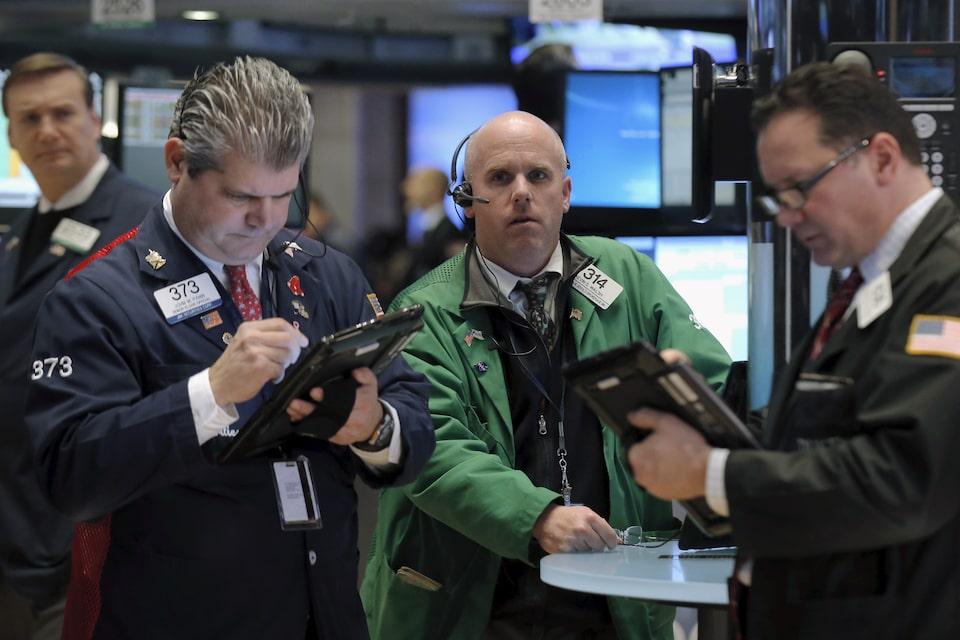
Trump's pressure on Fed to lower interest rates could backfire Some market indicators suggest Fed independence is a concern But bond market's immediate focus is on rate cuts NEW YORK, Sept 5 (Reuters) - Some investors see potential cracks in the U.S. bond market and red flags from recent whipsawing moves, saying the market is underpricing long-term fiscal risks and the danger posed by White House pressure on the central bank to cut interest rates. U.S. bond markets sold off earlier this week as concerns about global fiscal health escalated, although the pain was quickly reversed and bonds rallied on weak economic data. The rebound continued on Friday, as a sharp slowdown in U.S. job growth raised the prospect that the Federal Reserve would embrace a faster pace of monetary easing than anticipated. Sign up here. Investors, however, say they remain concerned about the health of the market. "My concern is that we're in a bit of a boiling-the-frog moment," said Bill Campbell, portfolio manager for global bond strategy at bond firm DoubleLine, referring to the risks of institutional strength erosion, particularly recent pressure from the White House on the Fed to cut interest rates, as well as other factors such as a worsening U.S. fiscal trajectory. Some measures of risk in the bond market show investors are accounting for the potential of an overly dovish Fed that could lead to higher inflation further down the line. The U.S. Treasury term premium, a component of Treasury yields and a measure of the compensation investors demand for the risk of holding long-term U.S. debt, rose to 84 basis points on Tuesday, its highest level in more than three months, according to the latest available New York Fed data. Expectations for inflation over the next decade, as measured by Treasury Inflation-Protected Securities (TIPS), hit 2.435% on August 27, the highest level in more than a month. They have since declined and were last at 2.36% on Friday. "I'm wondering if what we're seeing with the continuation of the widening in term premium, the bit of steepening in the curve that we're seeing, is just more like cracks in the dam, and it just might happen one day that you get a bit more of a disorderly move," Campbell said. Yet market participants say it is hard to isolate the drivers behind the moves, citing a list of issues including pressure on the Fed to lower rates, the inflationary impact of President Donald Trump's tariffs, as well as concerns over the U.S. debt trajectory and rising global debt levels. All those factors back trades that bet on a steeper yield curve, where long-term debt becomes less attractive than short-dated securities. A steepening curve typically signals that investors anticipate higher interest rates in the future because of stronger economic activity and higher inflation. The curve also steepens when short-term Treasury yields decline on stronger expectations of an imminent easing in monetary policy, and longer-dated yields rise - or decline by a smaller amount than shorter-dated debt - on concerns that rate cuts could boost higher long-term inflation. "I think the market has been relatively sanguine in terms of the pricing of those risks," said Jonathan Cohn, head of U.S. rates desk strategy at Nomura. "There has certainly been some push into positioning steepeners or otherwise that would benefit in the event that these risks are realized, but the actual pricing is difficult to disentangle from the multitude of other risks that are kind of the same way," he said. 'EARLY PHASES'? Trump has relentlessly criticized the Fed Chair Jerome Powell and the U.S. central bank's Board of Governors for not lowering rates, which has raised investor concerns about political pressure influencing monetary policy. While the president has been demanding immediate and aggressive reductions in borrowing costs, he also has said the Fed could raise rates again if inflation rose. White House spokesperson Kush Desai said Trump believes it's time to cut rates to support employment and economic growth as inflation has been tamed. The push for a bigger rate cut at the Fed's September 16-17 meeting was bolstered on Friday by data that showed a sharp slowdown in job growth in August. DoubleLine's Campbell warned that the administration's pressure to lower rates could backfire by pushing up long-term yields. Those yields, which are determined by market conditions, influence key borrowing costs for consumers, such as mortgages and interest rates on credit cards and loans. "This administration needs to be careful in their attempts to ease financial conditions and monetary conditions; overdoing it or pushing it to an extreme will have the opposite effect, and our biggest concern is that the back end of the curve more and more will reflect concerns about inflation expectations and the fiscal outlook," he said, adding that DoubleLine is betting on a steeper yield curve. Trump will soon get a chance to nominate a replacement for Powell, whose term as Fed chief expires next May. The president last month nominated White House economic adviser Stephen Miran to the U.S. central bank's seven-member board and then attempted to remove Fed Governor Lisa Cook from her post over mortgage fraud allegations, prompting her to file a lawsuit challenging Trump's effort to oust her. Her ousting would open up a new seat on the Fed board. Lawrence Gillum, chief fixed income strategist for LPL Financial, said the potential ouster of Cook and the possibility that the executive branch may get excessive influence over interest rate decisions will likely lead to higher term premiums and even steeper yield curves. "I think we're in the early phases of the bond market kind of trying to figure out what this is going to look like," he said. "I think it's really too early to make any sort of proclamation just yet." https://www.reuters.com/business/finance/us-bond-market-may-be-too-sanguine-about-underlying-fiscal-inflation-risks-2025-09-05/
2025-09-05 16:11
Regulator caps transfer amounts for some institutions Further rules expected soon to curb hacker attacks Crypto regulation set to be released this year BRASILIA, Sept 5 (Reuters) - Brazil's central bank on Friday announced new measures approved by its board to strengthen the security of the country's financial system, following recent cyberattacks on financial institutions. Effective immediately, payment institutions not authorized by the central bank and connected to the National Financial System Network via IT service providers will face a 15,000 reais ($2,766.92) cap on digital cash transfers. Sign up here. Central bank Governor Gabriel Galipolo said the cap was set because 99% of corporate transactions via the Pix instant payment system or TED bank transfers fall below that threshold. "By limiting the transfer amount, you force attackers to carry out a larger number of operations," Galipolo told reporters at a press conference, adding that cyberattacks typically involve large, one-off transactions. He said the measures target organized crime, not financial institutions. Under the new rules, no payment institution will be allowed to operate without prior authorization from the central bank. The deadline for unauthorized firms to apply for a license has also been moved up to May 2026 from December 2029. Galipolo said more measures would be announced "soon." Also speaking at the press conference, central bank regulation director Gilneu Vivan said cryptoasset regulation would also be issued later this year, following a legal framework approved by Congress in 2022 that has yet to be implemented. The central bank has previously voiced concern over the growing use of stablecoins in Brazil, often linked to illicit financial activity. Asked about the central bank's decision earlier this week to block the acquisition of mid-sized lender Master by peer BRB (BSLI3.SA) , opens new tab, Galipolo said he could not comment due to confidentiality rules protecting institutional information. He emphasized, however, that all central bank decisions are made collectively and based on technical criteria. "There is no risk to Brazil's banking system," he added. "The system is sound from a stability standpoint. There is no threat whatsoever." U.S. SANCTIONS Following U.S. sanctions against Supreme Court Justice Alexandre de Moraes under the Magnitsky Act, Galipolo on Friday said the reasons for the penalty appeared "unusual," but noted that the central bank has been monitoring and maintaining dialogue with the financial system on the matter. Washington sanctioned Moraes in late July, accusing him of authorizing arbitrary arrests and curbing free speech. Moraes oversees the case in which former President Jair Bolsonaro is accused of plotting a coup after losing the 2022 election. The sanctions freeze Moraes' assets in the United States and bar U.S. companies from doing business with him, raising questions over potential spillovers for Brazilian banks with U.S. operations. ($1 = 5.4212 reais) https://www.reuters.com/world/americas/brazils-central-bank-enhances-security-financial-system-2025-09-05/

2025-09-05 15:58
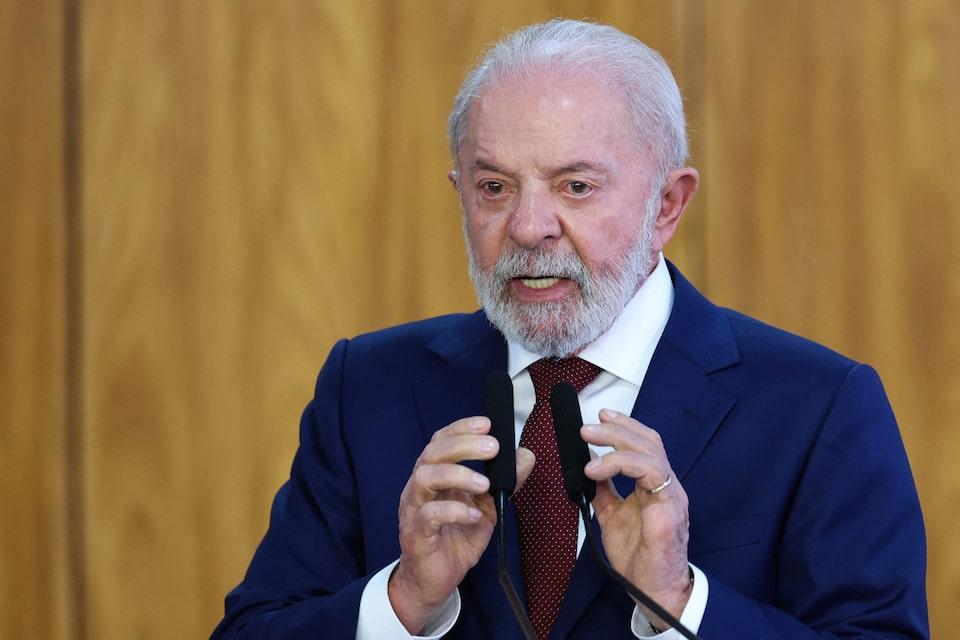
SAO PAULO, Sept 5 (Reuters) - Brazilian President Luiz Inacio Lula da Silva announced on Friday a 12 billion reais ($2.21 billion) debt renegotiation package aimed at supporting up to 100,000 agricultural producers, primarily small and medium-sized farmers affected by recent climate events. WHY IT'S IMPORTANT The measure comes as Brazil's largest state-run bank, Banco do Brasil (BBAS3.SA) , opens new tab, faces record default levels in its agribusiness portfolio, threatening the stability of the country's crucial agricultural sector. Sign up here. BY THE NUMBERS The executive order signed by Lula guarantees 12 billion reais in total relief funding to up to 100,000 producers eligible for support. Banco do Brasil currently has 20,000 defaulting clients, its CEO Tarciana Medeiros said last month. KEY QUOTES "Today I signed an executive order that guarantees the renegotiation of rural debts under special conditions," Lula said in a social media post. "This means more security for those who work the land, more food on Brazilian tables, and a stronger country in the face of climate change." CONTEXT Brazilian farmers have faced mounting challenges in recent years, including severe weather events, high interest rates, and elevated input costs. The agricultural sector is crucial to Brazil's economy as a top global supplier of grains, coffee, meat, cotton, and sugar. The relief package aims to ensure food security and support farmers struggling with climate-related challenges. ($1 = 5.4212 reais) https://www.reuters.com/business/finance/brazils-lula-announces-22-bln-debt-relief-package-farmers-2025-09-05/
2025-09-05 15:27
US central bank's next policy meeting is on September 16-17 Futures contracts point to 10% chance of half-percentage-point rate cut Fed's benchmark interest rate could drop to 3.25%-3.50% by January Sept 5 (Reuters) - Federal Reserve policymakers look set to kick off a series of interest rate cuts this month to shore up an increasingly fragile labor market, after a government report on Friday showed job growth nearly stalled and the unemployment rate rose in August. While Fed Chair Jerome Powell is likely to interpret the addition of a paltry 22,000 jobs last month with caution, given the drop in immigration, the tick up in the unemployment rate to 4.3% - the highest level since October 2021 - will raise some alarm bells. With employers hiring only slowly, Powell said last month, any increase in what has been a very low rate of layoffs could lead to a sharply higher jobless rate. Sign up here. More than a quarter of those out of work have now been looking for a job since at least the beginning of February, just weeks into President Donald Trump's second term in the White House, Friday's data showed. Unemployment for Black Americans, who typically are more vulnerable to job market downturns, jumped to 7.5%. The Fed will get fresh inflation data next week as policymakers prepare for their September 16-17 policy meeting, and consumer price increases are expected to accelerate as Trump's tariffs put a bigger imprint on what people pay for basic goods. Even so, the weaker-than-expected jobs data have put concerns about deterioration of the labor market on the front-burner. The Fed has kept its benchmark interest rate in the 4.25%-4.50% range all year. "The August jobs report should cement a shift in the Fed's thinking from worrying about inflation to focusing on labor market weakness," Bank of America economists said after the release of the jobs report. The Wall Street firm now sees quarter-percentage-point rate cuts in September and December, and a Fed policy rate of 3.00%-3.25% by the end of next year. TRUMP PRESSURE At the Kansas City Fed's annual central bankers symposium in Jackson Hole, Wyoming two weeks ago, Powell telegraphed a rate cut in September with remarks that highlighted downside risks to the labor market, but he said that stable labor market conditions would allow the Fed to "proceed carefully." White House economic adviser Kevin Hassett said Friday's data could move the Fed to consider resuming its monetary policy easing with a bigger rate cut this month. That view is in line with Trump's longstanding demands for the Fed to slash borrowing costs that have fueled the president's aggressive moves to exert control over the U.S. central bank. Hassett is among those Trump has said he is considering to succeed Powell when the Fed chief's term expires next May. A bigger-than-usual rate cut this month remains a long shot in the view of financial markets, where futures tied to the Fed's policy rate reflected about a 10% chance of a half-percentage-point reduction in short-term borrowing costs this month, up from zero before the jobs report. The majority of bets centered on a quarter-percentage-point rate reduction, with the same-sized cuts seen at each of the next policy meetings and a nearly 50-50 chance that by January the short-term benchmark rate will be a full percentage point lower than it is today. Not all analysts discounted the view of a more aggressive response. "Today's data suggests the risk that the Fed may embark on a faster pace of easing than the cautious approach outlined by Powell at Jackson Hole," said Simon Dangoor, head of fixed income macro strategies at Goldman Sachs Asset Management. https://www.reuters.com/markets/wealth/fed-track-string-rate-cuts-labor-market-weakens-2025-09-05/