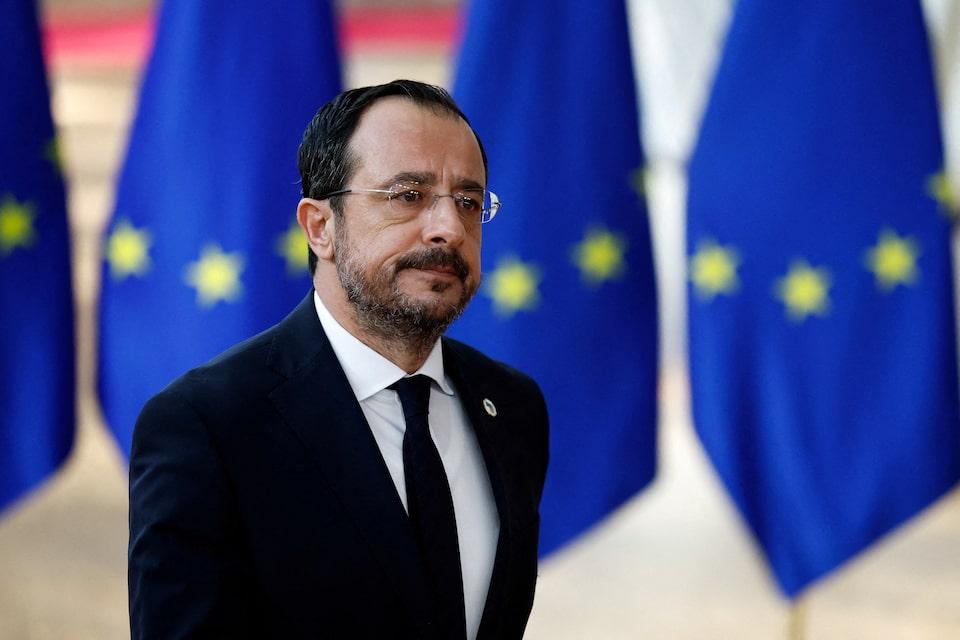
2025-09-08 10:02
FRANKFURT, Sept 8 (Reuters) - The European Central Bank is easing some of the checks it makes on euro zone banks, from how lenders get approval for share buybacks to how stress tests are carried out, ECB supervisor Sharon Donnery said on Monday. The ECB is coming under pressure from lenders it oversees to ease the supervisory burden as the Trump administration promises easier rules in the United States and shadow banks gain ground in the credit business. Sign up here. Writing in a blog post, Donnery listed measures the ECB has taken, including speeding up the approval of new appointments, buybacks and internal models, and reducing the amount of work demanded from banks during stress tests. But she repeated her position that simplification should not go too far if the sector is to remain robust. "The ECB is turning words into action and making banking supervision as simple as possible, but not simpler, to make sure banks are able to stay resilient and are well prepared to manage risks in their portfolios," she wrote. An ECB task-force, chaired by Vice President Luis de Guindos and also including Donnery, has recently presented a number of possible simplification measures to the Governing Council that are now being discussed by the euro zone's 20 national central banks. Germany's bank regulators have proposed creating a separate regime for "small and non-complex banks", which would subject them to a single capital requirement rather than the full array foreseen under EU rules. Under this optional regime, banks with less than 10 billion euros ($11.73 billion) in assets, with a strong domestic focus and a small trading book would be required to have a leverage ratio - capital expressed as a percentage of total assets - "significantly higher than 3%", the non-paper prepared by Germany's Bundesbank and Bafin shows. Donnery said earlier this year that the regulatory framework was already less strict for "small and non-complex" banks, although she saw scope for "more proportionality". The EU delayed new, global rules governing banks' trading earlier this year as it awaited more clarity regarding the U.S. administration's plans to deregulate its financial sector. ($1 = 0.8527 euros) https://www.reuters.com/technology/ecb-eases-bank-checks-buybacks-stress-tests-donnery-says-2025-09-04/
2025-09-08 09:16
Yen weakens, Nikkei rises 1.8% after Ishiba's resignation Stocks rise as traders pencil in rate cut in September French political quagmire adds to investor angst US inflation data this week also in focus SINGAPORE/LONDON, Sept 8 (Reuters) - Stocks rose and Treasury yields held lower on Monday after last week's dismal U.S. labour data sealed the case for an interest rate cut this month, with investors preparing for a week heavy on politics, crucial data and central bank activity. U.S. S&P 500 futures were up about 0.2%, leaving the index set to head back towards the record intraday high hit following last week's jobs data, while European (.STOXX) , opens new tab and Asian shares were up 0.2% and 0.7%, respectively. (.MIAPJ0000PUS) , opens new tab Sign up here. The first political drama of the week took place in Japan, where the yen and longer-dated bonds fell and stocks rose following the resignation of Prime Minister Shigeru Ishiba, as traders bet heightened political uncertainty would make the Bank of Japan less likely to raise rates in the near term. Attention is turning to who will replace Ishiba, and whether it could be an advocate of looser fiscal and monetary policy such as Liberal Democratic Party veteran Sanae Takaichi, who has criticised the BOJ's interest rate hikes. Meanwhile, France could be forced to look for its fifth prime minister in three years as the incumbent Francois Bayrou faces a confidence vote on Monday that he is expected to lose. The selloff in French assets after Bayrou called the vote last month has eased, and French stocks and bonds were slightly outperforming European peers on Monday. (.FCHI) , opens new tab But uncertainty about whether President Emmanuel Macron would try to appoint another prime minister or call fresh parliamentary elections if Bayrou loses means French and wider European assets are not yet out of the woods. A slew of upcoming French debt rating reviews are also on investors' radar. DOLLAR HELD IN CHECK The political uncertainty in France and Japan is also keeping the dollar in check - even after last Friday's soft jobs data, which has left markets fully pricing in a 25 basis point rate cut from the Fed later this month, and showing a small chance of a 50 basis point cut. The numbers raise "the question as to whether US employment conditions are now shifting from cooling to deteriorating and if the Fed should cut rates faster," said Paul Mackel, global head of FX research at HSBC. He said this had "opened the door" for the dollar to weaken again, but with "political noise around the yen and euro, the likelihood of dollar weakness will be reflected more easily against other currencies". The dollar hit a six-week low against a basket of currencies on Friday after the jobs data . On Monday, while it was down markedly on the Swiss franc, and Antipodean currencies, , the euro was just 0.1% higher at $1.1731 and the dollar was even a touch higher on the yen at 147.6 yen. , U.S. Treasury yields dropped sharply on Friday but were last steadier, with the benchmark 10-year yield marginally softer on the day at 4.08% and the rate sensitive two-year yield at 3.50%. U.S. CPI data due on Wednesday will be the last major data point before the Fed's meeting, and a hot print could temper bets on a super-sized rate cut. The European Central Bank meets on Thursday, but is expected to hold rates steady for a second straight meeting. In commodities, gold continued to surge, hitting its latest all time high of 3,616 an ounce. The precious metal is up 37% this year after rising 27% in 2024. Oil prices climbed after the OPEC+ group agreed over the weekend to raise output at a slower pace from October on expectations of weaker global demand. Brent crude and U.S. West Texas Intermediate crude rose 1.6% each. https://www.reuters.com/world/china/global-markets-wrapup-4-2025-09-08/

2025-09-08 09:01
Annual medium-term programme is roadmap for economy GDP growth forecast at 3.3% in 2025, 5% in 2028 VP Yilmaz expects disinflation to carry on this year Last year, Turkey forecast single-digit CPI by 2026 Yilmaz: FX interventions rare, address extreme moves ANKARA, Sept 8 (Reuters) - Turkey's government expects inflation to slow to 28.5% this year and to 16% in 2026 before dropping to single digits the following year - about a year later than previously predicted, according to an economic roadmap announced on Monday. In its annual medium-term economic programme, which covers the next three years, the government also forecasts economic growth would slow to 3.3% this year as tight monetary policy weighs, before it rebounds and returns to around trend growth of 5% in 2028. Sign up here. Vice President Cevdet Yilmaz, presenting the programme in Ankara, said disinflation will continue through year end, supported by fiscal policies and the moderate course of commodity prices. Authorities intervene at times to smooth "extreme" moves in the foreign-exchange rate, Yilmaz said, but added that Turkey has a floating FX regime and no target for the lira currency. The lira slipped to 41.2650 against the dollar on Monday, on track for another record low close after a year in which it has depreciated slowly but steadily. The inflation forecast marked a retreat from last year's medium-term programme in which the government predicted single-digit consumer price inflation by 2026, not 2027. Last month, annual inflation was higher than expected at nearly 33%. That, combined with unexpectedly high GDP growth in the second quarter, prompted analysts to predict the central bank will slow its rate cuts to only 200 basis points this week. RECOVERY AFTER CRISIS The major emerging market economy is slowly coming out of a protracted economic crisis that sent inflation soaring and the lira plunging since 2018, due largely to unorthodox low interest-rate policies championed by President Tayyip Erdogan. Since mid-2023, a new cabinet and central bank leadership have reversed course with tight monetary policy - including a policy rate raised as high as 50% - meant to rein in inflation that had soared as high as 85%. In July, the central bank cut rates by 300 basis points to 43%, relaunching an easing cycle it had paused in March due to market turmoil over a widespread legal crackdown on the main opposition party. Markets were jolted again last week when a court ousted the party's Istanbul provincial head, dealing another judicial blow to Erdogan's opponents and triggering falls in shares and bonds. Finance Minister Mehmet Simsek, also presenting the programme, said there were no "extraordinary" market moves in the last week and that it was not possible to isolate the potential economic impact of any domestic political issues. FORECASTS The programme, released around midnight in the Official Gazette, forecast economic growth of 3.3% in 2025, 3.8% in 2026 and 5% in 2028, and added that potential GDP growth was expected to rise by 0.5% during this time due to structural reforms. Tourism revenues were expected to rise to $75 billion by 2028 from $64 billion this year. Exports were seen climbing to $308.5 billion by 2028 from $273.8 billion this year. The unemployment rate was expected to be relatively stable this year and next year at 8.5%. The current account-to-GDP ratio was forecast to be 1.4% in 2025, before reaching 1% in 2028. The current account deficit was seen narrowing to $18.5 billion by 2028, from $22.6 billion this year, while the budget deficit was forecast to widen from 2,208.3 billion lira ($53.55 billion) this year to 2,805.1 billion lira in 2028. The programme also listed a series of planned structural reforms ranging from transitioning into digital or high value-added technology industries to a green transformation and ways to increase agricultural efficiency. ($1 = 41.2358 liras) https://www.reuters.com/world/middle-east/turkey-forecasts-285-inflation-this-year-single-digits-by-2027-2025-09-07/

2025-09-08 08:33
LONDON, Sept 8 (Reuters) - The pound hovered largely unchanged on Monday, having posted its biggest one-day rally against the dollar in two weeks on Friday, following surprisingly weak U.S. employment data that has cemented expectations for a U.S. rate cut this month. Sterling was last unchanged on the day at $1.3513, having risen by 0.5% on Friday, when the dollar came under heavy pressure following the August nonfarm payrolls report that showed just 22,000 jobs were created last month and far fewer were created in the prior months, too. Sign up here. Traders are fully expecting a quarter-point cut from the Federal Reserve when it meets next week and a high chance of identical cuts in October and December. The Bank of England, which also meets next week, is barely expected to deliver even one rate cut in the remainder of this year, given UK inflation remains well above the central bank's 2% target and the economy is slowing, but without obvious signs of a more serious weakening. This divergence creates a theoretical advantage for sterling and UK assets in general, as investors stand to benefit from higher British interest rates versus those elsewhere. Sterling shrugged off UK Prime Minister Keir Starmer's cabinet reshuffle on Friday after the resignation of his deputy, which did not affect finance minister Rachel Reeves. The pound was also steady against the euro, which traded at 86.8 pence. "There's no UK data of note this week and few Bank of England speakers. We suspect euro/sterling can trade in a 86.50-87.00 range this week, given that next week's BoE meeting and news on quantitative tightening plans will be far more interesting," strategists at ING said in a note. Against the Japanese yen, sterling rallied to one-month highs above 200 , after Japanese Prime Minister Shigeru Ishiba said he would resign on Sunday. Ishiba said he was taking responsibility for his Liberal Democratic Party's election losses earlier this year. https://www.reuters.com/world/uk/sterling-holds-firm-against-dollar-after-weak-us-jobs-report-2025-09-08/
2025-09-08 08:14
Finance minister says Japan's trade deal provides reference Foreign minister sees any deal similar to Japan's problematic Officials negotiating details of investment package South Korea's trade deal to include foreign exchange policy SEJONG, South Korea, Sept 8 (Reuters) - South Korea will take into account Japan's trade agreement with the U.S. as a reference as it negotiates final details of its own trade deal and pins down details on a pledged $350 billion investment package, the finance minister said on Monday. "There are pros and cons for us. What is positive is that because we know the outcome of Japan's negotiations, we can negotiate with the U.S. based on it," Minister Koo Yun-cheol told a press conference. Sign up here. Separately, South Korea's foreign minister said Seoul would not accept the same terms agreed in Japan's deal, which also includes a $550 billion package. President Donald Trump signed an executive order implementing Japan's trade deal last week, but South Korea is yet to reach a written agreement on the deal struck in July between its team led by Koo and the U.S. leader. The Japanese deal lowering U.S. tariffs on imports of its cars to 15% from 25% has put South Korean automakers, which still face 25%, at a competitive disadvantage. "We will consult with the U.S. in a way that meets the national interest as much as possible," Koo said. South Korea and the U.S. were negotiating on details of a $350 billion investment package included in the deal and Seoul would seek ways to launch various investment projects in the U.S. in an effective manner, he said. Seoul was also in talks with the U.S. over foreign exchange policy, which will be included when the two sides announce the results after trade negotiations conclude, Koo said. In a parliamentary session on Monday, Foreign Minister Cho Hyun said Seoul's trade negotiations were being delayed because it was taking a tough stance on U.S. demands regarding the investment package and said similar terms would cause problems. "If you look at the agreement between the U.S. and Japan, you will understand why our government is delaying negotiations," he said, without elaborating. Japan's trade deal with the U.S. was struck under the terms that available free cash flows from its $550 billion investment package would be split in half until reaching an allocated amount and then 90% would go to the United States. Last week, Trump's administration asked the U.S. Supreme Court to swiftly hear a bid to preserve his sweeping tariffs pursued under a 1977 law meant for emergencies, after a lower court invalidated most of the levies that have been central to the Republican president's economic and trade agenda. Koo said authorities were taking into account every possible scenario, but said it remained "more pressing than ever" to respond to various external changes, such as tariffs. He vowed to prepare new strategies by October to respond to fundamental changes in the global trade order. https://www.reuters.com/world/asia-pacific/south-korea-says-finalise-us-trade-deal-by-learning-japan-agreement-2025-09-08/
2025-09-08 07:46
NICOSIA, Sept 8 (Reuters) - Cyprus has approached the United Arab Emirates for possible cooperation on an EU-financed subsea power cable linking Europe to the eastern Mediterranean region, it said on Monday, reaffirming its commitment to the project. European prosecutors said last Thursday that they had launched an investigation into possible criminal offences relating to the 1.9 billion euro ($2.2 billion) cable to link Greece with Cyprus and later to Israel, a project all three countries say they support despite a series of delays. Sign up here. "To cite just one example that proves this political commitment of ours, I myself and the foreign minister visited the United Arab Emirates," Cypriot President Nikos Christodoulides told reporters after comments from Greek Prime Minister Kyriakos Mitsotakis at the weekend urging Cyprus to clarify its views on the matter. "I met with the president of the country precisely to discuss this issue and to consider the possibility of a joint partnership ... to invest in other areas related to this project." Christodoulides did not comment on the European investigation announced last week. The cable is being built by Greek transmission operator IPTO, which took over in late 2023 from a Cyprus-based operator that had been working on the project for about a decade. Project promoters say the link would be the world's longest high-voltage cable at 1,240 km (770.5 miles) and also the deepest, at 3,000 metres. Cyprus has repeatedly sought clarifications on the total cost of the project, its viability and any liabilities for unforeseen delays. ($1 = 0.8532 euros) https://www.reuters.com/world/middle-east/cyprus-talks-uae-over-european-subsea-cable-project-president-says-2025-09-08/