2025-09-08 07:06
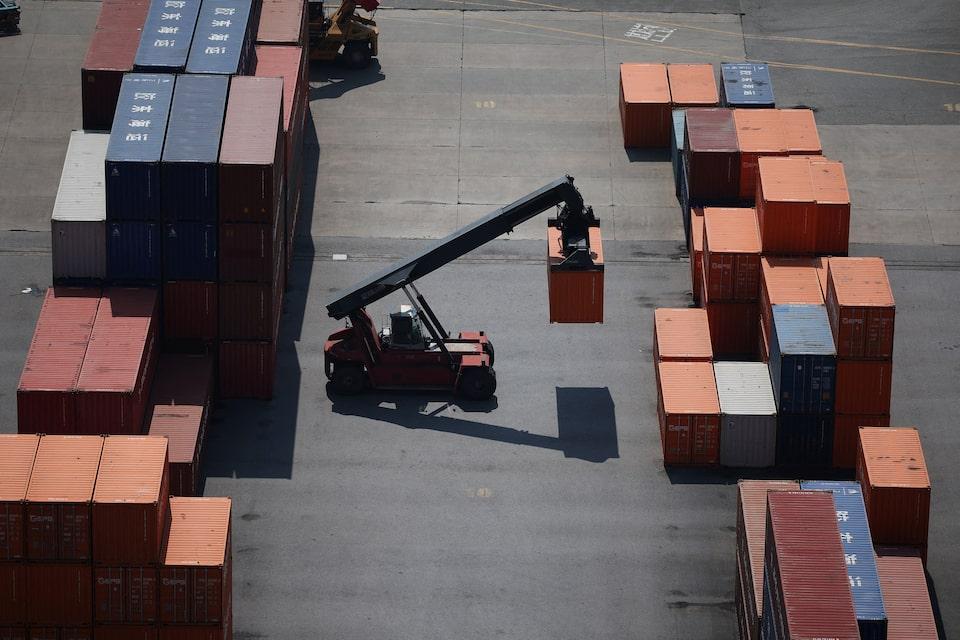
Top credit rating for Russia's Gazprom paves the way for yuan bond issuance Russia and China agreed to build Power of Siberia 2 pipeline Rating can also be used in Gazprom's transactions with Chinese banks, counterparties - source SHANGHAI, Sept 8 (Reuters) - Chinese rating agency CSCI Pengyuan assigned its highest AAA rating to U.S.-blacklisted Russian oil and gas giant Gazprom (GAZP.MM) , opens new tab on Friday, paving the way for any debt issuance in China's domestic bond market. Western rating agencies including Moody's, Fitch and S&P Global Ratings have withdrawn credit ratings for Gazprom and many other Russian companies due to the Russia-Ukraine conflict. Sign up here. Accessing China's bond market, the world's second-biggest, would be a boon for Russian companies cut off from Western financing due to sanctions. "The high rating from an independent foreign rating agency confirms Gazprom's financial stability and indicates the company's strong creditworthiness," Gazprom Deputy CEO Famil Sadygov said in a statement. The long-term issuer rating on Gazprom will not necessarily lead to an imminent issuance of yuan-denominated bonds by the Russian company, said a source with direct knowledge of the situation. But the rating paves the way for potential yuan bond issuance in the future, though that requires approval from Chinese regulators who will take geopolitical risks into consideration, said the source, who was not authorised to speak publicly. The "AAA" rating for Gazprom with a stable outlook came just days after Russia and China gave their blessings to the Power of Siberia 2 pipeline, a massive gas project linking the two countries as they seek to reduce economic reliance on the West. Gazprom made the announcement about the project during Russian President Vladimir Putin's visit to China last week. "Gazprom's rating reflects its strategic importance and legal ties to the Russian government," CSCI Pengyuan said. The firm's credit profile "is underpinned by its strong business profile as one of the market leaders in the global oil and gas industry and its important position in Russia's energy market," it added. Late last month, senior Chinese financial regulators told top Russian energy executives that they would support their companies' plans to sell yuan "panda bonds", the Financial Times reported on Sunday, citing sources. Companies typically obtain credit ratings before selling bonds in China. Such issuer ratings can also be used in transactions with Chinese banks and in deals with Chinese counterparties, said the source with knowledge of the situation. GEOPOLITICAL RISKS In an analysis of Gazprom's outlook alongside its rating decision, CSCI Pengyuan cited "high geopolitical risks" associated with the energy company, which was sanctioned by the U.S. following Russia's invasion of Ukraine in 2022. "Sanctions and geopolitical disruptions have adversely affected the company's operations, leading to a decline in gas export revenue and volume in 2023," the rating agency said. "As the geopolitical landscape continues to evolve, operational uncertainties persist." Last month, CSCI Pengyuan also assigned a "AAA" credit rating to Zarubezhneft, a mid-scale upstream oil company fully owned by the Russian Federation. A decade ago, China and Russia were in talks on a framework to allow Russia to issue yuan-denominated bonds, but little progress has been made. https://www.reuters.com/business/energy/chinese-agency-assigns-aaa-rating-russian-energy-giant-gazprom-2025-09-08/

2025-09-08 06:56
China's central bank buys gold in August for 10th month in a row Gold hit record high of $3,599.89/oz on Friday Speculators raise net long positions in gold - CFTC Sept 8 (Reuters) - Gold held firm near an all-time high on Monday, inching closer to a key $3,600 level, bolstered by mounting expectations of a U.S. Federal Reserve rate cut this month following a weaker-than-expected jobs report last week. Spot gold was up 0.2% at $3,593.79 per ounce, as of 0641 GMT. Bullion rose to a record high of $3,599.89 on Friday. Sign up here. U.S. gold futures for December delivery fell 0.5% to $3,634. "The main driver is U.S. jobs data and the expectations now that the Fed could cut by 50 basis points in September. It's a marginal chance but a material shift from before the jobs figures," Capital.com financial market analyst Kyle Rodda said. "Basically ... all of the tailwinds are blowing for gold at the moment and notwithstanding an inflation shock this week, we will make a good test of $3,600." U.S. job growth weakened sharply in August, and the unemployment rate increased to a nearly four-year high of 4.3%, confirming that labor market conditions were softening and sealing the case for a Fed rate cut next week. Traders have fully priced in a 25-bp cut this month, with an 8% chance of a jumbo 50-bp rate cut, according to the CME FedWatch tool. Lower interest rates decrease the opportunity cost of holding non-yielding bullion and weigh on the dollar, making gold cheaper for investors holding other currencies. Focus now shifts to the U.S. inflation report on Thursday that could offer more clarity on the size of the Fed's expected rate cut. Bullion has surged 37% so far this year after a 27% gain in 2024, driven by the dollar's weakness, central bank buying, a softening monetary policy backdrop, and wider geopolitical and economic uncertainty. China's central bank added gold to its reserves in August, extending purchases of bullion into a 10th straight month. Meanwhile, gold speculators raised net long positions by 20,740 contracts to 168,862 in the week ended September 2. Elsewhere, spot silver fell 0.1% to $40.92 per ounce. Platinum rose 1.5% to $1,393.27, and palladium gained 1.2% to $1,123.20. https://www.reuters.com/world/india/gold-hovers-near-record-high-us-rate-cut-prospects-2025-09-08/

2025-09-08 06:55
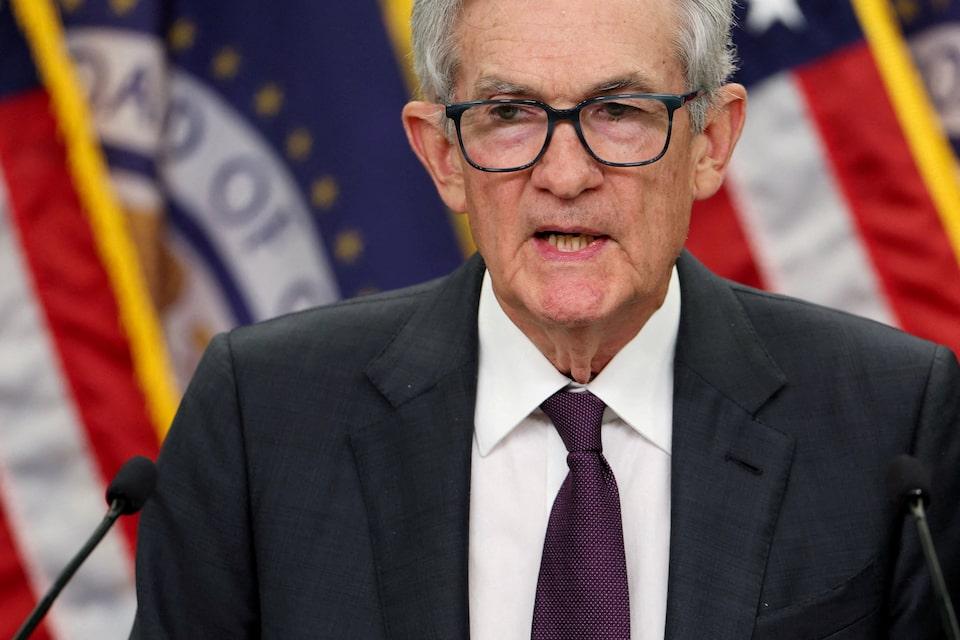
Sept 7 (Reuters) - Standard Chartered expects the U.S. Federal Reserve to cut interest rates by 50 basis points at its policy meeting this month, double its earlier projection of a 25-bp reduction, following a soft August jobs report. Data on Friday showed U.S. job growth weakened sharply in August and the unemployment rate rose to a near four-year high of 4.3%, confirming a softening labor market and bolstering the case for a rate cut this month. In a client note on Friday, the brokerage said that the labor market had shifted "from solid to soft in less than six weeks." Sign up here. "August labor market data has paved the way for a 'catch-up' 50 basis point rate cut at the September FOMC meeting, similar to what occurred at this time last year." After a 50-bps cut the market could take time to price in a slower subsequent pace of cuts, the brokerage added. Meanwhile, Morgan Stanley and Deutsche Bank do not consider the August jobs report weak enough to warrant a 50-bps rate cut in September, though they noted it could pave the way for reductions at consecutive meetings. Last month, Fed Chair Jerome Powell signaled a rate cut was possible at the September 16-17 policy meeting, citing rising labor market risks, while cautioning that inflation remained a threat. Barclays revised its forecast on Friday to include 25 bps reductions at each of the remaining meetings this year, while Macquarie brought forward its expected December cut to October. Bank of America also revised its outlook, now expecting 25 bps cuts each in September and December, after previously forecasting no cuts this year. Markets are pricing in a 90% chance of a 25-bps rate cut next week and a 10% probability of a larger 50-bps reduction, according to the CME FedWatch Tool. https://www.reuters.com/business/stanchart-expects-fed-cut-rates-by-50-bps-next-week-after-weak-jobs-data-2025-09-08/
2025-09-08 06:53
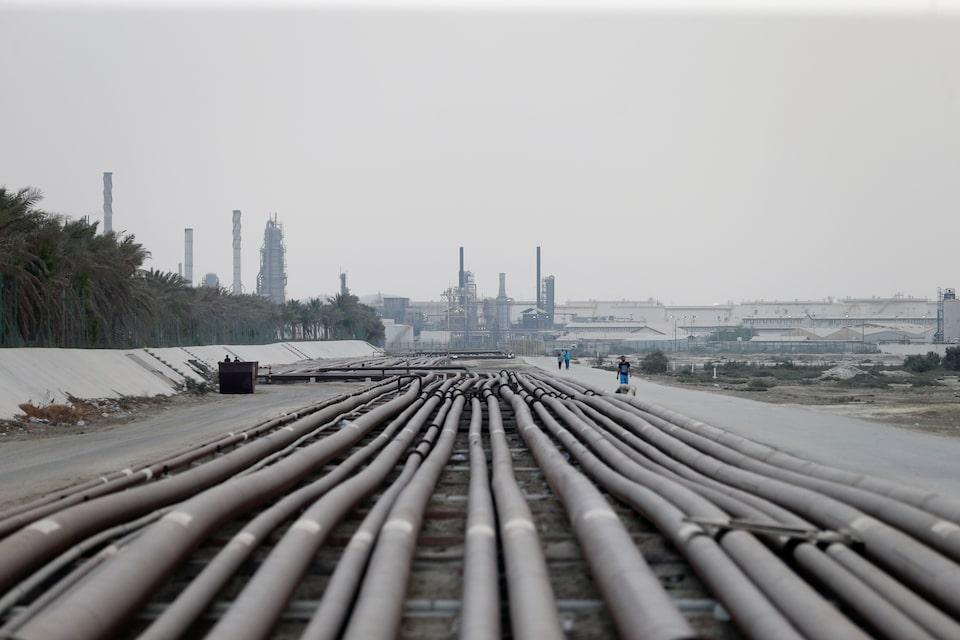
SINGAPORE, Sept 8 (Reuters) - Bahrain's state oil firm Bapco Energies expects to commission its Sitra refinery expansion in the fourth quarter of this year, and will be looking to buy heavier crudes than it now runs and more liquefied natural gas, a senior executive said on Monday. The expansion will increase Sitra's refining capacity to "just under 400,000 barrels per day" from about 265,000 bpd, said Bapco's group chief strategy officer, Alexander van Veldhoven, speaking at the APPEC Conference in Singapore. Sign up here. "We are in the very last phase of that programme. Most units are all up and running, and we are kind of getting close to commissioning the last units in the refinery," he added. The refinery expansion will boost the plant's ultra-low sulphur diesel production by 72% and jet fuel production by 90%, its company website showed. Also, the refinery is expected to produce more naphtha, van Veldhoven said. On the feedstock front, Bapco Energies still plans to import heavier crude for the expanded plant. "It is undeniably the case, when you build residual hydrocrackers with the ability to go deeper into the bottom of the barrel ... we're going to be stepping away from just running sweet Arab crude that comes from the Saudi-Bahrain pipeline," said van Veldhoven. When asked about Bapco's partnership with French oil major TotalEnergies (TTEF.PA) , opens new tab, van Veldhoven said "there is a plan for further cooperation" and possibly a joint venture. Last year, the Bahrain oil major signed a trading partner agreement with TotalEnergies. "We already started to trade together … the next phase is to really kind of incorporate that and set it up as an integrated joint venture kind of trading company that has yet to come. We are getting very close to that," said van Veldhoven. On the broader energy front, Bapco is looking to buy more LNG gas next year compared to this year. It was in talks to secure more LNG supplies from Russia, Reuters reported in May. "It's definitely going to ramp up," said van Veldhoven, referring to the country's purchase of the super-chilled fuel, adding that they will be in the market "for both spot and medium term cargoes". He did not comment on volumes. "We're coming to the market in the fourth quarter." https://www.reuters.com/business/energy/bahrains-bapco-sees-expanded-plant-up-q4-seeks-heavier-crude-more-lng-2025-09-08/
2025-09-08 06:33
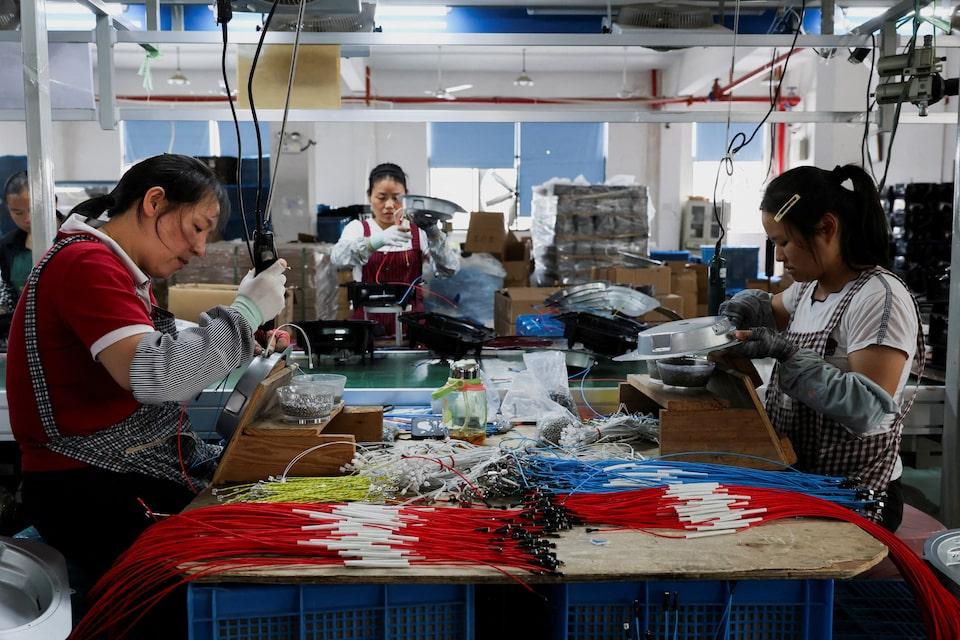
Exports rise 4.4% y/y, slowest pace since Feb; miss f'cast Imports up 1.3%, also below forecast Investors worry about absence of durable trade deal with U.S. Exports to other markets rise, reduces need to rush fiscal stimulus, analysts say BEIJING, Sept 8 (Reuters) - China's export growth slowed to a six-month low in August as a brief boost from a tariff truce with the U.S. faded, but demand elsewhere provided officials some relief as they try to underpin an economy facing low domestic consumption and external risks. Authorities are counting on manufacturers to diversify into other markets in the wake of U.S. President Donald Trump's erratic trade policy, enabling them to hit Beijing's annual growth target of "around 5%" without rushing to offer additional near-term fiscal support. Sign up here. Outbound shipments from China rose 4.4% year-on-year in August, customs data showed on Monday, missing a forecast 5% increase in a Reuters poll and marking the slowest growth in six months. They compared with July's better-than-expected 7.2% increase. Imports grew 1.3%, following 4.1% growth a month earlier. Economists had predicted a 3.0% rise. The slowdown in headline export growth was affected by a high base of comparison, but last August's figure was also distorted by manufacturers rushing to beat tariffs from a number of trading partners. "I would say the number is still decent, and the resilience of exports has certainly lasted longer than we had expected," said Xu Tianchen, senior economist at the Economist Intelligence Unit. "The prospect of a fiscal stimulus is definitely quite dim. China still has a number of economic tools such as policy bank credit and monetary easing, which may be enough to help it reach 5%," he added. China's exports to the U.S. fell 33.12% year-on-year in August, the customs data showed, while its shipments to Southeast Asian nations rose 22.5% in the same period. Chinese producers are trying to export more to markets in Asia, Africa and Latin America to offset the impact of Trump's tariffs, but no other country comes even close to U.S. consumption power, which once absorbed over $400 billion of Chinese goods annually. And with Trump in July threatening a 40% penalty tariff on goods deemed to be transshipped from China to the U.S. to evade his earlier levies, how long Chinese factory owners can continue to find American buyers that way remains to be seen. But policymakers are loathe to implement painful but much-needed economic reforms for a durable pick-up in domestic consumption under external pressure, analysts say. "The [import data] breakdown showed a pickup in energy shipments, but this was more than offset by declines in chip and industrial metal imports, with the latter likely reflecting the continued slowdown in construction activity," said Zichun Huang, China economist at Capital Economics. A protracted slump in the property sector, a key store of household wealth, is squeezing consumer spending. Depleted land-sale revenue is also limiting local authorities' ability to back Beijing's drive to revive demand through subsidies such as job-creation schemes. Beijing also seems to be exercising tighter control over its flagship 'cash-for-clunkers' programme and did not rush to replenish funds after several local governments recently ran through the allocation set aside for the scheme. But that puts a lot of pressure on Chinese exporters. China's August trade surplus came in at $102.3 billion, from $98.24 billion in July, but still well below June's $114.8 billion. TRADE TENSIONS Beijing and Washington agreed on August 11 to extend their tariff truce for another 90 days, locking in place U.S. levies of 30% on Chinese imports and 10% Chinese duties on U.S. goods, but appear to be struggling to chart a path beyond the current pause. Once Trump's tariffs top 35%, they become prohibitively high for Chinese exporters, economists warn. China's soybean imports rose to their highest-ever level for the month of August, as buyers snapped up large volumes from South America and continued to hold off booking U.S. soybeans - leaving American exporters at risk of missing out on billions of dollars in sales as trade talks drag on. Iron ore imports in August stayed high as mills prepared for the peak steel demand period in September, which policymakers will be hoping sees an uptick in construction activity off the back of better weather. But with no end to the property downturn in sight and structural reforms slow to come by, officials are likely to be focussed on one preferred option - negotiating a resolution to the trade war with the Trump administration while expanding China's commercial footprint elsewhere. "Exports are holding up well so far," said Dan Wang, director for China at Eurasia Group. "Shipments to the U.S. are down, but other routes are even better than last year. Lots of exports are also tied to Chinese factories going overseas and importing raw materials and other inputs from China," she added. https://www.reuters.com/world/china/chinas-august-export-growth-slowest-6-months-us-tariff-risks-mount-2025-09-08/
2025-09-08 06:22
South Korea seeks to formalise trade deal with U.S. after Japan Officials negotiating details of investment package South Korea's trade deal to include foreign exchange policy SEJONG, South Korea, Sept 8 (Reuters) - South Korea will take into account Japan's trade agreement with the United States as a reference as it negotiates final details of its own trade deal struck in late July, the finance minister said on Monday. "There are pros and cons for us. What is positive is that because we know the outcome of Japan's negotiations, we can negotiate with the U.S. based on it," Minister Koo Yun-cheol told a press conference. Sign up here. President Donald Trump signed an executive order implementing Japan's trade deal last week, but South Korea is yet to reach a written agreement on the deal struck in July between its team led by Koo and the U.S. leader. The Japanese deal lowering U.S. tariffs on imports of its cars to 15% from 25% has put South Korean automakers, which still face 25%, at a competitive disadvantage. "We will consult with the U.S. in a way that meets the national interest as much as possible," Koo said. South Korea and the U.S. were negotiating on details of a $350 billion investment package included in the deal and Seoul would seek ways to launch various investment projects in the U.S. in an effective manner, he said. Seoul was also in talks with the U.S. over foreign exchange policy, which will be included when the two sides announce the results after trade negotiations conclude, Koo said. Last week, Trump's administration asked the U.S. Supreme Court to swiftly hear a bid to preserve his sweeping tariffs pursued under a 1977 law meant for emergencies, after a lower court invalidated most of the levies that have been central to the Republican president's economic and trade agenda. Koo said authorities were taking into account every possible scenario, but said it remained "more pressing than ever" to respond to various external changes, such as tariffs. He vowed to prepare new strategies by October to respond to fundamental changes in the global trade order. Referring to a U.S. immigration raid that saw hundreds of Korean workers detained last week at a Hyundai plant under construction in Georgia, Koo said the government would consult with the Trump administration to prevent similar incidents from happening again to companies investing in the United States. https://www.reuters.com/world/asia-pacific/south-korea-reference-japan-deal-when-finalising-its-us-trade-deal-minister-says-2025-09-08/