2025-12-04 07:09
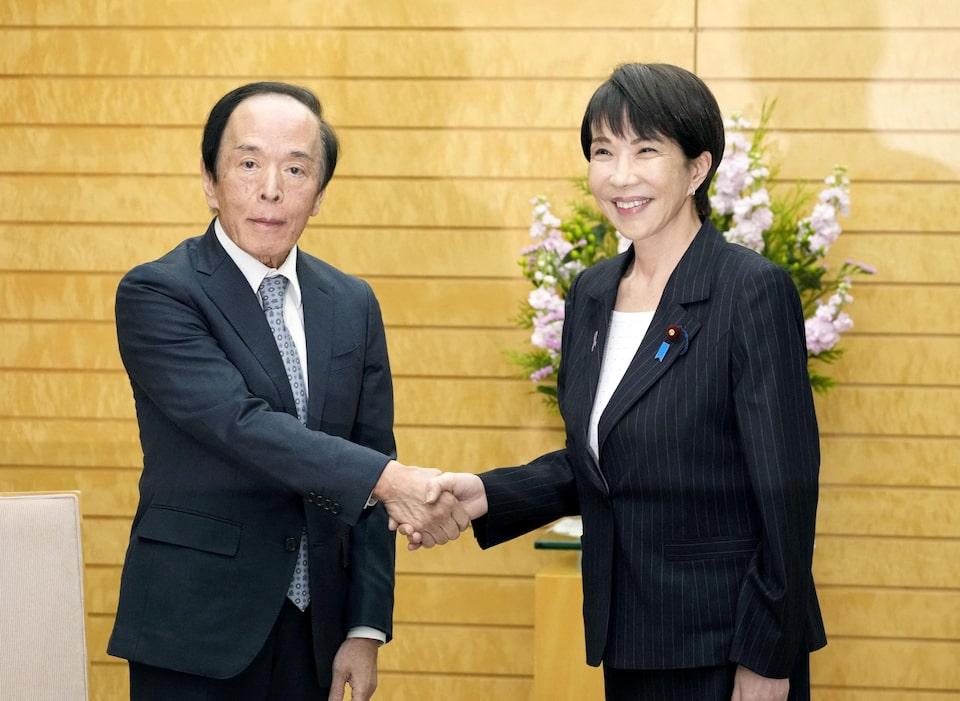
Ueda essentially pre-commits to December hike in speech Finance minister, reflationist aide nod to Ueda's comments Weak yen, Ueda's guarded caution behind government consent No clear plan yet on how to communicate long-term rate hike plan Neutral rate debate may prove elusive, keep language ambiguous TOKYO, Dec 4 (Reuters) - Bank of Japan chief Kazuo Ueda used diplomacy and nodded to the dangers of inflation and a weak yen to sell his plan for a December rate hike to Prime Minister Sanae Takaichi, who only last year called rate hikes "stupid". The pitch worked - both markets and Japan's new government got the message that a quarter point rate hike to 0.75% later this month was a near certainty, allaying worries the BOJ might succumb to political pressure to not tighten policy. Sign up here. However, what is less clear is how the BOJ plans to communicate the longer-term rate hike path - a more challenging task given a lack of consensus on where Japan's neutral rate of interest lies. The uneasy truce between the BOJ and administration will keep the bond market jittery, with investors already focusing on what Ueda would say on the pace of further rate hikes. "I think the BOJ sees a December hike pretty much as a done deal. The more important question is what's next," said Mari Iwashita, executive rates strategist at Nomura Securities. "The yen will fall if Ueda fails to assure markets the BOJ will keep hiking rates. But signaling steady hikes could make the administration nervous," she said. "It's a bit tricky." FIRST ROUND TO THE HAWKS Ueda essentially pre-announced a December rate hike in a speech on Monday, saying the BOJ would consider the "pros and cons" of such a move this month. The comments, which led markets to price in an 80% chance of a December hike, got little pushback from the administration of Takaichi, who has historically advocated loose monetary policy. Instead, Finance Minister Satsuki Katayama said on Tuesday she saw no problem with Ueda's comments, a sign the government won't get in the way of a rate hike this month. Even Takaichi's reflationist aides gave guarded consent, including government panel member Toshihiro Nagahama, who said the premier may accept a December hike if the yen stayed weak. "The BOJ will have to raise rates if the yen's weakness persists even after next week's U.S. monetary policy decision," he told Reuters, when asked about Ueda's speech on Monday. The next hike would bring the BOJ's policy rate to 0.75%, a level unseen in three decades, in another step by Ueda in removing remnants of his predecessor's radical stimulus. Clearing political opposition has been the biggest challenge to Ueda's rate-hike plan since Takaichi took office on October 21, with the premier voicing displeasure over an early increase. As with Ueda's past two rate hikes, however, fears of unwelcome yen falls helped the BOJ convince politicians of the need to lift deeply negative real interest rates. The breakthrough came in Ueda's meeting with Takaichi on November 18, held at the premier's office late afternoon rather than the customary one-hour talk over lunch. Describing the meeting as "candid, good" talks, Ueda said Takaichi acknowledged the BOJ's plan to make a smooth landing towards its price goal through gradual rate hikes. A day later, Katayama met Ueda and said she had no objection to a gradual "adjustment" of a still-massive stimulus. By then, the yen was at 10-month lows, drawing threats of currency intervention by Katayama. The premier no longer spoke of how the government, rather than the BOJ, sets monetary goals. "The premier is very sensitive to yen moves," said a government official with knowledge of the administration's deliberations. "Countering the weak yen became a priority as inflation would hit approval ratings," another source said. LAYING THE POLITICAL GROUNDWORK Immediately after the talks, the BOJ's monetary affairs staff began crafting rhetoric to prop up market bets of a December hike without antagonising the administration. Staff burnt the midnight oil to complete a draft speech for Ueda on December 1, the last set event available to drop policy signs before the December 18-19 rate review. The plan was to praise "Abenomics," a mix of monetary and fiscal stimulus deployed by former premier Shinzo Abe and hailed by Takaichi, as successfully pulling Japan out of stagnation. The speech then explained how raising still-low borrowing costs would achieve long-term stable growth, and ultimately "lead to the success of efforts undertaken by the government and the BOJ." "Ueda's speech shows the BOJ and the administration had done the necessary groundwork," said former BOJ board member Takahide Kiuchi. 'HASTE MAKES WASTE' While Japanese law nominally affords the BOJ independence, it has faced political pressure in the past to expand monetary support for a moribund economy. The central bank is also sensitive to political winds because the government has authority to pick the governor and members of the board, which then need parliamentary approval. Ueda's dogged caution, which had served as a restraining force in an increasingly hawkish board, may have also helped convince the administration the rate hikes would be gradual. People who know Ueda well describe him as a pragmatic, cautious academic who prefers to collect and analyse data before making decisions. "Haste makes waste is probably Ueda's approach," said one of them. "Such a style may have helped dispel worries held by some politicians that the BOJ would rush into normalising policy." But there is uncertainty on how long the truce will last. Even if the BOJ successfully hikes rates in December, it faces a bigger challenge in communicating how far it would eventually push up borrowing costs. The BOJ has released estimates suggesting Japan's nominal neutral rate of interest - or the rate that neither cools nor overheats the economy - lies somewhere in a range of 1% to 2.5%. Analysts argue that wide range prevents investors from buying long-term bonds due to uncertainty over future rate hikes. Ueda on Thursday acknowledged that uncertainty in knowing how far the central bank could raise rates. Swap rates show markets see the BOJ eventually raising rates up to around 1.5% by mid-2027. But Takuji Aida, an economic adviser to Takaichi, said after a hike to 0.75%, the BOJ should keep rates steady until 2027. That ambiguity complicates any communication around future hikes, analysts say. "In reality, the BOJ would have to judge whether its rate is approaching neutral by looking at how its rate hikes are affecting the economy and prices," said former BOJ official Nobuyasu Atago. https://www.reuters.com/world/asia-pacific/boj-wins-first-showdown-with-takaichi-whats-next-is-less-certain-2025-12-04/
2025-12-04 07:07
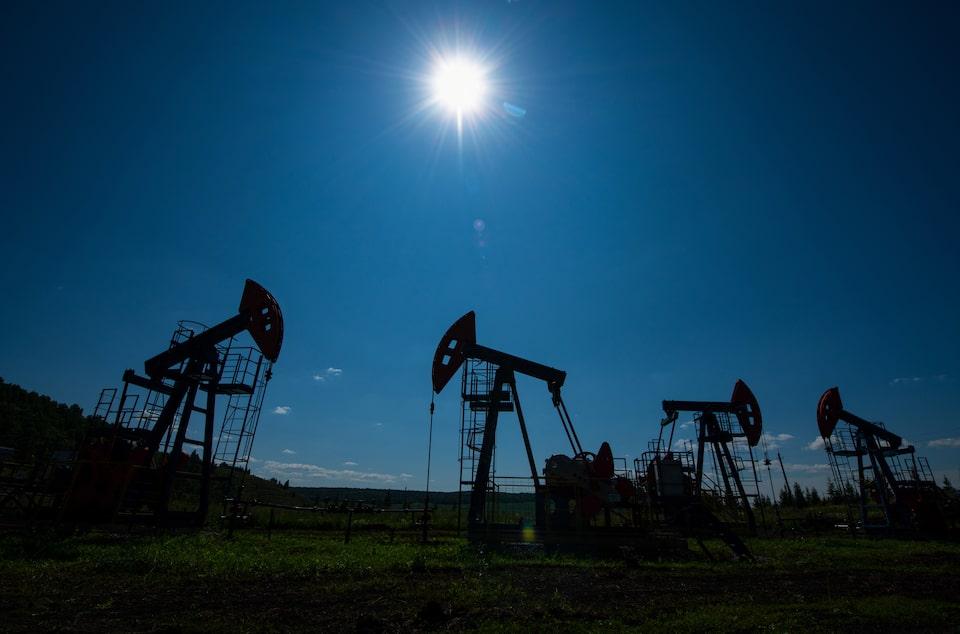
Investors weigh potential for Fed rate cut Peace talks on Russia-Ukraine stall U.S. crude stocks rise vs expected draw HOUSTON, Dec 4 (Reuters) - Oil prices settled up on Thursday on investors' expectations for the Federal Reserve to cut interest rates, while stalled Ukraine peace talks tempered expectations of a deal restoring Russian oil flows. Brent crude settled up 59 cents, or 0.94%, to $63.26. U.S. West Texas Intermediate settled up 72 cents, or 1.22%, to $59.67. Sign up here. U.S. crude futures briefly rose more than $1 a barrel earlier in the session as g, powered by expectations that a U.S. rate cut will support the world's largest economy and oil demand, after data showed employment is slowing. The dollar was lower, poised for its 10th straight day of losses against a basket of major currencies, making crude cheaper for buyers using other currencies. “I think the potential for a rate cut is overshadowing everything right now and driving crude prices up,” said Phil Flynn, senior analyst with Price Futures Group. Escalating tensions between the U.S. and Venezuela were also supporting prices, analysts said, on concerns of a drop in crude supplies from the South American country. "Benchmark crude oil prices could be impacted significantly by escalating military tensions between the U.S. and Venezuela," Rystad Energy analysts said in a note on Thursday, noting that U.S. President Donald Trump's administration is ratcheting up pressure on Venezuelan President Nicolás Maduro, "signalling the possibility of a U.S. incursion." UKRAINE PEACE TALKS STALL The perception that progress on a peace plan for Ukraine was stalling also supported prices, after Trump's representatives emerged from peace talks with the Kremlin with no breakthroughs on ending the war. "War and politics, balanced against comfortable stocks, expected supply surplus, and OPEC’s market-share strategy, keep Brent in the $60–$70 range for now," said PVM analysts. Previously, expectations of an end to the war had pressured prices lower, as traders anticipated a deal would allow Russian oil back into an already oversupplied global market. Ukraine hit the Druzhba oil pipeline in Russia's central Tambov region, a Ukrainian military intelligence source said on Wednesday, the fifth attack on the pipeline that sends Russian oil to Hungary and Slovakia. The pipeline operator and Hungary's oil and gas company later said supplies were moving through the pipeline as normal. "Ukraine’s drone campaign against Russian refining infrastructure has shifted into a more sustained and strategically coordinated phase," consultancy Kpler said in a research report. "This has pushed Russian refining throughput down to around 5 million barrels per day between September and November, a 335,000 bpd year-on-year decline, with gasoline hit hardest and gasoil output also materially weaker," the report added. U.S. crude and fuel inventories rose last week as refining activity picked up, the Energy Information Administration said on Wednesday. Crude inventories rose by 574,000 barrels to 427.5 million barrels in the week ended November 28, the EIA said, compared with analysts' expectations in a Reuters poll for an 821,000-barrel draw. Fitch Ratings on Thursday cut its 2025-2027 oil price assumptions to reflect market oversupply and production growth that is expected to outstrip demand. Saudi Arabia set the January Arab Light crude oil official selling price to Asia at $0.60 a barrel above the Oman/Dubai average, its lowest level in five years, according to a pricing document reviewed by Reuters. Meanwhile, Kazakhstan's oil and gas condensate production declined by 6% in the first two days of December, an industry source said on Thursday, following a Ukrainian drone attack on the Caspian Pipeline Consortium's (CPC) Black Sea loading facility. https://www.reuters.com/business/energy/oil-prices-firm-after-ukrainian-strikes-russian-oil-infrastructure-stalled-peace-2025-12-04/
2025-12-04 07:03
Rolls up three existing timber funds 73% of investors stick with new perpetual fund Aims to generate cash yield of at least 8% LONDON, Dec 4 (Reuters) - Investor Stafford Capital Partners has consolidated assets from three timber funds into a new $1.2 billion fund, retaining nearly three-quarters of existing investors amid strong institutional demand for the assets. The Stafford International Timberland Continuation Fund will operate as a perpetual fund and include 74 assets from across Stafford International Timberland (SIT) funds VI, VII and VIII, it said in a statement. Sign up here. Continuation funds allow managers to keep assets beyond the original fund's life - typically to maintain exposure to strong performers or avoid selling at unfavourable prices. About 73% of SIT investors rolled over their investment, with fresh capital accounting for 27%. The biggest backer is a group of UK Local Government Pension Funds, which collectively make up 54% of the fund. "The establishment of the Continuation Fund follows closely behind our $1 billion close of SIT X, our tenth core timberland fund," said Stafford Chief Executive Angus Whiteley, referring to the March fundraising. "We believe this further signals the growing momentum and institutional interest in timberland as a strategic asset class." The fund's assets, built up between 2011 and 2018, cover 6.3 million acres of commercial timberland from across the United States, New Zealand, Australia and Latin America, the firm said. It plans no new acquisitions to the fund and instead will gradually sell down about 28% of the fund, aiming to generate a cash yield of more than 8% over the next decade. https://www.reuters.com/sustainability/climate-energy/stafford-capital-launches-12-billion-timber-fund-targets-8-yield-2025-12-04/

2025-12-04 07:01
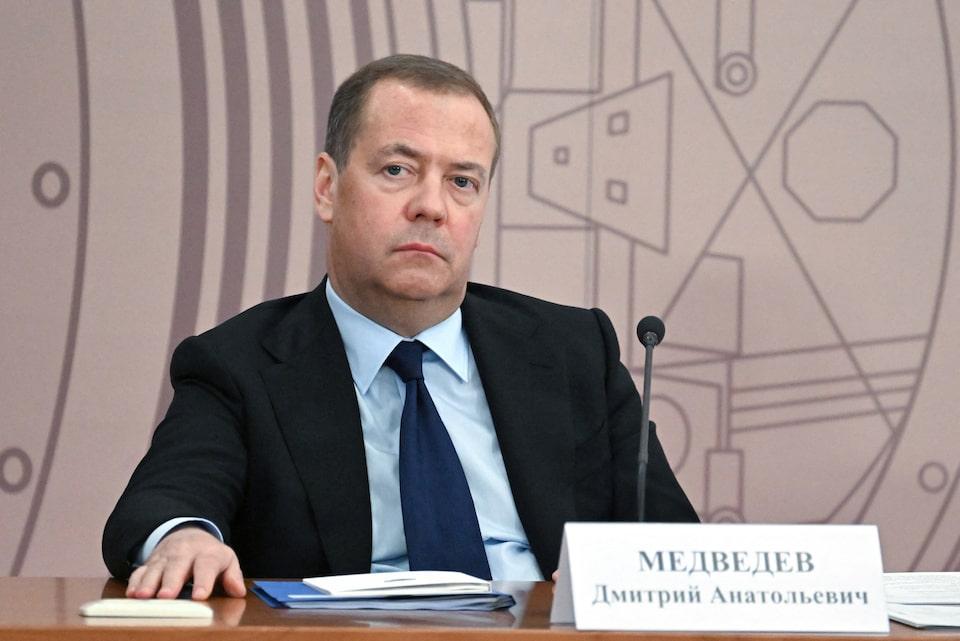
MOSCOW, Dec 4 (Reuters) - Dmitry Medvedev, the deputy chairman of Russia's Security Council, said on Thursday that if the European Union takes frozen Russian assets, then it may be considered by Moscow as tantamount to an act justifying war. "If the crazy European Union does, after all, try to steal Russian assets frozen in Belgium under the guise of a so-called ‘reparations loan’, Russia may well view this move as tantamount to a casus belli with all the relevant implications for Brussels and individual EU countries," Medvedev said. Sign up here. The European Commission proposed on Wednesday an unprecedented use of frozen Russian assets or international borrowing to raise 90 billion euros ($105 billion) for Ukraine to cover its struggling military and basic services. https://www.reuters.com/world/europe/russias-medvedev-says-eu-seizure-frozen-assets-could-be-tantamount-justification-2025-12-04/
2025-12-04 06:56
Divestments to help miner generate $5 billion to $10 billion Miner sees $650 mln in productivity benefits in first 3 months Miner in active talks with Chinalco over stake LONDON, Dec 4 (Reuters) - Rio Tinto (RIO.AX) , opens new tab, (RIO.L) , opens new tab CEO Simon Trott outlined a plan on Thursday to generate $5 billion to $10 billion through divestments and productivity growth, as he moves to simplify the structure of the world's largest iron ore miner. Investors had been waiting for the details since Rio Tinto announced in August it would streamline its business to three core units from four and focus on profitable assets. Assets up for sale include Rio's titanium and borates businesses. Sign up here. Rio Tinto joins global peers in efforts to become leaner and more focused by selling non-core assets, cutting jobs, and tightening capital to boost investor appeal amid shifting commodity cycles and pressure for higher returns. MINER IDENTIFIED GLOBAL ASSETS THROUGH REVIEW The Anglo-Australian miner identified some global assets it does not need to own following a thorough review, Trott told media on a telephone call on the company's strategy day. "We'll proceed and test the market for (titanium and borates) assets, together with some of the other measures across our footprint: things like land, infrastructure, processing assets, and mining assets ... so we're reaching up to $10 billion," he said. Talking to shareholders in London on Thursday, Trott added the miner is working with its main shareholder, Aluminium Corporation of China Limited (Chinalco), to resolve governance constraints limiting its ability to buy back shares. Rio Tinto said it is also exploring commercial partnership options for some of these assets and plans to cut unit costs by 4% from 2024 to 2030. It announced $650 million in annualised productivity gains and cost savings, with $370 million already realised and the rest to be delivered in the first quarter. The figure included headcount reductions, Trott added, but declined to specify the number of jobs to be cut. The company's shares opened up more than 2% in London following his remarks, before clawing back gains, with some analysts expecting more. "Headline cost out of $650 million [is] a little disappointing," said Glyn Lawcock, an analyst at Barrenjoey. However, analysts at Citi were more optimistic, saying "Rio ... has laid out an attractive vision for the company, with positive guidance commentary for 2025 & 2026, reiterating the solid volume growth outlook by 2030 and capex normalization." Earnings could be boosted by as much as half by the end of the decade, Rio added, thanks to capital discipline, rising prices for its commodities and 20% growth in copper production. UPS FORECASTS FOR COPPER OUTPUT The miner also raised its 2025 copper production forecast, citing stepped up operations at its Oyu Tolgoi project in Mongolia. Rio said it now expects copper production this year to range between 860,000 metric tons and 875,000 tons on a consolidated basis, up from its previous forecast of 780,000 tons to 850,000 tons. In 2026, it expects copper production between 800,000 tons and 870,000. Rio earns profits primarily from iron ore but it is shifting focus towards copper, aiming to produce 1 million tons of the metal annually by 2030. Copper prices stand at records, and the commodity is expected to be in high demand as the world adopts greener forms of energy. Rio said it remains on track to boost copper output at Oyu Tolgoi by more than 50% this year and by about 15% in 2026. https://www.reuters.com/world/asia-pacific/rio-tinto-lifts-2025-copper-production-forecast-2025-12-04/
2025-12-04 06:53
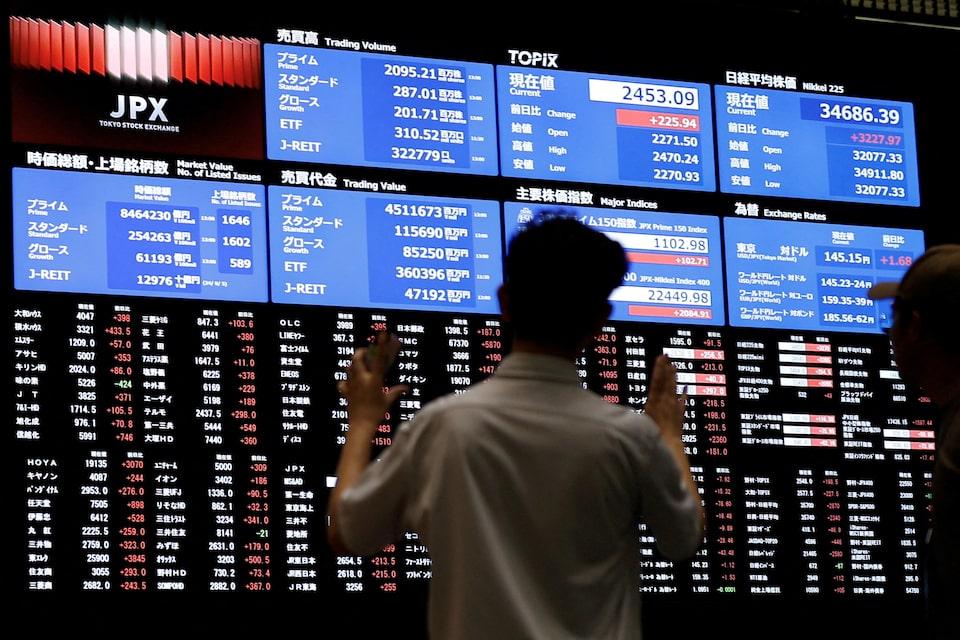
Fed expected to cut rates amid weak economic data US dollar index is set to snap nine-session losing streak Japanese stocks lead gains, Nikkei up 2% NEW YORK/LONDON, Dec 4 (Reuters) - Global shares and the dollar on Thursday were mostly higher as traders await a Fed interest rate cut. U.S. stocks finished mostly higher in a choppy trading session, with the benchmark S&P 500 (.SPX) , opens new tab and Nasdaq (.IXIC) , opens new tab gaining while the Dow (.DJI) , opens new tab ended slightly lower. Consumer staples, healthcare, and materials stocks suffered the most losses, while industrials, technology and communications services drove gains. Sign up here. The Dow Jones Industrial Average (.DJI) , opens new tab fell 0.07%, the S&P 500 (.SPX) , opens new tab rose 0.11% and the Nasdaq Composite (.IXIC) , opens new tab gained 0.22%. In Europe, the STOXX 600 (.STOXX) , opens new tab was up 0.45% and still headed for a modest weekly gain. London's FTSE 100 index (.FTSE) , opens new tab was up 0.19% while Germany's DAX (DAX.O) , opens new tab gained 0.32%. MSCI's gauge of stocks across the globe (.MIWD00000PUS) , opens new tab rose 0.24%. Japanese stocks rallied sharply after an auction of government bonds drew strong demand from investors, which helped set the tone for the broader equity market. The Nikkei (.N225) , opens new tab rose 2.33%. "After a 5% pullback in late November, stocks have rebounded and are now trading at the pre-pullback levels and near all-time highs," said Michael Farr, chief executive of investment advisory firm Farr, Miller & Washington in Washington. Data on Thursday appeared to assuage concerns of a sharp deterioration in U.S. labor market conditions. The number of Americans filing new applications for unemployment benefits fell to a more than three-year low of 191,000 last week. That came after U.S. private payrolls data posted its biggest drop in more than two-and-a-half years, and following a survey of the services sector that showed activity held steady in November while hiring slowed. "If they cut rates by a quarter of a point and then take a pause - which every Fed speaker has indicated, markets might be disappointed in the messaging. If they don't cut and say we're going to wait until the next meeting, markets will be disappointed there too," Farr said. Fed funds futures are pricing a near 90% chance of a quarter-point cut at the end of the Fed's next meeting on December 10, compared with an 83.4% chance a week ago, according to the CME Group's FedWatch tool. The dollar index , which tracks the U.S. currency's performance against six others, was up slightly by 0.17% on the day, easing earlier losses and poised to end nine straight sessions of declines. Oil prices rose, with Brent crude futures adding 0.94% to settle at $63.26 while U.S. crude futures gained, settling up 1.22% at $59.67. US 10-YEAR TREASURY BOND YIELD UP The yield on the U.S. 10-year Treasury bond was last up 4.2 basis points at 4.1%. The Financial Times reported on Wednesday that bond investors had expressed concerns to the U.S. Treasury that Kevin Hassett, a candidate to replace Jerome Powell as Fed chair next year, could aggressively cut interest rates to align with President Donald Trump's preferences. "I think there's purposeful timing by the Trump administration to announce the president's selection of a new Fed chairman that will be seen - correctly or not - as being more dovish around this meeting to appear as an antidote to the messaging," Farr said. In Japan, the government's debt sale drew the strongest demand in more than six years, which helped soothe investor nerves about the country's long-term finances that have stoked similar worries about other economies. The dollar was last down 0.08% at 155.11 against the yen , which is heading for its largest weekly gain against the U.S. currency in over two months. The yen got another boost from a Reuters report that the Bank of Japan is likely to raise interest rates in December with the government expected to tolerate such a decision, citing three government sources familiar with the deliberations. Meanwhile, the yuan softened a touch, leaving the dollar up 0.21% at 7.071 yuan in offshore trading in Hong Kong . The Chinese currency hit its strongest level against the dollar in more than a year on Wednesday. Precious metals cooled after a recent hot streak. Gold was flat at $4,208.66 an ounce, while silver fell 2.32% to $57.12 an ounce, after hitting a record high of $58.98 on Tuesday. https://www.reuters.com/world/china/global-markets-wrapup-1-2025-12-04/