2025-12-04 06:42
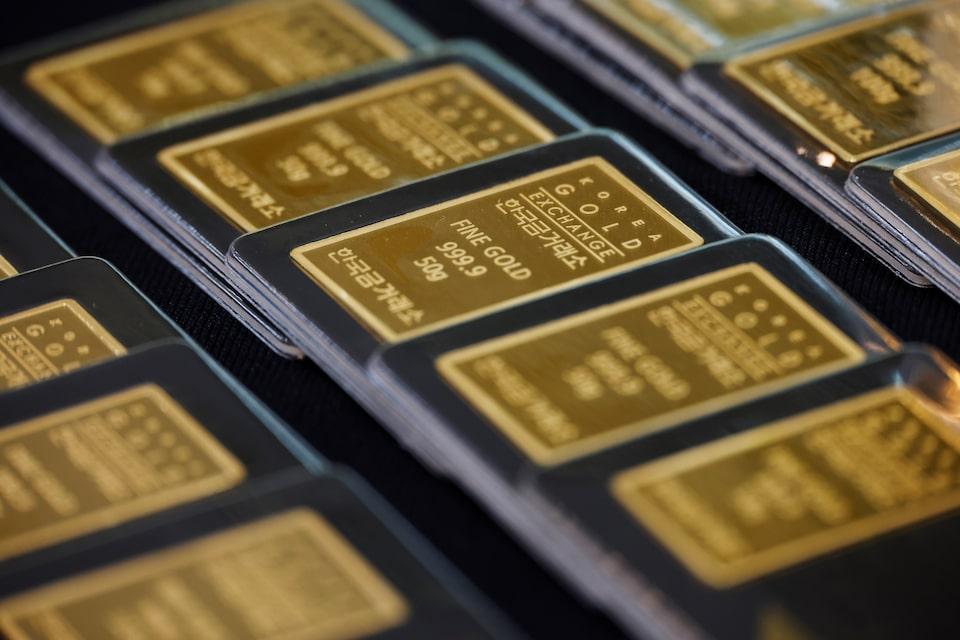
US weekly jobless claims drop to over 3-year low Gold will not retest the old highs, analyst says US private payrolls fell by 32,000, jobs data showed Dec 4 (Reuters) - Gold prices were largely unchanged on Thursday, as rising U.S. Treasury yields offset support from a weaker dollar, while markets awaited Friday's U.S. inflation data for clues on the Federal Reserve's policy outlook ahead of its December meeting. Spot gold was up 0.1% at $4,210.49 per ounce by 1833 GMT. U.S. gold futures for February settled 0.2% higher at $4,243.00 per ounce. Sign up here. "Higher yields are keeping a bit of a cap on the upside (for gold), and providing some support is the general dollar index," said Marex analyst Edward Meir. Benchmark 10-year U.S. Treasury yields rose, while the U.S. dollar index (.DXY) , opens new tab hit a one-month low, making gold more affordable for overseas buyers. Data on Thursday showed new U.S. unemployment benefit claims dropped to 191,000 last week, the lowest level in over three years and well below economists' expectations of 220,000. Meanwhile, Wednesday's ADP report indicated U.S. private payrolls declined by 32,000 in November, marking the steepest drop in more than two and a half years. A majority of over 100 economists polled by Reuters forecast the Federal Reserve will reduce its key interest rate by 25 basis points at its December 9-10 policy meeting, as the central bank seeks to support a cooling labor market. Lower interest rates typically benefit non-yielding assets like gold. Investors are now eyeing the September Personal Consumption Expenditures (PCE) report, the Federal Reserve's preferred inflation gauge, due on Friday. "Markets aren't going to do very much between now and next week and as far as gold is concerned, probably we will be stuck in a relatively uneventful trading range for a while," said Meir, adding gold will not retest the old highs of nearly $4,400 this year. Meanwhile, silver fell 2.6% to $56.96 after touching a record high of $58.98 on Wednesday. The metal is up about 97.3% this year, supported by a structural supply deficit, concerns around market liquidity and its inclusion in the U.S. critical minerals list. Platinum lost 1.7% to $1,642.67, while palladium slid 1.4% to $1,440.57. https://www.reuters.com/world/india/gold-slips-investors-turn-cautious-ahead-fed-meeting-pce-data-focus-2025-12-04/
2025-12-04 06:39
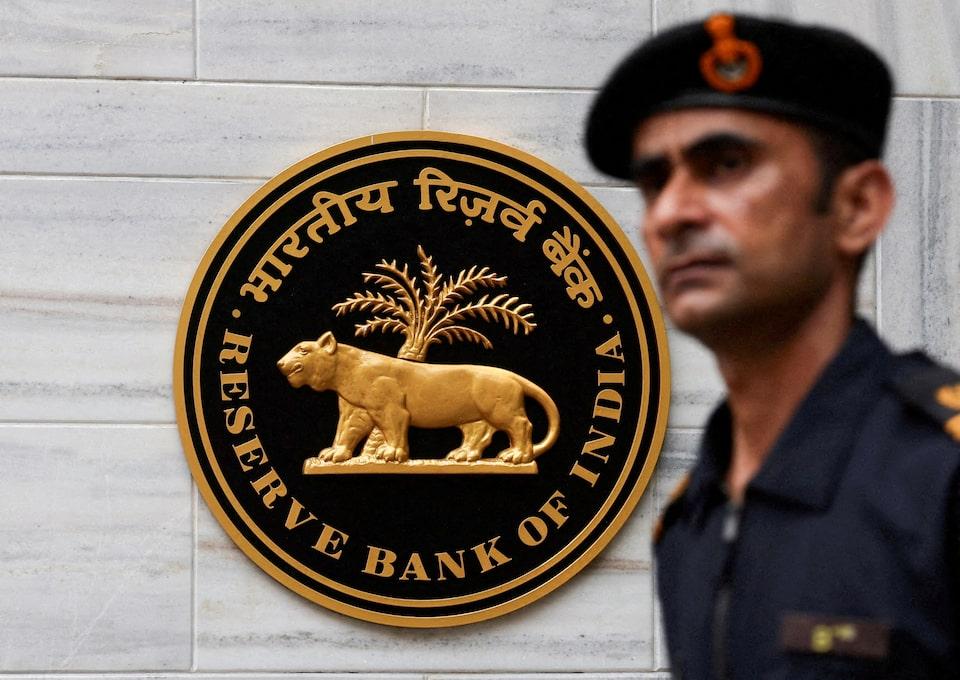
RBI intervenes to curb volatility, not defend specific rupee levels, sources say Rupee hits record low of 90.42, down 5.5% this year Foreign investors sold $17 billion in Indian stocks this year MUMBAI, Dec 4 (Reuters) - India's central bank will tolerate a weaker rupee as the country's external sector confronts multiple headwinds including a wider trade gap and stalling of dollar inflows into the world's fifth-largest economy, three sources familiar with the central bank's thinking told Reuters. The Reserve Bank of India (RBI), which had supported the rupee through aggressive interventions via dollar sales until last month, has allowed the rupee to fall 1.3% in the last seven trading sessions to a record low of 90.42 per dollar. Sign up here. The rupee, down 5.5% on year, is Asia's worst performing currency. By signaling tolerance for a weaker rupee, the central bank is indicating that it will intervene mostly to curb sharp volatility or on any signs of a speculative build-up but not defend any specific level on the rupee, the sources said. "It doesn't make sense to spend reserves when fundamentally everything is against the currency," said one of the sources, who commented on condition of anonymity as they were not authorised to speak to the media. The RBI did not immediately respond to an email seeking comment. "As and when fundamentals and real dollar demand dictate, the central bank does let the rupee move more than it normally would," the second source said. India is one of the worst-hit markets in terms of outflows, with foreign investors selling stocks amounting to $17 billion so far this year. At the same time, foreign direct investment, trade, and offshore fundraising flows have slowed down. While the currency's fall below the psychologically important 90 per dollar mark has garnered attention and could embolden speculators, the central bank can step in to stamp those out as needed, a third source said. INVESTORS ON GUARD A weaker currency provides more policy flexibility to the central bank, but it could also diminish the appeal of Indian assets for overseas investors. "A weakening Indian rupee is definitely a negative when it comes to investing in Indian equities and it is one reason why we are only neutral weight in India versus our benchmark," said Sam Kongrad, an investment manager for Asian equities at Jupiter Asset Management. MSCI's India equities index has risen 7% this year, but currency weakness has trimmed its dollar returns (.dMIIN00000PUS) , opens new tab to under 2% — well below the roughly 80% and 30% gains posted by South Korea and Hong Kong, respectively. "A resolution to the tariff situation with the U.S. can’t come soon enough and foreign flows from a potential global index inclusion will be very much needed," said Kenneth Akintewe, head of Asian sovereign debt at Aberdeen Investments. Over the long term, though, investors reckon sustained momentum in India's blockbuster economic growth could help offset the currency's fall by boosting company earnings. India's GDP grew 8.2% in the July-September quarter even as the rupee languished at a record low, underscoring a divergence between the strong domestic economy and weak external demand. "I'm not losing sleep over it," India's Chief Economic Advisor V Anantha Nageswaran said on Wednesday, referring to the rupee's fall. The rupee's weakness has had no impact on inflation, he added, expecting the currency to recover in 2026. https://www.reuters.com/world/india/india-central-bank-tolerate-weaker-rupee-inflows-dry-up-sources-say-2025-12-04/
2025-12-04 06:36
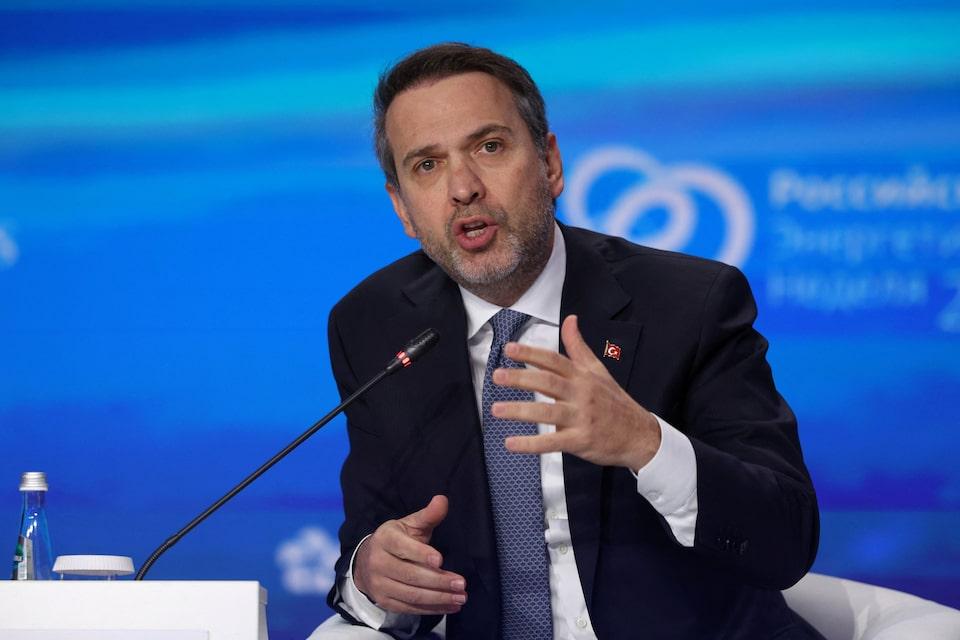
Turkey aims to reduce reliance on Russian energy Gazprom supply contracts were due to expire at year-end US investment would hedge against higher prices, says minister Turkey in talks over Iranian gas imports Also in negotiations for nuclear plants ISTANBUL, Dec 4 (Reuters) - Turkey has extended its expiring Russian gas import contracts by a year as it plans U.S. infrastructure investment as part of efforts to reduce reliance on Russian energy, the Turkish energy minister said. Turkey is Russia's last major natural gas market in Europe after years of war-related Western sanctions on Moscow. It imports a total of 22 billion cubic metres of gas under the Gazprom (GAZP.MM) , opens new tab contracts that expire at the end of the year, amounting to less than 40% of Turkey's overall gas mix, down from more than 50% in 2018. Sign up here. The Russian gas is supplied via the Blue Stream and TurkStream pipelines under multi-year contracts starting from February 2003 and January 2020 respectively. Turkish state gas importer BOTAS has separately signed a series of long-term contracts for liquefied natural gas (LNG), much of which is from the United States, taking advantage of large global LNG supply over the next few years. BOTAS will continue to be supplied by Gazprom next year, but with a more short-term focus of one year, Energy Minister Alparslan Bayraktar said in embargoed comments to reporters in Istanbul on Wednesday. Gazprom did not reply immediately to a request for comment. INVESTMENT IN U.S. GAS PRODUCTION The minister said Turkey also plans to invest in U.S. gas production facilities to hedge against potential price increases on the 1,500 LNG cargoes it has agreed to buy from the U.S. over the next 15 years. "To hedge our position and create the whole value chain, we are considering investing in the upstream U.S. market," Bayraktar said. State company TPAO was in talks with U.S. energy majors including Chevron (CVX.N) , opens new tab and Exxon (XOM.N) , opens new tab and a deal could be concluded next month, he added. The U.S. became Turkey's fourth-largest gas supplier this year at 5.5 bcm. Most of the U.S. LNG deals came shortly before President Tayyip Erdogan's September visit to the White House, where U.S. President Donald Trump asked him to stop buying oil from Russia, Turkey's largest supplier since 2022. Russia supplied about half of Turkey's crude imports from January to September this year, but Turkish refiners cut imports sharply in November, Kpler data shows. Private companies handle Turkey's oil and oil product imports, but Bayraktar said they are likely to comply with reductions, having done so in 2016-2017 in compliance with sanctions on Iran. "It will be their call," he said, adding that the government would step in if supply security was threatened. IRANIAN GAS TALKS AND TURKMEN SUPPLIES Turkey is also in negotiations with Iran over a 10 bcm gas import contract that expires next July, aiming to ramp up gas supplies from Turkmenistan, Bayraktar said. Turkey signed a one-year 1.3 bcm gas deal with Turkmenistan this year, sourcing the gas via Iran. Separately, Turkey plans to add two more floating storage and regasification units (FSRUs) over the next few years to increase its LNG intake capacity, with the potential to charter them later to Morocco and other countries, the minister said. Turkey currently has three FSRUs and two on-shore LNG gasification terminals, with combined capacity of 50 bcm. In expectation of significant increases in its electricity consumption, Turkey also plans to build two more nuclear plants and is in talks with South Korea's KEPCO (015760.KS) , opens new tab and Canada's AtkinsRealis (ATRL.TO) , opens new tab over deals to build them. U.S.-based Westinghouse has expressed interest in being involved in the second plant with KEPCO, Bayraktar said. https://www.reuters.com/business/energy/turkey-extended-russia-gas-contracts-by-year-eying-us-gas-investment-2025-12-04/
2025-12-04 06:34
Spate of attacks on Russia-linked ships in Black Sea Attacks near Turkish coast have alarmed authorities Minister says Zelenskiy asked for help with gas supply ISTANBUL, Dec 4 (Reuters) - Turkey is telling Russia, Ukraine, and all other parties to keep energy infrastructure out of their conflict and wants energy flows to continue uninterrupted, Energy Minister Alparslan Bayraktar said after a series of attacks off Turkey's Black Sea coast. Ukraine, which is targeting Russia's oil exports as Moscow bombards its power grid, has taken responsibility for an attack by seaborne drones on two empty tankers heading towards a Russian port last week. But it denied any link to another incident on Tuesday in which a Russian-flagged tanker loaded with sunflower oil said it had come under drone attack. Sign up here. "Hopefully, this horrible war will end. But as of today also, we say to all the parties - Russia and Ukraine - to keep the energy infrastructure out of this war," Bayraktar told journalists in embargoed comments on Wednesday. "We need to keep the energy flows uninterrupted," he said, adding that routes like the Caspian Pipeline Consortium pipeline should be kept safe. HIGHER SHIPPING RISKS Ankara, a NATO member that has kept warm relations with both Kyiv and Moscow during war, has said the attacks on Russia-linked vessels near Turkey are unacceptable and warned both sides, discussing the issue at a NATO meeting on Wednesday. President Vladimir Putin has responded by threatening to sever Ukraine's access to the sea and said Russia would intensify attacks on Kyiv's facilities and vessels. The attacks have sent Black Sea shipping insurance rates higher and prompted one Turkish company to halt Russia-related operations due to security concerns after one of its vessels was damaged near Senegal by external impacts. No one claimed responsibility. The CPC pipeline, which carries over 80% of Kazakhstan's oil exports and handles more than 1% of global supply, briefly halted operations on Saturday after a mooring at its Black Sea terminal near Russia's Novorossiisk port was damaged by a Ukrainian drone attack. Five industry sources later said Kazakhstan will divert more crude via the Baku-Tbilisi-Ceyhan (BTC) pipeline in December. "According to the flow numbers in the BTC, there is no, let's say, reduction. BTC is as of today supplying 600,000 to 700,000 barrels of oil to the global markets," Bayraktar said. TURKEY, UKRAINE DISCUSSED GAS SUPPLY Last month, Ukrainian President Volodymyr Zelenskiy visited Ankara for talks with President Tayyip Erdogan. "The topic we had with Zelenskiy in the room was, of course, they asked us to help them for gas supply to Ukraine," Bayraktar said when asked about what was discussed during the meetings. He said Ukraine had a similar arrangement with Greece, and added that Turkey's state energy company, BOTAS, and Ukraine's Naftogaz were working on how Ankara could help Kyiv. Bayraktar did not elaborate further, but said Ukraine had a "huge capacity" in underground storage, meaning it could store energy brought in cheaply during the summertime for the winter. https://www.reuters.com/business/energy/turkey-told-russia-ukraine-keep-energy-infrastructure-out-war-minister-says-2025-12-04/
2025-12-04 06:32
Shutdown likely to be complete by June, sources say Exxon considers buying feedstock for derivative units post-shutdown, sources say Feedstock naphtha import requirements to drop, analyst says SINGAPORE, Dec 4(Reuters) - ExxonMobil (XOM.N) , opens new tab plans to wind down operations at the older of its two steam crackers on Singapore's Jurong Island from March, four sources familiar with the matter said, part of a global petrochemicals sector trend to reduce capacity amid industry losses. The shutdown of the plant, which opened in 2002, is expected to be complete by June, two of the sources said. The sources asked not to be identified because they were not authorised to speak to media. Sign up here. The imminent shutdown of the U.S. major's first cracker in the Asian oil trading hub comes as chemical producers grapple with losses from overcapacity led by China, the world's largest consumer of petrochemicals used to make products ranging from plastics and clothes to shoes and cars. "As a matter of practice, we do not comment on market rumors or speculation," an ExxonMobil spokesperson said in response to Reuters' queries. The planned shutdown comes after Exxon's start-up earlier this year of a new steam cracker in the southern Chinese city of Huizhou, which can produce around 1.6 million tpy of ethylene. Exxon has in the past two years gradually scaled down term contract volumes with customers in Singapore, a second of the four sources said. Local buyers will likely switch to offtake from the two remaining ethylene producers in Singapore, traders said. Exxon has a second 1.1 million tpy cracker at Jurong Island which started operations in 2013. South Korea, another major petrochemical hub in Asia, is also seeing sector consolidation. POST-CLOSURE PLANS Exxon is considering buying feedstock to continue operating some of its derivative polyolefin units after the cracker's shutdown, depending on margins, the first source said. "Unless they can secure very low olefins prices, this is unlikely to be economically viable in the long term," said Catherine Tan, ICIS senior manager for chemical analytics. Tan expects Exxon to reduce imports of naphtha, the cracker's main feedstock, as a result of the shutdown. For the first 11 months this year, Exxon imported around 1.5 million metric tons (13.4 million barrels) of naphtha, compared with nearly 2.5 million tons for all of 2024, data from ship-tracking firm Kpler showed. In October, Exxon said it expected to cut 10-15% of its Singapore workforce by 2027. The U.S. major also agreed to sell its petroleum retail business in the city-state to Indonesia's Chandra Asri, co-owner of Aster Chemicals which runs the Bukom refinery-petrochemical complex. In September, however, Exxon started operations at a new refining unit at its 592,000 barrel-per-day (bpd) Singapore refinery. https://www.reuters.com/business/energy/exxon-permanently-shut-one-steam-cracker-singapore-march-sources-say-2025-12-04/
2025-12-04 06:28
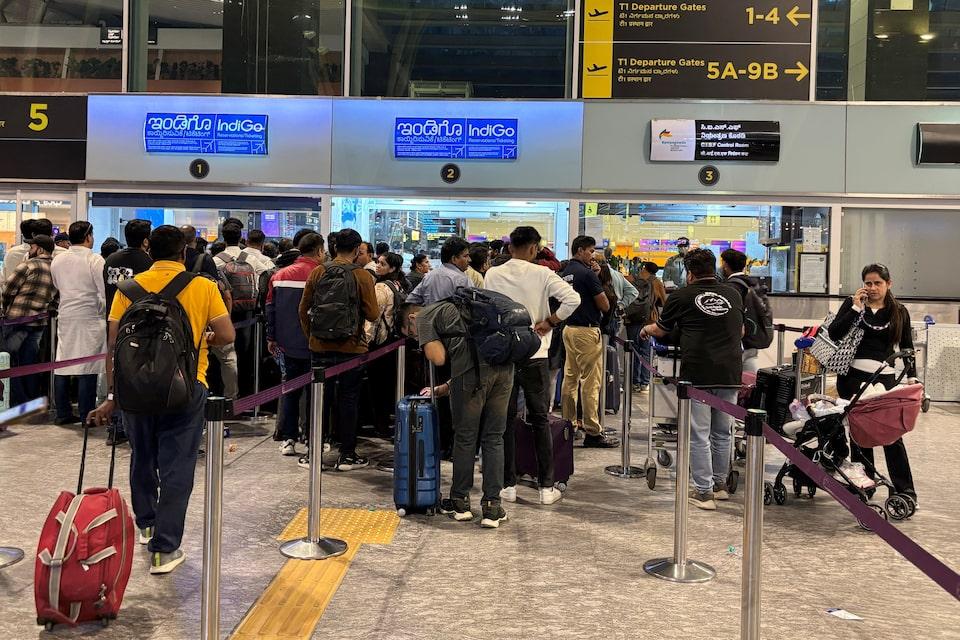
At least 175 IndiGo flights were cancelled as of early Thursday IndiGo did not rejig roster planning adequately ahead of new rules The airline's stock has lost 6% this week BENGALURU, Dec 4 (Reuters) - Thousands of IndiGo (INGL.NS) , opens new tab passengers were stranded by flight cancellations on Thursday - a third day of chaos after India's biggest airline did not make sufficient changes to its roster planning to accommodate new government regulations. At least 175 IndiGo flights were cancelled as of early Thursday, leaving passengers at major airports in New Delhi, Mumbai, Hyderabad, Pune and Bengaluru angry and upset. On Wednesday, at least 150 flights were cancelled. Sign up here. Shares of IndiGo, which commands 60% of the market and has built its reputation on punctuality, fell 3.4% on Thursday and are now down 6% for the week. The Federation of Indian Pilots said IndiGo was not able to make timely roster adjustments and plan its schedule properly due to new rules aimed at improving safety. The rules, announced last year, went into effect on November 1. It was not immediately clear why IndiGo was suffering such a huge impact this week. IndiGo has acknowledged that stricter flight duty time limits have been a factor in the cancellations. It did not respond to a request for comment on Thursday. Other airlines, including Air India, Spicejet (SPJT.BO) , opens new tab and Akasa Air, have not had to cancel flights. The new rules have increased the amount of mandatory rest per week for pilots by 12 hours to 48 hours. In addition, pilots are now only allowed to make two night-time landings per week, down from six under the old rules. Officials from India's civil aviation regulator are due to meet IndiGo's senior management later on Thursday, and will seek details about what has led to the crisis and if there is a recovery plan in place, according to a government source with direct knowledge of the plans who declined to be identified. The regulator did not immediately respond to a request for comment. "INDIGO STANDARD TIME" On Thursday, 73 flights were cancelled at Bengaluru airport, its spokesperson said. Around 30 were cancelled in Delhi, and 68 in Hyderabad, and 85 IndiGo flight cancellations are planned for Mumbai on Thursday, according to airport sources. A Reuters photographer said she was stuck inside her IndiGo plane for three hours when it landed in the western city of Pune on Wednesday night, with the pilot citing operational issues and the lack of permission to dock the plane until other planes had flown. The debacle is a major setback for a two-decade-old airline that has more than 2,000 flights daily and a fleet of more than 400 planes, mostly Airbus (AIR.PA) , opens new tab A320s. The airline has prided itself on its lack of delays, and its staff will often announce "IndiGo Standard Time" when boarding has been completed before scheduled, a play on "Indian Standard Time". It remains to be seen just how badly the rostering woes will affect IndiGo, which garnered $9 billion in revenue in the past business year. Its biggest rival, Air India, has its own troubles, grappling with much scrutiny following a June crash that killed 260 people. At airports, frazzled and furious passengers stood in long queues inside crowded terminals as they tried to gather details about their flights. Ram Shankar Yadav, who was travelling with family to attend his younger brother's wedding celebrations, told Reuters that his flight had been delayed for six hours. "We don't have enough chairs. People are taking newspapers to sit on the floor," Yadav told Reuters by telephone from the airport in Pune. "People are angry. There's nobody to manage; their helplines are not working," he added. https://www.reuters.com/sustainability/sustainable-finance-reporting/indias-bengaluru-airport-says-73-indigo-flights-cancelled-dec-4-2025-12-04/