2025-09-04 11:37
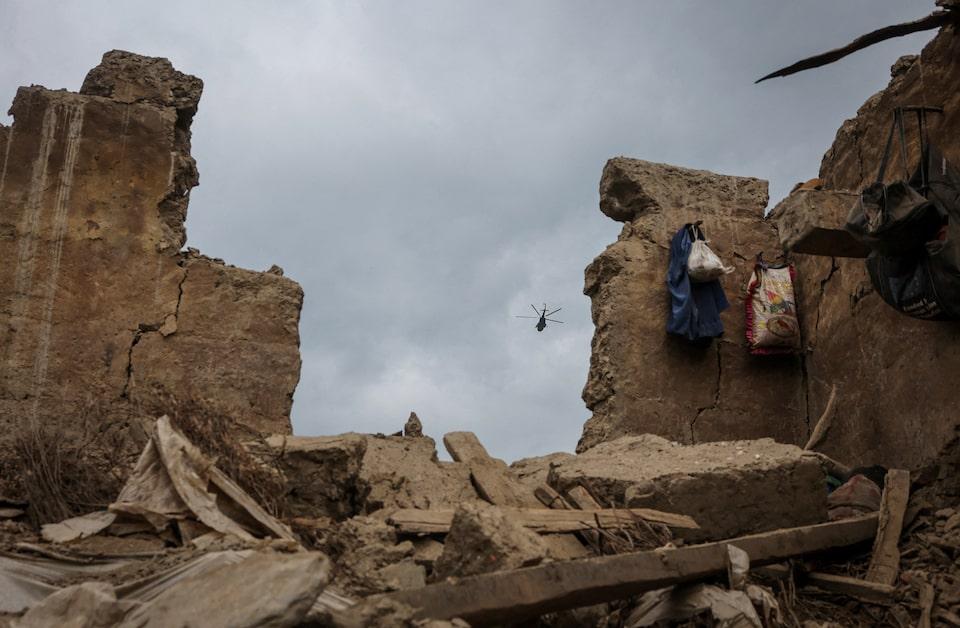
At least 2,205 dead, over 3,600 injured, Taliban says About 84,000 affected, thousands displaced, says aid agency Some Kunar villages saw 98% of buildings destroyed or damaged Funding cuts, Taliban policies worsen aid situation KABUL/MAZAR DARA, Afghanistan, Sept 4 (Reuters) - Rescue workers on Thursday pulled bodies from the rubble of homes razed in Afghanistan's earthquakes as the confirmed death toll topped 2,200, while homeless survivors faced a bleak future with global aid agencies warning of dwindling resources. Search operations continued in the quake-hit mountainous eastern areas, the Taliban administration said, announcing a new death toll of 2,205 with at least 3,640 people injured. Sign up here. "Everything we had has been destroyed," said Aalem Jan, whose house in the worst-affected province of Kunar was flattened by the tremors. "The only remaining things are these clothes on our backs," said Jan. His family sat under trees with their belongings piled next to them. The first earthquake of magnitude 6, one of Afghanistan's deadliest in recent years, unleashed widespread damage and destruction in the provinces of Kunar and Nangarhar on Sunday, when it struck at a shallow depth of 10 km (6 miles). A second quake of magnitude 5.5 on Tuesday caused panic and interrupted rescue efforts as it sent rocks sliding down mountains and cut off roads to villages in remote areas. More than 6,700 homes have been destroyed, authorities have said. The United Nations has warned the toll could rise with people still trapped under rubble as time runs out for survivors. Humanitarian needs are "vast and growing rapidly", said the International Federation of Red Cross and Red Crescent Societies. "Up to 84,000 people are directly and indirectly affected, with thousands displaced," it added, citing initial figures. In some of the worst-affected villages in Kunar province, two out of three people had been killed or injured, while 98% of buildings were either destroyed or damaged by the tremors, according to an assessment by British-based charity Islamic Relief Worldwide. Survivors desperately searching for family members sifted rubble, carried bodies on woven stretchers and dug graves with pickaxes in the wait for aid to arrive. Video showed trucks, some laden with sacks of flour and others carrying men with shovels, travelling to remote villages on higher slopes. Authorities also airdropped dozens of commando forces at sites where helicopters could not land. Afghanistan is prone to deadly earthquakes, particularly in the Hindu Kush mountain range, where the Indian and Eurasian tectonic plates meet. With homes made mostly of dry masonry, stone and timber, some families preferred to sit out in the open rather than return home as aftershocks continue at regular intervals. The houses gave little protection from the quakes, in ground left unstable by days of heavy rain, said the U.N. Office for the Coordination of Humanitarian Affairs. Resources for rescue and relief work are tight in the South Asian nation of 42 million people pulverised by war, poverty and shrinking aid, where harsh weather presents a further challenge. U.S. President Donald Trump's funding cuts to foreign aid and donor frustration over the Taliban's restrictive policies towards women and its curbs on aid workers have worsened Afghanistan's isolation. The World Health Organisation pointed to a funding gap of $3 million, saying it was critical to keep medicines, trauma kits, and essential commodities flowing amid rising demand. The U.N. World Food Programme has funding and stocks to support the survivors for just four more weeks, its country head, John Aylieff, told Reuters on Wednesday. Jacopo Caridi of the Norwegian Refugee Council, called for donors to go beyond life-saving relief to ensure Afghans a chance at a future beyond perpetual emergency. "The earthquake should serve as a stark reminder: Afghanistan cannot be left to face one crisis after another alone," he said. https://www.reuters.com/business/environment/afghanistan-earthquake-death-toll-tops-2200-survivors-face-aid-crunch-2025-09-04/
2025-09-04 11:33
Hitachi to build massive new facility in Virginia for power transformers Investment aims to meet AI data centers' electricity demand Hitachi's global investment exceeds $9 billion NEW YORK, Sept 4 (Reuters) - Hitachi plans to invest $1 billion to expand its U.S. power grid infrastructure manufacturing, its energy unit said on Thursday, as the country faces record electricity demand from Big Tech's build-out of AI data centers. Hitachi's announcement follows a push by the administration of U.S. President Donald Trump to dramatically increase electricity supply for the rapid expansion of artificial intelligence, which is being developed in energy-intensive data centers around the globe. Sign up here. "If we are going to win the AI race, reindustrialize, and keep the lights on, America is going to need a lot more reliable energy,” U.S. Energy Secretary Chris Wright said in a statement. “Thankfully, Hitachi is delivering." The U.S. holds the biggest concentration in the world of data centers, which are expected to triple their energy use to consume about 12% of the domestic power supply in less than three years. As a result, many utilities are ramping up spending on the long-stagnating electrical grid. Nearly half of Hitachi Energy's latest investment, or $457 million, will go towards building a new facility in South Boston, Virginia, to manufacture large power transformers. The facility will be the biggest U.S. producer of the massive transformers, which can run as large as a two-story home, Hitachi said. Construction of the project is set to begin this year, with service to begin by 2028, the company said. "Bringing production of large power transformers to the U.S. is critical to building a strong domestic supply chain for the U.S. economy and reducing production bottlenecks," said Andreas Schierenbeck, CEO of Hitachi Energy, which is a subsidiary of Japan's Hitachi Ltd (6501.T) , opens new tab. Transformers, which help transport electricity, have been in short supply since the COVID-19 pandemic disrupted global supply chains. Hitachi, which produces other types of electrical equipment in the U.S., including breakers and switchgear, is also investing in its facilities near Pittsburgh, Pennsylvania. The U.S. investments are part of more than $9 billion Hitachi is deploying globally, in part to expand its manufacturing capacity. A Hitachi spokesperson said the company has received a commitment from the White House around expediting the development of new manufacturing production capacity for power components. Without elaborating, the spokesperson also said that Hitachi is working together closely with the White House on various other initiatives. https://www.reuters.com/business/energy/hitachi-invest-1-billion-produce-power-grid-components-us-2025-09-04/

2025-09-04 11:26
OPEC+ to consider raising oil production further, sources say OPEC+ meeting set for Sunday US crude stocks rose last week, sources say LONDON, Sept 4 (Reuters) - Oil prices fell 1.5% on Thursday, adding to their more than 2% decline the previous session, as investors awaited a weekend meeting of OPEC+ at which producers are expected to consider another increase in output targets. Brent crude fell $1, or 1.5%, to $66.59 a barrel by 1104 GMT, while U.S. West Texas Intermediate crude shed $1, or 1.6%, to $62.95 a barrel. Sign up here. Eight members of the Organization of the Petroleum Exporting Countries and allies - known together as OPEC+ - will consider further increases to production in October at a meeting on Sunday, two sources familiar with the discussions told Reuters, as the group seeks to regain market share. A potential OPEC+ production hike would send a strong signal that regaining their market share takes priority over price support, said PVM analyst Tamas Varga. OPEC+ had already agreed to raise output targets by about 2.2 million barrels per day from April to September, in addition to a 300,000 bpd quota increase for the United Arab Emirates. Over the past few months, despite the accelerating production increases, Middle Eastern oil prices have remained the strongest regional prices globally. This has bolstered the confidence of Saudi Arabia and other OPEC members to boost output, according to a Haitong Securities' report. Weighing further on prices were some shaky U.S. macroeconomic data that showed job openings fell to a 10-month low in July, consistent with easing labour market conditions and supporting expectations the Federal Reserve would cut interest rates this month. Markets are also awaiting government data on U.S. crude stockpiles due on Thursday, a day later than usual because of a U.S. holiday on Monday, to gauge the strength of demand in the world's biggest oil consumer. U.S. crude stocks rose by 622,000 barrels in the week ended August 29, market sources said, citing American Petroleum Institute figures on Wednesday. https://www.reuters.com/business/energy/oil-falls-more-than-1-opec-consider-another-output-hike-2025-09-04/
2025-09-04 11:26
BERLIN, Sept 4 (Reuters) - The European Commission is providing a 645 million euro ($755.10 million) grant for a renewable energy cluster near Bornholm in the Baltic Sea, Germany's economy ministry said Thursday, a major step towards the creation of a cross-border offshore hub. Danish transmission system operator Energinet and its German counterpart 50Hertz signed the funding contracts in Berlin, granted under the EU's Connecting Europe Facility (CEF). Sign up here. The Bornholm Energy Island will link a 3 gigawatt (GW)offshore wind farm in the Baltic Sea to both the Danish and German power grids, providing up to 2 GW of electricity to Germany and 1.2 GW to Denmark starting in the 2030s. ($1 = 0.8542 euros) https://www.reuters.com/sustainability/boards-policy-regulation/eu-grants-755-mln-eur-bornholm-offshore-energy-hub-german-economy-ministry-2025-09-04/
2025-09-04 11:25
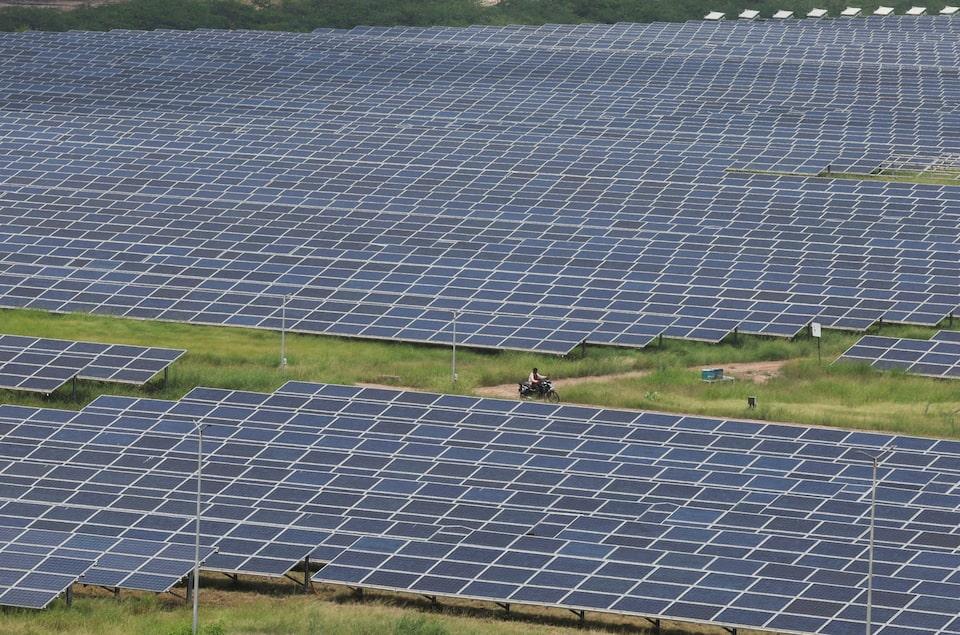
NEW DELHI, Sept 4 (Reuters) - India's decision to cut taxes on solar and wind equipment will lower costs for new plants and pressure existing project developers to reduce tariffs, accelerating the country's shift to renewable energy, industry experts said. The government on Wednesday slashed the goods and services tax (GST) on solar photovoltaic modules and wind turbine generators to 5% from 12%, part of broader tax cuts on hundreds of consumer items. Sign up here. The tax cut for solar PV modules and wind turbine generators is expected to reduce the capital cost for solar and wind power projects by about 5%, said Girishkumar Kadam, Senior Vice President & Group Head, ICRA Ltd. India, which aims to expand its non-fossil fuel capacity to 500 GW by 2030, currently has about 44 GW of renewable projects awaiting firm power supply agreements. The tax change poses “a few short-term challenges” as projects awarded before the cut may require renegotiation of existing power supply contracts, said Saurabh Agarwal, tax and new energy partner at EY India. Oyster Renewable Energy said the lower tax rate would allow developers to re-engage with utilities at more competitive tariffs, potentially unlocking stuck projects. Developers that have not yet procured equipment will likely need to pass on the tax benefit to consumers through lower tariffs, while those that already paid the higher rate can justify existing tariff agreements by providing documentation to the federal regulator, said Sanjeev Aggarwal, founder and executive chairman of Hexa Climate Solutions. Solar equipment maker Waaree Energies (WAAN.NS) said it would pass on the benefits to customers. https://www.reuters.com/sustainability/boards-policy-regulation/indias-tax-cut-solar-wind-devices-lower-clean-energy-tariff-experts-say-2025-09-04/
2025-09-04 11:24
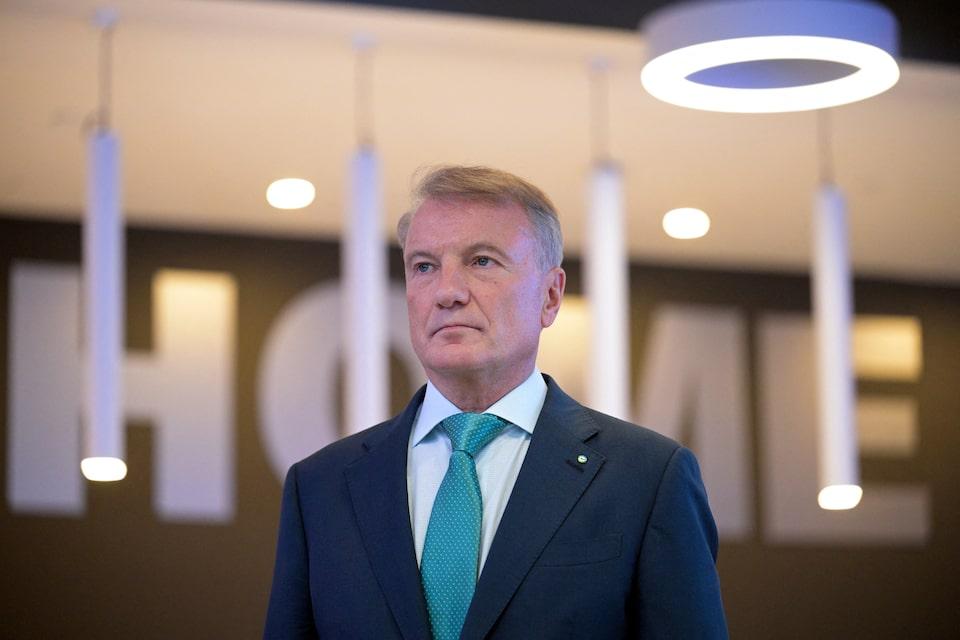
Central bank rates too high, Gref says Sberbank CEO says the economy is stagnating Says growth close to zero in August and July Economy minister says some machine-building enterprises have switched to four-day week VLADIVOSTOK, Russia, Sept 4 (Reuters) - Sberbank CEO German Gref, one of Russia's most powerful bankers, warned on Thursday that the economy was stagnating and that unless the central bank slashed interest rates then the country would fall into recession. Russia's war economy grew at 4.1% in 2023 and 4.3% in 2024, far faster than G7 countries, despite multiple rounds of Western sanctions imposed after its invasion of Ukraine in 2022, but it is slowing sharply under the weight of high interest rates. Sign up here. Russia's highest military spending since the Cold War has stoked inflation, which prompted the central bank to raise its key interest rate to 21% in October, the highest level since the early years of President Vladimir Putin's rule in 2003. The central bank cut to 20% in June and then to 18% in July, but there have been a series of warnings from senior officials about the fate of the economy, which they say is still shackled by the crippling cost of credit. Speaking to reporters on the sidelines of the Eastern Economic Forum in the city of Vladivostok, Gref, a former economy minister, said that in the second quarter, the economy looked as if it was in "technical stagnation". Gref said the expected cut in rates to 14% by year-end from the current 18% was not enough to revive the economy - and suggested that only if the rates were cut to 12% would the economy recover. "It is important to move out of this period of controlled cooling of the economy so that it does not turn into stagnation, because reviving the economy will be much more difficult than cooling it down," he said. Gref said that data from banks - received faster than state statistics - showed a sharp slowdown and that there were signs that growth was close to zero in July and August. Finance Minister Anton Siluanov told Putin last week that Russia's economic growth is expected to slow to 1.5% in 2025, far below the earlier 2.5% forecast, as high interest rates imposed to reduce inflation have stifled borrowing. Pressure is mounting on the central bank - run by Gref's former colleague Elvira Nabiullina - to cut rates at its Sept. 12 meeting, with a slew of warnings from senior officials and influential business chiefs about the impact of high rates. RATE DECISION Gref said he hoped the central bank would heed the warnings and avoid a recession. "At current inflation levels, the rate at which we can hope for economic recovery is 12% or lower. So somewhere around these levels, we will most likely see economic recovery." Nabiullina's deputy, Alexei Zabotkin, said on Tuesday that Russia had made substantial progress in fighting inflation but that the central bank was exercising caution in its assessments of inflation reduction to ensure they are not overly premature or overly optimistic. Reuters reported exclusively in January that Putin had grown increasingly concerned about distortions in Russia's wartime economy, particularly with a cut to investment by major companies due to high interest rates. "The latest data suggests that the economy is cooling down faster than expected," said Economy Minister Maxim Reshetnikov, whose staffers are finalising the latest set of macroeconomic forecasts for the next year's budget. Reshetnikov said producer prices had not risen indicating that there was not enough demand in the economy, and that some machine-building enterprises had switched to four-day weeks to reduce costs. During Putin's first two terms as president from 2000 to 2008, the size of the economy soared to $1.7 trillion from less than $200 billion in 1999. But Russia's nominal GDP is now just $2.2 trillion, about the same level it was in 2013, the year before Russia annexed Crimea from Ukraine. https://www.reuters.com/business/finance/sberbank-ceo-gref-warns-russian-recession-if-rates-not-slashed-2025-09-04/