2025-09-02 22:01
Sept 2 (Reuters) - The U.S. Securities and Exchange Commission and the U.S. Commodity Futures Trading Commission on Tuesday announced a joint initiative to coordinate efforts on digital assets. The CFTC and the SEC will work together to issue guidance about the "listing of leveraged, margined, or financed spot retail commodity transactions on digital assets," the agencies said in a release. Sign up here. https://www.reuters.com/business/us-securities-commodities-regulators-announce-joint-crypto-initiative-2025-09-02/

2025-09-02 21:14
Fresh quake hits region, more destruction feared Sunday's quake kills over 1,400, injures over 3,100, say Taliban Rescue efforts in remote areas hindered by terrain and weather WHO highlights overwhelmed health system and delivery challenges Britain and India among few to offer early aid KABUL, Afghanistan, Sept 2 (Reuters) - An earthquake of magnitude 5.5 shook southeastern Afghanistan on Tuesday, sparking fears of further damage and destruction almost two days after a large quake in the same region killed more than 1,400 people and injured thousands more. Tuesday's quake occurred at a relatively shallow depth of 10 km (6 miles), the same level as the one that struck at midnight on Sunday with a magnitude of 6. That was one of Afghanistan's worst quakes in years, flattening houses in remote villages. Sign up here. The aftershock caused panic and halted rescue efforts as it sent rocks sliding down mountains, cutting off roads further and making it dangerous to dig through rubble, said Safiullah Noorzai, who works with Aseel, a humanitarian tech platform with networks around Afghanistan. Noorzai, whose organisation has sent teams to the mountainous region, said more people had been injured, likely pushing the death toll higher. The difficult terrain has badly hindered rescue workers' relief efforts in the isolated villages. A Reuters journalist who reached the area on Tuesday, before the latest tremors, saw every home had been damaged or destroyed, with locals still digging through the rubble for survivors. A lot of people were still trapped. Some partially damaged homes were destroyed by the second earthquake, according to residents. At least 1,411 people are known to have died so far, 3,124 have been injured and more than 5,400 houses destroyed, Taliban administration spokesperson Zabihullah Mujahid said. The U.N. coordinator in Afghanistan said the death toll was sure to rise further. Aid group Save the Children called on the international community to urgently release emergency funds. The earthquake has disrupted sources of clean water, raising fears of disease, and restricted access to food, it said. "This is now a race against time to save lives – to get injured people out of remote villages cut off by massive rock falls and to get clean water, food, and shelter in," said Samira Sayed Rahman, Programmes and Advocacy Director at Save the Children. Afghanistan is prone to deadly earthquakes, particularly in the Hindu Kush mountain range, where the Indian and Eurasian tectonic plates meet. The eastern provinces of Kunar and Nangarhar were worst hit in Sunday night's earthquake. On Tuesday, a line of ambulances was on the damaged mountain road trying to reach Kunar villages, as helicopters flew in, bringing aid supplies and taking the injured to hospitals, according to a Reuters reporter. Thousands of children were at risk, the United Nations Children's Fund warned on Tuesday. UNICEF said it was sending medicines, warm clothing, tents and tarpaulins for shelter, and hygiene items such as soap, detergent, towels, sanitary pads, and water buckets. Taliban soldiers were deployed in the area, providing help and security. The disaster has further stretched the war-torn nation's Taliban administration, already grappling with a sharp drop in foreign aid and deportations of hundreds of thousands of Afghans by neighbouring countries. "Damaged roads, ongoing aftershocks, and remote locations of many villages severely impede the delivery of aid," the World Health Organization said, adding that over 12,000 people had been affected by the quake. "The pre-earthquake fragility of the health system means local capacity is overwhelmed, creating total dependence on external actors," it said. Food and tents were desperately needed, said Aseel's Noorzai. With their houses in ruins, many people were living in the open amid a fear of aftershocks, Noorzai added. AID CUTS The rescue and relief work has struggled in the face of tight resources in the impoverished nation of 42 million people and limited global help in the aftermath of the tragedy. So far, Britain has allocated 1 million pounds ($1.35 million) to support the efforts of the U.N. and the International Red Cross. India delivered 1,000 tents and was moving 15 tonnes of food supplies to Kunar, with more relief to be sent on Tuesday. Other nations such as China, the United Arab Emirates, the European Union, Pakistan and Iran have pledged help but aid is yet to arrive. Afghanistan has been badly hit by U.S. President Donald Trump's decision in January to cut funding to its humanitarian arm USAID and reductions in other foreign aid programmes. Crises elsewhere in the world, along with donor frustration over the Taliban's policies toward women and curbs on aid workers have been a factor in funding cuts, according to diplomats and aid officials. ($1 = 0.7402 pounds) https://www.reuters.com/business/environment/new-quake-shakes-devastated-afghan-region-death-toll-exceeds-1400-2025-09-02/

2025-09-02 21:11
ORLANDO, Florida, Sept 2 (Reuters) - TRADING DAY Making sense of the forces driving global markets Sign up here. By Jamie McGeever, Markets Columnist Stock markets around the world slumped on Tuesday while bond yields rose and gold hit a new high, as investors moved into "stagflation" trades against a backdrop of rising worries over tariffs, inflation and deteriorating government finances. More on that below. In my column today, I look at the so-called "September effect" in U.S. and other stock markets. History shows September is by far the worst month of the year for equities - will this year be any different? If you have more time to read, here are a few articles I recommend to help you make sense of what happened in markets today. Today's Key Market Moves Today's Talking Points: * Long bond blues Debt and deficit worries are intensifying, and no major economy is immune. Japan's 30-year yield touched record highs last week and now Europe is in the spotlight - Britain's 30-year yield is the highest since 1998, and France's the highest since 2009. Fiscal dominance? The UK sold a record amount of 10-year bonds on Tuesday but paid the highest price since 2008. Britain has heavy borrowing needs, slow growth and the highest inflation in the G7. And France won't get its fiscal house in order any time soon as the government faces collapse, which would force snap elections. * Gold glitters Gold rose on Tuesday for the sixth day in a row, its longest winning streak in a year. It has risen 6% in that period, and today posted a new high of $3,540 an ounce. Is this portfolio reallocation, a dovish Fed trade, or flight to safety? It's probably all of the above, with the safe-haven element figuring more prominently in investors' recent thinking. Then there's inflation. Tariff-driven price hikes combined with loose fiscal policy in many major economies are fueling inflation fears and driving up long bond yields. A perfect storm for gold. * Tariff-ic Just when much of the uncertainty around Washington's tariffs had died down, a U.S. federal appeals court ruled on Friday that most of them are illegal. They remain in place and President Donald Trump said the administration will file an appeal with the Supreme Court on Wednesday and request a quick decision. But it's a headache investors could do without as the worst month of the year for stocks gets underway. Figures on Tuesday showed U.S. manufacturing contracted for a sixth straight month in August, and from a global viewpoint, pictures of China's Xi Jinping, Russia's Vladimir Putin and India's Narendra Modi smiling together in Beijing on Monday won't have been lost on investors either. Anxious Wall Street braces for jumbo 'September effect' Data going back decades shows that, on average, September is the worst month for U.S. stocks – and by a considerable margin. So should investors brace for another bumpy ride this year? Almost certainly, and not just because of the "September effect." If the market saying "Sell in May and go away" had any validity, September would be a bumper month, with investors returning from their summer holidays eager to buy back stocks that, presumably, had become cheaper since Memorial Day. But history suggests the opposite. Since 1950, the S&P 500's average return in the month of September is -0.68%, according to Carson Group's Ryan Detrick. If you round to one decimal place, September is the only month with an average negative return in the last 75 years. And there have been more "down" than "up" Septembers over this period. The S&P 500 has only posted positive returns in September 44% of the time since 1950, the lowest positivity rate for any calendar month and the only one below 50%. And the performance appears to be getting worse. In the last decade, the S&P 500's average September return has been near -2%. TOTAL OUTLIER There is no obvious explanation for those seasonal factors. Some analysts point to the looming fiscal year-end, as fund managers may seek to dump their worst-performing stocks. Others say tax-related selling is a factor, again because fund managers are shedding their losing positions, this time to limit or offset capital gains. Investor psychology could also be at play. Investors, having experienced decades of lousy Septembers, may return from their summer holidays expecting a tough month. This caution can turn into pessimism, which can lead to selling, resulting in a self-fulfilling prophecy. However dubious these explanations may be, the numbers don't lie. For much of the last century, September has been the cruelest month for global equity investors. EYES WIDE OPEN The stage is set for a particularly rocky September this year. Wall Street's main indexes are at or near record highs, valuations are getting stretched, especially in the tech sector, and market concentration has never been greater. True, momentum appears to be on the bulls' side. The S&P 500 and Nasdaq have been up for four and five consecutive months, respectively. And as the second-quarter earnings season wraps up, nearly 80% of companies have reported profit and revenue above analysts' estimates, compared with long-term averages of 67% and 62%, respectively, according to LSEG data. On top of that, investors can likely expect a Federal Reserve rate cut on September 17, if rates futures market pricing is accurate. But all of that is already "in the price," to use traders' parlance. And Wall Street's momentum is slowing as monthly gains have steadily diminished over the summer, especially for the Nasdaq, which rose 1.6% in August compared with 9.6% in May. What happens next will likely largely depend – like most things in markets this year – on what happens in the technology sector. Tech stocks are by some valuation metrics the most expensive they have been since the dotcom bubble burst 25 years ago. Investors appear to have noticed, as they have recently started rotating out of tech and into cheaper small caps. Given the record-high market concentration in this sector, a continuation of this trend could weigh heavily on the broader market. So this September could be volatile, at the very least. Past results are no guarantee of future performance, of course. But caution is warranted. As Porter Collins, co-founder of Seawolf Capital, recently posted on X, when markets are this extended, an "eyes wide open approach" is advisable. With so many potential catalysts for a correction looming this September, investors would be wise not to look away. What could move markets tomorrow? Want to receive Trading Day in your inbox every weekday morning? Sign up for my newsletter here. Opinions expressed are those of the author. They do not reflect the views of Reuters News, which, under the Trust Principles , opens new tab, is committed to integrity, independence, and freedom from bias. https://www.reuters.com/world/china/global-markets-trading-day-graphic-2025-09-02/
2025-09-02 20:45
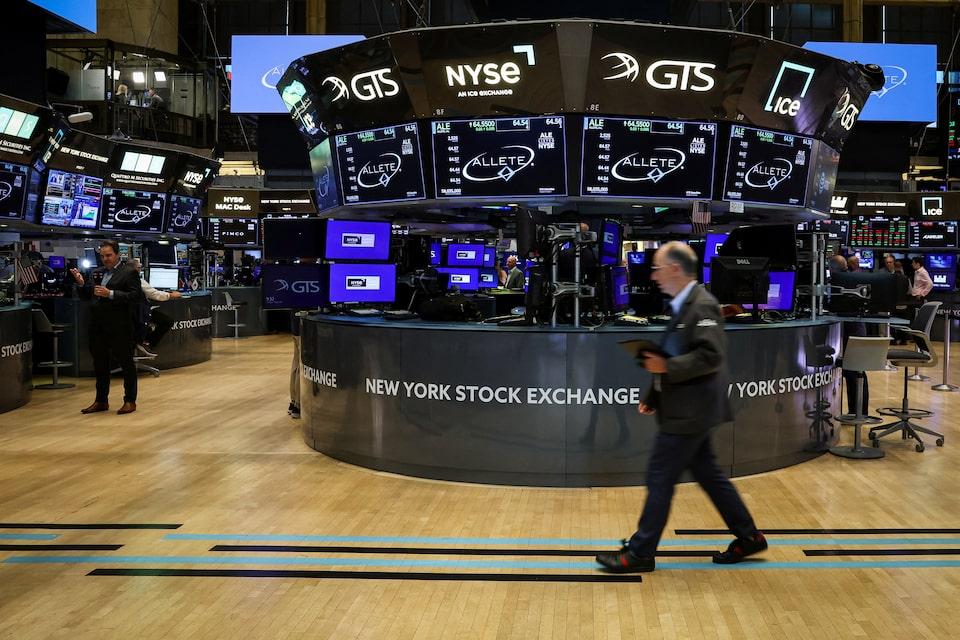
TSX ends up 0.2% at 28,615.62 Eclipses Friday's record closing high Materials Group adds 1.8% as gold hits new peak Energy gains 0.9%, with oil settling 2.5% higher Sept 2 (Reuters) - Canada's main stock index edged up to another record high on Tuesday, recouping its earlier declines, as a jump in the price of oil and gold offset increased investor caution at the start of the month. The S&P/TSX composite index (.GSPTSE) , opens new tab ended up 51.17 points, or 0.2%, at 28,615.62, eclipsing Friday's record closing high. The market was closed on Monday. Sign up here. Wall Street started off September on a sharply lower note as investors weighed the legality of U.S. President Donald Trump's tariffs. "Investors were definitely reeling back in their risk exposure and getting more cautious," said Colin Cieszynski, chief market strategist at SIA Wealth Management. "This was one of those days where the resource sector exposure came through for Canada." The materials group (.GSPTTMT) , opens new tab, which includes metal mining shares, added 1.8% as copper prices climbed and the price of gold extended its record-breaking rally. The price of oil also rose, settling 2.5% higher at $65.59 a barrel, which boosted the energy sector (.SPTTEN) , opens new tab. Energy was up 0.9% and heavily weighted financials (.SPTTFS) , opens new tab ended 0.1% higher. Real estate (.GSPTTRE) , opens new tab was a drag, falling 1.5%, as long-term borrowing costs climbed globally. Canada's 10-year yield was up 7.3 basis points at 3.448%. Telus Corp (T.TO) , opens new tab said it would buy the remaining shares in its digital services unit in a $539 million cash-and-stock deal, looking to expand its artificial intelligence capabilities. Shares of the telecom company were down 0.4%. Domestic data was downbeat. Canada's manufacturing sector contracted in August for the seventh straight month as U.S. tariffs weighed on export demand. https://www.reuters.com/markets/europe/gold-mining-shares-lift-toronto-stock-market-another-record-high-2025-09-02/
2025-09-02 20:41
Sept 2 (Reuters) - Plains All American Pipeline (PAA.O) , opens new tab said on Tuesday it would buy a 55% stake in pipeline operator EPIC Crude Holdings from units of Diamondback Energy (FANG.O) , opens new tab and Kinetik Holdings (KNTK.N) , opens new tab for $1.57 billion, including $600 million in debt. Plains, among the largest U.S. pipeline and storage operators, is seeking to expand in the Permian Basin of Texas and New Mexico, the country's top oil-producing region. Sign up here. EPIC Crude is one of the major pipelines that bring oil from the Permian and Eagle Ford shale basins of Texas to export facilities in Corpus Christi along the U.S. Gulf Coast. It entered full service in 2020 and has a capacity of more than 600,000 barrels per day that could be expanded to carry up to 1 million barrels per day. It is one of the last readily expandable oil pipelines of scale left in the Permian. Reuters in August reported that owners of the pipeline were looking at a sale. "By further linking our Permian and Eagle Ford gathering systems to Corpus Christi, we are enhancing market access and ensuring our customers have reliable, cost-effective routes to multiple demand centers," Plains CEO Willie Chiang said in a statement. Plains added the transaction is expected to immediately add to the distributable cash flow and result in mid-teens returns before accounting for debt. The transaction is expected to be completed by early 2026, pending antitrust clearance. The deal could invite some antitrust scrutiny, as Plains is already one of the largest Permian-focused pipeline companies, two industry sources said. The company declined to comment beyond its statement. Plains, which has made about 15 acquisitions since 2022, already operates the Cactus and Cactus II pipelines, which together can move over 1 million bpd from the Permian Basin to Corpus Christi. It also owns stakes in BridgeTex and Wink to Webster pipelines that move oil from Permian to Houston. The company, which has its largest asset presence in the Permian Basin, expects to move about 7.2 million bpd of oil there and about 560,000 bpd in Eagle Ford in 2025. Plains shares declined 2.25% shortly before the close, while broader holding firm Plains GP Holding shares were down 18%. https://www.reuters.com/business/energy/plains-buy-epic-crude-stake-16-billion-diamondback-kinetik-2025-09-02/
2025-09-02 20:27
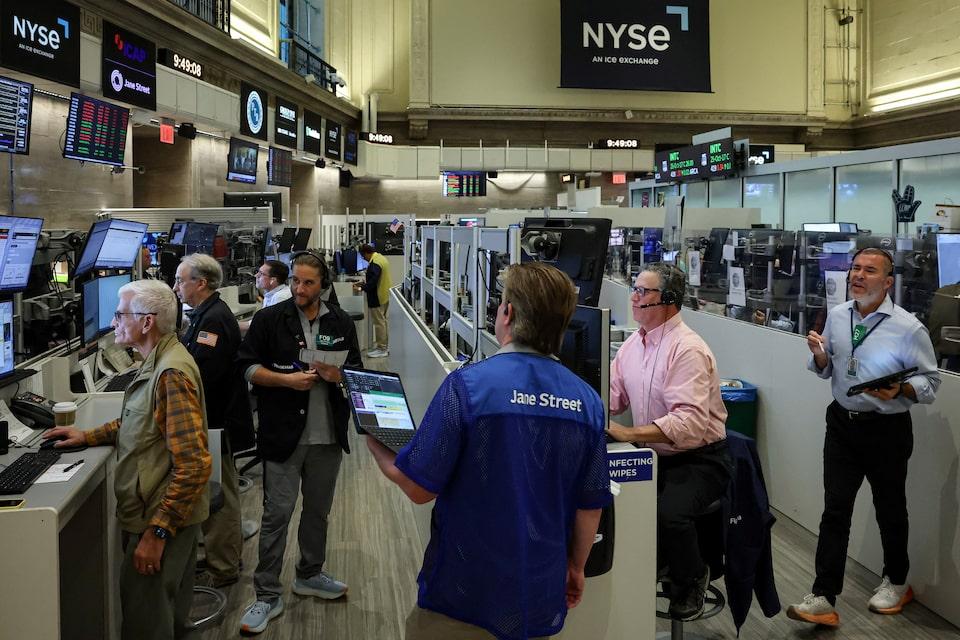
US, European stocks slide 30-year British gilt and French OAT yields soar Pound and yen both under pressure Gold hits record high Sept 2 (Reuters) - Global stocks fell and long-dated bond yields in Europe hit multiyear highs on Tuesday as investors grew increasingly worried about the state of finances in countries around the world, while the dollar gained, and gold touched a fresh record high. A divided U.S. appeals court ruled on Friday that most of President Donald Trump's tariffs are illegal, although the court allowed for the tariffs to stay in place until October 14, pending a likely to the Supreme Court. Sign up here. U.S. manufacturing contracted for a sixth straight month in August as factories grappled with the impact of import tariffs, but an artificial intelligence spending boom is lending support to some segments of the industry. U.S. stocks traded lower, with the Dow Jones Industrial Average (.DJI) , opens new tab down 0.55%, the S&P 500 (.SPX) , opens new tab off about 0.7% and the Nasdaq Composite (.IXIC) , opens new tab down 0.8%. "Global bond markets are starting the month with a nervous glance towards upcoming government budget discussions in the U.S. and in Europe," Paul Christopher, head of global investment strategy at the Wells Fargo Investment Institute, said in a client note. "The cumulative increase in yields has caught the attention of equity investors." As markets suffered a sharp September shock, the Japanese yen also tumbled after a close aide to Prime Minister Shigeru Ishiba said he would resign from his post. France’s 30-year government bond yields hit their highest levels in more than 16 years on Tuesday at around 4.5%, while yields on 30-year German bonds hit a fresh 14-year high at about 3.4%. In the UK, 30-year gilt yields notched their highest mark since 1998, as investors looked warily ahead to the government's autumn budget plans. , , Bond yields move inversely to prices, and yields especially on super-long-dated 30-year bonds have been soaring around the world, with investors concerned about the scale of debt in countries from Japan to the United States. "The pain trade in bond markets seamlessly carried over from August into September," said Kenneth Broux, head of corporate research FX and rates at Societe Generale. "And the flurry of new primary issuance that awaits investors in the coming days and weeks threatens to exacerbate the global selloff in the long end." The U.S. 30-year yield was also up 5.1 bps at 4.96% , while benchmark 10-year Treasury yields rose 4.5 bps to 4.27%. Britain and France are in particular focus. French Prime Minister Francois Bayrou looks set to lose a confidence vote as opposition parties balk at his cuts to government spending, while British finance minister Rachel Reeves is expected to raise taxes in her autumn budget to remain in line with her fiscal targets. Sterling also tumbled sharply, down 1.14% on the dollar at $1.33, and at its weakest in nearly a month on the euro. , Currencies were volatile elsewhere too, and the dollar was last up 0.8% on the yen, at 148.3 as dovish-leaning remarks from a Bank of Japan official and the resignation of the ruling party's secretary general pulled down the Japanese currency. The euro also slid 0.6% to $1.164. and Broux said the dollar was seeing some safe-haven properties for the first time since April's tariff shock. "It is only one day, of course," he said, noting the moves could provide "an attractive entry point if (nonfarm payrolls) surprises to the downside on Friday and the clamour grows for the Fed to cut." All that hurt stocks, and Europe's broad Stoxx 600 (.STOXX) , opens new tab share benchmark was down 1.5%. For much of the last century, September has been the cruelest month for global equity investors. BUSY WEEK FOR U.S. DATA The U.S. business activity data was the first instalment in a packed week of economic figures, which will either underscore expectations the Federal Reserve will cut rates later this month, or put them into question. The most important of the week's data is Friday's U.S. nonfarm payrolls report, which will be preceded by data on job openings and private payrolls, providing investors and the Fed a clearer picture of the labor market that has become the center of policy debate. Markets widely expect the Fed to lower interest rates later this month, pricing in an 89% chance of a 25-basis-point cut. The prospect of near-term Fed cuts, long-term worries about inflation, and global market jitters combine to form a perfect environment for precious metals. Gold rose 1.74% to $3,536 an ounce on Tuesday, its highest level on record, while silver hit a 14-year high. , Oil prices settled up more than 1% a barrel after the U.S. imposed sanctions targeting Iran's oil revenue, and ahead of an OPEC+ meeting on Sunday where analysts expect the group will not unwind remaining voluntary cuts. Brent crude LCOc1 , opens new tab rose about 1.5%, at $69.14 a barrel. https://www.reuters.com/world/china/global-markets-global-markets-2025-09-02/