2025-09-02 11:13
BUCHAREST, Sept 2 (Reuters) - Romania is negotiating with the European Commission to delay shutting down 2.6 gigawatts of coal-fired generation by at least five years, Romanian Energy Minister Bogdan Ivan said on Tuesday. Romania uses a mix of gas, coal, hydro, nuclear and renewables for electricity generation. The government had committed to phasing out lignite and hard coal from 2026 under its European Union-funded recovery aid package. Sign up here. State-owned lignite power holding CE Oltenia has partnered with three private companies - OMV Petrom (ROSNP.BX) , opens new tab, Tinmar and Alro Slatina (ALR.BX) , opens new tab - to build solar parks and gas-fired power plants to replace coal assets, but the projects will be completed later than initially envisioned. In central Romania, private developer MAS Group Holding is building a 1.7 GW steam and gas power plant that will replace outdated hard coal fired generation. "Right now we are having fairly intense negotiations to postpone the deadline by at least five years, a realistic deadline for when we will connect new gas-fired energy units," Ivan told reporters. The country has been asking for a postponement since 2023. Ivan said Romania will send Brussels a study showcasing the negative impact on the economy and power market that will be triggered by shutting down coal assets by 2026. He also said that Romania expected to add 12.96 GW worth of new gas, nuclear, wind and solar power units by 2032, using EU funds as well as private and state investment, including 2.25 GW in storage capacity. "This will take us as a country from a net power importer to a net exporter," Ivan said. A large offshore gas project which will come online in 2027 is also expected to turn Romania into a net gas exporter. The country already produces about 90% of its required gas locally through state producer Romgaz , oil and gas group OMV Petrom and Black Sea Oil & Gas (BSOG). https://www.reuters.com/business/energy/romania-is-negotiating-with-eu-extend-coal-fired-plants-operation-minister-says-2025-09-02/

2025-09-02 11:08
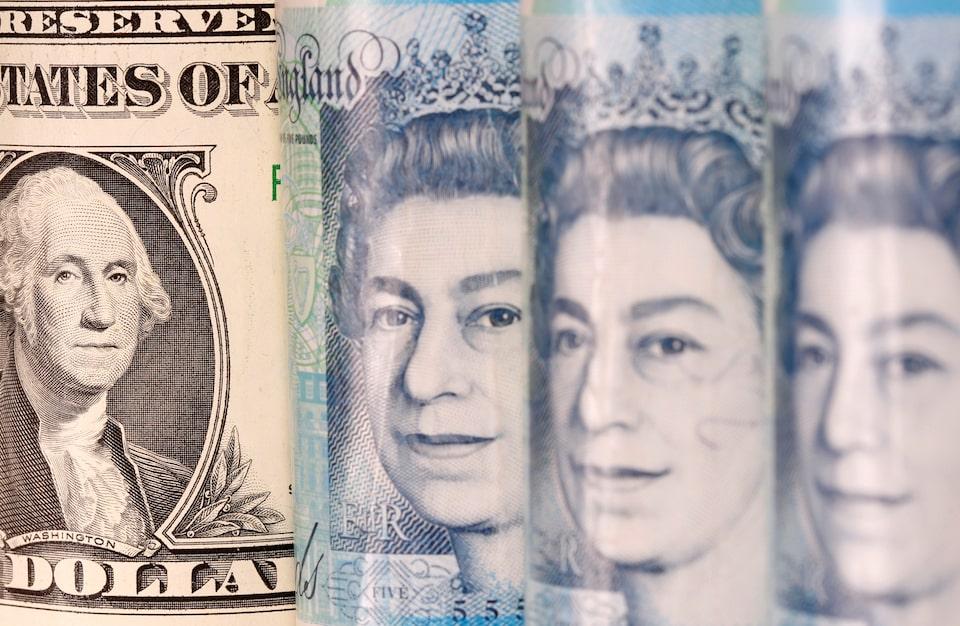
Sterling, yen fall 1% each against dollar Britain, France bond yields at multi-year highs on fiscal worries Higher Treasury yields support dollar Key U.S. data due this week MUMBAI, Sept 2 (Reuters) - Sterling and the Japanese yen slumped on Tuesday on the back of growing investor anxiety about government finances, allowing the dollar to claw back some ground after five days of selling. Renewed pressure on bond markets, with Britain's 30-year borrowing costs rising to their highest levels since 1998, spilled over into currency markets, while gold hit fresh record highs. Sign up here. Sterling fell 1.3% to $1.3379, its lowest level since August 7, while the dollar firmed by 1% to 148.66 yen . The euro gained against both sterling and yen by 0.6% and 0.3%, respectively. While sterling was weighed down by lingering worries over Britain's fiscal position ahead of a budget later this year, dovish-leaning remarks from a Bank of Japan official and the resignation of a key ruling party official pulled down the yen. "Sterling's underperformance is reflecting the growing concerns over the fiscal situation as we move closer to the budget and it becomes a bigger focus for market participants," said Lee Hardman, senior currency analyst at MUFG. Finance minister Rachel Reeves is expected to raise taxes in her autumn budget in order to remain on course for her fiscal targets, potentially adding to the challenge of boosting growth. For the Japanese yen, heightened political uncertainty was likely to remain a drag, while the lack of a hawkish policy signal from Deputy Governor Ryozo Himino on Tuesday would encourage speculators to continue rebuilding short yen positions, Hardman said. The dollar also drew support from an uptick in U.S. Treasury yields as investors home in on key U.S. labour market data due this week for cues on the path of benchmark interest rates. Against a basket of major currencies , the dollar was up 0.8% at 98.4. The interest rate expectations-sensitive 2-year U.S. Treasury yield was up 3 bps at around 3.653% after hitting its lowest level since May last week. U.S. markets were shut on Monday for the Labor Day holiday. Money markets are currently pricing in a 91% chance that the Fed will cut rates by 25 basis points this month, but those wagers could be tested by U.S. economic data lined up this week. Data due this week include ISM's manufacturing and services purchasing managers' indexes and the non-farm payrolls report. While the data was likely to cement expectations of a rate cut by the Fed, it was unlikely to cause a sharp move lower in the dollar beyond the knee-jerk reaction, said Jane Foley, head of FX strategy at Rabobank. The bank expected the euro to rise to $1.20, but the move was more likely to be a grind higher than a bounce and was likely to roughly coincide with the end of Fed Chair Jerome Powell’s term in the spring of next year, Foley said. Concerns about the independence of the U.S. Federal Reserve have also been in focus for investors in light of U.S. President Donald Trump's repeated push for lower policy rates and his move to fire Fed Governor Lisa Cook over allegations of mortgage fraud, which she denies. Elsewhere, data released on Friday showed that Euro zone inflation edged up in August but remained close to the European Central Bank's 2% target, likely reinforcing market expectations that the ECB will keep benchmark rates unchanged in the near-term. Spot gold , meanwhile, steadied after touching an all-time high and was last up 0.2% at $3,483 per troy ounce. https://www.reuters.com/world/africa/sterling-japanese-yen-slump-investor-anxiety-over-public-finances-2025-09-02/
2025-09-02 10:53
Sept 2 (Reuters) - The Ether Machine has raised $654 million worth of ether in private financing, it said on Tuesday, as the cryptocurrency firm expands its treasury strategy ahead of its Nasdaq listing later this year. The 150,000 ether - invested by longtime ethereum proponent Jeffrey Berns - will be delivered to its wallet later this week, the company said. Sign up here. Berns will also join the company's board of directors. As cryptocurrencies gain favor across corporate treasuries, ether stands out for its yield-generating ability. Holders can lock up their tokens to support the ethereum network in exchange for rewards, earning active returns. Ether Machine's financing comes less than two months after it was formed via a merger between the Ether Reserve and blank-check firm Dynamix Corporation (ETHM.O) , opens new tab. The deal was initially expected to raise over $1.6 billion, with investors like Blockchain.com, Kraken, and Pantera Capital. Ether Machine is now expected to go public with over 495,362 ether, the world's second largest cryptocurrency, worth $2.16 billion, and another $367.1 million remaining in capital to acquire additional ether. THIRD ROUND When buying crypto, treasury companies try to minimize dilution via instruments like convertible debt or preferred stock to maximize their crypto holdings per share. "Between the issuance of debt and the ability to do on chain yield generation that surpasses exchange traded funds, we believe that we should be able to sustain a multiple-to-net asset value (mNAV) in perpetuity," co-founder and Chairman Andrew Keys told Reuters in an interview. mNAV compares the market capitalization of a company to the actual value of the assets they own. With the Nasdaq listing expected to close next quarter, the Ether Machine is continuing fundraising, Keys said. "Citibank is leading our third capital raising round," Keys said, adding that it would be at least $500 million. "It starts on Wednesday." https://www.reuters.com/business/ether-machine-raises-654-million-private-ether-financing-nasdaq-debut-nears-2025-09-02/

2025-09-02 10:48
LONDON, Sept 2 (Reuters) - What matters in U.S. and global markets today By Mike Dolan , opens new tab, Editor-At-Large, Finance and Markets Sign up here. It may just be the 'back to school' trade, but September is bringing a sudden burst of financial market volatility as Americans return from Labor Day, with the dollar, long-term government bond yields and record-high gold all surging on Tuesday. Although worries abound about mounting public debt, tariffs and Federal Reserve independence, it was difficult to identify any precise trigger for the sequence of overnight market moves - and hard to connect the dots. Rising long-term government bond yields in Britain, France and the United States may reflect debt concerns as we enter the annual budget season and higher oil prices aren’t helping things, but the simultaneous rise of gold and the dollar made less sense. The rise in volatility has knocked back stocks worldwide. * Europe was the epicentre of Tuesday's bond jolt, with France's 30-year government bond yields hitting their highest in over 16 years as Prime Minister François Bayrou began talks with political parties in a bid to prevent a government collapse over his budget. Britain's 30-year borrowing costs rose to their highest levels since 1998 and sterling slid more than 1% on Tuesday, with this week's reshuffle of PM Keir Starmer's economic team ahead of the Autumn budget raising questions about the position of Chancellor Rachel Reeves. With Fed independence a key focus in a big week for labor data on Wall Street, U.S. 30-year yields stalked 5% yet again and hit their highest in over a month - sending the 2-to-30-year yield curve to its highest in almost four years. * With China's gathering of its Russian, North Korean and Indian allies this week as a backdrop, gold soared to record highs on a heady mix of long-term inflation and government debt concerns - bursting through April's prior peak to top $3,500 per ounce and clocking year-to-date gains of 33%. However, the dollar - unusually in times of stress this year - also surged against the euro, sterling, yen and yuan - with U.S. payrolls eyed, real-time U.S. GDP estimates , opens new tab running at 3.5% for the third quarter and August manufacturing surveys due later. * Elsewhere, global stocks were down generally - with Wall Street futures down about 0.5% after a rough session last Friday saw a 1%-plus shakeout in the tech sector. There was also a wave of uncertainty over fresh legal challenges to President Trump's 'reciprocal' tariffs - a ruling that arrived after Friday's closing bell. The tech wobble hit Japanese and South Korean stocks on Monday, but they recovered some of that today. Aside from the government bond angst in Europe, there was a focus on Nestle's 1% share slip after the Swiss food giant ousted Chief Executive Laurent Freixe a year into his tenure. Today's column explores the implications of the legal challenges to Trump’s 'reciprocal' tariffs and how they complicate an already messy policy picture. Today's Market Minute * China's President Xi Jinping convened his Russian and North Korean counterparts together for the first time on Tuesday, a show of solidarity with countries shunned by the West over their role in Europe's worst war in 80 years. * Nestle (NESN.S) investors were pitched back into choppy waters on Tuesday after the Swiss food giant changed its CEO for the second time in a year, ousting boss Laurent Freixe over an affair he had with a subordinate. * U.S. Treasury Secretary Scott Bessent said on Monday the Federal Reserve is and should be independent but said it had "made a lot of mistakes" and defended President Donald Trump's right to fire Fed Governor Lisa Cook over allegations of mortgage fraud. * The complex web of Western sanctions targeting Russia’s oil and gas industry has failed to impede Moscow’s energy flows or its war effort, writes ROI energy columnist Ron Bousso, suggesting that time and overuse are blunting the force of U.S. and European financial weapons. * Asia's imports of crude oil rebounded in August as heavyweight buyers China and India bought more crude from top exporters in the Middle East. But is this being driven by demand or price? Read the latest from ROI columnist Clyde Russell. Chart of the day As government budget season looms in Europe and anxiety about U.S. debt loads and central bank independence linger stateside, long-term public borrowing rates are climbing and the so-called yield curve gaps between 2-year maturities and 30-year tenors is widening to reflect much of that long-term uncertainty. French and British yield curves are now at their steepest since 2017 and the U.S. curve is at its steepest since 2021. Today's events to watch * U.S. August manufacturing surveys from S&P Global (9:45 AM EDT) and ISM (10:00 AM EDT) * Chinese President Xi Jinping to meet Russian President Vladimir Putin in Beijing * U.S. Secretary of State Marco Rubio visits Mexico -- Want to receive the Morning Bid in your inbox every weekday morning? Sign up for the newsletter here. You can find ROI on the Reuters website , opens new tab, and you can follow us on LinkedIn , opens new tab and X. , opens new tab (The opinions expressed here are those of the author, a columnist for Reuters) https://www.reuters.com/business/finance/global-markets-view-usa-2025-09-02/
2025-09-02 10:44
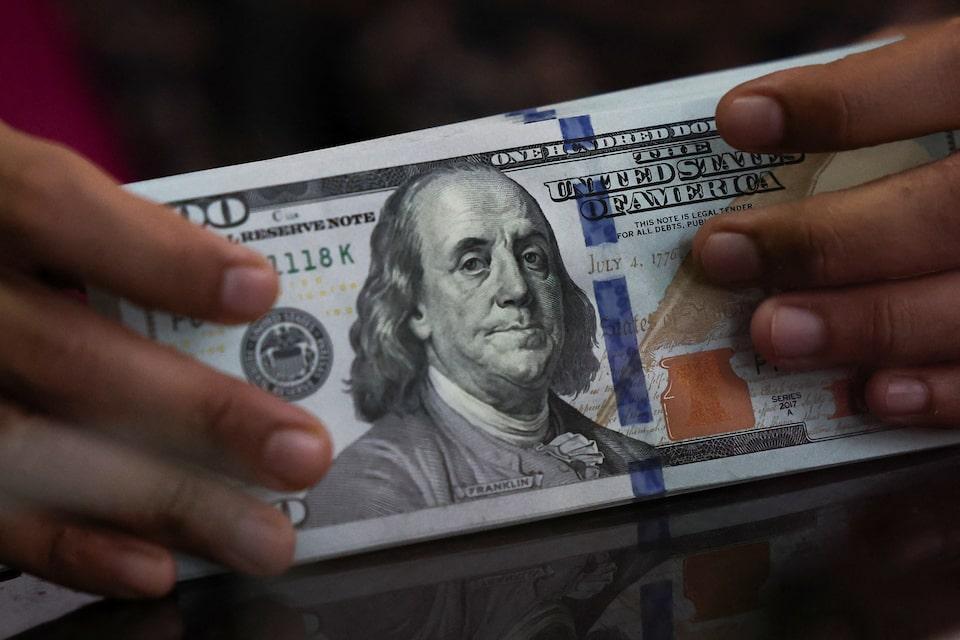
MUMBAI, Sept 2 (Reuters) - The Indian rupee ended marginally higher on Tuesday, but came off the day's high, as importer demand for the greenback wiped out recovery witnessed earlier in the session. The currency ended at 88.1550, marginally up 0.05% from Monday's close of 88.1950. It hit an intraday high of 87.8450 before declining past the 88-mark later in the day. Sign up here. "After the initial losses, there has been some strong demand from oil importers pushing the (USD/INR) pair higher," trader with a state-run bank said. The rupee had dropped to a lifetime low of 88.33 on Monday after moving past the 88-mark for the first time on Friday, in the aftermath of the U.S. government imposing additional tariffs on Indian goods. Traders and analysts said that U.S. tariff related concerns will continue to remain a drag on the Asian currency in the near term. "With U.S. tariff issues unresolved, risks remain skewed to the downside… any recovery is likely to stay limited without clear trade relief," said Amit Pabari, managing director at CR Forex. Traders will continue monitoring the Indian central bank’s stance around intervention, as well as portfolio outflows and importer hedging - all key factors that will affect the rupee’s trajectory. Meanwhile, Asian currencies traded largely steady against a strong dollar. The dollar index was up 0.77% at 98.401 as of 2:55 p.m. IST. Investors are now awaiting the release of U.S. nonfarm payrolls data for August, due on Friday, for clues on the interest rate trajectory in the world's largest economy. Confidence that the Fed will deliver a rate cut have strengthened after Chair Jerome Powell's relatively dovish remarks at Jackson Hole. The odds of a 25-basis-point cut in two weeks time stand around 90%, according to CME FedWatch Tool. https://www.reuters.com/world/india/rupee-off-days-high-importer-dollar-demand-wipes-out-most-gains-2025-09-02/
2025-09-02 10:40
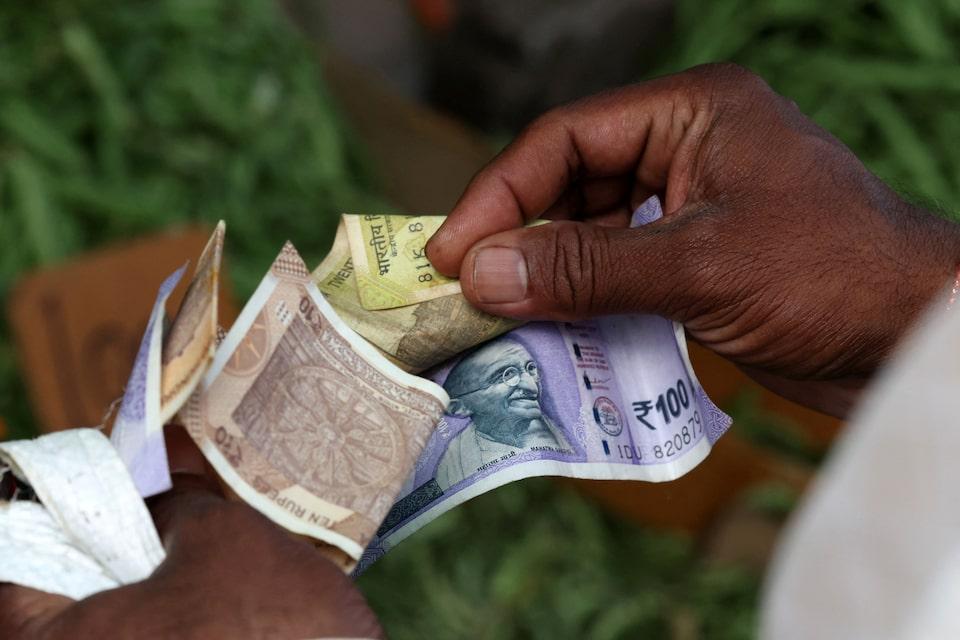
Sterling down as much 1.5% vs dollar 30-year gilt yields highest since 1998 Global bonds sell off, but UK vulnerable Britain still sells record 14 billion pounds of new bonds LONDON, Sept 2 (Reuters) - Britain's 30-year borrowing costs rose to their highest levels since 1998 and sterling slid over 1.5% on Tuesday, highlighting growing investor anxiety about the UK's ability to keep its finances under control. The selloff in British bonds, known as gilts, coincided with selling across other major bond markets, where the focus is firmly on rising debt levels. Sign up here. But weakness in sterling pointed to vulnerability in UK markets at a time of increasing concern about the Labour government's ability to exercise fiscal constraint. "The UK has had a perilous (fiscal) backdrop and that's going to continue," said Lloyds FX strategist Nick Kennedy. "Over the summer, there has been a bit of a risk premium built into the rates market. Investors are now wanting more of a risk premium for sterling as well." Thirty-year gilt yields rose to 5.723%, their highest since May 1998, and sterling was by far the day's weakest performing G10 currency against the dollar, down over 1.5% at one point. It was last off 1.0% at $1.34 , its biggest daily fall since June, and at 86.98 pence per euro, 0.6% softer. CHALLENGES AHEAD Prime Minister Keir Starmer on Monday reshuffled his top team of advisers, moving finance minister Rachel Reeves's deputy Darren Jones into his Downing Street office to better coordinate policy delivery. Starmer also appointed a former Bank of England deputy governor, Minouche Shafik, as his chief economic adviser, to bolster economic expertise ahead of what is expected to be a difficult budget later this year, but also sparking headlines that the move had weakened Reeves. Analysts said the changes on the first day of parliament after the summer recess renewed focus on the economic challenges given heavy levels of borrowing, slow economic growth and the highest inflation rate among the G7 major Western economies. Santander said it now expects the Bank of England to hold rates at 4% until the end of 2026, having previously expected two cuts next year. With the budget unlikely to come before November, Britain faces weeks of speculation about tax rises, potentially dampening investment and consumer confidence. And higher borrowing costs are making the government's task harder. "Everyone wants to feel assured that the government finances are in a sound position but as yields go up ... the fiscal black hole has grown and grown and grown," said Mark Dowding, fixed income CIO at RBC BlueBay Asset Management. Britain is not the only country suffering fiscal worries. France's 30-year government bond yields surged to their highest levels in over 16 years on Tuesday, driven by fiscal concerns and political instability. Japan's bonds have sold off heavily this year on concern about rising debt. In one reassuring sign, Britain sold a record 14 billion pounds ($19 billion) of new 10-year bonds on Tuesday, after attracting 141.2 billion pounds in orders from investors. The Bank of England is also expected soon to slow the pace at which it shrinks its 558 billion-pound ($754 billion) holdings of government bonds, a process called quantitative tightening. Dowding at BlueBay wanted them to go further. "The Bank of England has got to stop QT right now," he said. "Many investors including ourselves have been saying to the Bank of England they are making life worse, not better. Stop doing this." https://www.reuters.com/world/uk/uk-borrowing-costs-hit-highest-since-1998-pound-slides-fiscal-worries-2025-09-02/