2025-09-02 06:37
Ukraine's attacks force Russia to shut 17% of oil-processing capacity Bets on Federal Reserve rate cut buoy oil demand outlook U.S. market reopens on Tuesday following Labor Day break Sept 2 (Reuters) - Oil prices rose on Tuesday as concerns about supply disruptions grew amid an escalation of the conflict between Russia and Ukraine, and as the market weighed whether upcoming U.S. jobs data would lead to interest rate cuts. Brent crude added 37 cents, or 0.54%, to $68.52 a barrel by 0617 GMT, while U.S. West Texas Intermediate crude was at $65.02 a barrel, up $1.01, or 1.58%. Sign up here. WTI futures did not settle on Monday due to the Labor Day holiday in the U.S. "Oil prices are drawing short-term strength from the prospect of imminent Fed easing, which is reviving demand sentiment," said Priyanka Sachdeva, senior market analyst at Phillip Nova. A raft of U.S. labour data is due this week ahead of the Federal Reserve's September meeting, which could strengthen the case for monetary easing after surprisingly weak U.S. payrolls data released in July. On the supply side, recent Ukrainian drone attacks shut down facilities accounting for at least 17% of Russia's oil-processing capacity, or 1.1 million barrels per day, according to Reuters' calculations. On Sunday, Ukraine's President Volodymyr Zelenskiy said Ukraine plans new strikes deep into Russia after weeks of intensified attacks on Russian energy assets. Three-and-a-half-years into the war, Russia and Ukraine have both intensified airstrikes in recent weeks. Russia has targeted Ukraine's energy and transport systems, while Ukraine has been attacking Russian oil refineries and pipelines. "Ongoing risks to energy infrastructure in Russia remain high. Ukraine struck more Russian oil refineries over the weekend as it ramped up its attacks on infrastructure," said Daniel Hynes, senior commodity strategist at ANZ, in a note on Tuesday. China's vision for "a new global order" could potentially add to geopolitical tensions. Chinese President Xi Jinping pressed his vision on Monday for a new global security and economic order that prioritises the "Global South", in a direct challenge to the U.S., during a summit that included the leaders of Russia and India. China and India are the biggest buyers of crude oil from Russia, the world's second largest exporter. Trump has imposed additional tariffs on India over the purchases but not on China. Investors now await a meeting among members of the Organization of the Petroleum Exporting Countries and their allies on September 7 for any clues on future production plans. The market expects OPEC+ to keep output unchanged for now, after having unwound supply cuts over the past half year. That, combined with concerns about the economic impact of tariffs, have led oil supply to grow faster than demand, according to the IEA. "The scale of the surplus through next year means it's unlikely the group will bring additional supply onto the market," ING analysts said in a note. "The bigger risk is OPEC+ deciding to reinstate supply cuts, given concerns about a surplus." https://www.reuters.com/business/energy/oil-rises-ukraine-war-stokes-supply-worries-market-eyes-prospects-fed-easing-2025-09-02/

2025-09-02 06:23
Current account deficit narrows as investors earn more from foreign investments Net exports add 0.1 ppt to Q2 economic growth Public sector demand makes no contribution SYDNEY, Sept 2 (Reuters) - Australia's international trade added only slightly to economic growth in the second quarter and government spending made no contribution at all, leading some analysts to lower their growth forecasts. Data from the Australian Bureau of Statistics on Tuesday showed the current account ran a deficit of A$13.7 billion ($8.90 billion) in the June quarter, from a revised A$14.1 billion the previous quarter. That compared with forecasts for a A$16.08 billion deficit. Sign up here. That was due to domestic investors earning more from their overseas equities, while strong imports of non-monetary gold and travel services led to a fall in the goods and services surplus. The ABS said net exports would add 0.1 percentage points to gross domestic product in the second quarter, when analysts had expected a flat contribution. Government spending, which was the engine of activity last year, continued to underwhelm, with the bureau estimating it made no contribution to growth in the second quarter. Economists had expected a rebound from the first quarter. The soft partial data led analysts at RBC Capital Markets and Citi to lower their forecasts for second-quarter GDP to 0.5% quarter-on-quarter from 0.6% previously. The GDP data is due on Wednesday. A Reuters poll of 22 analysts forecast the economy would grow by a moderate 0.5% in the second quarter, up from 0.2% the previous quarter, as household spending began to pick up after a long fallow period, lifting the annual growth rate to 1.6%. "We expect private household consumption to have underpinned activity in the quarter with a marginal contribution from business and dwelling investment," said Robert Thompson, a macro rates strategist at RBC Capital Markets. "Government demand looks to have been flat to down slightly in H1-25. This skew toward private sector activity is encouraging." The Reserve Bank of Australia has cut interest rates three times this year to 3.6% as inflation has cooled, but the recovery in the economy has been tepid so far, adding to the case for more policy easing in coming months. The RBA expected the economy to grow just 1.7% by the year end. Swaps imply a less than 20% chance the RBA will follow up with another cut this month as a monthly reading on inflation came in on the high side and the labour market remained resilient, but a move in November has been fully priced in. Rates are seen settling around 3.10%. ($1 = 1.5389 Australian dollars) https://www.reuters.com/world/asia-pacific/trade-adds-slightly-australias-q2-growth-government-spending-underwhelms-2025-09-02/

2025-09-02 06:20
TOKYO, Sept 2 (Reuters) - Suntory Holdings CEO and Chairman Takeshi Niinami has resigned following a police investigation into his purchase of a potentially illegal supplement, the company said on Tuesday. Niinami, an outspoken business leader who has often served as the face of corporate Japan at Davos and other international events, told the company he purchased the supplement believing that it was legal, Suntory said in a statement. Sign up here. The Tokyo Shimbun daily reported earlier that police in Fukuoka prefecture have been conducting an investigation into whether supplements containing cannabis components had been sent to Niinami's home in connection with a man who was arrested in July. Police questioned Niinami and searched his Tokyo home, although no illegal drug possession or use has been confirmed, the daily said, citing sources familiar with the matter. Niinami, a fluent English speaker, is chair of the powerful Keizai Doyukai business lobby and has served as economic adviser to several Japanese prime ministers. A graduate of Harvard Business School, he was previously chief executive of convenience store operator Lawson before becoming the first head of Suntory from outside its founding family. https://www.reuters.com/sustainability/boards-policy-regulation/suntory-says-ceo-niinami-resigns-after-buying-potentially-illegal-supplement-2025-09-02/

2025-09-02 06:00
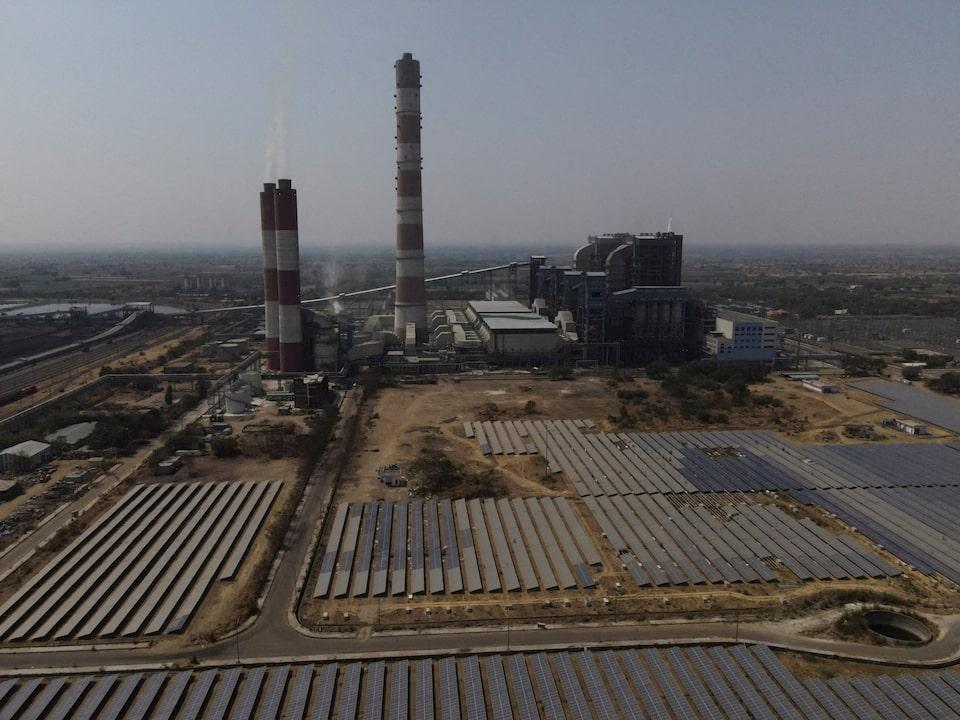
LITTLETON, Colorado, Sept 2 (Reuters) - Clean electricity production in India has surged by 20% to new highs so far this year, giving utilities a rare chance to cut fossil fuel-fired generation and reduce reliance on energy imports for power production. India's clean electricity sources are also on track to provide a third of its utility electricity for the first time over the next month or so, thanks to record combined output from renewables, hydro and nuclear assets, data from Ember shows. Sign up here. The steep build in home-grown clean electricity comes just as India faces unprecedented scrutiny over its energy import practices, particularly its heavy reliance on sanctioned Russian oil that has triggered stiff new tariffs from the United States. India also faces pressure to boost imports of U.S. LNG as a means to reduce its trade deficit with the United States, but has steadily reduced its reliance on gas for power as clean energy output has increased. Continued growth in clean generation - alongside rising homemade production of clean energy tech such as solar panels and battery systems - may help India limit its reliance on foreign-sourced fossil fuels while continuing to expand its overall energy generation. NEW PEAK Over the first half of 2025, India's utilities generated a record 236 terawatt hours (TWh) of clean electricity, data from Ember shows. That total is 20% more than during the same months in 2024, and allowed utilities to curb generation from fossil fuels by 4% from the year before to around 691 TWh. A 29% jump in wind generation (to 47.2 TWh) and a 25% rise in solar generation (to 85 TWh) were the main drivers of the advance in clean electricity supplies. Record output from India's nuclear fleet - to 29 TWh - and a 14% year-over-year climb in output from hydro dams also helped lift the overall clean supply total. On the fossil fuel side of the generation ledger, coal-fired electricity supplies dropped by 3% from the year before to 675 TWh, while gas-fired electricity output shrank by 34% to 13.75 TWh. SEASONAL SWAY The collective upswing in multiple clean generation sources is leading to clean power grabbing a record share of India's generation mix, which will likely exceed 30% for the months of July, August and September. The average clean generation share through the opening half of 2025 was 25%, compared to an average of 21% for the same months in 2024. In June, clean power sources accounted for 31% of the overall generation mix, which was the highest reading on record for that month and meant the share from fossil fuel sources dropped below 70% for the first time. Data on India's generation during July and August has yet to be released, but clean power sources are likely to have secured even larger shares of the overall mix during that period as wind and hydropower output tends to hit annual peaks around then. Over the first half of 2025, total clean generation from all sources was around 24% more than average generation levels from India's clean generation assets during the same months from 2022 to 2024. If wind and hydro production rise as expected during July, August and September, total clean electricity production in India will smash previous records this year and may set the stage for even steeper cuts to fossil fuel generation going forward. Given the fast pace of electricity demand growth in India, utilities are likely to continue adding coal-fired generation capacity to the generation system to ensure that overall electricity supplies keep up with consumption. But with solar and wind capacity expected to continue growing at a faster pace, the share of fossil fuels within India's overall generation mix may be close to peaking, which would mark a major milestone for India's fast-growing energy system. An established peak in the share of fossil fuels in electricity generation could then trigger a potential decline in fossil fuel imports and use, and reduce the pressure on India to succumb to international pressure on oil and gas import trends. The opinions expressed here are those of the author, a columnist for Reuters. Enjoying this column? Check out Reuters Open Interest (ROI), your essential new source for global financial commentary. ROI delivers thought-provoking, data-driven analysis of everything from swap rates to soybeans. Markets are moving faster than ever. ROI can help you keep up. Follow ROI on LinkedIn , opens new tab and X , opens new tab. https://www.reuters.com/markets/commodities/india-cuts-fossil-electricity-output-clean-generation-hits-new-peak-2025-09-02/
2025-09-02 05:44
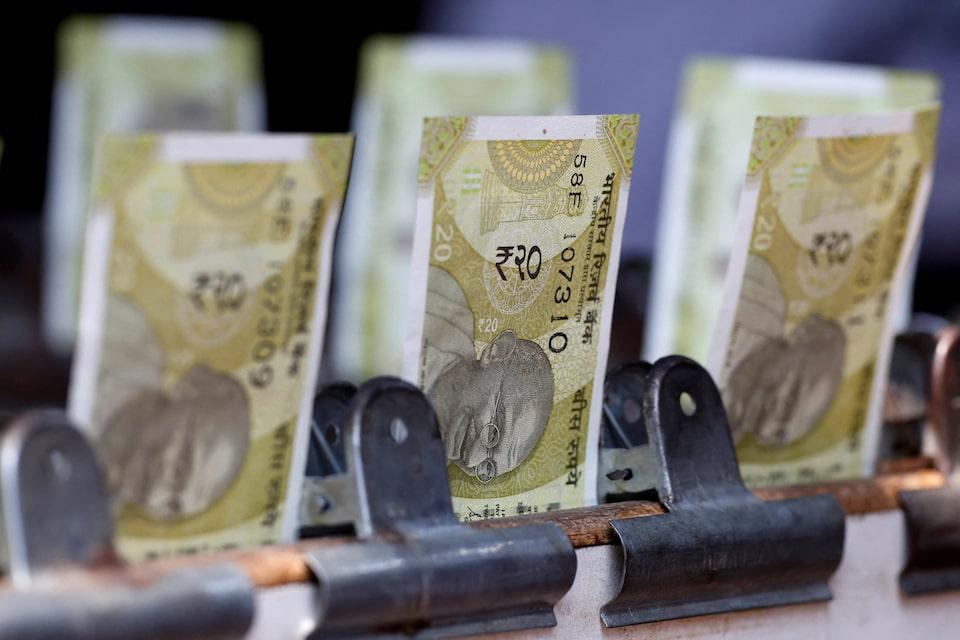
MUMBAI, Sept 2 (Reuters) - The Indian rupee strengthened to 88 per U.S. dollar on Tuesday, lifted by offshore position trimming and a recovery in local shares. The currency was last at 88.0050, up 0.2% from Monday's close. It hit an intraday high of 87.9550 on the interbank order-matching system. Sign up here. The 87.95 level is seen an important support for the dollar/rupee pair since it was the previous record high before being breached last Friday. "I will be very surprised if we break below 87.95 and hold," said a currency trader at a private bank. "That would nullify the immediate upside bias, which doesn’t make sense considering the current news flow." The dollar/rupee had slipped in the non-deliverable forward market before domestic trading began, and the "markets here followed through", he added. An FX salesperson at the same bank said the recovery in Indian equities was helping the rupee "at the margin" and "maybe there is a one-off inflow via foreign banks." India equities rose on Tuesday, adding to Monday's rally. Bankers said equity moves have recently played a smaller role in driving the rupee. However, when the currency trades at record or near-record levels its sensitivity to stock market swings increases, adding to intraday volatility. Meanwhile, Asian currencies were steady on Tuesday with investors awaiting U.S. data that could shape expectations for Federal Reserve rate cuts this year. The focus is on two key releases — the August jobs report and the inflation print — both due before the September 16–17 policy meet. https://www.reuters.com/world/india/rupee-back-88usd-offshore-cleanup-equity-rebound-2025-09-02/
2025-09-02 05:36
MOSCOW, Sept 2 (Reuters) - Russia's Gazprom (GAZP.MM) , opens new tab and China National Petroleum Corporation signed an agreement to increase annual gas supplies to China via the Power of Siberia pipeline as well as via the Far Eastern Route, Russia's RIA agency reported on Tuesday. Reuters reported last month that China was seeking to buy more Russian gas through an existing pipeline as talks between the two countries have failed to make progress on building a second link. Sign up here. The agreements were signed during Russian President Vladimir Putin's visit to China where he is due to attend a military parade on Tiananmen Square on Wednesday marking the end of World War Two after Japan's formal surrender. RIA, citing Gazprom's CEO Alexei Miller, said that Gazprom and CNPC have agreed to increase supplies to 44 billion cubic metres (bcm) a year from 38 bcm a year. Additionally, the two have agreed to increase gas supplies via the Far Eastern route to 12 bcm from the 10 bcm. Miller also said that a legally binding memorandum has been signed for the construction of the Power of Siberia 2 pipeline to China and the Soyuz Vostok transit gas pipeline through Mongolia. "Gazprom and CNPC also signed today a new memorandum on strategic cooperation, which reflects a new stage in our work with CNPC on new projects," Miller said. (This story has been corrected to say 38 bcm, not 33 bcm, in paragraph 4) https://www.reuters.com/business/energy/gazprom-cnpc-sign-agreement-increase-gas-supplies-china-ria-reports-2025-09-02/