2025-09-02 05:35
Undermining central bank independence raises long-term borrowing costs, says Schnabel Schnabel: End of Fed independence would disrupt global financial system World not yet ready for end of dollar supremacy, she says FRANKFURT, Sept 2 (Reuters) - Curtailing the U.S. Federal Reserve's independence could backfire and push up borrowing costs rather than lower them while disrupting the entire global financial system, European Central Bank board member Isabel Schnabel said. U.S. President Donald Trump has been exerting relentless pressure on the Fed to cut interest rates and publicly discussed firing Fed Chair Jerome Powell, whom he called a 'numbskull' and a 'moron', for not giving in to his demands. Sign up here. Upping this battle, Trump last month attempted to fire Fed Governor Lisa Cook, setting off a critical legal test over the Fed's ability to function without political interference, the cornerstone of modern central banking. "Any attempt to undermine central bank independence is going to lead to an increase in medium and long-term interest rates," Schnabel told Reuters in an interview. "History is very clear about the benefits of central bank independence: it lowers risk premia and it eases financing conditions for households, firms and governments," Schnabel, an academic who runs the ECB's market operations, said. Trump is demanding lower rates to boost investment and give mortgage borrowers relief over some of the highest interest rates in the developed world. But politically motivated rate cuts would signal that the Fed is willing to tolerate higher inflation, eroding trust among investors, who hold trillions of dollars of U.S. assets, banking on policy certainty from the Fed. "If the loss of Fed independence happened – and I very much hope that it doesn’t – this would be very disruptive for the global financial system and it also would have an impact on the ECB," Schnabel said. Such a loss of confidence could then push up longer-term borrowing costs, which are more relevant than short-term central bank rates for mortgages and business loans, potentially undoing any Fed effort to ease the financing burden. The U.S. could also export higher inflation as the pandemic's key lesson was that countries struggle to fight off global inflationary developments, Schnabel said. While such a loss of trust could also threaten the dollar's supremacy in the global financial system, there was no alternative to the greenback for now, Schnabel said. Some European officials have argued that distrust in U.S. policy could create an opportunity for the euro to gain market share, Schnabel said the world was not yet ready to live without the dollar's supremacy. "The big question is whether the U.S. dollar can maintain its current status," Schnabel said. "I’m inclined to think that it can." "But if it weren’t able to, then it’s not clear what would happen in the global financial system because there is no clear alternative," Schnabel said. "The global financial system is not in a situation where it could easily live without the U.S. dollar as the key currency." https://www.reuters.com/business/finance/loss-fed-independence-would-push-up-borrowing-costs-set-off-turmoil-ecbs-2025-09-02/
2025-09-02 05:35
Schnabel says rates 'mildly accommodative' Sees U.S. tariffs as inflationary Inflation risks tilted to upside - Schnabel Says global rate hikes may come earlier than thought FRANKFURT, Sept 2 (Reuters) - The European Central Bank should keep interest rates steady as the euro zone economy is holding its own in the face of U.S. tariffs and inflation may still come in higher than expected, ECB policymaker Isabel Schnabel told Reuters. The central bank for the 20 countries that share the euro snapped a year-long easing cycle in July and policymakers are now waiting to see the full impact of U.S. duties agreed in July before deciding if borrowing costs need to fall further. Sign up here. Schnabel -- the most influential among the ECB's hawks, as policymakers who favour higher rates are known -- said she didn't see the need for more cuts and the current, 2% policy rate may be "mildly" stimulating an already buoyant economy. "I believe that we may be already mildly accommodative and therefore I do not see a reason for a further rate cut in the current situation," the German economist said in an interview. The ECB is expected to keep interest rates on hold at its next meeting on September 11 but investors see a good chance it will cut rates again by June, money market data shows. Sources also told Reuters discussions about further easing were likely to resume in the autumn. The U.S. Federal Reserve, under pressure from U.S. President Donald Trump, is expected to cut rates this month. But Schnabel said the euro zone's economy had fared better than expected thanks to "robust growth in domestic demand" and that it was now in for a "significant fiscal impulse" from Germany's investment on infrastructure and the military. Contrary to many of her colleagues and the ECB's own projections, Schnabel argued global trade tariffs imposed by Trump's administration would push up inflation, even without retaliation from the European Union. "I continue to believe that tariffs are on net inflationary," Schnabel said. "If you have an increase in input prices globally due to tariffs, and these propagate through global production networks, this will increase inflationary pressures everywhere." She also said tariffs would disrupt supply chains, citing Chinese restrictions on the export of several rare earths and a U.S. decision to tax even small-value parcels as examples. This, together with fast-growing food prices, meant Schnabel saw "the balance of risk as being tilted to the upside", meaning inflation may surpass the ECB's projections for 1.6% next year and 2% in 2027. While Schnabel was not advocating for rate hikes at present, she thought the time for tightening may come, for central banks across the globe, sooner than thought due to trade curbs, fiscal largesse and an older population. "A more fragmented world with a less elastic global supply, higher fiscal spending and ageing societies is a world with higher inflation," she said. "So I think the point where central banks around the world start to hike interest rates again may come earlier than many people currently think." Schnabel saw no evidence of Chinese companies dumping cheap goods on the euro zone as an alternative to the United States, noting China's overall export prices had recovered and the cost of Chinese imports to the bloc was low but stable. She also played down the impact of a stronger euro, saying its pass-through to prices will be smaller if it is driven by improving growth prospects in the euro zone. "Therefore, I am less concerned about exchange rate developments," Schnabel said. She remained open to change her views on policy if there were "material and persistent deviations" from the ECB's 2% target that destabilised inflation expectations but she deemed this unlikely. "I find it highly unlikely that there’s going to be a de-anchoring of inflation expectations to the downside, especially after these many years of too high inflation," Schnabel said. "When you look at firms’ selling prices, you don’t see any indication of disinflationary pressures, neither in the manufacturing nor in the services sector." https://www.reuters.com/business/finance/ecbs-schnabel-calls-steady-rates-economy-holds-up-face-tariffs-2025-09-02/
2025-09-02 05:29
Stocks struggle for direction ahead of economic data Dollar soft on rate cut wagers, gold soars to new peak U.S. labour market in focus before Fed's policy meeting Worries about Fed's independence linger SINGAPORE, Sept 2 (Reuters) - Stocks were muted, the dollar steadied near five-week lows and gold climbed to record highs on Tuesday, as investors awaited economic data this week that could reinforce expectations for a Federal Reserve rate cut in September. Markets widely expect the Fed to lower interest rates later this month, pricing in an 89% chance of a 25 basis point cut, but data this week will help investors gauge whether the central bank could perhaps lean toward a jumbo cut. Sign up here. The focus will be on Friday's U.S. nonfarm payrolls report, which will be preceded by data on job openings and private payrolls, providing investors and the Fed a clearer picture of the labour market that has become the centre of policy debate. "While an outsized 50 bps cut in September is not the base case expectation currently, it cannot be ruled out altogether if the August jobs data shows exceptional weakness," said Vasu Menon, managing director of investment strategy at OCBC Bank. The U.S. inflation report for August, scheduled to be released on September 11, a week before the Fed's policy meeting, will play a crucial role in determining the central bank's next steps. The prospect of lower borrowing costs has kept Wall Street near record highs, while stocks in other regions have also gained in recent weeks. On Tuesday, MSCI's broadest index of Asia-Pacific shares outside Japan (.MIAPJ0000PUS) , opens new tab was flat. Nasdaq futures fell 0.1% while European futures eased 0.07%. U.S. markets were closed on Monday for a holiday leaving few cues for Asian markets. "It is all about gauging whether the Fed remains ahead of a possible slowdown in the U.S. economy, or if it's behind the curve," said Kyle Rodda, a senior financial market analyst at Capital.com in Melbourne. "If it seems like the U.S. economy is accelerating off the cliff, it's going to raise fears that the Fed has been too slow to cut rates. If the deterioration is modest, it will support the case for rate cuts while also easing fears of a rapid deterioration in economic activity." China stocks have been on a tear recently buoyed by AI enthusiasm but fell on Tuesday as investors locked in profits following the sharp rally. The blue-chip CSI300 index (.CSI300) , opens new tab fell 0.9% after hitting a three-year high for the third straight session earlier on Tuesday. Hong Kong's Hang Seng index (.HSI) , opens new tab eased 0.6% after surging 2% on Monday. In currencies, the dollar clawed back some of its losses ahead of the European open. The euro fell 0.16% at $1.16925, while sterling was at $1.35264, down 0.17%. The yen weakened 0.3% to 147.70 per dollar after Bank of Japan Deputy Governor Ryozo Himino said the central bank should keep raising interest rates but warned that global economic uncertainty remains high, suggesting it was in no rush to push up still-low borrowing costs. The dollar index , which measures the U.S. currency against six others, was 0.2% higher at 97.847, but still near the five-week low it hit on Monday. The yield on benchmark U.S. 10-year notes was 2.4 basis points higher at 4.249%. FED INDEPENDENCE Efforts by President Donald Trump to fire Fed Governor Lisa Cook have raised the prospect that Trump could make more dovish appointments to the U.S. central bank that would result in easier policy. Cook is set to file fresh arguments against her firing on Tuesday. Trump has criticised the Fed and its chair, Jerome Powell, for months for not lowering rates, and recently took aim at Powell over a costly renovation of the central bank's Washington headquarters. U.S. Treasury Secretary Scott Bessent said on Monday the Fed is and should be independent but said it had "made a lot of mistakes". In commodity markets, gold gained from the dollar's softness and the outlook for lower U.S. rates. The metal rose to a record high of $3,508.5. Oil prices rose on Tuesday as concerns about supply disruptions grew amid an escalation of the conflict between Russia and Ukraine. Brent crude rose 0.4% to $68.44 a barrel, while U.S. West Texas Intermediate crude was up 1.42% at $64.92 a barrel. https://www.reuters.com/world/china/global-markets-wrapup-2-2025-09-02/

2025-09-02 05:19
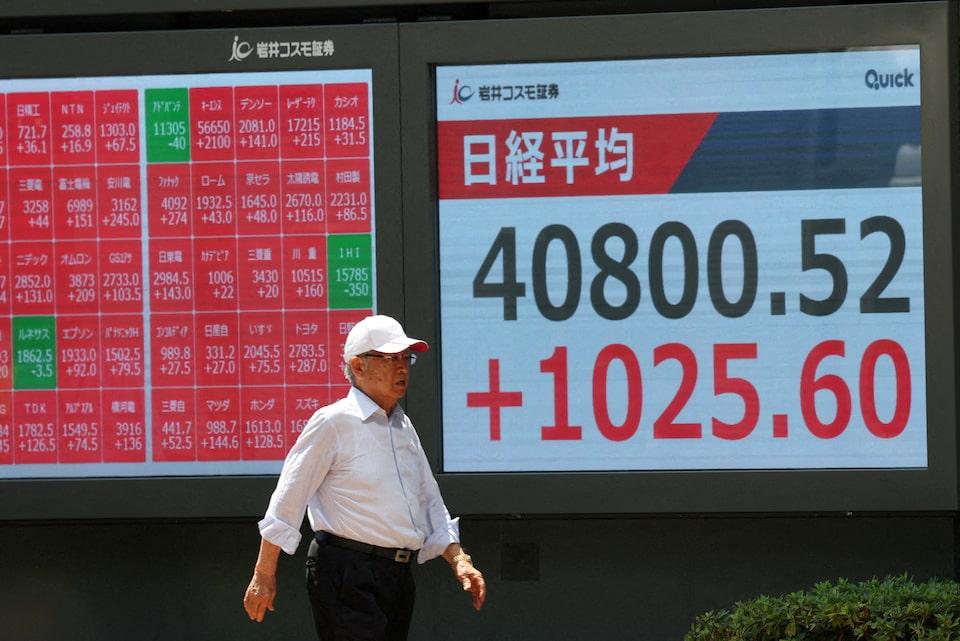
Reflation trade prompts asset rotation to stocks from bonds Yen hedging costs cause headaches for Japanese investors Lack of repatriation flows puzzles analysts SINGAPORE, Sept 2 (Reuters) - Japanese financial markets are undergoing a long-awaited reflation trade. There's just one missing factor: the Japanese investor. Foreign buyers have been in the driving seat of a rally that has driven Tokyo shares (.N225) , opens new tab to record highs last month and coincided with an appreciation of the yen . They have also been major sellers of Japanese government debt, causing yields on 30-year bonds to reach all-time peaks. Sign up here. "Global investors have been a major driver of the rise in Japanese stocks," said Nicholas Smith, a strategist at CLSA in Tokyo. "There is little sign of domestic investors chasing," after a rally in the Topix from lows reached in April, he said, which has pushed the index up 34.2%. As supportive government policies and corporate reforms help Japan to ignite economic growth after almost three decades of lacklustre activity, the Bank of Japan began its exit from a massive, decade-long stimulus last year and raised interest rates in January this year to their highest level since the 2008 global financial crisis. That has stoked an asset rotation from bonds into equities, boosting beat-up industrials at the expense of flashier growth stocks, while favouring shorter-dated bonds to the longer-dated end of the yield curve. Some analysts believe the rally in stocks could have further to run if Japanese retail investors resume buying, after pulling out some $23 billion so far this year. "Retail sentiment is finally back in the positive since last week after hitting an extremely bearish level," analysts from Bernstein said in a research report. Attributing retail investors' caution to uncertainty over how U.S. tariffs would affect Japan's economy and market volatility, they said the combination of a recovery in earnings, strong foreign investor confidence and return of retail flow "looks quite supportive for markets." Foreign flows into equities this year are the strongest of the past decade, and on track to mark the highest since the Abenomics-inspired influx of 2013. "Foreigners aren’t the only entities buying though: corporates, through share buybacks, were even larger," said CLSA's Smith. "That’s very exciting, because corporates are awash with cash and could afford to buy a whole lot more." Despite the outsized moves in stocks and bonds, the yen has proven relatively stable, remaining stubbornly within a 140-160 trading range for the past two years rather than strengthening on the prospects of stronger growth, or from a rush of investor fund flows lured by higher bond yields or equity returns. "The big story is the lack of repatriation flows," said Brad Setser of the Council on Foreign Relations. Setser attributes the absence to Japanese institutional portfolios that invested heavily in U.S. Treasury markets prior to COVID-19 now being effectively under water after the Fed's increases in interest rates. Put simply, Japanese capital is staying overseas rather than coming home to chase the gains. Analysts and traders are watching closely whether that will change as the Japanese markets spring into action. Here are some charts that show Japan's asset rotation. 1/ Asset class rotation Investors betting on stronger economic growth are pulling cash from fixed income and piling into stocks instead. The Nikkei 225 and Topix indexes have reached all-time highs. /2 Value beats growth Mirroring reflation trades in other countries, Japanese value stocks have outperformed faster-growing companies. Often, quantitative investors interpret this trend as an indication of economic growth becoming more diffused throughout the economy. /3 Carry trades Foreign buyers of JGBs are able to generate a substantial pickup over equivalent-dated U.S. debt. A five-year Treasury bond generates a yield of just 3.86%, compared to a Japanese government bond of the same maturity swapped into U.S. dollars which returns a 5% yield. This bond market alchemy is only possible because of the large interest rate gap differential between the Federal Reserve and the Bank of Japan. /4 Yen hedging costs But that boost only goes in one direction. Japanese investors find it more expensive to invest in the U.S. on a currency-hedged basis because of the Bank of Japan's relatively low interest rates. /5 Japan's overseas riches Japan lost its crown as the world's top creditor earlier this year to Germany, yet a sizeable quantity of its financial assets are held outside Japan and could be sold and brought back home. (This story has been corrected to fix the timing of BOJ's exit from easy policy in paragraph 4) https://www.reuters.com/business/finance/japanese-investors-are-leaving-reflation-trade-foreigners-2025-09-02/
2025-09-02 04:47
A look at the day ahead in European and global markets from Ankur Banerjee A sleepy start to a data-heavy week will get its first test when an inflation report for the euro zone comes out during European hours, while investor focus will also be on Nestle after the Kitkat maker abruptly dismissed its CEO. Sign up here. Euro zone inflation is likely to have remained stable at 2.0% in August, showed economist estimates compiled by Reuters. Data from Germany, France, Italy and Spain last week indicated inflation stayed close to the European Central Bank's target. The ECB left its key interest rate at 2% at its July policy meeting and market watchers expect it to do so again this month before discussion about further cuts resume in the autumn. NESTLE UPHEAVAL Nestle (NESN.S) , opens new tab dismissed Laurent Freixe exactly a year after becoming CEO for not disclosing a romantic relationship with a subordinate. The dismissal also came a year after predecessor Mark Schneider's sudden departure, and two and a half months after longstanding chair Paul Bulcke announced he would step down in 2026, amounting to one of the most turbulent periods in the food giant's history. Nestle's stock price has fallen more than 17% over the past 12 months, versus a 5% gain in the pan-European STOXX 600 (.STOXX) , opens new tab. Watch out for fireworks at the open. RATE-CUT WAGERS Meanwhile, the broader market struggled for direction as investors geared up for a U.S. jobs report on Friday that will influence the Federal Reserve's near-term policy path. Investors broadly expect a 25 basis-point cut at its September meeting. Relentless attacks on the Fed from President Donald Trump have also kept investors wary, with Trump's efforts to fire Governor Lisa Cook raising the prospect of him making more dovish appointments at the central bank. Comments from Treasury Secretary Scott Bessent stoked further concern about the Fed's independence and credibility. "The Fed should be independent. The Fed is independent, but I, I also think that they've made a lot of mistakes," Bessent said in an interview. The dollar has remained under pressure on rate-cut wagers, propelling gold to break above $3,500 an ounce to a record high. The metal is up 33% this year after gaining 27% last year. Key developments that could influence markets on Tuesday: https://www.reuters.com/world/china/global-markets-view-europe-2025-09-02/
2025-09-02 02:56
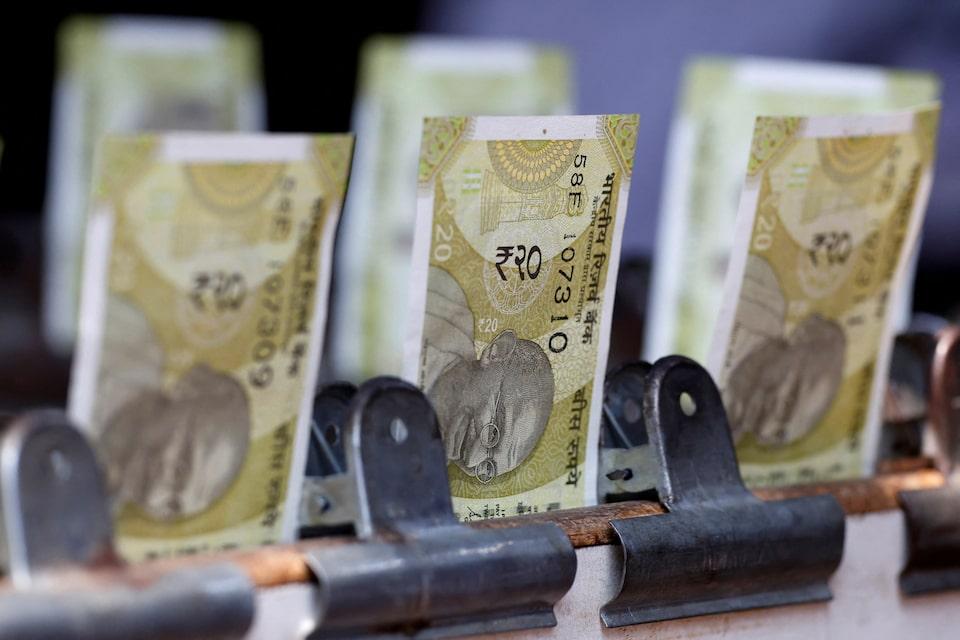
MUMBAI, Sept 2 (Reuters) - The Indian rupee is expected to open marginally higher on Tuesday, building on the modest relief from the previous session, though sentiment remains fragile amid concerns over the fallout from higher U.S. tariffs. The 1-month non-deliverable forward indicated the rupee will open in the 88.10 to 88.14 range versus the U.S. dollar, compared with 88.1950 on Monday. Sign up here. The rupee dropped to a lifetime low of 88.33 on Monday before staging a slight recovery. Market chatter pointed to likely Reserve Bank of India dollar sales helping the recovery, though bankers said it was hard to pin down. Currency traders said the rupee's trajectory will hinge on the RBI’s stance, with portfolio outflows and active importer hedging piling on pressure. Outflows and tariff-related uncertainty are expected to cap any upside, they added. Directionally, risks for the rupee right now are firmly on the downside, a spot FX trader at a mid-sized private sector bank said. "It will take either a sizeable dollar decline, aggressive RBI intervention or a positive surprise on the U.S.-India trade front to engineer a meaningful turnaround," he added. Foreign investors were net sellers of Indian equities on Monday, preliminary data showed, though the pace of outflows tempered compared with the previous few sessions. Meanwhile, data released late on Monday showed India's current account swung to a deficit in the April-June quarter on the back of a wider trade deficit. ASIA QUIET Investors are awaiting a raft of U.S. data this week, with August nonfarm payrolls due on Friday the most critical release. The report will help markets gauge whether current bets on a Federal Reserve rate cut at this month’s policy meeting are well-founded. Confidence in a rate cut has strengthened after Fed Chair Jerome Powell’s relatively dovish remarks at Jackson Hole. KEY INDICATORS: ** One-month non-deliverable rupee forward at 88.22; onshore one-month forward premium at 11 paise ** Dollar index at 97.81 ** Brent crude futures up 0.4% at $68.4 per barrel ** Ten-year U.S. note yield at 4.25% ** As per NSDL data, foreign investors sold a net $1.02 billion worth of Indian shares on Aug 31 ** NSDL data shows foreign investors sold a net $217.3 billion worth of Indian bonds on Aug 31 https://www.reuters.com/world/india/rupee-set-slight-lift-after-respite-us-tariff-risks-linger-2025-09-02/