2024-03-19 10:25
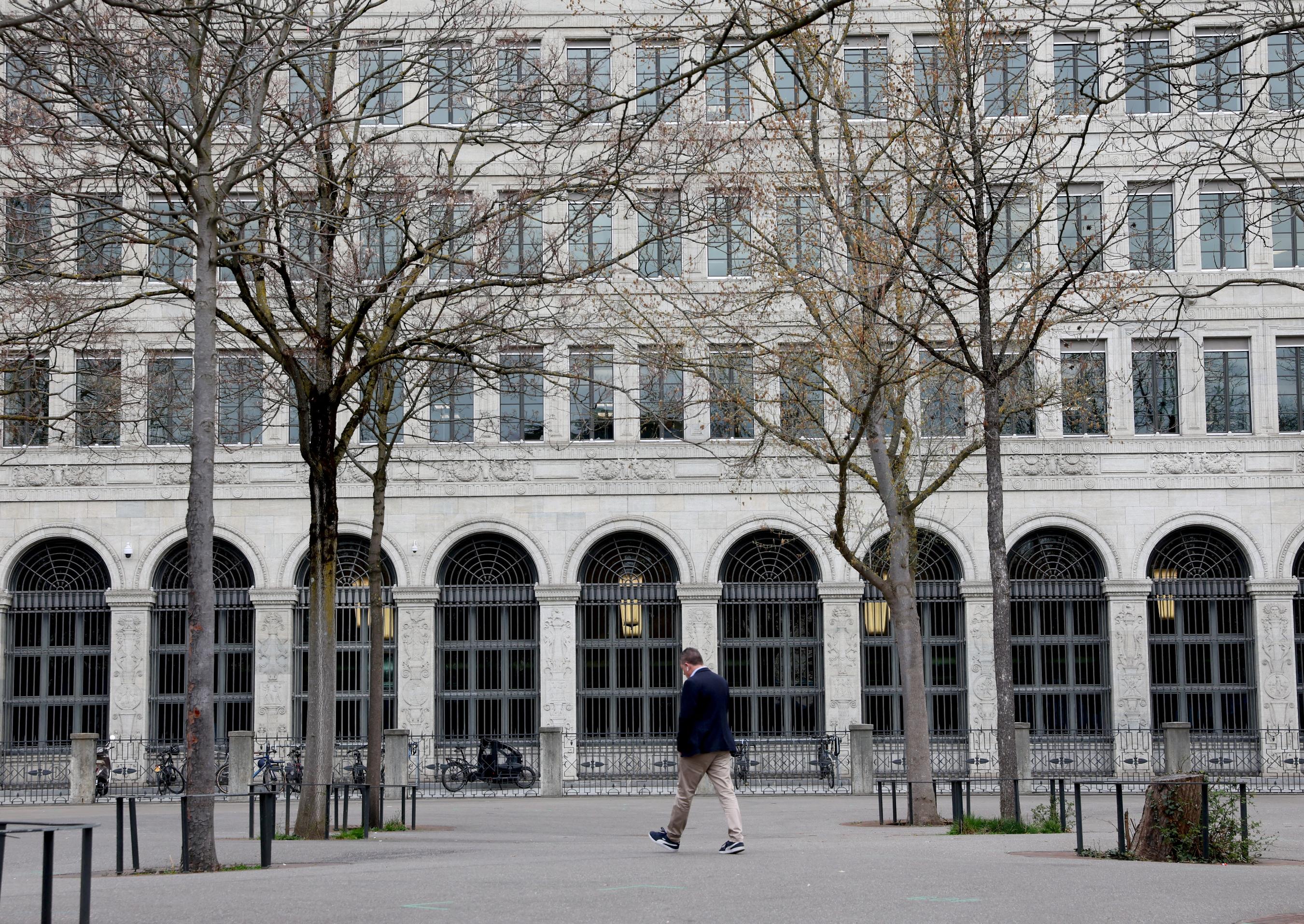
A look at the day ahead in U.S. and global markets from Mike Dolan If just two years ago, you'd imagined the day the Bank of Japan ended its negative interest rate era, you'd probably not have put the yen near 34-year lows through 150 per dollar or the Nikkei stock index within 2% of record highs. Yet, here they are - and Bank of Japan policy rates are positive again for the first time since 2016 after the BOJ delivered its first rate hike in 17 years at Tuesday's meeting. And it went big in its dismantling of its extraordinarily easy money regime - removing formal bond yield caps and purchases of stock funds. Of course the move had been telegraphed for weeks, if not months, and only the timing was at issue. And perhaps the market's eventual takeaway from the meeting was an emphasis on policy remaining "accommodative" with rates stuck around zero as a fragile economic recovery retains large rate gaps with other G7 nations. The BOJ said it will continue its JGB purchases at broadly the same amount as before - which pushed yields lower on the day - even though it will scale back the maximum limit of its purchases. Still the prospect of further hikes were left on the table. "If trend inflation heightens a bit more, that may lead to an increase in short-term rates," said BOJ Governor Kazuo Ueda said, without elaborating on the likely pace and timing of further moves. And business welcomed the move, with the chair of Japan's biggest business lobby Keidanren describing it as "the appropriate policy decision at the appropriate time". But with the long-awaited hike now out of the way, dollar/yen surged to 150.62 - within 1% of 2022's peaks. And the Nikkei (.N225) , opens new tab gained 0.6% - about 1% from its record high set earlier in the month. In the background, Australia's dollar weakened and shares there ended higher as the Australian central bank signalled greater confidence in inflation returning to its target range after leaving policy rates unchanged at 12-year highs of 4.35%. And of course all now spins into the Federal Reserve's two-day meeting, which kicks off later on Tuesday. The rates and currency market mood is hawkish going into the Fed meeting, although there was some relief on Treasury yields early Tuesday and spiky oil prices ebbed a bit. Thanks largely to the yen swoon, the dollar (.DXY) , opens new tab was higher across the board, hitting its highest in almost three weeks. But despite the cloudy U.S. interest rate picture, the buzz about artificial intelligence kept stock indexes buoyed. Google's parent Alphabet (GOOGL.O) , opens new tab jumped on a media report that Apple (AAPL.O) , opens new tab is in talks to build Google's Gemini AI engine into the iPhone. Nvidia (NVDA.O) , opens new tab shares added almost 1% as it kicked off its annual developer conference as investors waited for new chip announcements from Chief Executive Jensen Huang. But Super Micro Computer (SMCI.O) , opens new tab, which joined the S&P 500 on Monday, gave up earlier gains to close down 6.4%, making it the biggest percentage decliner on Monday. The stock, which has rallied furiously recently on bets it would benefit from AI, is still up more than 252% for the year-to-date. And in a good day for mega caps, even Tesla (TSLA.O) , opens new tab climbed 6%, leading S&P 500 percentage gains, after the electric carmaker said it would soon increase the price of its Model Y EVs in parts of Europe. But the tech and megacap flurry disguised a bad session for small caps, with the Russell 2000 (.RUT) , opens new tab ending down 0.7%. Key diary items that may provide direction to U.S. markets later on Tuesday: - U.S. Feb housing starts, Jan TIC data on foreign holding of Treasuries; Canada Feb consumer price data - U.S. Federal Reserve's Federal Open Market Committee starts two-day policy meeting, decision Wednesday - US Treasury auctions 20-year bonds, 12 month bills Get a look at the day ahead in U.S. and global markets with the Morning Bid U.S. newsletter. Sign up here. https://www.reuters.com/markets/us/global-markets-view-usa-2024-03-19/
2024-03-19 10:22
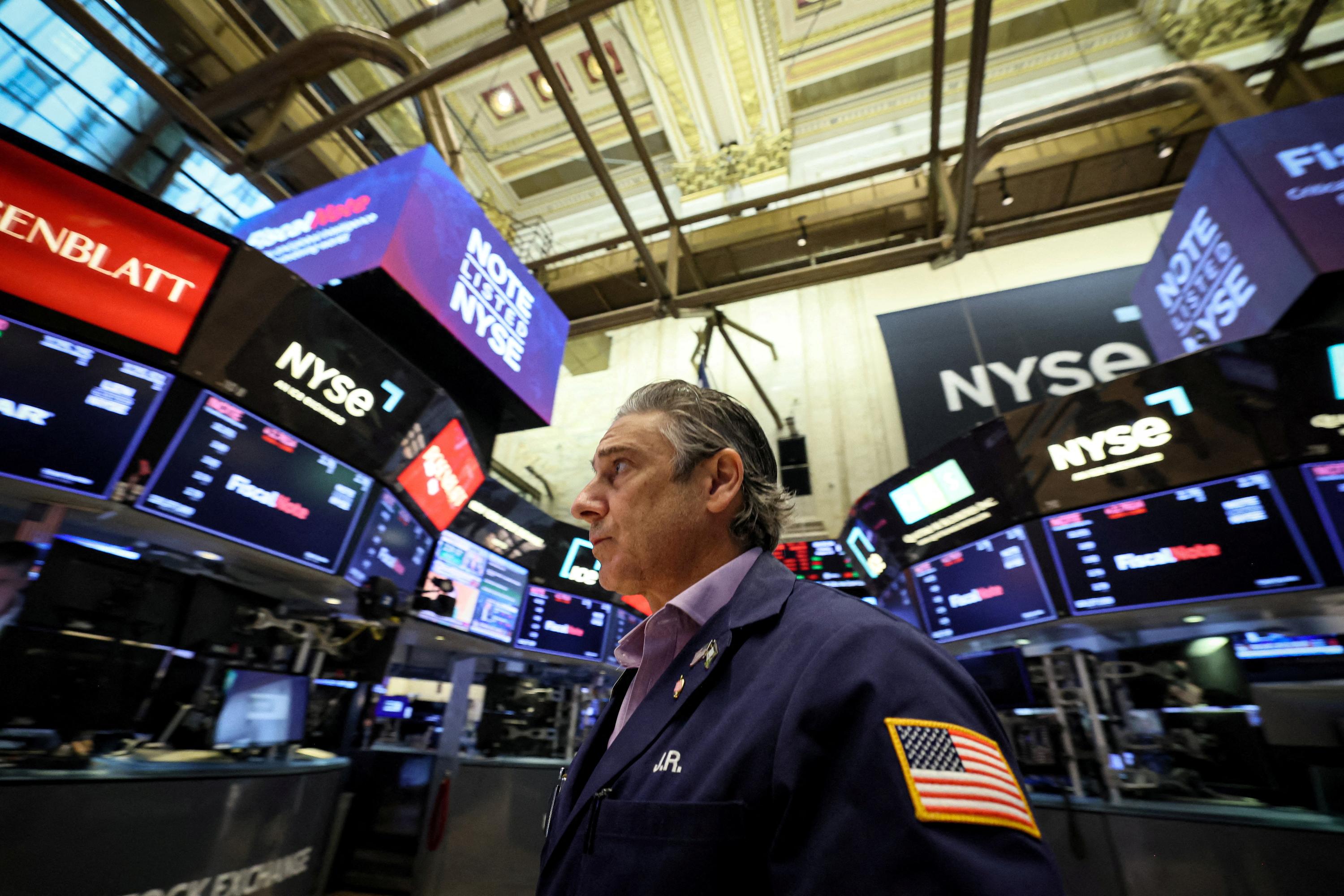
LONDON, March 19 (Reuters) - Global interest rates are in flux. The Bank of Japan, a holdout dove as central banks across the developed world raised borrowing costs from late 2021, finally called time on its easy money era on Tuesday. Most other big central banks, in contrast, are on the brink of victory in their fight against inflation. Rate setters in the United States, Britain, Switzerland and Norway meet this week and may at least offer clues about when they will cut rates. Here's how big central banks stand. 1) UNITED STATES - Markets have pared back Federal Reserve rate cut bets given hawkish central bank speak and hotter than expected inflation. Traders price in roughly 75 basis points (bps) of U.S. rate cuts in 2024 versus 150 bps at the start of the year, with a first move seen as most likely in June. The Fed, which meets on March 19-20, has held rates steady at 5.25% to 5.5% since July 2023. 2) NEW ZEALAND - Reserve Bank of New Zealand deputy governor Christian Hawkesby told Reuters this month that interest rates, at a 15-year high of 5.5%, need to stay restrictive for some time. But the mood could shift before the RBNZ's next rate decision in April. Finance minister Nicola Willis warned last week that economic growth in coming years will be "significantly slower" than previously expected. High interest rates have already dampened economic activity. 3) BRITAIN - The Bank of England is one to watch. Traders, swaps markets and positioning data broadly expect it to ease rates later than the Fed and the ECB. But economists reckon inflation could tumble rapidly as wage growth slows, prompting an early move. For now, money markets price the first BoE cut in August. Its next meeting is Thursday. 4) CANADA - The Bank of Canada's next rate decision is due on April 10 with the central bank widely expected to keep its key overnight rate steady at a multi-decade high. Markets see the BoC cutting by around 60 bps this year with the highest chance of the first cut in July. 5) EURO ZONE The ECB kept borrowing costs at record highs this month, but took a first, small step towards lowering them, saying inflation was easing faster than it had anticipated a few months ago. Markets are pricing 84 bps of cuts this year, with a 57% probability of the first cut coming in June, an outlook some ECB policymakers appear aligned with. But the market's expectations for euro zone rate cuts could shift based on what may happen in the United States. By cutting before the Fed, the ECB risks a bout of euro weakness that may re-stoke inflation. 6) NORWAY - Norway could be a late mover on rate cuts. Inflation numbers for February were clearly below the Norges Bank's estimates but seen as unlikely to alter the central bank's position on March 21. Norges Bank kept its benchmark rate unchanged at 4.50% in January and said the cost of borrowing could stay at that level "for some time ahead". 7) AUSTRALIA - The Reserve Bank of Australia held rates steady on Tuesday at a 12-year high of 4.35% but softened its stance by dropping a warning about further hikes that had appeared in previous monetary policy statements. Expectations for the first rate cut were fully priced into swaps markets for September. 8) SWEDEN - Sweden's central bank, which left its key rate steady at 4% in February, said it might be able to bring forward the timing of a first rate cut if inflation continues to slow. The Riksbank makes its next rate decision on March 26. Economists see the first round of easing in May or June. 9) SWITZERLAND - A fall in Swiss inflation to its lowest level in nearly two and half years in February has fuelled expectations that the Swiss National Bank could cut rates when it meets on Thursday. Traders anticipate the first full rate cut in June, however, according to money market pricing. 10) JAPAN - The Bank of Japan on Tuesday ended eight years of negative interest rates. As well as bringing interest rates up to a range of 0-0.1%, the BOJ also abandoned yield curve control, where it purchased vast amounts of Japanese government bonds to cap state borrowing costs. With inflation exceeding the BoJ's target for over a year, a shift had been expected in March or April. Still, the moves were a mark of confidence from the BoJ that Japan has finally emerged from the grip of deflation. The Reuters Daily Briefing newsletter provides all the news you need to start your day. Sign up here. https://www.reuters.com/markets/rates-bonds/boj-joins-rate-hike-party-that-other-big-central-banks-have-left-2024-03-19/
2024-03-19 09:48
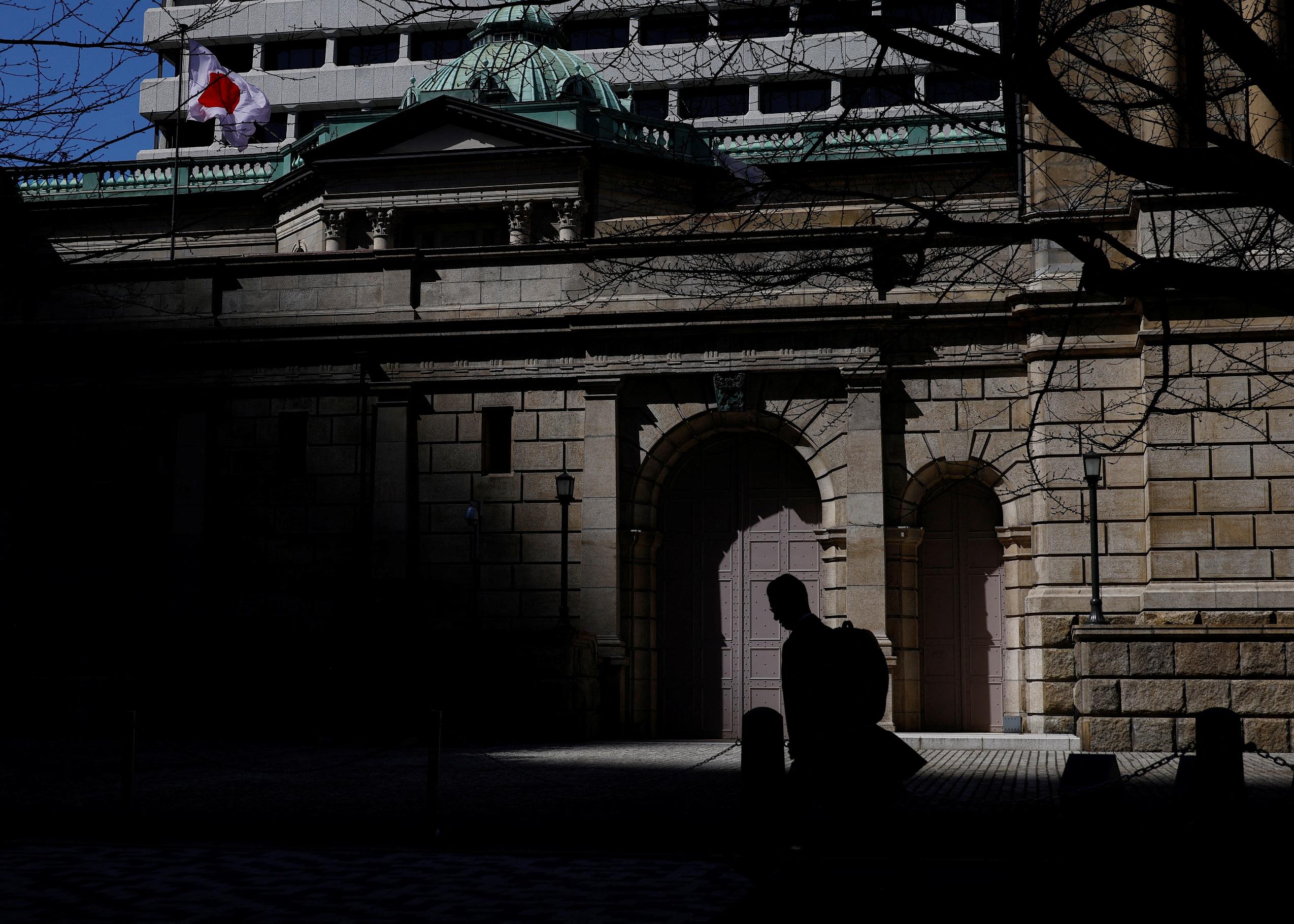
KAMPALA, March 19 (Reuters) - The Ugandan shilling was steady on Tuesday but was expected strengthen, underpinned by inflows of dollars from coffee exporters and subdued importer demand, traders said. At 0930 GMT commercial banks quoted the shilling at 3,875/3,885, compared with Monday's closing rate of 3,880/3,890. Keep up with the latest medical breakthroughs and healthcare trends with the Reuters Health Rounds newsletter. Sign up here. https://www.reuters.com/markets/currencies/ugandan-shilling-stable-firm-due-coffee-dollar-inflows-2024-03-19/

2024-03-19 07:25
LONDON/SINGAPORE, March 19 (Reuters) - Bitcoin fell by as much as 6.5% on Tuesday, on track for its largest one-day drop in two weeks, as a wave of selling hit cryptocurrencies and other risk assets, such as stocks. The price was last down 5.6% at $63,650, having dropped to a two-week low of $62,966, while ether fell 6.7% to $3,276. Bitcoin is still showing a 52% gain for the year so far, as investors have piled into U.S. exchange-traded funds backed by spot bitcoin. The price hit a record high of nearly $74,000 on Thursday last week, which has triggered some profit-taking, along with a series of U.S. data releases that suggested the Federal Reserve may not cut interest rates this year as much as previously thought. In the last week, bitcoin has fallen by nearly 9%, set for its largest week-on-week decline since last September, while ether has lost 13% following an upgrade to the underlying ethereum network. But performance has not been as weak across the broader crypto complex. Smaller tokens, known also as "altcoins", have drawn in flows of their own. The solana network's sol token has gained 19% in the latest week, while avalanche's avax coin has risen by 17%, according to Coingecko. "In light of bitcoin's recent all-time high and subsequent correction, we anticipate a period of market recalibration as investors seek equilibrium amidst unprecedented inflows into spot bitcoin ETFs," analysts at exchange Bitfinex said in a note. In Tuesday's U.S. premarket, shares of Coinbase (COIN.O) , opens new tab slid 5.7%, while crypto miners Riot Platforms (RIOT.O) , opens new tab and Marathon Digital (MARA.O) , opens new tab fell 4.1% and 6.6%, respectively. Shares in software firm and bitcoin buyer MicroStrategy (MSTR.O) , opens new tab dropped more than 10% and the ProShares Bitcoin Strategy ETF (BITO.P) , opens new tab fell 4.8%. Flows of capital into the 10 largest bitcoin ETFs have also slowed over the past few days. According to LSEG data, $178 billion flowed into the major ETFs on Monday, compared with well over $400 billion on a number of days last week. The Technology Roundup newsletter brings the latest news and trends straight to your inbox. Sign up here. https://www.reuters.com/technology/bitcoin-slides-5-profit-taking-sweeps-crypto-2024-03-19/

2024-03-19 06:57
NEW YORK/LONDON, March 19 (Reuters) - Global shares edged higher and the yen slid past 150 to the dollar on Tuesday after the Bank of Japan met market expectations by ending eight years of negative interest rates, likely the highlight of a busy week for central banks. Investors will now turn their focus to the U.S. Federal Reserve's monetary policy meeting that ends on Wednesday, when the central bank is expected to provide further clues about the pace at which it will likely lower interest rates this year. Financial markets are now considering the chance that the Fed might reduce the number of projected rate cuts this year to two from three on the back of last week's stronger-than-expected inflation data. "We don’t think the Fed will fundamentally change its outlook for inflation based on two hotter than desired prints to start the year," said Christopher Hodge, chief economist at Natxis CIB Americas. "However, we do expect a slightly more hawkish tone in the hopes of keeping a leash on financial conditions." MSCI's world share index (.MIWD00000PUS) , opens new tab was little changed, and hovered near all-time highs. Stocks on Wall Street reversed earlier losses, with the Dow Jones Industrial Average (.DJI) , opens new tab rising 0.83%, the S&P 500 (.SPX) , opens new tab gaining 0.56%, and the Nasdaq Composite (.IXIC) , opens new tab adding 0.39%. The U.S benchmark 10-year Treasury yield was down 4.8 basis points to 4.293%, from 4.34%. The day's big news was in Japan, where the BOJ heralded a new era as it shifted away from years of ultra-easy monetary policy. It also abandoned bond yield curve control and dropped purchases of riskier assets, including exchange-traded funds. Japan's Nikkei (.N225) , opens new tab was choppy after the decision but closed 0.66% higher, buoyed by the weaker yen, while Japanese government bond yields fell. The dollar rose 1.15% to 150.88 yen against the Japanese yen. "The BOJ clearly has been very, very keen to manage this process so that it is not disruptive,” said David Mitchinson, fund manager at Japan focused Zennor Asset Management. “The markets have front-run them and anticipated their move.” Though the shift was Japan's first interest rate hike in 17 years, it still keeps its rates stuck around zero as a fragile economic recovery forces the central bank to go slow on further rises in borrowing costs, analysts say, giving the rate-sensitive yen little traction. In a statement announcing its decision, the BOJ said it would keep buying "broadly the same amount" of government bonds as before. "So some of that spread closure between Japan and the U.S. isn’t quite really happening at the moment because although Japan has hiked a little, the U.S. hasn’t cut,” said Mitchinson, pointing to the fact that U.S. inflation pressures have been stronger than expected. BOJ Governor Kazuo Ueda said in his press conference that accommodative financial conditions would be maintained for the time being and the pace of further hikes would depend on the economic and inflation outlooks. European shares were fairly muted, with the STOXX 600 (.STOXX) , opens new tab and euro zone bond yields little changed. CENTRAL BANK BONANZA In the day's other central bank news, the Reserve Bank of Australia held interest rates steady as expected, while watering down a tightening bias to say it was not ruling anything in or out on policy. The Australian dollar slipped 0.42% to $0.6532 following the decision. The Aussie is down over 4% against the U.S. dollar this year. The Federal Reserve's two-day meeting wraps up on Wednesday, and central banks in Britain, Norway, and Switzerland meet on Thursday. All are expected to keep rates steady, though markets are not ruling out a move in the Alps. When it comes to the Fed, the market's attention is on policymakers’ updated economic and interest rate projections and comments from Chair Jerome Powell. Last week's stronger than expected inflation reports led traders to reduce their bets on U.S. rate cuts this year, with markets now pricing in 71 bps of easing in 2024, roughly in line with expectations the Fed published in December, the latest iteration of which are due at this meeting. At the start of the year, traders were pricing in 150 bps of cuts. In commodities, spot gold dropped 0.1% to $2,158.00 an ounce, after hitting all time highs earlier this month. U.S. crude recently rose 0.85% to $83.42 per barrel and Brent was at $87.38, up 0.56% on the day. Bitcoin stayed in the red for the day and was down 5.91% at $63,616.00 by late afternoon in New York. Get a look at the day ahead in U.S. and global markets with the Morning Bid U.S. newsletter. Sign up here. https://www.reuters.com/markets/global-markets-wrapup-1-2024-03-19/
2024-03-19 06:44
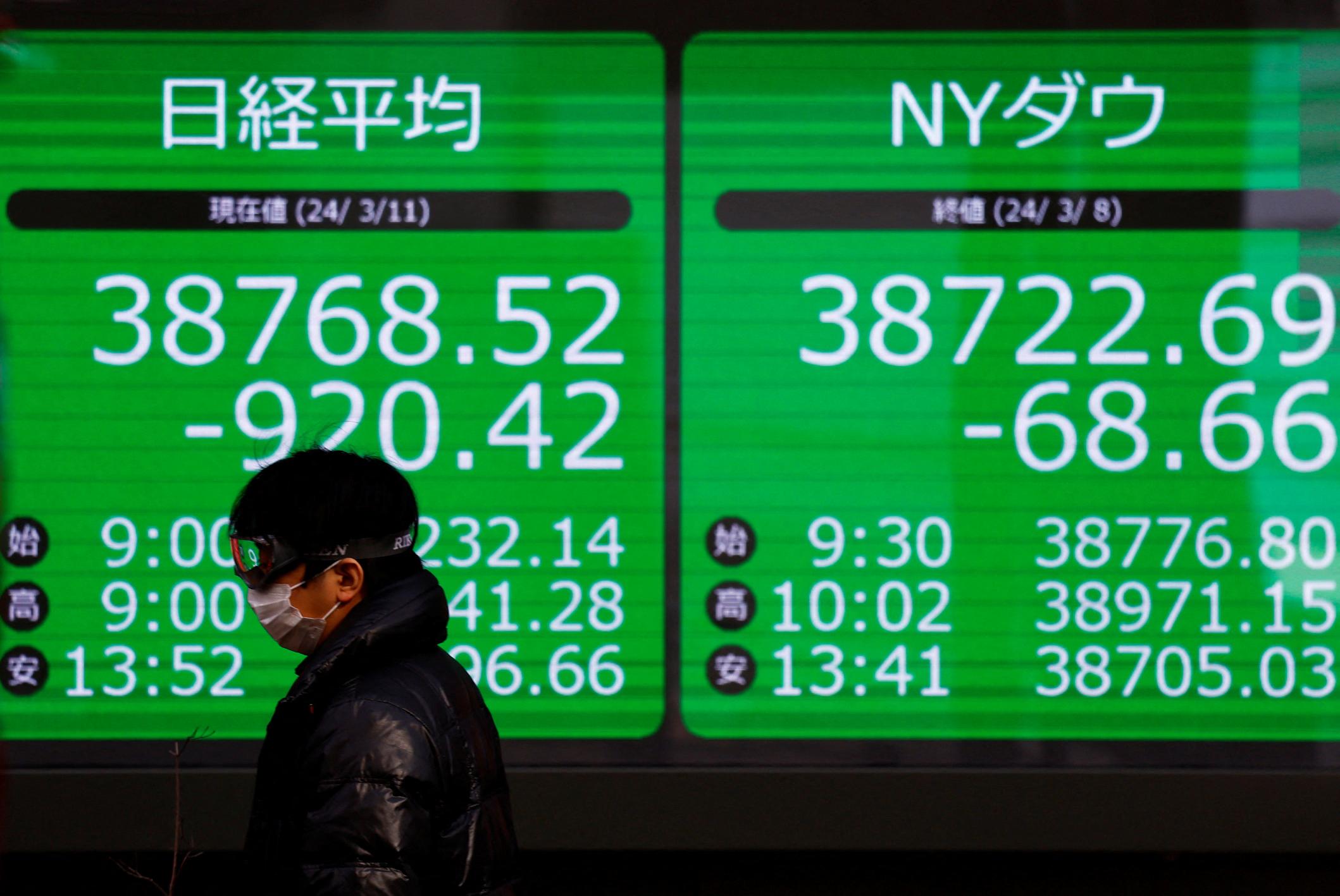
ZURICH, March 19 (Reuters) - The Swiss National Bank sold foreign currency worth 132.9 billion Swiss francs ($149.51 billion) in 2023, the central bank said on Tuesday, showing its increased emphasis on supporting the Swiss franc as a shield against imported inflation. The figure was a massive increase from 22.3 billion francs in foreign currencies sold by the SNB in 2022, when the bank started selling off some of its huge foreign currency holdings. The SNB's strategy has paid off, with Swiss inflation within its 0-2% target range for last nine months. "The SNB's foreign currency sales contributed to the Swiss franc initially appreciating roughly in line with inflation differentials against other countries," the SNB said on Tuesday. "In doing so, they prevented a weakening of the Swiss franc in real terms and thus helped in tightening monetary conditions," it added. "Towards the end of the year, the inflation rate fell significantly." The SNB said it would no longer focus on foreign currency sales after achieving its goal. The central bank is due to announce its next monetary policy decisions on Thursday. ($1 = 0.8889 Swiss francs) Get a look at the day ahead in U.S. and global markets with the Morning Bid U.S. newsletter. Sign up here. https://www.reuters.com/business/finance/swiss-national-bank-sold-forex-worth-nearly-150-billion-2023-2024-03-19/